Work from Palermo: The Digital Nomad's Complete Home Swapping Guide to Sicily's Capital
Maya Chen
Travel Writer & Home Exchange Expert
Discover how to work from Palermo through home swapping—WiFi speeds, coworking spots, best neighborhoods, and why Sicily's chaotic capital is a digital nomad dream.
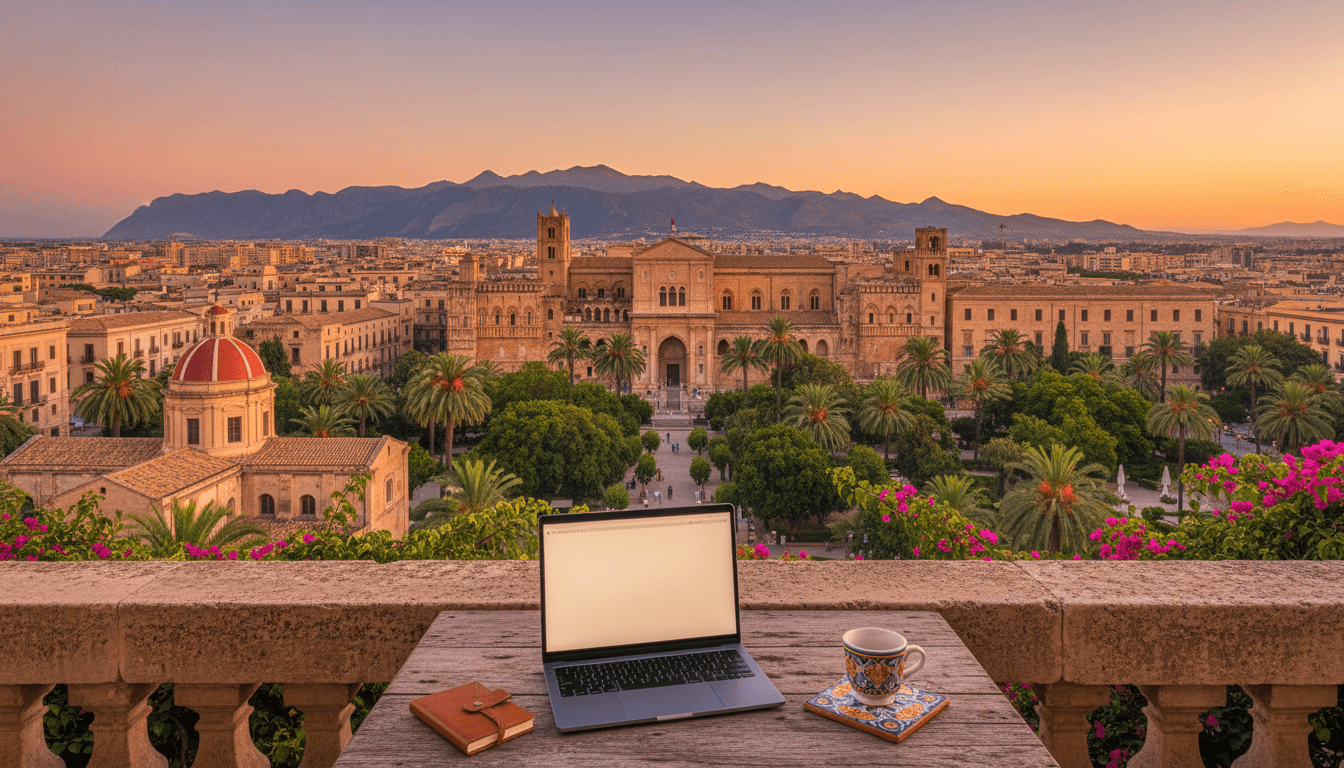
The espresso was €1. The granita was €2.50. And my "office" was a baroque balcony overlooking a 12th-century Norman church where I could hear nuns singing vespers at 5 PM every day.
That was my life last October when I decided to work from Palermo for six weeks through a home swap. I'd traded my San Francisco apartment for a third-floor flat in the Kalsa district, and honestly? It ruined me for regular remote work forever.
Here's the thing about Palermo—it's not Lisbon or Bali or any of the polished nomad hotspots you've seen on Instagram. It's grittier. Louder. More chaotic. And infinitely more rewarding if you're willing to embrace the beautiful mess of it all.
 golden afternoon light streaming through ornate wooden shutters onto a laptop and espresso cup, with
Why Work from Palermo? The Digital Nomad Case for Sicily
I'll be honest—Palermo wasn't even on my radar until a fellow home swapper mentioned it at a meetup in Barcelona. "Sicily?" I remember thinking. "Isn't that just... beaches and the Godfather?"
Three months later, I understood why she'd had that knowing smile.
Palermo offers something rare: an extremely low cost of living in a major European city with genuine cultural depth. We're not talking about some sleepy beach town where you'll run out of things to do in a week. This is a city of nearly 700,000 people with opera houses, underground catacombs, Arab-Norman architecture, and street food that'll make you question every meal you've ever eaten.
The numbers? They speak for themselves. A comfortable monthly budget looks something like €200-300 for groceries and market food, €150-250 for eating out regularly, €50-100 for coworking or café work, €30-50 for transportation, and €100-200 for entertainment and day trips. With a home swap covering your accommodation, that's roughly €530-900 per month for a genuinely good life. Compare that to Lisbon's €1,500+ or Barcelona's €2,000+, and you start to see why more nomads are quietly discovering this city.
But here's the real reason I fell hard for Palermo: the pace. Italians have this concept of "dolce far niente"—the sweetness of doing nothing. In Palermo, it's practically mandatory. Shops close for four-hour lunch breaks. Dinner doesn't start until 9 PM. And somehow, paradoxically, I got more deep work done here than anywhere else because the city's rhythm forced me to batch my work and actually disconnect.
Home Swapping in Palermo: What Digital Nomads Need to Know
Real talk: home swapping in Palermo requires a slightly different approach than swapping in Amsterdam or San Francisco.
The good news first. Sicilians are incredibly hospitable. My swap partner, Giulia, left me a handwritten guide to her neighborhood that included her nonna's phone number "in case you need anything." I called once to ask about the best fish market—her grandmother spent 20 minutes giving me directions and then met me there to introduce me to her favorite vendor. This level of warmth? Standard here.
The challenge is internet infrastructure. It can be... inconsistent.
When I was arranging my swap through SwappaHome, I asked Giulia three direct questions: What's your WiFi speed? (She sent me a screenshot—42 Mbps down, 15 up.) Is there a backup option if it goes down? (She had a portable hotspot with TIM.) Which room gets the best signal? (Her study, near the router—she even moved her desk there for me.)
Ask these questions before confirming any home swap in Palermo. The city center generally has decent fiber coverage, but older buildings in historic districts sometimes have copper connections that struggle. Anything above 25 Mbps is workable for video calls; above 50 Mbps and you're golden.
 cozy home office setup in a traditional Palermo apartment with high ceilings, decorative tiles, and
Setting Up Your Digital Nomad Home Base
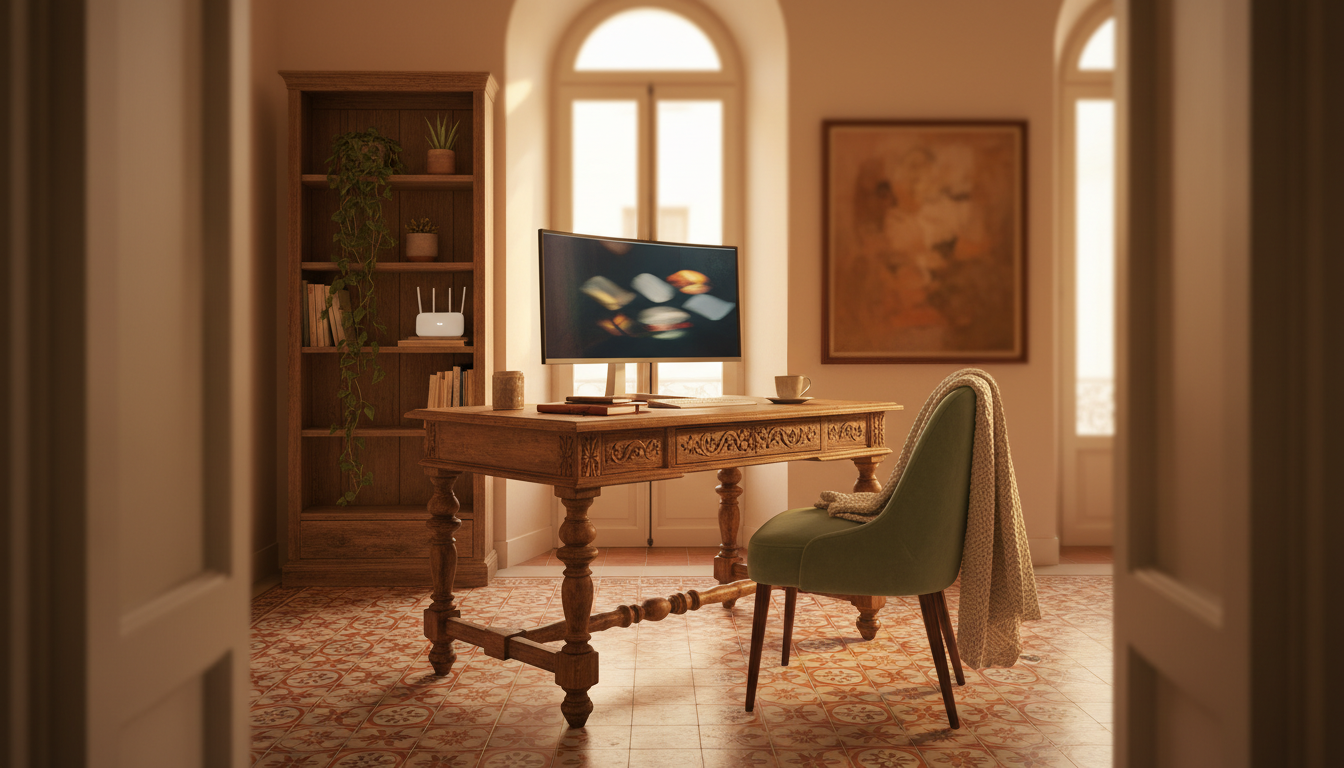
Palermo apartments tend to be larger than their Northern European counterparts—a legacy of the city's aristocratic past—which means you'll often have a dedicated room or at least a proper desk area.
I specifically asked for a desk near a window (natural light is non-negotiable for me), a comfortable chair or permission to buy a cushion, and good blackout options for early morning calls with US clients. Giulia's place had all of this, plus a small terrace where I'd take walking meetings. That terrace became my secret weapon—nothing impresses clients quite like casually mentioning you're pacing around a rooftop with a view of Monte Pellegrino.
Best Neighborhoods in Palermo for Remote Workers
Not all Palermo neighborhoods are created equal for the work-from-home crowd. Here's my honest breakdown.
Kalsa: The Sweet Spot
This is where I stayed, and I'm biased, but I think it's the best choice for most remote workers. Kalsa is the old Arab quarter near the sea, now gentrified just enough to have reliable WiFi and great cafés, but not so much that it's lost its character. The streets are narrow and sometimes confusing. You'll get lost. This is part of the charm.
My morning office was Bottega Sicula on Via Cataldo—€1 espresso, decent WiFi, and the owner Salvatore remembered my order by day three. For afternoon decompression, I'd walk along the Foro Italico waterfront promenade. And when I needed to remember why I came here, I'd visit the Oratorio di San Lorenzo, where Caravaggio's "Nativity" was stolen in 1969. The mystery remains unsolved.
Politeama/Libertà: The Reliable Choice
If Kalsa feels too chaotic, the area around Teatro Politeama and Via Libertà offers a more conventional European city vibe. Think tree-lined boulevards, proper sidewalks, more consistent infrastructure. You'll find more coworking options here (including Negg Worklab, which I'll cover later), better grocery stores for self-catering, easier navigation for newcomers, and more modern apartments with updated wiring.
The trade-off? Less character. You could be in any Mediterranean city. But if you're here primarily to work and need reliability over romance, Politeama delivers.
Vucciria/La Loggia: For the Adventurous
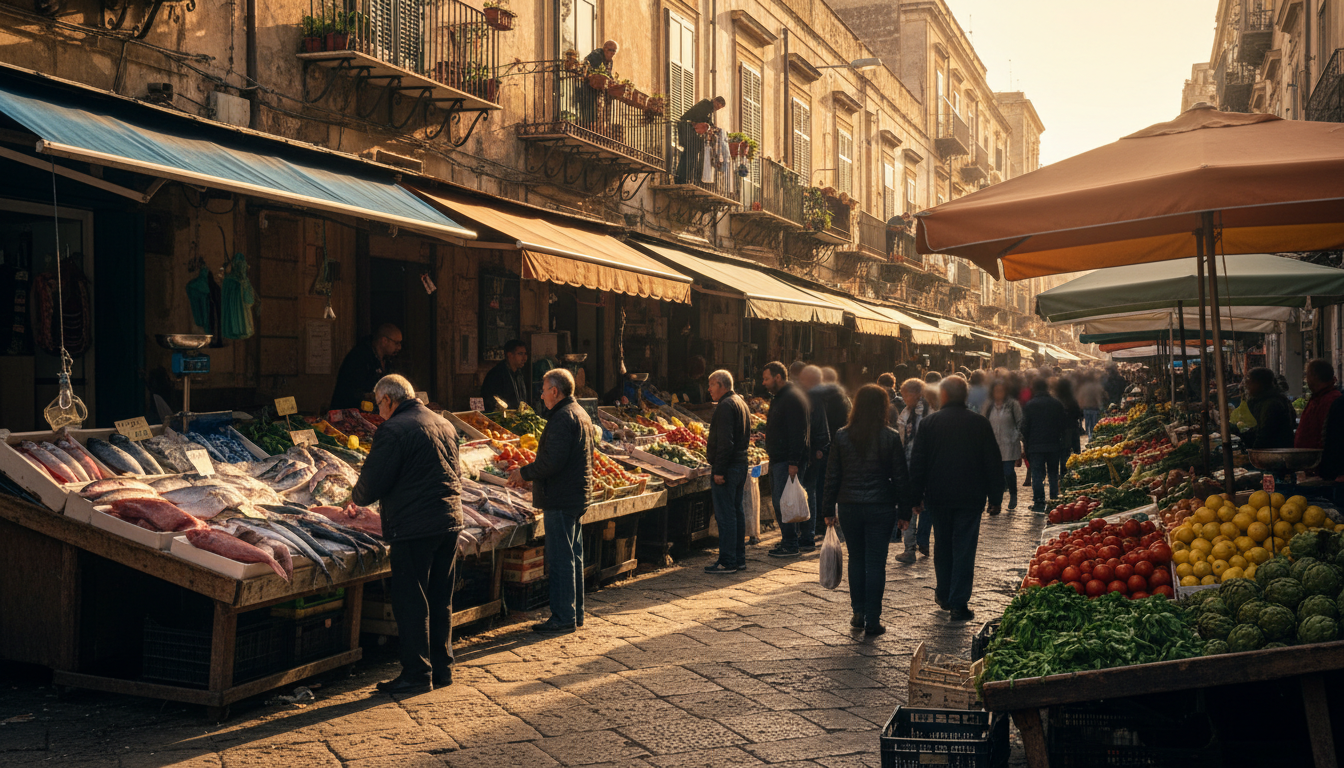
I almost don't want to include this because it's not for everyone. The Vucciria is Palermo's historic market district—loud, chaotic, sometimes smelly, always alive. At night, it transforms into the city's main nightlife zone with bars spilling onto the streets until 3 AM.
Work from here if you're a night owl who does your best work from 10 PM to 4 AM, if you have noise-canceling headphones and actually use them, or if you want to feel like you're living inside a Ferrante novel. Don't work from here if you have early morning calls, need quiet to concentrate, or if strong fish smells bother you. I spent a few days working from a friend's Vucciria apartment and loved it for the experience, but I couldn't have done it long-term.
 bustling Vucciria market at golden hour with vendors selling fresh fish and produce, colorful awning
Palermo's Coworking Spaces and WiFi Cafés
Even with a great home swap setup, you'll want backup options. Some days you need a change of scenery. Some days your building's internet decides to take a siesta.
Negg Worklab on Via Catania is the closest thing Palermo has to a proper coworking space. It's in the Politeama area, about a 15-minute walk from the historic center. Day passes run €15, weekly is €50, monthly €150. The vibe is young, techy, and Italian—meaning lots of animated phone conversations and espresso breaks. The WiFi is rock-solid at 120 Mbps, and they have phone booths for calls, which is crucial.
Caffè Letterario on Via Cataldo became my go-to when I needed to escape my apartment but didn't want the formality of a coworking space. This bookshop-café hybrid has adequate WiFi (25-30 Mbps), the staff doesn't mind you camping for hours if you keep ordering, and there's something deeply satisfying about writing while surrounded by Italian literature you can't read. The back room is quieter and has better outlets.
And then there's Ciuri Ciuri near Teatro Massimo. Not technically a work café, but hear me out. This legendary granita and brioche spot has outdoor seating, passable WiFi, and serves the best almond granita in the city. I'd go here for low-focus work—emails, admin tasks, anything that didn't require deep concentration. The granita con brioche at €3.50 is a religious experience. I'm not exaggerating.
For emergencies, the Biblioteca Centrale della Regione Siciliana on Corso Vittorio Emanuele offers free WiFi and air conditioning—not insignificant in summer. It's quiet, beautiful, and completely free. You'll need to show ID to enter.
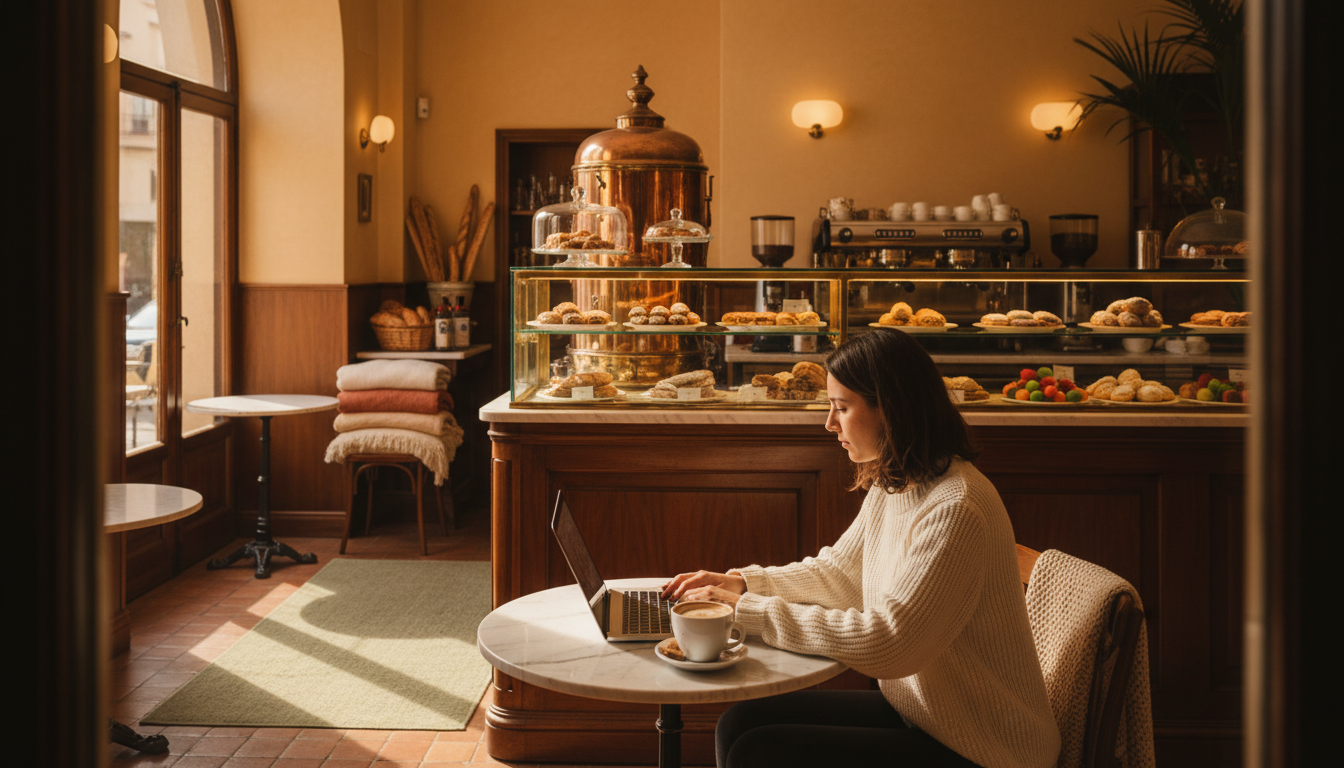 interior of an elegant Palermo caf with marble tables, vintage espresso machine, and a digital nomad
The Palermo Work Schedule: Adapting to Sicilian Time
This might be the most important section for digital nomads. Palermo operates on its own clock, and fighting it will only make you miserable.
From 7-9 AM, the city wakes slowly. Cafés open, but it's quiet—prime deep work time if you're an early riser. Then 9 AM to 1 PM is the active morning when shops open and streets fill up, good for calls with European clients. From 1-4 PM comes the pausa pranzo. Everything closes. Literally everything. Don't try to fight this—use it for lunch, a nap, or offline work. The passeggiata hours from 4-8 PM are when locals stroll and shops reopen. I found this time weirdly productive for creative work—maybe the energy of the streets seeped in. And 8 PM onward is dinner and social time. If you're working with US clients on Pacific time, this is when your overlap begins.
I structured my days around this rhythm: deep work in the early morning, calls and meetings late morning, offline time during pausa, creative work in the late afternoon, and US client calls after dinner. It sounds chaotic, but it worked beautifully.
One thing I didn't expect—the long lunch break actually improved my work. I'd been running on the American "eat at your desk" model for years. Having a forced two-hour break where I'd walk to a market, buy fresh produce, cook something simple, maybe nap—it reset my brain in a way that cramming through never did.
Practical Logistics for Digital Nomads in Palermo
Palermo Falcone-Borsellino Airport has direct connections to most European hubs. From the US, you'll typically connect through Rome, Milan, or another European city. Getting from the airport to the city, you can take the Prestia e Comandè bus for €7 (45 minutes to central station), a taxi for a fixed €40-50 to city center, or the train for €6, which runs hourly and takes about an hour.
Get an Italian SIM immediately. The main carriers are TIM, Vodafone, and WindTre. I used TIM because they had a shop right at the airport. A typical tourist plan runs €20-30 per month for 50-100GB data plus calls. This is your backup internet—don't skip it.
For visas, US, UK, Canadian, and Australian citizens can stay in the Schengen zone for 90 days within a 180-day period without a visa. For longer stays, you'd need to look into Italy's digital nomad visa (launched in 2024) or the elective residence visa. I did 6 weeks, which fit comfortably within tourist allowances.
Italy has excellent public healthcare, but as a tourist, you'll want travel insurance that covers medical expenses. I use SafetyWing at $45 per month for their Nomad Insurance, which has worked well across multiple countries.
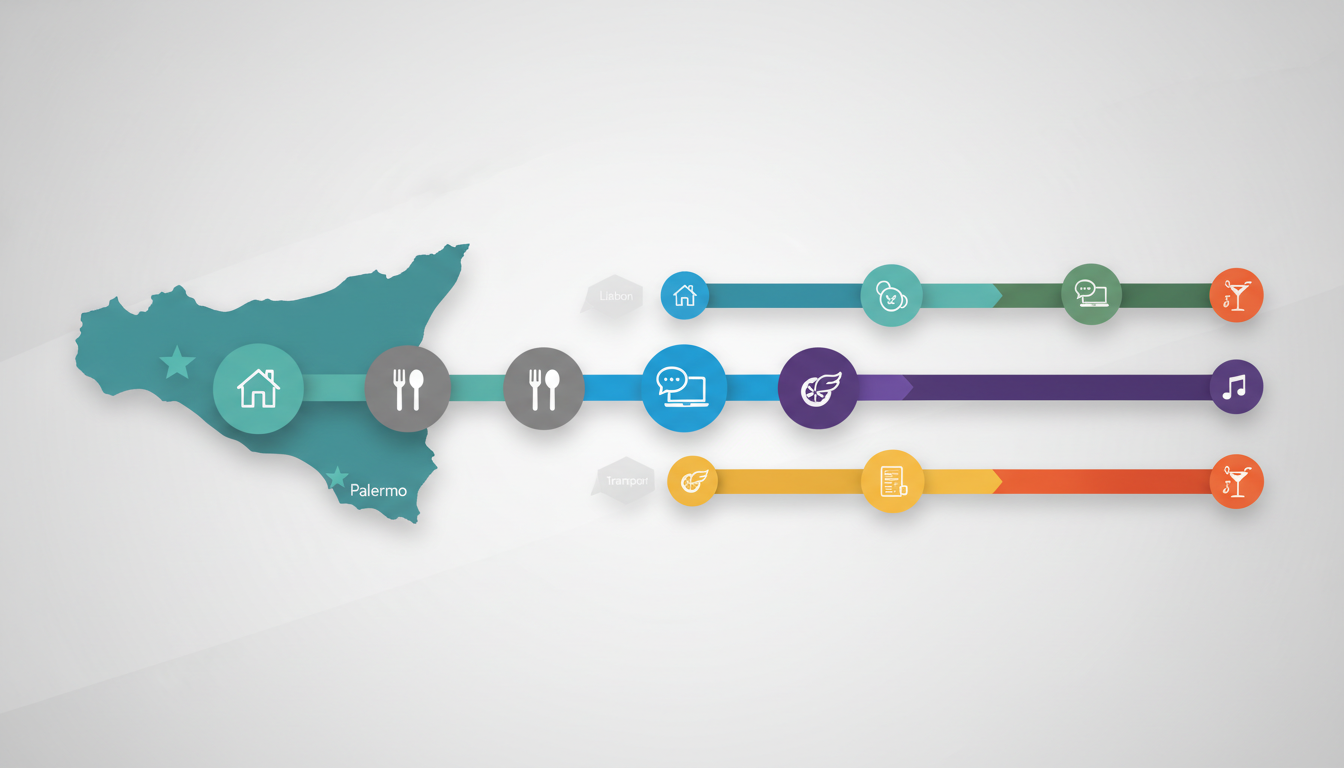 infographic showing Palermo cost of living breakdown for digital nomads with icons for housing, food
The Food Situation (Because You'll Be Eating a Lot)
I can't write about working in Palermo without addressing the food. It will become a central part of your life here. And honestly, it should.
Street food is the move. Palermo has one of the most vibrant street food cultures in Europe—a legacy of Arab, Norman, Spanish, and Italian influences colliding over centuries.
Arancine, those glorious rice balls, run €2-3 each. Get them at Bar Alba or any friggitoria. The ragù ones are classic; the pistachio ones are transcendent. Panelle—chickpea fritters—cost €1.50-2 in a sandwich. Find them at Friggitoria Chiluzzo in Ballarò market. Sfincione, the Sicilian pizza, runs €2-3 per slice. It's thicker, spongier, topped with tomato, onions, anchovies, and breadcrumbs. An acquired taste that I acquired immediately. And pasta con le sarde—sardines, wild fennel, pine nuts, raisins, saffron—sounds weird but is incredible. Get it at Trattoria Ferro di Cavallo for €9-12.
For groceries, the markets are your friends. Ballarò is the biggest and most chaotic—go before noon. Capo is more manageable with excellent fish. Vucciria is tourist-heavy now but still has good vendors if you know where to look. I'd typically spend €5-7 on a market lunch of fresh bread, cheese, olives, and fruit. Dinner out at a local trattoria ran €15-25 with wine.
What I Wish I'd Known Before My Palermo Home Swap
After six weeks, here's the honest stuff.
The noise is real. Palermo is loud—motorinos, church bells, street vendors, neighbors having full conversations across balconies at 11 PM. If you're noise-sensitive, bring earplugs for sleeping and noise-canceling headphones for working.
August is rough. The city empties out, many restaurants close, and the heat is oppressive at 35-40°C. Locals flee to the beach. If you must come in August, make sure your swap has air conditioning.
Learn basic Italian. English is less common here than in Northern Italy. Download Google Translate and learn "posso lavorare qui?" (can I work here?) and "c'è il WiFi?" (is there WiFi?).
The bureaucracy is legendary. Need to do anything official? Prepare for lines, paperwork, and confusion. This probably won't affect you as a short-term visitor, but it's worth knowing.
It's safe, but use street smarts. Palermo's reputation is outdated—it's genuinely safe for tourists. That said, don't flash expensive electronics, watch your bag in markets, and avoid empty streets late at night. Standard city stuff.
Making Your Home Swap Work Long-Term
If you're thinking about an extended stay—say, a month or more—here's how to set yourself up for success.
Be upfront about your needs. When you're arranging your swap on SwappaHome, tell your potential host exactly what you need: reliable internet, a workspace, quiet hours. Better to find out it's not a match before you commit.
Offer flexibility. Palermo isn't a major tourist destination yet, so you might find hosts eager for the chance to visit your city. I've noticed Sicilians are particularly interested in swapping with people in the US, UK, and Northern Europe.
Think about timing. Spring from April through June and fall from September through November are ideal. Perfect weather, everything's open, and you'll avoid both the summer crowds and the winter rains.
Build in buffer days. Don't schedule important calls for your first day. Give yourself time to settle in, test the WiFi, find your coffee spot, and adjust to the rhythm.
Leave something behind. I left Giulia a bag of Trader Joe's snacks and a handwritten list of my favorite spots in San Francisco. She left me homemade limoncello and her nonna's number. This is how home swapping builds community.
The Unexpected Gift of Working from Palermo
I came to Palermo thinking I'd save money and get some good photos for Instagram. I left with something harder to quantify.
There's a moment I keep returning to. It was maybe week four, late afternoon, and I was sitting in Piazza Pretoria watching the light change on the fountain. I'd just finished a big project, my laptop was in my bag, and I had nowhere to be for hours. An old man sat down next to me and started telling me about his grandchildren in German—he'd worked in Munich for thirty years. We talked for an hour, neither of us fully understanding the other, both of us enjoying it anyway.
That doesn't happen when you're staying in a hotel, rushing between tourist sites, trying to optimize your vacation. It happens when you slow down. When you have a home base. When you let a place seep into you.
Home swapping made that possible. The credits I'd earned hosting guests in San Francisco translated into six weeks of living—really living—in a city I'd never have discovered otherwise. No hotel could have given me Giulia's nonna's phone number, or Salvatore remembering my coffee order, or that afternoon in the piazza.
If you're a digital nomad looking for somewhere that will challenge you, feed you, and change how you think about work-life balance, Palermo is waiting. It's not the easiest place to work remotely. But the best things rarely are.
Ready to find your own Palermo home swap? SwappaHome connects you with hosts worldwide through a simple credit system—earn credits by hosting, spend them on stays anywhere. Your Sicilian adventure might be closer than you think.
Frequently Asked Questions
Is Palermo good for digital nomads?
Palermo is excellent for digital nomads seeking affordable European living with rich culture. The cost of living runs €530-900/month ($580-990 USD), WiFi in central neighborhoods typically hits 25-50 Mbps, and the city offers coworking spaces, cafés with reliable internet, and a lifestyle that naturally encourages work-life balance. The main challenges are occasional infrastructure inconsistency and the need for basic Italian.
How fast is the internet in Palermo for remote work?
Internet speeds in Palermo vary by neighborhood and building age. Central areas like Kalsa and Politeama typically offer 25-50 Mbps through fiber connections, sufficient for video calls and standard remote work. Older buildings may have slower copper connections. Always ask your home swap host for a current speed test before confirming, and get an Italian SIM card with data as backup.
What is the best neighborhood in Palermo for remote workers?
Kalsa is the best neighborhood for most digital nomads—it combines reliable infrastructure with authentic Sicilian character, walkable streets, and excellent cafés. Politeama/Libertà offers more modern apartments and better coworking access if you prioritize reliability over atmosphere. Avoid Vucciria unless you're a night owl who thrives in chaos.
How much does it cost to live in Palermo as a digital nomad?
Digital nomads can live well in Palermo for €530-900/month ($580-990 USD) excluding accommodation. With a home swap eliminating rent costs, budget roughly €200-300 for groceries, €150-250 for dining out, €50-100 for coworking, €30-50 for transport, and €100-200 for entertainment. This makes Palermo significantly cheaper than Lisbon, Barcelona, or other popular European nomad hubs.
Is home swapping safe in Palermo?
Home swapping in Palermo is safe when you use established platforms like SwappaHome with verification and review systems. Sicilians are notably hospitable hosts who often go above and beyond for guests. Standard precautions apply: communicate clearly about expectations, get your own travel insurance, and read reviews from previous swappers. The home exchange community in Sicily, while smaller than Northern Europe, is welcoming and trustworthy.
40+
Swaps
25
Countries
7
Years
About Maya Chen
Travel Writer & Home Exchange Expert
Maya is a travel writer with over 7 years of experience in the home swapping world. Originally from Vancouver and now based in San Francisco, she has completed more than 40 home exchanges across 25 countries. Her passion for "slow" and authentic travel led her to discover that true luxury lies in living like a local, not a tourist.
Ready to try home swapping?
Join SwappaHome and start traveling by exchanging homes. Get 10 free credits when you sign up!
Related articles
Lyon Home Exchange: Your Complete Guide to France's Hidden Gem for Home Swapping
Discover why Lyon home exchange is booming among savvy travelers. From Croix-Rousse to Presqu'île, find the best neighborhoods and insider tips for your swap.
Zurich Bucket List: 47 Unforgettable Experiences to Enjoy During Your Home Swap
Discover the ultimate Zurich bucket list for home swappers—from secret swimming spots to fondue rituals locals actually do. Save thousands while living like a true Zürcher.
Dublin Home Exchange Utilities Guide: WiFi, Heating & Everything Your Guests Need
Master Dublin home exchange utilities—from dodgy WiFi fixes to heating quirks. Practical tips from 7 years of swapping homes across Ireland.