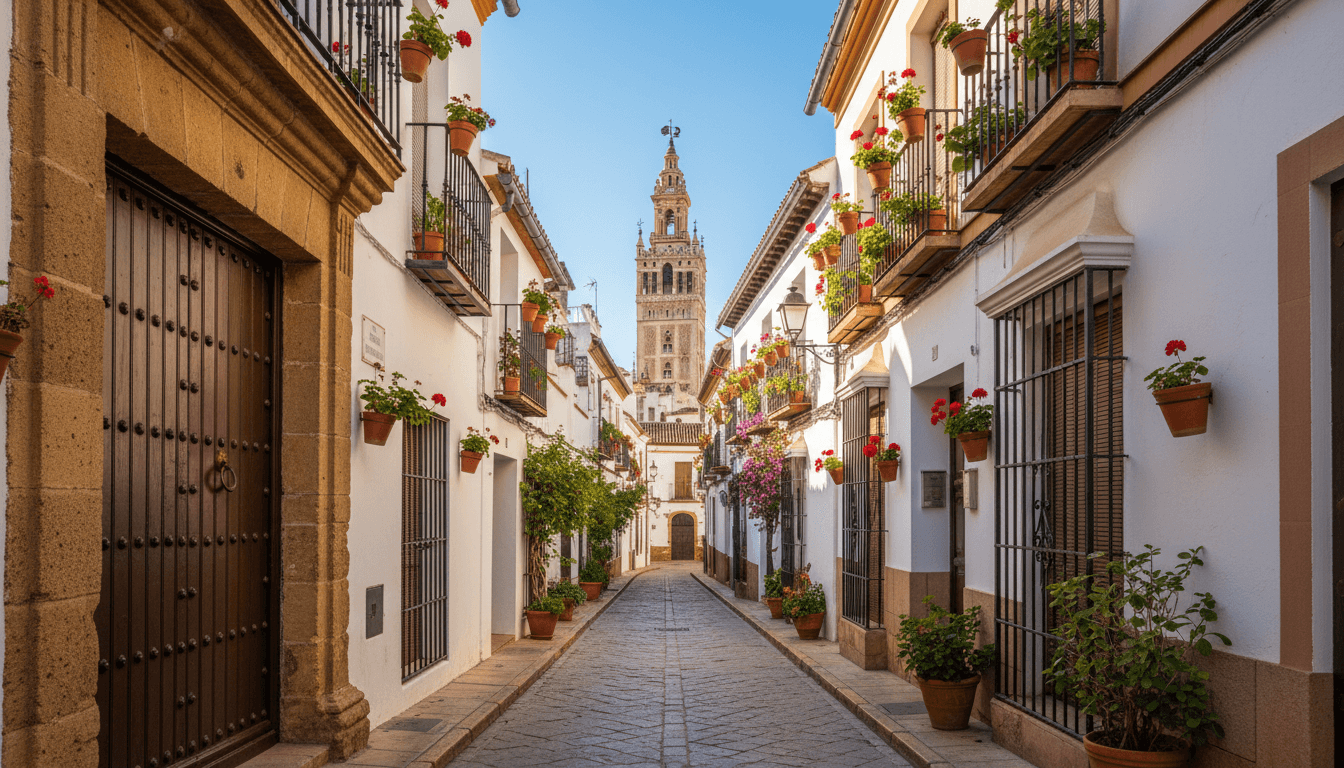
Work from Seville: The Ultimate Home Swapping Guide for Digital Nomads
Maya Chen
Travel Writer & Home Exchange Expert
Discover how to work from Seville as a digital nomad using home swapping. Insider tips on neighborhoods, coworking, WiFi, and living like a local in Spain's sunniest city.
The first time I tried to work from Seville, I made every mistake in the book. I'd booked a cute Airbnb in the historic center—gorgeous tilework, rooftop terrace, the whole postcard fantasy. What the listing failed to mention: the WiFi crawled at 2 Mbps, the nearest café with reliable internet was a 20-minute walk, and my "quiet street" hosted a flamenco bar that didn't get going until midnight.
Three years and countless lessons later, I've figured out how to actually work from Seville as a digital nomad—and home swapping has been the game-changer. Not just for the obvious financial reasons (though saving €1,500+ on a month-long stay certainly doesn't hurt), but because swapping homes with local Sevillanos means inheriting their WiFi setup, their neighborhood knowledge, and their actual working life infrastructure.
So here's everything I wish someone had told me before that first disastrous attempt.
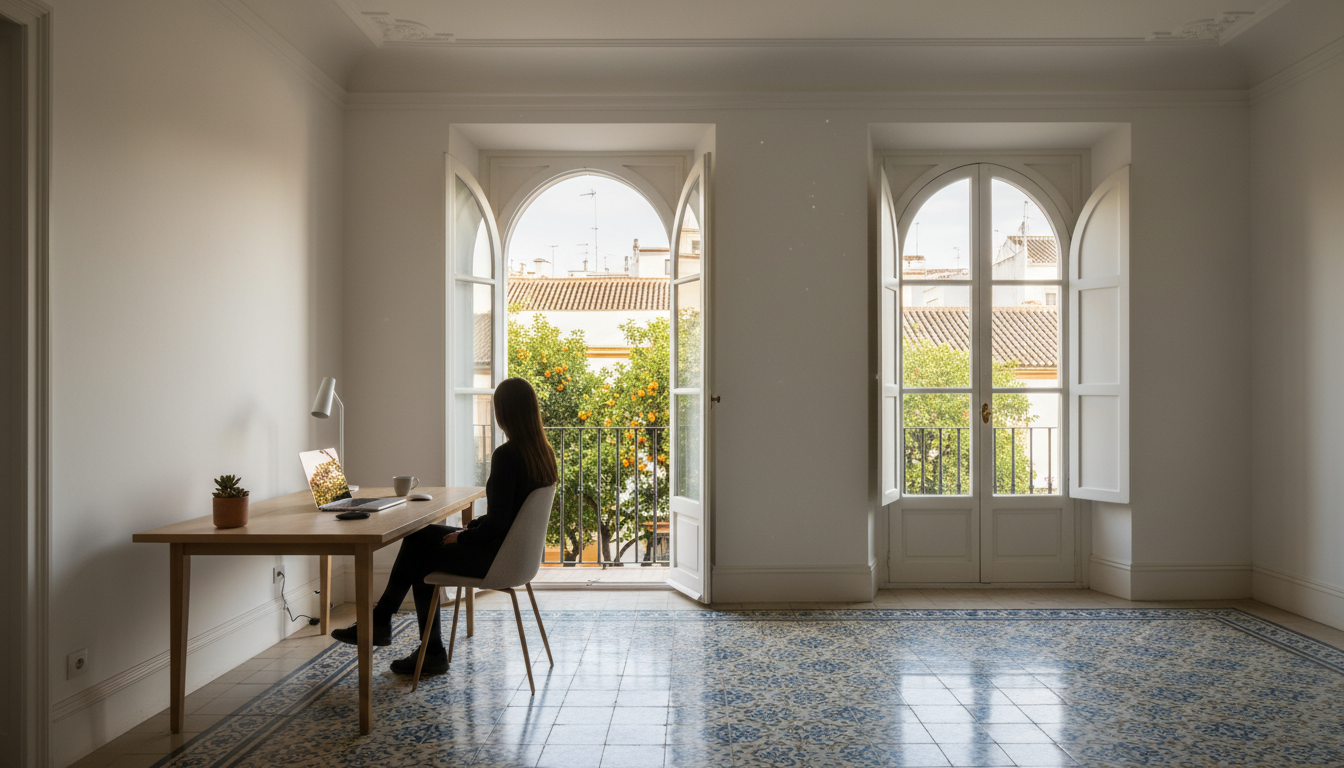 Morning light streaming through a traditional Seville apartment with high ceilings, decorative tiles
Why Digital Nomads Are Choosing to Work from Seville
Seville has this reputation as a party city—all tapas and flamenco and Feria de Abril chaos. And sure, that's part of it. But there's a reason the remote work community has been quietly growing here since 2019, and it's not just the 300+ days of sunshine.
The cost of living sits at roughly 40% below Western European capitals. We're talking €12-15 for a full lunch with wine at a neighborhood spot, €2.50 for a café con leche, €800-1,200/month for a one-bedroom apartment in a central neighborhood. Compare that to Lisbon (which has become genuinely expensive) or Barcelona (tourist-taxed to oblivion), and the math starts making sense.
But here's what really sold me: the rhythm.
Sevillanos take their time. Lunch is a two-hour affair. Shops close from 2-5 PM because—and I love this—people actually rest. For someone whose work requires deep focus blocks, this cultural permission to slow down has been transformative. I'm not fighting against a city that wants me to hustle 24/7. I'm working with a place that respects boundaries.
The timezone works beautifully too. GMT+1 means you can take morning calls with European clients, have a leisurely lunch, then catch late afternoon meetings with East Coast US teams. I've managed clients in London, New York, and San Francisco from here without destroying my sleep schedule.
How Home Swapping Works for Remote Workers in Seville
Let me be real: traditional home exchanges—where you swap directly with someone at the same time—rarely work for digital nomads. Our schedules are too unpredictable. We need flexibility.
That's where platforms like SwappaHome come in. The credit system means you're not locked into simultaneous swaps. Host a guest at your place in San Francisco for a week, earn 7 credits. Use those credits to book a month in Seville whenever it works for your schedule. No coordination headaches, no "sorry, those dates don't work for us" back-and-forth.
The real advantage for remote workers? You're staying in actual homes with actual working setups.
The Triana apartment I stayed in last October belonged to a Spanish copywriter. She had fiber optic internet (300 Mbps—I tested it), an ergonomic chair, a second monitor I could connect to, even a standing desk converter. Her place was already optimized for the exact work I needed to do.
When you're browsing listings, you can message hosts directly to ask about their internet situation. I always request a speed test screenshot before confirming. Most remote-working hosts get it—they'll send you their setup details without you even asking.
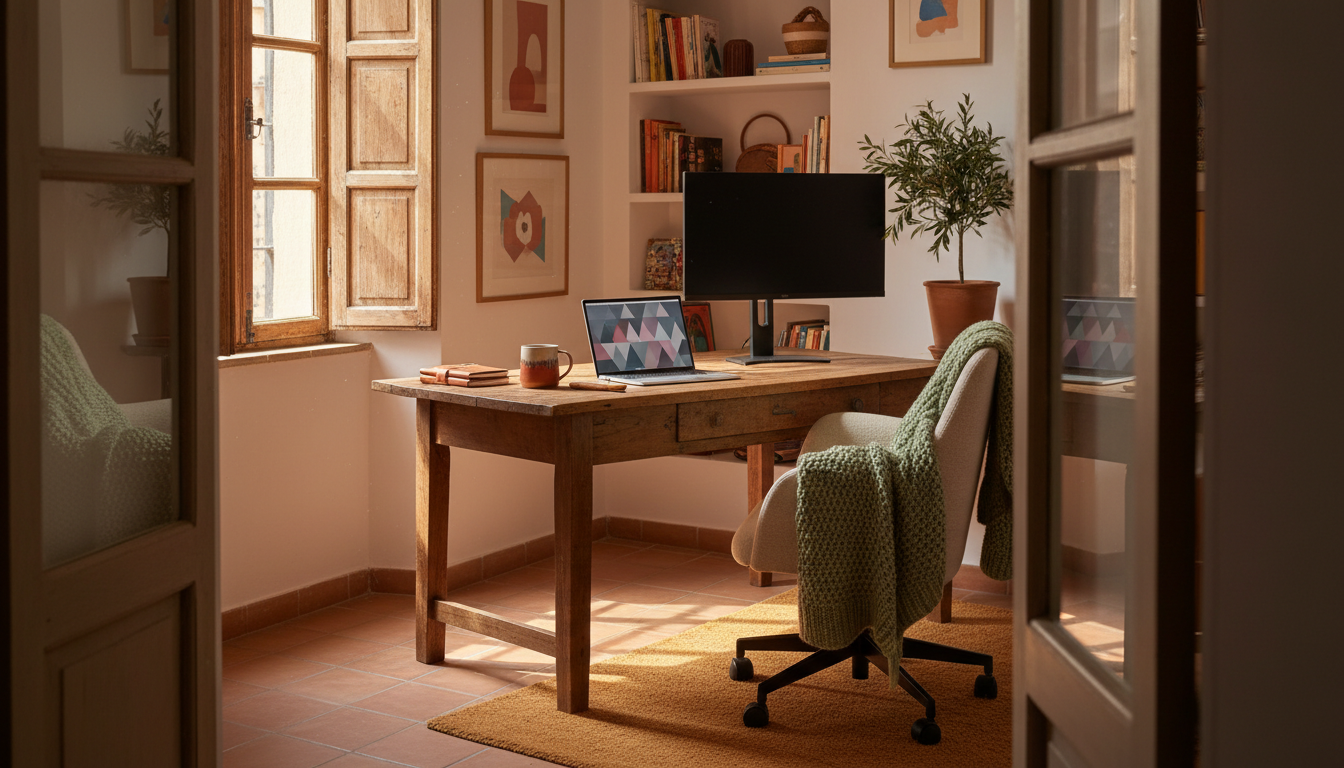 Cozy home office corner in a Seville apartment showing a laptop, second monitor, ergonomic chair, an
Best Seville Neighborhoods for Digital Nomads
Not all neighborhoods are created equal when you need to actually get work done. Here's my honest breakdown after staying in five different areas.
Triana: My Top Pick for Remote Workers
Across the river from the historic center, Triana feels like its own village. It's where Sevillanos actually live—fewer tourist crowds, more neighborhood bars, genuine community energy. The WiFi infrastructure is solid (most buildings have fiber access), and you'll find a handful of excellent cafés with reliable connections.
Mercado de Triana is your grocery situation sorted. Calle Betis along the river becomes magical at sunset. And crucially, it's quiet enough to focus during the day but lively enough that you don't feel isolated.
Rent expectations: €900-1,100/month for a one-bedroom. Through home swapping, you're looking at 30 credits for a month—essentially free if you've been hosting.
Alameda de Hércules: The Creative Hub
This is where Seville's younger, artsy crowd congregates. The plaza itself transforms throughout the day—morning yoga practitioners, afternoon families, evening bar-hoppers. Several coworking spaces have popped up nearby, and the café scene caters to laptop workers.
Fair warning: it gets loud at night, especially on weekends. If you're a light sleeper or need early morning focus time, request a home on a side street rather than facing the plaza directly.
Rent expectations: €850-1,000/month. Home swap availability is high here—lots of young professionals who travel frequently.
Nervión: The Practical Choice
Not glamorous. Not particularly Instagram-worthy.
But Nervión is where Seville actually functions. Modern apartments with reliable infrastructure, the Nervión Plaza shopping center for anything you need, excellent metro connections, and—this matters—air conditioning that actually works.
I stayed here during August once (don't recommend August in Seville, but sometimes deadlines don't care about weather). The modern building had proper climate control, the supermarket was a 3-minute walk, and I could focus without melting.
Rent expectations: €750-900/month. Great value for what you get.
Santa Cruz: Beautiful But Problematic
The historic Jewish quarter is stunning. Winding alleys, hidden plazas, orange blossom scent everywhere. It's also a tourist maze with spotty WiFi, narrow streets that trap summer heat, and noise from tour groups starting at 9 AM.
Stay here for a long weekend to soak up the atmosphere. Don't try to work here for a month.
 Aerial view of Triana neighborhood at golden hour, showing the colorful buildings along the Guadalqu
Essential WiFi and Coworking Options in Seville
Even with a solid home swap setup, you'll want backup options. Here's what actually works.
Coworking Spaces Worth Your Money
Workaway Sevilla (Calle Amor de Dios) charges €150/month for unlimited access or €15 for a day pass. The vibe is international—expect to hear English, German, and Spanish floating around. Fast WiFi, good coffee, and they host weekly community events.
La Fábrica de Tapices in a converted textile factory offers more character. €180/month, but the space is gorgeous—exposed brick, soaring ceilings, that industrial-creative aesthetic. Better for creative work than heads-down coding, in my experience.
Noho Seville near Alameda runs €200/month and attracts a more corporate crowd. If you need to jump on video calls and look professional, this is your spot. Phone booths, meeting rooms, the whole setup.
Cafés with Reliable Work WiFi
I'm picky about café working—I need actual speed, not just "free WiFi" that times out every 30 minutes.
La Cacharrería in Alameda gets it. They've set up a dedicated work section with outlets at every table, and the WiFi consistently hits 50+ Mbps. Café con leche is €2.20, and they don't side-eye you for staying three hours.
Paradas 7 in Triana is my morning spot. Specialty coffee (finally, good espresso in Seville), excellent pastries, and a relaxed attitude toward laptops. Gets busy after 11 AM though.
Federal Café near the Metropol Parasol has that Australian brunch café energy. Solid WiFi, good food, but pricier—expect €8-10 for breakfast. Worth it when you need a change of scenery.
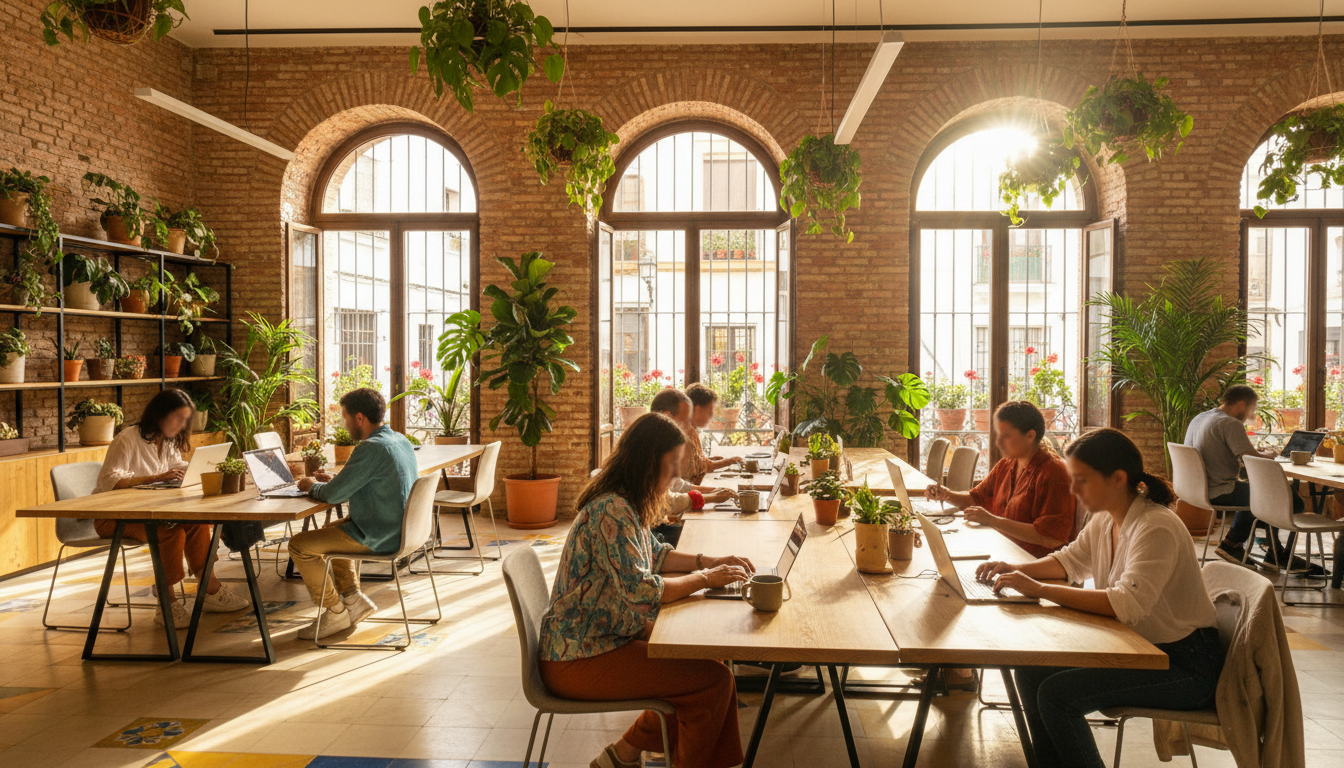 Interior of a bright Seville coworking space with exposed brick walls, plants, wooden desks, and dig
The Practical Stuff: Visas, Banking, and Logistics
Digital Nomad Visa Situation
Spain launched its digital nomad visa in 2023, and it's actually... pretty good? If you earn at least €2,520/month from remote work for non-Spanish companies, you can apply for a one-year visa (renewable up to five years). The tax rate is a flat 15% on Spanish-sourced income for the first four years.
The catch: processing takes 2-3 months, and you'll need to apply from outside Spain or convert from a tourist visa while there. Budget €300-500 for the application fees and required documents.
If you're from the US, Canada, or other visa-exempt countries, you can stay 90 days within any 180-day period without any paperwork. Many nomads do the Schengen shuffle—90 days in Spain, pop over to Morocco or the UK for a bit, then return.
Banking and Money
Spain is surprisingly cash-heavy for 2024. Smaller tapas bars, market stalls, and neighborhood shops often prefer efectivo. I keep €200-300 in cash at any time.
For a longer stay, Wise (formerly TransferWise) is essential. Their multi-currency card gives you real exchange rates, and you can hold euros without conversion fees. I also keep Revolut as a backup.
ATMs: use Santander or BBVA for the best rates. Avoid Euronet machines—they're tourist traps with terrible exchange rates.
Health Insurance
Spain requires proof of health coverage for the digital nomad visa. Even if you're just on a tourist stay, travel insurance with medical coverage is non-negotiable.
SafetyWing runs about $45/month for their Nomad Insurance and covers most situations. World Nomads is pricier but more comprehensive if you're doing anything adventurous. I carry both—SafetyWing as my base, World Nomads for specific high-risk activities.
What to Know Before Your Seville Home Swap
Summer Heat is No Joke
July and August regularly hit 40°C (104°F). If you're swapping during these months, air conditioning isn't a luxury—it's survival. Ask your swap host directly: "Does the AC cool the bedroom effectively?" Some older Seville apartments have those portable units that barely make a dent.
The flip side: September through June is genuinely perfect. Mild winters (rarely below 10°C), gorgeous springs, and those legendary Seville autumns.
Siesta Culture Affects Everything
From roughly 2-5 PM, Seville shuts down. Shops close. Streets empty. Even some cafés take a break.
This threw me off initially—I'd head out for a 3 PM coffee and find nothing open.
Now I've learned to work with it. Morning focus block, long lunch, siesta (or a second work block in the quiet of a home swap), then evening productivity when the city wakes back up. It's actually a healthier rhythm than powering through an 8-hour day.
The Noise Factor
Sevillanos live loudly. Not rudely—just... expressively. Conversations happen at full volume. Families eat dinner at 10 PM on their terraces. Neighbors chat across balconies.
If you're noise-sensitive, ask your swap host about the building's sound situation. Interior apartments (facing a courtyard rather than the street) are typically quieter. Modern buildings have better insulation than those charming 19th-century townhouses.
 Sunset view from a Seville rooftop terrace with the Giralda tower silhouetted against an orange and
Making the Most of Your Time Working from Seville
The Morning Routine That Works
I've tested this across multiple Seville stays: wake early (7:30 AM), grab a quick tostada con tomate and café con leche at a neighborhood bar (€3-4 total), then get 3-4 hours of focused work done before the heat sets in. By noon, I've accomplished more than I would in a full day of interrupted work.
The afternoon becomes exploration time. Wander the Alcázar (go after 4 PM when tour groups thin out). Get lost in the Santa Cruz alleys. Find a new tapas spot.
Weekend Escapes
Seville's location is ridiculously good for weekend trips. Córdoba is 45 minutes by high-speed train (€20-30 round trip). Granada is under 3 hours. The beaches of Cádiz are 90 minutes by car. Portugal's Algarve is a reasonable day trip.
Home swapping makes this even better. I've done mini-swaps—stay in Seville for three weeks, then use credits for a long weekend in a Granada cave house. The flexibility is unmatched.
Building Community
Remote work can get lonely. Seville helps with this more than most cities.
The Seville Digital Nomads Facebook group is active and organizes weekly meetups. Language exchange events happen most evenings at various bars. The coworking spaces host community lunches.
And honestly? Just becoming a regular at a neighborhood bar works wonders. By week two of my last stay, the owner of my local spot was saving me "my" table and asking about my work. That sense of belonging is hard to manufacture—but Seville makes it surprisingly easy.
Getting Started with Home Swapping for Your Seville Stay
If you're new to home exchange, here's the practical path.
First, list your own home on SwappaHome. Be honest about your space, take good photos, and—crucially for attracting other remote workers—mention your WiFi speed and any work-from-home amenities. New members start with 10 free credits, which gets you a week and a half in Seville to test the waters.
Second, start browsing Seville listings now, even if you're not ready to book. Save properties that match your needs. Pay attention to which hosts mention remote work setups.
Third, reach out to potential hosts with specific questions. What's the actual WiFi speed? Is there a desk or comfortable work area? How's the noise level during the day? Good hosts appreciate detailed questions—it shows you'll take care of their space.
The beauty of this approach: you're not gambling on an anonymous rental. You're connecting with a real person who can tell you exactly what to expect. And when you arrive, you've already got a local contact who can point you toward the best café, the quietest park, the neighborhood secrets that make a place feel like home.
Seville changed how I think about remote work. Not because it's perfect—the summer heat is genuinely brutal, the siesta schedule takes adjustment, and yes, sometimes the WiFi in that gorgeous historic building lets you down. But because it taught me that productivity isn't about optimizing every minute. It's about finding a rhythm that sustains you.
Home swapping here means more than free accommodation. It means stepping into a life that's already set up for living well—the local market your host shops at, the bar where everyone knows their name, the terrace where they watch the sunset. You're not a tourist extracting experiences. You're a temporary neighbor, borrowing a life for a while.
That first disastrous trip? I stayed in a hotel the last three nights after the flamenco bar situation became unbearable. It cost me €180 I hadn't budgeted for, and I spent those nights in a generic room that could have been anywhere.
Every trip since, I've swapped. And every time, I've come home with more than just completed work—I've come home with a new understanding of how people actually live in this city. That's worth more than any hotel loyalty points.
Frequently Asked Questions
Is Seville good for digital nomads?
Seville is excellent for digital nomads, offering low cost of living (40% below Western European capitals), reliable fiber internet in most neighborhoods, a growing coworking scene, and an ideal timezone for working with European and US clients. The relaxed pace and 300+ sunny days make it sustainable for long-term stays.
How much does it cost to live in Seville as a digital nomad?
Expect to spend €1,200-1,800/month for a comfortable digital nomad lifestyle in Seville. This includes €800-1,100 for a one-bedroom apartment, €200-300 for food (eating out most meals), €100-150 for coworking, and €100-200 for entertainment. Home swapping eliminates the accommodation cost entirely.
What is the best neighborhood in Seville for remote work?
Triana is the best neighborhood for remote workers in Seville, offering reliable fiber internet, a local community feel, affordable rent, and excellent cafés with work-friendly WiFi. It's quieter than tourist areas but still walkable to the historic center.
Do I need a visa to work remotely from Seville?
US, Canadian, and EU citizens can stay 90 days without a visa. For longer stays, Spain's digital nomad visa (launched 2023) requires €2,520/month minimum income from non-Spanish companies. Processing takes 2-3 months and costs €300-500 in fees.
How fast is the internet in Seville for remote work?
Most Seville apartments have access to fiber optic internet with speeds of 100-600 Mbps. When home swapping, always ask hosts for a speed test screenshot before booking. Coworking spaces and work-friendly cafés typically offer 50-100 Mbps connections.
40+
Swaps
25
Countries
7
Years
About Maya Chen
Travel Writer & Home Exchange Expert
Maya is a travel writer with over 7 years of experience in the home swapping world. Originally from Vancouver and now based in San Francisco, she has completed more than 40 home exchanges across 25 countries. Her passion for "slow" and authentic travel led her to discover that true luxury lies in living like a local, not a tourist.
Ready to try home swapping?
Join SwappaHome and start traveling by exchanging homes. Get 10 free credits when you sign up!
Related articles
Lyon Home Exchange: Your Complete Guide to France's Hidden Gem for Home Swapping
Discover why Lyon home exchange is booming among savvy travelers. From Croix-Rousse to Presqu'île, find the best neighborhoods and insider tips for your swap.

Zurich Bucket List: 47 Unforgettable Experiences to Enjoy During Your Home Swap
Discover the ultimate Zurich bucket list for home swappers—from secret swimming spots to fondue rituals locals actually do. Save thousands while living like a true Zürcher.
Dublin Home Exchange Utilities Guide: WiFi, Heating & Everything Your Guests Need
Master Dublin home exchange utilities—from dodgy WiFi fixes to heating quirks. Practical tips from 7 years of swapping homes across Ireland.