
Your Guide to the Italy Digital Nomad Visa: Requirements and How to Apply

SwappaHome Editorial Team
Home Exchange & Slow Travel Editorial
Here are the main points to remember about the Italy Digital Nomad Visa: Key Takeaways The Italy Digital Nomad Visa is for remote workers who are not EU…
Here are the main points to remember about the Italy Digital Nomad Visa:
Key Takeaways
- The Italy Digital Nomad Visa is for remote workers who are not EU citizens and wish to stay in Italy for longer than 90 days.
- Key requirements include proof of remote employment, sufficient income (at least €18,000/year), valid health insurance, and accommodation in Italy.
- The application process typically involves submitting forms and documents to the Italian consulate or embassy in your home country.
- Life in Italy as a digital nomad offers rich cultural experiences, delicious food, and a generally lower cost of living compared to many Northern European countries.
- Thorough preparation and understanding of the visa rules are vital for a successful application and a smooth transition to life in Italy.
Understanding the Italy Digital Nomad Visa
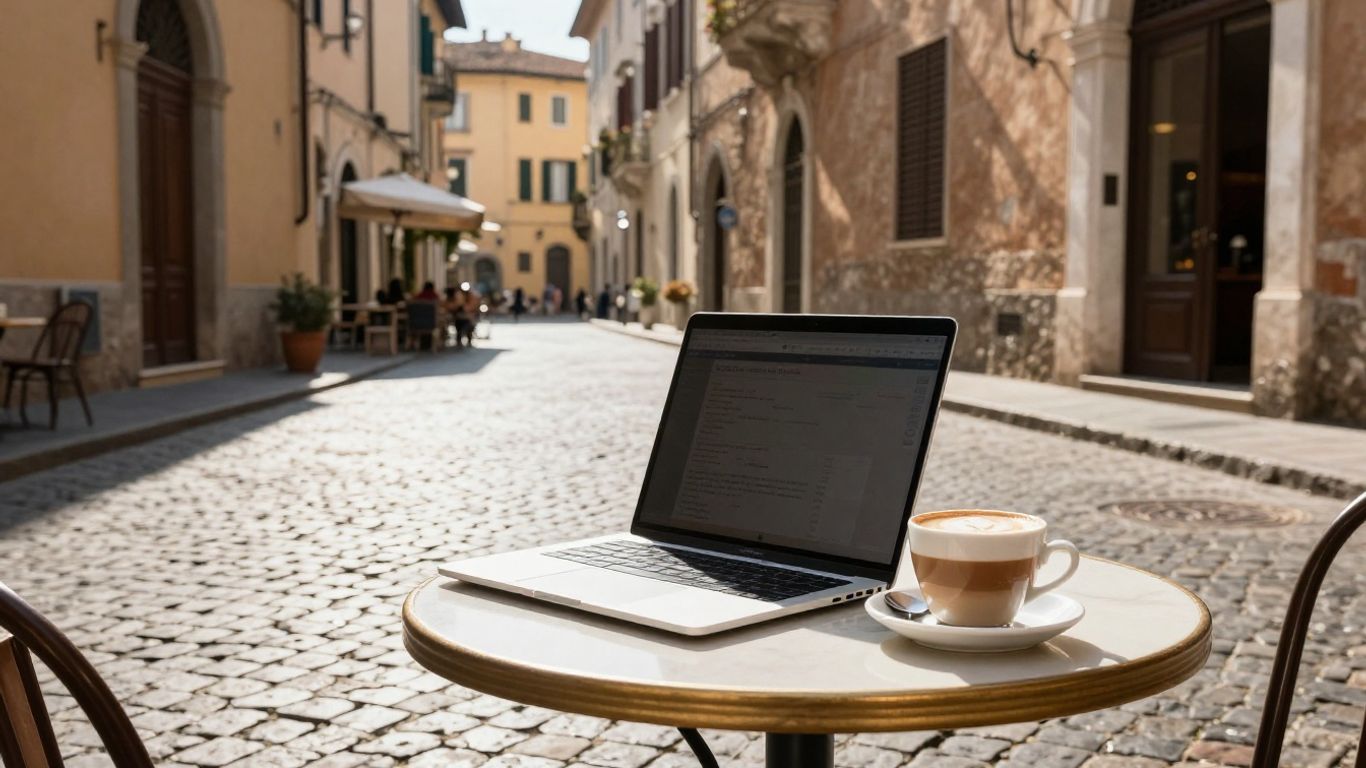 Laptop on a cafe table in Italy
So, you're thinking about trading your usual office view for the Tuscan sun or the bustling streets of Rome? The Italy Digital Nomad Visa might just be your ticket. It's a relatively new option designed specifically for folks who can work from anywhere, as long as they have a reliable internet connection. This visa allows you to live and work in Italy for an extended period, typically up to a year, while being employed by or freelancing for companies outside of Italy. It's a fantastic way to immerse yourself in Italian culture without the usual tourist rush.
What is the Italy Digital Nomad Visa?
Essentially, this visa is Italy's official welcome mat for remote workers. It's not for people looking for local employment in Italy, but for those who already have established remote work or freelance careers. Think of it as a way to legally reside in Italy while continuing your existing work, enjoying the Italian lifestyle, and contributing to the local economy through your living expenses. It's a pathway to experiencing Italy long-term, beyond a typical vacation.
Who Qualifies for the Italy Digital Nomad Visa?
To even consider this visa, you need to be able to prove you're a remote worker or a self-employed individual with clients outside of Italy. This means you can't be looking for a job within Italy. You'll need to show a steady income stream from your remote work. The Italian government wants to see that you're financially stable and won't be a burden on their social system. It's all about demonstrating your independent work status and your ability to support yourself while living in Italy. You can find more details on who qualifies.
Key Benefits of the Italy Digital Nomad Visa
Why choose this visa? Well, besides the obvious allure of living in Italy, there are some practical perks. You get to experience the Italian way of life firsthand, from the food to the culture, at a pace that suits you. It allows for longer stays than a standard tourist visa, giving you time to truly explore different regions and maybe even pick up some Italian phrases. Plus, it opens the door to potentially experiencing Italy during different seasons, like the beautiful autumn harvest or the vibrant spring bloom. It's a chance to live like a local, not just visit.
Here's a quick look at what makes it appealing:
- Legal Residency: Allows you to live in Italy for an extended period (usually up to one year).
- Cultural Immersion: Experience daily life, food, and traditions beyond the typical tourist path.
- Exploration: Provides the freedom to travel within Italy and potentially other Schengen countries.
- Lifestyle: Embrace the Italian pace of life, enjoying local markets, cafes, and social customs.
The visa is designed for individuals who can sustain themselves financially through remote work, allowing them to reside in Italy without taking jobs away from the local workforce. It's a bridge for those who want to integrate into Italian society while maintaining their international careers.
Eligibility Requirements for the Italy Digital Nomad Visa
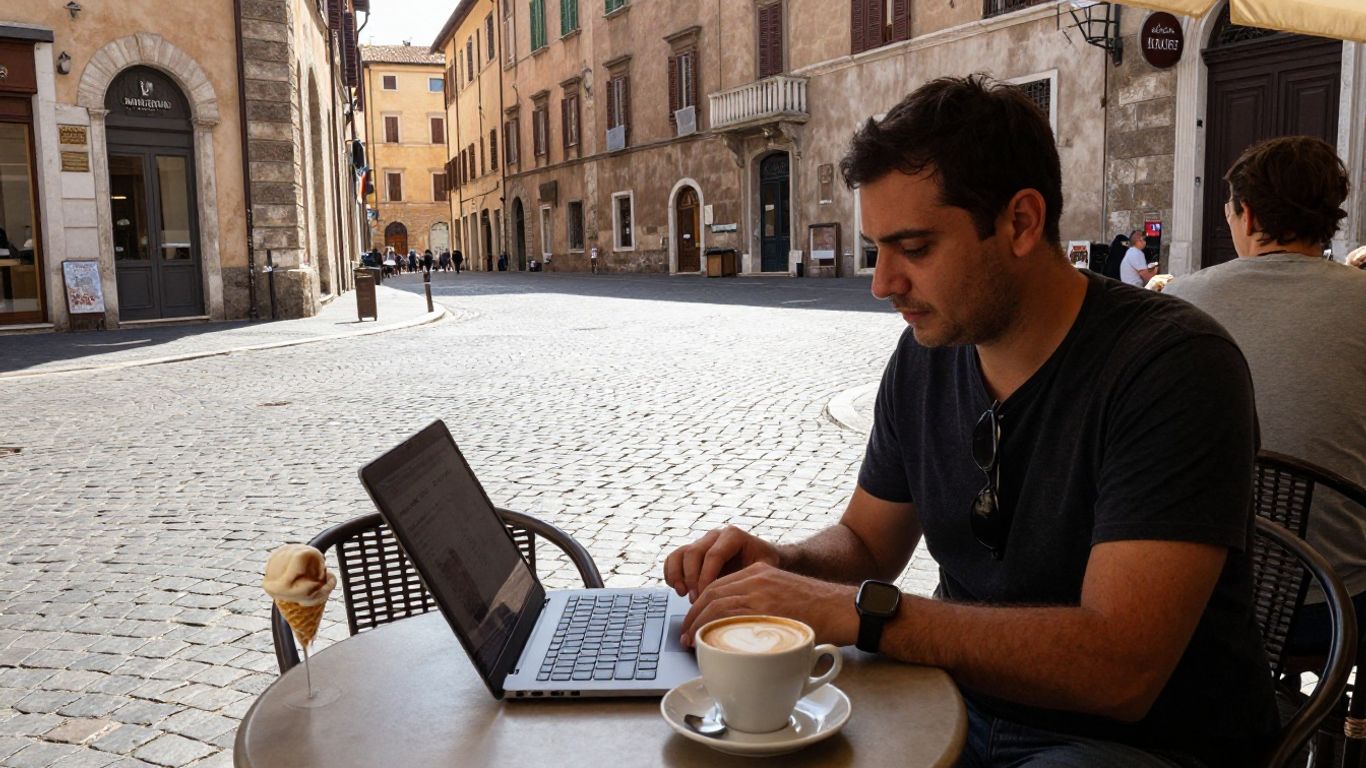 Digital nomad working on laptop in Italy.
So, you're thinking about ditching the office for an Italian adventure? Awesome! But before you start practicing your Italian phrases, let's talk about what you actually need to qualify for the digital nomad visa. It's not super complicated, but you do need to tick a few boxes.
Proof of Remote Employment or Self-Employment
First things first, you've got to prove you're not planning to just hang out in Italy and not work. This means you need to show you're currently employed remotely by a company outside of Italy, or that you're a freelancer with clients based abroad. You'll need official letters from your employer or contracts with your clients. These documents should clearly state your role, your salary, and confirm that your work can be done from anywhere.
Minimum Income Thresholds
Italy wants to know you can support yourself without becoming a burden on their social system. So, there's a minimum income requirement. While the exact amount can fluctuate a bit based on the year and the specific consulate, it's generally set at about twice the Italian minimum social security benefit (assegno sociale). As of recent checks, this works out to roughly €18,000 per year, but you should always confirm the current figure with the Italian consulate or embassy you'll be applying through.
Here's a rough idea, but always double-check the official numbers:
| Requirement Category | Minimum Amount (Approximate) |
|---|---|
| Annual Income | €18,000 |
Health Insurance Coverage
This one's pretty standard for most visas. You need to have valid health insurance that covers you while you're in Italy. It needs to be recognized by the Italian government and cover medical expenses, hospitalization, and repatriation. You can't just rely on travel insurance that only covers emergencies; it needs to be a comprehensive policy. You'll need to show proof of this coverage when you apply.
Accommodation in Italy
Another key piece is showing you have a place to stay. This doesn't necessarily mean you need to have bought a villa already. You can provide a lease agreement for a rental property, a letter of invitation from someone in Italy who is providing you with accommodation, or even a confirmed booking for a longer-term stay. Some people find home exchange options work well for this, allowing you to live like a local while securing a place to stay.
The Italian bureaucracy can sometimes feel a bit like a maze, so having all your ducks in a row regarding these requirements is super important. It makes the whole process smoother and less stressful. Think of it as your first real test of patience and organization before diving into Italian life.
Gathering Necessary Documentation for Your Application
Alright, so you've decided to go for the Italy Digital Nomad Visa. That's awesome! Now comes the part where you actually have to prove you're eligible. It's not super complicated, but you definitely need to be organized. Think of it like packing for a big trip – you wouldn't just throw things in a suitcase, right? You need a checklist.
Passport and Visa Application Form
First things first, you'll need a valid passport. Make sure it has at least six months of validity left from your intended stay in Italy. You'll also need to fill out the official visa application form. You can usually find this on the website of the Italian consulate or embassy that serves your region. Double-check all the details; a simple typo can cause delays.
Proof of Income and Employment
This is a big one. You need to show you have a stable income from remote work. This could be through:
- Employment Contract: A letter from your employer stating your position, salary, and that you work remotely.
- Self-Employment: If you're a freelancer or business owner, you'll need to provide business registration documents, invoices, and bank statements showing consistent income.
- Pay Stubs: Recent pay stubs can also be part of the evidence.
The Italian government wants to see that you can support yourself financially without needing to work in Italy. They'll be looking for a steady stream of income over a period, usually the last few months. It's not just about having money in the bank; it's about demonstrating a reliable source of funds from outside Italy. You can find more details on the specific requirements for the visa.
Health Insurance Policy Details
This is non-negotiable. You absolutely must have health insurance that covers you for your entire stay in Italy. It needs to be valid in all Schengen countries and cover medical emergencies and repatriation. Don't just get the cheapest plan; make sure it meets all the requirements listed by the consulate. Sometimes, specific insurance providers are recommended, so check that list.
Accommodation Arrangements
While you don't necessarily need to have your entire stay booked, you'll need to show proof of accommodation for at least the initial period. This could be:
- Hotel or Airbnb Booking: A reservation for your first few weeks.
- Lease Agreement: If you've already secured a longer-term rental.
- Invitation Letter: If you're staying with friends or family, they might need to provide a formal invitation and proof of their residency.
Some digital nomads find that using a home exchange service can be a cost-effective way to secure accommodation, allowing you to live in a real Italian home rather than a hotel. Just make sure whatever you present clearly shows your address in Italy.
The Application Process for the Italy Digital Nomad Visa
So, you've decided Italy is where you want to work remotely from. Awesome choice! Now comes the part where you actually make it happen – the application process. It might seem a bit daunting, but breaking it down makes it totally manageable. Think of it like following a recipe; you just need the right ingredients and steps.
Submitting Your Application
First things first, you'll need to figure out which Italian consulate or embassy serves your area. This is where you'll submit your application. It's super important to check their specific website because requirements and procedures can vary slightly from one consulate to another. You'll typically download the visa application form and fill it out completely. Don't rush this part; accuracy is key. Make sure all your documents are organized and ready to go before you even think about booking an appointment.
Italian Consulate or Embassy Appointment
Once you have your application form and all supporting documents, it's time to book an appointment. Some consulates allow online booking, while others might require a phone call or email. Appointments can fill up fast, especially during peak seasons, so plan ahead. This appointment is your chance to officially submit everything and get the ball rolling. Be prepared to wait a bit, as consulates can get busy.
Visa Interview and Biometrics
During your appointment, you'll likely have a brief interview. The consular officer just wants to confirm the details in your application and make sure you meet the visa requirements. They might ask about your remote work, your financial situation, and your plans in Italy. You'll also probably need to provide your fingerprints for biometric data collection. It's all pretty standard procedure for most visa applications.
Processing Times and Approval
After your appointment, the waiting game begins. Processing times can vary quite a bit, sometimes taking anywhere from a few weeks to a couple of months. It really depends on the consulate's workload and the complexity of your application. You'll usually be notified by email or phone when a decision has been made. If approved, you'll need to go back to the consulate to pick up your visa. If, for some reason, it's denied, they should provide a reason, and you can look into reapplying or appealing the decision.
Remember, patience is a virtue during this process. Double-checking all your paperwork and understanding the specific requirements for your local consulate will save you a lot of headaches down the line. It's all part of the adventure of moving to Italy!
Here's a general idea of the steps involved:
- Identify your local consulate: Find out which Italian diplomatic mission handles applications in your region.
- Gather all required documents: This includes proof of income, employment, health insurance, and accommodation.
- Complete the visa application form: Fill it out accurately and honestly.
- Book an appointment: Schedule your visit to the consulate or embassy.
- Attend your appointment: Submit your application, documents, and provide biometrics.
- Wait for processing: Be patient as your application is reviewed.
- Collect your visa: If approved, pick up your passport with the new visa.
For more details on the overall process, you can check out the process for obtaining Italy's digital nomad visa.
Life in Italy as a Digital Nomad
So, you've got the visa, you're ready to pack your bags, but what's it really like to live and work in Italy as a digital nomad? It's a dream for many, and honestly, it can be pretty amazing. But like anything, it's not all just endless pasta and sunshine. You've got to get a handle on the day-to-day stuff.
Cost of Living Considerations
Let's talk money. Italy can be surprisingly affordable, especially when you compare it to other Western European countries. But, and this is a big 'but', it really depends on where you choose to set up your temporary home. Big cities like Milan and Rome will naturally cost more than smaller towns or southern regions. Think about it: a cappuccino in Milan might set you back €1.50, while in Palermo, you might pay closer to €1.00. Rent is also a huge factor. You can find some great deals on apartments, especially if you're looking outside the absolute city centers. It's all about finding that sweet spot that fits your budget.
Here's a rough idea of monthly expenses for a single person, excluding visa costs:
| Category | Estimated Cost (EUR) | Notes |
|---|---|---|
| Rent (1-bedroom) | 600 - 1200 | Varies greatly by city and location |
| Utilities | 100 - 200 | Includes electricity, heating, water, internet |
| Groceries | 250 - 400 | Depends on eating habits and shopping habits |
| Transportation | 50 - 100 | Public transport pass or occasional taxi |
| Dining Out/Leisure | 200 - 500 | Coffee, aperitivo, occasional restaurant |
Internet Reliability and Co-working Spaces
Okay, the big question for any remote worker: is the internet any good? Generally, major Italian cities have decent fiber optic coverage, especially in newer buildings. You can often get speeds of up to 1Gbps. However, if you're looking at older buildings or smaller villages, you might be dealing with slower ADSL or FTTC connections, which could be around 20-100Mbps. It's usually workable, but if you have a lot of video calls or large file transfers, you'll want to confirm the specifics with your landlord or accommodation provider. Mobile data is pretty solid across the country, so having a local SIM card with a hotspot option is a smart backup plan. If you need guaranteed speed for important meetings, looking into co-working spaces in cities like Turin or Florence is a good idea. They're becoming more common and offer a reliable connection, plus a chance to meet other remote workers.
Navigating Italian Bureaucracy
Ah, bureaucracy. It's a topic that comes up a lot when talking about Italy, and for good reason. Things can move at a different pace here. Setting up bank accounts, getting a tax code (codice fiscale), or even just registering your address can sometimes feel like a slow-motion movie. Patience is key. Learn a few basic Italian phrases – it goes a long way with officials and locals alike. Don't be afraid to ask for help, and if possible, try to get appointments during off-peak hours. It's not impossible, just be prepared for a bit of a process.
The Italian way of life often involves a slower pace, especially when it comes to administrative tasks. Embrace the local rhythm, be prepared for potential delays, and remember that a friendly attitude and a few words of Italian can make a big difference in getting things done.
Embracing the Italian Lifestyle
This is where the magic happens. Beyond the work, Italy offers an incredible lifestyle. Think about the food culture – it's regional, seasonal, and meant to be savored. Lunch can be a long, leisurely affair, and aperitivo hour is a daily ritual. Italians value community and connection. You'll find people gathering in piazzas in the evenings, chatting and enjoying life. The key is to slow down and integrate. Instead of rushing between tourist spots, spend time in local markets, learn a few phrases, and just observe the daily life unfolding around you. Cities like Genoa offer a more authentic, less tourist-heavy experience that can be perfect for settling into this rhythm.
Maximizing Your Italy Digital Nomad Visa Experience
So, you've got the Italy Digital Nomad Visa, congrats! Now what? It's time to really soak it all in and make this Italian adventure count. This isn't just about working from a new place; it's about living there, even if it's just for a while. Think about how you want to spend your time. Do you want to be in a bustling city, or maybe a quieter town? Italy has so much variety, from the north to the south, each with its own vibe and pace.
Exploring Different Italian Regions
Italy isn't just one big place; it's a collection of distinct regions, each with its own character, food, and even dialect. You could start in the north, maybe Milan or Turin, known for their fashion and industry, but also surprisingly good internet speeds. Then, you could hop on a train and head south to Sicily or Puglia, where life moves a bit slower and the food is incredible. Each region offers a different slice of Italian life, so don't feel like you have to stick to just one spot. Consider what you're looking for in your work environment and your downtime.
- Northern Italy: Think efficiency, fashion, and a faster pace. Cities like Milan and Turin offer modern amenities and a strong business culture.
- Central Italy: Tuscany and Umbria offer rolling hills, historic towns, and a more traditional Italian experience. Florence is a cultural hub, while smaller towns offer tranquility.
- Southern Italy: Regions like Campania, Puglia, and Sicily provide a warmer climate, stunning coastlines, and a deeply rooted culinary tradition. Life here is often more relaxed.
Integrating into Local Communities
This is where the real magic happens. Forget staying in tourist hotels. Try to live like a local, even for a short time. This means finding a place to stay in a residential neighborhood, not just a hotel zone. You know, the kind of place where you can walk to the local market for your groceries, grab an espresso at the corner bar where everyone knows the barista's name, and maybe even pick up a few Italian phrases. It makes a huge difference in how you experience the country. You'll find that Italians are generally welcoming, especially if you make an effort to speak their language, even just a little bit.
Embracing the local rhythm means understanding that lunch is a serious affair, shops might close for a few hours in the afternoon, and the evening passeggiata is a social event. It's about slowing down and appreciating the daily rituals that make Italy so unique.
Leveraging the Visa for Extended Stays
Your digital nomad visa is a one-year permit, but how you use it is up to you. Think about planning longer stays in fewer places rather than trying to see everything in a rush. This allows you to really get to know an area, build a routine, and perhaps even make some local friends. It's also a fantastic opportunity to explore different types of accommodation. Instead of hotels, consider home exchanges. This way, you can live in a real home, often with better amenities like a full kitchen and reliable Wi-Fi, and save money too. It's a smart way to live like a local while you work remotely.
Here's a quick look at what to consider for longer stays:
- Accommodation: Look into home exchanges or longer-term apartment rentals in residential areas.
- Pace: Plan to spend at least a month in each chosen region to truly settle in.
- Community: Join local events, frequent neighborhood cafes, and practice your Italian.
By thinking strategically about how you spend your year, you can turn your digital nomad visa into an incredibly rich and authentic Italian experience.
Conclusion
The Italy Digital Nomad Visa offers a fantastic opportunity to live and work remotely from one of the world's most beautiful countries. While the application process requires careful preparation and attention to detail, the rewards of experiencing Italian culture, cuisine, and lifestyle firsthand are immense. By understanding the requirements, gathering the necessary documents, and embracing the adventure, you can make your dream of working from Italy a reality. Buon viaggio!
Frequently Asked Questions
What is the main goal of the Italy Digital Nomad Visa?
This visa is for people who work online for companies or clients outside of Italy and want to live there for more than three months. It lets you legally work remotely from Italy.
How much money do I need to show I have to get this visa?
You generally need to prove you earn at least €18,000 each year. This shows you can support yourself while living in Italy without needing local work.
Do I need to have a place to live before I apply?
Yes, you usually need to show you have a place to stay in Italy. This could be a rental agreement or proof of owning property. It assures them you have a home base.
How long does it take to get the visa?
Processing times can vary a lot. It might take a few weeks to a few months, depending on the Italian consulate you apply through and how busy they are. It's best to apply well in advance of your planned travel date.
Can I work for an Italian company with this visa?
No, this visa is specifically for remote work for companies or clients located *outside* of Italy. You can't take a job with an Italian employer using this visa.
What happens after my visa is approved?
Once approved, you'll get your visa to enter Italy. After arriving, you'll need to register with the local authorities and apply for a residence permit (permesso di soggiorno) within a certain timeframe, usually eight days.

Published by
SwappaHome
SwappaHome Editorial Team
Home Exchange & Slow Travel Editorial
The SwappaHome Editorial Team brings together travel research, home-exchange community insights, and platform data to produce practical guides for first-time and experienced home swappers. Every article cites real platforms, current market rates, and verifiable city-level facts so readers can make informed decisions without guessing.
Ready to try home swapping?
Join SwappaHome and start traveling by exchanging homes. Get 7 free credits when you sign up!