
10 digital nomad spots for work-ready stays around the world

SwappaHome Editorial Team
Home Exchange & Slow Travel Editorial
Key Takeaways A good remote-work base is about more than a pretty view: the daily setup matters just as much as the destination. These cities offer different…
Key Takeaways
A good remote-work base is about more than a pretty view: the daily setup matters just as much as the destination. These cities offer different ways to balance work, neighborhood life, and time away from the screen.
- Bangkok pairs big-city energy with a wide choice of everyday routines.
- Hanoi offers a lively local scene and the chance to settle into a more residential rhythm.
- Turin, Bilbao, and Seville bring distinct European city life without requiring a capital-city pace.
- Warsaw, Edinburgh, and Quebec City combine local character with practical urban amenities.
- Seattle and Sydney put nature and outdoor breaks within reach of city life.
1. Bangkok, Thailand: city energy, coworking cafés, and home swaps
Bangkok can feel like several cities at once: busy avenues, quieter lanes, neighborhood markets, and cafés where a few hours with a laptop feels entirely ordinary. That variety is useful when workdays need a little structure but evenings should feel different from the desk. The trick is choosing a home base that makes routine errands and your preferred work spot easy to reach.
A home swap can make that home-base idea more practical than building every day around a hotel room. SwappaHome describes its process as listing a home, finding work-ready places, and staying with credits; members earn one credit for each night they host and use one credit for a night in the network. It is a straightforward model to consider if you already have a place to share and want the experience of settling into a home while away.
Before booking any stay, think through the shape of an ordinary workday rather than an idealized one. A few questions can help narrow the choice:
- Is there a comfortable place to work for several hours?
- How will you confirm the internet setup before arrival?
- Can you reach groceries, transit, and a café without a complicated trip?
- Does the neighborhood still suit you after the workday ends?
Those details matter more than trying to fit every famous sight into a short visit. Bangkok rewards a slower, neighborhood-sized routine: focused work when it is time, then a meal or walk that feels like a genuine change of scene.
2. Hanoi, Vietnam: affordable living and a lively local scene
Hanoi’s appeal lies partly in its everyday movement: food stalls, small shops, busy streets, and pockets of calm tucked into the city’s residential fabric. For a remote worker, that can make a simple lunch break feel like part of the trip rather than an interruption to it. The city is lively, so choosing a base that supports quiet work is as important as choosing one close to things you want to explore.
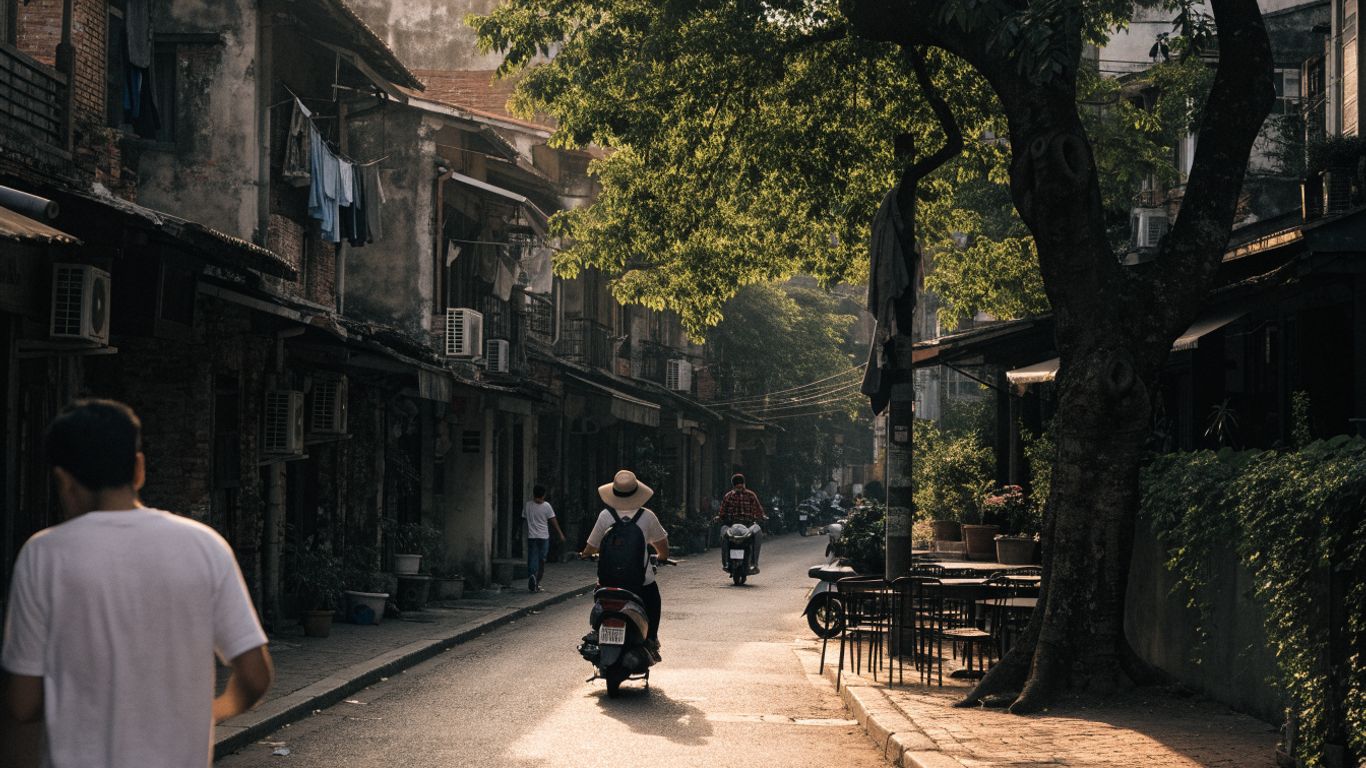 Hanoi neighborhood street with shaded cafés
A home exchange can offer a different way to experience that local rhythm. The Vietnam home exchanges page describes stays for digital nomads with reliable Wi-Fi and dedicated workspaces, while SwappaHome’s model uses credits for nights hosted and stays taken. As with any residential stay, it is worth confirming the specific workspace and connection details with a host rather than assuming every home has the same setup.
A few practical checks can make the first days smoother, especially if your work calendar is already full. Before settling on a place, consider these basics:
- Ask what kind of desk or table is available for work.
- Confirm the internet arrangement and whether a backup connection is practical.
- Check how the street and building feel during your usual working hours.
- Leave room in the schedule for meals and errands near home.
The point is not to plan every hour. A little preparation makes it easier to enjoy Hanoi’s bustle on your own terms, then return to a space where the workday can actually get done.
3. Turin, Italy: coworking culture without Milan’s crowds
Turin has a more measured feel than Italy’s biggest tourist magnets, with broad avenues, historic arcades, and a city center that invites a long walk between tasks. Its cafés can be part of the working day, while coworking spaces offer another option when a change of scenery or a more deliberate work setup would help. The balance is appealing if you want urban life without feeling as though every day has to be planned around crowds.
The useful question is how much structure you want. Some people work best with a desk at home and a café for a short change of pace; others prefer a shared workspace where work and social life have clearer boundaries. A home base near the places you will use most often can make either routine feel natural, rather than turning every workday into a transit exercise.
Turin also makes a good case for leaving some space in the itinerary. Long lunches, a neighborhood stroll, or an unhurried coffee can become part of the rhythm without requiring a major excursion. A 2026 city guide compares destinations through factors such as cost, visas, Wi-Fi, coworking, community, and lifestyle; that broader checklist is a useful reminder that the right city depends on the way you actually work.
4. Bilbao, Spain: walkable neighborhoods and a creative city feel
Bilbao’s compact scale gives daily life a pleasing sense of continuity: a walk to pick up lunch can also introduce you to a new street, plaza, or café. The city’s creative character is visible in its architecture and cultural life, but its appeal for a longer stay can be quieter than a highlight reel. It is a place to find a routine and let the city unfold around it.
Walkability helps when a workday is divided into small windows. If your home, a café, and everyday errands are close enough to combine on foot, breaks need not become another logistical task. Look for the neighborhood that fits your preferred pace, whether that means a lively street or a calmer residential base.
Work setups still deserve a little due diligence. Ask about the desk, chair, and connection before you arrive, and think about where you would go for a change of scene if you need one. A few thoughtful questions can help turn Bilbao’s appealing city feel into a stay that works on ordinary Tuesdays, not only on days off.
5. Seville, Spain: sunny days and quieter work-friendly areas
Seville’s light and outdoor life can make even a short break from work feel restorative. The city is known for busy, social spaces, but a longer stay does not have to mean living in the middle of the busiest visitor routes. A quieter neighborhood can provide a more comfortable base while still keeping the city’s cafés, plazas, and cultural life within reach.
The season and your daily schedule matter. If you expect to work through the middle of the day, shade, airflow, and a comfortable indoor setup become practical considerations rather than small details. When comparing homes, ask what the workspace is like and whether the room stays comfortable during the hours you plan to work.
Seville suits people who enjoy making a routine out of everyday pleasures: a morning coffee, focused work, a late walk, and time for a proper meal. There is no need to turn every free hour into sightseeing. A neighborhood that feels good on a regular workday may be a better choice than one that puts every landmark at the front door.
6. Warsaw, Poland: modern amenities and comparatively affordable living
Warsaw combines the conveniences of a large contemporary city with a history that is present in its streets and public spaces. For remote workers, that mix can mean a practical daily setup alongside plenty of options for evenings and days off. The city is broad enough that choosing a neighborhood thoughtfully can shape the whole experience.
Consider the details that make a stay feel easy: a dependable route to the places you expect to visit, a nearby grocery shop, and a home setup suited to your work hours. A quieter residential area may be preferable if concentration is a priority, while a more central base can make it easier to fill a free evening without much planning. Your own pace is the better guide than any universal ranking.
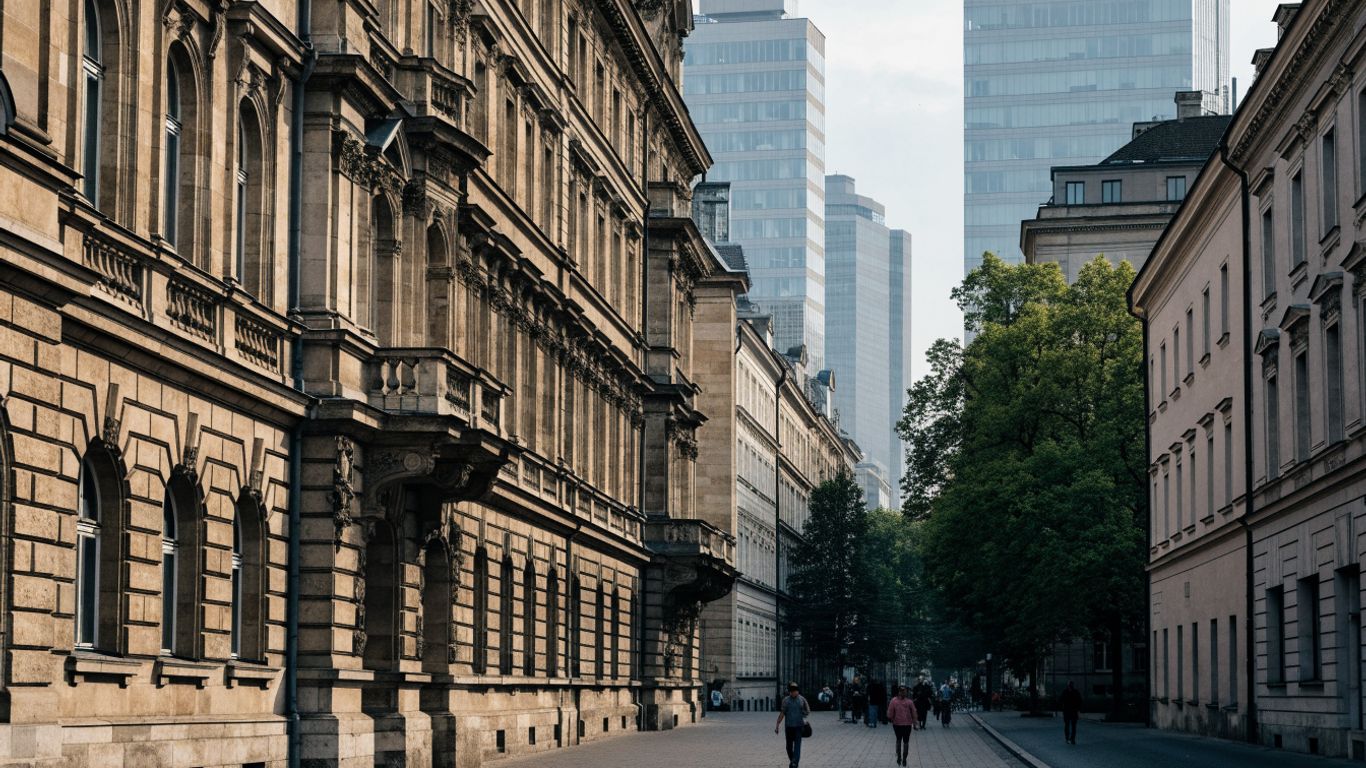 Warsaw street beside modern city buildings
Affordability is relative, and budgets change with season, length of stay, and the kind of accommodation you choose. It helps to compare the full routine rather than just nightly costs: transport, meals, workspace access, and how much you value being close to the center. Warsaw can be a good fit when you want city infrastructure and a varied cultural life without assuming that every trip must revolve around a capital’s most famous sights.
7. Edinburgh, Scotland: historic neighborhoods and reliable workspaces
Edinburgh’s historic character is part of the daily backdrop, not only something to see on a guided walk. Distinct neighborhoods, steep streets, and smaller local routines give the city a strong sense of place. For a remote worker, the best base may be a little outside the busiest visitor areas, where the day can begin more quietly.
Reliable work is less about the city’s reputation than the particular space you choose. Ask whether the home has a proper desk, what the internet setup is like, and whether there is a nearby alternative for the occasional change of scene. The Edinburgh remote-work guide is a useful starting point for thinking about workspaces and neighborhood life in a longer stay.
The weather can shift, so it helps to have a plan for days when a long outdoor break is less appealing. A comfortable home setup and a nearby café or shared workspace can give the week some flexibility. Then, when the skies do clear, the city’s hills and old streets are waiting just beyond the workday.
8. Quebec City, Canada: a European feel with North American conveniences
Quebec City offers a distinctive blend of old streets, French-speaking local life, and the practical ease of a North American city. Its historic core is atmospheric, but a longer visit can also be about the less theatrical pleasures of a neighborhood: the local bakery, familiar routes, and a place to settle in with a laptop. That contrast makes it appealing to travelers who want character without giving up everyday convenience.
Think about where you want to spend your working hours and how often you expect to head into the historic center. A quieter residential base may suit a full calendar, while a more central stay could make spontaneous walks easier. Either way, confirm the workspace and internet details directly, especially if calls or deadlines leave little room for improvisation.
Quebec City changes noticeably with the season, so your ideal routine may change too. Leave space for weather and daylight when planning the day, and choose a home that feels comfortable when you are indoors for longer stretches. The best stay is not necessarily the one with the most dramatic view; it is the one that supports the life you want to lead there.
9. Seattle, United States: urban neighborhoods and inspiring surroundings
Seattle pairs city neighborhoods with a landscape that can make a free afternoon feel like a genuine escape. Cafés and local shops offer natural pauses in the workday, while the surrounding water and hills give the city a sense of openness. For a remote worker, it is a satisfying combination if you like to alternate between urban routine and time outside.
A stay that works well begins with a little local research. Think about whether you want to be near the places where you will spend most of your time, and ask how the home’s workspace fits your usual day. The United States home exchange guide covers work-ready stays and neighborhood considerations for remote workers; it also notes that listings may change, so checking current availability matters.
Seattle’s surroundings are inspiring, but they do not replace the ordinary requirements of a work base. Check the internet details, make sure the room suits your working hours, and keep a realistic plan for getting around. Once those basics are in place, the city’s mix of neighborhood life and outdoor possibilities can make the weeks feel less repetitive.
10. Sydney, Australia: coastal living, cafés, and strong connectivity
Sydney gives remote workers a chance to pair a full city routine with time near the coast. That can be a lovely balance, though the distances between neighborhoods make location a real part of the decision. A home that fits your workday and the places you want to visit can save time and help a longer stay feel less rushed.
The Australia home-swap guide explores work-ready homes and stays using SwappaHome credits. For any particular home, confirm the Wi-Fi and workspace details with the host, then think about how the neighborhood connects to your everyday plans. A beach or harbor view may be memorable, but a comfortable desk and a workable commute are what make Monday morning manageable.
Different kinds of workdays call for different bases, so it can help to compare the trade-offs plainly before choosing. These broad categories are a starting point, not a substitute for checking the details of a specific home.
| Stay style | A good fit when | Check before settling in |
|---|---|---|
| Central neighborhood | You want cafés and errands close by | Street noise and workspace comfort |
| Residential base | You prefer a quieter everyday rhythm | Transit options for your usual plans |
| Coastal area | Outdoor breaks are a priority | Travel time to workday essentials |
| Home with a dedicated workspace | You have frequent calls or focused tasks | Desk, chair, and internet specifics |
That comparison can help clarify what matters most to you. Sydney is large and varied, so a little care with the location can bring the coastal side and the practical working side of the trip into better balance.
Conclusion
The most rewarding digital nomad spots are not simply beautiful backdrops; they are places where an ordinary workday can fit comfortably beside local life. Whether you choose a lively Asian capital, a walkable European city, or a coastal base, a thoughtful neighborhood choice and a checked workspace can make the stay feel both productive and genuinely lived in.
Frequently Asked Questions
What makes a city a good fit for digital nomads?
A good fit depends on your work schedule, budget, preferred pace, and the kind of daily life you want. Reliable internet and a comfortable place to work matter, as do neighborhood access and time away from the screen.
Should I choose a central neighborhood or a quieter one?
Choose based on your priorities. A central base can make cafés and errands easy to reach, while a quieter area may suit focused work and a calmer routine.
How can I check whether a stay is suitable for remote work?
Ask about the internet setup, workspace, and the room’s usual noise level. If you have calls or deadlines, confirm details directly rather than relying on general descriptions.
Are coworking spaces necessary for a remote-work trip?
Not necessarily. Some travelers work comfortably from home, while others benefit from a shared workspace or café for a change of scene. Having a backup option can be useful either way.
How long should I stay in one city?
That depends on your schedule and how much time you want to spend settling in. Longer stays can make it easier to build a routine, while shorter trips may suit travelers who prefer variety.
What should I consider when choosing a home-swap destination?
Look at the workspace, internet, neighborhood, transportation, and the practical terms of the exchange. It also helps to consider whether the destination suits your everyday routine, not just your sightseeing plans.
How do I balance sightseeing with a full work schedule?
Keep the plan modest and use small windows of free time well. A neighborhood walk, a café break, or one planned outing can make a work-heavy week feel connected to the place without overloading the calendar.

Published by
SwappaHome
SwappaHome Editorial Team
Home Exchange & Slow Travel Editorial
The SwappaHome Editorial Team brings together travel research, home-exchange community insights, and platform data to produce practical guides for first-time and experienced home swappers. Every article cites real platforms, current market rates, and verifiable city-level facts so readers can make informed decisions without guessing.
Ready to try home swapping?
Join SwappaHome and start traveling by exchanging homes. Get 7 free credits when you sign up!