
10 Tips for First-Time Hosts on SwappaHome: Your Complete Guide to Hosting Success

SwappaHome Editorial Team
Home Exchange & Slow Travel Editorial
Ready to welcome your first home swap guests? Discover essential hosting tips that will help you earn credits and create unforgettable experiences.
10 Tips for First-Time Hosts on SwappaHome: Your Complete Guide to Hosting Success
There's a moment every new SwappaHome host remembers vividly. You've just hit "publish" on your listing, your home is officially out there in the world, and suddenly a thought creeps in: What if someone actually wants to stay here?
Take a breath. That mix of excitement and nervousness you're feeling? It's completely normal. In fact, it's a sign that you care about creating a great experience—and that's exactly the mindset that makes an excellent host.
I've spoken with dozens of SwappaHome members who've gone from hesitant first-timers to confident hosts with glowing reviews and a healthy stack of credits. The difference between a stressful hosting experience and one that feels rewarding (maybe even fun) often comes down to preparation and perspective. So let's walk through everything you need to know to welcome your first guests with confidence.
 A welcoming entryway of a home with a small welcome basket on a console table, warm lighting, and a
Start With Your Space: Seeing Your Home Through Fresh Eyes
Here's a little exercise that might feel strange at first. Walk out your front door, wait thirty seconds, then walk back in as if you've never been there before. What do you notice? The slightly crooked picture frame you've stopped seeing? The pile of mail on the kitchen counter that's become invisible to you? That faint smell from last night's cooking?
When guests arrive at your home, they experience everything with fresh senses. Things that have blended into the background of your daily life suddenly become noticeable—for better or worse. The good news is that this works both ways. That beautiful afternoon light streaming through your living room windows? You might have forgotten how magical it looks, but your guests will notice immediately.
Spend an afternoon doing a thorough walkthrough of your space. Open every drawer guests might use. Check under the bathroom sink. Look at the ceiling corners. You're not trying to achieve perfection—you're trying to eliminate surprises. A small crack in the bathroom tile is fine if guests know about it beforehand. Discovering it during their stay makes them wonder what else might be lurking.
Pay special attention to the five-senses experience. How does your home smell when you first walk in? Is the lighting warm and welcoming or harsh and clinical? Are there any sounds that might disturb sleep—a ticking clock, a humming refrigerator, noisy pipes? These details matter more than you might think.
The Art of the Listing: Honesty Is Your Secret Weapon
Here's something counterintuitive that experienced hosts know: the best listings aren't the ones that make a home sound perfect. They're the ones that make it sound real.
When you're writing your listing description, resist the temptation to oversell. Yes, you want to highlight what makes your home special—the rooftop terrace with city views, the fully equipped kitchen, the quiet neighborhood perfect for morning jogs. But you also want to be upfront about the quirks and limitations.
Maybe your apartment is on the fourth floor with no elevator. Perhaps the second bedroom is more of a cozy den than a spacious suite. Your neighborhood might be wonderfully authentic but also means a fifteen-minute walk to the nearest metro station. Mention these things. Not apologetically, but matter-of-factly.
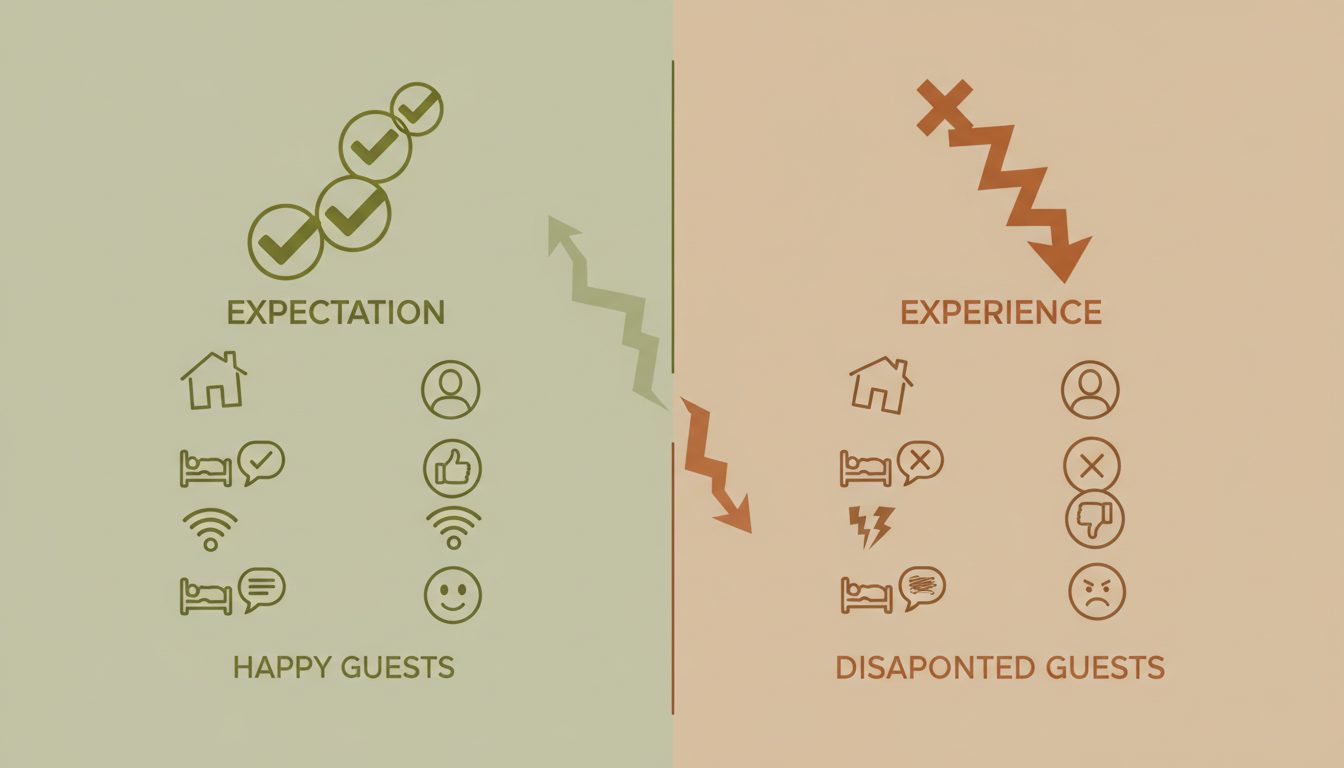 A split-screen infographic showing What guests expect vs. What they experience with examples of hone
Why does this work? Because guests who book your place after reading an honest description arrive with accurate expectations. They've already accepted the fourth-floor climb and are ready for it. They're not disappointed—they're prepared. And prepared guests are happy guests.
Your photos should follow the same principle. Use natural lighting, capture the actual size of rooms (wide-angle lenses can be deceiving), and include shots that show how spaces connect to each other. A guest should be able to mentally walk through your home before they arrive.
Creating Your Guest Manual: The Gift of Information
Imagine arriving in a new city, exhausted from travel, and walking into an unfamiliar home. You need to use the bathroom but can't figure out how to turn on the light. The WiFi password is... somewhere. You're thirsty but not sure if the tap water is drinkable. Every small uncertainty adds to your mental load when you're already tired.
Now imagine the opposite. You walk in, and right there on the kitchen counter is a friendly welcome guide. Within seconds, you know the WiFi password, how to work the quirky shower handle, where to find extra towels, and which local café makes the best croissants. The relief is palpable.
Your guest manual doesn't need to be a novel—in fact, it shouldn't be. Think of it as a collection of answers to questions guests will definitely have, organized so they can find information quickly. The essentials include:
WiFi details (make this impossible to miss—put it on a card by the router and in your printed guide). Instructions for any appliances that aren't intuitive—that espresso machine you love might be baffling to someone who's never used one. Emergency contacts and your own contact information. House rules stated clearly but warmly. And perhaps most valuably, your personal recommendations for the neighborhood.
That last part is where you can really shine. Anyone can Google "best restaurants near [your address]," but only you know that the tiny bakery three blocks east makes croissants that rival anything in Paris, or that the park around the corner is the perfect spot for sunset watching. These insider tips transform a stay from generic to memorable.
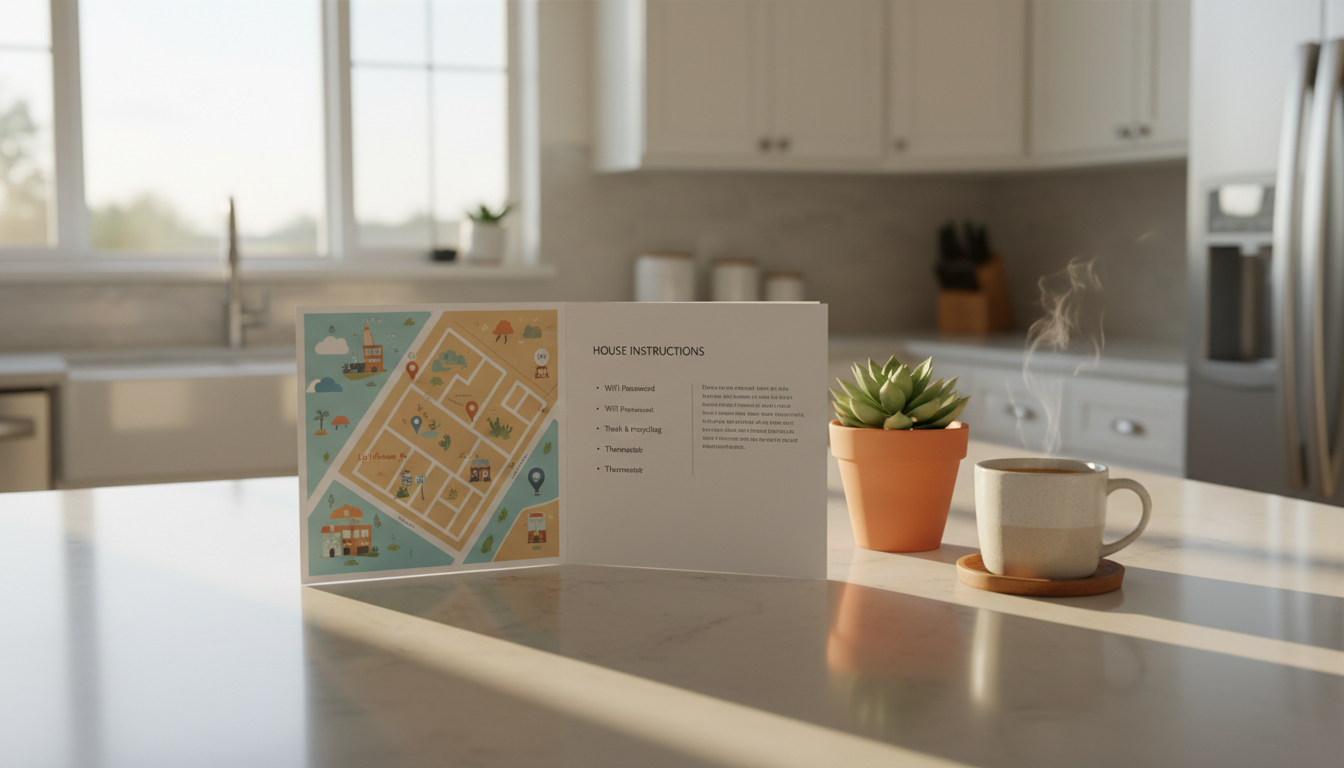 A beautifully designed welcome guide booklet open on a kitchen counter, showing a hand-drawn neighbo
The Welcome Kit: Small Touches, Big Impact
Let's talk about the psychology of arrival. When guests first enter your home, they're forming impressions at lightning speed. Those first few minutes set the emotional tone for the entire stay. This is why a thoughtful welcome kit matters so much more than its actual contents might suggest.
You don't need to spend a fortune here. In fact, the most appreciated welcome kits are often the simplest. A bottle of local wine or a selection of regional snacks. Fresh flowers or a small plant. Basic toiletries in case someone forgot something. Coffee, tea, and a few breakfast essentials so guests don't have to rush out shopping immediately.
The key is thoughtfulness, not expense. A handwritten welcome note feels infinitely more personal than a printed card. Local products show you've put thought into introducing guests to your area. Even something as simple as making sure the temperature is comfortable when they arrive demonstrates care.
One host I know leaves a small basket with items "you might have forgotten"—a phone charger, basic first aid supplies, sunscreen, an umbrella. She says guests rarely use everything, but they always comment on how reassuring it is to know these things are available.
Think about what you'd want to find if you were arriving tired and hungry after a long journey. Then provide exactly that.
Communication: The Rhythm of a Great Host
There's a sweet spot in host communication that sits between radio silence and constant messaging. Finding it is more art than science, but here's a framework that works well for most hosts.
Before the stay, confirm the booking and share essential arrival information. This means check-in time, how to access the property (keys, codes, lockbox details), parking information if relevant, and your phone number for any issues. Send this information a few days before arrival, then again the day before—people lose emails, and a reminder is always appreciated.
On arrival day, a brief message checking that they found everything okay and reminding them you're available if needed strikes the right balance. You're present but not hovering.
During the stay, resist the urge to check in constantly. Most guests want to feel like they're in their own space, not like they're being monitored. That said, a mid-stay message for longer visits (a week or more) asking if they need anything can be welcome.
After departure, thank them for staying and for leaving the home in good condition (assuming they did). This is also the appropriate time to leave them a review on SwappaHome, which brings us to an important point about the platform's credit system.
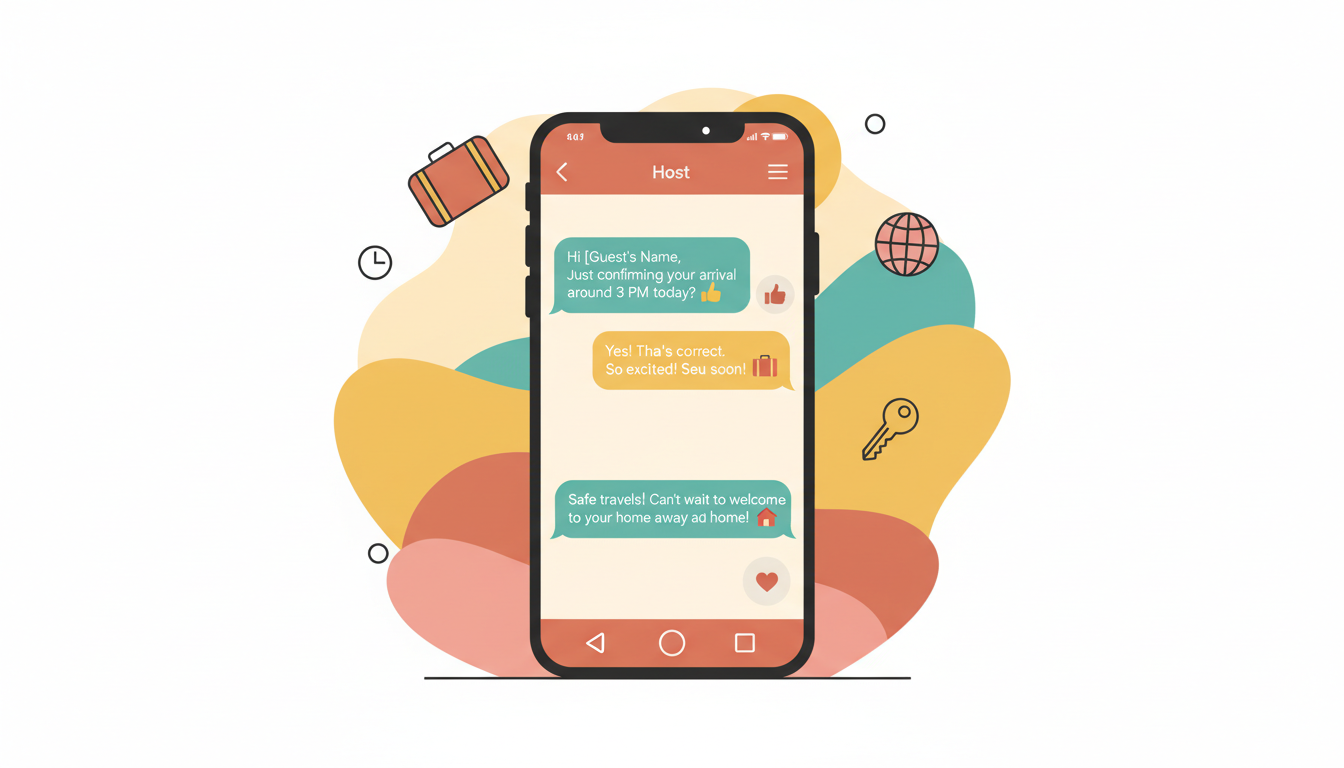 A smartphone showing a friendly text conversation between a host and guest, with messages about arri
Understanding Credits: Why Hosting Pays Off
If you're new to SwappaHome, here's the beautiful simplicity of how it works: every night someone stays in your home, you earn one credit. Those credits become your currency for staying in other members' homes around the world. No money changes hands—just the mutual exchange of hospitality.
This system creates something special. When you host guests, you're not just providing accommodation; you're investing in your own future travels. That week-long stay you're hosting? It's funding your own week in Barcelona, Tokyo, or wherever your wanderlust takes you next.
But here's what new hosts sometimes miss: the credit system means your guests are also hosts. They understand what goes into creating a welcoming space because they do it themselves. This shared understanding creates a community of people who treat each other's homes with respect and appreciation.
When you host well, you're not just earning credits—you're building a reputation within a community that values hospitality. Good reviews lead to more booking requests, which means more credits, which means more travel opportunities. It's a virtuous cycle that starts with your very first guest.
Preparing for the Unexpected: Plans B Through Z
Here's a truth about hosting: something will eventually go wrong. Not might—will. The question isn't whether you'll face an unexpected situation, but how you'll handle it when it arrives.
The hot water heater will decide to quit on the coldest night of the year. A pipe will spring a leak. The WiFi will mysteriously stop working. A guest will lock themselves out. These aren't failures of preparation; they're just the reality of homes being complex systems and humans being human.
The hosts who thrive are the ones who've thought through contingencies. Do you have a plumber you trust who can come quickly? Is there a spare key with a neighbor? Do you know how to reset your router remotely, or can you walk someone through it over the phone? What's your backup plan if a major appliance fails?
Keep a list of emergency contacts readily available—not just for your guests, but for yourself. Include numbers for your building manager, reliable repair services, and neighbors who might be able to help in a pinch. Know where your main water shutoff valve is and make sure your guests know too.
Most importantly, stay calm when problems arise. Your guests will take their emotional cues from you. If you respond to a minor issue with panic, they'll feel anxious. If you handle it with good humor and quick problem-solving, they'll feel reassured. Often, how you handle a problem matters more than the problem itself.
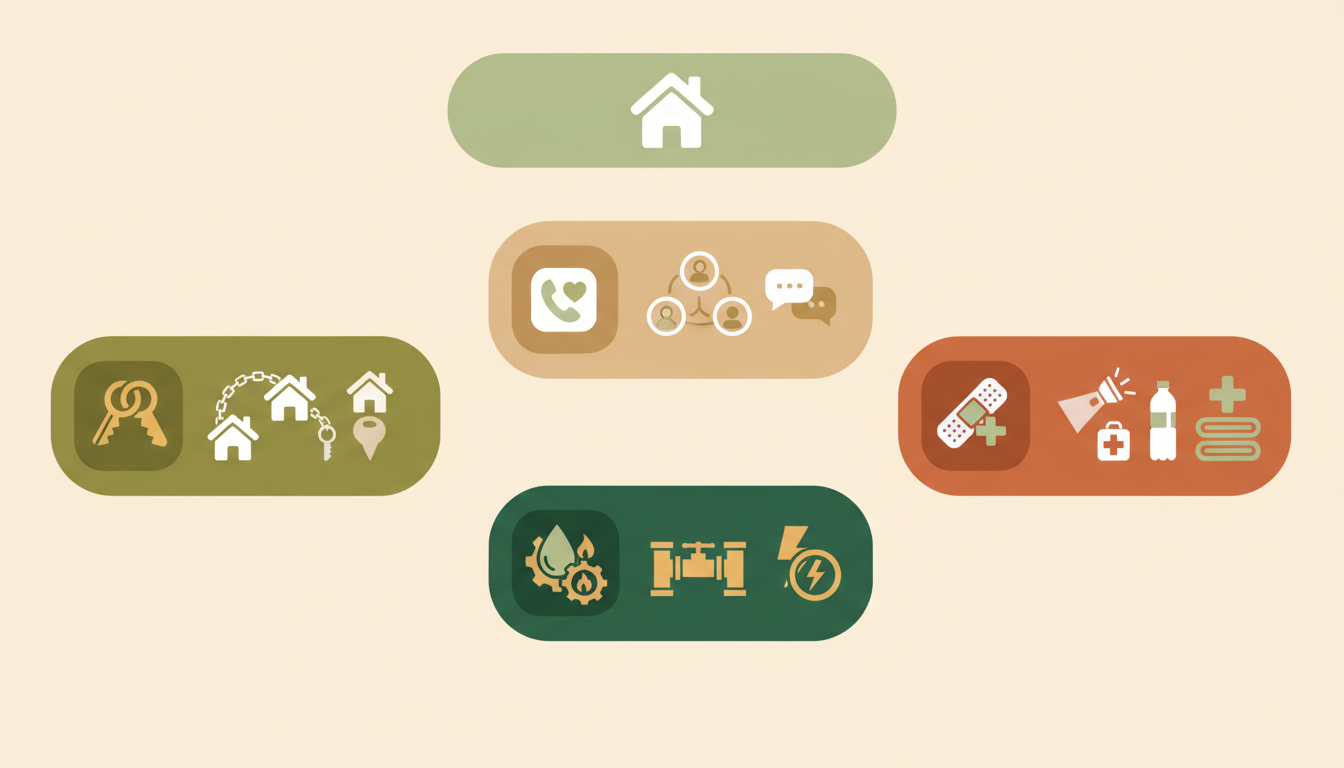 An infographic showing an Emergency Preparedness Checklist for hosts, including items like spare key
The Privacy Balance: Yours and Theirs
Opening your home to strangers requires trust, and trust requires clear boundaries. Before your first guest arrives, spend some time thinking about what you're comfortable sharing and what you'd prefer to keep private.
Many hosts designate certain spaces as off-limits—a locked closet for personal items, a home office with sensitive documents, a storage area with family belongings. This is completely reasonable and expected. Just be clear about these boundaries in your listing and guest manual.
Consider what personal items you want to store away. Family photos might feel too intimate to leave on display. Valuable jewelry or electronics should be secured. Important documents should be somewhere guests won't accidentally encounter them.
But remember that your guests also have privacy needs. If you're doing a simultaneous swap (you're staying in their home while they're in yours), resist any temptation to check in excessively or ask for updates about your own space. Trust the process. If you've prepared well and communicated clearly, your home is in good hands.
Some hosts install security cameras at entrances for peace of mind, which is fine as long as you disclose this clearly in your listing. But cameras inside the living spaces? That's a hard no. Guests need to feel they can relax without being watched.
Reviews: The Currency of Trust
In the SwappaHome community, reviews are everything. They're how members build reputations, establish trust, and decide who to swap with. As a new host, building up positive reviews should be a priority—but never at the expense of authenticity.
The best way to get great reviews is simple: be a great host. Everything we've discussed—accurate listings, thoughtful preparation, clear communication, graceful problem-solving—contributes to the kind of experience that guests want to write about.
After each stay, leave your guests a thoughtful, honest review. Comment on specific positives: how they left your home, how easy they were to communicate with, whether you'd host them again. This isn't just courtesy; it's how the community maintains its standards.
When asking for reviews (which is perfectly acceptable), make it easy. A simple message after checkout thanking them for their stay and mentioning that you'd appreciate a review if they have time is sufficient. Don't be pushy, and never try to negotiate or trade reviews.
If you receive constructive criticism, resist the urge to be defensive. Instead, thank the reviewer for their feedback and consider whether their points have merit. Some of the best hosts I know have improved their spaces based on guest suggestions they initially disagreed with.
The Mindset Shift: From Nervous to Excited
Let me let you in on a secret that experienced hosts know: the nervousness you feel before your first guest never completely goes away. It just transforms into something else—anticipation, curiosity, excitement about meeting new people and sharing your corner of the world.
Every guest who stays in your home has a story. They're celebrating an anniversary, exploring a new city, visiting family, or finally taking that trip they've been dreaming about for years. By opening your home, you become a small but meaningful part of their story.
And here's the beautiful reciprocity of it all: every time you host, you're not just earning credits for your own adventures. You're participating in a global community of people who believe that travel should be about connection, not just consumption. People who trust strangers with their most personal spaces because they've experienced the joy of being trusted in return.
Your first hosting experience might not be perfect. You'll probably forget something, or a small thing will go wrong, or you'll realize afterward that you should have done something differently. That's okay. That's how everyone starts.
What matters is that you've taken the leap. You've decided to share your home, to trust the process, to become part of something bigger than a simple transaction. And if you've read this far, I'm confident you're going to be a wonderful host.
Your Hosting Journey Begins Now
So here you are, standing at the beginning of your hosting journey on SwappaHome. Your home is ready, your listing is live, and somewhere out there, a fellow traveler is scrolling through options and about to discover your space.
Remember: you don't need a perfect home, just a welcoming one. You don't need to anticipate every possible situation, just be ready to handle them with grace. You don't need to be an experienced host—you just need to be a thoughtful one.
The credits you'll earn are wonderful, and the travel they'll enable is exciting. But if you ask hosts who've been doing this for years what they love most about SwappaHome, many will tell you it's not the free accommodation. It's the connections. The messages from guests who became friends. The recommendations exchanged, the stories shared, the small ways that opening your home opened your world.
Your first guest is out there. They're going to love your place. And you? You're going to be a fantastic host.
Welcome to the community.

Published by
SwappaHome
SwappaHome Editorial Team
Home Exchange & Slow Travel Editorial
The SwappaHome Editorial Team brings together travel research, home-exchange community insights, and platform data to produce practical guides for first-time and experienced home swappers. Every article cites real platforms, current market rates, and verifiable city-level facts so readers can make informed decisions without guessing.
Ready to try home swapping?
Join SwappaHome and start traveling by exchanging homes. Get 7 free credits when you sign up!
Related articles

Bachelor and Bachelorette Parties in Singapore: The Complete Home Swap Group Guide for 2026
Planning a bachelor or bachelorette party in Singapore? Discover how home swapping lets groups of 6-12 stay together in luxury condos, saving thousands while partying in Marina Bay.

Cycling in Lisbon: 7 Home Swap Bike Tour Itineraries for Every Rider
Discover the best cycling routes in Lisbon with these home swap bike tour itineraries—from waterfront paths to hilltop adventures, all starting from your borrowed home.

Graduation Trip to Barcelona: How Home Swapping Gives New Graduates the Ultimate Celebration
Planning a graduation trip to Barcelona? Discover how home swapping lets new graduates explore Spain's most vibrant city without the hostel crowds or hotel costs.