
15 best American travel destinations for every type of trip

SwappaHome Editorial Team
Home Exchange & Slow Travel Editorial
Key Takeaways The best american travel destinations cover far more than famous landmarks. This guide pairs major cities, national parks, coastlines, and…
Key Takeaways
The best american travel destinations cover far more than famous landmarks. This guide pairs major cities, national parks, coastlines, and culturally rich neighborhoods with the kind of trip each place suits best.
- New York City and Chicago reward travelers who love culture, food, and urban energy.
- The Grand Canyon, Yellowstone, Yosemite, and Acadia offer four very different national park experiences.
- Maui, Miami, and San Francisco bring beaches, ocean views, and distinctive coastal character.
- New Orleans, Nashville, Charleston, and Washington, D.C. are especially strong choices for food, music, and history.
- The right destination depends as much on pace and season as on the sights themselves.
1. New York City, New York
New York City is one of the easiest American travel destinations to shape around your own interests. A first visit might center on Central Park, a Broadway show, and the museums along Fifth Avenue, while a return trip could unfold around neighborhood restaurants, independent galleries, and long walks across bridges. The city is busy, loud, expensive, and endlessly absorbing in roughly equal measure.
Each borough has a different rhythm. Manhattan puts major museums, theaters, and architectural landmarks within a dense network of subway lines, while Brooklyn offers brownstone blocks, waterfront parks, and a broad restaurant scene. Queens adds some of the country’s most varied food, and the Bronx brings the New York Botanical Garden, the Bronx Zoo, and a less polished but equally compelling view of the city.
Staying in a neighborhood rather than beside a single attraction can make New York feel more manageable. A home exchange can also make a longer city visit more comfortable, particularly when a kitchen and ordinary living space matter; SwappaHome offers a guide to experiencing New York City through that kind of stay. Build each day around one major plan, then leave room for the discoveries between subway stops.
2. Grand Canyon National Park, Arizona
The Grand Canyon is difficult to understand from photographs because its scale keeps changing as you move along the rim. Sunlight shifts across layered rock, distant buttes seem to separate and merge, and the Colorado River appears almost impossibly small below. Even a short visit can feel like a genuine change of scene from ordinary life.
The South Rim is open year-round and offers the broadest range of viewpoints and visitor services. Mornings and evenings tend to bring softer light, while the middle of the day is useful for walking a portion of the Rim Trail or visiting the park’s cultural and geological exhibits. If you hike below the rim, remember that returning uphill takes substantially more effort than descending.
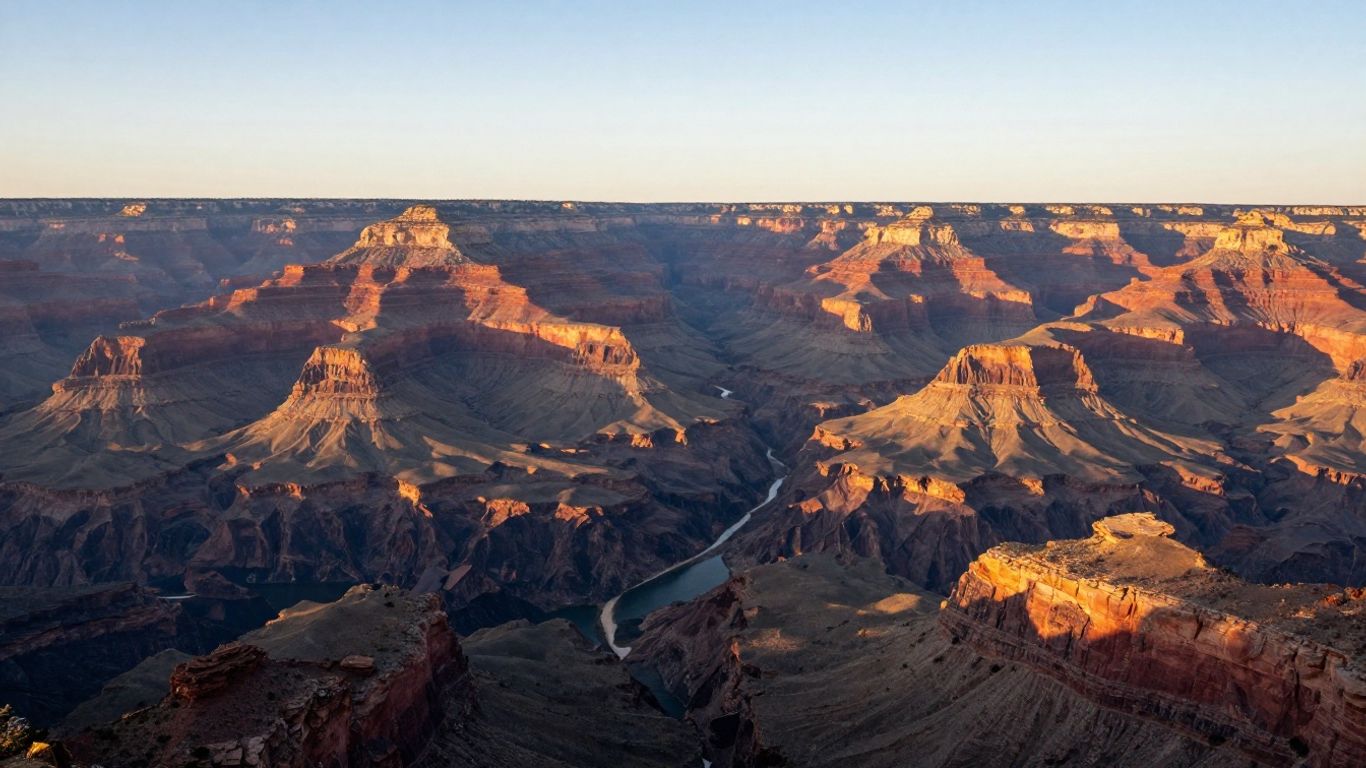 Layered Grand Canyon cliffs at sunrise
A thoughtful itinerary leaves time for stillness rather than trying to collect every overlook. The American destination guide is another source of inspiration for comparing the canyon with other landscapes across the country, but the most useful planning decision is practical: allow extra time for distances, heat, and changing weather.
3. Yellowstone National Park, Wyoming
Yellowstone feels like several parks joined together. Geysers and hot springs occupy one part of the experience, while broad valleys, mountain lakes, waterfalls, and wildlife corridors shape another. The park rewards travelers who accept that its roads are long and that the most memorable moments may happen between named attractions.
Old Faithful is the obvious starting point, but it should not be the whole plan. The colors around Grand Prismatic Spring, the terraces at Mammoth Hot Springs, and the sweeping views through Hayden Valley each show a different side of the park’s geology. Wildlife is best observed from a respectful distance, ideally with patience and binoculars rather than a crowded roadside stop.
Season changes the character of a Yellowstone trip. Summer provides the widest access but also the heaviest traffic, while autumn brings quieter roads and cooler air. Pack layers, carry water, and check road conditions before setting out; a route that looks simple on a map can take much longer than expected.
4. New Orleans, Louisiana
New Orleans is a destination for travelers who plan their days around atmosphere as much as attractions. The French Quarter’s iron balconies and narrow streets are only the beginning, with music spilling from clubs, brass bands appearing in unexpected places, and neighborhood restaurants serving food with deep regional roots. The city’s character is vivid without being tidy.
Spend time beyond Bourbon Street. The Garden District is best explored slowly, Magazine Street offers shops and cafes in a more residential setting, and the Tremé neighborhood connects music, history, and community in ways that deserve more than a quick drive-by. A cemetery tour or a visit to the Backstreet Cultural Museum can add context to the city’s visual energy.
Food is part of the itinerary here, not merely a break between sights. Try a po’boy, gumbo, jambalaya, or beignets, but also leave room for the less famous meals that give the city its everyday texture. Festivals can be thrilling, though travelers who prefer a gentler pace may enjoy visiting outside the largest event weekends.
5. San Francisco, California
San Francisco packs steep streets, cool ocean air, dramatic bridges, and distinct neighborhoods into a compact setting. The city is a natural fit for travelers who like to move on foot, pause often, and let a day develop around coffee, bookstores, public gardens, and an unplanned view. Its hills can be demanding, but they also create the city’s constant sense of reveal.
The waterfront is an easy introduction, from the Ferry Building and Embarcadero to the paths around Crissy Field. Elsewhere, Chinatown, the Mission, North Beach, and the Richmond District each bring different food traditions and street life. Alcatraz requires advance planning, while Golden Gate Park can absorb half a day without feeling repetitive.
San Francisco also works well as part of a longer Northern California trip. A rental car is useful beyond the city, but it is often more trouble than it is worth for urban sightseeing. If saving on accommodation makes room for more food and excursions, a home-exchange approach is one possible way to plan a longer stay, especially for travelers who prefer living in a neighborhood to staying beside a convention district.
6. Maui, Hawaii
Maui suits travelers who want a tropical holiday with more variety than a resort beach alone. The island combines calm coves, green valleys, volcanic landscapes, small towns, and long stretches of road where the scenery changes every few miles. It can be restful or adventurous, depending on how tightly the itinerary is planned.
Kāʻanapali and Wailea are convenient bases for beaches and resort amenities, while the road to Hāna offers waterfalls, dense vegetation, and coastal viewpoints. Haleakalā is a very different experience, with high-elevation terrain and early-morning cold that surprises travelers arriving from the shore. Reservations and local guidance matter for several popular activities, so check current access rules before committing to a day.
The best Maui trips leave gaps. Choose one major excursion, protect time for swimming or a slow lunch, and avoid treating the island as a series of appointments. Respect shoreline conditions, keep distance from wildlife, and remember that weather can vary sharply between the coast and the mountain.
7. Washington, D.C.
Washington, D.C. is among the strongest American travel destinations for a first trip built around history and museums. The National Mall connects monuments, memorials, and major institutions, but the city becomes more interesting when visitors move beyond that central corridor. Georgetown, Capitol Hill, Shaw, and Adams Morgan each offer a different sense of place.
Many of the Smithsonian museums are free, which makes D.C. unusually generous for travelers managing a budget. The National Museum of African American History and Culture, National Air and Space Museum, and National Museum of American History are popular, so timed-entry requirements should be checked ahead of time. The Library of Congress and the United States Capitol also reward advance planning.
Spring brings the famous cherry blossoms, but it is not the only appealing season. Autumn is comfortable for walking, winter can mean lighter crowds, and summer evenings are pleasant around the waterfront. The city’s Metro makes it possible to build a full itinerary without renting a car, though comfortable shoes remain essential.
8. Nashville, Tennessee
Nashville is best known for country music, yet its appeal reaches well beyond the neon and honky-tonks of Broadway. Songwriting, gospel, bluegrass, rock, and roots music all have a place here, and live performances can be found in small rooms as well as major venues. The result is a city that feels creative rather than simply themed.
Spend time at the Country Music Hall of Fame, the National Museum of African American Music, and the neighborhoods around 12 South and East Nashville. A morning at the Nashville Farmers’ Market can balance an evening of music, while the Parthenon in Centennial Park offers a quieter architectural detour. The city’s food scene has matured too, with hot chicken sharing attention with bakeries, barbecue, and modern Southern cooking.
 Nashville stage lights and guitar performance
A simple plan helps visitors avoid spending the entire trip in one crowded strip. Consider grouping destinations by neighborhood, reserving a show for one night, and leaving another evening open for a smaller venue. Nashville is more enjoyable when music remains the thread connecting the trip rather than the only thing on the schedule.
9. Yosemite National Park, California
Yosemite Valley delivers one of the great first impressions in the American outdoors. Granite walls rise abruptly above meadows, waterfalls appear at the edges of the landscape, and even a short walk can lead to a view that feels much larger than the route. The park is spectacular, but its popularity means that logistics are part of the experience.
Visitors who arrive early usually have an easier time with parking and trail access. Yosemite Falls, Lower Yosemite Fall, and the paths through the valley are accessible choices for many travelers, while more strenuous routes lead toward viewpoints such as Glacier Point or the top of Half Dome. Trail conditions and seasonal access vary, so check the park’s current guidance before setting out.
Do not limit the park to a single postcard view. Tuolumne Meadows and the high country offer a quieter landscape when roads are open, and Wawona adds a historic dimension to a longer visit. Bring food, water, and layers, and expect cell service to be limited in parts of the park.
10. Charleston, South Carolina
Charleston blends historic streets, coastal scenery, and a food culture shaped by African, Caribbean, and European influences. Its central neighborhoods are highly walkable, with pastel facades, shaded lanes, churches, and gardens appearing around nearly every corner. The city feels gracious, but its history is complex and should be encountered with curiosity rather than nostalgia alone.
The Old Slave Mart Museum and the International African American Museum provide important context, while the historic district offers a close look at architecture and preservation. Beyond downtown, Sullivan’s Island and Folly Beach bring a looser coastal mood. A day trip to the plantations and gardens outside the city can be worthwhile when approached with attention to the stories they tell.
Meals deserve planning, especially during busy weekends. Lowcountry staples such as shrimp and grits, oysters, and expertly seasoned rice dishes sit alongside bakeries and inventive neighborhood restaurants. For families or couples who want a little more room than a hotel provides, SwappaHome describes family-friendly home exchanges with kitchens and everyday living space, a useful idea for a longer Charleston stay.
11. Las Vegas, Nevada
Las Vegas is a natural choice for travelers who want spectacle, entertainment, and a flexible definition of a city break. The Strip is bright and theatrical, but it is only one part of the destination. Downtown, the Arts District, and the desert landscapes outside the city offer different experiences for visitors who need a break from casinos and resort corridors.
Shows, restaurants, pools, and sporting events can fill an itinerary without requiring much driving. For a change of pace, Red Rock Canyon provides striking desert scenery close to the city, while the Hoover Dam makes a manageable day trip. Summer heat can be severe, so schedule outdoor activities early or near sunset and carry more water than you think you need.
Las Vegas works best when the trip has a clear budget and a little restraint. Set aside money for the experiences that matter most, whether that is a concert, a special meal, or a guided desert outing. The city offers constant temptation, but travelers do not have to accept every invitation to spend.
12. Chicago, Illinois
Chicago combines grand architecture, serious food, neighborhood character, and a lakefront that changes the city’s scale. The Loop is a good introduction to skyscrapers and public art, while the Riverwalk and Millennium Park make it easy to explore several landmarks in one outing. Even familiar attractions feel different under summer sun or winter snow.
Architecture boat tours are a particularly effective way to understand the city’s skyline, and the Art Institute of Chicago can anchor a rainy afternoon. Wrigleyville, Pilsen, Logan Square, and Hyde Park offer contrasting neighborhood experiences, with restaurants and cultural institutions that reward leaving the center. The lakefront trail provides a surprisingly open route for walking or cycling.
Chicago’s food reputation is deserved, but it is broader than deep-dish pizza and hot dogs. Try the cuisine associated with the city’s many immigrant communities, visit a neighborhood bakery, and make time for a long meal. The city’s grid makes navigation relatively simple, while its public transit helps connect downtown sights with outlying neighborhoods.
13. Miami, Florida
Miami brings together beaches, Art Deco architecture, Caribbean and Latin American cultures, and a nightlife scene that can be as energetic or relaxed as you choose. South Beach is the familiar starting point, with broad sand and pastel buildings along Ocean Drive. Yet the city’s strongest moments often come from moving between neighborhoods rather than staying beside the water.
Little Havana is a place for coffee, music, dominoes, and food, while Wynwood is known for murals, galleries, and restaurants. Coconut Grove and Coral Gables offer a slower, greener side of the city, and Biscayne Bay adds another perspective from the water. The heat and humidity make midday pauses worthwhile, especially during the warmer months.
Miami is also a good base for a wider South Florida trip. The Everglades provide a striking contrast to the city’s polished surfaces, and Key Biscayne offers beaches with a quieter feel. Reserve popular restaurants and excursions, but keep at least one afternoon unplanned for swimming, people-watching, or simply following the shade.
14. Seattle, Washington
Seattle is shaped by water, hills, evergreen trees, and a culture that takes coffee seriously without being limited by it. Pike Place Market is lively and photogenic, but the city’s appeal extends to ferry rides, independent shops, public gardens, and neighborhoods with distinct local identities. On clear days, mountain views add another layer to the skyline.
The Museum of Pop Culture, Seattle Art Museum, and Chihuly Garden and Glass offer easy cultural stops, while Discovery Park provides trails and open views near the city. Ballard, Capitol Hill, Fremont, and Columbia City are good places to eat and wander beyond the downtown core. A ferry to Bainbridge Island can turn a simple afternoon into a memorable excursion.
Seattle’s famously changeable weather is part of the planning equation. Pack a light waterproof layer, use transit when parking becomes difficult, and do not cancel every outdoor plan because of drizzle. For solo travelers who want the structure of a local stay, SwappaHome presents home exchange as a way to experience real homes and walkable neighborhoods across the United States.
15. Acadia National Park, Maine
Acadia is a compact national park with an unusually rich mix of coast, forest, lakes, and granite summits. Its roads and trails make it possible to see a lot in a few days, though the park feels more rewarding when travelers slow down. Ocean air, spruce trees, and changing light give even familiar viewpoints a fresh quality.
The Park Loop Road connects several classic stops, including Sand Beach, Thunder Hole, and Jordan Pond. Cadillac Mountain is famous for sunrise, but access rules and reservations can change, so confirm details before visiting. For a quieter outing, explore carriage roads by bicycle or take a trail through the woods away from the busiest overlooks.
Bar Harbor is the most common base, with restaurants, shops, and boat trips close to the park. Lobster rolls and blueberry desserts fit naturally into the itinerary, but the region is just as memorable for a thermos of coffee beside the water. Autumn color can be spectacular, while summer offers the broadest range of activities; either way, bring layers for cool coastal mornings.
Conclusion
The finest american travel destinations are not interchangeable: New York rewards curiosity, Yellowstone rewards patience, Maui invites a slower rhythm, and cities such as New Orleans and Nashville make culture feel immediate. Choose the place that matches the trip you actually want, then leave enough room for weather, local meals, and the unplanned moments that tend to become the memories you keep.
Frequently Asked Questions
What are the best American travel destinations for a first trip?
New York City, Washington, D.C., the Grand Canyon, and San Francisco offer a strong mix of famous sights, culture, history, and varied scenery for a first visit.
Which destinations are best for outdoor adventure?
The Grand Canyon, Yellowstone, Yosemite, Acadia, and Maui are excellent choices, though each requires different preparation for weather, distance, terrain, and seasonal access.
What is a good destination for a food-focused trip?
New Orleans, Charleston, Chicago, New York City, Miami, and San Francisco all have distinctive food traditions and neighborhoods worth exploring beyond their best-known dishes.
Which American destinations work well for families?
Washington, D.C., Chicago, San Diego, Maui, and national parks with accessible trails can work well for families, provided the itinerary includes rest and realistic travel times.
When is the best time to visit these destinations?
There is no single best season. Spring and autumn often offer comfortable conditions in many cities, summer suits northern parks and coastal areas, and winter can bring lighter crowds in warmer destinations.
How can travelers keep a United States trip affordable?
Compare transportation options, travel outside peak dates, prioritize free museums and public lands, and consider accommodations with kitchens or shared living space when appropriate.
How long should a trip to the United States be?
A long weekend can cover one city, while a national park deserves several days. For a multi-region itinerary, two weeks or more allows time to travel between places without rushing every stop.

Published by
SwappaHome
SwappaHome Editorial Team
Home Exchange & Slow Travel Editorial
The SwappaHome Editorial Team brings together travel research, home-exchange community insights, and platform data to produce practical guides for first-time and experienced home swappers. Every article cites real platforms, current market rates, and verifiable city-level facts so readers can make informed decisions without guessing.
Ready to try home swapping?
Join SwappaHome and start traveling by exchanging homes. Get 7 free credits when you sign up!