
10 Best Family Vacation Places in the US for Every Kind of Trip

SwappaHome Editorial Team
Home Exchange & Slow Travel Editorial
Key Takeaways The best family vacation places in the United States make room for different ages, energy levels, and ideas of fun. Orlando brings theme-park…
Key Takeaways
The best family vacation places in the United States make room for different ages, energy levels, and ideas of fun.
- Orlando brings theme-park excitement and easy family logistics.
- San Diego and Maui pair outdoor time with relaxed coastal days.
- Washington, D.C., New York City, and Chicago turn learning into an adventure.
- Yellowstone, the Grand Canyon, and the Outer Banks offer memorable scenery.
- Williamsburg adds history, hands-on experiences, and a slower pace.
1. Orlando, Florida
Orlando is the classic choice when your family wants big attractions, warm weather, and a vacation built around excitement. Theme parks can fill several days, but the city also offers water parks, wildlife experiences, mini golf, and plenty of casual places to eat. It works especially well for families who prefer having a clear itinerary and lots of entertainment close together.
The trick is to avoid treating every day like a marathon. Alternate a long park day with a slower morning at the hotel pool or a nearby nature area. Younger children may need a midday break, while older kids might enjoy choosing one attraction they care about most rather than racing through everything.
Orlando also rewards a little planning around location and meals. A kitchen or larger living space can make breakfast, snacks, and bedtime easier than managing every meal out. For more inspiration before choosing a destination, browse these family vacation ideas, then shape the trip around your own children's ages and interests.
2. San Diego, California
San Diego has an unusually friendly mix of beaches, parks, museums, and manageable travel days. Families can spend a morning near the water, wander through Balboa Park in the afternoon, and still have energy for dinner. The mild climate makes outdoor plans appealing across much of the year, although coastal mornings can be cool and cloudy.
A good visit leaves room for both activity and aimless time. Let children look for tide-pool life, collect interesting shells where permitted, or simply play in the sand while adults enjoy the view. Neighborhoods with casual restaurants and open-air spaces help the trip feel less like a sequence of scheduled appointments.
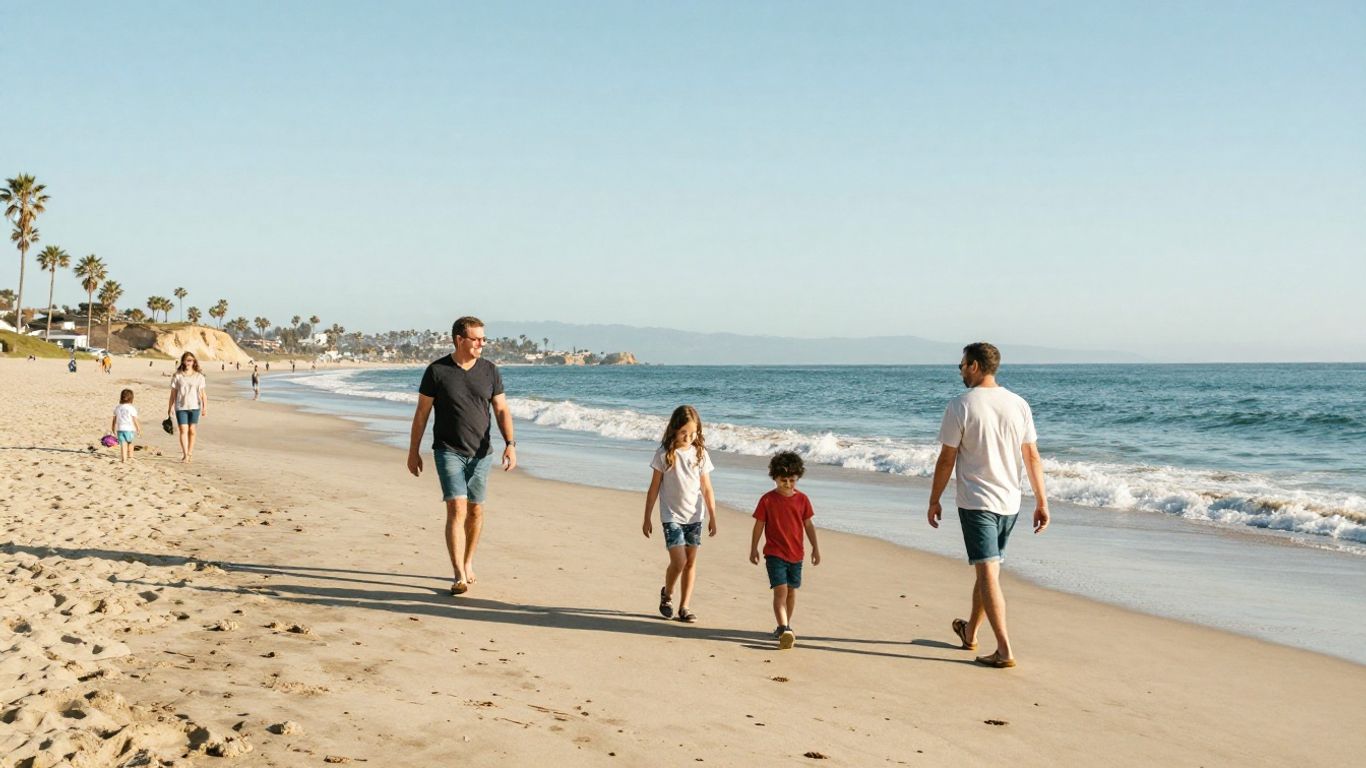 Children exploring a sunny San Diego beach
Families should choose a base that matches their plans rather than assuming every attraction is next door. A beach-focused stay feels different from one centered on museums or the zoo, and that distinction can save considerable driving. San Diego is at its best when the itinerary stays pleasantly loose.
3. Washington, D.C.
Washington, D.C., is one of the strongest family destinations for curious travelers because so much can be explored without paying admission. The National Mall connects monuments, memorials, and museums, giving children a sense that the city itself is an open-air classroom. Even a short visit can combine American history, science, art, and plenty of walking.
Do not try to cover every museum in one trip. Choose a few anchors and use the spaces between them for snacks, photographs, or a rest on the grass. Older children may enjoy discussing a presidential memorial or a spacecraft, while younger visitors often respond best to a single vivid object or hands-on exhibit.
Public transportation and walkable clusters make it possible to leave the car behind for much of the day. Comfortable shoes matter, as does checking opening hours and timed-entry requirements before setting out. A simple plan with one major museum and one outdoor stop often feels more successful than an ambitious checklist.
4. Yellowstone National Park, Wyoming
Yellowstone offers the kind of family trip that changes pace completely: geysers, wide valleys, unusual rock formations, and the chance to watch wildlife from a respectful distance. The scenery is dramatic, but the most lasting memories may come from small moments, such as spotting a bison or hearing a geyser erupt. Children often become more engaged when they are given a simple observation mission.
Distances inside the park can be deceptive, and roads may be busy during popular periods. Build in extra time for pullouts, restroom stops, and the inevitable question of whether the next bend reveals an animal. Short walks are often enough to make the landscape feel personal, especially for younger travelers.
Safety deserves a calm, direct conversation before arrival. Stay on designated paths around thermal features, keep well away from wildlife, and carry water and layers even on a warm-looking morning. Yellowstone is not a place to rush; its scale becomes part of the experience when the family accepts a slower day.
5. New York City, New York
New York City can feel enormous, but that is also what makes it thrilling for families. A morning in Central Park, an afternoon museum visit, and an early dinner can create a full day without crossing the entire city. The best itinerary usually has one or two fixed plans and plenty of space for discoveries between them.
Different ages can find their own entry point. Younger children may love playgrounds, ferries, and big animals at the zoo, while teenagers often enjoy neighborhoods, food, theater, or a museum chosen around a personal interest. Keep expectations realistic about walking, noise, and the need for occasional quiet.
Choosing a convenient neighborhood matters more than squeezing in the cheapest room. A nearby grocery store, a comfortable place to rest, and easy access to transit can change the mood of the whole trip. Families who want more room to spread out might consider family home exchanges as one possible way to create a practical base, subject to availability and their own comfort with the arrangement.
6. Maui, Hawaii
Maui suits families who want a beach vacation with enough variety to keep the week from becoming repetitive. Calm swimming spots, scenic drives, short nature walks, and relaxed meals can all fit into one trip. The island invites an unhurried rhythm, which is useful when traveling with children who do not want every day packed from breakfast to sunset.
 Family watching sunset over Maui coastline
Water conditions can vary, so choose swimming areas carefully and follow local guidance. Younger children may be happiest with a shaded beach morning and a pool afternoon, while older kids might enjoy snorkeling or a longer scenic outing. A flexible plan is more valuable than promising every possible activity.
Maui also asks families to respect the places they visit. Keep beaches clean, avoid disturbing wildlife, and remember that local communities are living here rather than serving as a backdrop. When the schedule leaves room for a quiet lunch, a nap, or one more sunset, the island's gentler character comes through.
7. The Grand Canyon, Arizona
The Grand Canyon gives children a memorable lesson in scale: photographs rarely prepare anyone for the first view from the rim. Families can enjoy the landscape without attempting a strenuous hike, using overlooks, short paved paths, and ranger programs to create a rewarding visit. Sunrise and sunset are especially striking, though midday light can reveal the canyon's depth just as powerfully.
Heat, sun, and elevation make preparation worthwhile. Bring water, hats, sunscreen, and layers, and keep children close near exposed edges. If the family does hike below the rim, remember that returning uphill takes longer and feels harder than the descent.
A visit becomes richer when it includes time to notice details rather than only taking the famous photograph. Look for changing colors in the rock, listen for birds, and let children sketch or describe what they see. The canyon is impressive enough that a quiet half-hour can be a complete activity.
8. Chicago, Illinois
Chicago is a lively city break with a lakefront, excellent museums, striking architecture, and neighborhoods that make a family feel like visitors rather than tourists moving between attractions. The river and skyline provide a strong visual introduction, while parks and beaches offer breathing room. It is a particularly good choice for families who like mixing culture with easy outdoor time.
Plan around geography whenever possible. Pair a museum with a nearby meal or combine a lakefront walk with an attraction in the same part of town. Children appreciate knowing what comes next, but they also need room to stop for an unexpected sculpture, street performance, or interesting snack.
A city trip does not have to be expensive at every turn. Free public spaces, libraries, neighborhood parks, and carefully chosen museum days can balance out paid experiences. The goal is not to see everything; it is to leave with a few vivid memories and enough energy to enjoy the final evening.
Families comparing destinations often find it helpful to separate the practical questions from the dream itinerary. This quick view can clarify what each place naturally offers:
| Destination type | Strongest family appeal | Pace to expect | Useful planning focus |
|---|---|---|---|
| Major city | Museums, food, and variety | Flexible but active | Transit and neighborhood choice |
| National park | Wildlife and scenery | Slower, weather-dependent | Water, layers, and distances |
| Beach destination | Swimming and downtime | Relaxed | Conditions, shade, and supplies |
| Historic town | Stories and hands-on learning | Moderate | Walking routes and opening hours |
The comparison is not a ranking. It is a reminder that the right destination depends as much on your family's preferred pace as on the headline attractions.
9. Outer Banks, North Carolina
The Outer Banks is a natural fit for families who want a beach rental, long stretches of shoreline, and a vacation that feels pleasantly removed from city routines. Days can revolve around swimming, sandcastles, bicycle rides, and simple dinners at home. The broad setting gives everyone room to follow a slightly different version of fun.
Wind and surf conditions may shape the day, so build in alternatives rather than assuming the beach will always be calm. Lighthouses, maritime history, nature trails, and small-town stops add variety when the weather changes. Children often enjoy the sense of place here: dunes, boardwalks, fishing boats, and open water are all part of the scenery.
Before booking, think about the supplies and routines your group actually needs. A kitchen, laundry access, nearby groceries, and enough bedrooms can make a longer stay much easier. Home exchange is another option some families explore; budget-friendly home exchange can be worth researching when space and everyday convenience matter as much as the destination itself.
A simple Outer Banks day might include:
- An early beach walk before the heat builds.
- A relaxed lunch with time for younger children to rest.
- A lighthouse, aquarium, or local history stop.
- A sunset stroll or casual dinner near the water.
That loose structure keeps the day moving without making it feel managed. It also leaves room for the best coastal discoveries, which are often the unplanned ones.
10. Williamsburg, Virginia
Williamsburg blends history with a pace that is easier to manage than a major city. Families can walk through restored areas, hear stories about colonial life, and visit nearby attractions without constantly repacking the day. The setting works well for children who learn best by seeing, touching, and asking questions.
History feels more approachable when it is connected to ordinary details: what people ate, how they traveled, what school was like, and how homes were arranged. Give children a small question to investigate, then let them explain their findings over dinner. That turns a visit into a shared story rather than a lecture.
The surrounding area makes it possible to balance historic sites with amusement, gardens, or time outdoors. Consider staying long enough for an unhurried morning, since the town's appeal is not limited to a single attraction. Williamsburg is a strong choice for families who want substance without sacrificing fun.
Whether the trip centers on history, nature, beaches, or a busy city, the most successful family itineraries leave some breathing room. A few well-chosen plans usually create better memories than trying to prove how much can fit into one week.
Conclusion
The best family vacation places are not identical, and they do not need to be. Choose the destination that matches your family's energy, interests, budget, and tolerance for travel days, then leave enough space for the small moments that no itinerary can predict.
Frequently Asked Questions
What makes a destination good for a family vacation?
A strong family destination offers activities for more than one age group, manageable logistics, places to rest, and enough variety to adapt when weather or energy levels change.
How long should a family vacation be?
The ideal length depends on travel time and the destination, but a trip with one or two unscheduled days often feels more comfortable than a shorter visit packed with constant activities.
Which destination is best for young children?
Orlando, San Diego, the Outer Banks, and Maui can work well for young children because they offer familiar routines, outdoor space, and flexible activity choices.
Which places are best for educational family travel?
Washington, D.C., Williamsburg, New York City, Chicago, and Yellowstone all make learning feel connected to real places, objects, landscapes, or stories.
How can families keep a vacation affordable?
Compare travel seasons, choose lodging with useful shared spaces, prepare some meals, use free attractions, and prioritize a few meaningful experiences instead of paying for everything.
Should families plan every day in advance?
Reserve truly popular activities ahead of time, but keep the rest flexible. Children usually enjoy a trip more when there is room for rest, spontaneous stops, and changing interests.
What should families pack for varied destinations?
Comfortable shoes, refillable water bottles, sun protection, layers, necessary medications, and a few familiar snacks are useful starting points for most domestic trips.

Published by
SwappaHome
SwappaHome Editorial Team
Home Exchange & Slow Travel Editorial
The SwappaHome Editorial Team brings together travel research, home-exchange community insights, and platform data to produce practical guides for first-time and experienced home swappers. Every article cites real platforms, current market rates, and verifiable city-level facts so readers can make informed decisions without guessing.
Ready to try home swapping?
Join SwappaHome and start traveling by exchanging homes. Get 7 free credits when you sign up!