
A complete guide to digital nomad visas in Europe

SwappaHome Editorial Team
Home Exchange & Slow Travel Editorial
Key Takeaways Transitioning to a location-independent lifestyle requires careful preparation beyond simply booking a flight. Understanding the legal,…
Key Takeaways
Transitioning to a location-independent lifestyle requires careful preparation beyond simply booking a flight. Understanding the legal, financial, and logistical framework is essential for a smooth move.
- Digital nomad visas provide a legal pathway for remote work not found in standard tourist entries.
- Meeting strict financial thresholds is usually the primary hurdle for most successful applicants.
- Administrative consistency is key; keep all apostilled documents and translations organized in a single folder.
- Tax residency rules vary significantly by country and often change based on your total days of stay.
- Proactive maintenance of health insurance and renewal timelines prevents accidental loss of legal status.
Understanding the landscape of European digital nomad visas
What defines a digital nomad visa
A digital nomad visa is a specialized permit allowing non-resident individuals to live and work legally in a foreign country for an extended period, provided they earn income from sources outside the destination. Across the continent, digital nomad visas europe have become the standard solution for freelancers and employees seeking to combine professional duties with local exploration. These permits bypass the ambiguity of working on tourist credentials, which were never intended for long-term occupational activity.
Difference between tourist, work, and nomad visas
Tourist visas are restricted to recreation and prohibit any form of gainful employment, even for an international employer. Standard work visas typically require a local sponsor or employer, which is often impossible for freelancers to secure. Nomad visas simplify this by effectively decoupling your right to reside from your source of employment, allowing you to reside locally while remaining employed globally.
The role of EU residency and Schengen rules
Schengen Area rules generally limit non-EU citizens to 90 days of stay within any 180-day period. Nomad visas provide a legal exception to this limit for the specific country issuing the permit, essentially granting you a type of temporary residency. Note that having a permit for one country does not automatically extend your allowed stay in other Schengen nations, meaning you must still manage your travel clocks wisely.
Financial and tax requirements for remote work visas
 A professional working on a laptop at a bright table
Minimum income thresholds for eligibility
Most countries mandate a specific monthly or annual income to ensure applicants can support themselves without strain. These thresholds serve to protect the host country's domestic economy and housing market. The following table highlights typical monthly income ranges required by prospective host nations.
| Country | Typical Monthly Requirement | Note |
|---|---|---|
| Portugal | €3,040 | Based on four times the minimum wage |
| Spain | €2,700 | Verified through recent bank statements |
| Estonia | €2,000 | Subject to periodic official adjustments |
These figures can fluctuate annually, so verify the exact amounts on official government portals before submitting your primary application paperwork.
Understanding cross-border tax implications
Establishing residence often triggers tax obligations in your new host country after you exceed a certain duration of time. Countries like SwappaHome often emphasize the importance of understanding how local tax laws interact with your home country's jurisdiction. Being physically present for over 183 days often creates a tax nexus that necessitates professional guidance.
Banking and proof of funds documentation
Consulates require clear evidence that your income is stable and verifiable. You will typically need to present six months of bank statements, employment contracts, and sometimes proof of tax payments from your home country. Maintaining a clean financial paper trail is one of the critical components of a successful application package.
Administrative hurdles and documentation for applicants
Compiling apostilled documents and translations
Bureaucracy in the EU often demands that all legal documents, such as birth certificates or criminal record checks, be apostilled to ensure international validity. Once processed, these documents must be translated by a certified professional into the target country's official language.
Navigating the embassy and consulate application process
Securing an appointment often feels like a full-time job. Be prepared for the following common requirements when you finally step into the consulate:
- Submission of a physical passport with ample blank pages for stamps.
- Presentation of a recent, color-passport-sized photo on a clean background.
- Detailed cover letter explaining your intended remote work activities.
- Documentation of your current housing arrangements or lease agreements.
Always bring extra copies of every document you submit, as minor administrative errors at the counter can force an immediate restart of the entire process.
Health insurance and coverage requirements
Comprehensive health insurance is a non-negotiable requirement for visa approval. Applicants must prove they carry coverage that meets the host country's minimum liability standards for medical emergencies, hospitalization, and repatriation during their entire stay.
Comparing popular digital nomad visa programs in Europe
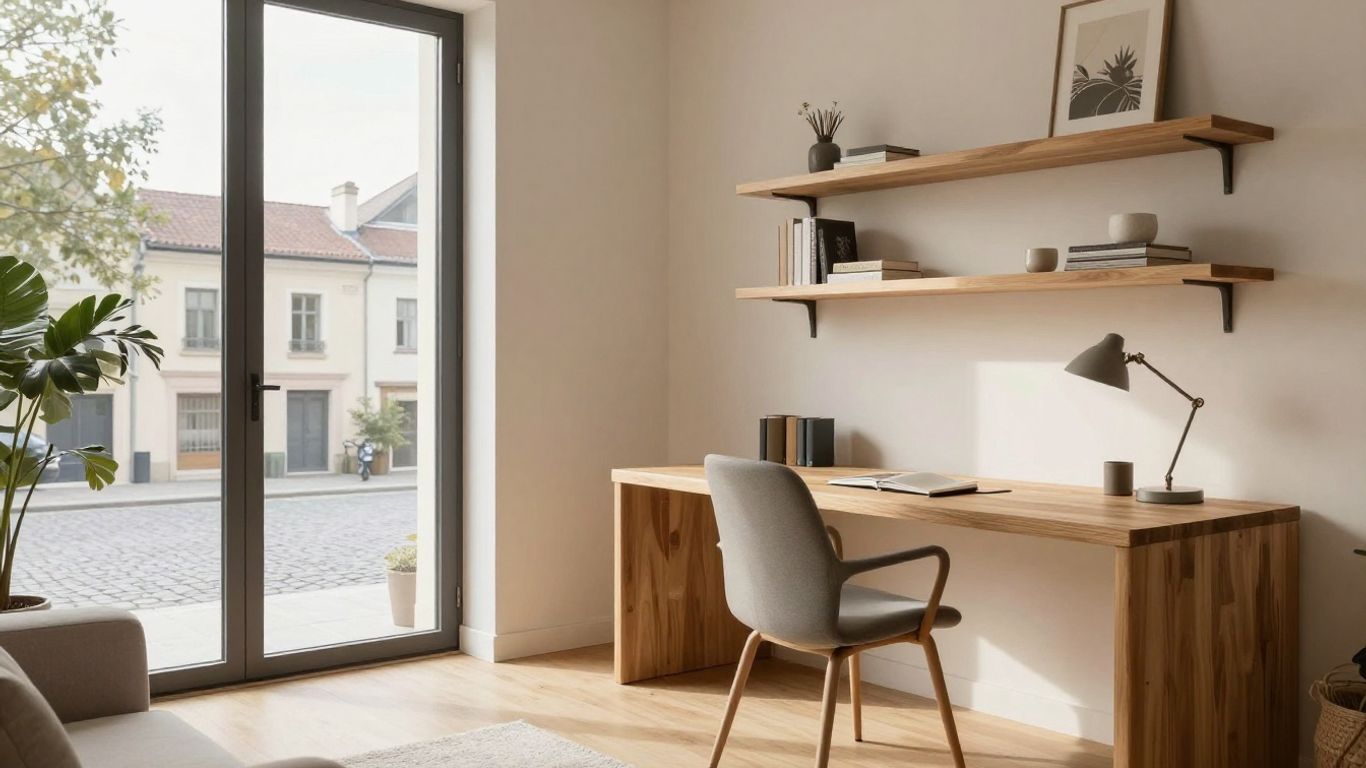 An airy modern apartment with a wooden desk
Analyzing the Spanish digital nomad visa
Spain’s policy is designed to welcome high-earning remote professionals who prefer a vibrant climate and established infrastructure. It is a favored choice for those seeking to blend SwappaHome exchange benefits with a legalized pathway to stay for 12 months or longer.
Proximity and perks of the Portuguese nomad permit
Portugal offers a pathway that is frequently paired with SwappaHome to provide a cost-effective and culturally rich living experience. The country's infrastructure for remote professionals is highly advanced, particularly in hubs like Lisbon and Porto.
Benefits of the Greek remote work scheme
Greece attracts those looking for an island-to-continental work balance. Using SwappaHome in this region allows you to experience the Mediterranean lifestyle while maintaining steady fiber connectivity throughout your work week.
Evaluating the Estonian digital nomad program
Estonia remains a global leader in digital governance, making its program exceptionally efficient for those who prefer streamlined, digital-first interactions. It is ideal for users of SwappaHome who value minimalist, modern environments and a proactive tech culture.
Strategies for choosing an EU country for your nomadic base
Evaluating cost of living and affordability
Assess your budget not just by rent, but by the true cost of lifestyle including transport, groceries, and dining. Use resources to survey local market conditions to ensure your income remains comfortable after accounting for taxes and inflationary pressures in popular European cities.
Local internet reliability and co-working infrastructure
Reliable internet is the baseline for your livelihood. Many countries offer fiber-optic networks, but verify that your specific residence can receive these speeds rather than relying on standard DSL alternatives.
Access to transport and international networks
Seamless travel is vital for both leisure and occasional business trips across the continent. Understanding your car shipping options or the local rail network ensures you are not stranded in a location that lacks the regional connectivity your career occasionally demands.
Community and lifestyle considerations
Finding a community is more than just joining a social group in Berlin or Munich. Your location choice should balance your need for professional networking with your personal need for local cultural immersion to avoid the isolation that can come with long-term remote work.
Essential tips for maintaining visa compliance abroad
Managing renewal timelines and visa extensions
Visas are not automatic residence permits, and their expiration dates are strictly enforced. Start your renewal application at least 90 days before your current visa expires to account for potential administrative delays.
Reporting changes in employment status
If you change employers, you must immediately verify whether your permit is tied to your specific income stream. Some countries require you to amend your visa application to reflect these shifts in your professional earnings or company details.
Keeping digital logs of travel dates and stays
Even after receiving a long-stay visa, maintain a detailed log of your entry and exit dates. Border guards may occasionally request this for status checks, and having an accurate record protects you during audits.
Preparing for potential audits or follow-ups
Occasionally, immigration authorities audit visa holders to confirm they are still meeting the income requirements. Keep a secure digital folder containing all your tax returns, bank statements, and updated employment contracts readily accessible for any unexpected requests.
Conclusion
Building a life as a remote worker in Europe is an achievable dream if you prioritize your legal status and financial planning from the outset. By diligently managing your documentation, understanding your host country's specific tax requirements, and selecting a base that supports your connectivity needs, you set the stage for a rich and productive experience that justifies the complexity of the application process.
Frequently Asked Questions
Can I work for a local company on a digital nomad visa?
Most digital nomad visas are designed strictly for remote work for employers or clients outside the host country. Working for a local company typically triggers different visa requirements and labor regulations.
How hard is it to find housing while applying?
You will often need to show a lease or a rental agreement as part of your application. Using home exchange networks can be helpful, provided those residences meet the visa’s specific administrative documentation requirements.
Does the visa lead to permanent residency?
This depends entirely on the country’s specific laws. Some nomad visas remain temporary, while others allow you to count years spent under these permits toward a future application for permanent residency.
Can I bring my family with me?
Family reunification is often possible under many European remote work schemes, though you must usually prove additional financial means to support each accompanying dependent.
What happens if my income drops below the threshold?
Failing to meet the minimum income requirements can jeopardize your visa and may lead to a denial during your renewal process. It is best to maintain a financial buffer to account for fluctuations in exchange rates and income cycles.
Can I use the visa to enter other EU countries?
The visa allows you to be in the issuing country. While it may allow for short touristic visits to other countries within the Schengen Area, you cannot use your nomad visa to legally work or reside in any other nation.
Is it worth hiring an immigration lawyer?
While not strictly necessary for every situation, an experienced immigration lawyer can be invaluable for complex cases or if you are struggling with the specific nuances of a country's bureaucratic language and requirements.

Published by
SwappaHome
SwappaHome Editorial Team
Home Exchange & Slow Travel Editorial
The SwappaHome Editorial Team brings together travel research, home-exchange community insights, and platform data to produce practical guides for first-time and experienced home swappers. Every article cites real platforms, current market rates, and verifiable city-level facts so readers can make informed decisions without guessing.
Ready to try home swapping?
Join SwappaHome and start traveling by exchanging homes. Get 7 free credits when you sign up!