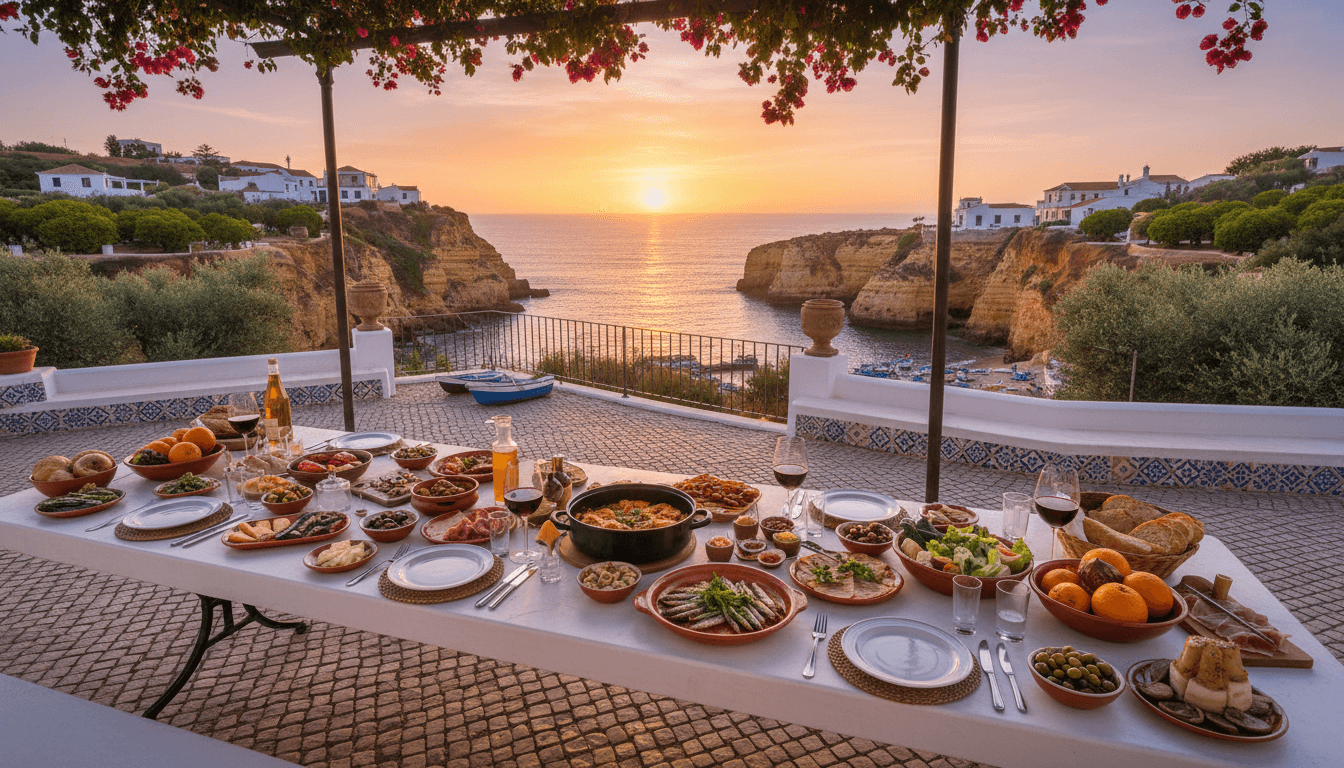
Algarve Food Scene: The Ultimate Culinary Guide for Home Exchange Travelers
Maya Chen
Travel Writer & Home Exchange Expert
Discover the Algarve food scene like a local during your home exchange—from cataplana secrets to hidden tascas only residents know about.
The smell hit me before I even opened the front door. My home exchange host in Lagos had left a note: "Cataplana in the fridge. Reheat slowly. Welcome to the Algarve."
I stood in that sun-flooded kitchen, lid lifted off the copper pot, inhaling saffron and clams and something I couldn't quite name—later I'd learn it was piri piri grown in her garden. That's when I understood that the Algarve food scene isn't something you visit. It's something you live. And a home exchange is the only way to truly taste it.
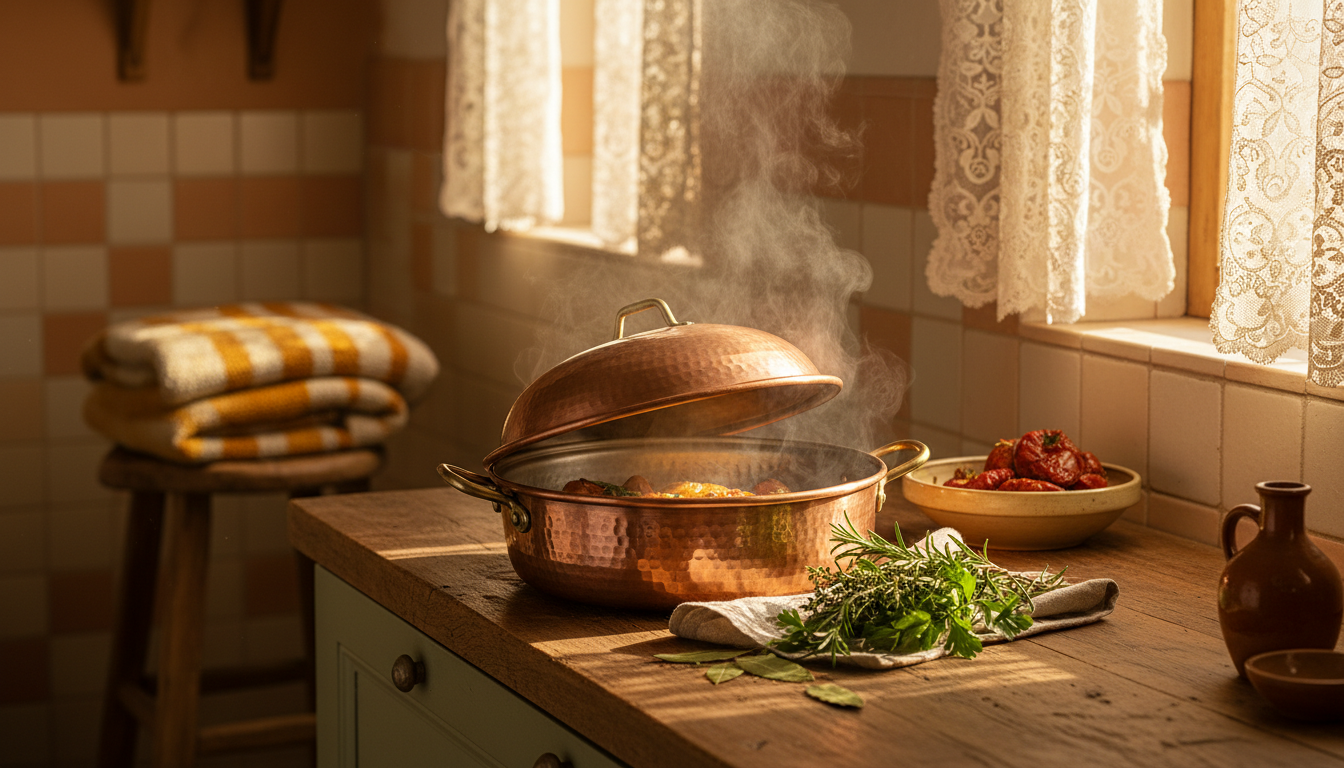 Traditional copper cataplana pot steaming on a rustic Portuguese kitchen counter, morning light stre
I've done home swaps in food-obsessed places—Lyon, Oaxaca, Bologna—but Portugal's southern coast surprised me. Not because the food is fancy (it isn't, thank god), but because it's so deeply tied to place. The fishermen. The family recipes passed down through generations. The grandmother who still makes Dom Rodrigos for feast days. You can't get this from a hotel breakfast buffet. You need a kitchen. You need a neighborhood. You need someone to tell you where they actually eat.
The Two Algarve Food Scenes (And Why Home Exchange Gets You Into the Right One)
Here's something most tourists miss: the Algarve has two food scenes.
There's the tourist version—overpriced seafood platters on marina boardwalks, "traditional" restaurants with laminated menus in six languages, dishes designed to look good on Instagram but taste like they were microwaved in a hotel kitchen. I've eaten at these places. Once.
Then there's the real Algarve food scene. Tiny tascas where the menu is whatever Maria decided to cook that morning. Markets where fishermen sell the catch they didn't give to restaurants. Bakeries that haven't changed their pastel de nata recipe since 1952.
The difference? Access.
When you're staying in someone's home through a platform like SwappaHome, you inherit their neighborhood. Their butcher. Their favorite pastelaria. My Lagos host, Sofia, had annotated a Google Map with 47 pins. Forty-seven. Each one had a note: "Best bifana in town, order extra sauce" or "Only go on Tuesdays when João is cooking."
That map was worth more than any guidebook I've ever bought.
Traditional Algarve Dishes You Actually Need to Try
I'm not going to list every Portuguese dish you've already read about. You know about bacalhau. You've heard of pastéis de nata. Instead, here's what's actually special about Algarve cuisine specifically—and where to find it done right.
Cataplana: The Dish That Defines This Coast
This copper-clammed cooking vessel is to the Algarve what the tagine is to Morocco. The shape—two clamshell halves sealed together—creates a pressure-cooking effect that makes seafood impossibly tender.
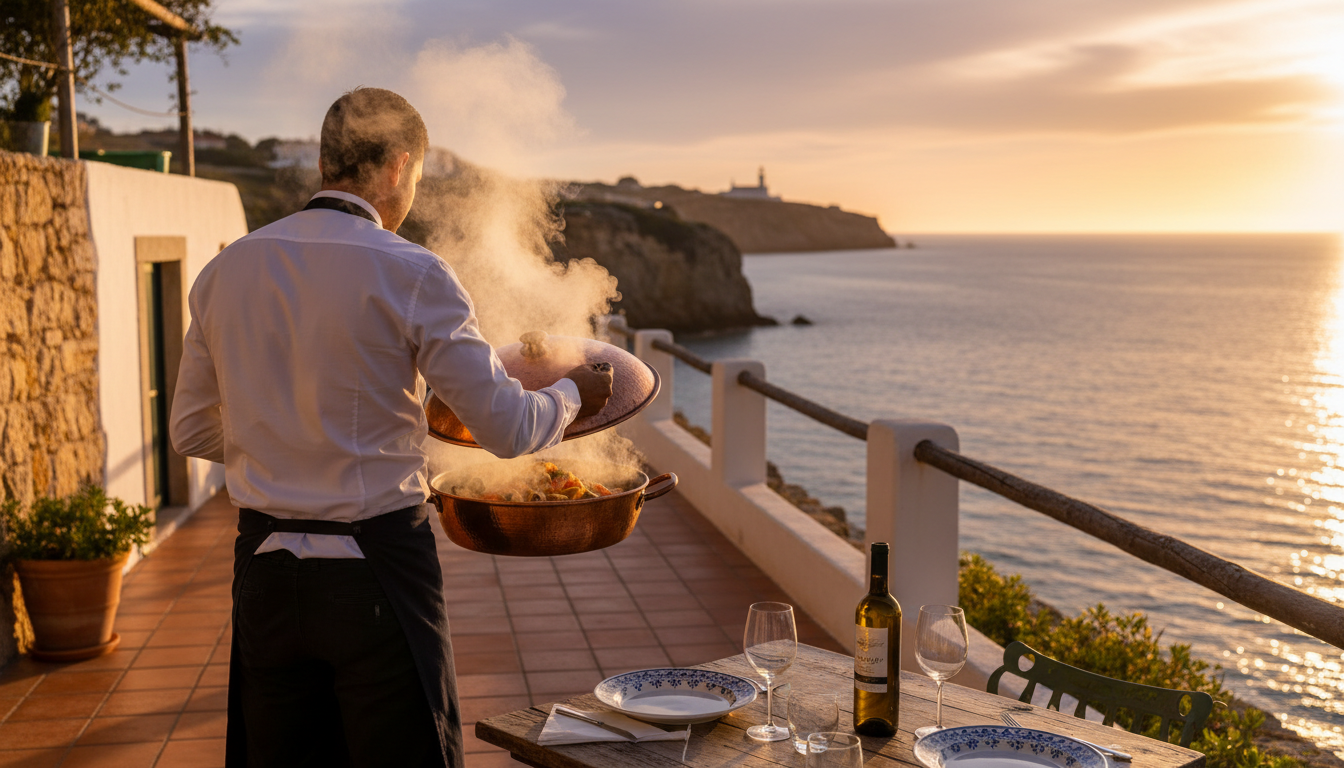 Waiter opening a traditional cataplana at a seaside restaurant in Ferragudo, steam rising, ocean vis
The classic is cataplana de amêijoas (clams with chouriço, white wine, and tomatoes), but I've had versions with monkfish, pork and clams together, even a vegetarian one with wild mushrooms at a farm near Silves.
Where to try it: A Tasca do Kiko in Portimão runs about €22-28 for two people. No English menu. Point at what the table next to you is having. You'll be fine.
Here's the thing for home exchangers—ask your host if they have a cataplana pot. Many Algarve homes do. The fishmonger at Lagos Municipal Market will sell you €15 worth of clams and tell you exactly how to cook them if you ask nicely. My host's recipe: garlic, white wine, piri piri, chouriço, clams, lid on, 15 minutes. Done.
Grilled Fish: Aggressively Simple, Impossibly Good
The Algarve's grilled fish philosophy is almost confrontational in its simplicity. Whole fish. Coarse salt. Charcoal grill. That's it.
The magic is in the freshness—fish that was swimming hours ago tastes completely different from fish that's been on ice for days. Order dourada (sea bream) or robalo (sea bass) if you want mild, sardinha if you want intense. Price is usually by weight—expect €12-18 per person for a whole fish with sides.
Marisqueira Rui in Silves has been grilling fish over charcoal since 1981. The owner, Rui himself (now in his 70s), still checks every plate before it leaves the kitchen.
Feijoada de Búzios: My Favorite Discovery
This is a bean stew made with búzios—whelks, a type of sea snail. I know. It sounds strange. It tastes like the ocean married a Portuguese grandmother's kitchen. Rich, briny, deeply comforting.
You won't find this in tourist areas. It's a working-class dish from the fishing villages. I had it at a nameless tasca in Olhão that my host's neighbor recommended—€8 for a portion big enough for two, served with crusty bread and a carafe of house red that probably came from someone's backyard.
Dom Rodrigos and Morgados: Edible History
The Algarve has a confectionery tradition dating back to Moorish times—elaborate sweets made from almond paste, eggs, and sugar. Dom Rodrigos are wrapped in colorful foil like little presents. Morgados are shaped into fruits and figures.
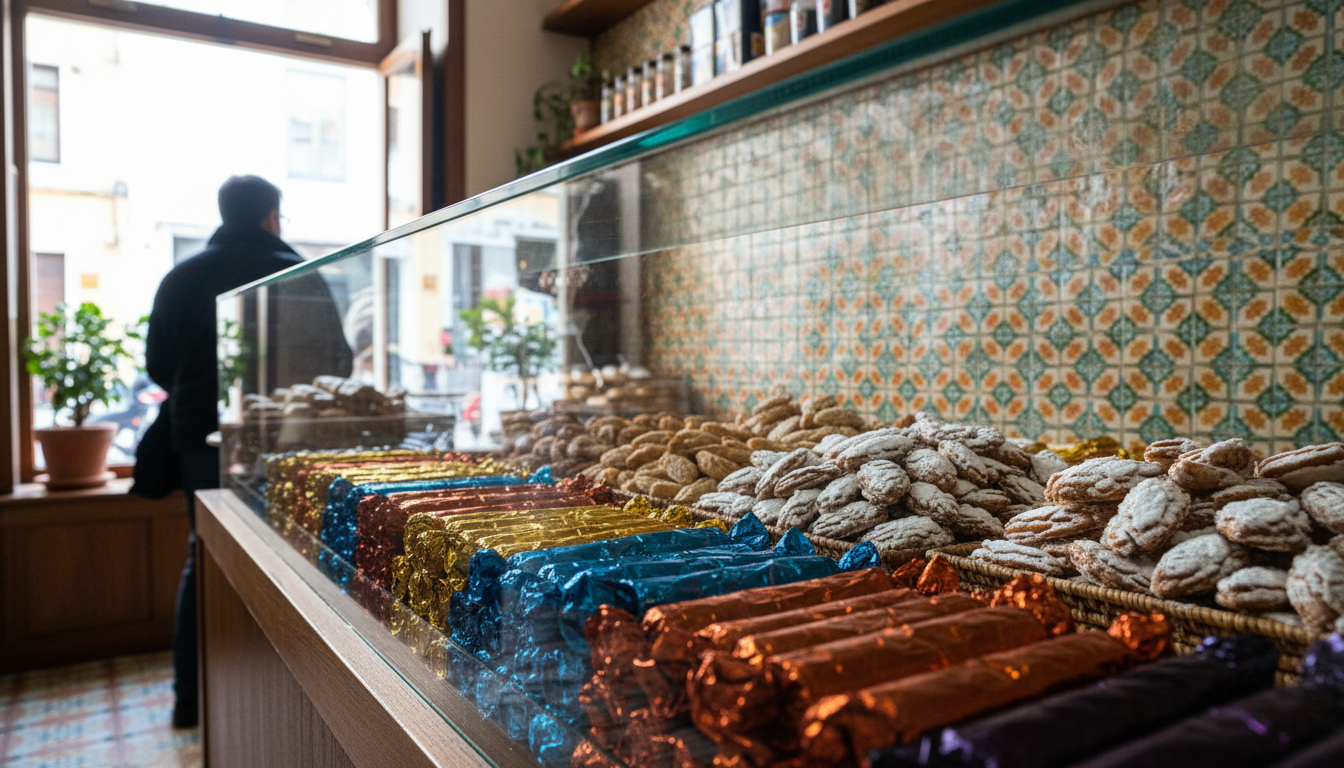 Display case in a traditional Algarve pastelaria showing rows of colorful Dom Rodrigos wrapped in fo
They're intensely sweet—one or two is plenty. Buy them at Pastelaria Rosa in Loulé or, even better, at the Saturday market where local grandmothers sell homemade versions from folding tables for €2-3 each.
Algarve Markets: Where Having a Kitchen Changes Everything
Having a kitchen transforms how you experience markets. Instead of just taking photos, you're actually shopping. Comparing the color of tomatoes. Asking the cheese lady which queijo is best for melting.
Lagos Municipal Market is open Monday-Saturday until 1pm. The fish hall is the star—arrive by 8am to see the auction and get first pick. There's a tiny stall in the corner selling homemade chouriço that's worth the trip alone. Budget €25-30 for a full day's worth of groceries including fish, vegetables, bread, and cheese.
Loulé Market on Saturday mornings feels like stepping back 50 years. The covered market hall is gorgeous—Moorish arches, azulejo tiles—but the real action is outside, where farmers sell directly from the back of their trucks. This is where I found wild espargos in spring, foraged by someone's uncle from the hills near Alte.
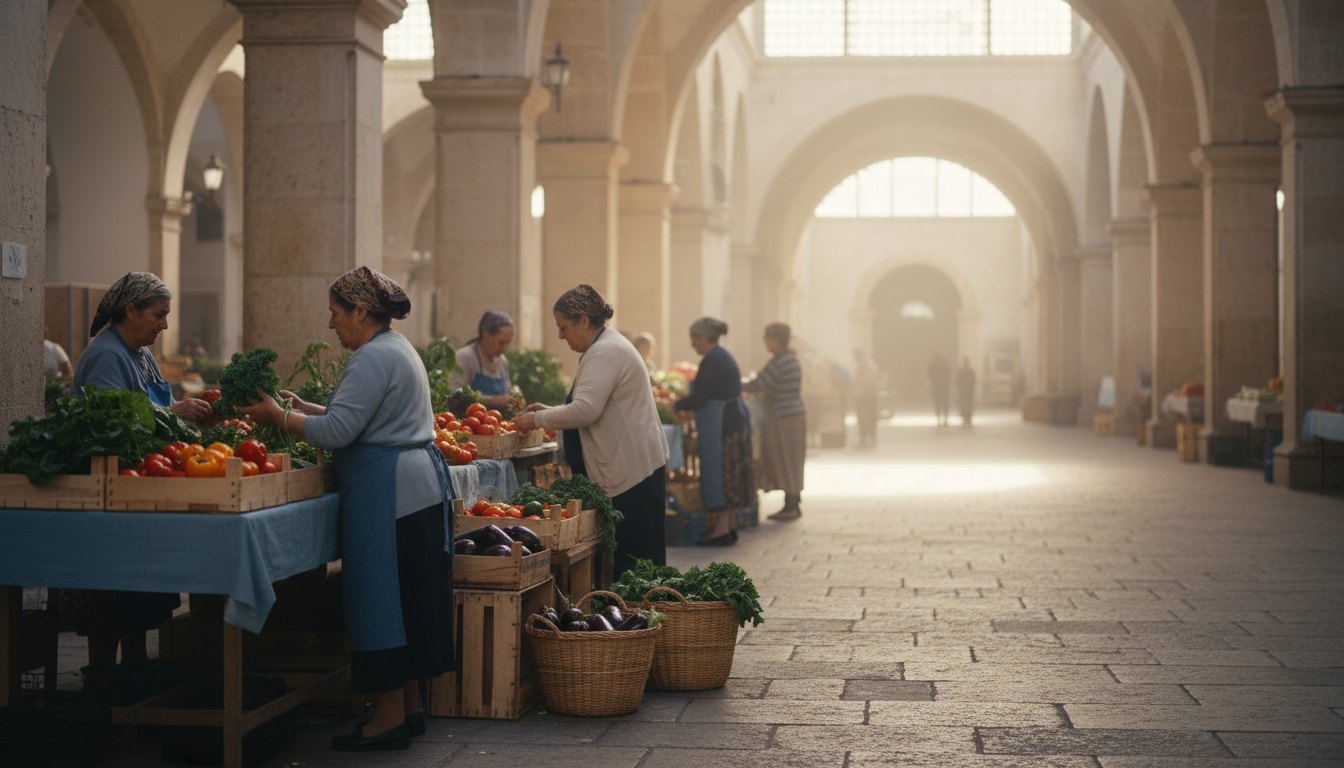 Bustling Saturday morning at Loul market, elderly Portuguese women selling vegetables from wooden cr
Olhão Market is the largest and most "real"—two separate buildings, one for fish, one for produce. The fish market is intense. Fishermen's wives shouting prices. Octopus tentacles draped over ice. The smell of the sea everywhere. Come hungry and have bifana at one of the market cafés for €3.50.
Restaurants Worth Leaving Your Kitchen For
I know I've been pushing the "cook at home" angle, but let's be real—you're on vacation. You're going to eat out. Here's where to do it without falling into tourist traps.
For Seafood: O Chamboril in Portimão. Hidden on a residential street, no sea view, plastic tablecloths. The arroz de tamboril (monkfish rice) is the best I've had in Portugal. Cash only. Expect to wait on weekends. About €35-40 for two with wine.
For Meat: Casa Velha in Guia. Yes, it's famous for frango piri piri. Yes, it's in every guidebook. It's in every guidebook because it's genuinely excellent. The chicken is spatchcocked, grilled over charcoal, and served with a sauce that builds heat slowly. €12 for a half chicken with fries and salad.
For Something Different: Noélia e Jerónimo in Cabanas de Tavira. This tiny restaurant serves only what Noélia decides to cook each day. No menu. You sit down, she brings food. Might be polvo, might be javali (wild boar), might be something you've never heard of. Trust her. About €25-30 per person including wine.
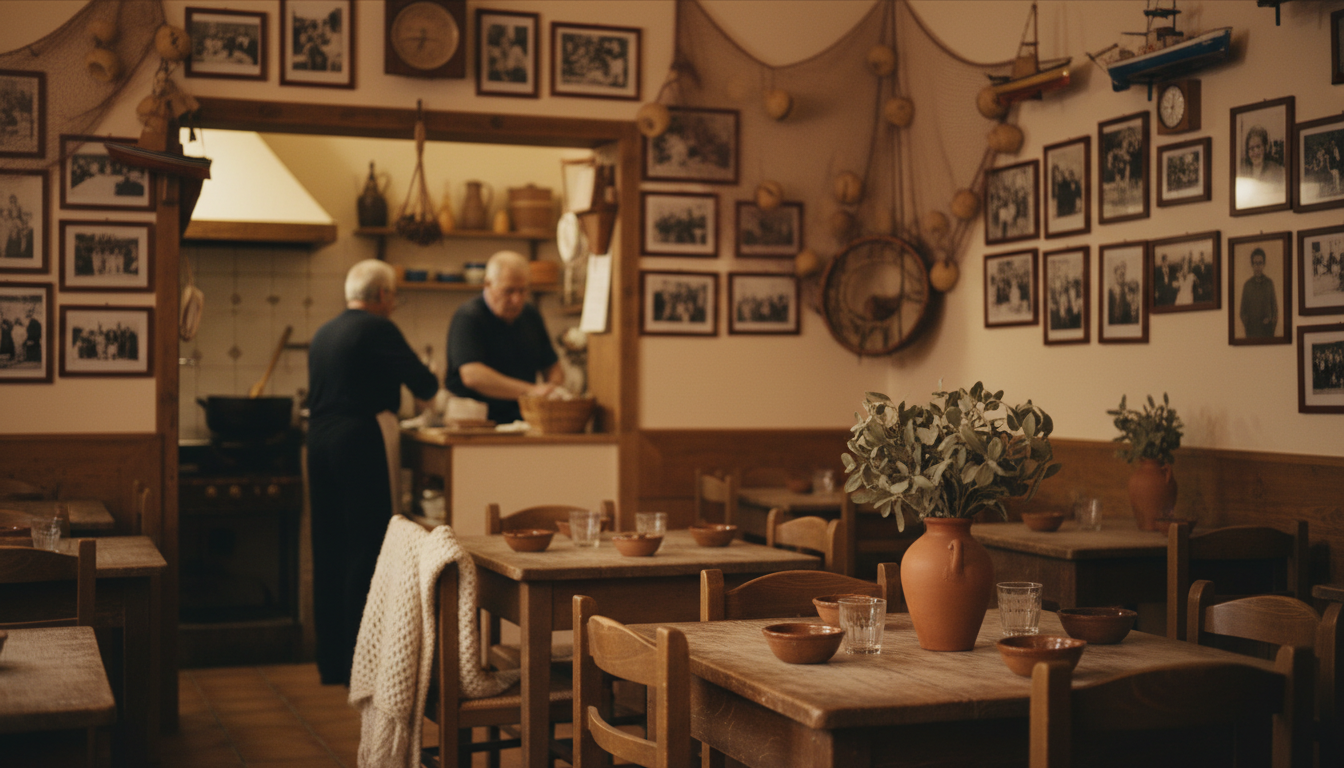 Intimate interior of a traditional Algarve tasca, elderly couple running the restaurant visible in t
For Breakfast: Pastelaria Coelho in Tavira. The pastéis de nata here are better than most in Lisbon. Fight me. €1.20 each. Get two. Get three. No judgment.
Wine, Medronho, and What to Drink
The Algarve isn't Portugal's most famous wine region, but it's having a moment. Small producers are making interesting wines from indigenous grapes—wines that are almost impossible to find outside the region.
For reds, look for the Negra Mole grape—light, fruity, perfect for warm evenings. Quinta do Francês and Monte da Casteleja are doing excellent work. For whites, Arinto and Síria grapes make crisp, citrusy wines that pair perfectly with grilled fish. Skip the supermarket and go to Garrafeira Soares in Faro. Expect €8-15 for a good local bottle.
But honestly, the real discovery is medronho—the local aguardente made from strawberry tree fruit. It's strong (45-50% alcohol) and tastes like a forest fire in the best possible way. Every village in the hills makes their own.
I was offered homemade medronho by my host's neighbor in Monchique. We sat on his terrace, watched the sunset, and he told me stories about his grandfather's still. That's the kind of experience you can't book anywhere.
When to Go: A Seasonal Food Calendar
Timing your home exchange right can unlock experiences that only happen certain times of year.
February-March brings the orange harvest. The Algarve produces most of Portugal's citrus, and oranges go for €1 per kilo at markets. The smell of orange blossoms is intoxicating.
April-May is wild asparagus season. Locals forage espargos bravos from the hillsides—you'll find them at markets, usually sold by elderly folks who know the secret spots.
June-August means sardines at their peak—fat, oily, perfect over charcoal. Every town has a sardine festival.
September-October is fig and almond time. Fresh figs that actually taste like something. Almonds everywhere—buy them raw and roast them yourself.
November-December brings the olive harvest. Some farms offer experiences where you can help pick and press. Ask your host—they might know someone.
What I'd Tell Anyone Planning Their First Algarve Food Exchange
After three separate home exchanges in the Algarve—Lagos, Tavira, and Monchique—here's what I've learned.
Talk to your hosts. Really talk to them. Ask where they eat, what they cook, about their grandmother's recipes. SwappaHome's messaging makes this easy—start the conversation before you arrive, and you'll land with a food education already begun.
Buy less than you think you need. Markets are open almost every day. Fish is best eaten the day it's caught.
Leave time for happy accidents. Some of my best food memories weren't planned—the fisherman who invited me to try his wife's caldeirada, the bakery I stumbled into because I smelled bread, the neighbor who dropped off homemade medronho because she heard I was interested.
That's the thing about experiencing the Algarve food scene through home exchange. You're not a tourist. You're a temporary local. And locals eat well.
Sofia emailed me after my stay. "Did you use the cataplana?" she asked.
I had. Three times. And I'd left her a note with my own recommendations—a wine I'd discovered, a tasca I'd found by accident, a cheese vendor at the market who'd become my new favorite.
That's how this works. You receive. You give back. You eat incredibly well. And you leave with recipes, memories, and probably a few extra pounds.
Worth it.
Frequently Asked Questions
What is the traditional food of the Algarve region?
The Algarve food scene centers on fresh seafood—cataplana stews, grilled fish, clams, octopus, sardines. Almond-based sweets like Dom Rodrigos reflect Moorish heritage. Piri piri chicken from Guia draws visitors from across Portugal.
How much should I budget for food in the Algarve?
Figure €40-60 per person daily for eating out at local restaurants, or €20-30 if you're cooking with market ingredients. Home exchange cuts costs significantly—market shopping runs about half of restaurant dining while often delivering better quality.
Is the Algarve good for food lovers?
Absolutely. Exceptional seafood freshness, regional dishes you won't find elsewhere in Portugal, vibrant markets in Lagos, Loulé, and Olhão. The region's culinary identity—shaped by Atlantic fishing traditions and Moorish influences—rewards curious eaters willing to venture beyond tourist restaurants.
Where do locals eat in the Algarve?
Small tascas away from tourist areas, often in residential neighborhoods or fishing villages. Look for places without English menus, where prices are on chalkboards, where the lunch crowd is Portuguese workers. Olhão, Portimão's old town, and villages around Silves have excellent spots.
Can vegetarians eat well in the Algarve?
With some planning, yes. Traditional cuisine is meat and seafood-heavy, but markets offer outstanding vegetables, cheese, and bread. Kanalla in Lagos caters specifically to vegetarians. Focus on açorda, grilled vegetables, and the region's exceptional tomatoes, figs, and almonds during harvest seasons.
40+
Swaps
25
Countries
7
Years
About Maya Chen
Travel Writer & Home Exchange Expert
Maya is a travel writer with over 7 years of experience in the home swapping world. Originally from Vancouver and now based in San Francisco, she has completed more than 40 home exchanges across 25 countries. Her passion for "slow" and authentic travel led her to discover that true luxury lies in living like a local, not a tourist.
Ready to try home swapping?
Join SwappaHome and start traveling by exchanging homes. Get 10 free credits when you sign up!
Related articles
Lyon Home Exchange: Your Complete Guide to France's Hidden Gem for Home Swapping
Discover why Lyon home exchange is booming among savvy travelers. From Croix-Rousse to Presqu'île, find the best neighborhoods and insider tips for your swap.

Zurich Bucket List: 47 Unforgettable Experiences to Enjoy During Your Home Swap
Discover the ultimate Zurich bucket list for home swappers—from secret swimming spots to fondue rituals locals actually do. Save thousands while living like a true Zürcher.
Dublin Home Exchange Utilities Guide: WiFi, Heating & Everything Your Guests Need
Master Dublin home exchange utilities—from dodgy WiFi fixes to heating quirks. Practical tips from 7 years of swapping homes across Ireland.