
Santiago on a Budget: How Home Swapping Saves You Thousands in Chile's Capital

SwappaHome Editorial Team
Home Exchange & Slow Travel Editorial
Discover how home swapping in Santiago can save you $2,000+ on accommodation while living like a local in Chile's most vibrant neighborhoods.
I was standing in the kitchen of a stranger's apartment in Providencia, making myself a cup of Nescafé (Chileans are obsessed with instant coffee, fair warning), when I did the math on what this trip would have cost me in hotels. The number made me laugh out loud.
Santiago on a budget isn't just possible—it's genuinely enjoyable when you're not hemorrhaging money on overpriced accommodation. And home swapping? It's the closest thing to a travel cheat code I've found in seven years of doing this.
 Morning light streaming through floor-to-ceiling windows in a modern Providencia apartment, with the
So here's the deal: I'm going to break down exactly how home swapping saves you thousands in Santiago, which neighborhoods to target, and the real costs you'll encounter once you're there. Because Chile's capital is wildly underrated, and you deserve to experience it without the financial hangover.
Why Santiago on a Budget Requires Smart Accommodation Choices
Here's what most travel guides won't tell you straight: Santiago isn't a cheap city anymore. The Chilean peso has strengthened, the tourism industry has matured, and those "South America on $30 a day" articles from 2015? Basically fiction now.
Decent hotels in safe, interesting neighborhoods run $120-180 USD per night. Airbnbs in Lastarria or Bellavista? $80-120. Even hostels have crept up to $25-40 for a private room.
Do that math for a two-week trip. You're looking at $1,120 to $2,520 just for somewhere to sleep—before you've eaten a single empanada or taken the funicular up Cerro San Cristóbal.
When I did my Santiago home swap last autumn, I stayed for 12 nights in a two-bedroom apartment with a full kitchen, washing machine, and a balcony overlooking Parque Bicentenario. My cost? Zero dollars. I'd earned the credits by hosting a lovely couple from Melbourne in my San Francisco place a few months earlier. The savings aren't theoretical—they're the difference between a stressed, budget-conscious trip and one where you can actually say yes to things.
How Home Swapping in Santiago Actually Works
I get asked this constantly, so let me demystify it.
On SwappaHome, every night you host someone earns you one credit. Every night you stay somewhere costs one credit. That's it. No complicated pricing tiers, no "premium" listings that cost more. A studio in Santiago costs the same credits as a villa in Tuscany.
New members start with 7 free credits—already enough for a solid Santiago trip. You don't need to find someone who wants your specific home at the exact time you want theirs. Host a family from Tokyo in March, use those credits in Santiago in October. The system is flexible.
The Santiago home exchange community has grown significantly in the past few years. Chilean members tend to be professionals in their 30s-50s, often with beautifully maintained apartments in the eastern neighborhoods. They're typically eager to explore North America and Europe, which works perfectly if that's where you're based.
 A cozy living room in a Santiago apartment decorated with Chilean folk art, colorful woven textiles,
Best Neighborhoods for Budget Home Swaps in Santiago
Not all Santiago neighborhoods are created equal for home swappers. Here's where to focus your search—and what you'll actually experience in each.
Providencia: The Sweet Spot for First-Timers
Providencia is where I'd point anyone doing their first Santiago home swap. Safe, walkable, packed with restaurants and cafés, connected to everything via the Metro.
The neighborhood sits between the business district and the foothills of the Andes, giving you that mountain backdrop that makes Santiago so photogenic. Apartment buildings here tend to be modern, well-maintained, and equipped with the amenities you'd expect back home.
Average hotel cost in Providencia: $140-180/night. Home swap cost: 1 credit/night (effectively $0).
I stayed near Avenida Suecia, which sounds fancy but is basically Santiago's version of a neighborhood with good brunch spots and wine bars. The apartment had a gym in the building, which saved me from my usual travel fitness spiral.
Ñuñoa: The Local's Secret
Ñuñoa rarely appears in tourist guides, which is exactly why I love it. This is where young Santiago professionals actually live—not where tourists think they should stay.
The Plaza Ñuñoa area comes alive on weekends with families, street performers, and some of the best casual restaurants in the city. Craft beer spots, independent bookstores, that authentic neighborhood energy that disappears the moment too many tourists show up. Home swaps here often come with parking (useful if you're planning Patagonia road trips) and larger spaces for the same credit cost. The Metro connection is solid, putting you 15-20 minutes from downtown.
Lastarria: For Culture Obsessives
Lastarria is Santiago's answer to Brooklyn or Shoreditch—cobblestone streets, art galleries, independent boutiques, and coffee shops where everyone looks like they're writing a screenplay.
The neighborhood clusters around the Museo de Bellas Artes and extends up toward Cerro Santa Lucía. It's walkable, beautiful, and absolutely lousy with good restaurants.
Fair warning: Lastarria home swaps get snapped up fast. The neighborhood is small and desirable, so you'll want to reach out to potential hosts 2-3 months ahead. But the location savings are enormous—hotels here easily hit $200/night.
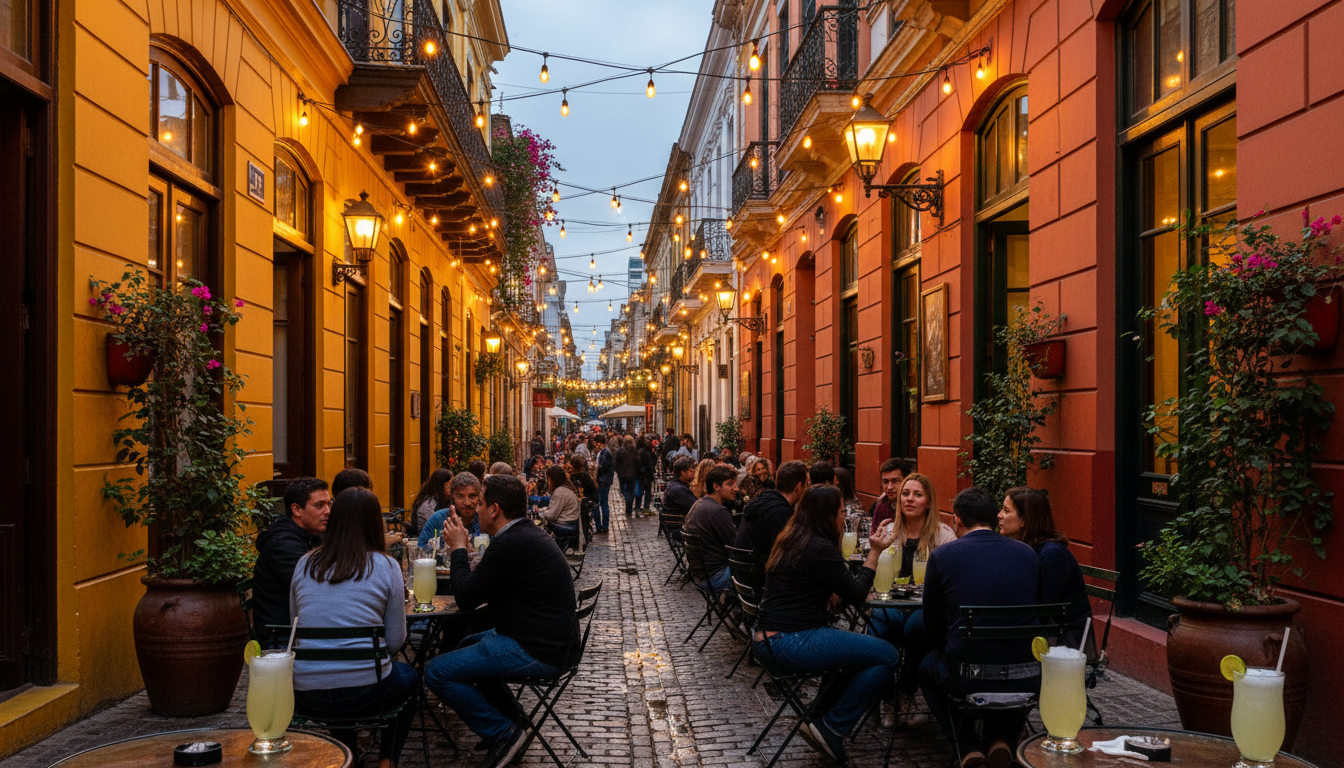 Narrow cobblestone street in Lastarria at dusk, string lights overhead, outdoor caf tables with peop
Bellavista: The Bohemian Choice
Bellavista wraps around the base of Cerro San Cristóbal and has this slightly chaotic, artistic energy that I find irresistible. Pablo Neruda's house, La Chascona, sits here, and the neighborhood seems to have absorbed some of his poetic eccentricity.
The street art is incredible. The nightlife is the best in Santiago. The restaurants range from hole-in-the-wall seafood joints to upscale Peruvian fusion. Home swaps in Bellavista tend toward older buildings with more character—think high ceilings, wooden floors, balconies overlooking the hill. Just know that weekends get loud. If you're a light sleeper, Providencia might be your better bet.
The Real Budget Breakdown: Santiago Costs Beyond Accommodation
Saving thousands on accommodation means nothing if you blow it all on overpriced tourist meals. Here's what Santiago actually costs when you're living like a local.
Food and Dining
Having a kitchen changes everything. Chilean supermarkets are excellent—Jumbo and Lider are the main chains—and you'll find everything from fresh seafood to surprisingly good wine for under $8 a bottle.
My typical daily food budget in Santiago ran about $25-43, broken down like this: breakfast at home for $3-5 (eggs, fresh bread from the corner panadería, avocado, coffee), lunch at a local picada for $8-12 (the menú del día includes drink and often dessert), afternoon coffee and pastry for $4-6, and dinner cooked at home or at a casual restaurant for $10-20. Compare that to $60-100 if you're eating every meal at tourist-oriented restaurants.
The menú del día tradition is your best friend. Most local restaurants offer a fixed lunch menu—usually a starter, main, drink, and sometimes dessert—for 6,000-10,000 Chilean pesos ($7-12 USD). The food is hearty, homemade, and exactly what the office workers around you are eating.
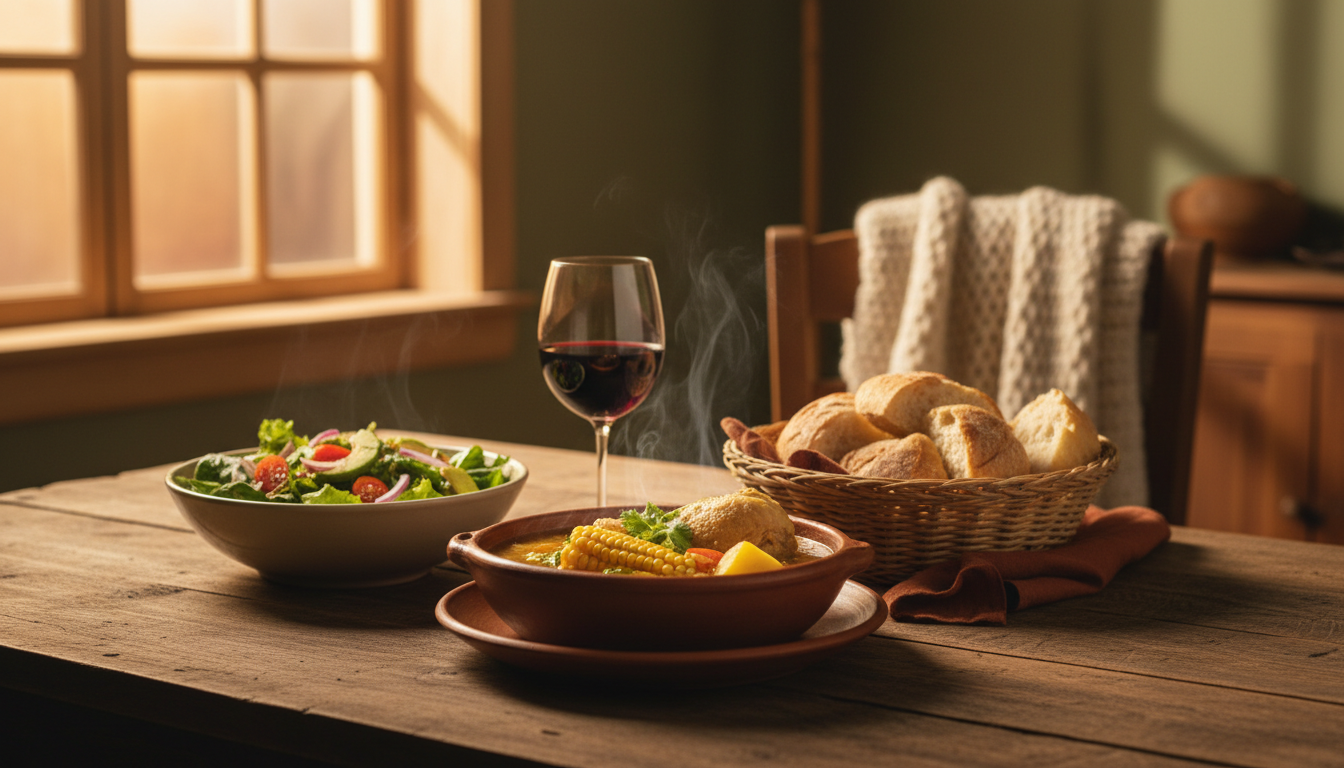 A traditional Chilean lunch spread on a wooden table - cazuela soup with chicken, fresh bread, a sid
Transportation
Santiago's Metro is clean, efficient, and cheap—a single ride costs around $1 USD, and a bip! card (their transit card) works on buses too.
Uber and Cabify operate legally and are affordable. A 20-minute ride across the city rarely exceeds $8. I used them for late nights when the Metro had stopped running. Budget $5-15/day depending on how much you're moving around.
Activities and Attractions
Many of Santiago's best experiences cost nothing or next to nothing. The Museo de la Memoria (heartbreaking and essential), the Museo Nacional de Bellas Artes, and the Centro Cultural La Moneda all have free admission.
Cerro San Cristóbal charges about $5 for the funicular, but you can hike up for free and enjoy the same views. The Mercado Central is free to wander, and you can eat lunch there for $12-15. Wine tasting in the Maipo Valley (an easy day trip) runs $30-60 including transportation if you join a group tour, or rent a car and do it independently for less. Realistic daily activity budget: $10-30.
Total Daily Budget Comparison
With home swapping, you're looking at about $53-77 per day: $0 for accommodation, $30-40 for food, $8-12 for transportation, and $15-25 for activities.
Without home swapping (mid-range hotel), it's $215-290 per day: $140-180 for accommodation, $50-70 for food (no kitchen means more restaurant meals), $10-15 for transportation, and $15-25 for activities.
Over two weeks? That's a difference of $2,268 to $2,982. I'm not exaggerating when I say home swapping saves you thousands.
Practical Tips for Your Santiago Home Swap
After multiple trips and plenty of lessons learned, here's what actually matters.
Timing Your Trip
Santiago's best weather runs from October through April—their spring and summer. December through February is peak season, and home swap availability tightens. March and April offer gorgeous autumn weather, fewer crowds, and more flexible hosts.
Avoid July if you can. Santiago winters are gray, cold, and the air quality plummets due to temperature inversions trapping smog against the mountains. It's not dangerous, just unpleasant.
Communication with Chilean Hosts
Chileans are warm but formal in initial communications. Start with proper greetings, express genuine interest in their home and neighborhood, and don't be surprised if they want to video chat before confirming.
Most Santiago home swappers speak English, but any Spanish effort goes a long way. Even a "Muchas gracias por tu hospitalidad" in your first message sets the right tone.
What to Expect in a Santiago Apartment
Chilean apartments typically include a washing machine (dryers are rare—line drying is standard), hot water via calefón (instant water heater that takes about 10 seconds to warm up), good WiFi (Chile has excellent internet infrastructure), and basic kitchen supplies and spices.
They typically don't include air conditioning (most Santiago apartments don't have it—nights are cool enough), dishwashers (less common than in North America), or ovens in smaller apartments (stovetops and microwaves are standard).
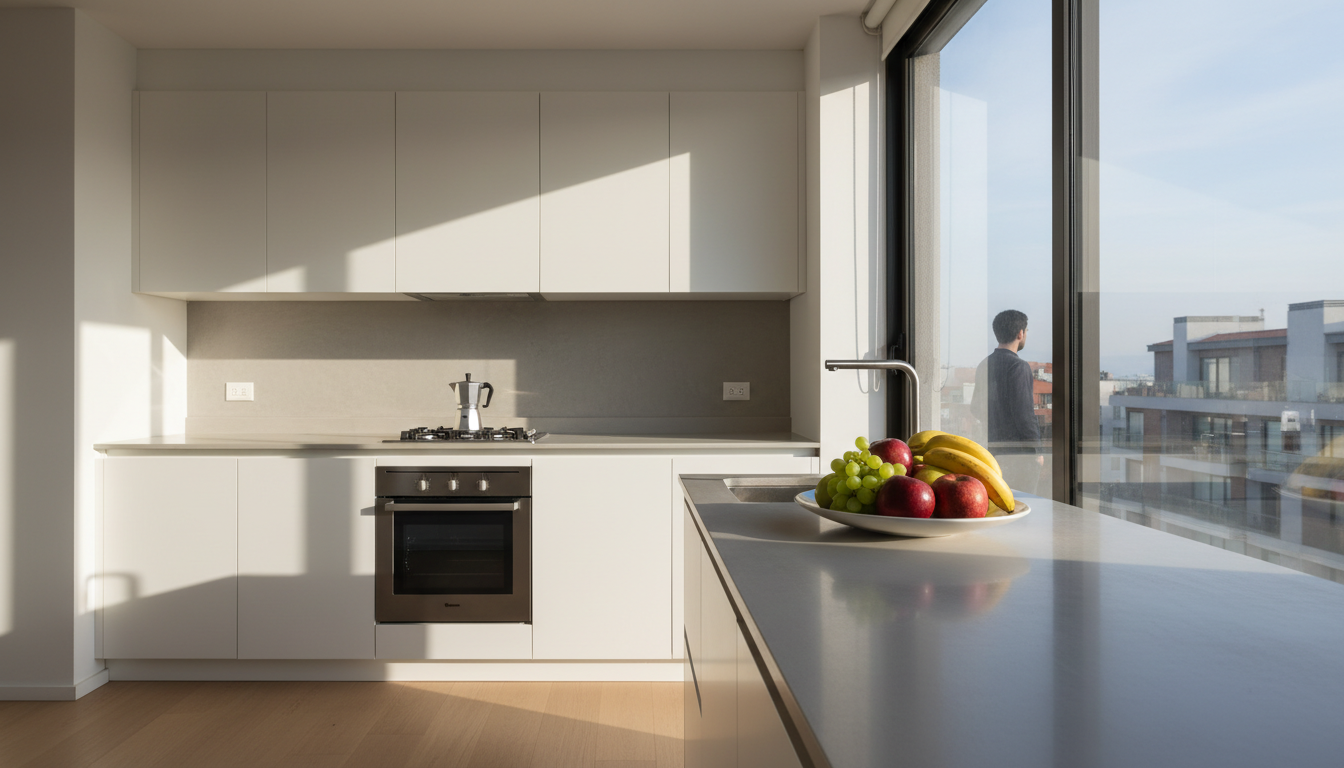 Modern Santiago apartment kitchen with white cabinets, stovetop with a moka pot, fresh fruit in a bo
The Earthquake Reality
Chile is seismically active. You'll likely feel a small tremor during a two-week stay—most locals don't even look up from their phones. Buildings are engineered for this, and serious earthquakes are rare.
Ask your host where the emergency supplies are (most Chilean homes have a kit) and note the building's evacuation plan. It's basic preparedness, not paranoia.
Making the Most of Your Savings
Here's what I did with the money I didn't spend on hotels during my last Santiago trip.
I took a day trip to Valparaíso, the coastal city that looks like someone spilled paint cans down a hillside. The bus costs $8 each way, and wandering the cerros (hills) with their street art and funiculars is one of Chile's essential experiences.
I splurged on a proper dinner at Boragó, the restaurant that put Chilean cuisine on the global map. It's expensive—around $180 for the tasting menu—but it's also a once-in-a-lifetime meal that I could only justify because I wasn't paying for accommodation.
And I extended my trip by four days. When you're not burning $150/night on a hotel, staying longer becomes possible. Those extra days let me take a slower pace, discover neighborhood spots I'd have missed on a rushed itinerary, and actually rest.
Why Santiago Deserves More Than a Layover
Too many travelers treat Santiago as a stopover on the way to Patagonia or the Atacama. That's a mistake.
The city has this energy—ambitious, artistic, complicated by its history—that takes time to feel. The food scene rivals anything in South America. The wine regions are literally 45 minutes away. The Andes provide a daily backdrop that never stops being dramatic.
And when you're not stressed about accommodation costs, you can actually sink into a place. You can linger over a long lunch, take the afternoon to explore a neighborhood without checking the time, say yes to that spontaneous invitation from your host's neighbor.
That's what home swapping really gives you. Not just savings—though those are real and significant—but a different way of traveling. You're not a tourist consuming a city from a hotel room. You're temporarily living somewhere, with all the small pleasures and authentic experiences that implies.
If you're considering Santiago, start browsing SwappaHome listings now. The Chilean members I've connected with have been universally welcoming, and the apartments available would cost you a fortune on any booking platform.
Your future self, standing on a Providencia balcony with the Andes turning pink at sunset, a glass of Carménère in hand, will thank you for figuring this out.
Frequently Asked Questions
Is home swapping in Santiago safe?
Santiago home swapping is very safe, especially in neighborhoods like Providencia, Ñuñoa, and Las Condes. SwappaHome's verification and review system helps you connect with trusted hosts, and Chile consistently ranks as one of South America's safest countries. The home exchange community here tends toward professionals with well-maintained properties.
How much money can I save with home swapping in Santiago?
Most travelers save $1,500-3,000 over a two-week trip compared to hotels. Mid-range Santiago hotels cost $120-180/night, while home swaps cost only 1 credit per night regardless of location or apartment size. The savings increase further when you factor in kitchen access reducing restaurant expenses.
What's the best time of year for a Santiago home swap?
March through May or October through November hit the sweet spot. These shoulder seasons offer pleasant weather, fewer tourists, and more available home swap listings. December through February is peak summer with higher demand, while July's winter brings cold weather and poor air quality.
Do I need to speak Spanish for home swapping in Chile?
You don't need fluent Spanish—most Chilean hosts speak English. But honestly, basic Spanish phrases help enormously for daily interactions like shopping, restaurants, and transportation. Your host can provide local tips regardless of language, and translation apps handle most communication gaps.
How far in advance should I arrange a Santiago home swap?
Aim for 2-3 months in advance for the best selection, especially in popular neighborhoods like Lastarria and Providencia. Last-minute swaps are possible but limit your options. Contact multiple potential hosts simultaneously and stay flexible with exact dates to increase your chances of confirmation.

Published by
SwappaHome
SwappaHome Editorial Team
Home Exchange & Slow Travel Editorial
The SwappaHome Editorial Team brings together travel research, home-exchange community insights, and platform data to produce practical guides for first-time and experienced home swappers. Every article cites real platforms, current market rates, and verifiable city-level facts so readers can make informed decisions without guessing.
Ready to try home swapping?
Join SwappaHome and start traveling by exchanging homes. Get 7 free credits when you sign up!
Related articles

Bachelor and Bachelorette Parties in Singapore: The Complete Home Swap Group Guide for 2026
Planning a bachelor or bachelorette party in Singapore? Discover how home swapping lets groups of 6-12 stay together in luxury condos, saving thousands while partying in Marina Bay.

Cycling in Lisbon: 7 Home Swap Bike Tour Itineraries for Every Rider
Discover the best cycling routes in Lisbon with these home swap bike tour itineraries—from waterfront paths to hilltop adventures, all starting from your borrowed home.

Graduation Trip to Barcelona: How Home Swapping Gives New Graduates the Ultimate Celebration
Planning a graduation trip to Barcelona? Discover how home swapping lets new graduates explore Spain's most vibrant city without the hostel crowds or hotel costs.