
Cairo with Children: Why Home Swap Makes Family Travel to Egypt Easier

SwappaHome Editorial Team
Home Exchange & Slow Travel Editorial
Discover how home swapping in Cairo transforms family travel—from kid-friendly neighborhoods to saving thousands on accommodation while living like locals.
My daughter was three when she first tried koshari from a street vendor in Cairo's Zamalek district. She eyed those layers of rice, lentils, pasta, and crispy onions with deep suspicion—fair enough, honestly. But one bite changed everything. We sat on the balcony of our home swap apartment, the Nile glittering below, and I thought: this is why we travel this way.
Cairo with kids isn't something most parents consider casually. Egypt feels big, ancient, overwhelming. The pyramids! The chaos! The heat! But here's what I've learned after bringing my kids twice through home exchange: it's not only doable—it's genuinely magical. And swapping a hotel for someone's actual home? That transforms the whole experience from survival mode to something we're actually enjoying.
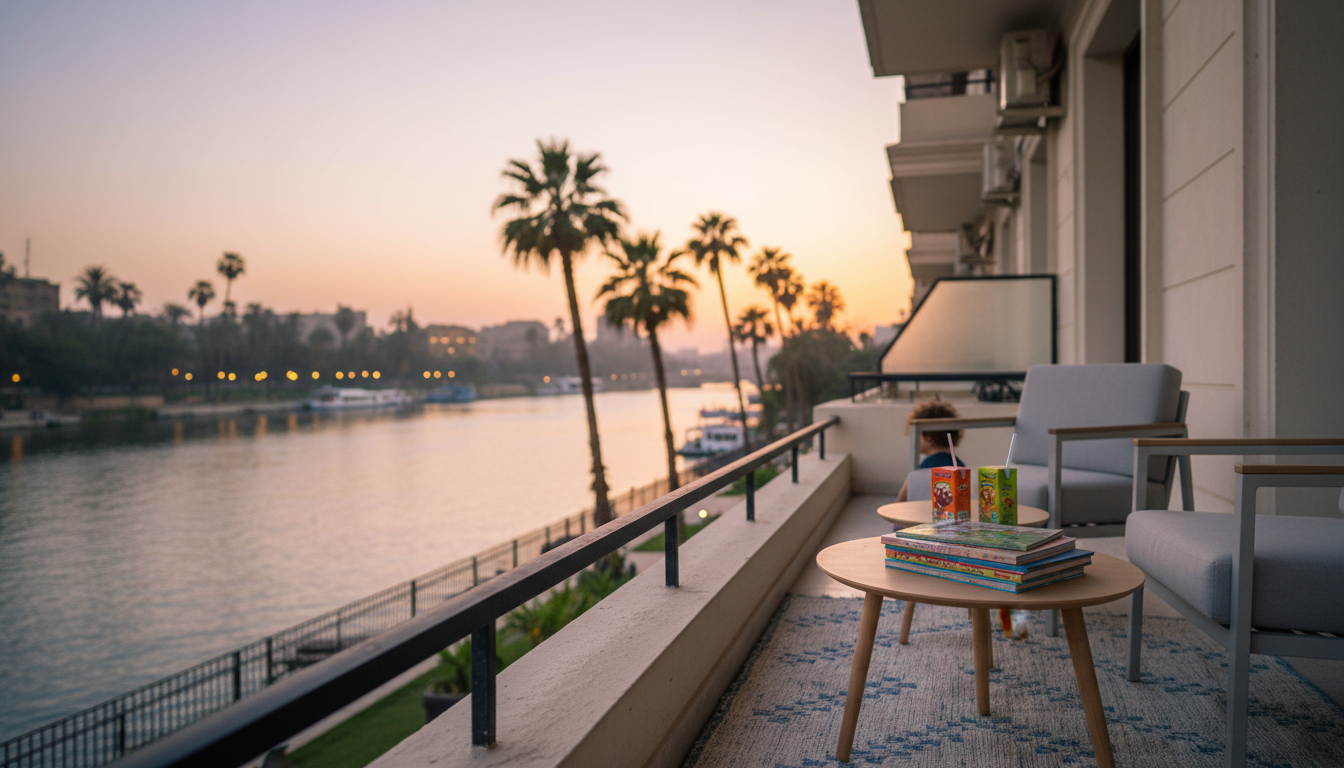 A family-friendly apartment balcony in Cairos Zamalek neighborhood overlooking the Nile at golden ho
Why Cairo with Children Works Better Through Home Swap
Real talk: Cairo hotels that are genuinely family-friendly cost a fortune. We're talking $250-400 USD per night for places with enough space for kids to spread out, reliable air conditioning, and locations that don't require a 45-minute taxi ride to see anything interesting. A week at a decent family hotel? That's $1,750-2,800 just for accommodation.
With home swapping through platforms like SwappaHome, you're spending credits instead of cash—1 credit per night, whether you're in a studio or a three-bedroom apartment. Those 7 free credits new members get? That's 7 nights in Cairo. The math isn't subtle.
But honestly, the money isn't even the biggest win when you're traveling with kids. It's the space.
The Space Factor Nobody Talks About
Hotel rooms with children are an exercise in controlled chaos. Where does the stroller go? Where do the kids nap while you desperately need coffee? What happens at 6 PM when everyone's exhausted but it's too early for bed and you're all trapped in 300 square feet together?
Our Zamalek apartment had two bedrooms, a full kitchen, a living room with actual toys left by the host family, and that balcony overlooking the Nile. My kids could go to bed at 7:30 while my husband and I sat outside with Egyptian wine (yes, it exists, and it's decent), planning the next day. That's not vacation luxury—with kids, it's survival.
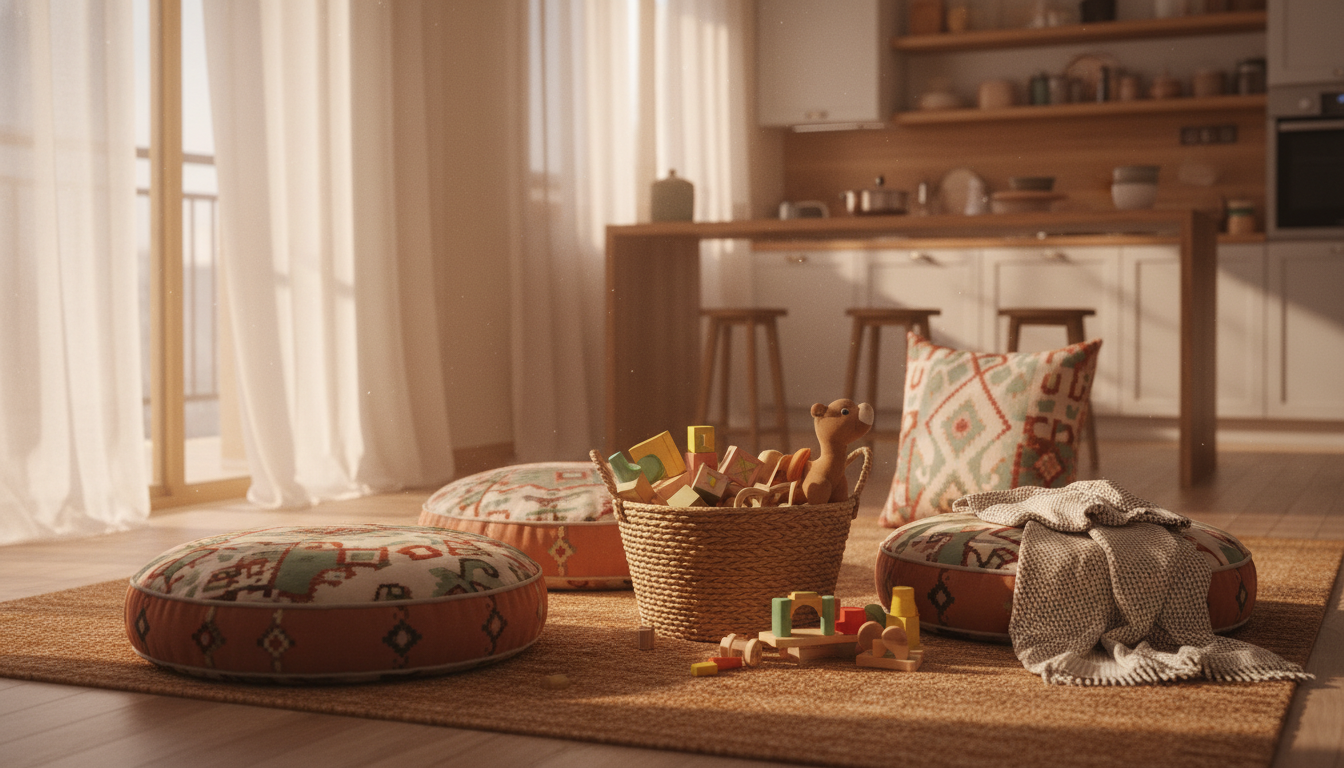 Interior of a bright, spacious Cairo apartment living room with childrens toys in a basket, Arabic-s
Best Cairo Neighborhoods for Family Home Exchanges
Not all Cairo neighborhoods work equally well for families. After two trips and extensive research—okay, obsessive planning because I travel with tiny humans—here's my honest breakdown.
Zamalek: The Gold Standard for Families
Zamalek is an island in the Nile, and that geography creates something rare in Cairo: relative calm. Tree-lined streets. Actual sidewalks. Parks, gelato shops, and quiet residential blocks where kids can walk without you having a heart attack.
Home swaps here tend to be in older apartment buildings with character—high ceilings, wooden floors, balconies. Many Egyptian families in Zamalek have traveled internationally, so they understand home exchange and often have kid-friendly setups already.
You're walking distance to the Cairo Opera House grounds (great for letting kids run), there are multiple playgrounds nearby, and Sequoia restaurant has a Nile-side terrace where kids can roam safely. Grocery stores like Seoudi and Metro Market make self-catering easy. Uber to the pyramids runs about 45 minutes and costs 150-200 EGP ($5-7 USD).
Maadi: Suburban Calm with Expat Infrastructure
Maadi feels almost like a different city. This southern suburb has housed expats for decades, which means international schools, familiar grocery chains, and a surprising number of playgrounds.
The downside? You're far from the major sites—the pyramids are a solid hour away in traffic. But if you're planning a longer stay, say two weeks or more, Maadi's calm might be worth the trade-off. Home swaps often include gardens or shared green spaces, more modern buildings with reliable utilities, and English-speaking neighbors happy to share tips. Road 9's restaurant strip works well for family dinners.
Garden City: Central but Quieter
Garden City sits right downtown but maintains an almost village-like feel in places. You're walking distance to the Egyptian Museum, the Nile Corniche, and Tahrir Square. The architecture is gorgeous—early 20th-century buildings with wrought-iron balconies.
For families, the main advantage is location. You can hit major sites without spending half your day in Cairo traffic. The main disadvantage: fewer green spaces for kids to burn energy.
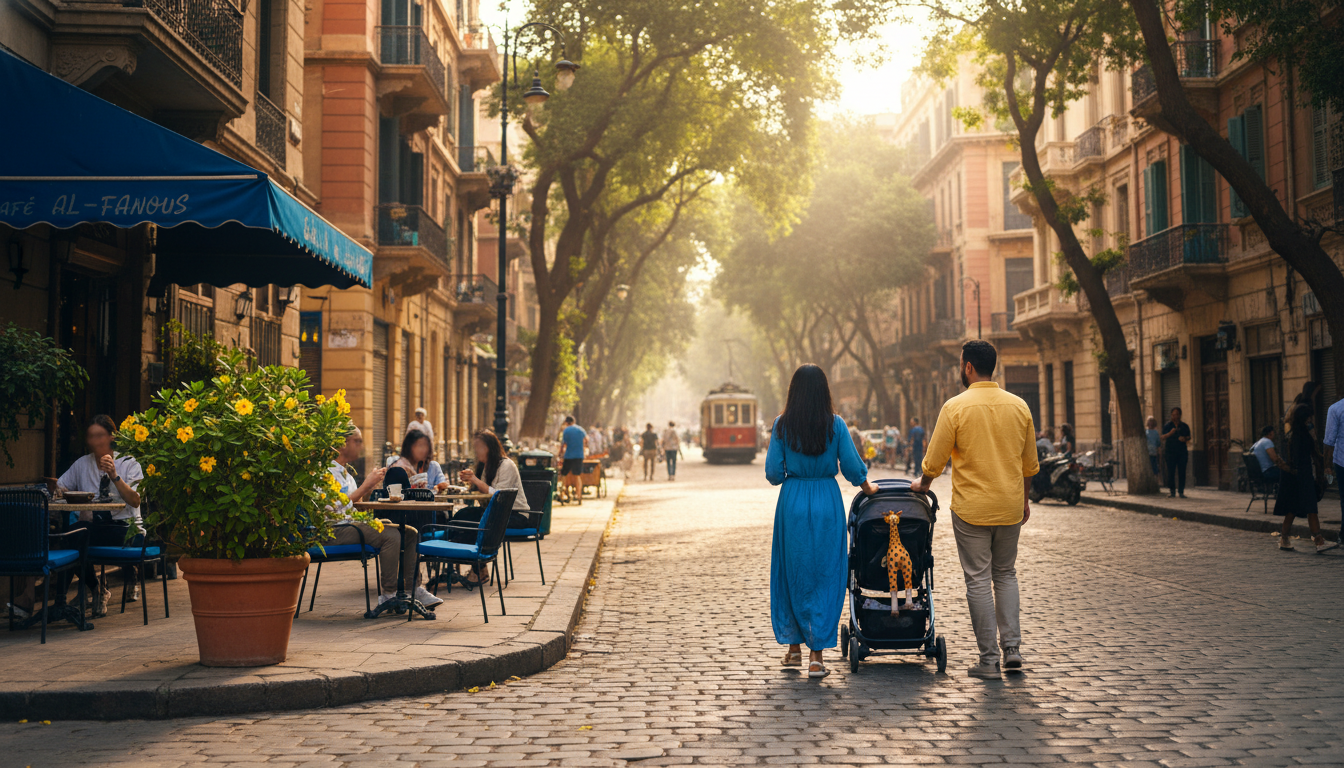 A tree-lined street in Zamalek with historic apartment buildings, dappled sunlight, a family walking
How Home Swapping in Cairo Actually Works
I get this question constantly from parent friends: "But how do you actually do it? You just... stay in a stranger's house?"
Yes. And it's less weird than it sounds.
Through SwappaHome, you list your home with photos and description—including what makes it family-friendly, like that crib in the closet or the fenced backyard. Then you search Cairo listings, filtering for what matters: number of bedrooms, neighborhood, amenities like washing machines (crucial with kids). You message potential hosts directly, and I always mention my kids' ages, our travel style, and ask specific questions about the neighborhood. Booking uses credits—1 per night, simple. Good hosts tell you where to find the best ful medames for breakfast and which pharmacy stocks children's Panadol.
The review system means everyone has reputation at stake. In seven years of home swapping, I've never had a bad experience—and I've done this with kids, which raises the stakes considerably.
What to Ask Your Cairo Host Before Booking
This is where traveling with children requires extra homework. I always ask: Is there air conditioning in the bedrooms? (Non-negotiable in Cairo summers.) What floor is the apartment on, and is there an elevator? Carrying a sleeping four-year-old up six flights is... character building. Are there window guards or balcony safety features? What's the nearest pharmacy and grocery store? Is there a washing machine? (Please say yes.) Can you recommend a reliable driver for day trips? What's the hot water situation—some older buildings have solar heaters that run out.
Good hosts appreciate specific questions. Shows you're serious and helps them prepare.
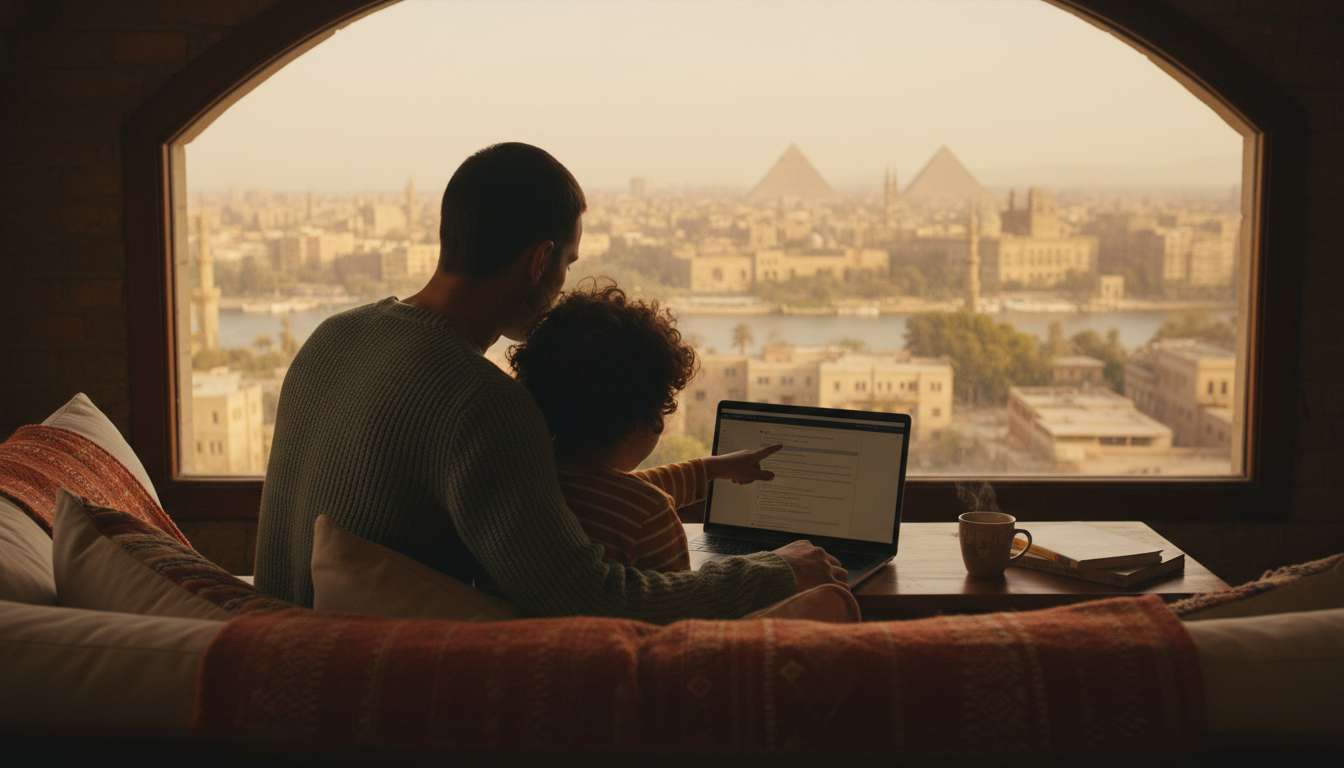 A parent and child looking at a laptop together, with a Cairo cityscape visible through the window b
Experiencing Cairo's Sites with Kids: Real Talk
Okay, let's talk pyramids. That's why you're going, right?
The Pyramids of Giza with Children
Here's what nobody tells you: the Giza plateau is exhausting with kids. Hot (even in winter, the sun is intense). Dusty. Vendors are persistent. The scale is disorienting.
But it's also genuinely awe-inspiring, and kids feel that. My daughter, at five, stood in front of the Great Pyramid and whispered, "Mama, people made this?" Worth every sweaty, chaotic moment.
Go early—gates open at 8 AM, be there at 7:45. By 10 AM, it's crowded and hot. Hire a guide, not for the history lecture (kids will tune out) but for navigation and vendor management; expect 800-1,200 EGP ($25-40 USD) for a 2-3 hour tour. Skip the camel rides with young kids—they're higher than they look, and handlers can be pushy. Horse-drawn carriages are gentler. Bring more water than you think. And snacks. And wet wipes. And a change of clothes because sand gets everywhere.
The Solar Boat Museum is air-conditioned and fascinating for older kids (7+). And here's the thing—leave before meltdowns. You can always come back. That's the beauty of staying longer through home swap; you don't have to cram everything into one morning.
The Egyptian Museum (Downtown)
The old Egyptian Museum near Tahrir Square is chaotic, poorly labeled, and absolutely magical. It's also overwhelming for kids.
My strategy: pick three things to see. The Tutankhamun galleries. The Royal Mummy Room (extra ticket, 180 EGP/$6, and yes, kids find mummies fascinating). One other thing that interests your specific child—animal mummies, jewelry, whatever. Spend 90 minutes maximum. Get ice cream after.
The new Grand Egyptian Museum near the pyramids is now partially open and will eventually house most of these collections. It's modern, air-conditioned, and designed for visitors. Check current status before your trip.
Khan el-Khalili: Yes or No with Kids?
Cairo's famous bazaar is sensory overload for adults. With kids? Depends entirely on your children's temperaments and your own tolerance for chaos.
I took mine at ages 3 and 6. The 6-year-old was enchanted—the colors, the smells, the tiny shops stuffed with treasures. The 3-year-old had a complete meltdown within 20 minutes.
If you go, late afternoon works better than midday. El Fishawy café has been serving tea since 1773 and makes a good rest stop. The spice section is genuinely fascinating for kids and smells incredible. Set expectations: you're exploring, not shopping efficiently. Have an exit strategy and know where the nearest main road is.
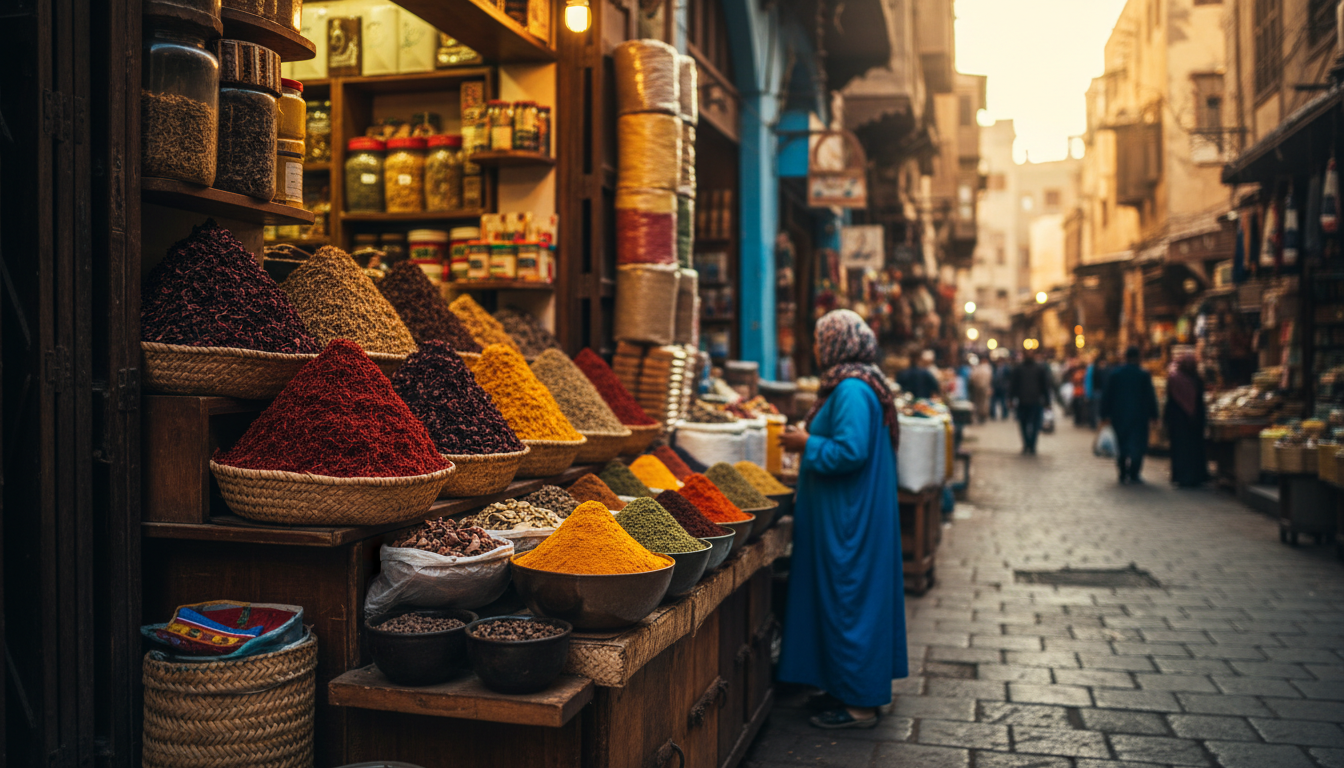 A colorful spice stall in Khan el-Khalili bazaar with pyramids of saffron, cumin, and dried hibiscus
The Hidden Advantages of Home Swapping with Children in Cairo
Beyond the obvious space and cost benefits, home exchange creates experiences you simply can't get in hotels.
Neighborhood Integration
When you stay in someone's home, you become—temporarily—part of their neighborhood. The doorman knows you're in apartment 4B. The corner shop owner recognizes your kids. You start to understand the rhythm of the place.
In Zamalek, we became regulars at a tiny bakery selling feteer (Egyptian layered pastry) for 25 EGP ($0.80). My daughter would run ahead to the counter, and the owner would already be preparing her favorite—feteer with honey and cream. That's not a tourist experience. That's just... life.
Kitchen Access Changes Everything
I cannot overstate how much kitchen access matters with kids.
Breakfast doesn't require getting everyone dressed and presentable. Lunch can be simple—cheese, bread, fruit from the market. You can accommodate picky eaters without restaurant negotiations. You can prepare familiar foods when someone's stomach is adjusting.
And Egyptian grocery stores are an adventure themselves. My kids loved choosing yogurt drinks with Arabic labels and picking out unfamiliar fruits. Travel education without anyone realizing they're learning.
Nap Time Isn't a Crisis
With hotel rooms, nap time often means everyone trapped in darkness while one child sleeps. With an apartment, the sleeping child stays in the bedroom while everyone else continues living. Read on the balcony. Watch a movie. Actually relax.
Sounds small. It's not. It's the difference between parents who return from vacation exhausted and parents who return genuinely refreshed.
Practical Logistics: Cairo with Kids
The unsexy but essential details.
Getting Around
Uber works well in Cairo and is the easiest option with kids. Car seats aren't standard—bring your own travel seat or accept the local norm (which is basically no car seats, I know, I know). Rides are cheap: most trips within central Cairo run 50-150 EGP ($1.60-5 USD).
The metro is possible but challenging with strollers. Stations aren't accessible, and rush hour is intensely crowded. That said, kids ride free under 6, and older kids often find it exciting.
Walking in Cairo requires constant vigilance. Sidewalks are inconsistent. Traffic is creative. But in neighborhoods like Zamalek or Maadi, walking is pleasant and practical.
Health and Safety
Cairo is generally safe for families. Egyptians adore children—expect strangers to smile at your kids, offer them candy, want to take photos. This is cultural warmth, not danger, though always trust your instincts.
Don't drink the tap water; bottled water is everywhere and cheap (5-10 EGP). Stick to busy restaurants where turnover is high—street food is generally fine if it's cooked fresh and hot. The Egyptian sun is no joke: hats, sunscreen, midday breaks. Pharmacies are well-stocked and pharmacists often speak English; common kids' medications are available without prescription. As-Salam International Hospital in Maadi has excellent pediatric care.
Best Time to Visit Cairo with Children
Cairo in summer is brutal—40°C+ (104°F+) with relentless sun. Don't do it with kids unless you have no choice.
Ideal months: October through April. December and January can be surprisingly chilly at night (bring layers), but days are perfect for sightseeing. March and April get warmer but remain manageable.
Ramadan changes the city's rhythm significantly. Restaurants may close during daylight hours, but evenings become magical and festive. It can be wonderful with older kids who can understand and appreciate the cultural experience.
Making the Home Swap Connection
Finding the right Cairo home exchange takes some effort, but it's worth it.
When I search on SwappaHome, I filter for 2+ bedrooms (non-negotiable with kids), specific neighborhoods (Zamalek first, then Maadi or Garden City), recent reviews (active hosts are responsive hosts), and photos showing actual living spaces, not just glamour shots.
My initial message always includes who we are (ages of kids, where we're from), why we want to visit Cairo, specific questions about kid-friendliness, and an invitation to ask about our home.
Egyptian hosts, in my experience, are incredibly warm and often go above and beyond with recommendations. One left us a hand-drawn map of her favorite Zamalek spots, including which playground had the best shade.
What Your Kids Will Actually Remember
I want to end with something that matters more than logistics.
My daughter doesn't remember specific facts about the pyramids. She doesn't remember our Zamalek street name or how many credits we spent.
She remembers feeding pigeons in a Cairo park with a little Egyptian girl who didn't speak English but shared her bread anyway. She remembers the doorman who taught her to say "sabah el kheir" (good morning) and praised her accent. She remembers the call to prayer echoing across the city at sunset while we ate watermelon on the balcony.
These aren't hotel memories. They're home memories. And that's what home swapping gives you—not just a place to sleep, but a place to live, even if just for a week or two.
Cairo with children is absolutely worth the effort. Doing it through home exchange transforms it from an expensive, exhausting trip into something sustainable, affordable, and genuinely enriching.
Start browsing Cairo listings on SwappaHome. Message a few hosts. Ask your questions. And maybe, a few months from now, you'll be sitting on a Zamalek balcony watching your kids discover koshari for the first time.
Trust me—it's worth every bit of planning.
Frequently Asked Questions
Is Cairo safe for children to visit?
Cairo is generally safe for families, and Egyptians are notably welcoming toward children. Stick to established neighborhoods like Zamalek, Maadi, or Garden City. Standard travel precautions apply—watch traffic carefully, stay hydrated, use reputable transportation like Uber. Violent crime against tourists is rare.
How much does a family trip to Cairo cost with home swapping?
Using home exchange through SwappaHome, accommodation costs only credits—not cash. A 10-night stay that would run $2,500+ at a family hotel becomes essentially free. Budget approximately $100-150 USD daily for a family of four covering food, transportation, and activities, making Cairo remarkably affordable.
What age is best for taking kids to see the pyramids?
Children ages 5 and up typically appreciate the pyramids most, understanding the scale and history. Younger kids can still enjoy it but may tire quickly. For toddlers, keep pyramid visits short (under 2 hours) and go early morning when temperatures are cooler and crowds thinner.
What should I pack for Cairo with children?
Essentials include high-SPF sunscreen, wide-brimmed hats, a portable stroller that handles uneven surfaces, familiar snacks for picky eaters, children's medications (though pharmacies are well-stocked), and layers for air-conditioned spaces. Bring a travel car seat if that's important to you—they're not standard in Egyptian vehicles.
How do I find family-friendly home swaps in Cairo?
On SwappaHome, filter searches by bedroom count and neighborhood. Message hosts directly asking about child safety features, nearby playgrounds, and family amenities. Look for hosts with children themselves—their homes often include toys, high chairs, and kid-proofed spaces. Read reviews mentioning family stays for honest assessments.

Published by
SwappaHome
SwappaHome Editorial Team
Home Exchange & Slow Travel Editorial
The SwappaHome Editorial Team brings together travel research, home-exchange community insights, and platform data to produce practical guides for first-time and experienced home swappers. Every article cites real platforms, current market rates, and verifiable city-level facts so readers can make informed decisions without guessing.
Ready to try home swapping?
Join SwappaHome and start traveling by exchanging homes. Get 7 free credits when you sign up!
Related articles

Bachelor and Bachelorette Parties in Singapore: The Complete Home Swap Group Guide for 2026
Planning a bachelor or bachelorette party in Singapore? Discover how home swapping lets groups of 6-12 stay together in luxury condos, saving thousands while partying in Marina Bay.

Cycling in Lisbon: 7 Home Swap Bike Tour Itineraries for Every Rider
Discover the best cycling routes in Lisbon with these home swap bike tour itineraries—from waterfront paths to hilltop adventures, all starting from your borrowed home.

Graduation Trip to Barcelona: How Home Swapping Gives New Graduates the Ultimate Celebration
Planning a graduation trip to Barcelona? Discover how home swapping lets new graduates explore Spain's most vibrant city without the hostel crowds or hotel costs.