Algarve Neighborhood Guide for Home Swappers: From Trendy Lagos to Traditional Tavira

SwappaHome Editorial Team
Home Exchange & Slow Travel Editorial
Discover the best Algarve neighborhoods for home exchange—from surf-town vibes in Lagos to authentic fishing villages in the east. Your insider guide to Portugal's sun-drenched coast.
That first train ride into Lagos, luggage bumping along behind me toward some stranger's apartment I'd be calling home for three weeks—I genuinely wondered if I'd made a terrible mistake. Everything I'd read made the Algarve sound so... touristy. Golf courses and package holidays. Retirees nursing sangria by the pool.
I was spectacularly wrong.
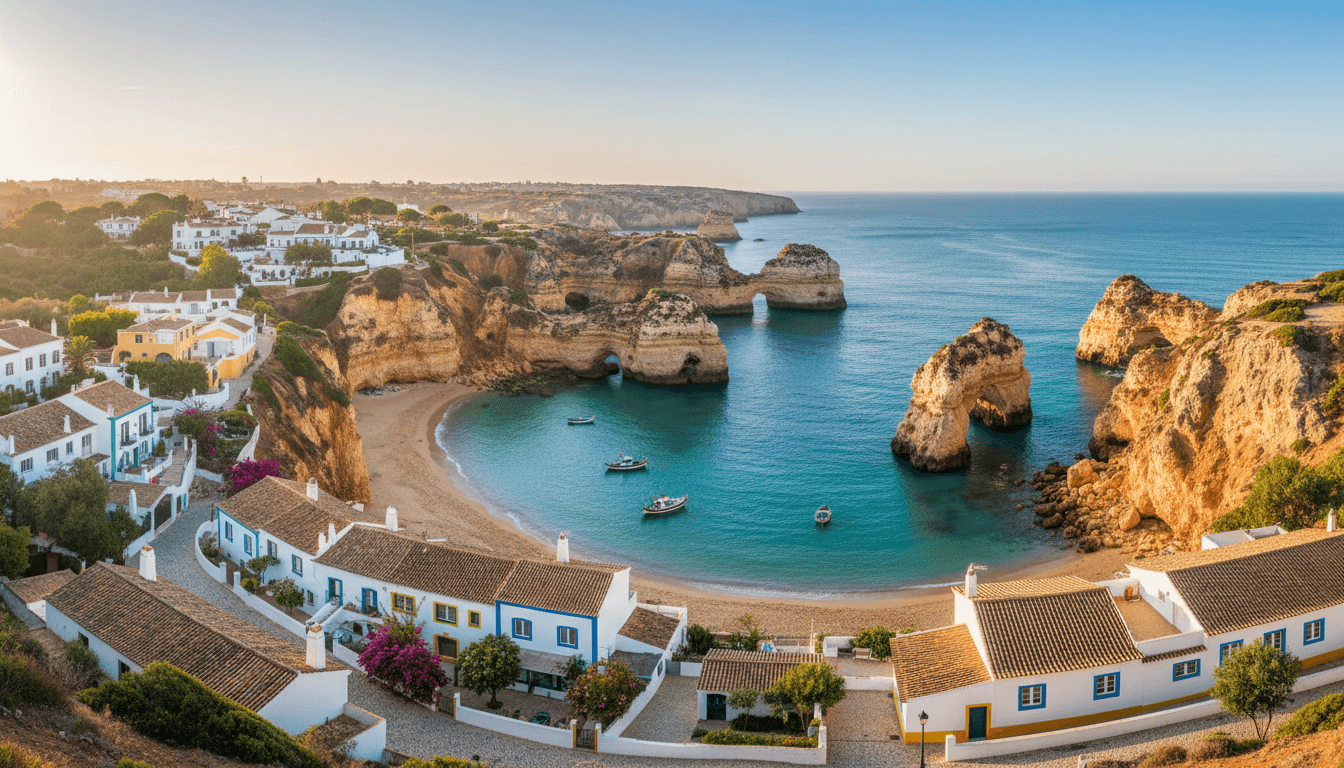
That trip rewired how I think about Portugal's southern coast entirely. Here's what the guidebooks miss: the Algarve isn't one place. It's 150 kilometers of coastline with neighborhoods so distinct they might as well be different countries. And when you're doing a home exchange instead of bouncing between hotels, you actually get to live in those differences.
So whether you're craving Lagos's digital nomad energy, Tavira's old-world charm, or something deliciously in between—this guide will help you find your match. I've swapped in four different Algarve towns over the years now, and I'm about to tell you everything I wish someone had told me before that first trip.
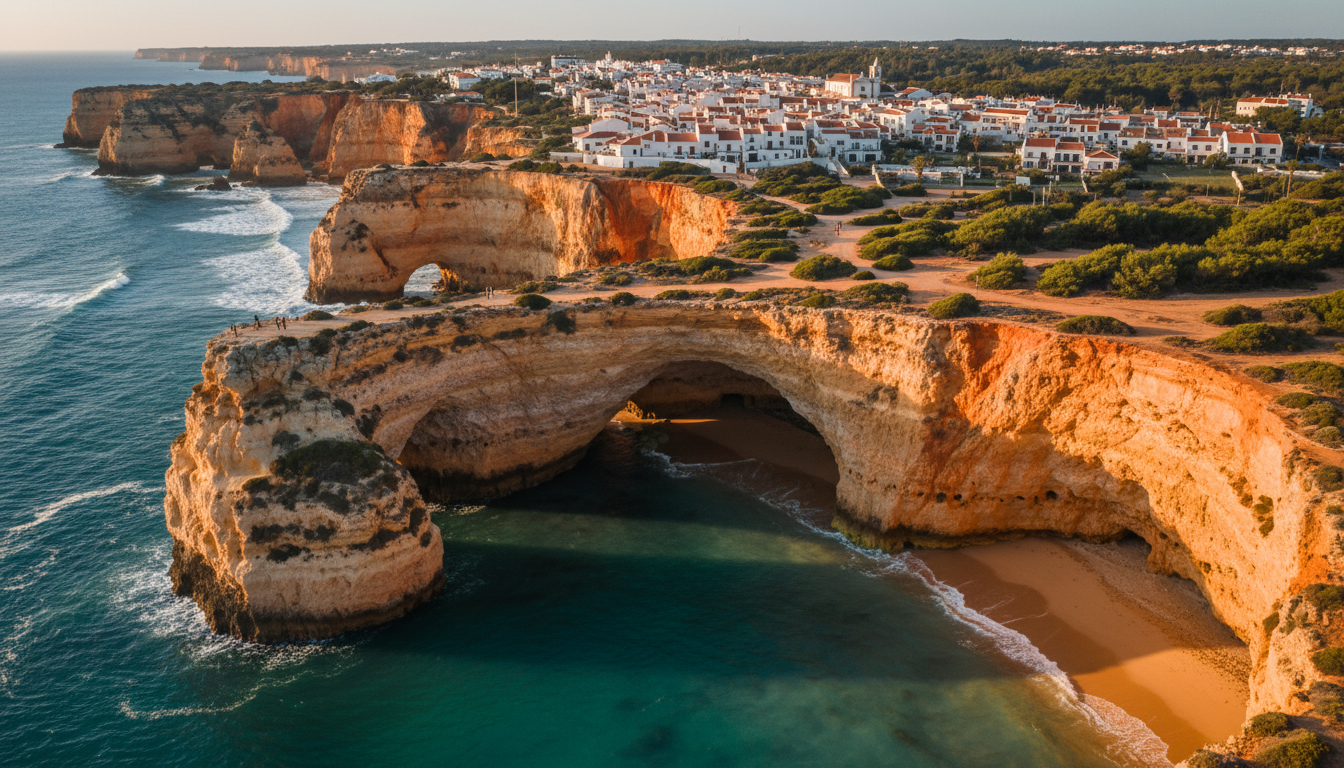 Aerial view of dramatic Algarve coastline at golden hour, showing orange cliffs, hidden coves, and t
Understanding the Algarve's Three Distinct Zones
Before we dive into specific neighborhoods, you need to understand the geography here. It'll completely change how you plan your swap.
The western Algarve—Sagres to Lagos—is wilder, windier, and draws surfers, hikers, and people who think "nightlife" means a bonfire on the beach. The central stretch from Portimão to Faro has the most tourist infrastructure, both good (easy transport, tons of restaurants) and less appealing (resort complexes, British pubs serving full English breakfasts). Then there's the eastern Algarve, Olhão to the Spanish border, where time genuinely slows down. Portuguese becomes the dominant language again. You'll eat the freshest seafood of your life for half what you'd pay elsewhere.
Each zone attracts different home swap listings. Western Algarve tends toward apartments and surf shacks. Central has everything from pool villas to city flats. Eastern? That's where you find those character-filled townhouses with rooftop terraces that make you never want to leave.
Lagos: Where First-Timers Should Start
Let me be honest—Lagos is where I'd send any first-timer doing a home swap in the Algarve. Not because it's the most "authentic" (we'll get to those spots), but because it strikes this perfect balance between convenience and character.
The old town is a maze of cobblestones lined with buildings painted in faded blues, yellows, and terracottas. My first swap was a two-bedroom above a ceramics shop on Rua da Barroca. I still remember waking up to the elderly neighbor singing fado while hanging her laundry. That's Lagos—touristy enough to have great coffee shops, Portuguese enough to feel like you're actually somewhere.
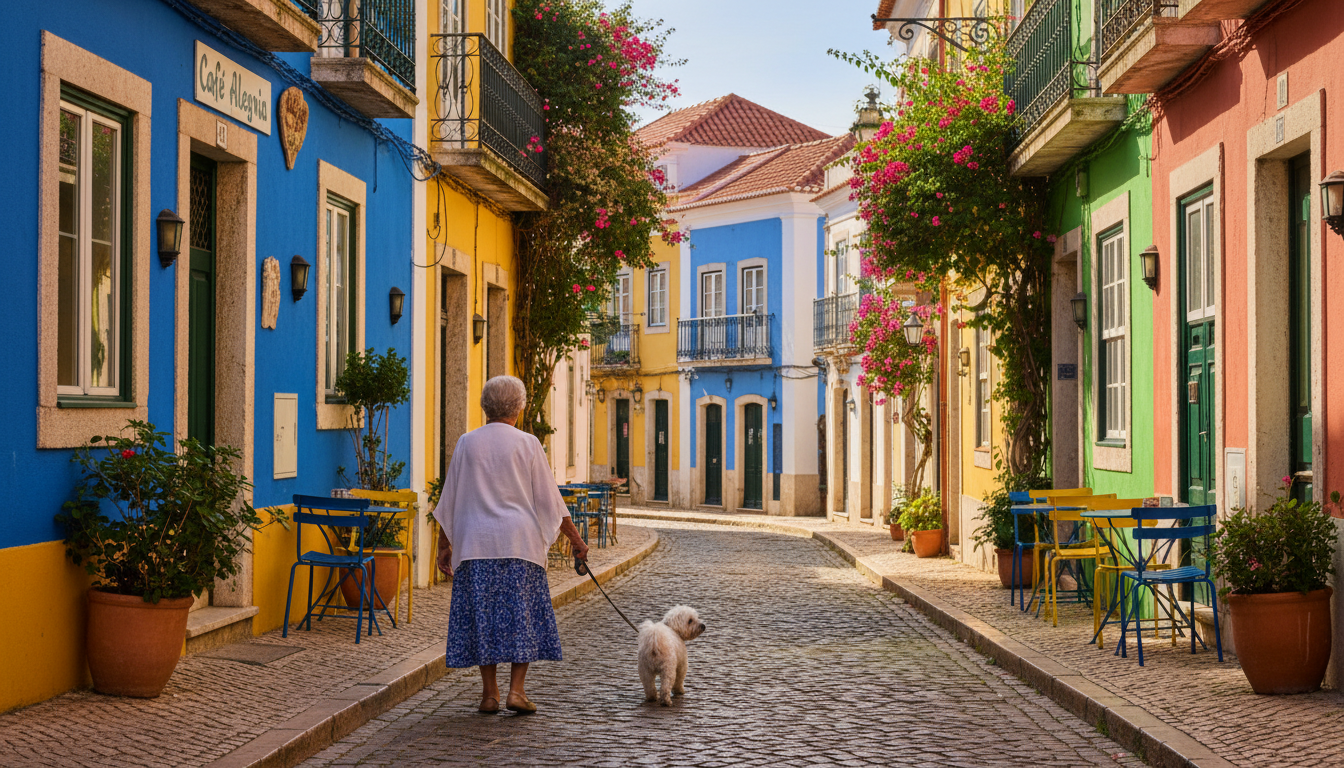 Narrow cobblestone street in Lagos old town at mid-morning, showing colorful painted buildings with
Where to Look for Lagos Home Swaps
The old town (Centro Histórico) is the obvious choice, but competition gets fierce in summer. Look for listings in Meia Praia if you want beach proximity and don't mind a 15-minute walk to the center. São Roque, just north of the marina, is where locals actually live—larger apartments, often with parking, and a neighborhood feel that disappears in the tourist core.
Avoid anything marketed as "Porto de Mós" unless you have a car. Technically Lagos, but it's a 30-minute walk to anything interesting.
Studios and one-bedrooms dominate the listings here. Traveling with family? Start your search early. Multi-bedroom properties get snapped up months in advance.
The Lagos Lifestyle
Mornings start at Pastelaria Gombá on Rua Porta de Portugal. A galão and pastel de nata will set you back about €3.50. The beaches—Dona Ana, Camilo, Praia do Pinhão—are all walkable from the center, though "walkable" involves some serious stair action down those cliffs.
Lagos has genuinely good restaurants that aren't tourist traps. Casinha do Petisco on Rua do Ferrador does petiscos that locals actually eat. Dinner with wine runs €25-30 per person. For something fancier, Bon Vivant in the marina does creative Portuguese cuisine—expect €45-50.
The digital nomad scene is real. Laptops everywhere at Café Goldig and The Garden. There's a coworking space (Lagos CoWork) if you need reliable wifi—monthly membership around €150, day passes €15.
Tavira: Time Travel in the Eastern Algarve
If Lagos is the Algarve's cool younger sibling, Tavira is the wise grandmother everyone wishes they'd visited more. This town made me fall in love with eastern Algarve swapping. Genuinely one of the most underrated destinations in Portugal.
Tavira straddles the Gilão River, connected by a Roman bridge still in use two thousand years later. The town has 37 churches for a population of 26,000. Crumbling palaces being slowly restored. A pace of life that makes you realize how unnecessarily fast you've been moving.
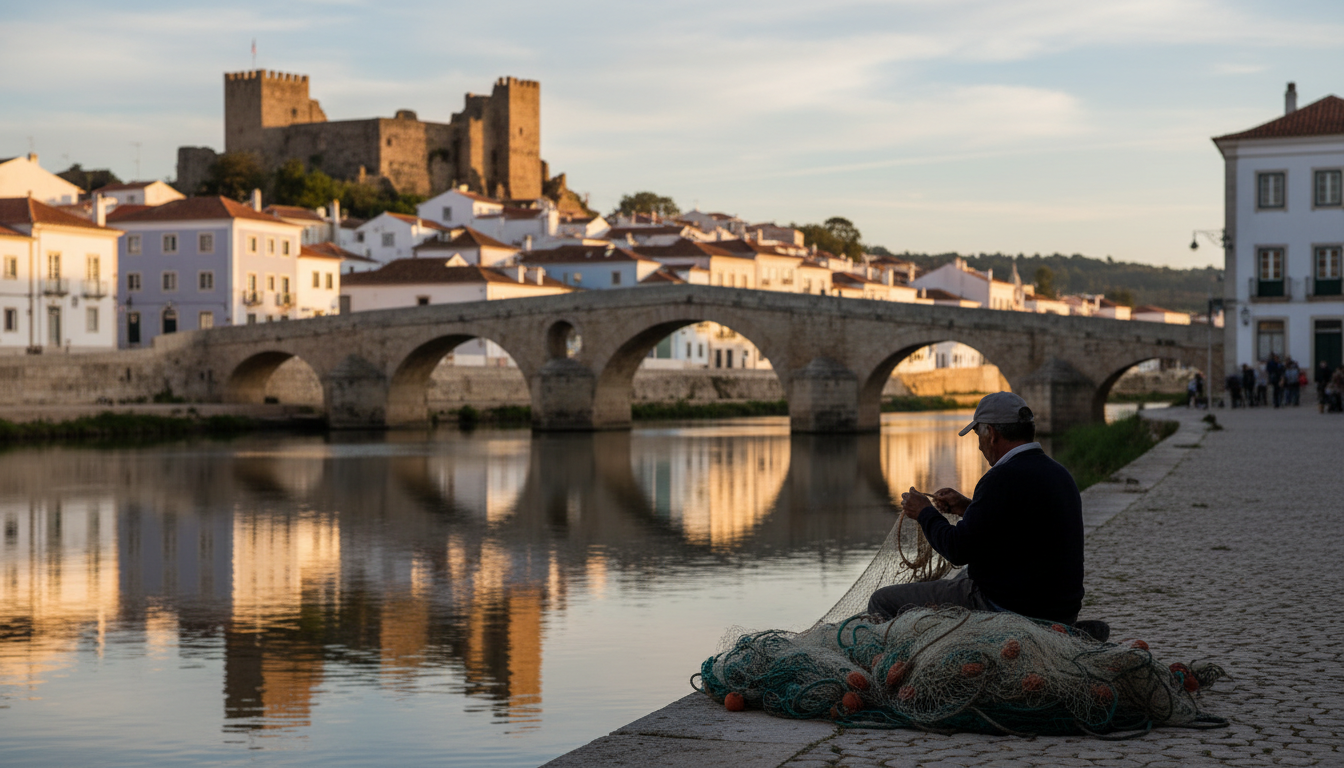 View across the Gilo River in Tavira at late afternoon, showing the ancient Roman bridge, traditiona
The Tavira Home Swap Experience
Listings here tend toward traditional townhouses—narrow staircases, thick whitewashed walls, rooftop terraces with views over terracotta to the river. These houses can be quirky. Low doorways. Uneven floors. Kitchens requiring creative maneuvering. But that's the charm.
I did two weeks in a converted fisherman's house near the covered market. The kitchen was roughly closet-sized, but the rooftop terrace had a fig tree growing through it. I'd eat breakfast watching morning light turn the castle ruins golden. You don't get that at a hotel.
Look in the old town (within the ancient walls) for maximum character, or across the river in Arraial Ferreira Neto for slightly larger properties with easier parking. Santa Luzia, a fishing village 3km east, has fantastic listings if you want near-Tavira but even quieter.
Living the Tavira Life
The Mercado da Ribeira operates Tuesday through Saturday mornings. This is where you buy everything. Fish so fresh it was swimming hours ago. Vegetables from nearby farms. Cheese from the Serra de Monchique mountains. A week's shopping runs €40-50, and you'll eat better than any restaurant.
Speaking of restaurants—Tavira has some of the Algarve's best, priced without tourist markup. O Patio on Rua António Cabreira serves cataplana I still dream about. Budget €20-25 per person for a full meal with wine. Quatro Águas overlooks the ferry dock to Ilha de Tavira and does grilled fish by weight—around €35-40 for two with drinks.
The beach situation requires a ferry. Boats leave from Quatro Águas every 15-30 minutes (€2 return) to Ilha de Tavira, a barrier island with kilometers of sand and almost no development. Bring water, snacks, a book. There's one beach bar and that's it.
Olhão: For Seafood Obsessives Who Don't Need Pretty
Olhão doesn't try to be charming. It's a working fishing town with Africa-influenced cube architecture, a massive fish market, and zero interest in catering to tourists. Which is precisely why I love swapping here.
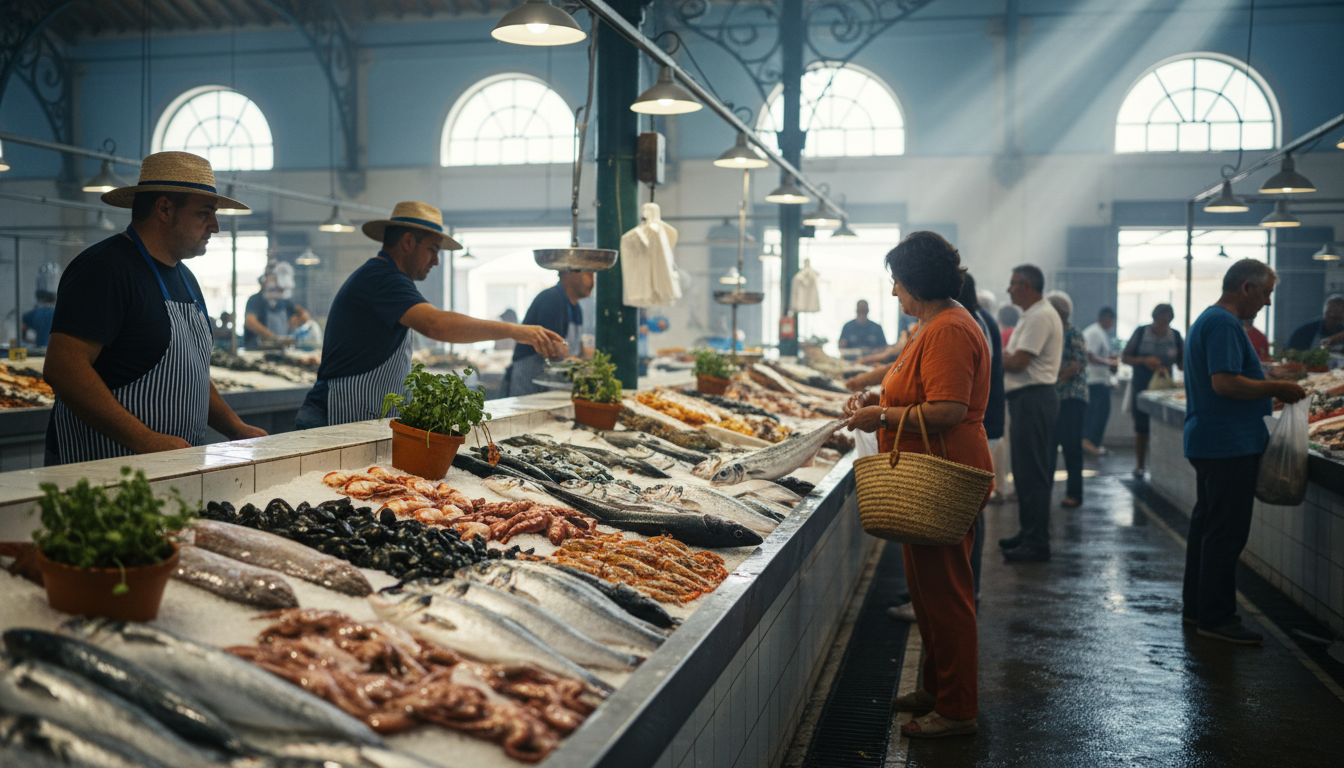
The town isn't traditionally pretty—no cobblestones, no pastel buildings, no Instagram corners. What there is: the Algarve's largest fishing fleet, two covered markets selling some of the best seafood in Portugal, and a waterfront that feels genuinely, unapologetically local.
 Olhos fish market interior at mid-morning, showing glistening displays of fresh seafood on ice, loca
Finding Olhão Listings
Home swap inventory here is smaller than Lagos or Tavira, but what exists tends to be excellent value. Look for apartments in the old town near the markets, or in Barreta west of center for a more residential feel.
The town's cube-style houses (açoteias) are unique to this part of the Algarve—flat-roofed, whitewashed, with rooftop terraces originally used for spotting returning fishing boats. If you find one listed, grab it.
Honest warning: Olhão requires more Portuguese or patience than Lagos or Tavira. English is less common. Menus aren't always translated. You'll figure things out through gestures and Google Translate sometimes. If that sounds exhausting rather than exciting, this might not be your neighborhood.
The Olhão Rhythm
Saturday morning at the markets is non-negotiable. The fish market is a cathedral of seafood—percebes, razor clams, sea bass, octopus, whatever the boats brought in. The adjacent produce market has fruit and vegetables from the surrounding countryside. Get there by 9am before the best stuff goes.
For eating out, the waterfront Avenida 5 de Outubro has a strip of restaurants that look similar but vary wildly. O Aquário at number 122 is consistently good—grilled fish, simple preparations, honest prices around €15-20 per person. Avoid anywhere with photos on the menu.
The Ria Formosa lagoon is Olhão's backyard. Ferries run regularly to the barrier islands—Armona (15 minutes, €4 return) is closest with excellent beaches. Culatra island has a small fishing village with a couple of restaurants worth the trip.
Ferragudo: When You Need to Decompress Completely
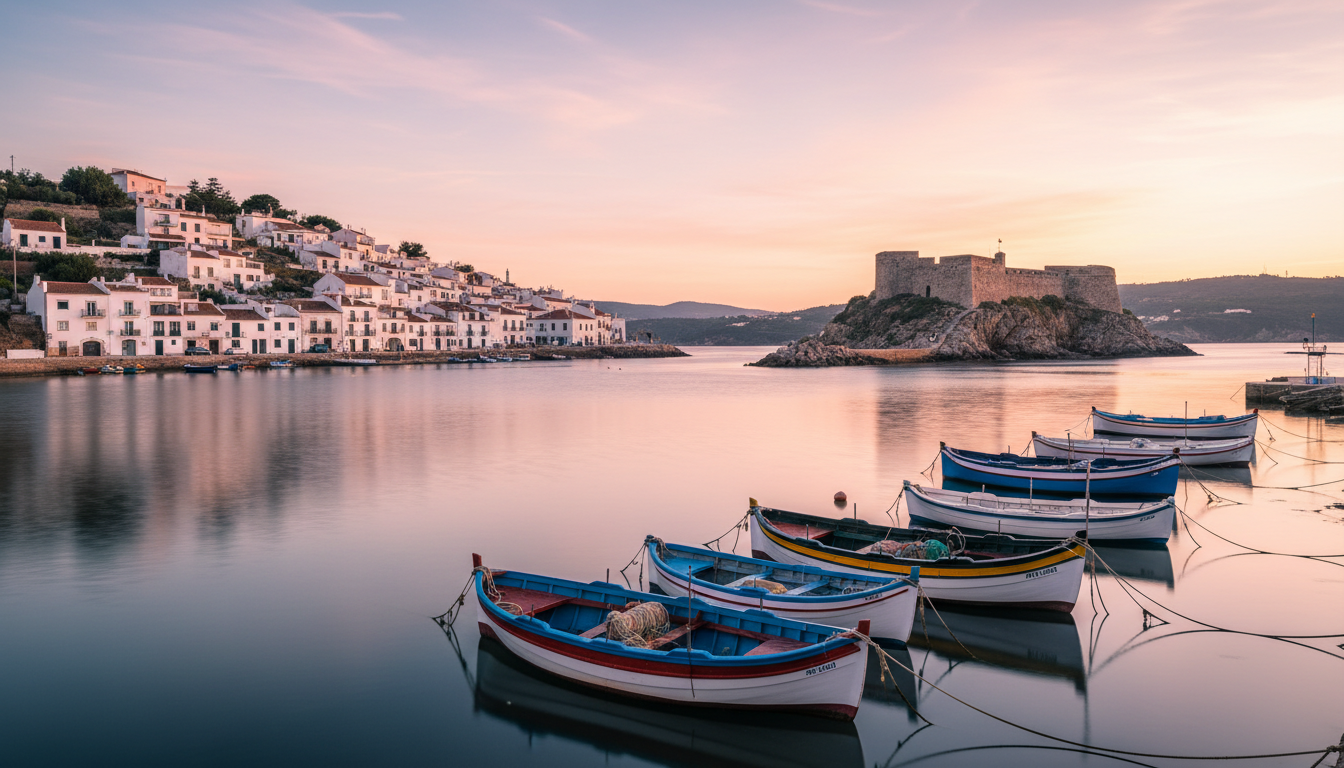
Ferragudo is what happens when a fishing village gets discovered by artists and retirees but somehow keeps its soul. It sits at the mouth of the Arade River, across from Portimão's busier waterfront, maintaining a sleepy atmosphere the central Algarve largely lost decades ago.
The village is tiny—end to end in fifteen minutes—but that's the point. A small beach. A cluster of good restaurants. A handful of galleries. Not much else. Home swappers come here to decompress, not tick off attractions.
 Ferragudo village at sunset, showing whitewashed houses climbing the hillside, small fishing boats m
Ferragudo Considerations
Listings here are predominantly houses rather than apartments—often with small gardens or terraces. The hillside layout means many properties have water views. Also means stairs. Lots of stairs.
Parking is limited in the village center. If your swap includes a car, confirm arrangements. Some homes have dedicated spots; others require using the lot at the village entrance.
Ferragudo works best for couples or solo travelers seeking quiet. Families with young kids might find it too sleepy. Anyone wanting nightlife should look elsewhere—the last restaurant closes by 10pm.
Village Life
Breakfast at Café Inglês (British-owned, but Portuguese pastries) on the main square. Coffee and a tosta mista for about €5. The village has a small supermarket for basics, but serious shopping means Portimão—10-minute drive, or a scenic ferry across the river for €1.50.
Dinner at Sueste on the waterfront is the standout—contemporary Portuguese with river views. Budget €35-40 per person. For simpler fare, O Velho Novo near the church does excellent grilled fish at local prices, around €18-22.
Praia Grande, a 10-minute walk from the village, is one of the Algarve's most photogenic beaches—golden sand framed by dramatic rock formations. Busy in summer, but early mornings are peaceful.
Carvoeiro: The Polished Option
I'll be honest—Carvoeiro isn't really my vibe. It's the Algarve at its most manicured: whitewashed villas with pools, golf courses, upscale restaurants, a village center that feels designed for wealthy northern Europeans. But plenty of home swappers love it.
Carvoeiro works if you want comfort without roughing it. The village beach is small but pretty. The cliff walks are spectacular. The restaurant concentration means you won't have a bad meal. It's the Algarve with training wheels—nothing too challenging, nothing too authentic.
The Villa-with-Pool Zone
This is where you find those listings. If a private pool in August is your dream—and honestly, it's pretty dreamy—Carvoeiro delivers. Expect larger properties, often with multiple bedrooms, designed for families or groups.
The trade-off: these villas usually sit outside the village center, requiring a car for everything. And "village center" is essentially one street of restaurants and shops—charming enough, but you'll see everything in an afternoon.
Budget-conscious swappers should know that restaurants here skew expensive. Casual dinner runs €30-40 per person easily. The nearest supermarket is a 10-minute drive.
Sagres: For the Wild at Heart
Sagres sits at Europe's southwestern tip, where land ends and Atlantic begins. Raw, windswept, attracting a specific type—surfers, hikers, people who think "beach day" means scrambling down cliff paths to empty coves.
Listings here tend toward simple apartments and small houses, often with surf storage. This isn't villa territory. The town itself is functional rather than pretty: surf shops, casual restaurants, a couple of supermarkets. The beauty is in the surrounding landscape.
Is Sagres Right for You?
Choose Sagres if you surf or want to learn—waves suit beginners and experts. If you're a serious hiker—the Rota Vicentina coastal path passes through. If dramatic nature matters more than cultural attractions.
Skip it if you want walkable restaurants and cafés, aren't comfortable driving (public transport is minimal), or wind bothers you. It's windy. Really windy. All the time.
The surf scene means Sagres has better casual food than expected. Mar à Vista does excellent fish tacos and acai bowls—around €12-15 for a meal. For traditional Portuguese, A Tasca near the fortress serves honest local food at local prices.
Practical Tips From Experience
After multiple Algarve exchanges, here's what I wish I'd known from the start.
Getting Around
The Algarve has a train line running Lagos to Vila Real de Santo António, stopping at most major towns. Cheap (Lagos to Faro about €7), scenic, reliable. For the western Algarve or smaller villages, you'll want a car.
Rentals run €25-40 per day in summer, less in shoulder season. Book early for July and August—inventory genuinely runs out.
Faro airport is the main gateway. Lagos is about 90 minutes west, Tavira 40 minutes east.
When to Go
Summer (July-August) is hot, crowded, expensive. Beach towns are packed, restaurant reservations necessary, home swap competition fierce. Book 3-4 months ahead minimum.
Shoulder season (May-June, September-October) is my favorite. Warm weather (20-25°C), swimmable beaches, manageable crowds. Best home swap availability.
Winter (November-March) is surprisingly mild (15-18°C), occasionally rainy, very quiet. Many tourist businesses close, but Tavira and Olhão maintain year-round local life. Great for long-term swaps and remote work.
Making Your Swap Work
When browsing listings, pay attention to proximity to essentials—can you walk to morning coffee? Is there a grocery store nearby? In walkable towns, location within the town makes a huge difference.
Outdoor space transforms the experience here. A terrace, balcony, or garden for eating breakfast outside beats the nicest interior.
Check seasonal quirks. "No air conditioning" in August is brutal. "No heating" in December is miserable.
Finding Your Match
Let me make this simple.
Lagos if you want the full package—beaches, nightlife, restaurants, culture—with easy logistics. Best for first-timers, solo travelers, anyone who likes options.
Tavira if you prioritize authenticity over convenience, love historic architecture, want to live like a local in a town that hasn't sold its soul.
Olhão if you're a serious food person, speak some Portuguese (or don't mind the challenge), want the most "real" experience possible.
Ferragudo if you need to decompress completely, prefer villages to towns, find peace in simplicity.
Carvoeiro if comfort is king, you're traveling with family, a villa with pool sounds like heaven.
Sagres if adventure calls louder than comfort, you surf or hike, nature matters more than culture.
My recommendation for first-timers? Start with Lagos or Tavira. Different enough to suit different tastes, but both offer that magic combination of livability and discovery that makes home exchange so much better than hotel-hopping.
Here's the thing about the Algarve—once you've done one swap here, you'll want to come back and try a different neighborhood. I've done Lagos, Tavira, and Olhão. Already eyeing Ferragudo listings for next spring. The coast is long, the neighborhoods are distinct, and each swap reveals a different version of this place.
That's the beauty of home exchange in a region like this. You're not just visiting. You're collecting different versions of the same place, building a mental map tourists never get. And when you find yourself on that rooftop terrace at sunset, local wine in hand, watching light turn the cliffs golden—you'll understand why the Algarve keeps pulling people back.
Frequently Asked Questions
What is the best Algarve neighborhood for a first home swap?
Lagos. It offers walkable beaches, excellent restaurants, reliable public transport, and good home exchange availability. The town balances tourist convenience with authentic Portuguese character—easy logistics while still feeling like genuine travel rather than a resort stay.
How far in advance should I book an Algarve home swap?
Summer visits (July-August) need 3-4 months lead time—popular listings disappear fast. Shoulder season (May-June, September-October) requires 6-8 weeks. Winter swaps can often happen with just 2-4 weeks notice as demand drops and availability increases across all neighborhoods.
Do I need a car for an Algarve home swap?
Depends on your neighborhood. Lagos, Tavira, and Olhão are walkable towns where you can manage without a car, using trains for longer trips. Ferragudo, Carvoeiro, and Sagres essentially require one—public transport is limited and attractions spread out. Rentals cost €25-40 daily in summer.
Which Algarve town has the most authentic Portuguese atmosphere?
Olhão and eastern Tavira. Olhão is a working fishing town where Portuguese dominates and tourism infrastructure is minimal. Tavira's old town, especially away from the river, maintains traditional daily rhythms. Both contrast sharply with the more tourist-developed central and western Algarve.
Is the Algarve good for long-term home swaps in winter?
Absolutely. Winter temperatures stay mild (15-18°C), and towns like Tavira and Olhão maintain year-round local life. Excellent long-term availability November through March when tourist demand drops. Just confirm heating in your swap—evenings can be cool, and not all properties have adequate systems.

Published by
SwappaHome
SwappaHome Editorial Team
Home Exchange & Slow Travel Editorial
The SwappaHome Editorial Team brings together travel research, home-exchange community insights, and platform data to produce practical guides for first-time and experienced home swappers. Every article cites real platforms, current market rates, and verifiable city-level facts so readers can make informed decisions without guessing.
Ready to try home swapping?
Join SwappaHome and start traveling by exchanging homes. Get 7 free credits when you sign up!
Related articles
Bachelor and Bachelorette Parties in Singapore: The Complete Home Swap Group Guide for 2026
Planning a bachelor or bachelorette party in Singapore? Discover how home swapping lets groups of 6-12 stay together in luxury condos, saving thousands while partying in Marina Bay.
Cycling in Lisbon: 7 Home Swap Bike Tour Itineraries for Every Rider
Discover the best cycling routes in Lisbon with these home swap bike tour itineraries—from waterfront paths to hilltop adventures, all starting from your borrowed home.
Graduation Trip to Barcelona: How Home Swapping Gives New Graduates the Ultimate Celebration
Planning a graduation trip to Barcelona? Discover how home swapping lets new graduates explore Spain's most vibrant city without the hostel crowds or hotel costs.