
Applying for a Digital Nomad Visa While in Spain: A Comprehensive Guide

SwappaHome Editorial Team
Home Exchange & Slow Travel Editorial
Thinking about becoming a digital nomad in Spain? It's a dream for many, and with the new visa options, it's more possible than ever. But if you're already in…
Thinking about becoming a digital nomad in Spain? It's a dream for many, and with the new visa options, it's more possible than ever. But if you're already in Spain and want to make the switch to this lifestyle, you might be wondering about the process. Applying for a digital nomad visa while in Spain can seem a bit tricky, but with the right info, it's totally doable. This guide breaks down what you need to know to get your application sorted without leaving the country.
Key Takeaways
- Understand the specific requirements for the Spanish digital nomad visa, including income, remote work status, and personal documentation.
- Gather all necessary documents, such as proof of employment, financial records, health insurance, and a clean criminal record.
- Figure out how to use your current Spanish address and get local documents needed for the application.
- Learn the correct way to submit your application, whether online or at a consulate, and how to check its progress.
- Know what to do after your visa is approved, including registering with Spanish authorities and settling into your new life.
Understanding the Digital Nomad Visa Spain
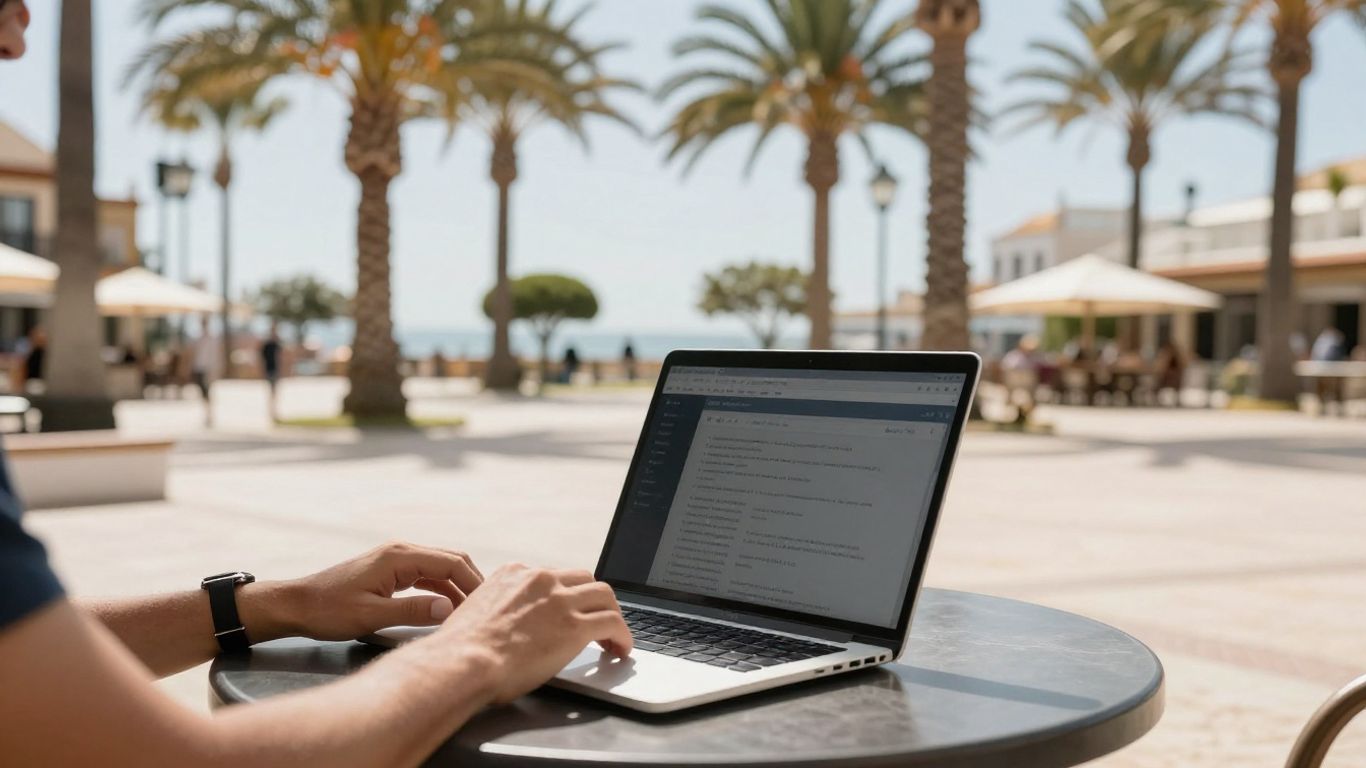 Laptop on a table in a sunny Spanish plaza.
So, you're thinking about Spain for your digital nomad adventure? That's awesome! Spain has rolled out a specific visa for remote workers, and it's a pretty sweet deal if you meet the criteria. It's designed to let people like us work remotely from Spain for up to a year, with the possibility of extending it. This isn't just a tourist visa where you're hoping nobody notices you're working; this is the official way to do it legally.
Eligibility Criteria for Applicants
To even be considered for this visa, you've got to tick a few boxes. First off, you can't have been living in Spain for the last five years. Also, you need to prove you've been working remotely for at least three months with the same company or as a freelancer. The company you work for, or your clients if you're self-employed, can't be based in Spain. This is key – the visa is for working from Spain, not in Spain for a Spanish company.
Here's a quick rundown of who generally qualifies:
- Remote Employees: You must have a stable remote job with a company located outside of Spain. You'll need to show proof of employment and that you've been working there for a minimum of three months.
- Self-Employed Individuals (Freelancers/Entrepreneurs): If you're your own boss, you need to demonstrate that you've been running your business or freelancing for at least three months and have clients outside of Spain. You'll need contracts or proof of ongoing work.
- Financial Stability: You need to show you have enough money coming in to support yourself without needing to work for a Spanish employer. The exact amount can change, but it's generally tied to Spain's minimum wage (IPREM).
Key Requirements for a Successful Application
Beyond just being eligible, there are some specific things the Spanish government wants to see. They're looking for proof that you're not going to be a burden on their social system and that you're genuinely here to work remotely. Having all your paperwork in order is probably the most important part of this whole process.
- Proof of Remote Work: This is non-negotiable. You'll need official documents from your employer or client contracts detailing your remote work status and responsibilities. For employees, a letter from your company stating you're allowed to work remotely from Spain is a must. For freelancers, invoices and client agreements are crucial.
- Financial Solvency: You need to show you have sufficient funds. This usually means demonstrating an income that's at least double the minimum monthly salary in Spain (IPREM). For 2026, this figure is around €2,333 per month, but always check the latest official numbers.
- Health Insurance: You'll need private health insurance that covers you fully in Spain. It needs to be a Spanish policy or one recognized by Spain, with no co-payments or deductibles.
- Clean Criminal Record: A certificate showing you have no criminal record from any country you've lived in for the past five years is required.
Navigating the Application Process
Applying for this visa can feel a bit like a maze, but breaking it down makes it manageable. The process generally involves gathering documents, submitting your application, and then waiting for a decision. You'll typically apply through the Spanish consulate or embassy in your country of residence. It's a good idea to check their specific website for the most up-to-date requirements and appointment booking procedures, as these can vary slightly. Some consulates might even allow for online submissions, which can be a real time-saver. You can find more details on the requirements on the Spanish Ministry's website.
Remember, the goal is to present a clear picture of your stable remote work situation and your ability to support yourself financially while in Spain. Don't rush the document gathering phase; accuracy and completeness are key to a smooth application.
Gathering Essential Documentation
Alright, so you're ready to get your digital nomad visa application rolling. This is where things get a bit more concrete. You'll need to pull together a bunch of papers to show Spain you're legit and that you won't be a burden on their system. It sounds like a lot, but if you break it down, it's totally manageable.
Proof of Remote Employment or Self-Employment
This is probably the most important piece. You need to prove you're not going to be looking for work in Spain. This means showing you have a job you can do from anywhere, or that you're your own boss and your business is doing well enough to support you.
- For Employees: You'll need a letter from your employer. This letter should clearly state your position, your salary, that you'll continue to work remotely for them while in Spain, and that they approve of this arrangement. It's good if it's on company letterhead and signed by someone in authority.
- For Freelancers/Self-Employed: You'll need to show contracts with your clients, invoices, and proof of payment. Basically, anything that demonstrates a steady stream of income from your work. You might also need to show your business registration documents if you have a registered company.
- For Business Owners: If you own a business that allows you to work remotely, you'll need to provide documentation about your company, its financial health, and how your role allows you to work from Spain. This could include company registration, tax returns, and a detailed business plan.
The key here is to make it crystal clear that your income source is stable and located outside of Spain.
Financial Solvency and Income Verification
Spain wants to know you can support yourself financially. They don't want you showing up and then needing public assistance. The exact amount can change, so always double-check the latest figures, but generally, you need to show you earn enough to cover your living expenses. This is often tied to Spain's IPREM (Indicador Público de Renta de Efectos Múltiples), which is a public income indicator used for grants and benefits.
Here's a general idea of what they look for:
- Monthly Income: You typically need to demonstrate an income that is at least 200% of the minimum wage in Spain (IPREM). For 2026, this is roughly €2,400 per month, but again, verify this number.
- Bank Statements: You'll likely need to provide bank statements for the last 3-6 months. These should show regular income deposits and sufficient funds to cover your expenses. Make sure these are official statements from your bank.
- Tax Returns: Recent tax returns can also serve as proof of your income and financial stability.
It's a good idea to have more than the minimum required. Showing a comfortable buffer demonstrates you're well-prepared and reduces any potential concerns the consulate might have about your financial situation.
Health Insurance and Criminal Record Certificates
These are standard requirements for most visas, and Spain is no different. They want to make sure you're healthy and that you don't have a criminal past that could pose a risk.
- Health Insurance: You need to have private health insurance that covers you in Spain. This insurance must provide coverage equivalent to Spain's public healthcare system. It should cover hospitalization, medical emergencies, and repatriation. Make sure the policy is valid for the entire duration of your intended stay and that it's from a company authorized to operate in Spain or an EU-recognized insurer. Applying for a visa often requires this.
- Criminal Record Certificate: You'll need a certificate of good conduct or criminal record check from every country where you've lived for a significant period (usually the last 5 years). This document needs to be recent (typically issued within the last 3-6 months), legalized or apostilled, and translated into Spanish by a sworn translator if it's not already in Spanish.
- Other Potential Documents: Depending on your situation and the specific consulate, you might be asked for other documents like a birth certificate, marriage certificate (if applicable), or proof of address in your home country. Always check the specific requirements of the Spanish consulate or embassy where you'll be applying.
Preparing Your Application While in Spain
So, you're already in Spain and thinking about applying for that digital nomad visa? That's actually a pretty smart move, as it can simplify things a bit. You've already got a feel for the place, and you might even have a Spanish address sorted. Let's break down how to get your application ready while you're on the ground.
Leveraging Your Current Spanish Address
Having a place to live in Spain is a big plus when you're applying from within the country. You'll need to prove you have a legal address here. This could be a rental contract, a deed if you own property, or even a letter from a friend or family member if you're staying with them, along with a copy of their ID and proof of their residency. This address is where official mail will be sent, so make sure it's stable and reliable. It shows the authorities you're not just visiting but have established a base.
Obtaining Necessary Spanish Documents
Beyond your proof of address, there are a few other Spanish-specific documents you'll likely need. The most common one is the Certificado de Empadronamiento, which is basically a registration of your address with the local town hall (Ayuntamiento). It's a simple process, but you'll need to book an appointment and bring your passport and proof of address. Another document that might come up is a Número de Identificación de Extranjero (NIE), which is your foreigner identification number. If you don't have one already, you'll need to apply for it, and this can take some time. It's used for almost everything official in Spain, from opening a bank account to signing contracts.
Understanding Local Requirements and Procedures
Each consulate or application center might have slightly different takes on what they need, even if the overall requirements are the same. It's super important to check the specific requirements for the consulate that has jurisdiction over your current Spanish address. Sometimes, documents need to be translated by a sworn translator (traductor jurado), or they might need an apostille from your home country. You'll also want to figure out the payment methods for application fees, as some places only take cash or specific bank transfers. Don't be afraid to call or email the consulate's visa section with any questions – it's better to ask than to submit an incomplete application. Remember, being organized and thorough here makes the whole process much smoother.
Applying for your visa while already in Spain can feel like a shortcut, but it still requires careful attention to detail. Make sure you understand exactly what each document is for and why it's needed. This isn't just about ticking boxes; it's about showing you're prepared to live and work legally in Spain.
Submitting Your Application
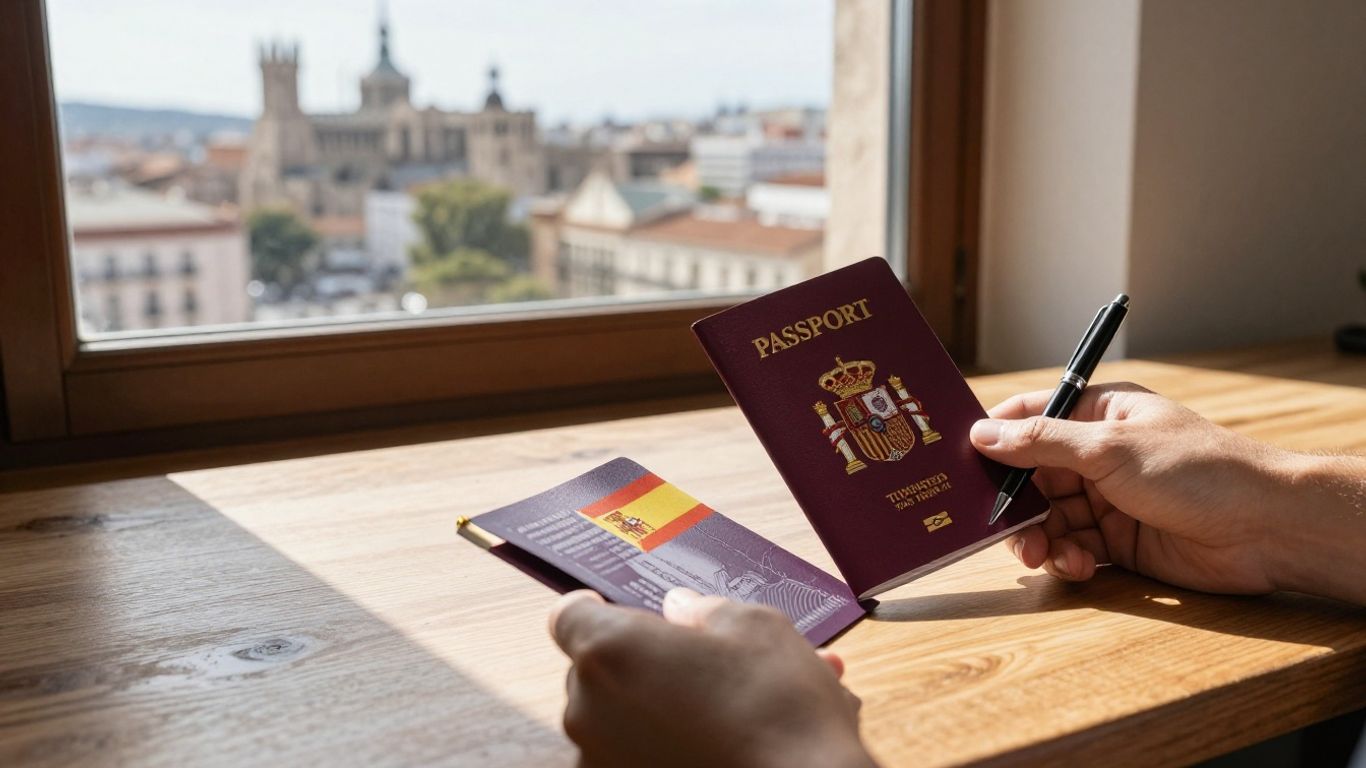 Applying for a digital nomad visa in Spain.
Alright, so you've got all your documents together, and you're ready to actually send in your application for the Digital Nomad Visa. This is a big step, and it's important to get it right. The process can feel a little daunting, but breaking it down makes it much more manageable.
Choosing the Right Consulate or Embassy
This is probably the most important decision you'll make in this stage. You can't just apply anywhere; you need to find the Spanish consulate or embassy that has jurisdiction over where you legally reside. This usually means the one closest to your permanent address, even if you're currently in Spain on a different visa or as a tourist. Don't try to submit your application to a consulate that doesn't cover your region, as they will likely reject it outright. It's worth checking the official website of the Spanish Ministry of Foreign Affairs, European Union and Cooperation to find the correct one. Sometimes, if you're already in Spain, you might be able to apply through a specific immigration office, but this is less common for the initial visa application and more for renewals or changes. It's always best to confirm with the consulate directly.
Online vs. In-Person Submission Methods
How you actually submit your application can vary quite a bit. Some consulates are moving towards online portals for initial submissions or at least for scheduling appointments. Others still require you to book an appointment and show up in person with all your paperwork. It's really a mixed bag, and you'll need to check the specific procedures for the consulate you've identified.
Here's a general idea of what to expect:
- Online Portals: Some consulates allow you to upload documents and fill out forms digitally. You might still need an in-person interview later, but it streamlines the initial submission.
- In-Person Appointments: Many still require you to schedule a specific time slot to submit your application and supporting documents in person. This is often the most traditional route.
- Mail-In Applications: This is becoming increasingly rare for initial visa applications, but some might offer it for specific circumstances or renewals. Always confirm if this is an option and what the specific requirements are.
It's really important to check the consulate's website well in advance. Appointments can fill up months ahead of time, especially during peak seasons. Don't leave this to the last minute!
Tracking Your Application Status
Once you've submitted everything, the waiting game begins. The processing times can vary significantly depending on the consulate and the volume of applications they're handling. Some consulates might provide a reference number that you can use to track your application status online through their portal. Others might require you to contact them directly via email or phone if you haven't heard back within a certain timeframe. Be patient, but also be proactive. If the stated processing time has passed and you haven't received any updates, it's perfectly reasonable to follow up politely. Remember, the goal is to legally work remotely in Spain, and this visa is your ticket there. Applying for Spain's Digital Nomad Visa from your home country is the first official step.
Post-Approval Steps and Relocation
So, you've got the green light for your Digital Nomad Visa! That's fantastic news. Now comes the exciting part: actually getting to Spain and settling in. It’s a bit of a process, but totally doable.
Receiving Your Visa and Entry into Spain
Once your visa is approved, you'll typically need to go back to the consulate or embassy where you applied to pick it up. Make sure you have all the required documents with you for this appointment, as they might do a final check. The visa will be stamped in your passport. This visa is your golden ticket to enter Spain for the purpose of establishing your digital nomad residency.
When you arrive at Spanish immigration, have your passport with the visa readily available, along with any other documents they might ask for, like your return ticket if applicable, or proof of accommodation for your initial stay. The border officer will stamp your passport, officially marking your entry into Spain under the digital nomad visa.
Registering with Spanish Authorities
This is a big one. Within 30 days of arriving in Spain, you absolutely must register with the Spanish authorities. This involves getting your Foreigner Identity Number (NIE) if you don't already have one, and then applying for your TIE (Tarjeta de Identidad de Extranjero), which is your actual foreigner identity card. This card is super important; it's your official proof of residency and will be needed for almost everything, from opening a bank account to getting a local phone number.
Here’s a general rundown of the steps:
- Obtain your NIE: If you applied for your visa from outside Spain, you might have already been assigned an NIE. If not, or if you need to renew it, you'll need to apply at a police station or immigration office. It can take a bit of time, so don't leave this to the last minute.
- Schedule your TIE appointment: You'll need to book an appointment at the local immigration office (Oficina de Extranjería) or a designated police station. These appointments can be hard to get, so check the booking system online frequently.
- Gather TIE documents: You'll need your passport, your visa, passport photos, the application form (EX-17), proof of NIE, and a fee payment receipt (tasa modelo 790 código 012).
- Attend your appointment: Go to your scheduled appointment, submit your documents, and get your fingerprints taken. You'll be given a receipt and told when to come back to collect your TIE card.
Remember, the Spanish bureaucracy can sometimes feel a bit slow, but patience and persistence are key. Having all your paperwork in order and understanding the process beforehand will make things much smoother.
Setting Up Your Life as a Digital Nomad in Spain
With your visa sorted and your TIE in progress, it's time to actually live the digital nomad life in Spain! This means finding a place to stay long-term, setting up your workspace, and getting integrated into the local scene.
- Accommodation: While you might have temporary housing sorted, you'll want to find a more permanent spot. Consider different cities based on your work needs and lifestyle preferences. For instance, some digital nomads find places like Barcelona or Valencia offer a good mix of city life and coastal vibes, with plenty of co-working spaces and reliable internet. Exploring options like home exchange can be a cost-effective way to live like a local for longer periods, offering a more authentic experience than a hotel. Home exchange opportunities in Barcelona can be a great starting point.
- Workspace and Connectivity: Ensure you have reliable internet wherever you decide to live. Major cities usually have excellent fiber optic connections, but it's always wise to confirm speeds. Many digital nomads find co-working spaces beneficial for networking and maintaining a work-life balance. Spain has a growing number of these, especially in larger cities.
- Banking and Utilities: You'll need to open a Spanish bank account to manage your finances, pay bills, and receive any income. Setting up utilities like electricity, water, and gas for your accommodation is also a priority.
- Social Integration: Don't forget to explore your new surroundings! Join local meetups, language exchange groups, or pursue hobbies. Getting involved in the community will make your experience in Spain much richer. Cities like Seville offer a vibrant culture and a welcoming atmosphere for newcomers. Digital nomad resources for cities like Seville can help you find your footing.
Wrapping It Up
So, you've made it through the whole process of figuring out the digital nomad visa for Spain while you're already here. It might seem like a lot of steps, and honestly, it can be. But with a little patience and by following these guidelines, you can totally get it done. Remember to double-check all your documents and don't be afraid to ask for help if you get stuck. Spain is an amazing place to live and work remotely, and this visa makes it all possible. Enjoy your time here!
Frequently Asked Questions
What exactly is the Digital Nomad Visa for Spain?
Think of it as a special permission slip from Spain that lets people who work online for companies outside of Spain live there for a year or more. It's for folks who can do their jobs from anywhere with an internet connection, like designers, writers, or programmers.
Who can apply for this visa while already in Spain?
If you're already in Spain legally, maybe on a tourist visa or another type of permit, and you meet the requirements for the digital nomad visa, you can often apply from within the country. This means you might not have to leave Spain to get your new visa.
What kind of proof do I need to show I work online?
You'll need to show official documents proving you have a remote job or are self-employed. This could be a contract with your employer stating you work remotely, or proof of your business if you're a freelancer, along with invoices or client agreements.
How much money do I need to prove I have?
Spain wants to make sure you can support yourself without needing help from their government. You'll need to show you have enough money coming in regularly, usually based on a percentage of the Spanish minimum wage. They'll look at your bank statements and income proof.
Do I need health insurance to apply?
Yes, absolutely. You must have health insurance that covers you fully in Spain. This is a really important requirement to make sure you're taken care of if you get sick or injured while you're there.
What happens after my visa is approved?
Once your visa is approved, you'll get it to enter Spain. After arriving, you'll need to register with the local Spanish authorities and get your Foreigner Identity Card (TIE). This card is like your ID in Spain and is super important for living and working there legally.

Published by
SwappaHome
SwappaHome Editorial Team
Home Exchange & Slow Travel Editorial
The SwappaHome Editorial Team brings together travel research, home-exchange community insights, and platform data to produce practical guides for first-time and experienced home swappers. Every article cites real platforms, current market rates, and verifiable city-level facts so readers can make informed decisions without guessing.
Ready to try home swapping?
Join SwappaHome and start traveling by exchanging homes. Get 7 free credits when you sign up!