
Applying for a Digital Nomad Visa While in Spain: A Step-by-Step Guide

SwappaHome Editorial Team
Home Exchange & Slow Travel Editorial
Here are the main things to remember when applying for your Spanish digital nomad visa: Key Takeaways Make sure you meet all the eligibility rules before you…
Here are the main things to remember when applying for your Spanish digital nomad visa:
Key Takeaways
- Make sure you meet all the eligibility rules before you start.
- Gather all the necessary documents, including proof of income and health insurance.
- Understand where and how to submit your application, whether online or in person.
- After approval, remember to collect your visa and register with local Spanish authorities.
- Stay organized and follow the steps carefully to make the process smoother.
Understanding the Digital Nomad Visa Spain Requirements
So, you're thinking about packing your bags and working from Spain? That's awesome! But before you start dreaming of tapas and flamenco, let's get down to the nitty-gritty of the Digital Nomad Visa. It sounds fancy, but it's basically Spain's way of saying, "Hey remote workers, come on over!" It allows non-EU/EEA citizens to live and work remotely in Spain for up to a year, with the possibility of extending it. Pretty sweet deal, right?
Eligibility Criteria for Applicants
First things first, who can even apply for this thing? There are a few key things Spain looks at. You've got to be a citizen from outside the EU or EEA. Also, you can't have been living in Spain for more than a certain period before applying, so no trying to switch your tourist status last minute. Your work needs to be remote, meaning you're not looking for a job in Spain, but rather continuing your current remote work for companies outside of Spain, or working for yourself with clients abroad.
Here’s a quick rundown of the main points:
- Non-EU/EEA Citizenship: This visa is specifically for individuals from countries outside the European Union and European Economic Area.
- Remote Work: Your primary income must come from remote work for companies or clients located outside of Spain.
- Professional Experience: You generally need at least one year of professional experience in your field.
- No Criminal Record: A clean slate is a must, both in your home country and any country you've lived in recently.
- Financial Stability: This is a big one. You need to prove you have enough money coming in to support yourself without needing to work for a Spanish company.
Required Documentation for Your Application
Okay, so you meet the basic criteria. Now comes the paperwork. This is where things can feel a bit overwhelming, but take it step-by-step. You'll need a valid passport, of course, and some official photos. A big chunk of your application will be proving your remote work situation. This usually means a contract or a letter from your employer detailing your role, salary, and the fact that you work remotely. If you're self-employed, you'll need documentation showing your business is legitimate and that you have clients outside Spain.
The Spanish government wants to see that you're a stable, contributing member of society who isn't going to be a burden. Think of it as showing them you're a responsible adult who's got their life together, at least financially and legally.
Navigating the Application Process
Applying for the visa while you're already in Spain can be a bit of a dance. You'll typically submit your application through the Spanish consulate or embassy in your home country before you arrive. However, if you're already in Spain on a tourist visa, there are specific procedures to follow, often involving submitting your application to the UGE-CE (Unidad de Grandes Empresas y Colectivos Vulnerables) or a designated immigration office. It’s important to check the most current guidelines, as these processes can change. You'll be looking at things like proof of income, which needs to meet a certain monthly threshold – roughly €2,850–€2,860 per month, though this can be adjusted annually. This is a key requirement for the Spain Digital Nomad Visa.
Here’s a general idea of the steps:
- Gather all your documents: Make sure everything is translated into Spanish if it's not already.
- Complete the application form: Fill it out accurately and completely.
- Submit your application: This is usually done at a Spanish consulate abroad or through the appropriate office if you're already in Spain.
- Attend an interview (if required): Be prepared to answer questions about your work and your plans in Spain.
- Wait for a decision: Processing times can vary, so patience is key.
It's a process, for sure, but totally doable with a bit of organization. And hey, if you're thinking about longer stays and want to live like a local, exploring options like home exchange in Barcelona could be a cool way to save on accommodation once you're settled.
Preparing Your Application for the Digital Nomad Visa
 Person working on laptop in Spain with passport.
Alright, so you've decided to go for it – the Spain Digital Nomad Visa. That's awesome! Now comes the part where we actually get all our ducks in a row. Think of this as the pre-game warm-up before the big match. It’s all about making sure you have everything ready so when you submit, it’s a smooth sail.
Gathering Essential Documents
This is where you'll spend a good chunk of your time. You need to collect a bunch of papers. The most important thing is to make sure every document is current and accurate. Missing or outdated paperwork is a surefire way to get your application delayed, or worse, rejected. So, let's break down what you'll likely need:
- Passport: A valid passport is a no-brainer, obviously. Make sure it has at least a year of validity left and plenty of blank pages. You'll probably need copies of all the pages, not just the ones with your photo and details.
- Passport Photos: Get a few recent, standard passport-sized photos. They usually have specific requirements for size and background color, so check those details.
- Proof of Remote Work: This is key. You need to show you're actually working remotely. This could be a contract with your employer, or if you're self-employed, contracts with clients. It needs to clearly state your role and that you'll be working remotely.
- Company Documentation (if applicable): If you work for a company, you might need official letters from them confirming your employment and remote work status. Sometimes, they might want to see the company's registration documents too.
Proof of Income and Financial Stability
Spain wants to know you can support yourself while you're there. They don't want digital nomads showing up and becoming a burden, which is totally understandable. You'll need to show a consistent income.
- Bank Statements: Typically, you'll need to provide bank statements for the last three to six months. These statements need to show a steady flow of income that meets or exceeds the minimum required amount. The exact amount can change, so always check the latest figures from the Spanish consulate or embassy.
- Income Threshold: The minimum monthly income requirement is usually set at a multiple of the national minimum wage (IPREM). For 2026, this is often around €2,520 per month, but again, verify this number. You need to demonstrate you're earning this consistently.
- Tax Returns: Sometimes, you might be asked for previous tax returns to further prove your financial history and stability.
Health Insurance and Criminal Record Checks
These are pretty standard for any visa application, and Spain is no different. They want to make sure you're healthy and have a clean record.
- Private Health Insurance: You'll need to get a private health insurance policy that covers you in Spain. It needs to be a comprehensive plan with no co-payments or gaps in coverage. Make sure the insurance provider is authorized to operate in Spain.
- Criminal Record Certificate: You'll need to obtain a criminal record certificate from every country you've lived in for the past five years. This usually needs to be an official document, often translated into Spanish and sometimes apostilled.
Getting these documents can take time, especially the criminal record checks. Start gathering them as early as possible to avoid any last-minute rushes. It's better to have everything ready a week or two before you plan to submit.
Remember, the specific requirements can vary slightly depending on your nationality and the Spanish consulate you're applying through. It's always a good idea to check the official Spanish consulate website for the most up-to-date and precise list of documents.
Submitting Your Digital Nomad Visa Application While in Spain
So, you've got all your documents together and you're ready to actually hand them in. This is a big step! If you're already in Spain and looking to switch your status to a digital nomad visa, the process is a bit different than applying from abroad. You'll typically be submitting your application to the immigration office, often referred to as the 'Oficina de Extranjería', in the province where you plan to reside. It's not usually done at a consulate when you're already in the country.
Where to Submit Your Application
This is where things can get a little bureaucratic. You'll need to submit your application in person. The specific office depends on where you're living in Spain. For example, if you're in Madrid, you'll go to the relevant 'Oficina de Extranjería' there. If you're in Barcelona, it's the office for that province. It's super important to figure out the correct office for your address before you go. You can usually find this information on the Spanish government's immigration website or by asking at your local town hall ('ayuntamiento').
- Identify the correct 'Oficina de Extranjería' for your province.
- Book an appointment ('cita previa') online. These can be hard to get, so keep checking the system.
- Gather all your original documents and copies. They'll want to see both.
- Attend your appointment. Be on time and have everything organized.
Understanding Processing Times
Okay, so how long does this all take? It's not instant, that's for sure. Generally, the Spanish authorities aim to process these applications within a certain timeframe. While it can vary quite a bit depending on the specific office and how busy they are, you're often looking at around 10 working days for the actual decision after your submission. However, getting that appointment can sometimes take much longer, so patience is key here. It's a good idea to plan ahead and not leave this to the last minute.
What to Expect During the Review Period
Once you've submitted everything, there's a waiting game. The immigration office will review your application to make sure all the paperwork is in order and that you meet the requirements. They might contact you if they need any clarification or additional documents, though this isn't always the case. The most common outcome is either an approval or a request for more information. If approved, you'll usually be notified to collect your visa or your residence permit card ('tarjeta de residencia'). If there's an issue, they'll let you know what needs to be fixed. It's a good idea to keep an eye on your email and any online portals they might use for updates. You can also check the status of your application online using your application number, if available.
Remember that applying from within Spain means you're already in the country, which can sometimes streamline certain aspects, but it also means you need to be very careful about maintaining your legal status while your application is being processed. Don't overstay any previous visas or permits.
After Approval: Next Steps for Digital Nomads in Spain
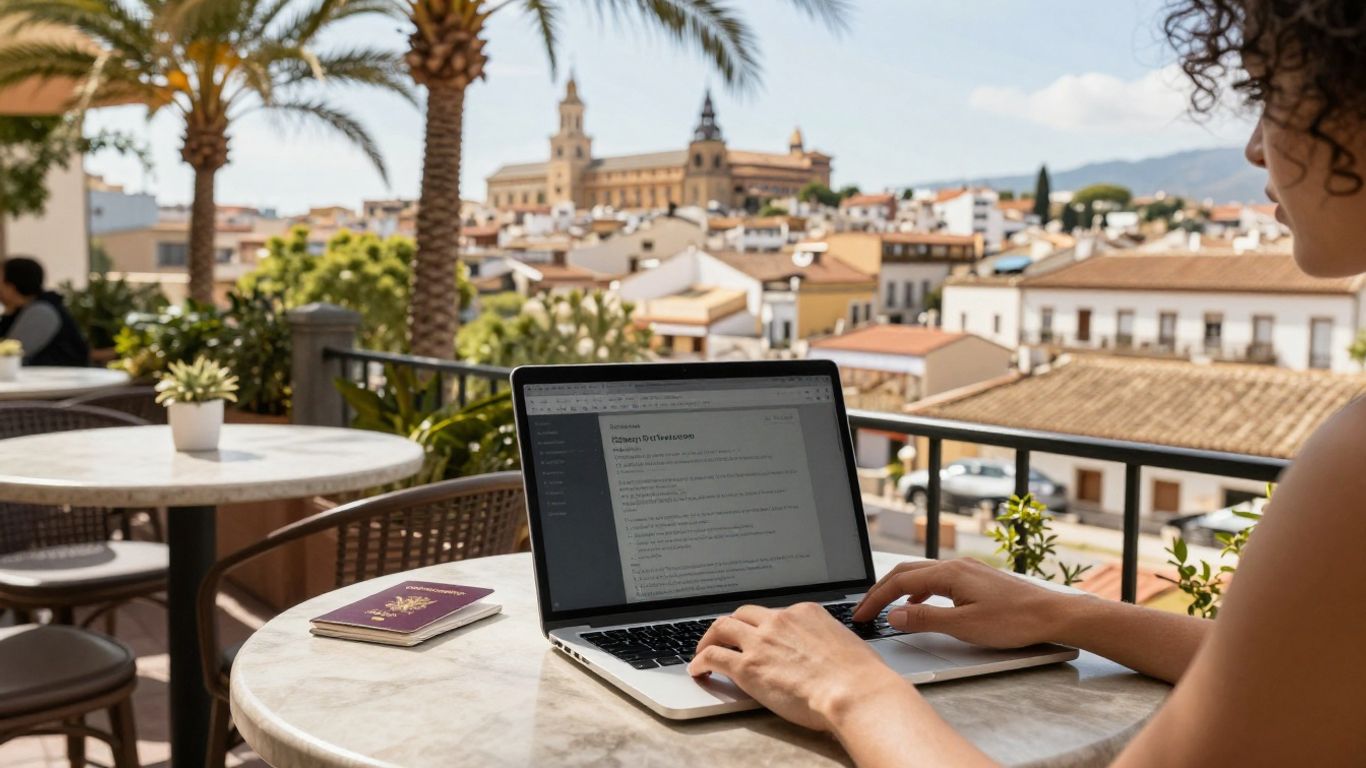 Digital nomad working on laptop in Spain
So, you got the green light for your digital nomad visa! That's fantastic news. Now comes the part where you actually get to settle into Spain and start your new life. It's not just about packing your bags; there are a few administrative steps you'll need to take to make things official and smooth.
Collecting Your Visa and Residencia
First things first, you'll need to pick up your actual visa and your foreigner identification number, known as the TIE (Tarjeta de Identidad de Extranjero). This is your official residency card. You'll usually do this at the immigration office (Oficina de Extranjería) or a police station that handles these matters in the province where you'll be living. Make sure you book an appointment beforehand, as they can get quite busy. You'll need your passport, the visa approval letter, and probably some passport photos. It's a good idea to check the specific requirements for your local office online before you go.
Registering with Local Authorities
Once you have your TIE, you'll need to register with the local town hall, which is called the 'empadronamiento'. This is super important because it officially registers you as a resident in that municipality. You'll need proof of address, like a rental contract or a utility bill in your name, along with your passport and TIE. This registration is often required for many other things, like getting a Spanish phone number or even opening that bank account we'll talk about next. It's basically your proof of address in Spain.
Opening a Spanish Bank Account
Having a local bank account makes life in Spain so much easier. You'll need it for paying bills, receiving payments if necessary, and generally managing your finances without dealing with international transfer fees all the time. To open an account, you'll typically need your passport, your TIE, and your 'empadronamiento' certificate. Some banks might also ask for proof of income or your employment contract, especially if you're opening a non-resident account initially. It's worth shopping around a bit to find a bank that suits your needs, maybe one with a good mobile app or branches conveniently located near you. You might even find that some banks offer better deals if you can show you're a resident.
Remember that while Spain is modernizing, some processes still rely on paperwork and in-person visits. Patience and organization are your best friends during this phase. Having copies of all your documents is always a smart move.
Getting set up with your residency and local registrations is a big step. It might seem like a lot, but each piece falls into place, and soon you'll feel much more settled. If you're thinking about how to make your stay even more affordable and authentic, you might want to look into options like home exchange networks. They can be a great way to live like a local in different Spanish cities, offering a unique way to experience the country beyond your initial visa location, perhaps for future travels or longer stays. Exploring home exchange could be a fun way to plan future adventures within Spain or elsewhere.
Tips for a Smooth Application Process
Okay, so you've gathered all your documents, you're feeling pretty good about your income proof, and you've even figured out that whole health insurance thing. That's awesome! But before you hit submit, let's talk about a few things that can make this whole digital nomad visa application process in Spain a bit less stressful. It's not rocket science, but a few smart moves can save you headaches down the line.
Leveraging Local Resources and Support
Don't try to go it alone if you don't have to. Spain has a pretty robust system for helping foreigners settle in, and there are people who know this stuff inside and out. Think about connecting with expat groups online or in person. Sometimes just chatting with someone who's already been through it can give you the inside scoop on what to expect or how to handle a tricky form. There are also professional services, like immigration lawyers or visa consultants, who can be a lifesaver if your situation is complicated or if you just want that extra layer of certainty. They might cost a bit, but peace of mind is often worth it. Plus, they're usually up-to-date on the latest requirements for Spanish visas.
Common Pitfalls to Avoid
We all make mistakes, but some are more common than others when applying for this visa. One big one is incomplete documentation. Seriously, double-check everything. Missing a signature, an outdated bank statement, or a blurry copy of your passport can cause delays. Another thing to watch out for is not clearly demonstrating your remote work connection. Make sure your contracts or letters from clients clearly state you're working remotely and for how long. Also, be aware of the processing times; they can be lengthy, so don't expect an instant approval. The official process can take a minimum of four months, so patience is key.
It's easy to get caught up in the excitement of moving to Spain and overlook the fine print. Take a deep breath, go through each requirement methodically, and if something doesn't make sense, ask for clarification before you submit. A little extra time spent now can prevent a lot of frustration later.
Maintaining Legal Status While Waiting
This is a big one. While your visa application is being processed, you're in a bit of a limbo state. It's super important to understand your current legal standing in Spain. If you're already in Spain on a tourist visa, you generally can't start working remotely for a Spanish company or start a business here until your digital nomad visa is approved and you have your residence permit. You'll need to make sure you're not overstaying your welcome, so keep track of your entry and exit dates. Once approved, you'll need to collect your visa and then get your TIE (Foreigner Identity Card), which is your official residency document. This whole process requires careful planning, and it's wise to have a clear understanding of the timelines involved, which can sometimes feel quite long.
Conclusion
So, you're thinking about applying for a digital nomad visa while in Spain. It might seem like a lot of steps, but by breaking it down and getting your paperwork in order, it's totally doable. Remember to check the latest rules, gather everything carefully, and don't be afraid to ask for help if you need it. Spain is a fantastic place to live and work remotely, and this visa can be your ticket to making that happen. Good luck with your application!
Frequently Asked Questions
Who can apply for the digital nomad visa in Spain?
You can apply if you're from outside the EU and have been working remotely for at least a year. You need to show you've been working for the same company or clients for a while and have enough money to support yourself in Spain.
What kind of documents do I usually need?
You'll likely need your passport, proof of your remote work (like contracts), proof of income (bank statements), a criminal record check, and health insurance. It's always best to check the official Spanish consulate website for the exact list.
Can I apply for this visa if I'm already in Spain on a tourist visa?
Yes, in many cases, you can start the application process from within Spain. However, the rules can change, so it's important to confirm if you can switch from a tourist status to a visa application while you're there.
How long does it take to get approved?
Processing times can vary quite a bit. It might take a few weeks or even a couple of months. It really depends on where you apply and how busy the immigration offices are.
What happens after my visa is approved?
Once approved, you'll usually need to collect your visa and then apply for a residency permit, called a 'TIE' (Tarjeta de Identidad de Extranjero), in Spain. You'll also need to register with the local town hall and possibly open a Spanish bank account.
What if I don't have enough income right now?
The income requirement is there to make sure you can live in Spain without needing local help. If your income is a bit low, you might need to wait until you meet the minimum amount or explore other visa options. Make sure you check the exact amount needed.

Published by
SwappaHome
SwappaHome Editorial Team
Home Exchange & Slow Travel Editorial
The SwappaHome Editorial Team brings together travel research, home-exchange community insights, and platform data to produce practical guides for first-time and experienced home swappers. Every article cites real platforms, current market rates, and verifiable city-level facts so readers can make informed decisions without guessing.
Ready to try home swapping?
Join SwappaHome and start traveling by exchanging homes. Get 7 free credits when you sign up!