Budget Travel to Bruges: Why Home Swapping Saves You Hundreds

SwappaHome Editorial Team
Home Exchange & Slow Travel Editorial
Discover how budget travel to Bruges becomes affordable through home swapping. Save €150+ per night while living like a local in Belgium's fairytale city.
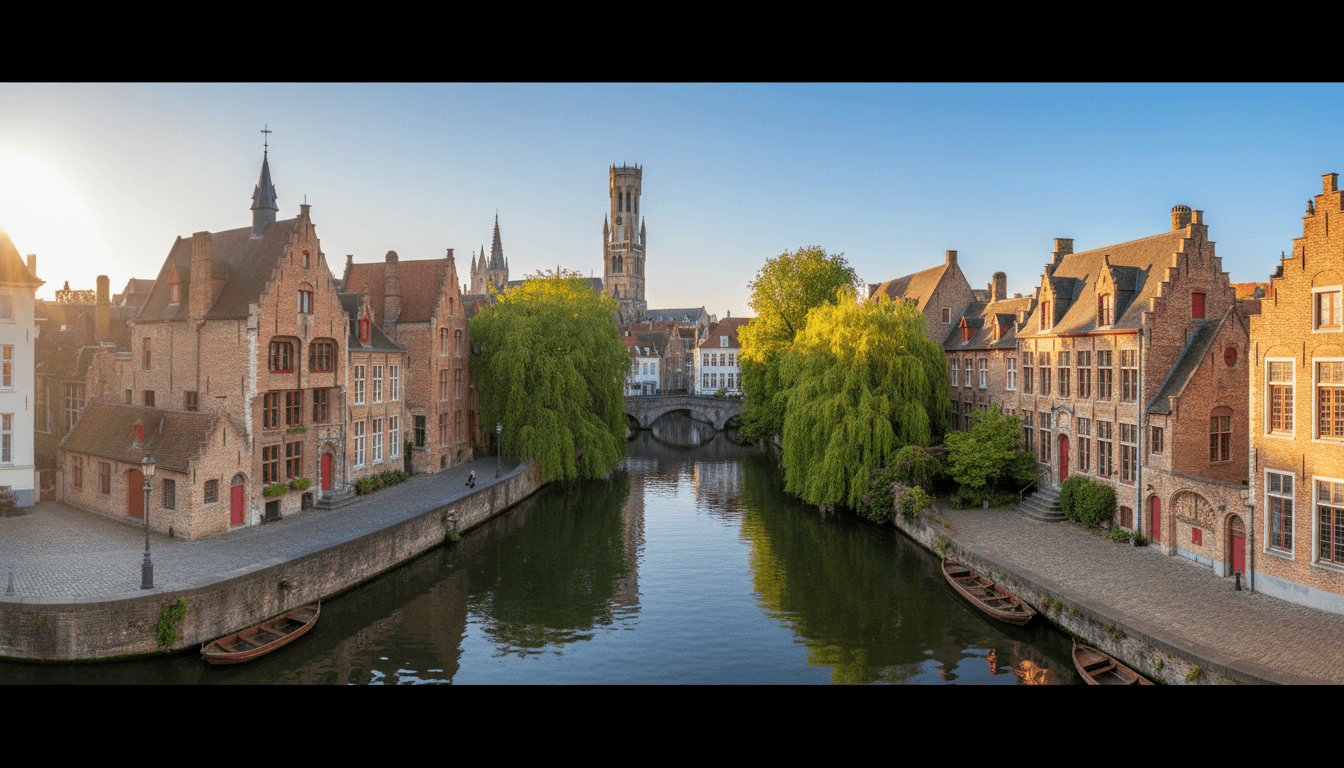
I stood on a bridge over the Dijver canal that February morning, frost still clinging to the medieval guild houses, watching swans glide past buildings that hadn't changed in 500 years. The air smelled like woodsmoke and something sweet—waffles, probably, from a café I couldn't see. I'd just arrived at my home swap in the Sint-Anna quarter, a narrow brick townhouse with steep stairs and windows that rattled slightly in the wind, and I remember thinking: there's no way a hotel could give me this.
Budget travel to Bruges sounds like an oxymoron, I know. This little Belgian gem has gotten so popular that hotel prices have gone completely sideways—even hostels charge €40-50 a night in peak season. But here's what most travel blogs won't tell you: there's a way to stay in Bruges for essentially free, in a real home, with a kitchen where you can make your own Belgian waffles at 7 AM while the city's still quiet. It's called home swapping. I've been doing it for seven years across 25 countries, and honestly? It's the smartest choice I've found for anyone who wants to experience Bruges without watching their savings evaporate.
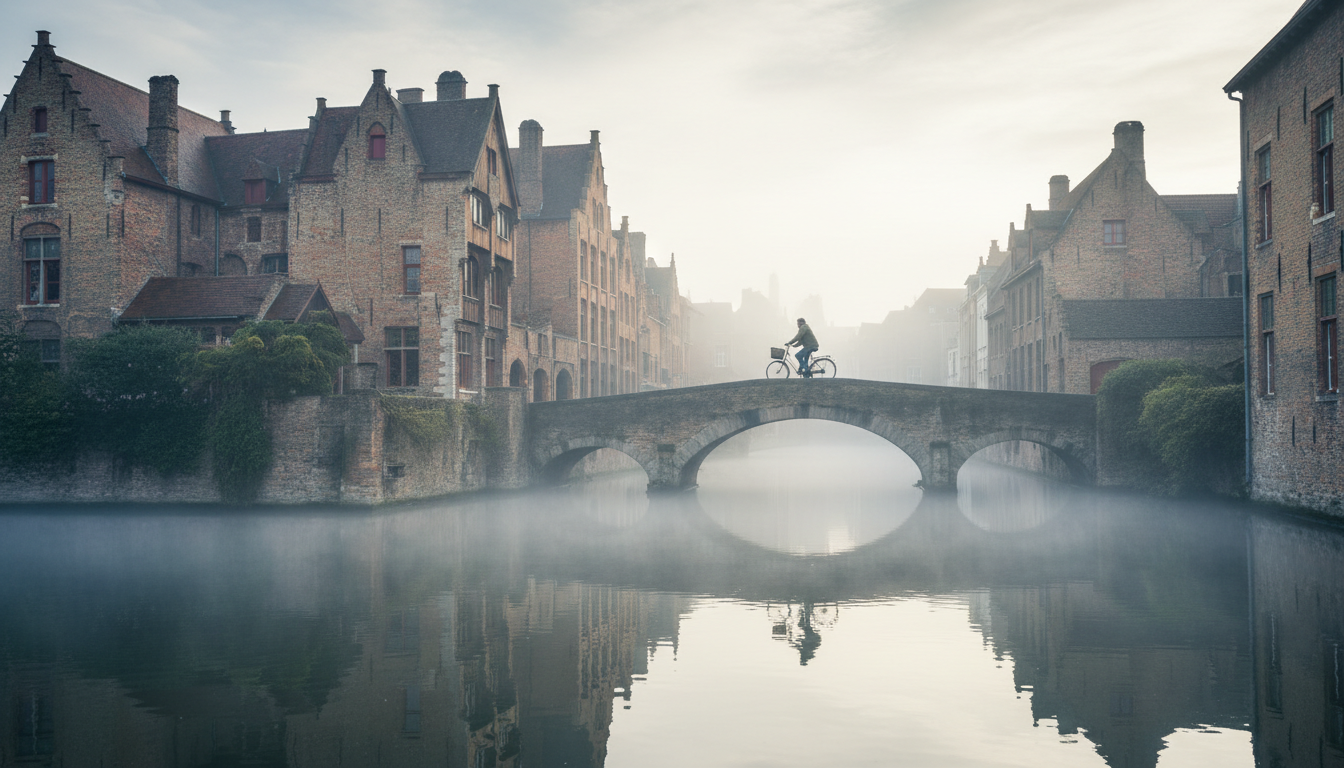 Morning mist rising over Bruges canal with medieval brick buildings reflected in still water, a sing
Why Budget Travel to Bruges Feels Nearly Impossible (Until You Discover This)
Let me give you some real numbers, because context matters here.
A mid-range hotel in central Bruges—nothing fancy, just decent—runs €180-250 per night in summer. That's $195-270 USD. For a week? You're looking at $1,365-1,890 just for accommodation. Airbnbs aren't much better. The "entire place" options in walkable areas average €120-180 per night, and that's before cleaning fees and service charges pile on.
I tracked my expenses during my Bruges swap last winter. Seven nights in that Sint-Anna townhouse cost me exactly zero euros in accommodation. Zero.
I spent my "hotel budget" on speculoos cookies from the Thursday market instead. On boat tours through the canals. On an embarrassing amount of Belgian chocolate from The Chocolate Line on Simon Stevinplein. (No regrets.)
The math is almost too simple: home swapping through platforms like SwappaHome works on a credit system—you earn 1 credit for every night you host someone, then spend 1 credit per night when you travel. New members start with 7 free credits. That's potentially 7 nights in Bruges without spending a cent on accommodation.
How Home Swapping in Bruges Actually Works
I get asked this constantly, so let me break it down the way I wish someone had explained it to me years ago.
Home swapping isn't about finding someone in Bruges who wants to stay in your exact city at the exact same time. That's the old model, and honestly, it was a logistical nightmare. The credit system changed everything. You host a family from Sydney in your San Francisco apartment for three nights—you earn 3 credits. Then you use those credits to book a week in Bruges with someone completely different. The Australian family might use their credits in Tokyo. Nobody needs to coordinate simultaneous trips.
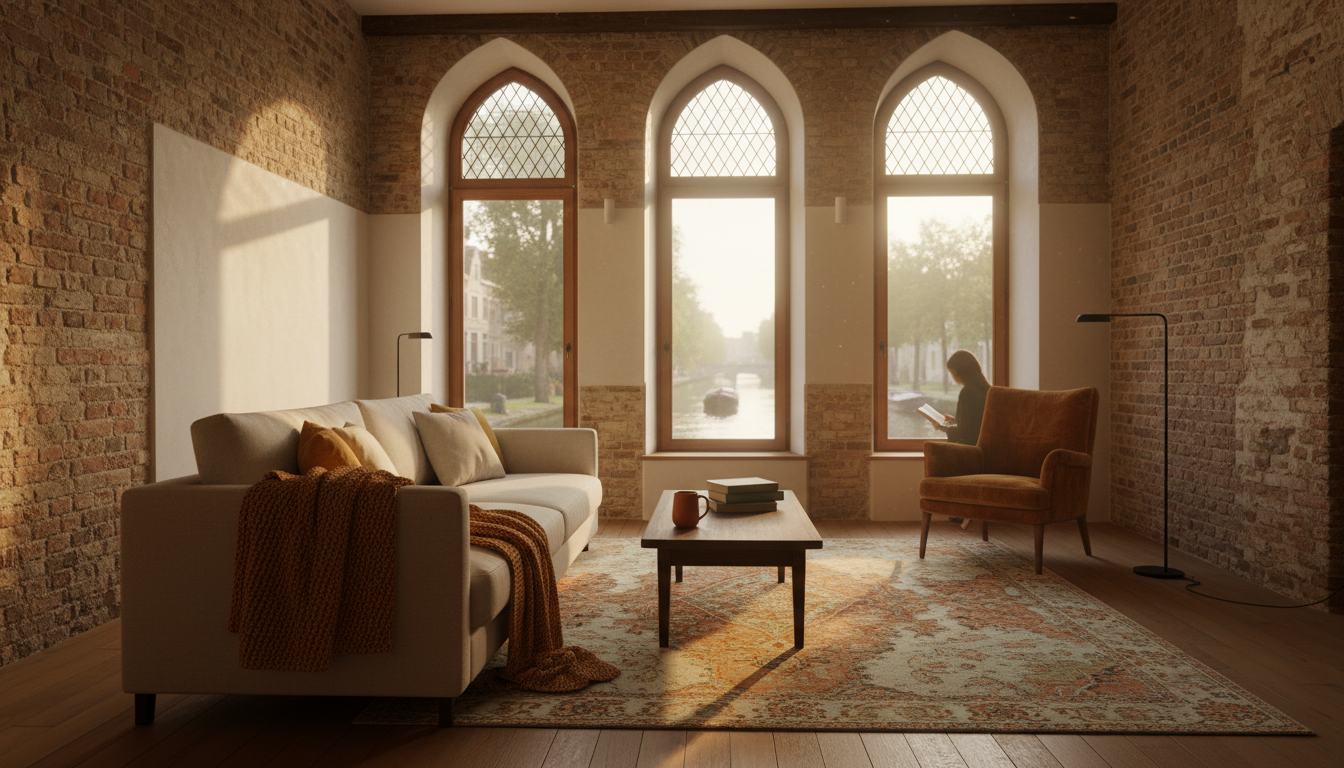 Cozy living room in a traditional Bruges townhouse with exposed brick walls, tall windows overlookin
For Bruges specifically, I've noticed a few patterns. Belgian members tend to have impeccably maintained homes—no surprise there, Belgians are meticulous about these things. Many properties are in those gorgeous narrow townhouses with steep staircases and surprisingly spacious interiors. You'll find options in every neighborhood, from the touristy center around the Markt to quieter residential areas like Sint-Gillis or Sint-Andries.
The process goes like this: browse listings, send a booking request with your travel dates and a message about yourself, wait for the host to accept. Most Bruges hosts respond within 24-48 hours in my experience. Once confirmed, you coordinate key exchange through the platform's messaging system. Some hosts leave keys with neighbors; others use lockboxes. My Sint-Anna host had arranged for her downstairs neighbor—an elderly woman named Martine—to let me in. Martine ended up giving me the best restaurant recommendation of my entire trip.
The Real Savings: Budget Travel to Bruges by the Numbers
I'm a spreadsheet person. Sorry not sorry.
Here's what a week in Bruges actually costs with home swapping versus traditional accommodation:
Traditional Budget (Hotel/Airbnb): Accommodation runs €1,050-1,400 ($1,140-1,520). Add dining out for every meal at €350-490 ($380-530), and you're looking at €1,400-1,890 total ($1,520-2,050).
Home Swap Budget: Accommodation costs €0 (using credits). Groceries plus some dining out comes to €150-200 ($165-220). Total: €150-200 ($165-220).
That's a difference of roughly $1,355-1,830 for one week. Even if you factor in the cost of hosting guests at your own home—maybe €30-50 in extra utilities and supplies—you're still saving over a thousand dollars.
But here's what the numbers don't capture: the experience difference.
When you're staying in a real Bruges home, you have a kitchen. You can walk to the Smedenpoort farmers market on Saturday morning, buy fresh bread and local cheese, and make breakfast overlooking the canals. You can store Belgian beer in the fridge and drink it on the terrace at sunset. You're not eating €18 hotel breakfasts or €25 tourist-trap lunches because you have no other option.
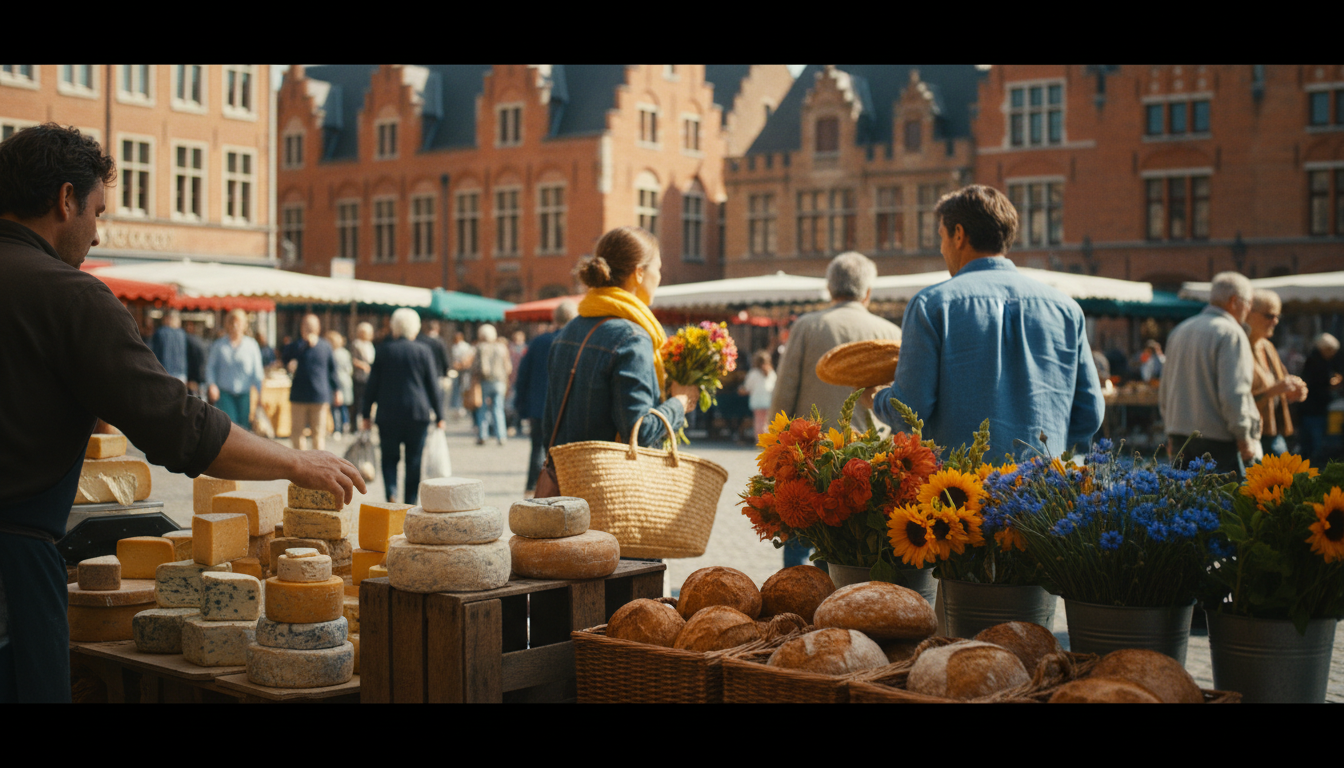 Bruges Saturday market scene with vendors selling artisanal cheese, fresh bread, and flowers, locals
Best Bruges Neighborhoods for Home Swapping
Not all Bruges neighborhoods are created equal, and where you stay dramatically affects your experience. Here's my honest take after exploring most of them.
Sint-Anna: The Local's Secret
This is where I stayed, and I'm biased, but it's genuinely special. Sint-Anna sits just east of the historic center—walkable to everything but removed from the tour group chaos. The streets are quieter. The neighbors actually live there year-round. You'll find yourself nodding hello to the same faces at the bakery each morning.
Home swap options here tend to be traditional townhouses with character. Expect steep stairs (this is Bruges, after all) and surprisingly lovely back gardens.
't Zand and Station Area: Practical but Less Charming
If you're arriving by train and want minimal logistics, the area around 't Zand square and Bruges station makes sense. It's a 10-minute walk to the Markt, and you'll find more modern apartments here—easier for anyone with mobility concerns or heavy luggage. The trade-off is atmosphere. This area feels more like a regular European city and less like a medieval painting.
Sint-Gillis: Underrated Gem
Southwest of the center, Sint-Gillis has this wonderful village-within-a-city feel. The Sint-Gilliskerk anchors a small square with local cafés that tourists rarely discover. I had coffee at a place called De Republiek here, and I was the only non-local in the room. Home swaps in Sint-Gillis often come with more space—think larger apartments or even small houses with gardens.
The Historic Center: Gorgeous but Loud
Yes, you can find home swaps right in the heart of Bruges, steps from the Belfry and the Markt. And yes, it's stunning.
But I'll be honest: I wouldn't choose it.
The center empties of residents and fills with tourists during the day, then gets eerily quiet at night. You'll hear tour groups outside your window at 8 AM. The magic of home swapping is living like a local—and locals don't live in the Markt.
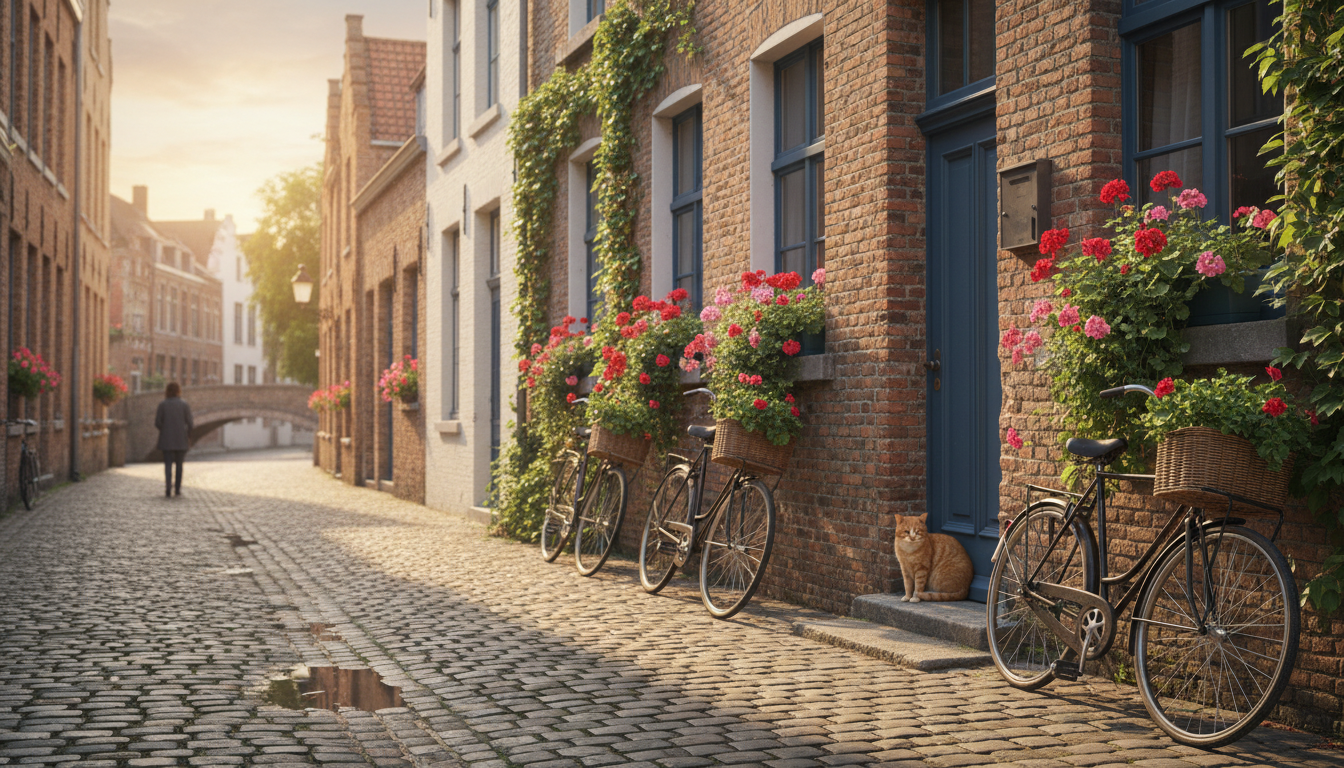 Quiet cobblestone street in Sint-Anna neighborhood at golden hour, bicycles leaning against brick wa
What to Expect from Your Bruges Home Swap Host
Belgian hosts, in my experience, are wonderfully thorough. The welcome information I received for my Sint-Anna stay was practically a novel—but in the best way.
My host had included detailed instructions for the coffee machine (Belgians take coffee seriously), a hand-drawn map of her favorite spots including a chocolate shop tourists never find, recommendations organized by category ("If you want quiet," "If you want lively," "If it's raining"), the WiFi password plus the quirks of the heating system, and emergency contacts including her neighbor Martine and a local friend who spoke English.
This level of care is typical. Home swap hosts aren't running a business—they're sharing their actual home with someone while they travel. There's a mutual respect built into the exchange that you simply don't get with commercial accommodation.
That said, you're staying in someone's real life. You'll see family photos on the walls. There might be a cat that needs feeding (some hosts arrange this; always clarify beforehand). The shower might have a learning curve. The bed might be firmer or softer than you're used to.
This is part of the adventure, not a bug.
Practical Tips for Budget Travel to Bruges via Home Swap
After multiple Belgian swaps, here's what I wish I'd known from the start.
Book 2-3 months ahead for summer. Bruges is small, and the home swap inventory isn't infinite. July and August fill up fast. Winter is easier—and honestly more magical, with fewer crowds and Christmas markets.
Message hosts personally. Don't just send a generic booking request. Mention something specific about their home, share a bit about yourself, explain why you're visiting Bruges. Belgian hosts appreciate genuine communication.
Ask about bikes. Many Bruges homes come with bicycles, which is incredible because biking is the best way to explore. My Sint-Anna host had two city bikes in her courtyard that I used daily. If bikes aren't mentioned in the listing, ask—hosts sometimes forget to include them.
Understand the credit system before you go. On SwappaHome, it's simple: 1 credit = 1 night, always. No surge pricing, no luxury premiums. A canal-view townhouse costs the same credits as a modest apartment. This means you can often stay in places that would be wildly expensive as hotels.
Bring a small host gift. This isn't required, but it's a lovely gesture. I brought my host a bag of Ritual Coffee beans from San Francisco. She later messaged me saying it was the best coffee she'd had in years. These small touches build the community that makes home swapping work.
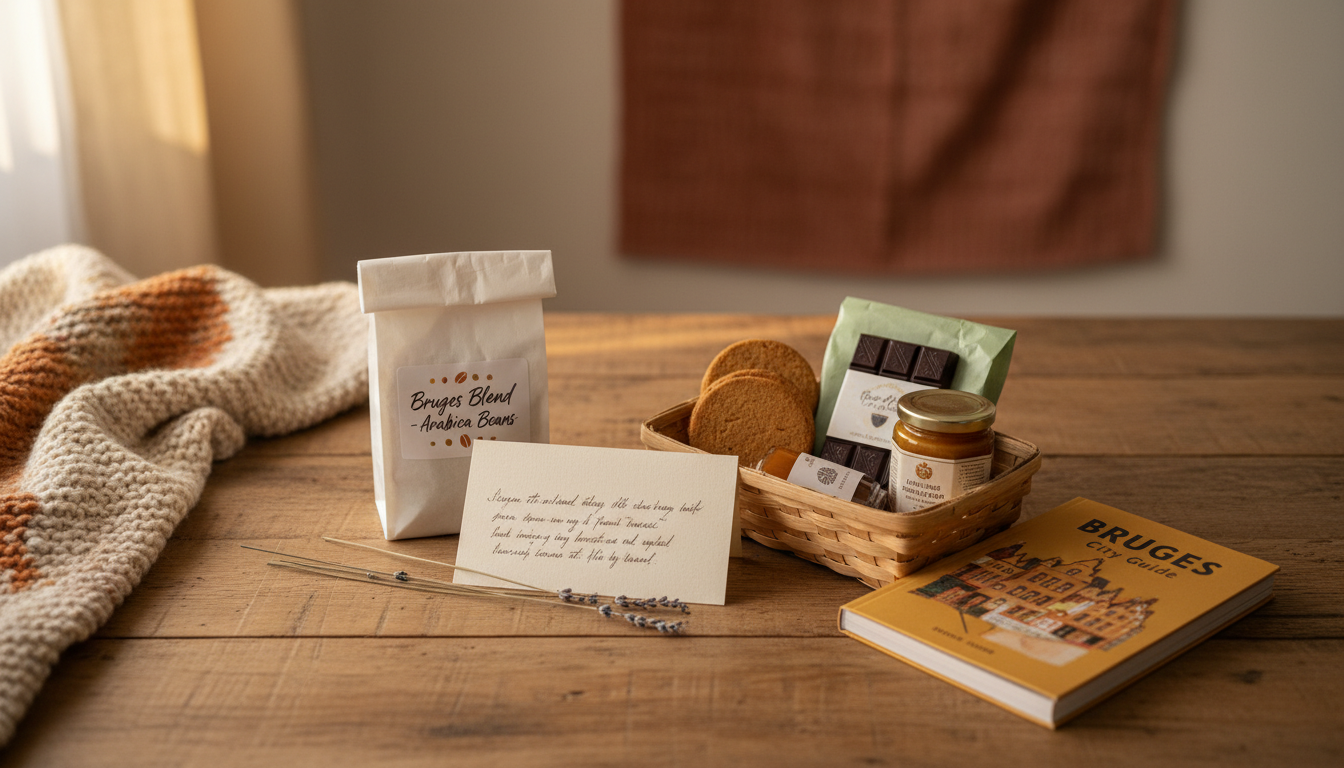 Flat lay of a thoughtful host gift arrangement specialty coffee beans, a handwritten thank-you note,
Beyond Accommodation: How Home Swapping Transforms Your Bruges Experience
Here's something I didn't expect when I started home swapping: it fundamentally changes how you travel.
When you're staying in a hotel, you're a tourist. You leave in the morning, return at night, and the city is something you observe from outside. When you're staying in someone's home, you become—even temporarily—a resident. You figure out which bakery opens earliest. You learn the garbage collection schedule. You develop a nodding relationship with the neighbor who walks his dog past your door at 7 AM.
In Bruges, this meant I discovered places I never would have found otherwise.
My host's hand-drawn map led me to De Bottelier, a tiny wine bar on Sint-Jakobsstraat where locals gather after work. She'd written "order the cheese plate, trust me" next to it. I did. She was right.
I found a bookshop called De Reyghere that's been operating since 1939, tucked on Mariastraat where tourists rarely wander. I ate frites from a stand near the Smedenpoort that her map marked with three exclamation points. These aren't in guidebooks. They're the kind of knowledge that comes from actually living somewhere.
Safety, Trust, and the Home Swap Community
I know what you're thinking: "But isn't it weird staying in a stranger's home? What if something goes wrong?"
Fair questions. Here's my honest answer after seven years and 40+ swaps: the home swap community is remarkably trustworthy, and it's not by accident.
Platforms like SwappaHome have review systems where both guests and hosts rate each other after every stay. These reviews are public and permanent. Someone with a history of problematic behavior simply can't continue swapping—the community self-regulates. Before accepting any guest or booking any stay, you can read detailed reviews from previous exchanges. There's also identity verification available, so you know the person you're communicating with is who they claim to be. And the messaging system keeps all communication documented and secure.
That said—and I want to be transparent here—SwappaHome is a platform that connects members, not an insurance company. If you want coverage for damages or liability, you should arrange your own travel insurance or home insurance policy. Most home swap veterans I know have a standard travel insurance policy that covers their belongings, and their homeowner's or renter's insurance covers their property while they're away.
The reality? Problems are rare. Think about it: everyone in the home swap community has skin in the game. If I trash someone's Bruges apartment, they can review me, and my home swapping days are over. The mutual accountability creates a level of respect that commercial transactions often lack.
Making the Most of Your Bruges Budget
With accommodation costs eliminated, your Bruges budget suddenly goes a lot further. Here's how I'd allocate a week's spending:
Food and Drink (€150-200 / $165-220): Shop at the Smedenpoort market on Saturday and the smaller Thursday market at 't Zand. Stock up on bread, cheese, and fruit for breakfasts and lunches. Splurge on a few special dinners—Den Dyver for beer-paired cuisine runs around €45-60 per person, or Rock Fort for more casual but excellent food at €25-35. Budget €3-4 for frites from a street stand, €2.50 for a Belgian waffle from a non-touristy spot.
Activities (€50-80 / $55-85): The Belfry climb is €14 and worth every cent for the view. A canal boat tour runs €12-14. The Groeningemuseum—Flemish Primitives, including van Eyck—is €14. Many churches are free or €2-4. Walking is free, and honestly, walking is the best activity in Bruges.
Chocolate and Beer (€40-60 / $45-65): You're in Belgium. This is a required budget category. The Chocolate Line on Simon Stevinplein is expensive but extraordinary—budget €15-20 for a small box. For beer, skip the tourist bars and head to 't Brugs Beertje on Kemelstraat, where you can try rare Belgian beers for €4-7 each.
Transportation (€0-20 / $0-22): Bruges is tiny. If your home swap includes bikes, you won't spend anything on transport. If not, you'll walk everywhere anyway. The only transport cost might be the train from Brussels airport—about €20 each way.
Total week in Bruges: €240-360 ($260-390), including everything except flights. Compare that to the €1,400-1,890 you'd spend with hotel accommodation. The difference is staggering.
When to Visit Bruges for Budget Travel
Timing matters for both your budget and your experience.
Winter (November-February): My favorite, honestly. Fewer tourists, Christmas markets in December, and that magical misty atmosphere I mentioned earlier. Home swap availability is good because fewer people travel. Temperatures hover around 2-7°C (35-45°F), so pack layers.
Spring (March-May): Increasingly popular, especially around Easter. The city blooms with flowers, and the weather is mild at 10-18°C (50-64°F). Book home swaps 2-3 months ahead.
Summer (June-August): Peak tourist season. The city gets crowded, and home swap inventory books up fast. If you must visit in summer, book 3-4 months ahead and consider staying slightly outside the center.
Fall (September-October): Underrated. The summer crowds thin, the weather stays pleasant at 12-18°C (54-64°F), and the light is gorgeous for photography. Good home swap availability.
The Verdict: Is Home Swapping the Smartest Choice for Bruges?
I've stayed in Bruges hotels. I've done Airbnbs. I've done home swaps.
I keep coming back to home swapping—not just because it's cheaper, though it dramatically is, but because it's better.
Better because you wake up in a real neighborhood, not a tourist zone. Better because you have a kitchen and a living room and maybe a garden. Better because someone who actually lives in Bruges has shared their favorite spots with you. Better because you're part of a community of travelers who believe there's a more authentic, more affordable, more human way to explore the world.
Budget travel to Bruges isn't about sacrificing comfort or experience—it's about being smart with where your money goes. Home swapping lets you redirect hundreds of euros from hotel shareholders to local chocolatiers, from corporate breakfast buffets to farmers market vendors, from generic rooms to genuine connections.
If you're considering Bruges and you haven't tried home swapping yet, SwappaHome is a good place to start. The 7 free credits for new members mean you could book your entire Bruges week without spending anything on accommodation. And once you've experienced the city from inside a canal-side townhouse, with church bells echoing across the rooftops and swans drifting past your window, you'll wonder why you ever paid for a hotel.
The swans don't care if you're a tourist or a temporary local.
But you will.
Frequently Asked Questions
Is home swapping in Bruges safe for solo travelers?
Home swapping in Bruges is generally very safe for solo travelers. The community relies on verified profiles and detailed reviews from previous exchanges, creating accountability. Bruges itself is one of Europe's safest cities with low crime rates. Always read host reviews carefully, communicate through the platform's secure messaging, and trust your instincts when selecting properties.
How much money can I save with home swapping in Bruges?
Most travelers save €1,050-1,400 ($1,140-1,520) per week by home swapping instead of booking hotels in Bruges. Mid-range hotels cost €150-200 per night, while home swapping costs zero euros in accommodation—you simply use credits earned from hosting. Even budget hostels at €40-50 per night add up to €280-350 weekly.
Do I need to speak Dutch or French for home swapping in Belgium?
No, English is widely spoken in Bruges, and most home swap hosts communicate fluently in English. Bruges is in the Flemish (Dutch-speaking) region of Belgium, but it's extremely tourist-friendly. Your host's welcome information will typically be in English, and locals in shops and restaurants speak English well.
What if something gets damaged during a home swap in Bruges?
Home swap platforms like SwappaHome connect members but don't provide damage insurance. Most experienced swappers recommend having your own travel insurance and ensuring your home insurance covers guests. Damages are rare due to the review system—members protect their reputation. Communicate openly with hosts about any accidents; most issues resolve amicably.
Can I home swap in Bruges during Christmas markets season?
Yes, Bruges Christmas markets (late November through early January) are a popular time for home swapping. Book 3-4 months ahead as this period fills quickly. The festive atmosphere, mulled wine stands, and decorated medieval squares make winter a magical time to visit—and home swapping means you can escape the crowds to a cozy local home.

Published by
SwappaHome
SwappaHome Editorial Team
Home Exchange & Slow Travel Editorial
The SwappaHome Editorial Team brings together travel research, home-exchange community insights, and platform data to produce practical guides for first-time and experienced home swappers. Every article cites real platforms, current market rates, and verifiable city-level facts so readers can make informed decisions without guessing.
Ready to try home swapping?
Join SwappaHome and start traveling by exchanging homes. Get 7 free credits when you sign up!
Related articles

Bachelor and Bachelorette Parties in Singapore: The Complete Home Swap Group Guide for 2026
Planning a bachelor or bachelorette party in Singapore? Discover how home swapping lets groups of 6-12 stay together in luxury condos, saving thousands while partying in Marina Bay.

Cycling in Lisbon: 7 Home Swap Bike Tour Itineraries for Every Rider
Discover the best cycling routes in Lisbon with these home swap bike tour itineraries—from waterfront paths to hilltop adventures, all starting from your borrowed home.

Graduation Trip to Barcelona: How Home Swapping Gives New Graduates the Ultimate Celebration
Planning a graduation trip to Barcelona? Discover how home swapping lets new graduates explore Spain's most vibrant city without the hostel crowds or hotel costs.