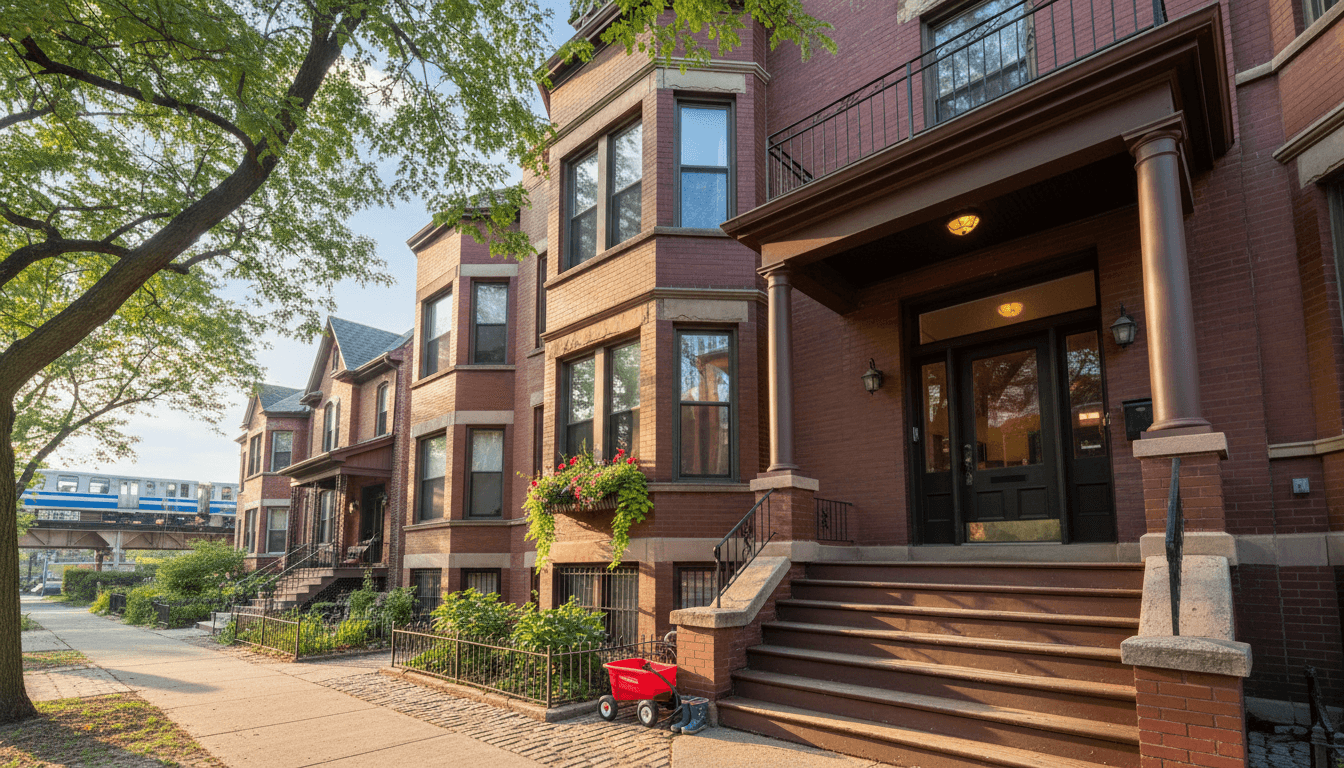
Chicago with Kids: Why Home Exchange Is Perfect for Family Travel

SwappaHome Editorial Team
Home Exchange & Slow Travel Editorial
Discover why home exchange in Chicago beats hotels for families. Real kitchens, neighborhood playgrounds, and savings of $200+ per night make all the difference.
Picture this: it's 7 AM, and a toddler is already awake, demanding Cheerios. In a hotel room, that means scrambling for overpriced minibar snacks or dragging everyone down to a crowded breakfast buffet in yesterday's clothes. But in a Lincoln Park brownstone—a home exchange for the week—there's a sunlit kitchen, a familiar cereal bowl, and Lake Michigan glittering through the window. The kids don't even realize they're on vacation yet. They just think this is a really cool house with better toys than theirs.
That's the magic of Chicago home exchange with kids. It transforms family travel from an endurance test into something that actually feels like... living.
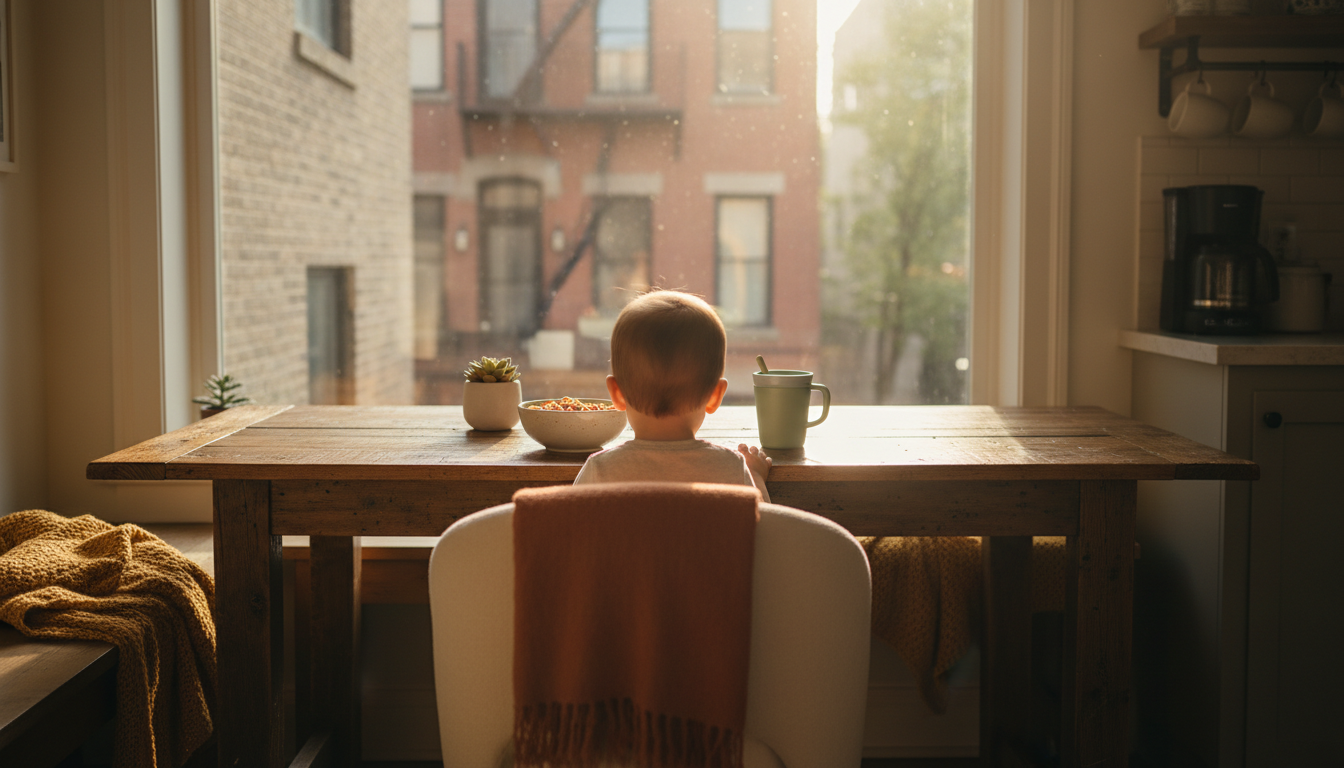 Morning scene in a Lincoln Park brownstone kitchentoddler at a sunny breakfast nook, cereal bowl and
Why Chicago Is Secretly One of America's Best Family Destinations
Chicago doesn't market itself the way Orlando or San Diego do. No mascot. No theme park empire. But families who've spent a week here know the truth: this city was practically designed for kids.
The lakefront alone offers 26 miles of public beaches, playgrounds, and trails. Navy Pier's 196-foot Centennial Wheel delivers skyline views without the claustrophobia of observation decks. The Field Museum houses Sue, the largest and most complete T. rex skeleton ever discovered—and if that doesn't impress a seven-year-old, nothing will. Millennium Park's Crown Fountain transforms into a giant splash pad every summer, kids running screaming through water jets projected from 50-foot glass towers.
Here's what parents actually care about: Chicago is navigable. The CTA's 'L' train system runs through every major neighborhood, so you're never wrestling a stroller through traffic. Most attractions cluster around the Loop and Museum Campus—hit the Shedd Aquarium, Adler Planetarium, and Field Museum without ever getting back in a car.
But—and this is the part nobody tells you—Chicago family travel gets expensive fast. A family of four staying near Michigan Avenue easily spends $350-500 per night on a hotel room that still requires eating every meal out. Add $40 parking fees, $15 hotel breakfasts per person, and suddenly that "budget" Chicago trip costs more than a week in Europe.
This is exactly where home exchange changes everything.
The Real Economics of Chicago Home Exchange for Families
Let's run the actual numbers, because this is where home swapping stops being a "nice idea" and becomes the obvious choice.
Traditional Chicago family hotel stay (7 nights):
- Hotel near attractions: $350/night × 7 = $2,450
- Breakfast (family of 4): $60/day × 7 = $420
- Parking: $45/day × 7 = $315
- Dinners out (because no kitchen): $120/day × 7 = $840
- Laundry service (kids are messy): $50
- Total: approximately $4,075
Chicago home exchange (7 nights):
- Accommodation: $0 (you're exchanging homes)
- Groceries for breakfast/some dinners: $250
- Parking: Often included with home, or street parking
- Laundry: Free (washer/dryer in home)
- Total: approximately $250-350
That's not a typo. The difference can exceed $3,500 for a single week. Enough to upgrade flights to business class. Enough to add a second week. Enough to actually enjoy the trip instead of watching a credit card statement with dread.
But the financial argument, as compelling as it is, misses the deeper point. Home exchange doesn't just save money—it fundamentally changes what family travel feels like.
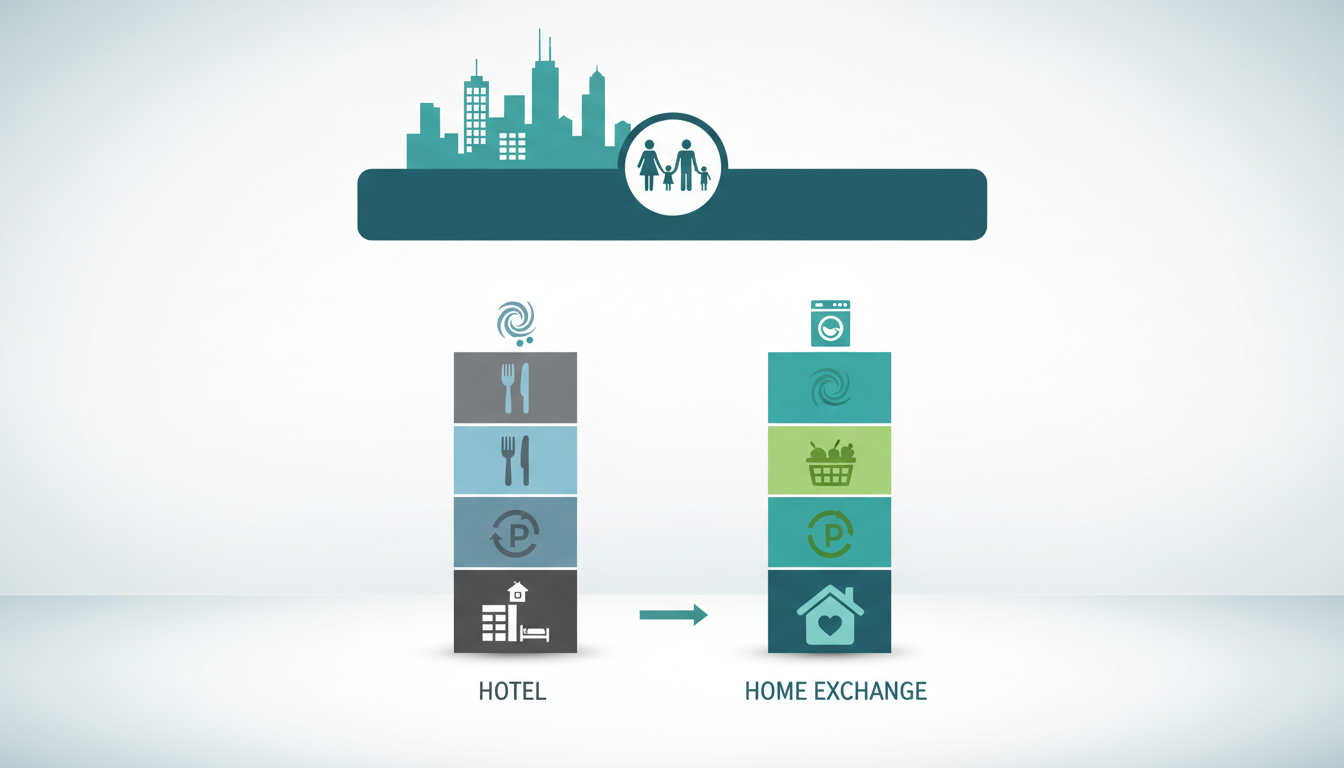 Infographic comparing hotel costs vs home exchange costs for a Chicago family tripbar chart showing
What "Living Like a Local" Actually Means When You Have Kids
Travel writers love the phrase "live like a local," but it usually means "find a coffee shop that isn't Starbucks." For families, living like a local means something far more practical.
It means a backyard. A bathtub instead of a cramped shower. A high chair that isn't a portable nightmare packed in a suitcase. Neighborhood playgrounds where kids can burn energy at 4 PM instead of destroying a hotel room.
Chicago neighborhoods deliver this in spades.
Lincoln Park: The Gold Standard for Family Home Exchange
Lincoln Park consistently ranks among the most family-friendly neighborhoods in America, and for good reason. The 1,200-acre park itself contains the Lincoln Park Zoo—one of the last free zoos in the country—plus Nature Boardwalk, Peggy Notebaert Nature Museum, and playgrounds every few blocks.
Home exchanges here typically feature classic Chicago brownstones and greystones with actual yards, something almost unheard of in major cities. Many have finished basements functioning as playrooms. The neighborhood's density of families means high chairs, pack-n-plays, and kids' books are often already stocked.
Walking distance to the zoo means visiting for an hour, heading home for nap time, and returning in the afternoon—something impossible when based downtown where every outing requires military-level logistics.
Andersonville: The Underrated Family Gem
Further north, Andersonville offers a different vibe—Swedish bakeries, independent toy stores, and a main street (Clark Street) that feels like a small town dropped into a major city. The Swedish American Museum has a dedicated children's floor. Svea Restaurant serves Swedish pancakes that kids devour.
Home exchanges here tend toward larger single-family homes with garages—critical for anyone driving to Chicago. You're 20 minutes from downtown on the Red Line but far enough to feel the neighborhood rhythm.
Wicker Park/Bucktown: For Families Who Don't Want to Feel Like Tourists
Wicker Park and Bucktown attract younger families who want walkability without the Lincoln Park price tag. The 606 Trail—a 2.7-mile elevated park built on an old rail line—runs right through the neighborhood, perfect for stroller walks or kids on scooters.
Home exchanges here often come with that quintessential Chicago feature: the back porch. Three-flats (Chicago's signature three-story buildings) frequently have porches on every level. Summer evenings on a Wicker Park porch, kids playing below while parents drink wine—that's about as good as family travel gets.
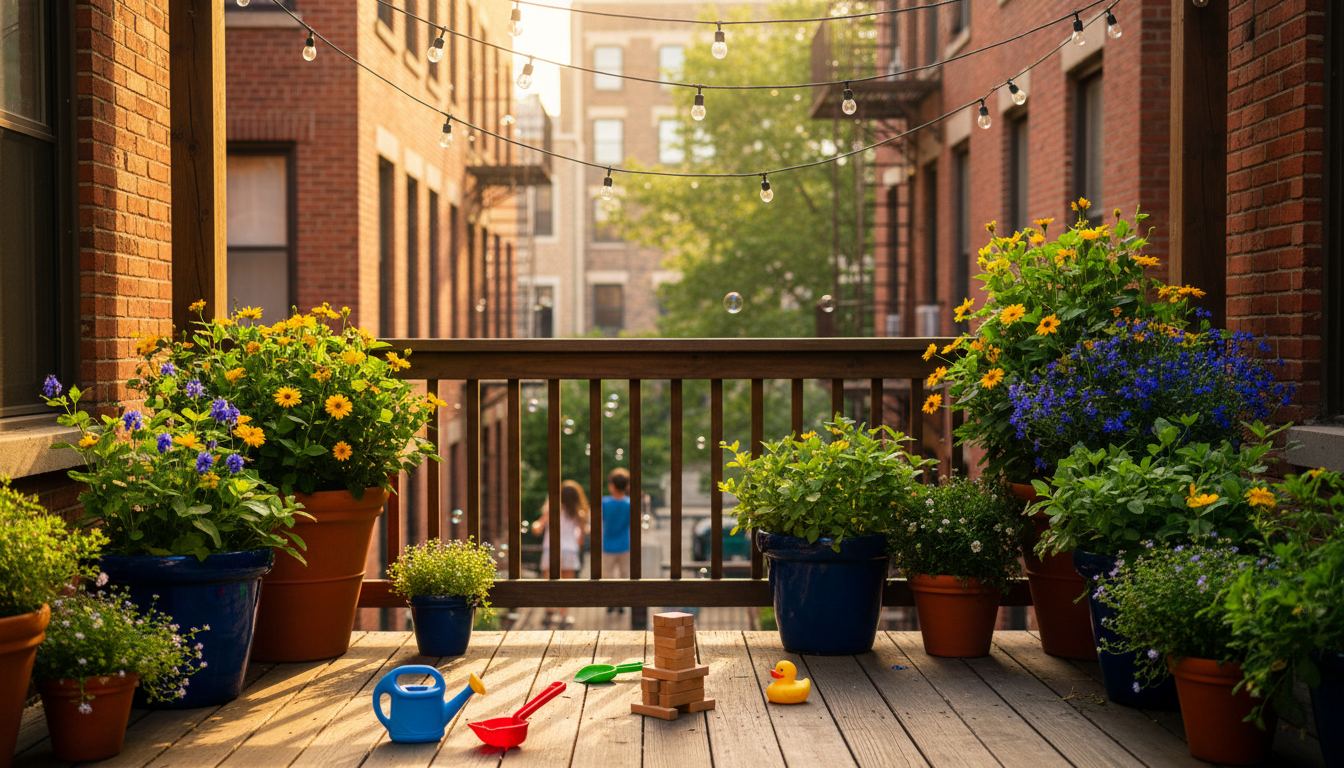 Summer afternoon on a Wicker Park back porchstring lights, potted plants, view of neighboring brick
The Practical Magic of a Chicago Kitchen
Here's something nobody warns you about traveling with kids: restaurants are exhausting.
Not occasionally exhausting. Relentlessly exhausting. Every meal becomes a negotiation—finding somewhere with a kids' menu, keeping them occupied while waiting for food, managing meltdowns when the chicken fingers arrive wrong, calculating tip while a toddler throws crayons.
A home exchange kitchen eliminates 70% of these interactions.
Chicago makes this especially easy. Mariano's, the local grocery chain, stocks everything from organic baby food to deep-dish pizza kits. Trader Joe's locations dot every neighborhood. The Green City Market in Lincoln Park (Wednesdays and Saturdays, May through October) sells farm-fresh everything within walking distance of many home exchanges.
The typical morning in a Chicago home exchange looks something like this: kids wake up, eat familiar breakfast foods, watch 30 minutes of cartoons while parents drink coffee in peace. No rushing to make a hotel breakfast cutoff. No hangry meltdowns at 8:47 AM because the restaurant doesn't open until 9.
And dinner? Grill some hot dogs on the back porch, throw together a pasta, or—when you actually want a restaurant experience—go out for one nice meal instead of three mediocre ones. The money saved on food alone often exceeds $100 per day.
Chicago Home Exchange: What Families Actually Find in Listings
The SwappaHome community includes hundreds of Chicago families, and their listings reflect what parents actually need. Common features in Chicago family home exchanges include:
Kid essentials: High chairs, pack-n-plays, baby gates, outlet covers. Many families leave these items specifically for swapping families, noting them in their listings.
Outdoor space: Chicago's lot sizes mean even city homes often have small yards, patios, or the beloved back porch. After a day of museums, kids need somewhere to run that isn't a hotel hallway.
Washer/dryer: Nearly universal in Chicago homes. This single amenity transforms family travel—pack half the clothes and actually keep up with the laundry disaster that is traveling with children.
Parking: Many Chicago home exchanges include garage or driveway parking, eliminating the $40-50 daily hotel parking fees.
Neighborhood intel: The best home exchange hosts leave detailed notes about local playgrounds, kid-friendly restaurants, pediatricians (just in case), and which bakery has the best cookies. This insider knowledge is worth more than any guidebook.
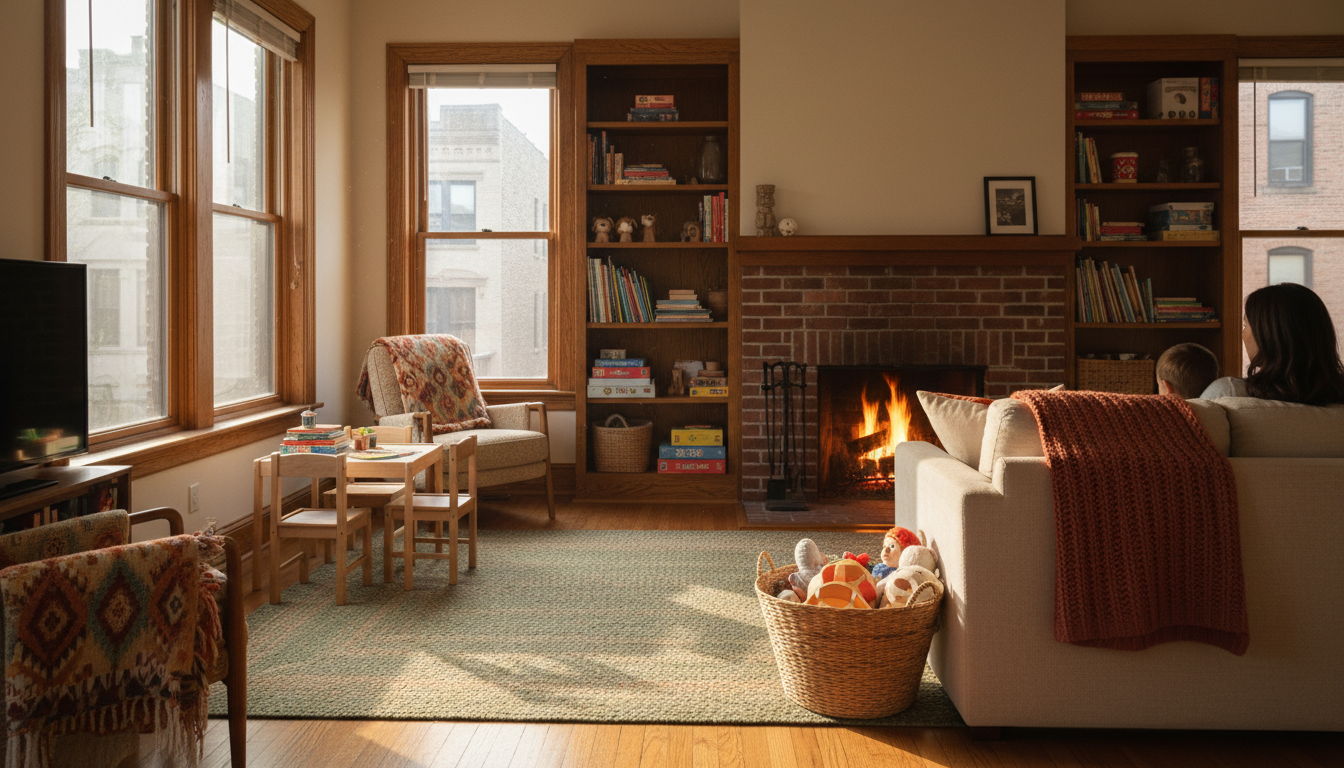 Cozy Chicago living room set up for a familytoys in a basket, kid-sized table and chairs by the wind
Planning Your Chicago Family Home Exchange: A Realistic Timeline
Home exchange requires more advance planning than booking a hotel, but the payoff justifies every minute. Here's what actually works:
3-4 months before your trip: Create or update your SwappaHome profile. Include photos of your home that show kid-friendly features—the backyard, the playroom, the neighborhood playground. Families search for families. Make it obvious you understand what parents need.
2-3 months before: Start browsing Chicago listings. Filter for neighborhoods that match your priorities. Send personalized messages to 5-10 potential matches—mention your kids' ages, your dates, and something specific about their listing that appeals to you.
6-8 weeks before: Confirm your exchange. Swap contact information, discuss logistics (key handoff, parking, any quirks about the home), and start the conversation about kid gear. Ask what they have; offer to leave what they need.
2 weeks before: Exchange detailed guides. Most experienced home-swappers create documents covering everything from WiFi passwords to garbage day to "the best playground within walking distance." Request this if they don't offer it.
Day of arrival: Many Chicago families leave welcome baskets—common touches include snacks for kids, a bottle of wine for parents, and hand-drawn maps of the neighborhood. Pay it forward when you host.
The Best Chicago Experiences for Home Exchange Families
Once you're settled into a Chicago home exchange, the city opens up differently than it does for hotel-bound tourists. You're not racing to justify a $400/night room. You're living here.
Museum Campus: Plan for Multiple Visits
The Field Museum, Shedd Aquarium, and Adler Planetarium cluster together on Museum Campus, and the mistake most families make is trying to do all three in one day. From a home exchange base, you can spread these across your trip.
The Shedd Aquarium alone deserves two visits—once for the main exhibits, once for the 4D theater and Stingray Touch pool. The Field Museum's Crown Family PlayLab (designed for kids under 10) could occupy an entire morning. Adler's Planet Explorers exhibit lets kids launch rockets and walk on the moon.
Worth noting: visit Museum Campus on weekday mornings. Weekend crowds are brutal, but Tuesday at 10 AM feels almost private.
Lakefront Trail: Your Daily Escape Valve
The 18-mile Lakefront Trail runs from Ardmore Avenue on the north to 71st Street on the south, and it's the single best free activity in Chicago. Rent bikes (Divvy stations everywhere, but kid bikes require a proper rental shop), bring scooters, or just walk.
From Lincoln Park, North Avenue Beach is minutes away—the boathouse there has bathrooms, food, and kayak rentals. From Andersonville, take the Red Line to Loyola and walk to Loyola Beach, one of the city's quieter stretches of sand.
Chicago Children's Museum: Worth the Navy Pier Crowds
Navy Pier gets a bad reputation among locals—touristy, crowded, overpriced. But the Chicago Children's Museum, located at the pier's entrance, genuinely deserves the hype. Three floors of hands-on exhibits, a dedicated area for kids under 5, and enough variety to occupy kids for 3-4 hours.
Go early (doors open at 10 AM), eat lunch somewhere else (the pier's food options are mediocre and expensive), and escape before the afternoon crush.
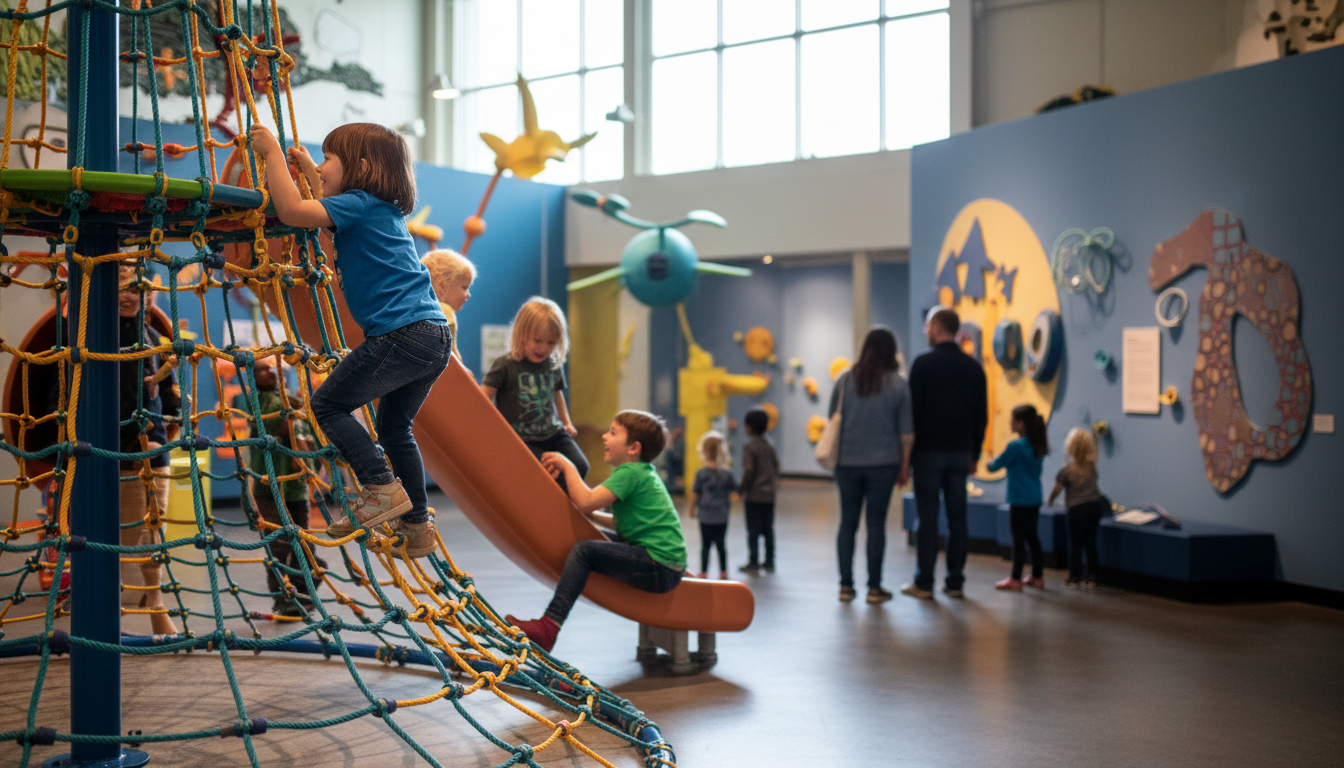 Kids climbing the rigging at Chicago Childrens Museumbright colors, engaged children, museum setting
Neighborhood Exploration: The Home Exchange Advantage
Here's what you can do from a home exchange that you can't do from a downtown hotel: wander.
Walk to the local playground and let kids make friends with neighborhood children. Find the ice cream shop everyone's talking about (Jeni's in Wicker Park, Pretty Cool Ice Cream in Logan Square, George's in Andersonville). Discover that the library branch three blocks away has a better kids' section than the one back home.
This isn't tourism. It's temporary living. And for kids, who don't care about architectural tours or Michelin restaurants, it's infinitely more engaging than being dragged through another museum.
Weather Reality: Timing Your Chicago Family Home Exchange
Chicago's weather is... a lot. The city earns its "Windy City" nickname (though the name actually refers to boastful politicians, not the lakefront gusts). Planning around seasons matters more here than in most destinations.
June through early September: Prime time. Beaches open Memorial Day weekend. Festivals every weekend—Taste of Chicago, Chicago Air and Water Show, neighborhood street fairs. Temperatures range from 70-85°F, occasionally spiking into the 90s. Book home exchanges 4-6 months ahead for summer; competition is fierce.
Late September through October: Underrated shoulder season. Crowds thin, temperatures stay pleasant (50-65°F), and fall colors along the lakefront are spectacular. Many families find better home exchange availability here.
November through March: Cold. Really cold. Wind chills below zero are common in January and February. But—and this is a significant but—Chicago doesn't shut down. Museums are emptier, home exchange availability is higher, and there's something magical about a snowy Chicago morning from a cozy brownstone. Just pack appropriately.
April and May: Unpredictable. Could be 70°F and gorgeous; could be 40°F and rainy. Locals call it "second winter." Flexible travelers might score a last-minute home exchange as Chicagoans flee for warmer destinations.
What to Know About Chicago Home Exchange Logistics
A few Chicago-specific details that affect home exchange planning:
Getting around: The CTA (Chicago Transit Authority) runs both 'L' trains and buses. A 7-day unlimited pass costs $33 per adult; kids under 7 ride free. From most residential neighborhoods, downtown is 20-40 minutes away. Uber and Lyft work well but add up fast with car seats—bring your own or request one.
Parking reality: If your home exchange includes parking, use it. Street parking in popular neighborhoods requires permits (which hosts can provide) or is metered. Garages near attractions charge $30-50 per day.
Groceries: Instacart and Amazon Fresh deliver to most Chicago addresses. Many home exchange hosts will stock basics if asked nicely—milk, bread, coffee—so you're not scrambling on arrival.
Safety considerations: Chicago's reputation for crime is statistically concentrated in specific South and West Side neighborhoods, far from typical tourist areas and home exchange locations. Lincoln Park, Andersonville, Wicker Park, and similar neighborhoods are as safe as any American city. Use normal urban awareness.
The Intangible Benefits: Why Home Exchange Creates Better Family Memories
There's a moment that happens in every successful home exchange that never happens in hotels.
You're cooking dinner. The kids are playing with toys that aren't theirs, in a room that isn't theirs, but they're completely at ease. The stress of travel—the constant novelty, the unfamiliar beds, the restaurant negotiations—has faded. You're not tourists anymore. You're just... somewhere else. Living.
This is what kids actually remember. Not the museums (though those are great). Not the deep-dish pizza (though that's essential). They remember the feeling of being comfortable somewhere new. The weird painting in the hallway. The cat next door. The ice cream shop you walked to every evening.
Home exchange makes this possible in ways hotels fundamentally cannot. You're not visiting Chicago. You're borrowing a Chicago life.
Getting Started with Chicago Home Exchange
If you're new to home exchange, Chicago is an ideal first destination. The city has an active swapping community, family-friendly neighborhoods with available listings, and enough to do that you'll want to return—which is the whole point of building home exchange relationships.
The SwappaHome platform makes matching straightforward. New members start with 7 free credits, enough for a substantial Chicago trip. The credit system means you don't need a simultaneous swap—host a family at your home whenever convenient, then use those credits for your Chicago adventure.
Browse Chicago listings filtered for your dates and family size. Look for mentions of kid gear, outdoor space, and neighborhood walkability. Read reviews from other families. Then reach out, introduce yourselves, and start planning.
Your kids won't remember another hotel room. But they'll remember that brownstone in Lincoln Park, the backyard fireflies, the walk to the zoo. They'll remember Chicago feeling like home.
Frequently Asked Questions
Is home exchange in Chicago safe for families with young children?
Chicago home exchange is as safe as any accommodation option, often safer because you're staying in residential family neighborhoods rather than tourist-heavy areas. The SwappaHome community includes verified members with reviews from previous exchanges. Most Chicago family listings come from parents who understand child-proofing and leave detailed safety information about their homes and neighborhoods.
How much can families save with Chicago home exchange versus hotels?
Families typically save $2,500-4,000 on a week-long Chicago trip through home exchange. This accounts for eliminated hotel costs ($300-500/night near attractions), reduced food expenses (kitchen access cuts restaurant spending by 50-70%), free parking (versus $40-50/night at hotels), and free laundry. The SwappaHome credit system means accommodation costs nothing beyond your annual membership.
What kid gear do Chicago home exchanges typically include?
Most family-friendly Chicago home exchanges include high chairs, pack-n-plays or cribs, baby gates, and basic toys and books. Listings specify available gear, and hosts often accommodate special requests. The SwappaHome community encourages families to communicate needs in advance—strollers, car seats, and specific age-appropriate items can often be arranged.
When is the best time for a Chicago home exchange with kids?
June through early September offers the best weather for Chicago family travel—beaches open, outdoor festivals run weekly, and temperatures average 70-85°F. However, shoulder seasons (late September-October, April-May) provide thinner crowds and better home exchange availability. Book summer exchanges 4-6 months ahead; competition for family-friendly listings is high.
Can we do a Chicago home exchange if we've never swapped before?
Absolutely. Chicago's active home exchange community makes it ideal for first-timers. SwappaHome provides 7 free credits to new members—enough for a week-plus stay. Start by creating a detailed profile showcasing your home's family-friendly features, then browse Chicago listings and send personalized messages to potential matches. Most experienced Chicago hosts happily guide newcomers through the process.

Published by
SwappaHome
SwappaHome Editorial Team
Home Exchange & Slow Travel Editorial
The SwappaHome Editorial Team brings together travel research, home-exchange community insights, and platform data to produce practical guides for first-time and experienced home swappers. Every article cites real platforms, current market rates, and verifiable city-level facts so readers can make informed decisions without guessing.
Ready to try home swapping?
Join SwappaHome and start traveling by exchanging homes. Get 7 free credits when you sign up!
Related articles

Bachelor and Bachelorette Parties in Singapore: The Complete Home Swap Group Guide for 2026
Planning a bachelor or bachelorette party in Singapore? Discover how home swapping lets groups of 6-12 stay together in luxury condos, saving thousands while partying in Marina Bay.

Cycling in Lisbon: 7 Home Swap Bike Tour Itineraries for Every Rider
Discover the best cycling routes in Lisbon with these home swap bike tour itineraries—from waterfront paths to hilltop adventures, all starting from your borrowed home.

Graduation Trip to Barcelona: How Home Swapping Gives New Graduates the Ultimate Celebration
Planning a graduation trip to Barcelona? Discover how home swapping lets new graduates explore Spain's most vibrant city without the hostel crowds or hotel costs.