Christmas in Geneva: Your Complete Guide to Holiday Home Swapping in Switzerland

SwappaHome Editorial Team
Home Exchange & Slow Travel Editorial
Experience Christmas in Geneva through home swapping—from lakeside markets to fondue nights. A local-style holiday guide with insider tips and real savings.
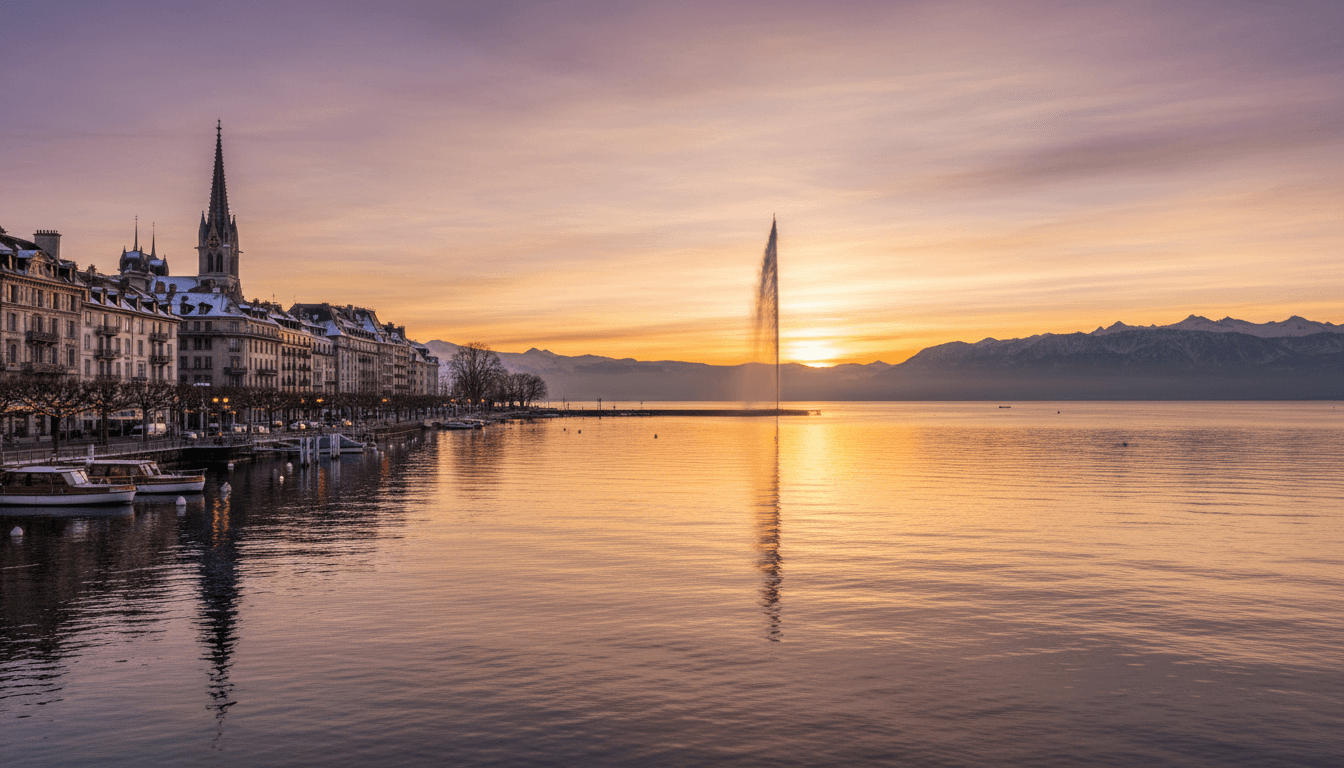
The first time I saw Geneva draped in Christmas lights, I was standing on the Pont du Mont-Blanc at dusk, watching the Jet d'Eau fountain catch the last pink rays of winter sun. Snow was just starting to fall—those fat, lazy flakes that make everything feel like a snow globe—and behind me, the smell of vin chaud and roasted chestnuts drifted from the Christmas market stalls. I remember thinking: this is what holiday magic actually feels like.
That was three years ago, during my first Christmas in Geneva home swap. I'd traded my San Francisco apartment for a cozy two-bedroom in the Eaux-Vives neighborhood, and what was supposed to be a week turned into the trip that completely changed how I think about winter travel.
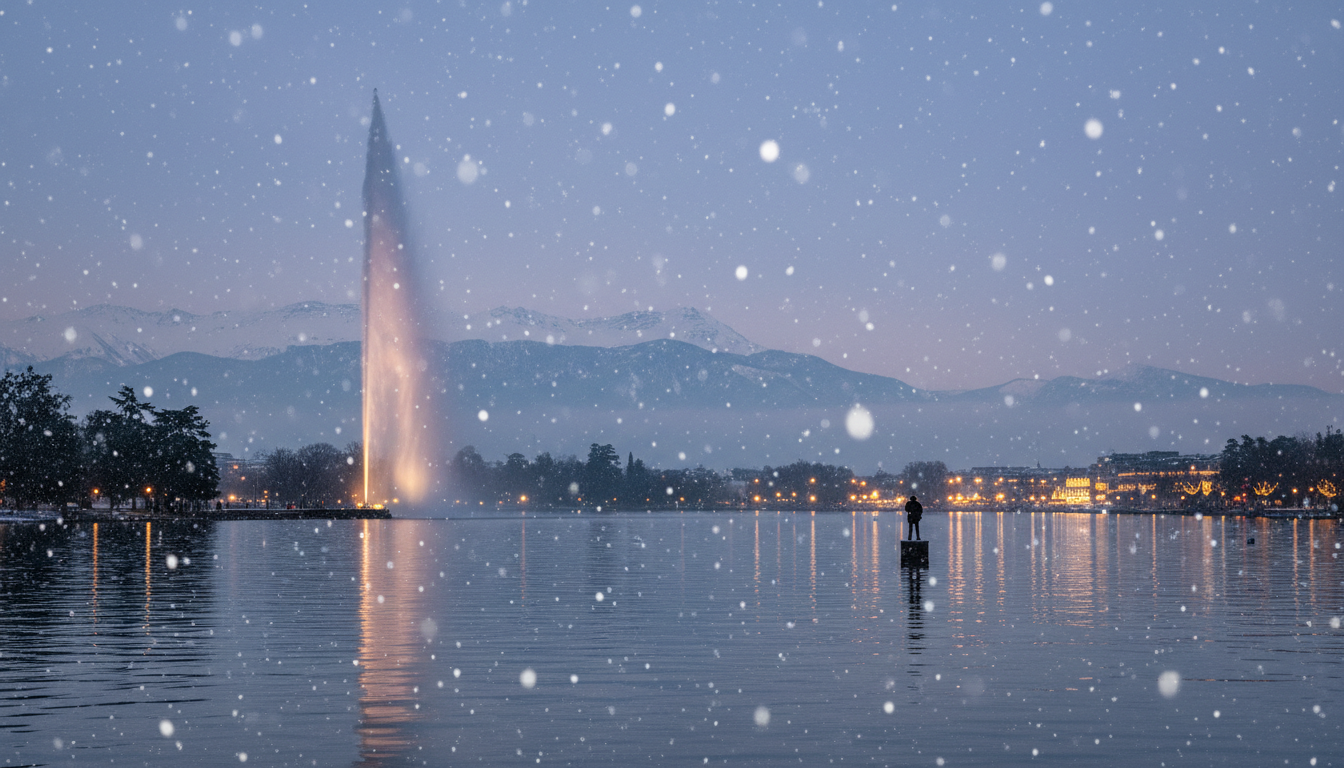 Genevas Jet dEau fountain at twilight with snow falling, Christmas lights reflecting on Lake Geneva,
Here's the thing about Geneva during the holidays: it's expensive. Like, really expensive. We're talking $400-500 per night for a decent hotel room, $30 for a basic lunch, and don't even get me started on fondue prices at tourist restaurants. But through home swapping? I spent three weeks living like a local, cooking in a real kitchen, and experiencing a Swiss Christmas that most tourists never see—all while spending a fraction of what I would have on accommodation.
Let me show you exactly how to make this work.
Why Geneva Home Swapping Makes Sense for Christmas Travel
I'll be real with you—Geneva is consistently ranked among the most expensive cities in the world. The Swiss franc is brutally strong, and during Christmas season, everything costs more. A friend of mine stayed at a mid-range hotel near the train station last December and paid 2,800 CHF (about $3,150 USD) for a week. Her room was the size of a closet, and the only kitchen access was a sad little kettle.
Meanwhile, I was in a proper apartment with a full kitchen, a Christmas tree the host had left up for me, and a balcony overlooking a courtyard where neighbors actually said "Joyeux Noël" when they saw me.
The math is simple. Budget hotels run $180-250 per night. Mid-range? $350-450. Anything nice starts at $500 and climbs from there. With SwappaHome, you're using credits—one credit per night, regardless of whether you're staying in a studio or a lakefront villa. Those 7 free credits you get when you sign up? That's potentially 7 nights in Geneva. Even if you need to host guests first to earn more credits, you're building toward free accommodation in one of the world's priciest destinations.
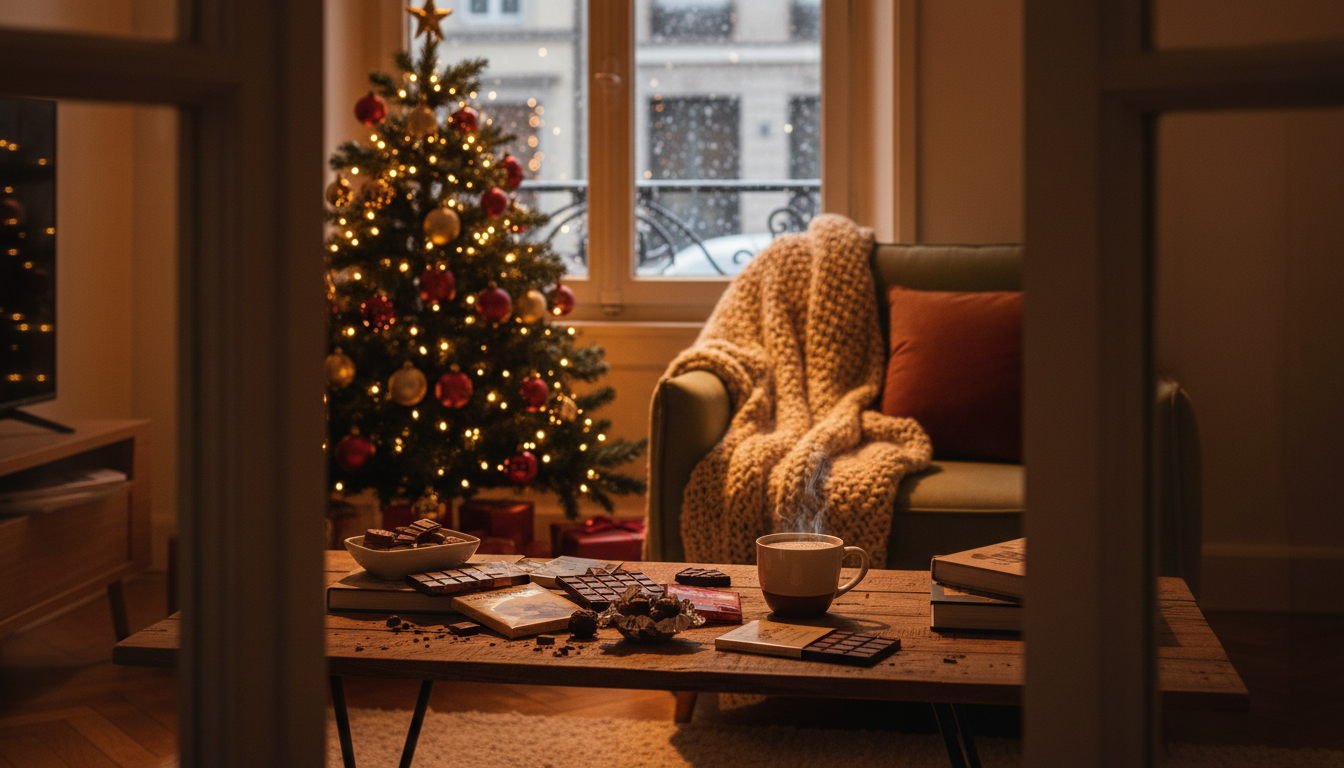 Interior of a cozy Geneva apartment decorated for Christmas, with a small tree, warm lighting, Swiss
But honestly, the money is only part of it. What really sold me on Geneva home swapping for Christmas was the experience itself. In a hotel, you're a tourist. In someone's home, you're temporarily part of the neighborhood. You know which bakery has the best pain au chocolat. You learn that the recycling schedule is serious business (the Swiss do not mess around). You get a handwritten note from your host telling you about the secret Christmas market in Carouge that doesn't show up in guidebooks.
Best Geneva Neighborhoods for Holiday Home Exchange
Not all Geneva neighborhoods are created equal—especially during Christmas. Here's where I'd recommend looking, based on what kind of holiday experience you want.
Eaux-Vives: My Personal Favorite
This is where I stayed on that first trip, and I've been back twice since. Eaux-Vives sits right on the lake, close enough to walk to the Christmas markets but residential enough that you feel like you actually live there. The Saturday morning market at Place du Marché transforms into a winter wonderland in December, with local farmers selling raclette cheese, mulled wine, and handmade decorations.
What I love: You can walk along the lakefront promenade to the Bains des Pâquis (which has an outdoor sauna—yes, in December—it's incredible), then loop back through the old town for the markets. Most apartments here are in beautiful old buildings with those tall European windows and original parquet floors. It's upscale but not as expensive as the old town, and homes tend to be well-maintained by professionals who travel frequently for work.
Carouge: Geneva's Little Italy
If Eaux-Vives is elegant, Carouge is bohemian. This former Sardinian territory has a completely different vibe—narrow streets, artisan workshops, and some of the best restaurants in the canton. During Christmas, Carouge hosts its own market that's smaller and more artisanal than the main Geneva one. Think handmade jewelry, local pottery, and food stalls run by people who actually made everything they're selling.
I did a home swap here two years ago with a ceramicist who left me a hand-thrown mug as a welcome gift. Her apartment was above her studio, all exposed brick and creative chaos, with a tiny balcony overlooking the Arve River. The restaurants here are about 30% cheaper than the city center, and the atmosphere is genuinely local. On Christmas Eve, I walked to midnight mass at Sainte-Croix church and then had drinks at a bar where everyone knew each other's names.
Plainpalais: For the Budget-Conscious
Plainpalais is Geneva's university district, which means younger residents, more affordable homes, and a slightly grittier urban feel. The famous flea market happens here (though it's smaller in winter), and you're within easy reach of MAMCO, the contemporary art museum.
During Christmas, Plainpalais hosts an ice skating rink that's way less crowded than the one at the main market. Entry is about 7 CHF ($8 USD), and skate rental is another 5 CHF. This neighborhood attracts hosts who are often students or young professionals—smaller spaces, but more flexibility with dates and a more casual vibe.
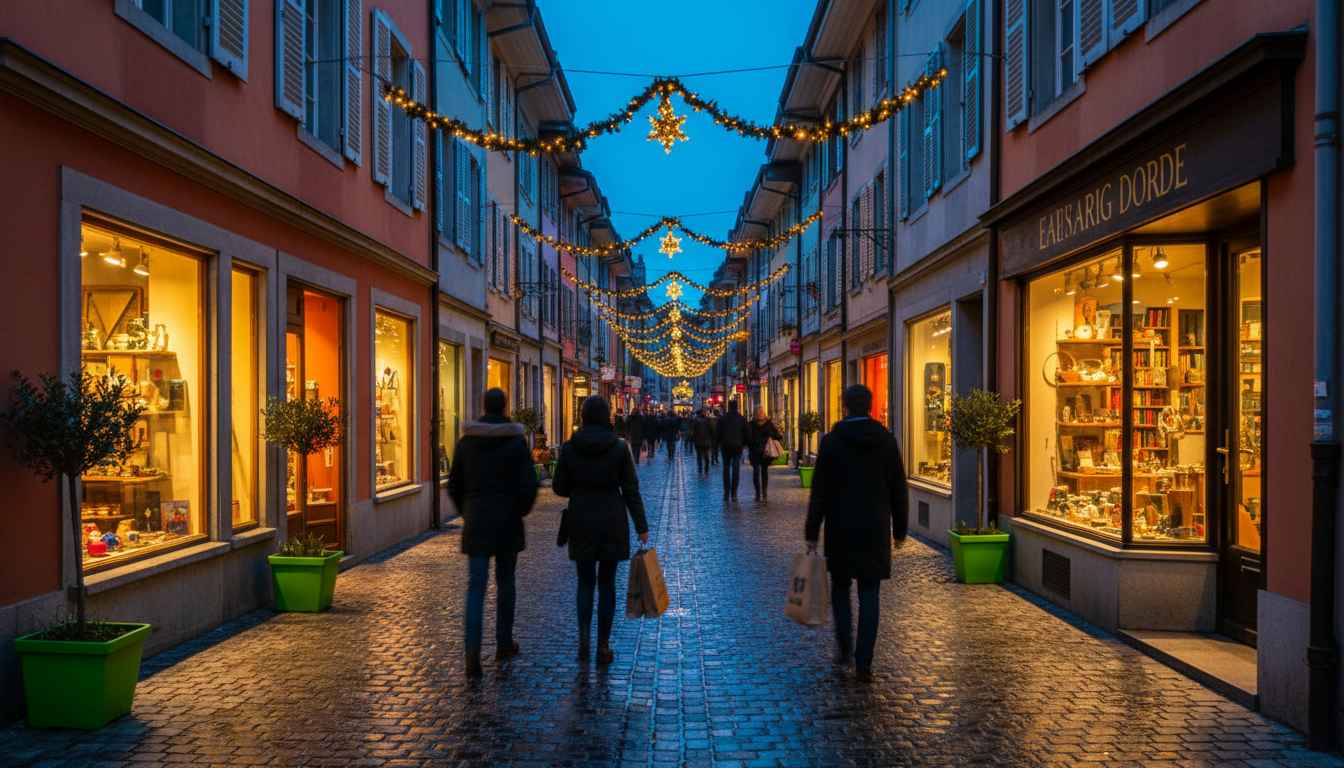 Carouges cobblestone streets decorated with Christmas lights, small artisan shops with warm glowing
Champel: Quiet Luxury
If you want a quieter Christmas—think morning walks in Parc Bertrand, family-friendly vibes, and larger apartments—Champel is your spot. This residential neighborhood is popular with diplomats and international organization employees, which means the homes available for swap tend to be spacious and well-equipped.
The downside: You'll need to take the tram (about 10 minutes) to reach the main Christmas markets. But if you have kids or just want some peace after the holiday crowds, it's worth it.
How to Find and Secure Your Geneva Christmas Home Swap
Here's where I need to give you some tough love: if you want to do a home swap in Geneva for Christmas, you need to plan early. I'm talking 4-6 months in advance, minimum.
Geneva has a smaller population than you might think (about 200,000 in the city proper), and it's a hub for international organizations, which means many residents travel home for the holidays. This is actually good news for home swappers—there are people looking to leave—but competition for the best places is real.
My Strategy for Finding Geneva Hosts
First, I set up my search filters on SwappaHome for Geneva and the surrounding area (don't forget Nyon, Lausanne, or even Annecy across the French border—all within easy reach). Then I look at profiles carefully.
What I'm checking for: Has this person been active recently? Do they have reviews from the past year? A dormant profile might mean they're not checking messages. I also look at photos—do they show the space in winter? This might seem minor, but it tells me the host actually thinks about seasonal guests. Bonus points if there's a photo of the heating system or a cozy reading nook. And in the description, hosts who mention things like "extra blankets in the closet" or "the heating can be tricky—here's how to adjust it" are the ones who'll actually prepare their home for you.
When I reach out, I always mention that I'm specifically interested in a Christmas stay and explain why. Something like: "I've always wanted to experience a Swiss Christmas, and your apartment in Eaux-Vives looks perfect for morning walks along the lake and easy access to the markets." Specific beats generic every time.
The Timing Question
Geneva's Christmas season runs roughly from late November through early January. The main Christmas market (Marché de Noël du Jardin Anglais) typically opens around November 20th and runs through December 24th. If you want the full experience, aim for the first two weeks of December—you get all the markets without the absolute peak pricing of Christmas week itself.
That said, the week between Christmas and New Year's has its own magic. The markets are closed, but the city is quieter, the mountains are calling, and you can often find last-minute home swap opportunities from hosts who extended their own travel plans.
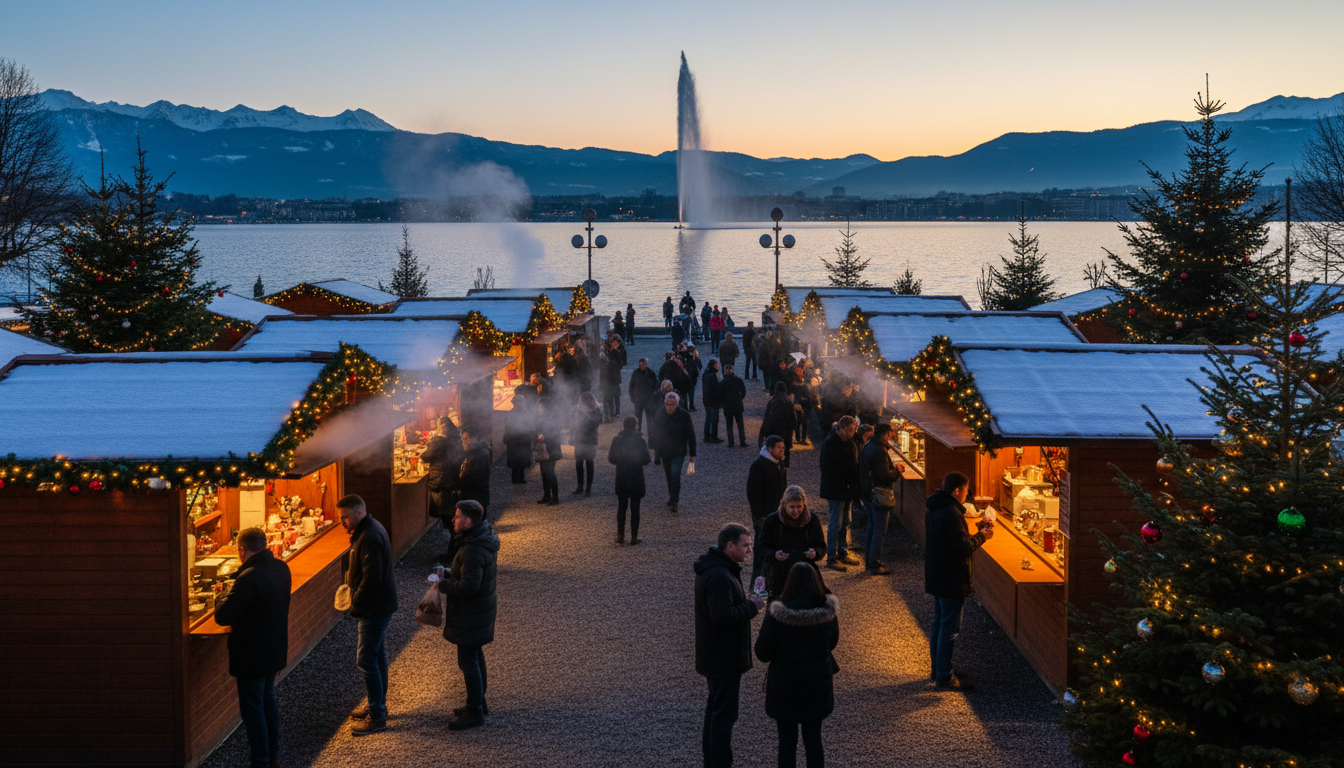 Genevas Christmas market at Jardin Anglais, wooden chalets lit with warm lights, steam rising from f
What to Actually Do During a Geneva Christmas Home Swap
Okay, you've secured your swap. Now what? Let me walk you through a Christmas in Geneva that goes beyond the obvious tourist checklist.
The Markets (But Make Them Local)
Yes, you'll go to the main Christmas market at Jardin Anglais. It's beautiful, it's festive, and the vin chaud is legitimately good (about 6 CHF for a mug, and you can keep the commemorative cup). But don't stop there.
The Carouge Christmas market I mentioned earlier is worth a dedicated evening. Take tram 12 or 18 from the city center (about 15 minutes), and arrive around 5 PM when the lights come on. The market runs weekends only in December, so check dates before you go. There's also a smaller market at Place du Molard that's more focused on local artisans—good for actual gift shopping rather than tourist trinkets.
And here's a tip most visitors miss: the Christmas market at the CERN visitor center. Yes, the particle physics laboratory. It runs for one weekend in early December, and it's surprisingly charming—scientists selling homemade jams, physics-themed ornaments, and tours of the facility if you book ahead.
Food Experiences Worth the Splurge
Geneva is expensive, but some things are worth it. Here's where I'd spend my food budget:
Café du Soleil in Petit-Saconnex serves the most authentic fondue experience in Geneva. It's cash-only, reservation-essential, and the fondue is made with local Gruyère and white wine. Expect to pay about 28-35 CHF ($32-40 USD) per person, which is actually reasonable for Geneva. The vibe is old-school Swiss—wooden benches, no-frills service, and locals who've been coming for decades.
Bains des Pâquis, that public bath on the lake, has a restaurant that serves simple, excellent food at prices that won't make you cry. Their fondue is about 25 CHF, and you can combine it with a session in the outdoor sauna (17 CHF entry). Sitting in a hot sauna, then jumping into Lake Geneva in December, then eating fondue—this is peak Swiss winter.
Les Armures in the old town—yes, it's touristy. Yes, it's expensive (fondue around 40-45 CHF). But it's also in a 17th-century building with incredible atmosphere, and if you're going to splurge once, this is the place.
Day Trips That Make Sense in Winter
One of the best things about a Geneva home swap is having a base for exploring the region.
Montreux Christmas Market: Take the train along Lake Geneva (one of the most scenic routes in Switzerland, about 1 hour) to Montreux, where the Christmas market sprawls along the lakefront promenade. It's bigger and more elaborate than Geneva's, with a dedicated medieval section and stunning views of the Alps across the water. The train costs about 30 CHF each way with a half-fare card, or 60 CHF without.
Annecy, France: Just across the border (about 45 minutes by car or bus), Annecy is a fairy-tale town with canals, a medieval old town, and a Christmas market that feels distinctly French. Prices are noticeably lower than Geneva, and the setting is ridiculously picturesque. Flixbus runs direct buses for about 10-15 EUR each way.
Gruyères: The village that gave us Gruyère cheese is about 90 minutes from Geneva by train. In winter, it's covered in snow and feels like stepping into a medieval painting. Visit the castle, tour the cheese factory, and eat fondue at the source. The whole day will cost you about 80-100 CHF including transport and food.
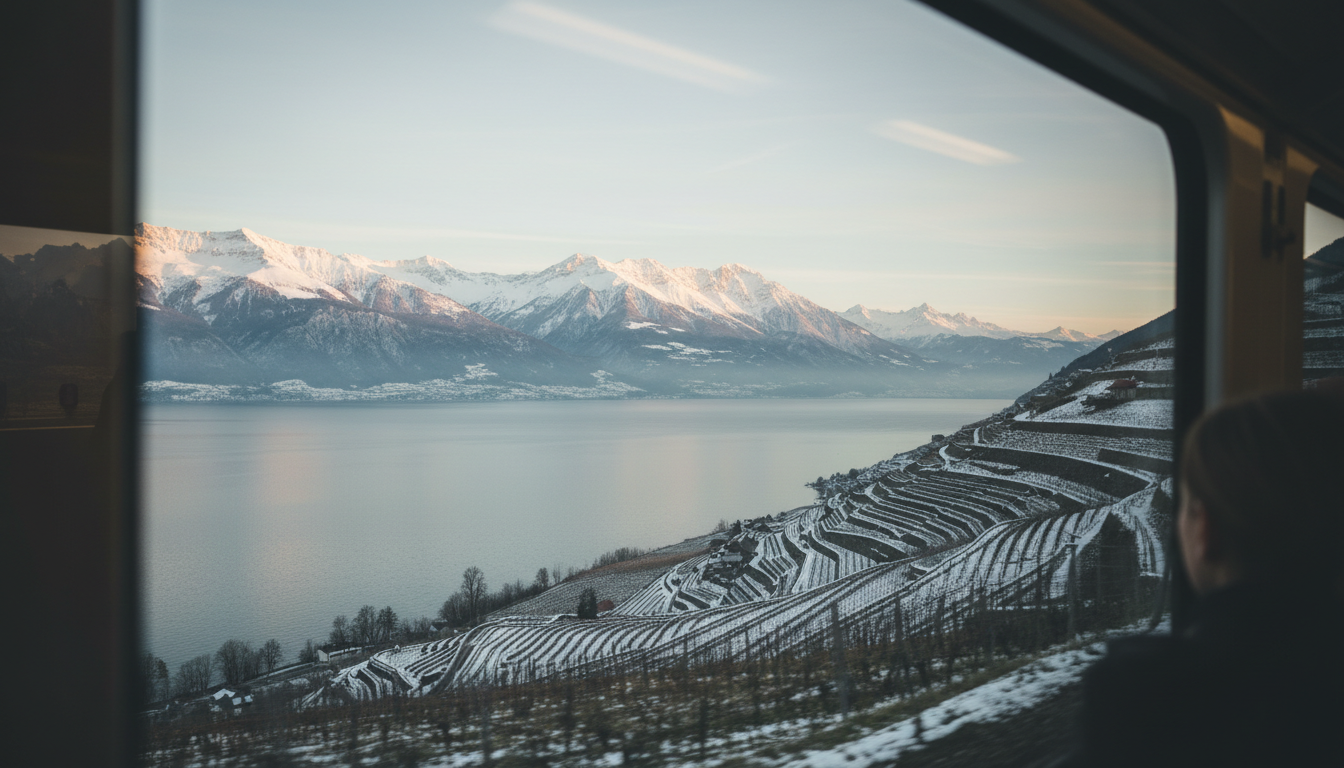 View from a train window showing Lake Geneva in winter, snow-capped Alps in the distance, vineyards
Practical Tips for Your Geneva Christmas Home Swap
What to Pack
Geneva in December is cold but not brutal—average temperatures hover around 0-5°C (32-41°F). What catches people off guard is the dampness. That lake humidity seeps into everything.
Bring layers you can shed at the Christmas markets (it gets warm in crowds), a proper waterproof outer layer, and shoes that can handle cobblestones and slush. I learned the hard way that cute ankle boots don't cut it—bring something with actual grip and insulation. Also: bring a small daypack. You'll want your hands free for vin chaud and raclette.
Getting Around
Geneva's public transport is excellent—trams, buses, and boats all run frequently. If you're staying in a home swap, your host might have a Geneva Transport Card to lend you (many residents get them through work). If not, a day pass costs about 10 CHF, and a week pass is around 40 CHF.
Pro tip: The yellow "Mouettes" water taxis that cross the lake are included in the transport pass. Taking one across the harbor at sunset, with the Christmas lights starting to twinkle, is one of my favorite Geneva moments.
Money Matters
Switzerland uses Swiss francs (CHF), not euros. Many places accept euros but give change in francs at unfavorable rates, so it's better to pay in the local currency. Credit cards are widely accepted, but some smaller market stalls and traditional restaurants are cash-only. ATMs are everywhere, but they often charge fees—I recommend getting a travel-friendly debit card (like Wise or Revolut) before you go.
Language
Geneva is in the French-speaking part of Switzerland. Most people in the service industry speak English, but learning a few French phrases goes a long way. "Joyeux Noël" (Merry Christmas), "un vin chaud, s'il vous plaît" (a mulled wine, please), and "c'est délicieux" (it's delicious) will cover most situations.
Making the Most of Your Host's Local Knowledge
This is honestly the secret weapon of home swapping that doesn't get talked about enough. Your Geneva host knows things that no guidebook will tell you.
Before my last Christmas swap, my host sent me a three-page document with her personal recommendations. She told me about a tiny chocolate shop in the old town where they make fresh truffles every morning (Auer Chocolatier—get there before 10 AM). She warned me that the tram to Carouge gets packed on Saturday mornings and to take the earlier one. She even left me her Migros loyalty card so I could get discounts at the grocery store.
I always ask my hosts a few specific questions before arriving: What's your favorite café for a quiet morning coffee? Is there a Christmas tradition in your neighborhood I should know about? Any restaurants I should book in advance? What do you wish you'd known your first Christmas in Geneva?
Most hosts love sharing this stuff. It makes them feel like they're giving you a real experience, not just a place to sleep.
The Reality Check: What to Expect
I want to be honest with you because I've read too many travel articles that make everything sound perfect.
Geneva in December can be gray. Really gray. The famous "bise" wind that comes off the lake is biting cold and can last for days. Some years, there's beautiful snow; other years, it's just wet and dreary.
The city also largely shuts down on Sundays and holidays. Like, really shuts down. Grocery stores close, restaurants have limited hours, and the streets can feel eerily quiet. This is actually part of the charm once you adjust—it forces you to slow down—but it can be jarring if you're expecting constant activity.
And while home swapping saves you money on accommodation, Geneva will still be expensive. Budget at least $80-100 per person per day for food, transport, and activities if you want to actually do things. You can do it cheaper by cooking most meals at home (your swap kitchen is your friend), but don't come expecting a budget destination.
Why Christmas in Geneva Through Home Exchange is Worth It
Last December, on Christmas morning, I woke up in my swapped apartment in Carouge to church bells ringing. I made coffee in the kitchen—my host had left me a bag of beans from a local roaster—and stood on the tiny balcony watching the neighborhood come to life. An older couple walked past with a small dog wearing a red sweater. Someone was playing piano in an apartment across the courtyard. Snow had fallen overnight, and everything was muffled and soft.
I thought about what this trip would have cost in a hotel. The money, sure, but also the experience. I wouldn't have known about the bakery around the corner that makes the city's best croissants aux amandes. I wouldn't have discovered that the courtyard has a shared garden where neighbors leave each other Christmas cookies. I wouldn't have felt, even for a moment, like I belonged.
That's what home swapping gives you that no hotel can: the feeling of actually living somewhere, even if it's just for a week or two. And in a city as expensive and as beautiful as Geneva during Christmas, that feeling is worth everything.
If you're thinking about trying it, my advice is simple: start now. List your home on SwappaHome, start earning credits by hosting, and begin your search for Geneva. The best Christmas swap properties go fast, but they're out there. And when you're standing on the Pont du Mont-Blanc watching the snow fall over the lake, vin chaud warming your hands, you'll understand exactly why this way of traveling has completely changed how I see the world.
Frequently Asked Questions
Is home swapping in Geneva safe during Christmas?
Home swapping in Geneva is generally very safe—Switzerland has low crime rates, and the SwappaHome community uses reviews and verification to build trust. I always recommend getting your own travel insurance for peace of mind, and communicating clearly with your host about house rules and expectations before arriving. After 40+ swaps, I've never had a safety issue.
How much can I save with a Geneva home swap versus hotels at Christmas?
The savings are substantial. Geneva hotels during Christmas average $350-500 per night for mid-range options, meaning a two-week stay could cost $5,000-7,000 USD. With SwappaHome's credit system (one credit per night), you're essentially staying for free once you've earned credits by hosting. Even factoring in hosting costs, most swappers save 80-90% on accommodation.
When should I book my Geneva Christmas home swap?
Start looking 4-6 months in advance for the best selection. Geneva has a smaller population than major cities, and the most desirable homes—especially those in Eaux-Vives, Carouge, and the old town—get booked early. September is ideal for searching if you want to travel in December.
What's the best neighborhood in Geneva for a Christmas home swap?
Eaux-Vives offers the best balance of lakefront location, walkability to Christmas markets, and residential charm. Carouge is perfect if you prefer a bohemian atmosphere with better restaurant prices. Plainpalais suits budget-conscious travelers, while Champel is ideal for families wanting quieter surroundings.
Do I need to speak French for a Geneva home swap?
Not necessarily—most Geneva residents speak English, especially in international neighborhoods. However, basic French phrases enhance your experience significantly. Your host can often provide local tips in English, and the SwappaHome messaging system makes pre-arrival communication easy regardless of language barriers.

Published by
SwappaHome
SwappaHome Editorial Team
Home Exchange & Slow Travel Editorial
The SwappaHome Editorial Team brings together travel research, home-exchange community insights, and platform data to produce practical guides for first-time and experienced home swappers. Every article cites real platforms, current market rates, and verifiable city-level facts so readers can make informed decisions without guessing.
Ready to try home swapping?
Join SwappaHome and start traveling by exchanging homes. Get 7 free credits when you sign up!
Related articles
Bachelor and Bachelorette Parties in Singapore: The Complete Home Swap Group Guide for 2026
Planning a bachelor or bachelorette party in Singapore? Discover how home swapping lets groups of 6-12 stay together in luxury condos, saving thousands while partying in Marina Bay.
Cycling in Lisbon: 7 Home Swap Bike Tour Itineraries for Every Rider
Discover the best cycling routes in Lisbon with these home swap bike tour itineraries—from waterfront paths to hilltop adventures, all starting from your borrowed home.
Graduation Trip to Barcelona: How Home Swapping Gives New Graduates the Ultimate Celebration
Planning a graduation trip to Barcelona? Discover how home swapping lets new graduates explore Spain's most vibrant city without the hostel crowds or hotel costs.