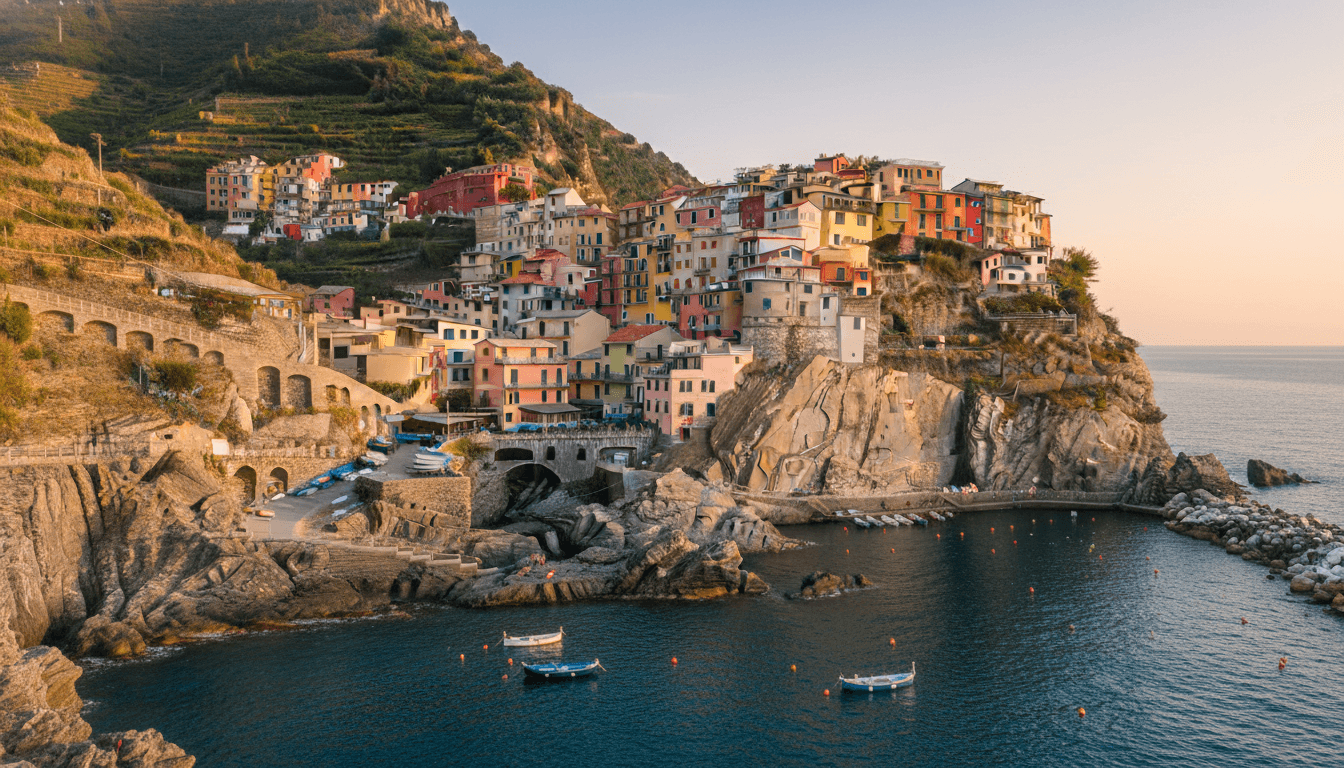
Cinque Terre on a Budget: How Home Swapping Saves You Thousands in Italy's Most Expensive Region

SwappaHome Editorial Team
Home Exchange & Slow Travel Editorial
Discover how home swapping in Cinque Terre can save you $2,000+ on accommodation. Real tips from 7 years of budget travel in Italy's priciest coastal villages.
I still remember standing on the platform at Riomaggiore station, watching a couple drag their suitcases toward a €400-per-night hotel, and thinking: I'm staying in a local's apartment with a terrace overlooking the same view—for free.
That was three years ago, during my second home swap in Cinque Terre. And honestly? It completely changed how I think about visiting this stunning but notoriously expensive stretch of Italian coastline. Because here's the thing about Cinque Terre on a budget: most people assume it's impossible. They're wrong.
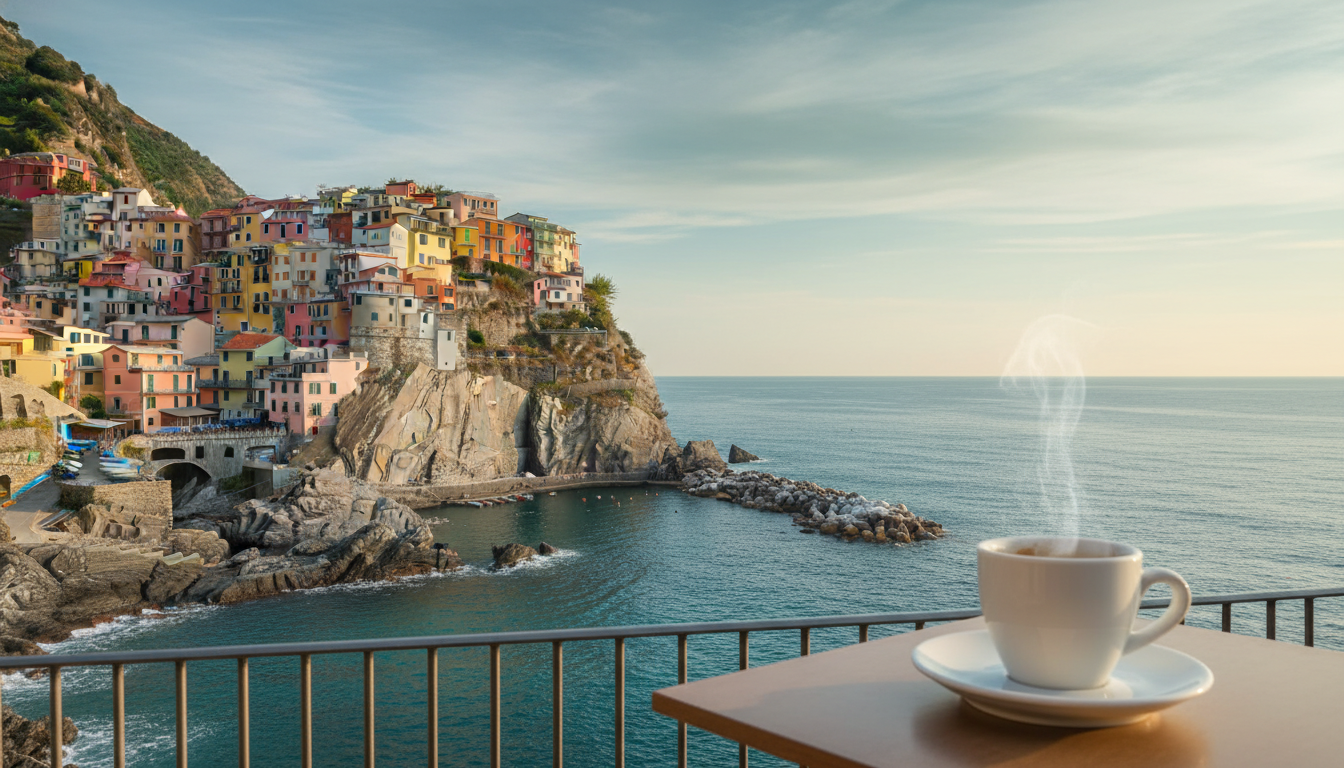 Morning light hitting the colorful stacked houses of Manarola, viewed from a private terrace with es
Why Cinque Terre Costs So Much (And Why It Doesn't Have To)
Let's talk numbers for a second. During peak season—June through September—a basic hotel room in any of the five villages runs €250-350 per night. That's $270-380 USD. For a week? Nearly $2,500 just for somewhere to sleep.
And we're not talking luxury here. Small rooms, often without air conditioning, in buildings where you can hear your neighbors' conversations through century-old walls. The views might be incredible, but your wallet will be crying.
The reason is painfully simple: limited space. These five villages—Monterosso, Vernazza, Corniglia, Manarola, and Riomaggiore—are literally carved into cliffs. There's no room to build new hotels. Supply is fixed, demand keeps growing, and prices have gone absolutely bonkers.
But here's what most travel guides won't tell you: locals live here year-round. They have apartments. And some of them want to travel too.
How Home Swapping Actually Works Here
I'll be honest—when I first heard about home exchange, I pictured some complicated arrangement where you had to find someone who wanted your exact city at your exact dates. Seemed like finding a needle in a haystack.
Turns out platforms like SwappaHome use a credit system that makes this way simpler. You host travelers at your place, earn credits, then use those credits to stay anywhere in the network. One credit equals one night, regardless of whether you're hosting someone in suburban Ohio or staying in a cliffside apartment in Vernazza.
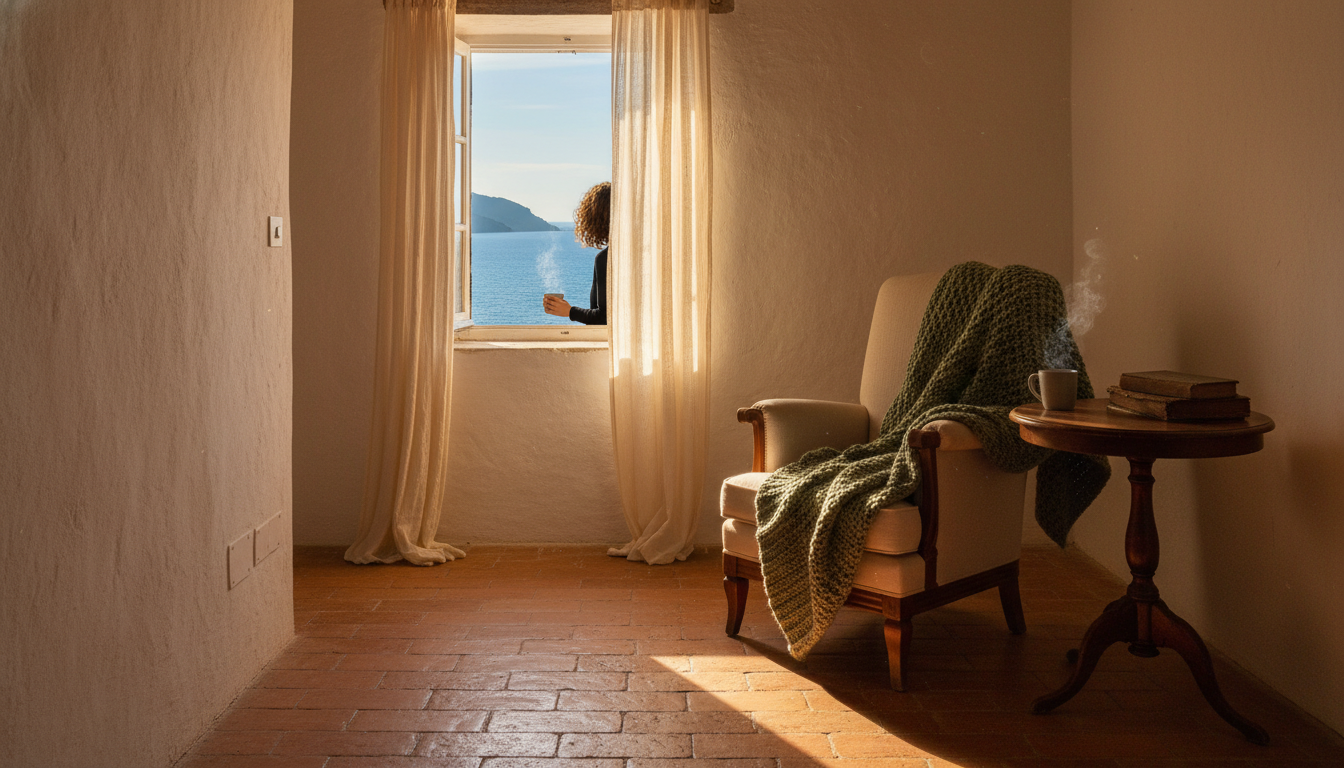 Interior of a traditional Ligurian apartment with terracotta tiles, white walls, vintage wooden furn
So that couple I saw at Riomaggiore station? They probably spent €2,800 on a week's accommodation. I spent zero. Well, technically I spent credits I'd earned by hosting a lovely family from Amsterdam at my San Francisco apartment a few months earlier.
The math works out to roughly $2,000-2,500 in savings for a week-long trip. And that's just accommodation. When you stay in a local's home, you also get a kitchen—which means you're not paying €18 for mediocre hotel breakfast or €25 for every dinner out.
Finding the Right Home Exchange
Now, I won't pretend there are hundreds of listings in the five villages themselves. These are tiny communities—Corniglia has maybe 150 permanent residents. But here's the strategy that's worked for me:
Look beyond the five villages. La Spezia, Levanto, and Portovenere are all within 15-20 minutes by train and have significantly more home swap options. La Spezia especially has a thriving local community, and the regional train to Cinque Terre runs every 20 minutes.
During my most recent trip, I stayed in a gorgeous two-bedroom apartment in Levanto—a beach town just north of Monterosso. My host, Giulia, left me a list of her favorite aperitivo spots and the name of her fishmonger. The apartment had a full kitchen, a washing machine (crucial after hiking), and a balcony where I'd drink coffee every morning.
The train to Riomaggiore? Twelve minutes.
Timing matters. Peak season runs June through August. Shoulder season—April, May, September, early October—offers better weather for hiking anyway, fewer crowds, and significantly more home swap availability. I've found that Italian homeowners are more likely to travel during these months too.
Start early. For Cinque Terre specifically, I recommend beginning your search 4-6 months in advance. This isn't Barcelona or Paris where there are thousands of listings. You're looking at maybe 50-100 options in the broader region, so giving yourself time to connect with the right host matters.
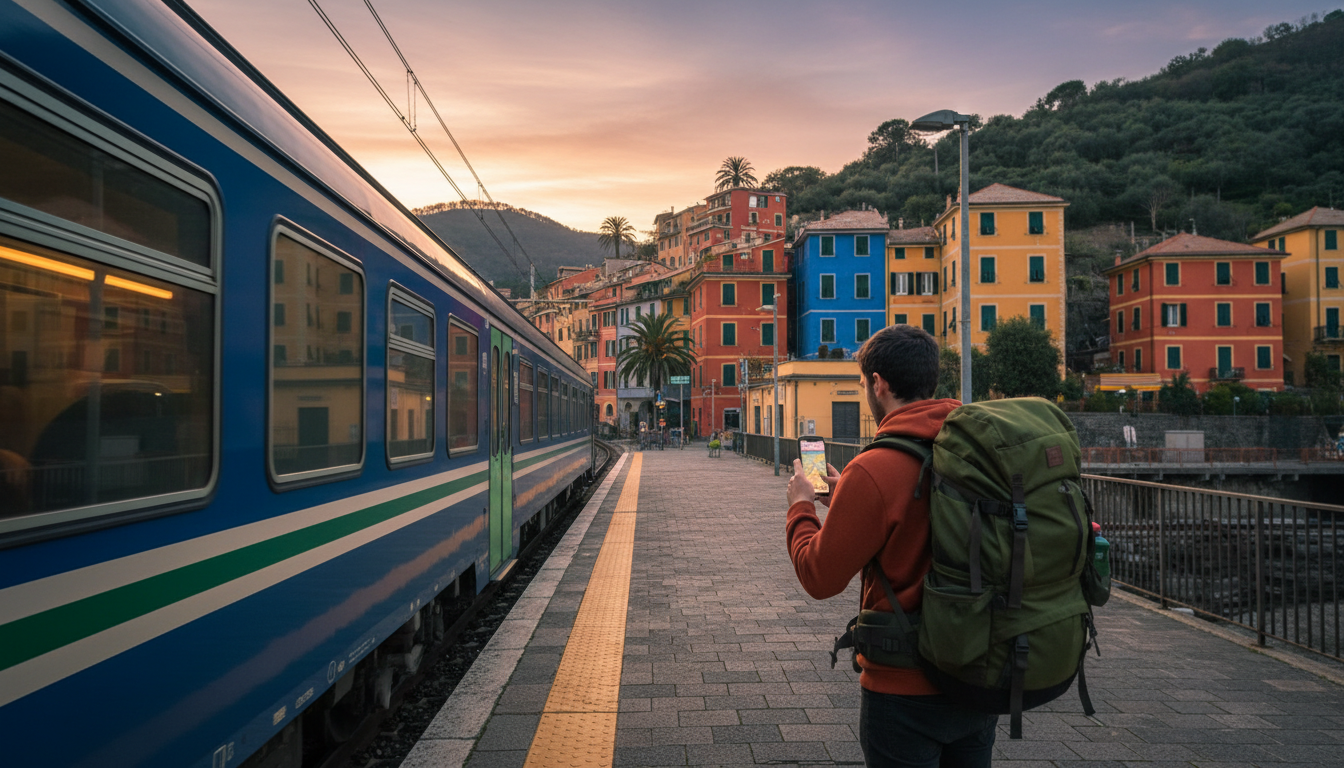 The Levanto train station platform with a regional train arriving, colorful Italian buildings in the
What a Week Actually Costs
Let me break this down with real numbers.
The traditional tourist route for seven nights in summer: accommodation at €250-350/night totals €1,750-2,450. Restaurant meals—€15-25 for lunch, €30-45 for dinner—add €315-490. The Cinque Terre Card for trails and trains runs €33-47. Aperitivo drinks at scenic spots, one per day at €8-12 each, add €56-84. Total: roughly €2,200-3,100, or $2,400-3,400 USD.
The home swap approach: accommodation costs zero credits earned from previous hosting. Groceries for cooking most meals run €80-120 for the week. You'll still want some restaurant dinners—maybe 3-4 at €30-40 each, adding €90-160. The Cinque Terre Card remains €33-47, and those aperitivos still cost €56-84 because some experiences are worth paying for. Total: roughly €260-410, or $280-450 USD.
That's a difference of $2,000-3,000. For a week. In one of Italy's most expensive destinations.
The Stuff Nobody Talks About
The savings are obvious. But after seven years of home swapping, I've realized the money is almost secondary.
You actually live like a local. I know—every travel article promises this. But there's a real difference between staying in a boutique hotel that "captures local charm" and actually sleeping in a Ligurian grandmother's spare bedroom while she visits her daughter in Milan.
During my Levanto stay, Giulia's apartment had a shelf of her favorite cookbooks. One was her mother's handwritten recipe collection. I made her family's trofie al pesto one night, using basil from the tiny plant on her windowsill. That's not something you get at a hotel.
 Hands making fresh trofie pasta on a wooden board, flour dusted everywhere, with a worn Italian cook
Local tips beat TripAdvisor every time. Most home swap hosts leave detailed notes about their neighborhood. Not the tourist version—the real version. Where to get bread at 7am. Which restaurant the fishermen actually eat at. The hiking path that isn't in any guidebook.
In Corniglia, a host once told me about a tiny wine bar accessible only through an unmarked door in an alley. I never would have found it otherwise. The owner knew my host by name, and suddenly I was being poured local Sciacchetrà dessert wine that wasn't even on the menu.
You actually slow down. When you're paying €300 a night, there's pressure to maximize every moment. You rush from village to village, trying to justify the expense. When accommodation is free? You can spend an entire afternoon reading on a terrace. You can take a nap after hiking. You can decide that today, you're just going to wander Manarola and see what happens.
That's when the magic moments find you.
Practical Stuff You Should Know
Italian home swappers tend to be detail-oriented. They want to know who's staying in their space. Include photos of your home that show personality—not just the bed and bathroom, but the bookshelf, the view from your window, the kitchen where you cook. Mention if you speak any Italian, even badly. My broken Italian has opened more doors than my fluent English ever could.
About the apartments themselves: these buildings are old. Medieval old. Staircases are narrow and steep. Ceilings might be low. Air conditioning is rare. But the thick stone walls keep interiors cool even in summer, and the quirks are part of the charm. I once stayed in an apartment where the bathroom had clearly been a closet in a previous life—I could touch both walls while standing in the middle. But the bedroom had a 16th-century fresco on the ceiling. Trade-offs.
Getting around: You don't need a car. In fact, you don't want one. The villages are car-free, and parking in surrounding areas is expensive and limited. The regional train connects all five villages plus La Spezia, Levanto, and other nearby towns. A Cinque Terre Card gives you unlimited train travel within the park plus access to hiking trails.
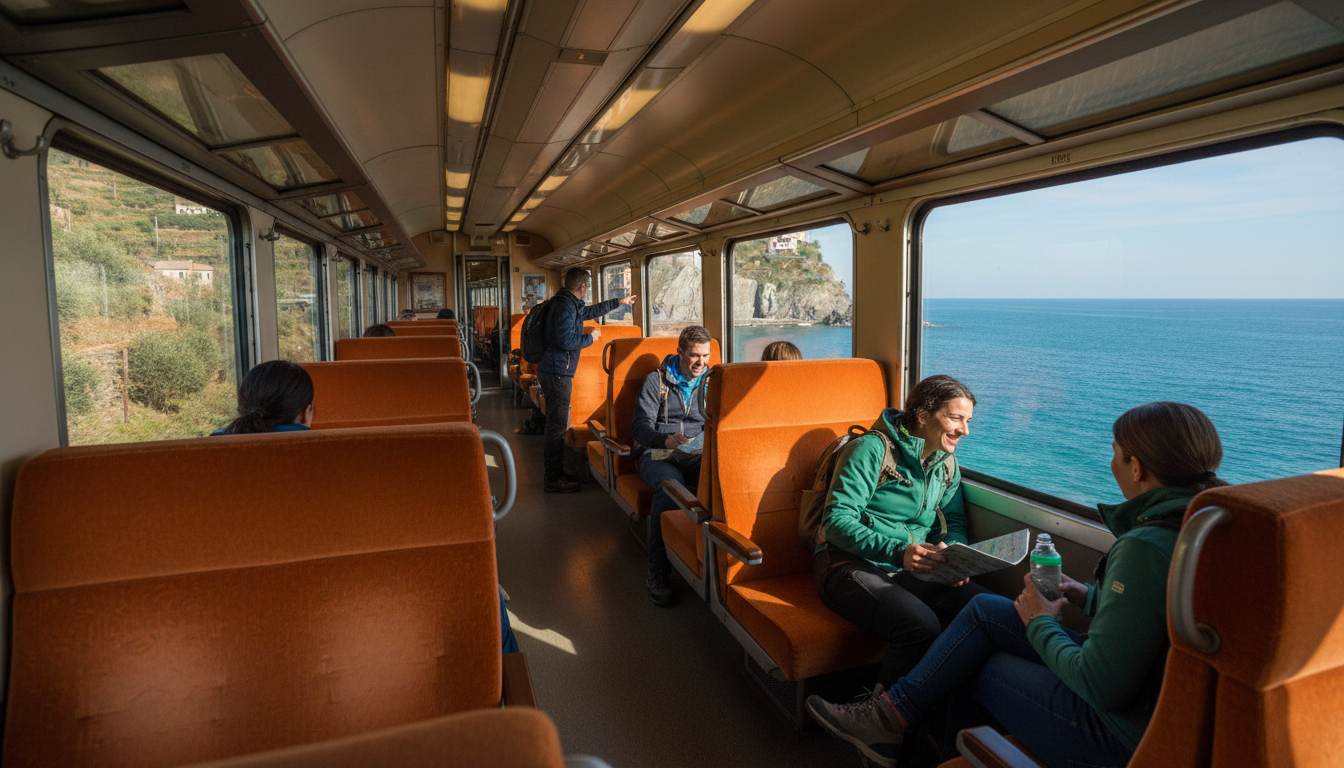 A regional Italian train winding along the coastal cliffs between Cinque Terre villages, turquoise s
Where to Find Listings (Ranked by Availability)
La Spezia has the most options by far—maybe 40-50% of regional home swap listings. It's a real Italian city where people live and work, not a tourist village. Excellent restaurants, a fantastic covered market, and trains to the five villages every 20 minutes.
Levanto comes next, with maybe 20-25% of listings. It's a beach town with actual sand (the villages mostly have rocky shores), a relaxed vibe, and a growing home exchange community.
Monterosso, the largest of the five villages, has roughly 10-15% of listings. They book up fast.
Riomaggiore and Manarola are limited but magical—maybe 5-10 total listings at any given time across both villages. Worth checking, but don't count on it.
Vernazza and Corniglia are needle-in-a-haystack territory. Vernazza is arguably the most beautiful village, and Corniglia is the quietest. Both have very few home swap options. If you find one, grab it immediately.
What to Do With Your Savings
So you've saved $2,000+ on accommodation. Here's what I'd do with it.
Splurge on experiences. Book a cooking class in Monterosso—they run €80-120 and teach you to make pesto the traditional way, with a marble mortar and pestle. Take a sunset boat tour along the coast (€25-40 per person). Hire a local guide for a private hike through the vineyards (€100-150 for a half day).
Eat at the good restaurants. With a kitchen for most meals, you can afford to splurge when you do eat out. In Vernazza, there's a restaurant called Gambero Rosso that's been there for decades. It's not cheap—expect €50-70 per person—but the seafood is caught that morning and the view is unreal. When you're not bleeding money on accommodation, a meal like this feels like a celebration.
Stay longer. Maybe the best use of your savings? A week in Cinque Terre feels rushed. Two weeks lets you actually settle in, learn the rhythms, become a temporary local. I've done both. The two-week version was infinitely better.
The Questions Everyone Asks
"What if something goes wrong?" In seven years and 40+ swaps, I've had exactly two minor issues. Once, a shower head broke while I was using it. I messaged my host, she told me where the replacement was, I fixed it in ten minutes. The other time, I accidentally left a window open during a rainstorm and some books got wet. I apologized profusely and offered to replace them. The host laughed and said they were old paperbacks she'd been meaning to donate anyway.
Communication solves almost everything. I always recommend getting your own travel insurance that covers accommodation issues—SwappaHome connects you with hosts, but any additional coverage is your responsibility. I use a policy that costs about $50 for a two-week trip.
"Isn't it weird staying in a stranger's home?" The first time, maybe a little. By the third swap, it feels completely natural. These aren't strangers—they're fellow travelers who've opened their homes to the community. You've read their reviews, seen their photos, exchanged messages. By the time you arrive, you usually feel like you're staying with a friend of a friend.
"What about language barriers?" Most Italian home swappers speak at least basic English, especially in tourist regions like Liguria. But even when language is limited, the universal language of "please don't break my stuff and enjoy my favorite coffee shop" comes through clearly. Google Translate handles the rest.
Getting Started
If you're convinced—and honestly, why wouldn't you be—here's the path forward.
Sign up for SwappaHome and create a detailed profile. New members get 7 free credits to start, enough for a week-plus stay. Upload quality photos of your home, write a genuine description of your neighborhood, and be specific about what makes your place special.
Start browsing Cinque Terre and surrounding areas. Save listings that interest you, even if dates don't align yet.
Begin hosting. The fastest way to build credits and reviews is to welcome travelers to your own home. Each night someone stays with you earns one credit. After a few successful hosting experiences, you'll have both the credits and the reputation to request stays in competitive destinations.
Reach out to potential hosts 4-6 months before your ideal travel dates. Introduce yourself, mention why you're interested in their specific home, and be flexible on exact dates if possible.
The Bigger Picture
I've been writing about budget travel for years, and Cinque Terre has always been the destination I struggled to make affordable. It's not like Southeast Asia where you can find $20 guesthouses. It's not like Eastern Europe where your dollar stretches forever.
Home swapping changed that equation entirely.
Last spring, I watched the sunset from a terrace in Manarola—the kind of view that normally costs €400 a night. I was drinking wine from a local vineyard, eating focaccia I'd bought at the bakery my host recommended, and thinking about how I'd spent less on my entire week than most tourists spend in two nights.
That's not just budget travel. That's smart travel. And it's available to anyone willing to open their own home to the community.
Frequently Asked Questions
Is home swapping in Cinque Terre safe?
Yes—when you use established platforms with review systems. SwappaHome members rate each other after stays, building accountability and trust. I recommend reading reviews carefully, communicating thoroughly before booking, and getting your own travel insurance for extra peace of mind. In seven years of swapping, I've never had a safety concern.
How much can I save with home exchange versus hotels in Cinque Terre?
Typically $2,000-3,000 per week. Peak season hotels average €250-350 per night, while home exchange costs zero—you use credits earned from hosting. Add kitchen savings of €150-200 weekly on food, and total savings often exceed $2,500 for a week-long trip.
When is the best time to home swap in Cinque Terre?
Shoulder season—April, May, September, and early October—offers the best availability. Italian homeowners travel more during these months, weather is ideal for hiking, and crowds are manageable. Start searching 4-6 months ahead, as listings in this popular region book quickly.
Can I find home swaps directly in the five villages?
Direct listings are limited due to small permanent populations. Most options are in La Spezia (15 minutes by train), Levanto (12 minutes), or Monterosso (the largest village). These locations offer more availability while keeping you connected to all villages via frequent regional trains.
Do I need to speak Italian for home swapping in Italy?
No. Most Italian hosts in tourist regions speak basic English, and platform messaging handles pre-arrival communication. But learning a few phrases helps build rapport—I always include "Parlo un po' di italiano" in my first message. Hosts appreciate the effort even when it's imperfect.

Published by
SwappaHome
SwappaHome Editorial Team
Home Exchange & Slow Travel Editorial
The SwappaHome Editorial Team brings together travel research, home-exchange community insights, and platform data to produce practical guides for first-time and experienced home swappers. Every article cites real platforms, current market rates, and verifiable city-level facts so readers can make informed decisions without guessing.
Ready to try home swapping?
Join SwappaHome and start traveling by exchanging homes. Get 7 free credits when you sign up!
Related articles

Bachelor and Bachelorette Parties in Singapore: The Complete Home Swap Group Guide for 2026
Planning a bachelor or bachelorette party in Singapore? Discover how home swapping lets groups of 6-12 stay together in luxury condos, saving thousands while partying in Marina Bay.

Cycling in Lisbon: 7 Home Swap Bike Tour Itineraries for Every Rider
Discover the best cycling routes in Lisbon with these home swap bike tour itineraries—from waterfront paths to hilltop adventures, all starting from your borrowed home.

Graduation Trip to Barcelona: How Home Swapping Gives New Graduates the Ultimate Celebration
Planning a graduation trip to Barcelona? Discover how home swapping lets new graduates explore Spain's most vibrant city without the hostel crowds or hotel costs.