Digital Nomad Home Swap in Tokyo: Your Guide to Working Remotely Like a Local
Maya Chen
Travel Writer & Home Exchange Expert
Discover how a digital nomad home swap in Tokyo lets you live like a local, save thousands, and find the perfect work-from-home setup in Japan's electric capital.
I'm typing this from a sixth-floor apartment in Shimokitazawa, watching the last of the cherry blossoms drift past my window like pink confetti. My laptop's balanced on a kotatsu table, there's a convenience store onigiri half-eaten beside me, and I just finished a client call at 6 AM because—time zones. This is my third digital nomad home swap in Tokyo, and honestly? I can't imagine doing remote work in Japan any other way.
Here's what I've learned after spending a cumulative four months working from various Tokyo apartments: hotels drain your budget and your soul. Airbnbs feel transactional. But swapping homes with a local? That's when Tokyo stops being a destination and starts being your life.
Why a Digital Nomad Home Swap in Tokyo Changes Everything
Let me paint you a picture of what remote work in Tokyo usually looks like for most people.
You book a hotel near Shinjuku because you've heard of it. You pay $180-250 per night for a room the size of a walk-in closet. The WiFi is decent but the desk is a joke—some tiny ledge that wobbles when you type. You work from the bed, destroy your back, then spend another $15 on coffee at a cafe just to feel human. After two weeks, you've spent over $3,000 on accommodation alone and you've seen the inside of your hotel room more than actual Tokyo.
Now here's what a home swap looks like.
You message Kenji, a graphic designer from Nakano who's been wanting to explore San Francisco. He's got a 2LDK apartment (that's a living room, dining room, kitchen, plus two bedrooms in Japanese real estate speak) with a dedicated workspace, blackout curtains for those early morning calls, and a pocket WiFi router that pulls 200 Mbps. His building has a 7-Eleven on the ground floor. His neighbor's cat sometimes sits on your balcony.
You stay for three weeks. It costs you credits on SwappaHome—not cash. And you live in a neighborhood where the ramen shop owner starts recognizing you by day four.
That's the difference.
The Best Tokyo Neighborhoods for Digital Nomad Home Swaps
Not all Tokyo neighborhoods are created equal for remote work. I've tested this extensively—sometimes the hard way.
Shimokitazawa: The Creative's Paradise
This is where I am right now, and I'm convinced it's the best neighborhood in Tokyo for digital nomads doing home swaps.
Shimokita (as locals call it) has this perfect balance: quiet enough to focus, interesting enough that you actually want to leave your apartment. The streets twist and wind past vintage clothing shops, tiny live music venues, and cafes that look like someone's grandmother decorated them in 1973. There's a new development called Shimokita Ekiue with coworking spaces if you need a change of scenery, but honestly? Most apartments here have enough character that you won't want to leave.
Practical stuff: Expect apartments in the ¥120,000-180,000/month range (around $800-1,200) if you were renting, which gives you an idea of the value you're getting through a swap. The Odakyu and Keio Inokashira lines connect you to Shinjuku and Shibuya in under 10 minutes.
I found my current swap through SwappaHome after filtering for "dedicated workspace" and messaging hosts who mentioned good natural light. Kenji's place has both, plus a standing desk he built himself.
Nakano: The Underrated Gem
If Shimokitazawa is the cool art student, Nakano is their pragmatic older sibling who somehow has better snacks.
Nakano Broadway gets all the attention for its anime and collectibles, but the residential areas around it are genuinely lovely for remote work. It's more affordable than trendier neighborhoods, the local shopping street (shotengai) has everything you need, and there's a surprising number of excellent coffee shops that don't mind you camping out with a laptop.
I did a two-week swap here with a translator named Yuki. Her apartment was compact—maybe 35 square meters—but she'd optimized every inch. Fold-down desk, excellent task lighting, a tiny balcony where I'd take calls while watching salarymen hurry to the station. The neighborhood felt lived-in rather than curated. I liked that.
Koenji: For the Night Owls
Koenji is Tokyo's punk rock heart, which sounds counterintuitive for remote work until you realize: the neighborhood runs late. If your clients are in US time zones and you're taking calls at midnight, Koenji's rhythm matches yours. The izakayas and live houses don't really get going until 10 PM, which means the mornings are dead quiet for focused work.
Fair warning though—some buildings here are older and the sound insulation can be... optimistic. I once heard my neighbor's entire argument with his girlfriend through the wall. Ask your swap partner about noise levels before committing.
Meguro and Naka-Meguro: The Polished Option
If you need to impress clients on video calls, this is your neighborhood. The apartments tend to be newer, the interiors more Instagram-ready. The Meguro River is genuinely beautiful for walking meetings (yes, I do those, don't judge me). Lots of expats live here, which means more English-friendly services but also slightly less of that "living like a local" feeling.
Expect home swap listings here to go fast. I've seen nice Naka-Meguro apartments get snatched up within days of posting.
How to Find the Perfect Tokyo Home Swap for Remote Work
Alright, let's get tactical. Finding a home swap in Tokyo that actually works for digital nomad life requires some specific searching.
The Non-Negotiables for Remote Work
Before you message anyone, know your must-haves. Mine are:
Internet speed: You need at least 50 Mbps for video calls, but Tokyo usually delivers way more. Ask for a speed test screenshot. Seriously. I learned this after one disastrous swap where the host's WiFi was "usually fine" but actually topped out at 8 Mbps during peak hours.
Dedicated workspace: A kitchen table doesn't count. You want a desk, a chair that won't destroy your spine, and ideally a window that isn't directly behind you (backlight on video calls makes you look like a witness protection interview).
Quiet hours alignment: Japanese apartments have notoriously thin walls. If you're taking calls at odd hours, you need either excellent sound insulation or understanding neighbors. Ask your host directly.
Proximity to a convenience store: This sounds silly until you're on deadline at 2 AM and need caffeine. A konbini within a 3-minute walk is genuinely life-changing.
Crafting Your Swap Request
Tokyo hosts on SwappaHome get a lot of requests. Stand out by being specific about your work situation.
Here's roughly what I wrote to Kenji:
"Hi Kenji! I'm a travel writer working remotely, usually 9-5 Japan time with occasional early morning calls (around 6-7 AM) for US clients. I'm quiet, respectful of neighbors, and I promise your plants will survive me—I've kept a fern alive for three years, which I consider a personal achievement. Your workspace setup looks perfect for what I need. Would love to chat about a potential swap for April!"
Notice what I included: my work hours, noise level, a bit of personality, and specific interest in his workspace. Generic "I'd love to stay at your place!" messages get ignored.
Timing Your Tokyo Digital Nomad Home Swap
Tokyo has brutal competition for home swaps during certain periods. Cherry blossom season in late March through early April means you'll need to book 3-4 months ahead minimum. Golden Week in late April through early May sees locals traveling, so there are more listings but also more demand. The autumn leaves around mid-November bring similar madness to cherry blossom season. And during New Year's in late December through early January, many hosts travel to family, so availability is limited.
The sweet spots? June (rainy season keeps tourists away but it's not that bad), September through October (gorgeous weather, fewer crowds), and January through February (cold but manageable, very available).
Setting Up Your Tokyo Home Office: Practical Tips
Once you've secured your swap, here's how to optimize for productivity.
The First 24 Hours
Don't try to work immediately. I know, I know—you have deadlines. But jet lag plus new environment equals garbage output.
Spend your first day doing a "systems check." Test the WiFi in different rooms. Figure out which outlets work (some older Tokyo apartments have quirky electrical situations). Locate the nearest konbini, grocery store, and coffee shop. Find where your host keeps extra toilet paper and how to separate the trash (Japanese garbage sorting is an art form).
Then sleep. A lot.
Gear Worth Bringing
Tokyo apartments are small, so don't expect much storage for your stuff. But these items have saved me: a portable laptop stand (Japanese desks are often lower than Western ones, and a stand saves your neck), noise-canceling headphones (essential for calls when neighbors are home), a power strip with USB ports (your host might only have one convenient outlet near the desk), and a pocket WiFi backup (rent one at the airport for about ¥800/day or $5-6, and use it as backup or for working from cafes).
Coworking Backup Options
Some days, you need to leave the apartment. Tokyo's coworking scene is excellent. WeWork has multiple locations with day passes around ¥3,500 ($23). Fabbit is more affordable at about ¥1,500-2,000 ($10-13) for a day. Coin Space offers pay-by-the-hour booths around ¥200-400/hour ($1.30-2.60) scattered throughout the city. And many Tokyo cafes tolerate laptop workers—just buy something every hour, don't hog tables during lunch rush, and you're fine.
Living Like a Local: Beyond the Work Hours
The whole point of a digital nomad home swap in Tokyo is experiencing the city authentically. Here's how to actually do that.
Your Morning Routine
Forget the hotel breakfast buffet. Your Tokyo morning should look like this:
Wake up, make coffee in your host's kitchen (they almost certainly have a pour-over setup—it's Japan). Walk to the nearest bakery for a ¥150 ($1) melon pan or curry bread. Stop at the konbini for an onigiri if you need protein. Work until lunch.
This costs maybe ¥400 ($2.60) total. A hotel breakfast would be ¥2,500 ($16) minimum.
The Neighborhood Immersion
By week two of my Shimokitazawa swap, the coffee shop owner stopped asking for my order. The guy at the dry cleaner nodded when I walked past. The woman who runs the tiny grocery store started setting aside the good avocados for me (avocados in Japan are weirdly hit-or-miss).
This doesn't happen in tourist areas. It doesn't happen when you're staying in hotels. It happens when you live somewhere, even temporarily.
Eating on a Digital Nomad Budget
Tokyo can be cheap if you eat like a local. Lunch sets (teishoku) run ¥800-1,200 ($5-8) for a full meal at local restaurants, usually between 11 AM and 2 PM. Konbini meals are genuinely good—a ¥500 ($3.30) bento box from 7-Eleven beats most Western fast food. Supermarket sushi with evening discounts (look for the stickers) makes high-quality sushi affordable. And standing soba shops offer filling noodle bowls for ¥400-600 ($2.60-4).
I budget about ¥2,500-3,000 ($16-20) per day for food in Tokyo, eating well. That's impossible in a hotel-centric lifestyle.
The Social Side of Home Swapping in Tokyo
One unexpected benefit: the connections.
Kenji and I have become actual friends. We've had video calls about his San Francisco trip (he loved it), exchanged restaurant recommendations, and he's already asked if I want to swap again next year. My Nakano host Yuki connected me with her friend who runs a translation agency—I ended up getting a small freelance gig through that introduction.
The SwappaHome community tends to attract a certain type: curious, open-minded, interested in cultural exchange. These aren't transactional relationships. They're the beginning of a network.
What to Know About Japanese Home Culture
Respecting your host's space matters more in Japan than almost anywhere else I've swapped.
The Unwritten Rules
Shoes off, always. There's a genkan (entryway) for a reason. Your host probably has indoor slippers. Use them.
Bathroom slippers are separate. There will be designated toilet slippers. Don't wear them anywhere else. This is not negotiable.
Trash separation is serious. Tokyo has burnables, non-burnables, recyclables (multiple categories), and PET bottles. Your host should leave instructions. Follow them religiously.
Quiet hours matter. Most Japanese apartments expect quiet after 9 PM. No loud calls, no music, no running washing machines. Plan your schedule accordingly.
Leave it cleaner than you found it. Japanese hospitality culture runs deep. Cleaning thoroughly before you leave isn't just polite—it's expected.
The Money Math: Home Swap vs. Traditional Accommodation
Let me break down my actual costs from a three-week Tokyo trip:
Home swap approach:
- SwappaHome credits: 21 credits (I'd earned these hosting guests in San Francisco)
- Pocket WiFi rental backup: ¥16,800 ($112)
- Food (cooking + eating out): ¥52,500 ($350)
- Transportation: ¥21,000 ($140)
- Misc (coffee shops, activities): ¥30,000 ($200)
- Total: approximately $802
If I'd done hotels:
- Budget business hotel: $150/night × 21 = $3,150
- Food (mostly restaurants, no kitchen): $40/day × 21 = $840
- Transportation: $140
- Misc: $200
- Total: approximately $4,330
That's a difference of $3,528. For three weeks. I could do another entire trip for that savings.
Preparing Your Own Home for Japanese Guests
Home swapping is reciprocal. When Kenji stayed at my San Francisco apartment, I wanted to make it work for him too.
I left detailed neighborhood guides covering the best ramen near me and good coffee shops for working. I stocked basic Japanese groceries—rice, soy sauce, miso—which are easy to find in SF. I provided a portable WiFi hotspot for exploring and left restaurant recommendations with notes on which ones had picture menus or English. And I made sure my workspace was clear and comfortable for his use.
The effort you put into hosting comes back to you. Kenji left me a care package of Japanese snacks and a handwritten thank-you note. That's the home swap culture at its best.
When Things Go Wrong (And How to Handle It)
I'll be honest—not every swap is perfect.
My first Tokyo swap, the WiFi died on day three. Complete router failure. My host was traveling and couldn't help remotely. I spent ¥2,000 ($13) on a day pass at a coworking space while troubleshooting, eventually figured out the router needed a hard reset (unplugging for 30 seconds, the universal fix), and everything was fine.
Another time, I accidentally broke a small ceramic dish. I immediately messaged my host, apologized profusely, and offered to replace it. She said not to worry about it—but I found a similar one at a local shop and left it for her anyway. That's how you maintain trust in the community.
The key is communication. Japanese hosts especially appreciate proactive, polite updates. If something breaks, tell them immediately. If you're confused about something, ask. Silence reads as rudeness.
Also—and this is important—SwappaHome connects you with hosts, but it's up to you to handle any issues directly. If you want extra peace of mind, get your own travel insurance that covers accommodation issues. I use World Nomads, which has saved me once when I got sick and needed to extend a trip unexpectedly.
Making the Most of Your Tokyo Time Zones
Real talk: working from Tokyo while serving Western clients is a time zone puzzle.
If your clients are in US Pacific time, you're 17 hours ahead. Their 9 AM is your 2 AM. Their 5 PM is your 10 AM. You'll likely need to take some calls in the middle of the night or very early morning. If your clients are in US Eastern time, it's 14 hours ahead—slightly more manageable, since their afternoon is your early morning. If your clients are in Europe, you're 7-9 hours ahead depending on the country, and this actually works great because their morning is your afternoon or evening.
I've learned to batch my calls. I tell US clients I'm available 6-9 AM Japan time (their afternoon/evening) and protect the rest of my day for deep work. Most clients are understanding once you explain you're working from Japan—it's interesting enough that they don't mind the scheduling constraints.
Your First Digital Nomad Home Swap in Tokyo: A Quick Start
If you're convinced and ready to try this, here's your action plan:
One to two months before your trip: Create your SwappaHome profile. Be detailed about your home and your work situation. Start browsing Tokyo listings to understand what's available.
One month before: Send personalized messages to 5-10 potential hosts. Mention your work hours, your experience with home swaps (or that you're new but respectful), and why their specific listing appeals to you.
Two weeks before: Finalize your swap. Exchange detailed information with your host—WiFi passwords, quirks of the apartment, neighborhood tips. Arrange your pocket WiFi rental.
During your swap: Communicate proactively. Send a message when you arrive safely. Ask questions if anything's unclear. Leave the place spotless.
After your swap: Leave a detailed, honest review. This is how the community stays trustworthy.
The Bigger Picture
I've been doing this digital nomad thing for seven years now, and I've tried every accommodation type imaginable. Hotels, hostels, Airbnbs, coliving spaces, house-sitting, couchsurfing, van life (briefly, never again).
Home swapping remains my favorite, especially in Japan.
There's something about waking up in someone's actual life—using their coffee maker, reading the books on their shelf, understanding how they've organized their space—that makes a place feel real in a way that transient accommodations never do. You're not a tourist consuming a destination. You're a temporary resident contributing to a community.
And Tokyo, with its layers and contradictions and quiet residential neighborhoods that tourists never see, rewards that approach more than almost any city I know.
So yeah. If you're a digital nomad thinking about Japan, skip the capsule hotels and the overpriced serviced apartments. Find a home swap. Live in a real neighborhood. Let Tokyo become, even briefly, your home.
I promise you won't regret it.
Frequently Asked Questions
Is a digital nomad home swap in Tokyo safe?
Yes, home swapping in Tokyo is generally very safe. Japan has extremely low crime rates, and the SwappaHome community uses reviews and verification to build trust between members. I recommend getting your own travel insurance for extra peace of mind, and always communicating clearly with your host about expectations and house rules.
How fast is the internet for remote work in Tokyo home swaps?
Tokyo has excellent internet infrastructure. Most residential apartments offer 100-300 Mbps speeds, which is more than enough for video calls and heavy file transfers. Always ask your host for a speed test screenshot before confirming your swap to ensure it meets your work requirements.
How much can I save with a Tokyo home swap versus hotels?
For a three-week stay, you can save approximately $3,000-4,000 compared to budget business hotels. Home swaps cost credits rather than cash, and having a kitchen reduces food expenses by 40-50%. My typical daily budget in Tokyo with a home swap is around $40-50 total including food and transportation.
What are the best Tokyo neighborhoods for digital nomad home swaps?
Shimokitazawa, Nakano, Koenji, and Naka-Meguro are excellent choices. Shimokitazawa offers creative energy and quiet streets. Nakano is affordable and practical. Koenji suits night owls working US time zones. Naka-Meguro provides polished, newer apartments. Each neighborhood has reliable transit connections to central Tokyo.
Do I need to speak Japanese for a home swap in Tokyo?
No, but basic phrases help. Most SwappaHome hosts in Tokyo speak some English, and communication happens primarily through the platform's messaging system. Translation apps work well for daily interactions. Your host will typically leave instructions in English for important things like trash sorting, WiFi, and appliance operation.
40+
Swaps
25
Countries
7
Years
About Maya Chen
Travel Writer & Home Exchange Expert
Maya is a travel writer with over 7 years of experience in the home swapping world. Originally from Vancouver and now based in San Francisco, she has completed more than 40 home exchanges across 25 countries. Her passion for "slow" and authentic travel led her to discover that true luxury lies in living like a local, not a tourist.
Ready to try home swapping?
Join SwappaHome and start traveling by exchanging homes. Get 10 free credits when you sign up!
Related articles

Algarve Neighborhood Guide for Home Swappers: From Trendy Lagos to Traditional Tavira
Discover the best Algarve neighborhoods for home exchange—from surf-town vibes in Lagos to authentic fishing villages in the east. Your insider guide to Portugal's sun-drenched coast.

Santiago Bucket List: 27 Unforgettable Experiences to Enjoy During Your Home Swap
From secret wine bars to Andean day trips, discover the ultimate Santiago bucket list experiences that only home swap travelers get to enjoy like locals.
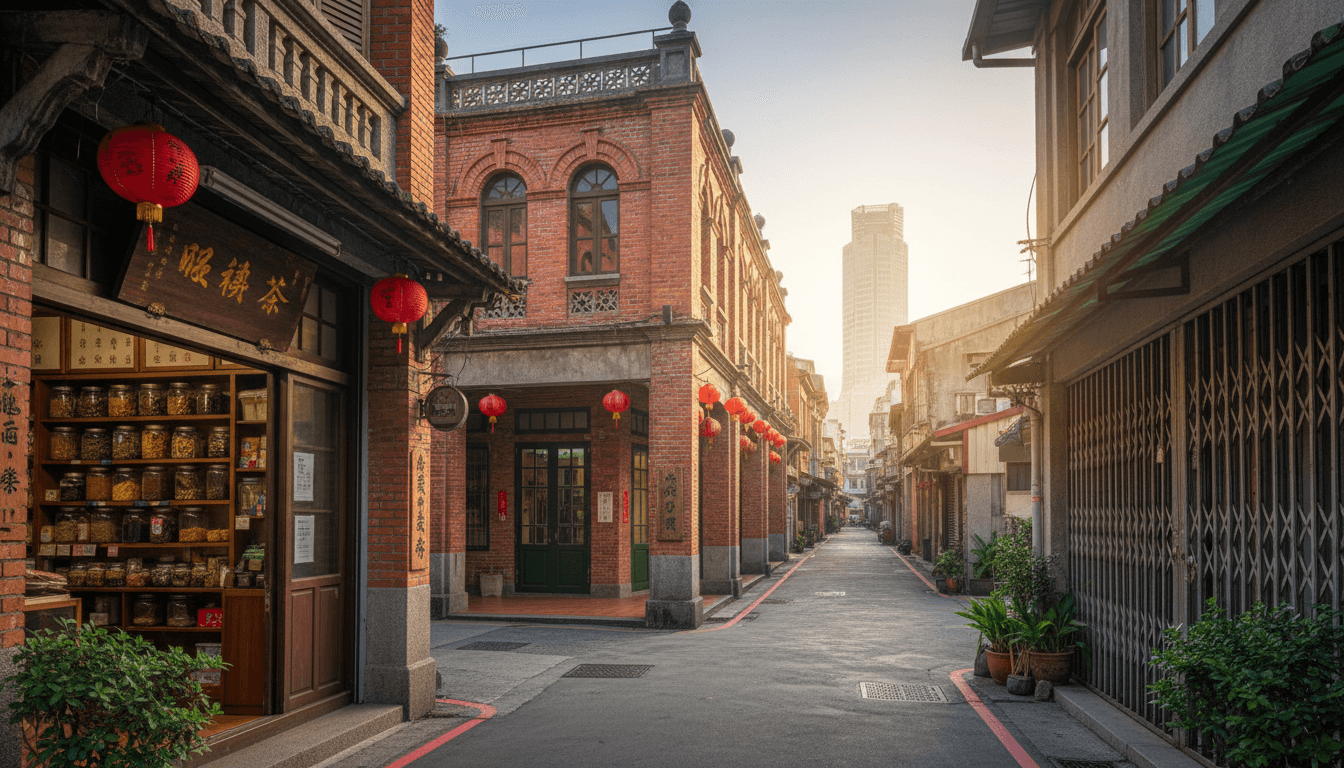
Taipei Neighborhoods for Home Swappers: Your Complete Guide from Trendy Xinyi to Traditional Dadaocheng
Discover the best Taipei neighborhoods for home exchange—from hipster cafés in Zhongshan to century-old temples in Wanhua. A local-tested guide to finding your perfect swap.