Santiago Bucket List: 27 Unforgettable Experiences to Enjoy During Your Home Swap

SwappaHome Editorial Team
Home Exchange & Slow Travel Editorial
From secret wine bars to Andean day trips, discover the ultimate Santiago bucket list experiences that only home swap travelers get to enjoy like locals.
I still remember standing on my borrowed apartment's rooftop terrace in Barrio Italia, watching the Andes turn pink at sunset, thinking: this is why I stopped booking hotels.
My Santiago bucket list had been ambitious—maybe too ambitious. Three weeks of home swapping in Chile's capital, and I'd barely scratched the surface. But that's the thing about experiencing Santiago through a home exchange: you don't just check off tourist sites. You live there. You have a kitchen where you can prep a proper Chilean once (that's their version of afternoon tea, and yes, it's as cozy as it sounds). You have neighbors who wave good morning. You have time.
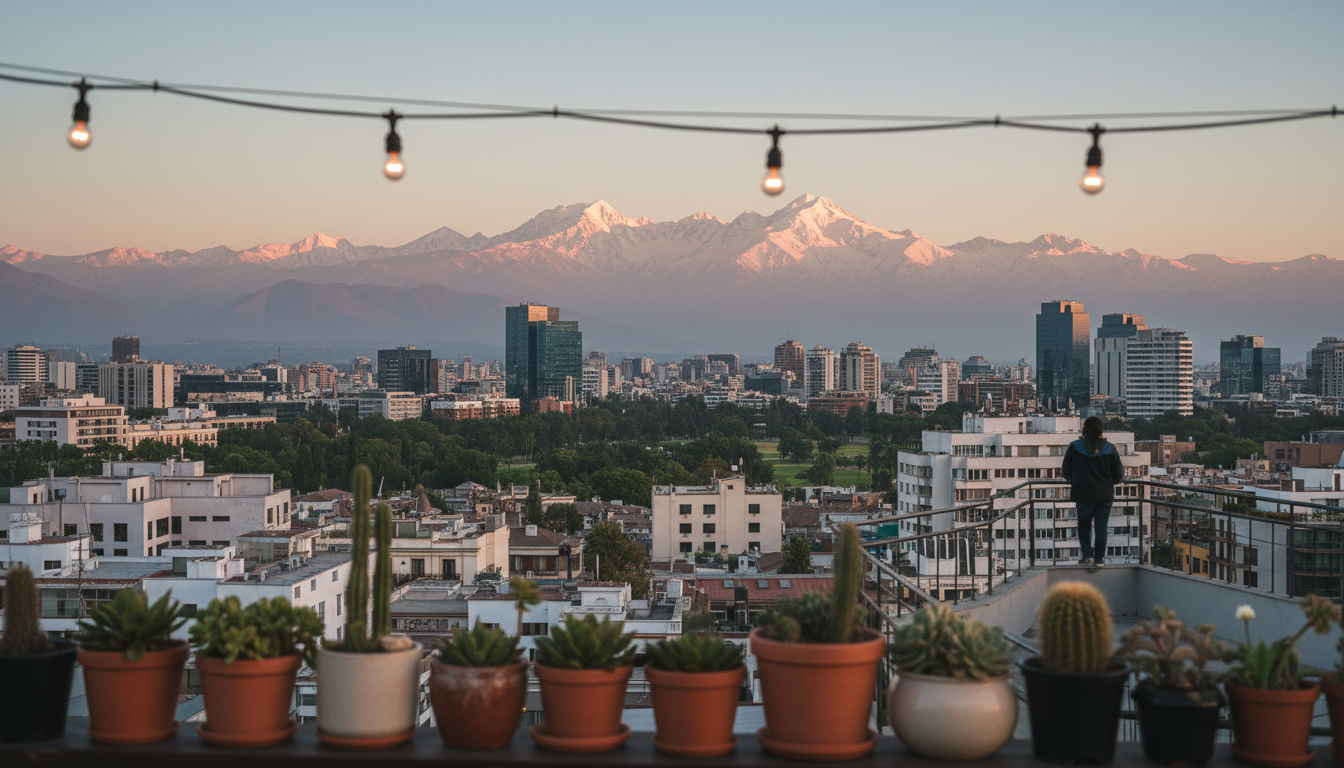 Panoramic view from a rooftop terrace in Barrio Italia at golden hour, the snow-capped Andes mountai
This Santiago bucket list isn't your typical "top 10 attractions" rundown. It's the stuff I actually did during my home swap—the experiences that made me fall hard for this underrated South American capital. Some are iconic, sure. But most are the kind of moments you only stumble into when you're not rushing between hotel checkout and airport shuttle.
The Essential Santiago Bucket List Experiences Every Home Swapper Needs
Before I break this down by neighborhood and vibe, here are the non-negotiables. The experiences that define Santiago—the ones you'll genuinely regret skipping.
Ride the Funiculars Up Cerro San Cristóbal
Yes, it's touristy. Do it anyway.
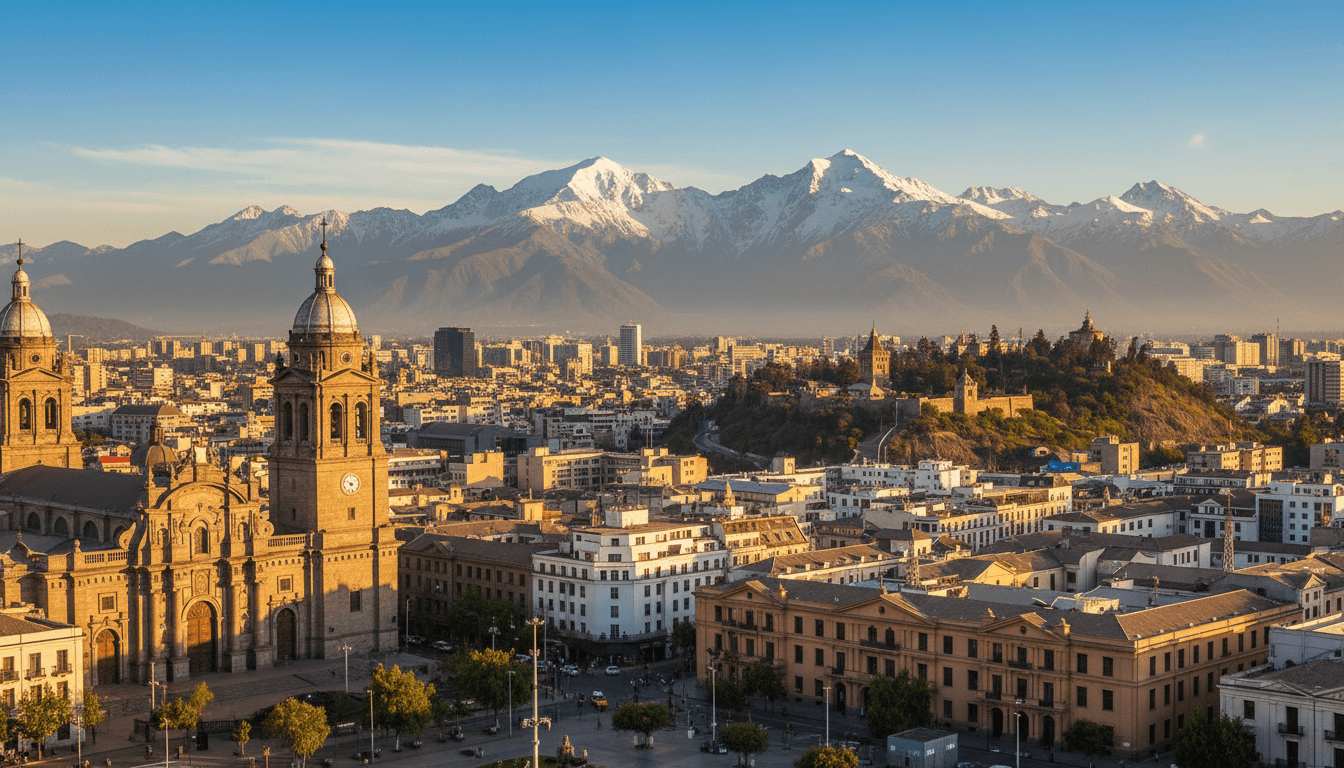
The funicular up Cerro San Cristóbal costs around 3,500 CLP (about $4 USD) for a round trip, and the views from the top are the kind that make you understand why people live here despite the smog days. On a clear morning—go early, trust me—you can see the entire Andes cordillera stretching endlessly.
I made the mistake of going at noon my first time. Hazy, hot, underwhelming. My second attempt? 8 AM on a Sunday after a rainstorm. Absolutely crystalline. The Virgin Mary statue at the summit was practically glowing.
My Providencia host gave me a tip I'm passing along: take the funicular up, then walk down through Parque Metropolitano. It's one of the largest urban parks in the world, and the downhill stroll through native forest feels miles away from the city below.
Wander La Vega Central Like You Actually Live Here
This is where Santiaguinos actually shop. Not the trendy organic markets in Vitacura—La Vega Central is chaotic, loud, slightly overwhelming, and absolutely essential for your Santiago bucket list.
I went three times during my home swap. The first time, I was intimidated by the shouting vendors and narrow aisles. By the third visit, I had a favorite fruit lady (her name is Carmen, she's been there 30 years, and her cherimoyas are unreal).
Bring cash. Prices are absurdly cheap—I filled a canvas bag with avocados, tomatoes, fresh herbs, and a kilo of strawberries for under $8 USD. There's also a food court section where you can get a massive bowl of cazuela (traditional Chilean soup) for around 4,000 CLP ($4.50).
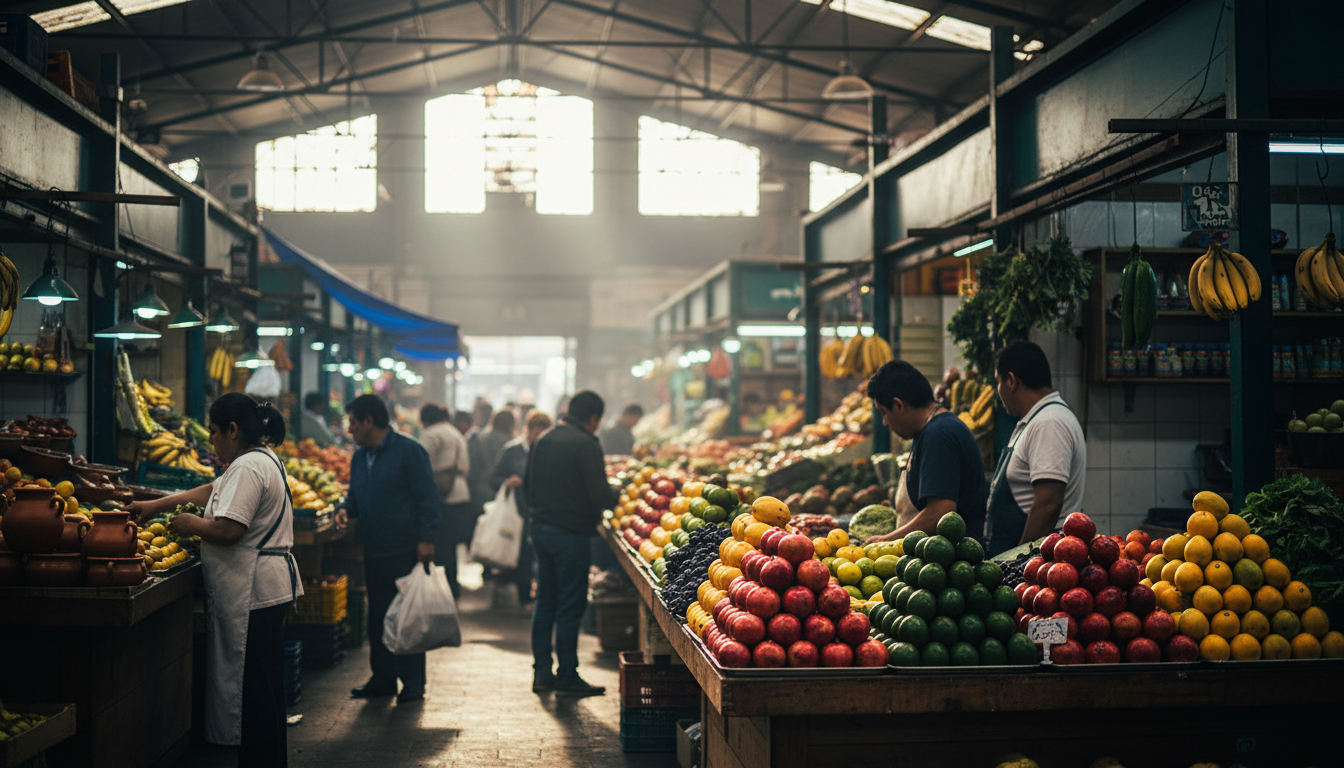 Bustling interior of La Vega Central market with colorful pyramids of fresh fruit, vendors in aprons
Experience a Chilean Asado (and Learn to Make One)
So here's where home swapping gives you an unfair advantage.
In a hotel, you might find a restaurant serving grilled meat. During a home swap, you might get invited to your host's friend's backyard asado. That's what happened to me—my host María connected me with her neighbor Rodrigo, who was having a Sunday cookout.
Chilean asados are different from Argentine ones (don't tell either country I said that). More choripán (chorizo sandwiches), more pebre (that addictive cilantro-tomato salsa), and always—always—served with Chilean wine that costs $5 at the corner shop but tastes like it should cost $30.
If you don't score an invite, at least buy some longaniza sausage from La Vega and grill it on your swap home's balcony. It's a rite of passage.
Santiago Bucket List: Neighborhood-by-Neighborhood Guide
Santiago is really a collection of villages pretending to be one city. Each barrio has its own personality, and your home swap location will shape your entire experience.
Lastarria & Bellas Artes: Culture and Coffee
This is where I'd recommend first-time Santiago home swappers look for exchanges. Lastarria is walkable, safe, gorgeous, and absolutely packed with things to do.
The Museo de Bellas Artes is free and houses an impressive collection of Chilean and Latin American art. I spent a rainy Tuesday afternoon there and had entire galleries to myself. Honestly, the building itself—a neoclassical palace with a glass ceiling—is worth the visit even if you're not an art person.
For coffee, skip the chains and head to Café Colonia (Rosal 382). Their cortado is perfect, and the people-watching from the sidewalk tables is unmatched. Budget around 3,500 CLP ($4) for a coffee and pastry.
Every evening, the pedestrian streets fill with buskers, artisan vendors, and couples strolling. It's the kind of scene that makes you want to extend your trip by another week.
Barrio Italia: The Hipster Heart
My home swap was here, and I'm biased, but Barrio Italia might be Santiago's best-kept secret for travelers who want to live like locals.
The neighborhood is built around antique shops, design studios, and some of the city's best restaurants. On weekends, Avenida Italia transforms into an open-air gallery of vintage furniture and curiosities.
My go-to dinner spot became Peluquería Francesa (Avenida Italia 1025)—a restaurant inside a converted 1920s barbershop. The pastel de choclo (corn pie with meat) is the best I had in Chile, around 12,000 CLP ($14). Make a reservation for weekend dinners.
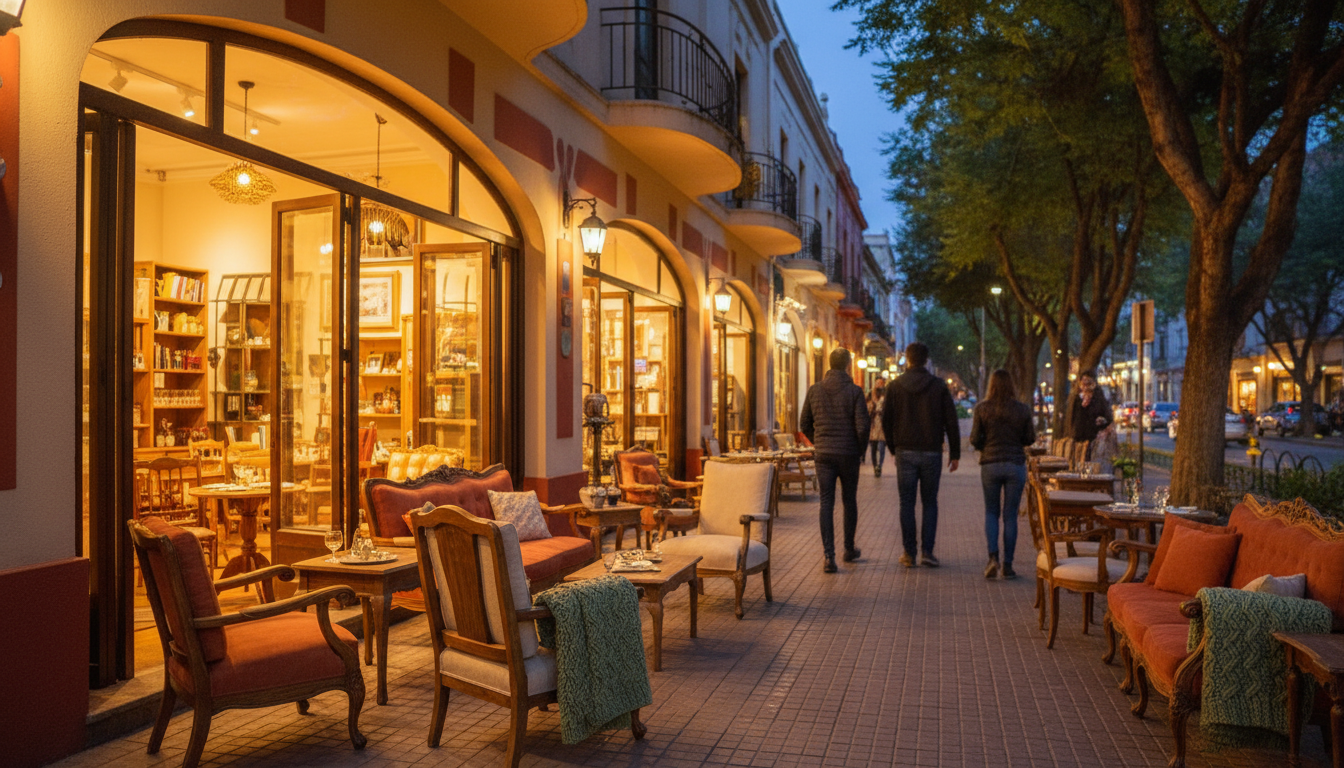 Evening scene on a tree-lined street in Barrio Italia, warm light spilling from restaurant windows,
Providencia: The Comfortable Middle Ground
If Lastarria is boutique-charming and Barrio Italia is hipster-cool, Providencia is where actual Santiaguinos with office jobs live. It's clean, efficient, full of good restaurants, and well-connected by metro.
The main draw is Parque Bicentenario—a long, skinny park perfect for morning runs or evening picnics. There's a flamingo pond (yes, really) and weekend food markets.
For a splurge dinner, Boragó consistently ranks among Latin America's best restaurants. Chef Rodolfo Guzmán does a tasting menu focused entirely on Chilean endemic ingredients—things like nalca (a rhubarb-like plant) and calafate berries. Expect to pay around $180 USD per person, but it's a once-in-a-lifetime experience.
Bellavista: Nightlife and Neruda
Bellavista is where Santiago gets weird—in the best way.
During the day, visit La Chascona, Pablo Neruda's Santiago house (now a museum). The poet built it for his secret lover, and the architecture is as eccentric as his poetry—hidden passages, ship-inspired rooms, and collections of everything from butterflies to seashells. Entry is around 8,000 CLP ($9), and the audio guide is worth it.
At night, Bellavista transforms into the city's nightlife hub. Patio Bellavista is a complex of restaurants and bars that's touristy but fun. For something more local, head to Bar The Clinic (named after the satirical newspaper) for cheap pisco sours and passionate political debates you won't understand but will enjoy.
Day Trips That Belong on Your Santiago Bucket List
One of the best things about home swapping in Santiago is having a base for exploring the surrounding region. You're not paying hotel rates, so you can actually afford to stay long enough to take these trips.
Valparaíso and Viña del Mar
The classic day trip—though honestly, Valparaíso deserves at least an overnight.
Valparaíso is a UNESCO World Heritage port city about 90 minutes from Santiago by bus (around 5,000 CLP / $6 each way from Terminal Alameda). The hillside cerros are covered in street art, funiculars, and crumbling-beautiful architecture that feels like Lisbon's artsy cousin.
I took the Turbus at 7 AM, spent the morning getting lost in Cerro Alegre and Cerro Concepción, had a seafood lunch at Café Turri (splurge on the sea bass with a harbor view), and caught a colectivo to Viña del Mar for beach time before heading back.
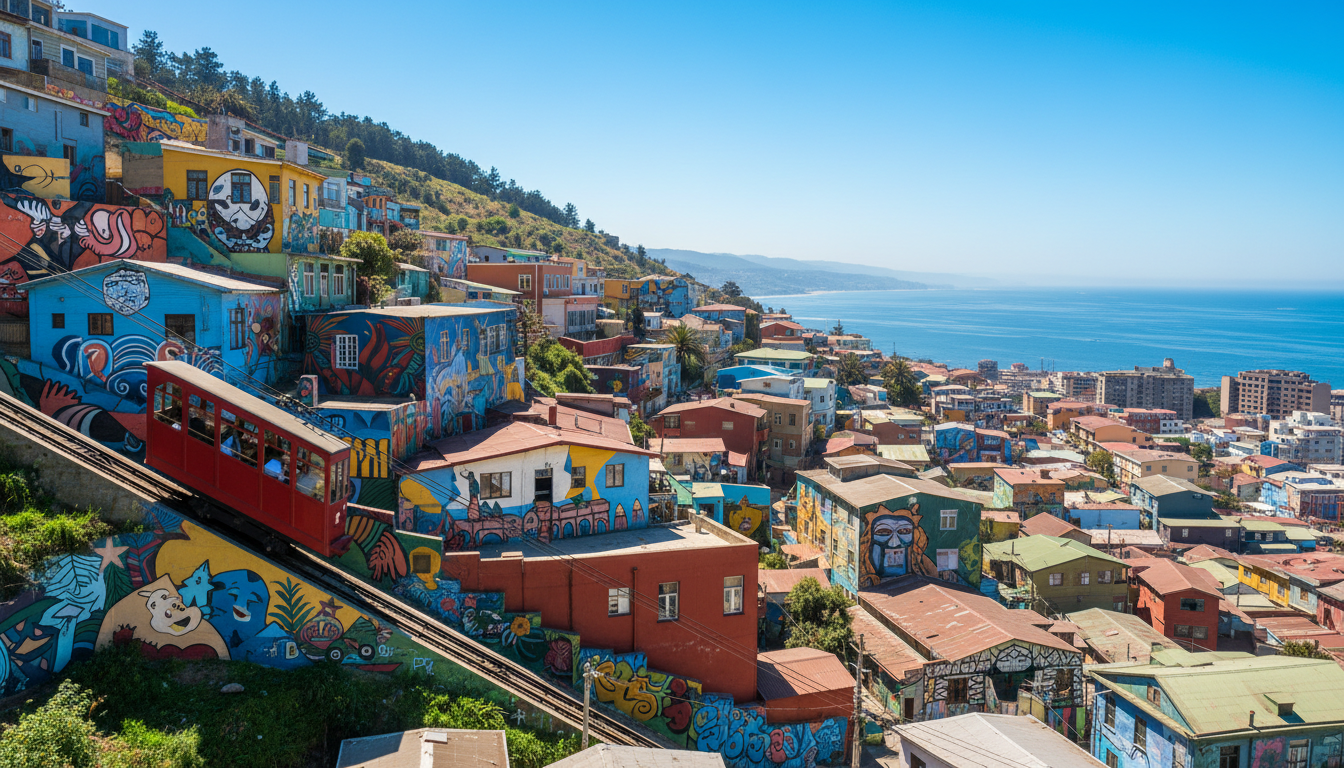 Colorful hillside houses in Valparaso covered in vibrant street art murals, a historic funicular asc
Wine Tasting in the Maipo Valley
Chile's wine country starts just 45 minutes from Santiago's center. The Maipo Valley is Cabernet Sauvignon territory, and several wineries offer tours and tastings.
Concha y Toro is the famous one—their Casillero del Diablo tour is well-produced and costs around 20,000 CLP ($23) including tastings. But I preferred the smaller Viña Cousiño-Macul, which has been family-owned since 1856 and feels less corporate.
You can do wine country independently via Uber (about $30-40 each way) or book a guided tour that includes lunch for around $80-100 USD. If you're home swapping with a car, even better—designate a driver and make a day of it.
Cajón del Maipo: Andean Adventure
This is the day trip that made me extend my Santiago home swap by a week.
Cajón del Maipo is a canyon in the Andes about an hour from Santiago. The scenery is dramatic—rushing rivers, snow-capped peaks, and tiny mountain villages that feel completely removed from the capital's chaos.
You can hike to waterfalls, soak in natural hot springs (Baños Colina is the most famous, around 15,000 CLP / $17 entry), or just drive the winding roads and stop for empanadas in the village of San José de Maipo.
For something more adventurous, several operators offer rafting on the Maipo River (around $50-60 USD for a half-day) or horseback riding through the canyon.
Food Experiences for Your Santiago Bucket List
I could write an entire separate article about eating in Santiago. The food scene here is genuinely exciting—traditional Chilean comfort food colliding with modern South American innovation.
Master the Art of the Completo
A completo is Chile's answer to the hot dog, and it's... a lot. We're talking a frankfurter buried under mashed avocado, chopped tomatoes, sauerkraut, and ungodly amounts of mayonnaise.
Is it refined? No. Is it delicious at 2 AM after pisco sours in Bellavista? Absolutely.
The most famous spot is Fuente Alemana in Providencia, which has been serving completos since 1952. A fully loaded one runs about 4,500 CLP ($5). Go hungry.
Take a Chilean Cooking Class
Several companies offer cooking classes in Santiago, but my favorite experience was an informal one arranged through my home swap host's recommendation.
A woman named Claudia runs classes out of her home in Ñuñoa (find her through Airbnb Experiences or ask locals). For about $45 USD, you spend four hours learning to make empanadas de pino, pastel de choclo, and sopaipillas. You eat everything at the end with Chilean wine.
It's the kind of experience you simply cannot have as a hotel tourist. But as a home swapper with local connections? It's Tuesday.
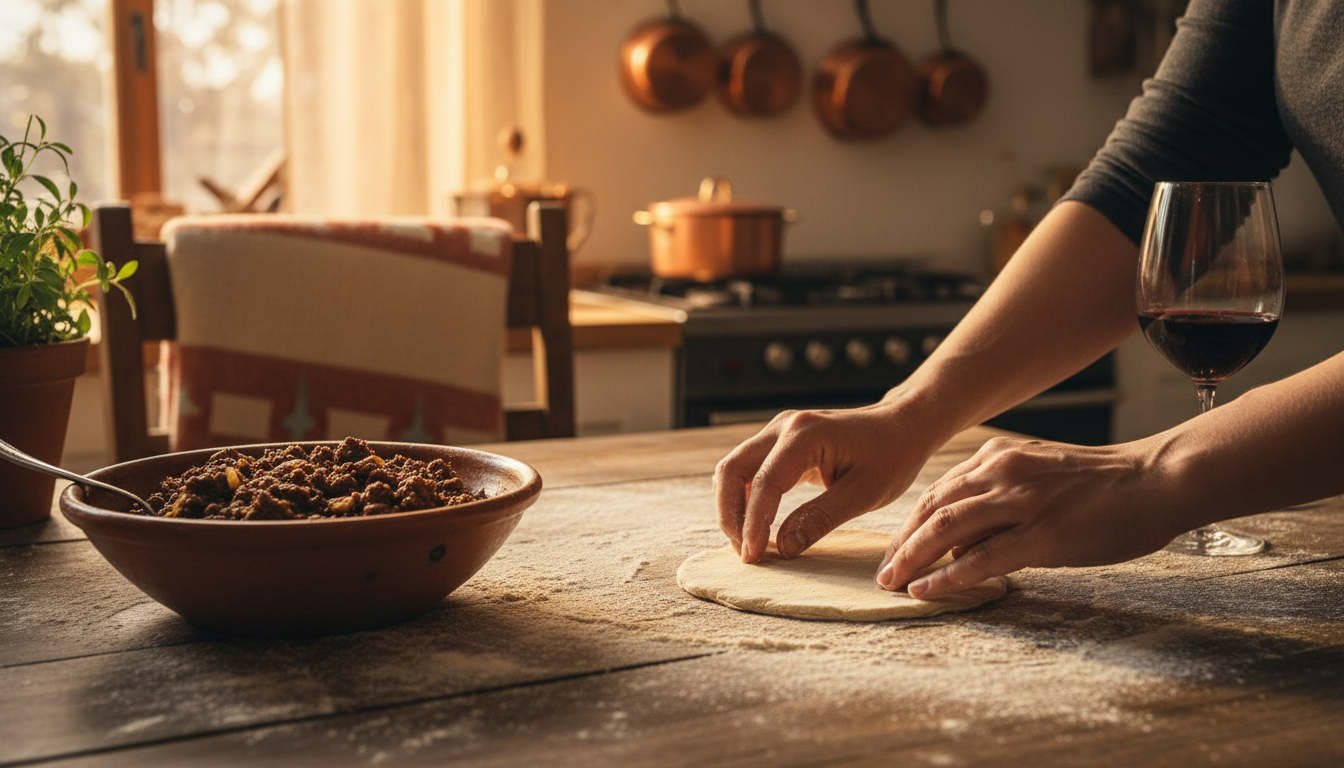 Hands shaping empanada dough on a flour-dusted wooden table, a bowl of pino filling nearby, warm kit
Hunt for the Best Pisco Sour in Santiago
This became a personal mission during my home swap.
Best classic pisco sour: Chipe Libre (Lastarria) — they call themselves a "Pisco Republic" and take the craft seriously. Around 6,000 CLP ($7).
Best creative variation: Bocanáriz (also Lastarria) — try their pisco sour with merkén, a smoky Chilean chili. Same price range.
Best value: Any fuente de soda (old-school diner) in a residential neighborhood. I had a perfect one at a no-name spot near my Barrio Italia apartment for 3,000 CLP ($3.50).
The key to Chilean pisco sours: they use lime, not lemon, and the good ones have a frothy egg white top. If it's served without foam, send it back.
Cultural Santiago Bucket List Experiences
Watch a Football Match at Estadio Nacional
I'm not even a huge football fan, but attending a Chilean league match was one of the highlights of my trip.
Estadio Nacional is where Chile won the Copa América in 2015, and the atmosphere during a Colo-Colo or Universidad de Chile match is electric. Tickets range from 10,000-40,000 CLP ($12-46) depending on the match and seating.
The stadium also has a somber history—it was used as a detention center during the 1973 coup. There's a memorial section you can visit on non-match days.
Explore Santiago's Street Art Scene
Santiago has one of the most vibrant street art cultures in South America, and much of it is political.
The best murals are in Barrio Yungay (take the metro to Quinta Normal), where entire buildings are covered in work by artists like Inti, Dasic Fernández, and collective Brigada Ramona Parra.
You can wander independently—the art is everywhere—or book a walking tour with a local guide who can explain the political and cultural context. Santiago Street Art Tours runs excellent 3-hour walks for around $30 USD.
Catch Live Music at a Peña
A peña is a traditional Chilean folk music venue, and experiencing one belongs on every Santiago bucket list.
The music style is Nueva Canción Chilena—the folk protest movement associated with artists like Víctor Jara and Violeta Parra. It's politically charged, emotionally intense, and completely unlike anything you'd hear in a typical tourist bar.
Peña del Nano Parra (in Barrio Brasil) is run by the nephew of Violeta Parra and hosts live music most weekends. Entry is usually around 5,000 CLP ($6), and the empanadas are excellent.
Practical Tips for Your Santiago Home Swap
After three weeks living in Santiago, here's what I wish I'd known from day one.
Getting Around
The metro is excellent—clean, efficient, and cheap (around 800 CLP / $0.90 per ride). Buy a Bip! card at any station and load it with credit.
Uber works well and is often cheaper than official taxis. A ride across the city rarely exceeds $8-10 USD.
For day trips, Turbus and Pullman are reliable long-distance bus companies. Book at the terminal or online—prices are very reasonable.
Money Matters
Chile is more expensive than Peru or Bolivia but cheaper than Argentina (depending on the exchange rate chaos). Budget around $60-80 USD per day for comfortable mid-range travel, not including accommodation—which, if you're home swapping, you're already saving.
Credit cards are widely accepted, but carry cash for markets, small restaurants, and tips. ATMs are everywhere; Scotiabank charges the lowest foreign transaction fees.
Safety Considerations
Santiago is generally safe, but petty theft happens. Keep your phone in a front pocket in crowded areas like La Vega or the metro during rush hour.
The 2019 protests brought some instability, and occasional demonstrations still happen in Plaza Italia (now called Plaza de la Dignidad by locals). They're usually peaceful but can disrupt transportation. Check local news if you see crowds gathering.
When to Visit
Santiago's best months are September through November (spring) and March through May (fall). Summer (December-February) is hot and many Santiaguinos flee to the coast, leaving the city quieter but some restaurants closed.
Winter (June-August) brings rain and smog but also snow in the nearby Andes—you can ski just 90 minutes from the city.
Why Home Swapping Makes Santiago Better
I've visited Santiago twice now—once in a hotel, once through a home exchange. There's no comparison.
In a hotel, I hit the major sites, ate at restaurants from guidebooks, and left feeling like I'd seen Santiago but not known it.
During my home swap, I had María's handwritten list of her favorite fuentes de soda. I had keys to a rooftop where I watched thunderstorms roll over the Andes. I had a kitchen where I practiced making pebre until I got it right. I had three weeks instead of five days because I wasn't hemorrhaging money on accommodation.
That's the thing about a Santiago bucket list—the best experiences aren't the monuments. They're the Tuesday afternoons when you're not rushing anywhere, the conversations with neighbors, the slow mornings with fresh bread from the corner panadería.
Home swapping doesn't just save you money in Santiago. It gives you time. And time is how you actually fall in love with a city.
If you're ready to experience Santiago like this—not as a tourist, but as a temporary local—SwappaHome is where I'd start looking. The platform's credit system means you can host travelers in your own home, earn credits, and use them to book stays in Santiago or anywhere else members have listings.
My Barrio Italia apartment came from a connection I made hosting a Chilean couple in San Francisco the year before. That's the beauty of home exchange: it's not transactional. It's a community of people who've figured out that the best way to travel is to actually live somewhere, even if just for a few weeks.
Santiago is waiting. Your bucket list is ready. Now you just need the keys to someone's apartment.
Frequently Asked Questions
What are the must-do Santiago bucket list experiences for first-time visitors?
The essential Santiago bucket list includes riding the funicular up Cerro San Cristóbal for Andes views, exploring La Vega Central market, visiting Pablo Neruda's La Chascona house in Bellavista, and taking a day trip to Valparaíso. For food lovers, trying a traditional completo and hunting for the perfect pisco sour are non-negotiable experiences.
How many days do you need to complete a Santiago bucket list?
To properly experience Santiago's highlights plus day trips to wine country and Valparaíso, plan for at least 7-10 days. Home swapping makes longer stays affordable—my three-week exchange allowed me to explore at a relaxed pace and discover neighborhood gems that shorter visits miss.
Is Santiago safe for home swap travelers?
Santiago is generally safe for travelers, including home swappers. Take normal precautions against petty theft in crowded areas like markets and metro stations. The home exchange community adds an extra layer of trust through reviews and verification. Most residential neighborhoods where you'd find home swaps—like Providencia, Barrio Italia, and Lastarria—are very safe.
How much does a Santiago bucket list trip cost?
Budget $60-80 USD daily for mid-range travel excluding accommodation. Key costs: metro rides ($0.90), market lunch ($5-8), museum entries ($5-15), day trips ($30-60), nice dinner ($20-35). Home swapping eliminates accommodation costs, which typically run $80-150/night for comparable apartments—a savings of $560-1,050 per week.
What's the best time of year to visit Santiago for a home swap?
Spring (September-November) and fall (March-May) offer the best weather for a Santiago bucket list trip—mild temperatures, clear skies for Andes views, and fewer crowds. These shoulder seasons also tend to have more home swap availability as locals travel, making it easier to find exchanges in desirable neighborhoods.

Published by
SwappaHome
SwappaHome Editorial Team
Home Exchange & Slow Travel Editorial
The SwappaHome Editorial Team brings together travel research, home-exchange community insights, and platform data to produce practical guides for first-time and experienced home swappers. Every article cites real platforms, current market rates, and verifiable city-level facts so readers can make informed decisions without guessing.
Ready to try home swapping?
Join SwappaHome and start traveling by exchanging homes. Get 7 free credits when you sign up!
Related articles

Bachelor and Bachelorette Parties in Singapore: The Complete Home Swap Group Guide for 2026
Planning a bachelor or bachelorette party in Singapore? Discover how home swapping lets groups of 6-12 stay together in luxury condos, saving thousands while partying in Marina Bay.
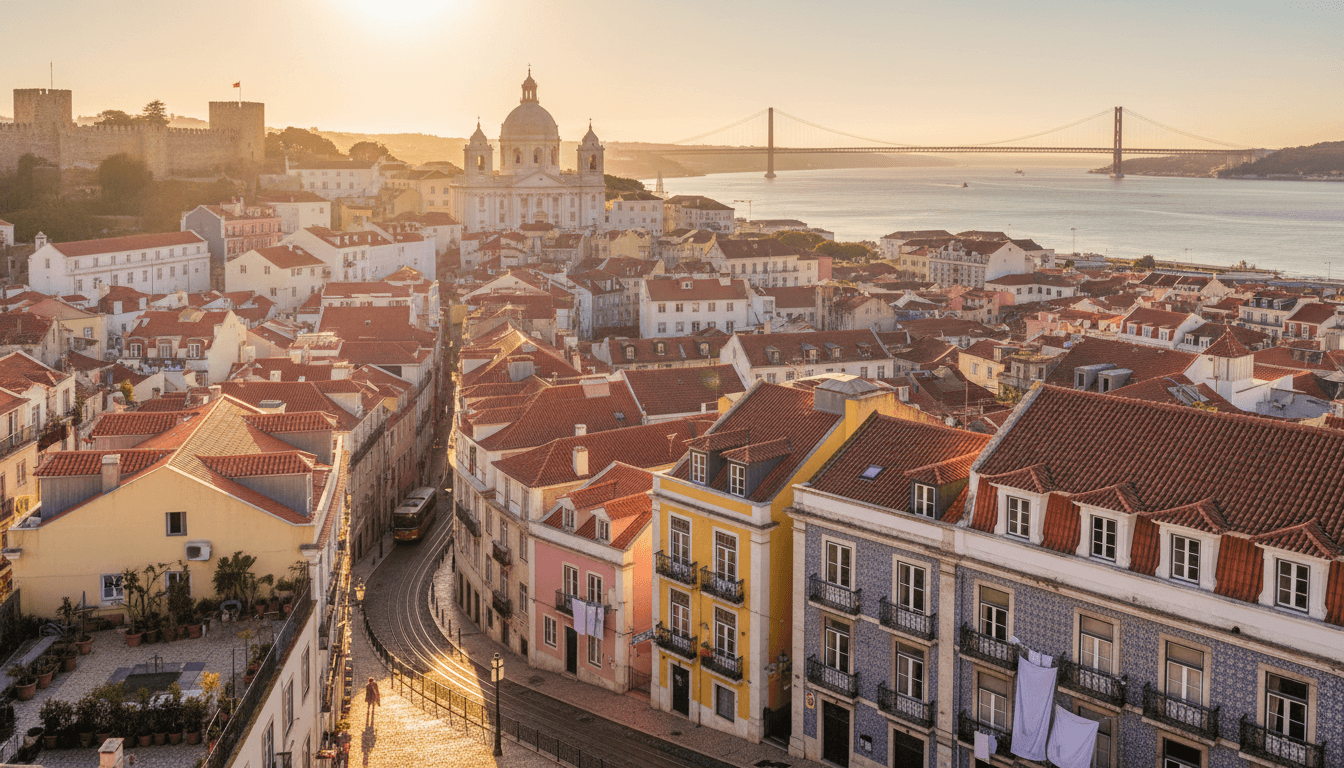
Cycling in Lisbon: 7 Home Swap Bike Tour Itineraries for Every Rider
Discover the best cycling routes in Lisbon with these home swap bike tour itineraries—from waterfront paths to hilltop adventures, all starting from your borrowed home.
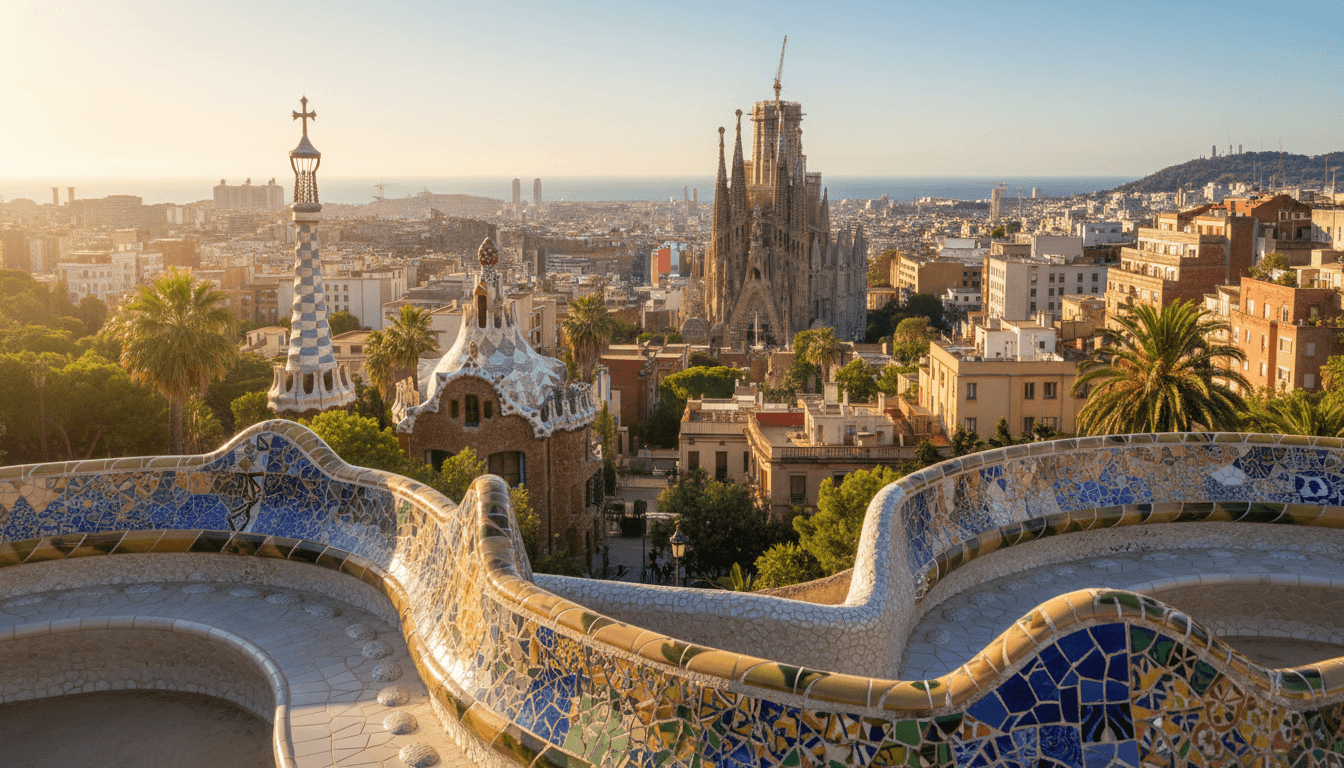
Graduation Trip to Barcelona: How Home Swapping Gives New Graduates the Ultimate Celebration
Planning a graduation trip to Barcelona? Discover how home swapping lets new graduates explore Spain's most vibrant city without the hostel crowds or hotel costs.