
Digital nomad visa El Salvador: The complete guide for remote workers

SwappaHome Editorial Team
Home Exchange & Slow Travel Editorial
Key Takeaways El Salvador may suit remote workers, but the right immigration route depends on current rules, nationality, income, and the nature of the work.…
Key Takeaways
El Salvador may suit remote workers, but the right immigration route depends on current rules, nationality, income, and the nature of the work.
- Confirm whether a dedicated digital nomad visa is currently available before making plans.
- Treat tourist entry and residence permission as separate legal situations.
- Prepare authenticated financial, identity, and background documents early.
- Check tax and local-employment rules before working from El Salvador.
- Plan accommodation, connectivity, renewals, and departure as one practical project.
Understanding the digital nomad visa situation in El Salvador
The phrase “digital nomad visa El Salvador” is used widely online, but immigration programs can change faster than travel articles do. Remote workers should distinguish between a newly announced program, a residence category, and informal advice based on tourist entry. This guide offers a planning framework, not a substitute for confirmation from Salvadoran authorities. Official verification remains essential before booking a one-way flight or signing a long lease.
Whether El Salvador offers a dedicated digital nomad visa
Some recent guides describe El Salvador as having introduced a dedicated route for remote workers, freelancers, and entrepreneurs earning income from abroad. Other sources frame the same opportunity as a form of temporary residence or a rentista-style pathway. Because the terminology and details vary, do not assume that a page titled “digital nomad visa” describes a single, clearly codified permit. Check the current legal basis, eligibility criteria, duration, and application channel directly.
For a useful overview of the claims circulating online, see this El Salvador visa guide, while treating its figures as information to verify rather than guaranteed terms.
How tourist entry differs from a residence permit
Tourist admission generally permits a visit for a limited period under the conditions attached to your passport and nationality. It does not automatically authorize long-term residence, local employment, or every form of remote work. A residence permit, by contrast, is an immigration status that normally requires an application, supporting documents, and approval or registration. Staying beyond an authorized period can create problems even if your foreign employer is comfortable with your location.
Visa options that may suit remote workers
Depending on your circumstances, possible routes may include tourist entry for a short exploratory stay, temporary residence based on demonstrable foreign income, or a business, investment, or employment category. The best fit depends on whether your income comes from salary, clients, investments, or a Salvadoran employer. Families may also face additional documentation requirements. A broader El Salvador residency overview can help you compare the concepts, but the final decision belongs with the relevant authority.
Why current immigration rules require official verification
Online summaries often disagree on minimum income, duration, renewals, physical-presence rules, fees, and whether an application must be filed from abroad. That does not necessarily mean every source is careless; it may reflect updates, translations, or different interpretations of the law. Ask for written, current instructions where possible and save copies of official replies. Immigration advice from a consultant can be useful, but it should complement—not replace—government confirmation.
Choosing the right immigration pathway
Choosing a route is less about finding the most attractive label and more about matching your actual situation to a lawful category. Start with the length of stay you want, the country where your clients or employer are located, and whether you will have any Salvadoran customers or business activity. Then compare the evidence each route requires. A short visit may need very little preparation, while residence planning can involve legalization, translations, and financial records.
 Remote worker planning Salvador residency
Short-term stays under tourist entry rules
Tourist entry can be practical for a reconnaissance trip, a short workation, or a stay that clearly fits within the period granted at arrival. Confirm permitted duration, extension rules, onward-travel expectations, and whether your nationality requires a visa before departure. Keep proof of accommodation and travel insurance available if requested. Do not use a series of border crossings as a substitute for a residence strategy without professional advice.
Temporary residence options for eligible applicants
A temporary residence route may be more appropriate when you want a stable base and can document regular foreign income or another accepted basis. Requirements can include a valid passport, proof of lawful entry, financial statements, background checks, health coverage, and certified translations. The exact list is not universal. Ask the immigration office or consulate for the current checklist that applies to your nationality and household.
Business, investment, and employment-based alternatives
Remote employees with overseas employers are not in the same position as people hired by a Salvadoran company. Entrepreneurs may need to explain the business structure and source of income, while investors or local employees may fall under entirely different rules. Never select an employment or investment route simply because it sounds familiar. The activity you actually perform should match the status you hold.
How your nationality affects entry and residence requirements
Nationality can affect visa-free access, permitted tourist duration, consular filing options, and document standards. It may also determine whether you need a prior entry visa or additional screening. Dependents can introduce separate requirements, including birth or marriage records. Build your plan around your own passport, not a friend’s experience or a generic list written for another region.
Meeting the typical application requirements
Most residence applications are won or lost in the paperwork. Authorities need to see who you are, how you entered, how you support yourself, and whether your documents can be trusted. Requirements vary by route, so use the list below as a preparation map rather than a definitive checklist. A clean, consistent file is easier to review than a pile of loosely translated attachments.
Passport validity and proof of legal entry
Begin with a passport that has enough remaining validity for the intended application and stay. Make clear scans of the identity page, entry stamps, visas, and any immigration receipts. Keep the original documents organized for an appointment. If you entered legally but your stamp is unclear or missing, ask the authorities how to document that fact before filing.
Evidence of remote employment or business activity
Employees may be asked for an employment letter, contract, or other proof that the employer is outside El Salvador. Freelancers and business owners may need client agreements, invoices, company registration documents, or a written explanation of their work. The evidence should tell one coherent story about where the income comes from and where the work is performed. Avoid overstating a client relationship or submitting documents with unexplained gaps.
Income, savings, and financial documentation
Financial evidence commonly includes bank statements, payslips, tax records, contracts, or proof of recurring payments. The reviewing officer may care about regularity as well as the headline balance. Use statements that show your name, account details, dates, and transaction history, and explain unusual deposits. A recent remote-work travel guide also illustrates why accommodation and workspace planning belong in the same budget conversation as immigration costs.
Criminal record checks, health documents, and translations
Background certificates may need to come from every relevant country and may require an apostille or other legalization. Health insurance or medical documents can also be required depending on the route. Documents in another language may need a certified Spanish translation, and names should be consistent across passports, certificates, and bank records. Start these steps early because certificates and appointments often expire or take longer than expected.
How to plan your application
A sensible application plan works backward from your intended arrival date. Allow time for obtaining certificates, legalization, translation, appointments, courier delivery, and requests for corrections. Keep a spreadsheet or folder with document dates and expiry dates. This is administrative work, but it prevents the common mistake of having one essential document become invalid while another is still being prepared.
Checking requirements with Salvadoran authorities
Use the official immigration service, consulate, or embassy that handles your case, and ask questions in writing when possible. Confirm whether applications are accepted online, in person, or through a representative. Ask for the current fee schedule and the exact format for financial and criminal-record evidence. If an official answer conflicts with an older guide, follow the current official instruction and retain the correspondence.
Preparing and certifying supporting documents
Order documents in the sequence they will be reviewed: identity, legal entry, qualifying activity, finances, background, health, and family records. Check whether each item needs an apostille, consular legalization, notarization, or certified translation. Scan the completed set and store a backup securely. Do not send irreplaceable originals unless the receiving office specifically requires them.
Submitting an application through the appropriate channel
Submission may involve a consulate, an immigration office, an online portal, or a locally authorized representative, depending on the route and your nationality. Before paying, confirm that the application category is the one that matches your work and intended stay. Request a receipt or case number and note the name of the office handling the file. If you are comparing international bases more broadly, a global market planning guide may be useful for business strategy, but it does not determine Salvadoran immigration eligibility.
Handling processing times, fees, and requests for more information
Published processing estimates are not promises. Build in a cushion for public holidays, incomplete submissions, background checks, and requests for updated statements. Keep enough money available for application fees, translations, travel, and temporary accommodation while you wait. Reply promptly and politely to any request, while checking that it came through a genuine official channel.
Living and working remotely in El Salvador
Immigration approval is only one part of making a remote-work stay function. Your daily experience will depend on the internet connection in the specific building, the distance to services, your tolerance for heat, and the rhythm of your workday. Visit a neighborhood before committing if you can. Ask hosts or landlords practical questions rather than relying on a city’s reputation.
Internet reliability and backup connectivity
Test the actual connection at the property, including upload speed and video-call stability, rather than accepting “Wi-Fi available” as enough. A local mobile-data plan, backup battery, and nearby café or coworking option can make a difference during outages. Keep important meetings scheduled with a fallback location in mind. Homes curated for remote workers, such as those described in Costa Rica home exchanges, show the value of checking Wi-Fi and workspace details before arrival; apply that same discipline in El Salvador.
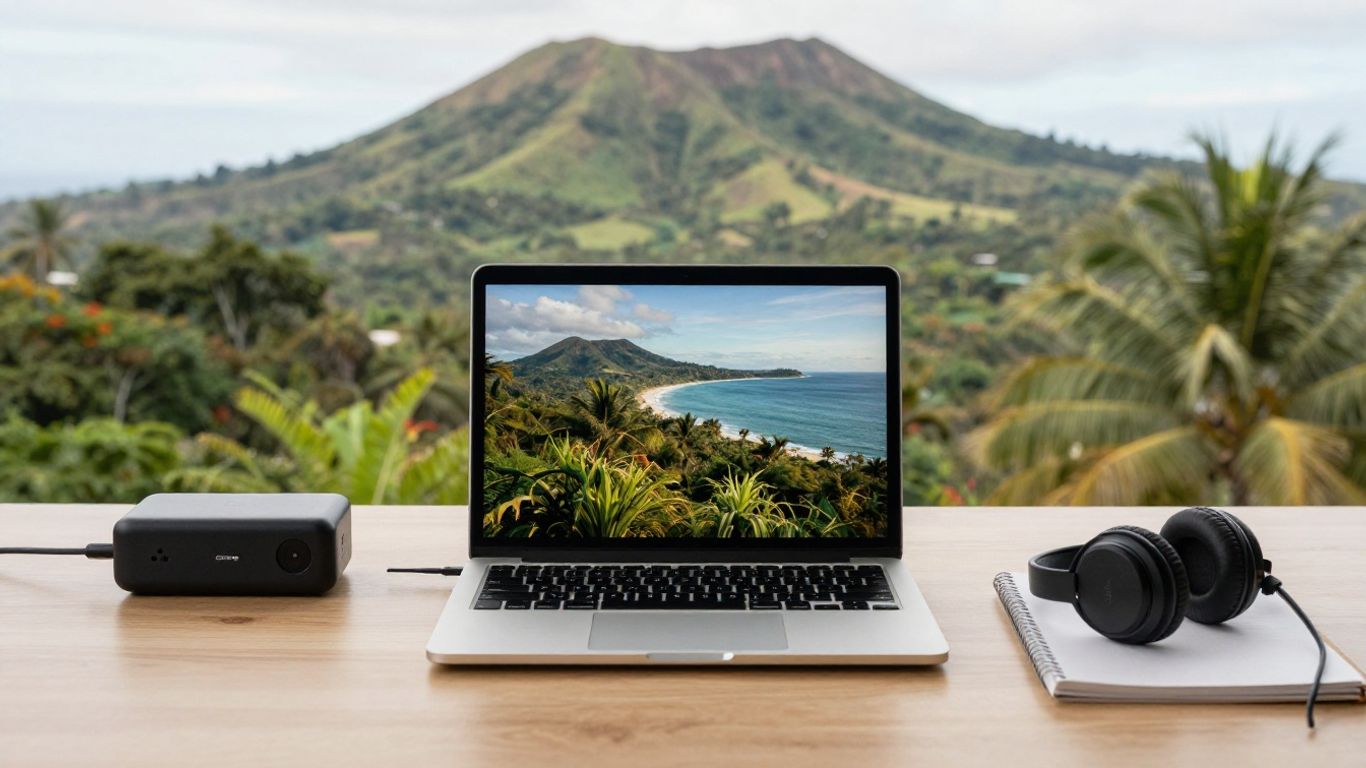 Laptop workspace near Salvadoran coast
Choosing between San Salvador, El Tunco, and Santa Ana
San Salvador offers the broadest access to services, offices, healthcare, restaurants, and transport connections. El Tunco appeals to people who want a surf-town setting, though humidity, seasonal conditions, and connectivity can vary by property. Santa Ana provides a slower urban pace and access to highland surroundings. Compare neighborhoods, not just city names, and weigh commute time, noise, safety, and reliable electricity.
Monthly expenses, accommodation, and coworking spaces
Build a monthly budget around rent, utilities, groceries, transport, insurance, mobile data, coworking, and occasional travel. Short-term furnished accommodation may cost more than a local lease, while a long commitment can be risky before you understand the area. Ask whether internet, water, cleaning, and electricity are included. If you are also comparing Mexico home exchange options for a later trip, keep that travel budget separate from the funds required for your Salvadoran application.
Safety, transportation, climate, and everyday logistics
Research the specific neighborhood, use trusted transport options, and avoid carrying unnecessary valuables. Tropical weather can affect plans, roads, power, and internet, so keep digital copies of documents and a little flexibility in your schedule. Learn basic Spanish for errands and service calls. Everyday comfort often comes from small preparations: local contacts, dependable transport, suitable clothing, and a realistic workday routine.
Taxes, compliance, and long-term planning
A residence permit does not automatically answer every tax question. Tax treatment can depend on days present, the source of income, the location of the work, treaty provisions, and your continuing ties to another country. Immigration status and tax residence are related but distinct. Before staying for a substantial part of the year, speak with advisers familiar with both jurisdictions.
When your stay could create tax residence
Many countries use physical presence as one factor in determining tax residence, alongside domicile, family, economic ties, and other tests. Count your days carefully, including arrival and departure dates where relevant. Keep leases, entry records, and tax documents together. A plan that is lawful for immigration purposes can still create unexpected filing obligations.
How remote income may be treated
Do not assume that foreign clients or an overseas payroll provider make income automatically tax-free. The answer may differ for salary, self-employment, dividends, and investment income. Ask how local rules treat services performed while physically present in El Salvador and whether reporting is required. Written advice is worth obtaining before you reorganize contracts or banking.
Avoiding unauthorized local employment
A remote-work residence route, if available, may be designed for income from abroad rather than employment in the Salvadoran labor market. Do not accept local work, invoice Salvadoran clients, or establish a local operation until you know your status permits it. If your business model changes, reassess the immigration category before taking the new work. Staying within the terms of your permit is part of protecting future renewals.
Renewals, extensions, and planning your departure
Record the expiry date of your passport, insurance, residence card, and permission to stay. Start renewal research well before the deadline and confirm whether a physical appointment or updated background certificate is needed. Keep a departure plan in case renewal is delayed or refused. Immigration planning should include a lawful exit date, final tax questions, housing notice, and document backups.
Conclusion
El Salvador can be an appealing base for remote workers, but a successful move begins with careful verification rather than a promising headline. Confirm the available immigration route, prepare evidence that matches your real work, test the practical living conditions, and get tax advice before staying long enough to create new obligations.
Frequently Asked Questions
Does El Salvador have a digital nomad visa?
Recent online sources describe a dedicated or residence-based route for remote workers, but the name and requirements should be confirmed with Salvadoran authorities before applying.
Can I work remotely in El Salvador as a tourist?
Tourist entry permits a visit under specific conditions; it does not automatically authorize every kind of remote work or long-term stay. Check the rules for your nationality and activity.
How long can a remote worker stay in El Salvador?
The permitted period depends on your entry status, nationality, and any residence approval. Do not rely on a generic duration without checking the current official terms.
What income proof might an applicant need?
Applicants may be asked for bank statements, payslips, employment letters, contracts, invoices, tax records, or other evidence showing stable financial support from an accepted source.
Are documents required in Spanish?
Documents in other languages may need certified Spanish translations, and some records may also require an apostille, legalization, or notarization.
Can a digital nomad work for Salvadoran clients?
Not necessarily. A route intended for foreign income may restrict local employment or local client work, so obtain professional advice before changing your activities.
Should I speak with a tax adviser before moving?
Yes. A longer stay can affect tax residence, reporting, and the treatment of income even when your immigration status allows you to remain in the country.

Published by
SwappaHome
SwappaHome Editorial Team
Home Exchange & Slow Travel Editorial
The SwappaHome Editorial Team brings together travel research, home-exchange community insights, and platform data to produce practical guides for first-time and experienced home swappers. Every article cites real platforms, current market rates, and verifiable city-level facts so readers can make informed decisions without guessing.
Ready to try home swapping?
Join SwappaHome and start traveling by exchanging homes. Get 7 free credits when you sign up!