Dubai Food Scene: The Complete Culinary Guide for Home Exchange Travelers

SwappaHome Editorial Team
Home Exchange & Slow Travel Editorial
Discover Dubai's extraordinary food scene during your home exchange—from AED 3 shawarma to Michelin-starred dining, with insider tips only locals know.
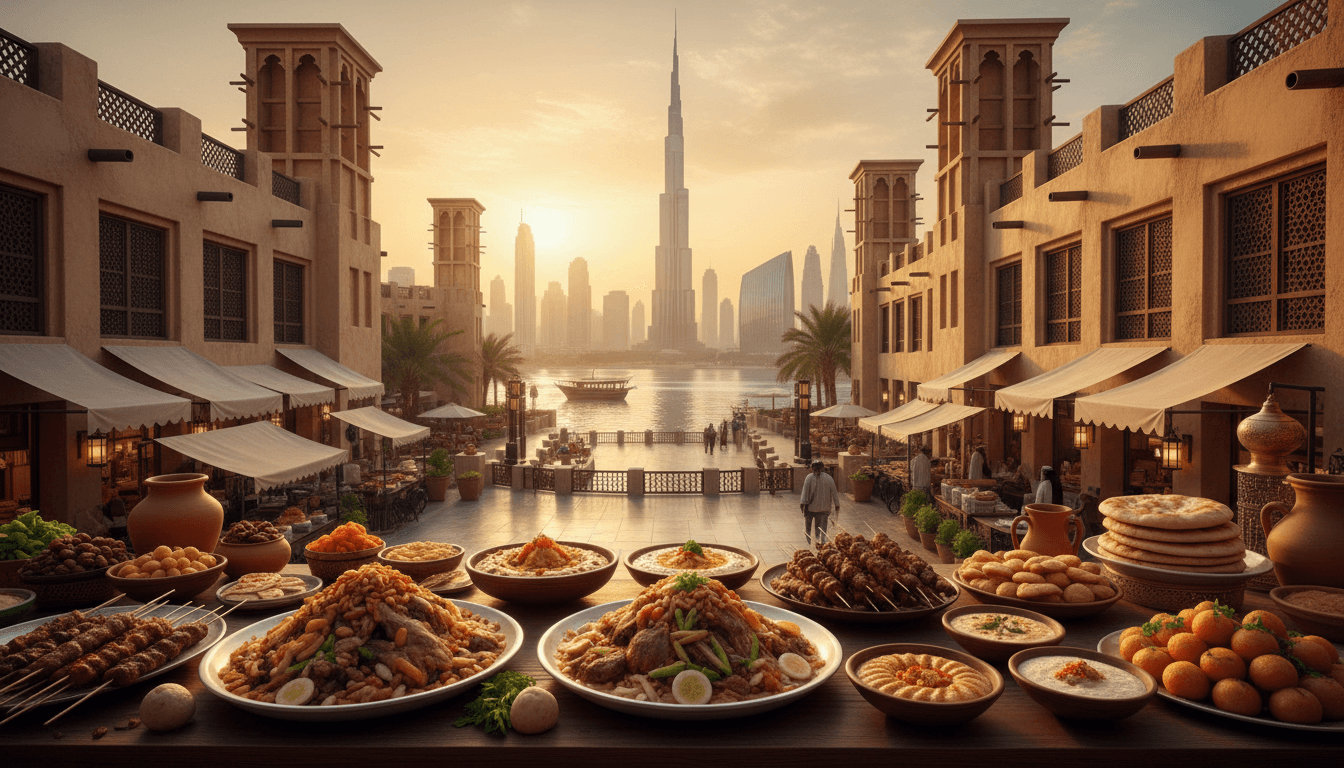
The scent of saffron rice hits you first. Then cardamom. Then something charred and caramelized drifting from a shawarma stand on Al Rigga Road in Deira. It's 10 PM, the temperature has finally dropped below 30°C, and half of Dubai seems to be eating dinner on plastic chairs under fluorescent lights. This is the Dubai food scene—a city where a AED 12 ($3.25) lamb shawarma can be as memorable as a AED 2,000 ($545) tasting menu at a restaurant overlooking the Burj Khalifa.
For home exchange travelers, Dubai presents a curious culinary paradox. There's no indigenous cuisine to speak of—Emirati food exists, but you'll have to hunt for it—yet this has become one of the world's most exciting food destinations. The reason? Over 85% of Dubai's population comes from somewhere else. Indians, Pakistanis, Filipinos, Lebanese, Iranians, Ethiopians, British expats, Russian oligarchs—they all brought their food with them, and they all expect it done properly.
Having a kitchen through your home exchange changes everything about how you experience eating here. You're not trapped in hotel breakfast buffets or tourist-trap restaurants in Dubai Mall. You can shop at Union Cooperative in Jumeirah like locals do, picking up fresh Arabic bread baked that morning and labneh so thick you could spread it with a trowel. You can come home from a souq expedition with bags of spices and actually use them.
What follows covers the full spectrum—from the street food that Dubai's taxi drivers swear by to the restaurants where reservations book out months ahead. More importantly, it tells you what's actually worth your dirhams and what's just Instagram bait.
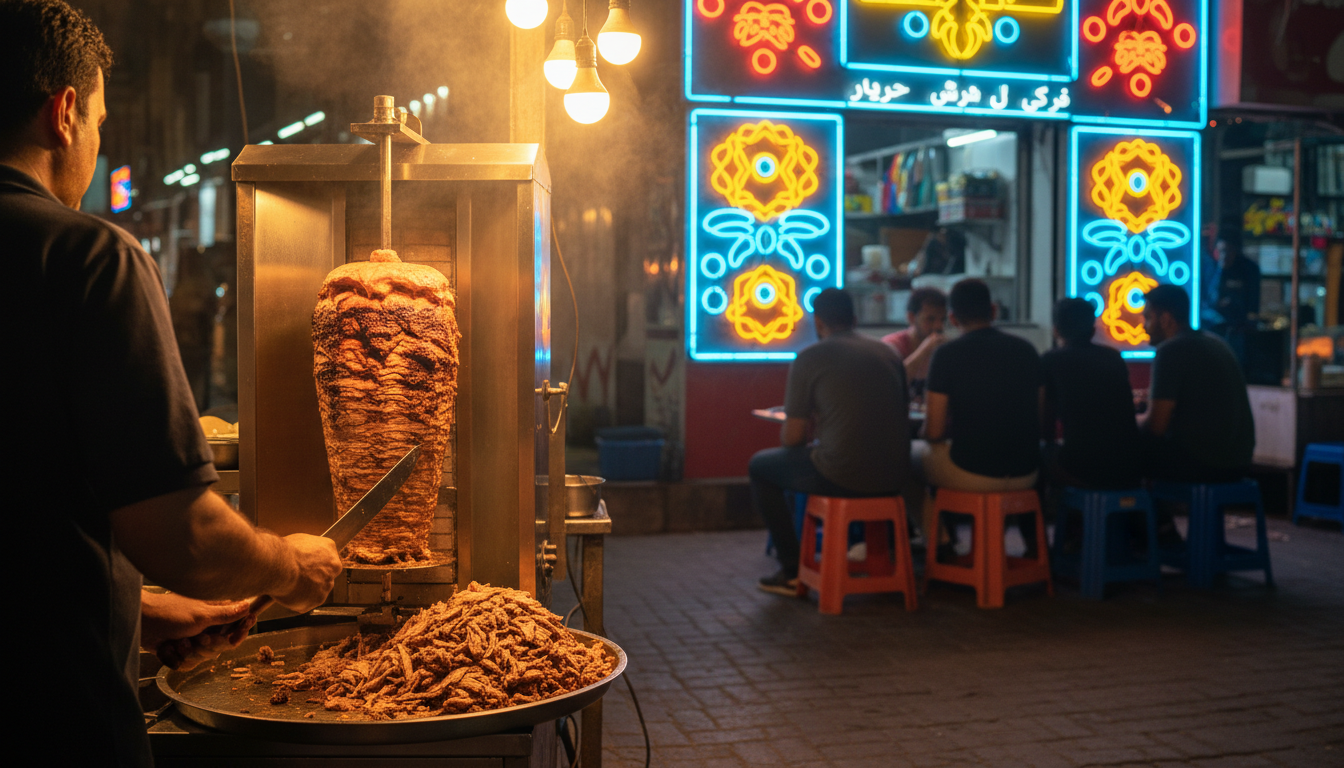 Steaming shawarma being sliced from a vertical spit at a late-night street stand in Deira, with Arab
Understanding Dubai's Food Geography: Where to Eat What
Dubai sprawls across 35 kilometers of coastline, and the culinary landscape shifts dramatically depending on where you're staying. This isn't a city where you can just "wander and find something"—neighborhoods are separated by eight-lane highways, and walking in summer heat above 45°C isn't just unpleasant, it's genuinely dangerous.
The food scene roughly divides into three zones, each with its own personality.
Old Dubai (Deira and Bur Dubai) is where the magic happens for budget-conscious food lovers. This is the Dubai that existed before the skyscrapers—a tangle of souqs, cheap hotels, and immigrant communities that have been cooking their home cuisines for decades. The streets around Al Fahidi Historical Neighbourhood smell like Iran. The area near Meena Bazaar could be transplanted directly from Mumbai. Naif Road is essentially Little Manila. Home exchanges in this area are rarer but put you within walking distance of Dubai's most authentic food.
New Dubai (Dubai Marina, JBR, Palm Jumeirah) is where most tourists stay and where most home exchange properties are listed. The food here skews international and expensive—think brunch culture, beach clubs, and celebrity chef outposts. It's not bad, just sanitized. You'll find excellent sushi, passable Italian, and a lot of places that prioritize the view over the plate.
The Middle Ground (Jumeirah, Al Quoz, Business Bay) offers the best of both worlds. Jumeirah Road has become Dubai's most interesting food corridor, with everything from hole-in-the-wall Pakistani spots to farm-to-table concepts. Al Quoz, the industrial-turned-artsy district, hides some of Dubai's most creative restaurants in converted warehouses.
Home exchanges in Jumeirah or Business Bay tend to offer the ideal balance: modern apartments with proper kitchens, but close enough to Old Dubai for easy food expeditions via the Dubai Metro (Red Line, AED 7.50 for a day pass).
The Street Food That Defines Dubai's Culinary Identity
Here's the honest truth about Dubai street food: it's not Emirati. The street food that defines this city comes from the laborers and immigrants who built it—South Asians, Levantine Arabs, Iranians, and Southeast Asians who brought their culinary traditions and adapted them to desert conditions.
Shawarma: Dubai's Unofficial National Dish
Every Dubai resident has a shawarma spot they'll defend to the death. The debate usually centers on a few legendary establishments.
Al Mallah on 2nd December Street in Satwa has been serving what many consider Dubai's definitive chicken shawarma since 1979. The bread is baked fresh, the garlic sauce is aggressive in the best way, and the whole thing costs AED 14 ($3.80). The catch? There's always a line, and the tiny shop has maybe six seats.
Shawarma Station in Deira operates 24 hours and draws taxi drivers at 3 AM—generally a reliable indicator of quality and value. Their meat shawarma with extra tahini runs AED 12 ($3.25).
Automatic Restaurant on Al Rigga Road isn't just a shawarma spot—it's a full Lebanese cafeteria that's been operating since 1972. The mixed grill plates (AED 45/$12.25) could feed two people and come with unlimited bread.
For home exchange travelers with kitchens, the smart move is to buy shawarma meat by weight from Al Maya Supermarket in Umm Suqeim and cook it yourself. They'll slice it fresh, and you can make wraps at home with Arabic bread from any bakery.
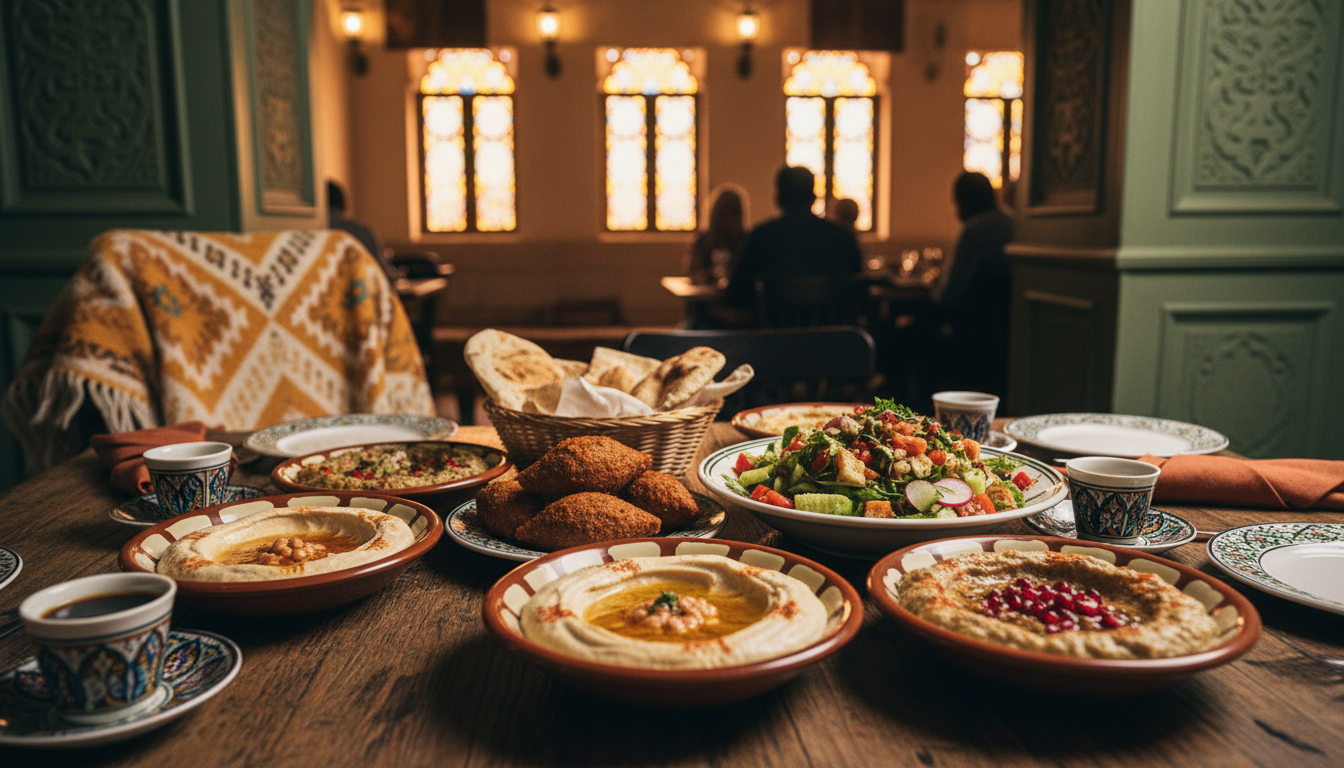 A colorful spread of mezze disheshummus, mutabbal, fattoush, kibbeharranged on a table at a traditio
South Asian Street Food: The Hidden Backbone
The Dubai food scene owes an enormous debt to its South Asian population, particularly in the affordable category. The streets around Meena Bazaar in Bur Dubai offer some of the best Indian food outside the subcontinent.
Ravi Restaurant in Satwa is the most famous—a no-frills Pakistani spot where a full meal (butter chicken, naan, dal, rice) costs under AED 40 ($11). It's been written up in international publications, but the quality hasn't suffered from the attention. Open until 3 AM.
Sind Punjab near the Dubai Museum serves Sindhi and Punjabi specialties that you won't find at typical Indian restaurants. Their sai bhaji (spinach curry with lentils) is worth the trip to Bur Dubai alone. Mains average AED 25-35 ($7-10).
Calicut Paragon in Karama brings Kerala cuisine—fish moilee, appam, prawn curry—to a city that often overlooks South Indian food in favor of North Indian standards. The pepper crab (AED 85/$23) is exceptional.
Worth noting: many of these restaurants don't serve alcohol (Dubai's licensing laws are complex), but they don't mind if you've had a drink elsewhere before arriving. Just don't expect wine with your biryani.
Iranian and Central Asian Gems
Dubai's Iranian community, concentrated in Deira, has created a pocket of Persian cuisine that rivals Tehran.
Special Ostadi on Al Maktoum Road is the consensus pick for kebabs—specifically the koobideh (ground lamb kebab) served with saffron rice and grilled tomatoes. A full meal runs AED 50-70 ($14-19). The bread comes from a tandoor in the corner, and the rice has that perfect tahdig crust.
Abshar nearby specializes in Iranian stews—gheymeh, ghormeh sabzi, fesenjan—the slow-cooked dishes that don't translate well to fast-casual settings. Budget AED 60-80 ($16-22) per person.
For home cooks, the Iranian grocery stores on Sikkat Al Khail Road sell everything you need: dried limes, barberries, saffron (significantly cheaper than in Western countries), and pomegranate molasses.
The Brunch Industrial Complex: Dubai's Weekend Ritual
Friday brunch in Dubai isn't a meal—it's a cultural institution, a social event, and occasionally a competitive sport. The city essentially shuts down on Friday mornings because everyone is at brunch.
The format typically works like this: pay a fixed price (anywhere from AED 200-800/$55-220), eat and drink unlimited for 3-4 hours. Some brunches are family-friendly; others become pool parties by 2 PM. The quality varies wildly.
Brunches Worth the Price Tag
Bubbalicious at The Westin Mina Seyahi (AED 495/$135 with house beverages) consistently ranks among Dubai's best. The spread covers everything from sushi to roast beef to a dedicated cheese room. The setting—poolside with marina views—justifies the premium.
Tresind Studio in DIFC offers a more refined approach: a set tasting menu of modern Indian cuisine with paired drinks (AED 650/$177). It's the opposite of the buffet chaos, and the food is genuinely creative.
Brasserie Boulud at Sofitel Downtown (AED 425/$116) brings Daniel Boulud's French cooking to Dubai. The charcuterie and cheese selection alone would cost this much in Paris.
For budget-conscious travelers, Warehouse in Al Quoz does a AED 199 ($54) Friday brunch that punches well above its weight—solid Mediterranean food, relaxed atmosphere, and a younger crowd.
The Anti-Brunch Strategy
Here's what experienced Dubai visitors figure out: while everyone else is at brunch, the rest of the city is empty. This is the perfect time to explore Old Dubai's food scene without crowds, hit the souqs before the afternoon heat, or cook an elaborate breakfast in your home exchange kitchen using ingredients from the Friday morning fish market at Deira.
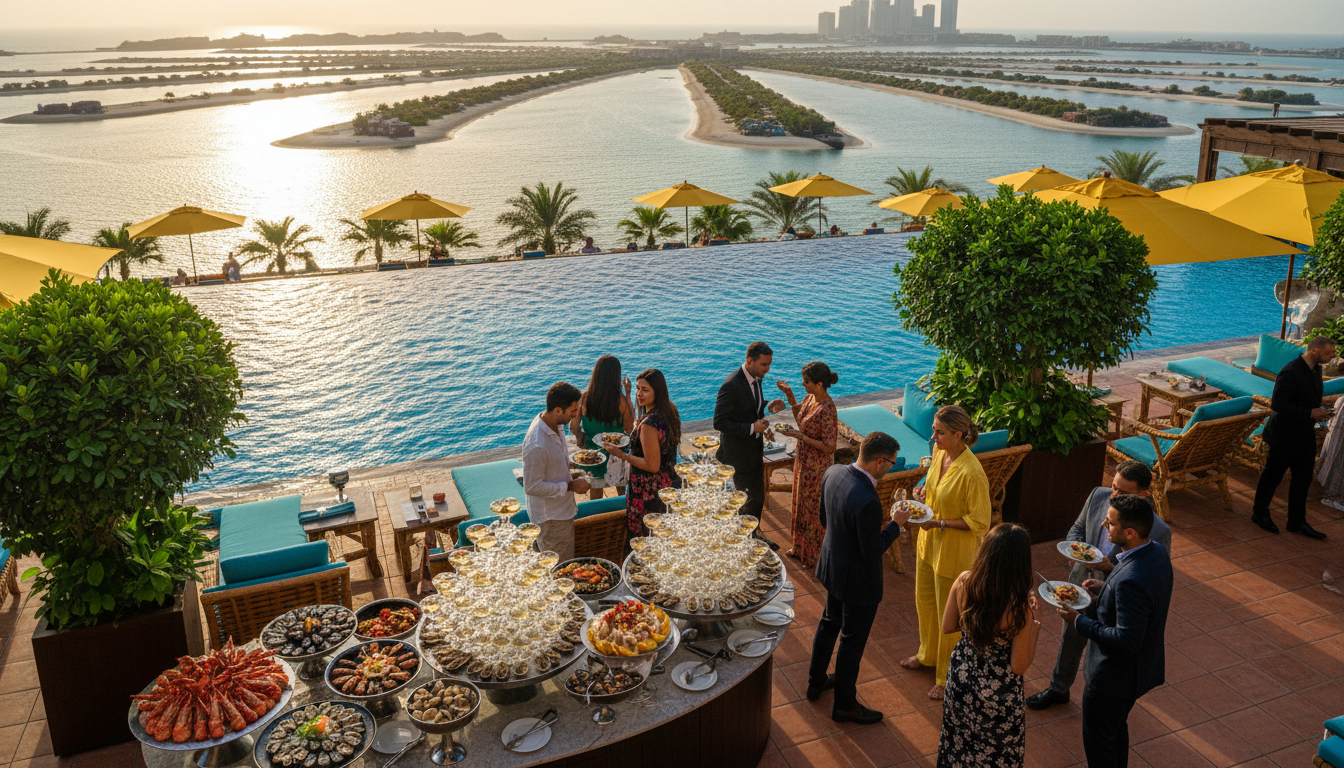 Aerial view of a lavish Dubai brunch spread with champagne towers, seafood stations, and well-dresse
Fine Dining in Dubai: When to Splurge and When to Skip
Dubai has attracted an absurd concentration of celebrity chefs and Michelin-starred restaurants (the guide launched in Dubai in 2022). The high end can be genuinely world-class—but it can also be overpriced spectacle designed for Instagram rather than actual eating.
Worth Every Dirham
Trèsind Studio (2 Michelin stars) in DIFC has redefined what Indian fine dining can be. Chef Himanshu Saini's tasting menu (AED 850/$231 for 10 courses) includes dishes like butter chicken served in a sphere and deconstructed pani puri. Reservations open 30 days ahead and fill within hours.
Orfali Bros Bistro in Jumeirah (1 Michelin star) brings Syrian-Lebanese cuisine to a modern setting without losing its soul. The hummus alone—topped with spiced lamb and pine nuts—is worth the visit. Mains AED 80-150 ($22-41). One of the few starred restaurants where you can walk in for lunch.
11 Woodfire in Jumeirah has become Dubai's most talked-about restaurant, with a focus on live-fire cooking and Middle Eastern ingredients. The lamb shoulder (AED 295/$80, serves 2-3) needs to be ordered 24 hours ahead and arrives falling off the bone.
Ossiano at Atlantis The Palm puts you underwater—literally, dining surrounded by a massive aquarium. The seafood tasting menu (AED 1,100/$300) is expensive but includes genuinely rare ingredients and theatrical presentation. Worth it once for the experience.
Skip These Tourist Traps
Not every famous name delivers value in Dubai. A few honest assessments:
At.mosphere in the Burj Khalifa charges a premium for being 122 floors up, but the food is merely competent. The minimum spend (AED 550/$150 at dinner) buys you a view, not a memorable meal. Better to have drinks at the bar and eat elsewhere.
Nusr-Et (Salt Bae's place) is pure theater—the gold-wrapped steaks, the sunglasses, the salt-sprinkling. The meat is fine, but you're paying AED 1,500+ ($408+) for a steak that's no better than a good steakhouse at half the price.
Most hotel restaurants in Dubai Marina and JBR follow a formula: safe international menu, nice view, inflated prices. Unless specifically recommended, assume you can do better.
Cooking in Your Dubai Home Exchange: Markets and Ingredients
One of the greatest advantages of a home exchange in Dubai is access to ingredients that would cost a fortune—or be impossible to find—back home. The city's position as a trading hub means spices, seafood, and specialty products flow through from across Asia, Africa, and the Middle East.
Essential Markets for Home Cooks
Deira Fish Market (officially Waterfront Market, relocated to a modern facility) is where Dubai's restaurants source their seafood. Arrive before 8 AM for the best selection: hammour (local grouper), king prawns the size of your hand, whole red snapper, and seasonal catches from the Arabian Gulf. Prices are negotiable but expect to pay AED 40-80 ($11-22) per kilo for quality fish. Many stalls will clean and fillet your purchase for free.
Deira Spice Souq remains the best place for dried goods: saffron (AED 30-50/$8-14 per gram, versus $15+ in Western countries), dried limes, baharat spice blends, sumac, and za'atar. The vendors expect haggling—start at 40% of the asking price.
Ripe Market (Fridays and Saturdays at various locations) brings together local organic farms, artisan producers, and specialty food vendors. It's pricier than supermarkets but offers products you won't find elsewhere: locally grown microgreens, small-batch hot sauces, and fresh Arabic cheeses.
Carrefour Market of the World in Mall of the Emirates has an international section that rivals specialty stores in major Western cities. Japanese ingredients, Mexican chiles, Eastern European preserves—if an immigrant community exists in Dubai, Carrefour stocks their essentials.
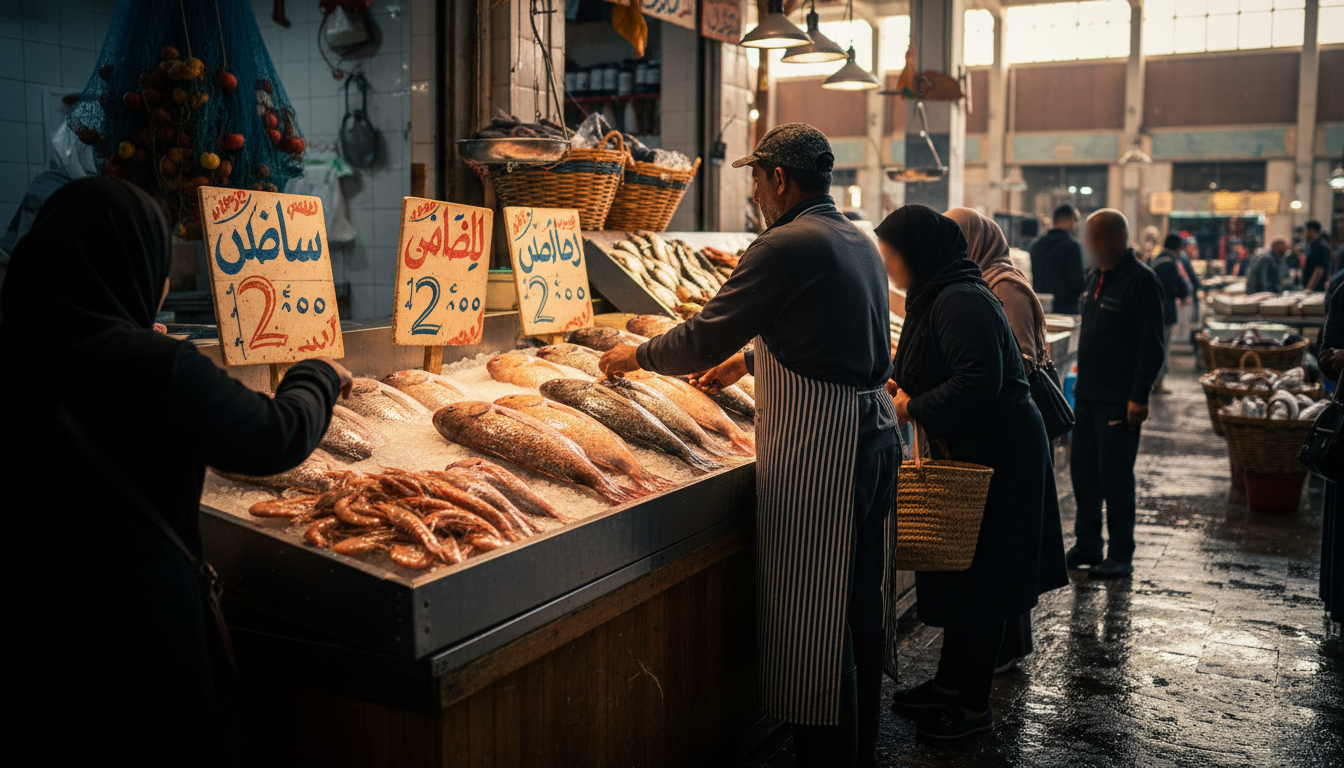 A fishmonger at Deira Fish Market arranging fresh hammour and prawns on ice, with customers examinin
What to Cook in Dubai
The home exchange kitchen advantage is particularly valuable for dishes that don't travel well to restaurants or cost a premium when eating out.
Breakfast spreads are where Dubai ingredients shine. Pick up fresh manakish (flatbread with za'atar) from any bakery, labneh from the dairy section, local honey, and Arabic coffee from a spice vendor. A breakfast that would cost AED 80+ ($22) at a hotel can be assembled for AED 30 ($8).
Grilled meats benefit from Dubai's excellent butchers. The Pakistani and Iranian shops in Deira sell pre-marinated kebabs ready for your grill or oven. A kilo of lamb koobideh (AED 60/$16) feeds four people generously.
Seafood is the obvious choice given the market access. Whole grilled hammour with garlic and lemon—the simplest preparation—showcases the fish's quality. Most home exchange properties in Dubai have at least basic cooking facilities, and many in newer buildings include outdoor grills.
Emirati Cuisine: The Rare Local Food Experience
Here's something most Dubai food guides won't tell you directly: Emirati cuisine is almost impossible to find in Dubai. Emiratis make up less than 12% of the population, traditional dishes are time-intensive to prepare, and there's little commercial incentive to open Emirati restaurants when the customer base is so small.
But it does exist, and seeking it out offers a glimpse into the region's culinary heritage before oil wealth transformed everything.
Where to Find Authentic Emirati Food
Al Fanar Restaurant in Festival City recreates a 1960s Emirati home, complete with traditional architecture and staff in period dress. The food—machboos (spiced rice with meat), harees (wheat porridge with lamb), luqaimat (sweet dumplings)—is genuinely traditional, if slightly sanitized for tourists. Mains AED 55-95 ($15-26).
Arabian Tea House in Al Fahidi Historical Neighbourhood serves Emirati breakfast (balaleet, eggs with sweet vermicelli, plus Arabic bread with cheese and date syrup) in a restored courtyard house. It's touristy but charming, and the food is accurate. Breakfast AED 45-70 ($12-19).
SMCCU Cultural Meals (Sheikh Mohammed Centre for Cultural Understanding) offers weekly lunches hosted by Emirati nationals who explain the dishes and answer questions about local culture. It's part meal, part cultural exchange, and one of the few ways to eat Emirati food while actually talking to Emiratis. AED 100 ($27) including the program.
For home cooks, Emirati dishes are surprisingly accessible to make. Machboos (essentially a spiced rice pilaf with meat) requires ingredients available at any Dubai supermarket. The Arabic cooking YouTube channel "Cooking with Fatima" offers authentic recipes from an Emirati home cook.
Neighborhood Food Guides: What to Eat Where
Depending on where your home exchange is located, here's how to maximize the food scene in your immediate area.
If You're in Dubai Marina or JBR
The Marina is convenient but culinarily predictable. For better options:
- Pier 7 at Dubai Marina Mall stacks seven restaurants vertically, with Asia Asia (pan-Asian, AED 150-250/$41-68 per person) offering the best food-to-view ratio
- Catch 22 on The Walk at JBR does solid fish and chips (AED 75/$20) with beach views
- Bu Qtair in Jumeirah 1 (20 minutes by taxi) is the famous fish shack where you pick your catch, they fry it, and you eat on plastic tables—AED 50-80 ($14-22) for a feast
- The Spinneys supermarket in Marina Mall has a surprisingly good prepared food section for quick home meals
If You're in Downtown Dubai or Business Bay
You're surrounded by Dubai Mall's overwhelming restaurant options, but better choices exist nearby:
- Al Makan in Souk Al Bahar serves excellent Lebanese food with Burj Khalifa views at half the price of neighboring restaurants (mains AED 60-90/$16-25)
- Tom&Serg in Al Quoz (15 minutes by taxi) pioneered Dubai's specialty coffee scene and does all-day brunch better than most hotels
- Pickl in Business Bay makes Dubai's best smash burgers (AED 45-65/$12-18)
- The Waitrose in Dubai Mall has a food hall with quality prepared meals and ingredients for cooking
 Interior of a cozy Dubai caf with exposed brick, specialty coffee equipment, and patrons working on
If You're in Jumeirah
The best food corridor in Dubai. Walking distance options:
- Operation Falafel does exactly what the name suggests, exceptionally well (AED 25-40/$7-11)
- Comptoir 102 combines a café, organic grocery, and lifestyle shop—the avocado toast (AED 55/$15) is a Dubai institution
- 3Fils is a tiny Japanese-Peruvian spot that's become one of Dubai's hardest reservations (book weeks ahead, AED 200-350/$55-95 per person)
- Ravi (the famous Pakistani spot) is a 10-minute taxi ride in Satwa
If You're in Deira or Bur Dubai
You've hit the jackpot for affordable, authentic food. Within walking distance:
- Al Ustad Special Kebab has been serving Iranian food since 1978 (mains AED 40-70/$11-19)
- Ashwaq Cafeteria does the best chapati wraps in Dubai (AED 8-15/$2-4)
- Sind Punjab for Sindhi comfort food (AED 25-45/$7-12)
- XVA Café in Al Fahidi for a refined break—Emirati-inspired dishes in an art gallery courtyard (AED 50-80/$14-22)
Practical Tips for Navigating Dubai's Food Scene
Timing Matters More Than You Think
Dubai operates on a schedule that confuses first-time visitors. The weekend is Friday-Saturday (not Saturday-Sunday). Many restaurants close between 3-7 PM, especially in Old Dubai. During Ramadan (dates shift yearly—check before booking your home exchange), eating in public during daylight hours is illegal, though hotels and some restaurants serve discreetly to non-Muslims.
Peak dining times: Friday brunch (11 AM-3 PM), Thursday night dinner (the start of the weekend), and any evening during the cooler months (November-March). Book ahead for popular spots.
Alcohol in Dubai: The Rules
Dubai's alcohol laws relaxed significantly in 2023, but confusion persists. The current situation:
- Restaurants need a license to serve alcohol—most mid-range and upscale places have one
- You can buy alcohol from licensed stores (African + Eastern, MMI) with a free personal license
- Drinking in public or being visibly drunk in public remains illegal
- Many of the best cheap restaurants (Pakistani, Indian, Iranian) don't serve alcohol
For home exchange travelers, having a kitchen means you can enjoy a drink at home before or after eating at unlicensed restaurants. A bottle of wine from MMI costs AED 50-150 ($14-41), versus AED 60-100 ($16-27) per glass at restaurants.
Budget Breakdown: What Food Actually Costs
The food scene spans an enormous price range. Realistic daily food budgets:
Budget (AED 100-150/$27-41 per day): Street food, cafeteria restaurants, cooking at home with market ingredients. Entirely achievable and genuinely delicious.
Mid-range (AED 250-400/$68-109 per day): Mix of casual restaurants, one nice dinner, coffee shops. The sweet spot for most travelers.
Splurge (AED 600+/$163+ per day): Fine dining, Friday brunch, hotel restaurants. Easy to spend this and more.
Home exchange travelers typically save 40-60% on food costs compared to hotel stays, primarily by cooking breakfast and some dinners, and by avoiding the hotel restaurant markup.
The Dubai Food Scene Calendar: When to Visit
The food scene has distinct seasons that affect what's available and enjoyable.
November-February is peak season: pleasant weather (20-25°C), outdoor dining is comfortable, and the city hosts the Dubai Food Festival (usually late February). Prices and crowds are highest, but so is the quality of the experience.
March-April offers shoulder-season value with still-tolerable temperatures. Ramadan often falls in this period—a unique experience if you're prepared, but it limits daytime eating options.
May-September is brutal. Temperatures exceed 40°C, humidity is oppressive, and outdoor dining is impossible. Many restaurants offer summer deals (up to 50% off), and the city is emptier. Home exchanges are easier to find and often cheaper. Just plan to eat indoors and travel by air-conditioned taxi or metro.
October is transitional—still hot but improving, with fewer crowds than peak season.
Making the Most of Your Dubai Home Exchange Kitchen
A few final thoughts on why kitchen access from a home exchange transforms the experience here.
Breakfast changes everything. Dubai hotel breakfasts are either extravagant buffets (AED 150-300/$41-82) or disappointing continental spreads. With a kitchen, you can create an Arabic breakfast spread—fresh bread, labneh, za'atar, honey, Arabic coffee—for a fraction of the cost and arguably better quality.
Then there's the matter of leftovers. Dubai portions are often enormous, especially at South Asian and Middle Eastern restaurants. Being able to take food home and reheat it the next day means less waste and more value.
But the markets are where it really matters. Without a kitchen, visiting Deira Fish Market or the Spice Souq is just tourism. With a kitchen, it becomes the foundation of a memorable meal. The experience of selecting your own hammour at the market and cooking it that evening connects you to the city in a way restaurant dining never can.
The Dubai food scene rewards curiosity and punishes laziness. The easy path—hotel restaurants, mall food courts, tourist-trap spots near major attractions—will leave you wondering what the fuss is about. The rewarding path requires some effort: taking the metro to Deira, navigating a menu in Arabic, trusting the taxi driver's recommendation.
A home exchange provides the base camp for that exploration. You have a neighborhood, a local supermarket, a kitchen to return to. You're not a tourist passing through—you're temporarily living in one of the world's most fascinating food cities.
And that shawarma at 10 PM on Al Rigga Road? It tastes even better when you know you can walk home afterward.
Frequently Asked Questions
Is Dubai expensive for food compared to other major cities?
Dubai's food costs span an extreme range. Street food and local restaurants in Deira and Bur Dubai cost less than comparable meals in London or New York—expect AED 30-50 ($8-14) for a full meal. Fine dining, hotel restaurants, and tourist areas charge premium prices, often 20-30% more than equivalent quality in European capitals. Home exchange travelers who cook some meals and seek out local spots can eat exceptionally well on AED 150-250 ($41-68) per day.
What's the best neighborhood in Dubai for food lovers doing a home exchange?
Jumeirah offers the ideal balance for culinary exploration. You're within easy reach of Old Dubai's authentic restaurants via the Dubai Metro (15-20 minutes to Deira), surrounded by Jumeirah Road's diverse dining scene, and close to Al Quoz's creative food spaces. Business Bay and Downtown Dubai are convenient alternatives with excellent restaurant access, though slightly more expensive. Deira itself offers the most authentic food but fewer modern home exchange properties.
Can I drink alcohol with meals in Dubai restaurants?
Most mid-range and upscale restaurants in Dubai are licensed to serve alcohol. Many of the best budget restaurants—particularly Pakistani, Indian, and Iranian spots—don't have licenses. There's no prohibition on eating at unlicensed restaurants after having drinks elsewhere. Since 2023, tourists can purchase alcohol from licensed stores (African + Eastern, MMI) without a permit, making home consumption during your exchange straightforward. Public intoxication remains illegal.
What should I eat during Ramadan in Dubai?
Ramadan transforms the food scene. During daylight hours, eating in public is prohibited, though hotels and some restaurants serve non-Muslims discreetly. The real experience comes after sunset: iftar buffets (the meal breaking the fast) are offered at most hotels and many restaurants, featuring traditional dishes rarely available otherwise. Prices range from AED 150-400 ($41-109) per person. The late-night food scene becomes especially vibrant, with many restaurants staying open until 2-3 AM. Check Islamic calendar dates before booking your home exchange—Ramadan shifts 10-11 days earlier each year.
Where can I find authentic Emirati food in Dubai?
Authentic Emirati cuisine is genuinely rare in Dubai, as Emiratis comprise less than 12% of the population. Your best options are Al Fanar Restaurant in Festival City (traditional dishes in a heritage setting, AED 55-95/$15-26), Arabian Tea House in Al Fahidi for Emirati breakfast, and the SMCCU Cultural Meals program (AED 100/$27) which includes food and cultural discussion with Emirati hosts. For home cooking, machboos (spiced rice with meat) uses readily available ingredients—baharat spice blend, saffron, dried limes—from any Dubai supermarket or the Spice Souq.

Published by
SwappaHome
SwappaHome Editorial Team
Home Exchange & Slow Travel Editorial
The SwappaHome Editorial Team brings together travel research, home-exchange community insights, and platform data to produce practical guides for first-time and experienced home swappers. Every article cites real platforms, current market rates, and verifiable city-level facts so readers can make informed decisions without guessing.
Ready to try home swapping?
Join SwappaHome and start traveling by exchanging homes. Get 7 free credits when you sign up!
Related articles
Bachelor and Bachelorette Parties in Singapore: The Complete Home Swap Group Guide for 2026
Planning a bachelor or bachelorette party in Singapore? Discover how home swapping lets groups of 6-12 stay together in luxury condos, saving thousands while partying in Marina Bay.

Cycling in Lisbon: 7 Home Swap Bike Tour Itineraries for Every Rider
Discover the best cycling routes in Lisbon with these home swap bike tour itineraries—from waterfront paths to hilltop adventures, all starting from your borrowed home.

Graduation Trip to Barcelona: How Home Swapping Gives New Graduates the Ultimate Celebration
Planning a graduation trip to Barcelona? Discover how home swapping lets new graduates explore Spain's most vibrant city without the hostel crowds or hotel costs.