Cycling in Lisbon: 7 Home Swap Bike Tour Itineraries for Every Rider

SwappaHome Editorial Team
Home Exchange & Slow Travel Editorial
Discover the best cycling routes in Lisbon with these home swap bike tour itineraries—from waterfront paths to hilltop adventures, all starting from your borrowed home.
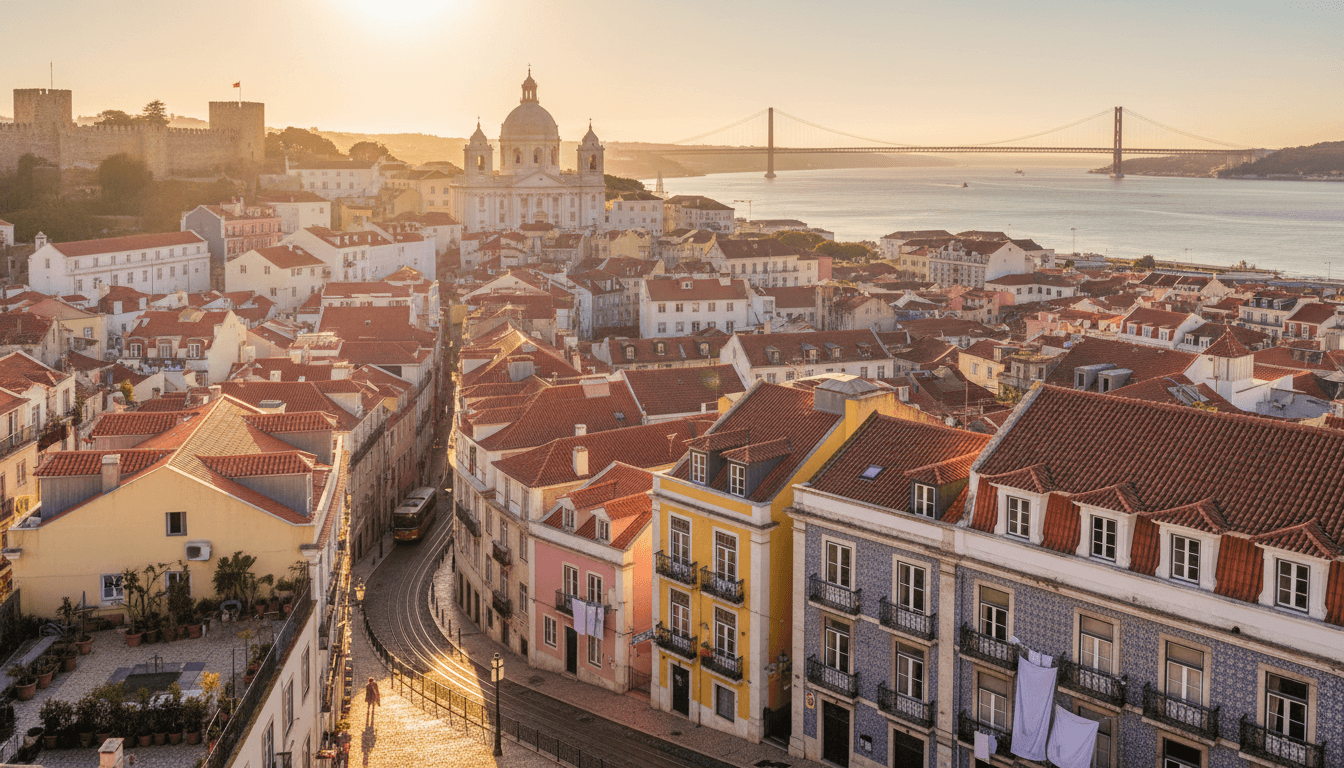
The tram 28 rattles past as you unlock a borrowed bike from the courtyard of a sun-bleached apartment in Alfama. It's 7:30 AM, the cobblestones are still cool, and the Tagus River glints copper below. This is cycling in Lisbon—not from a hotel lobby, but from a home swap that puts you in the heart of Europe's hilliest capital with a local's garage, a neighbor's route tips scribbled on a napkin, and seven days of two-wheeled exploration ahead.
Lisbon has quietly become one of Europe's most compelling cycling cities. Not despite its famous seven hills, but because of the creative infrastructure that's emerged to work around them—riverfront cycleways, funicular-assisted routes, and e-bike rental networks that turn cardiac-arrest climbs into manageable adventures. Combine that with the home swap advantage (free accommodation, local bikes, neighborhood starting points) and you've got something hotels simply can't match.
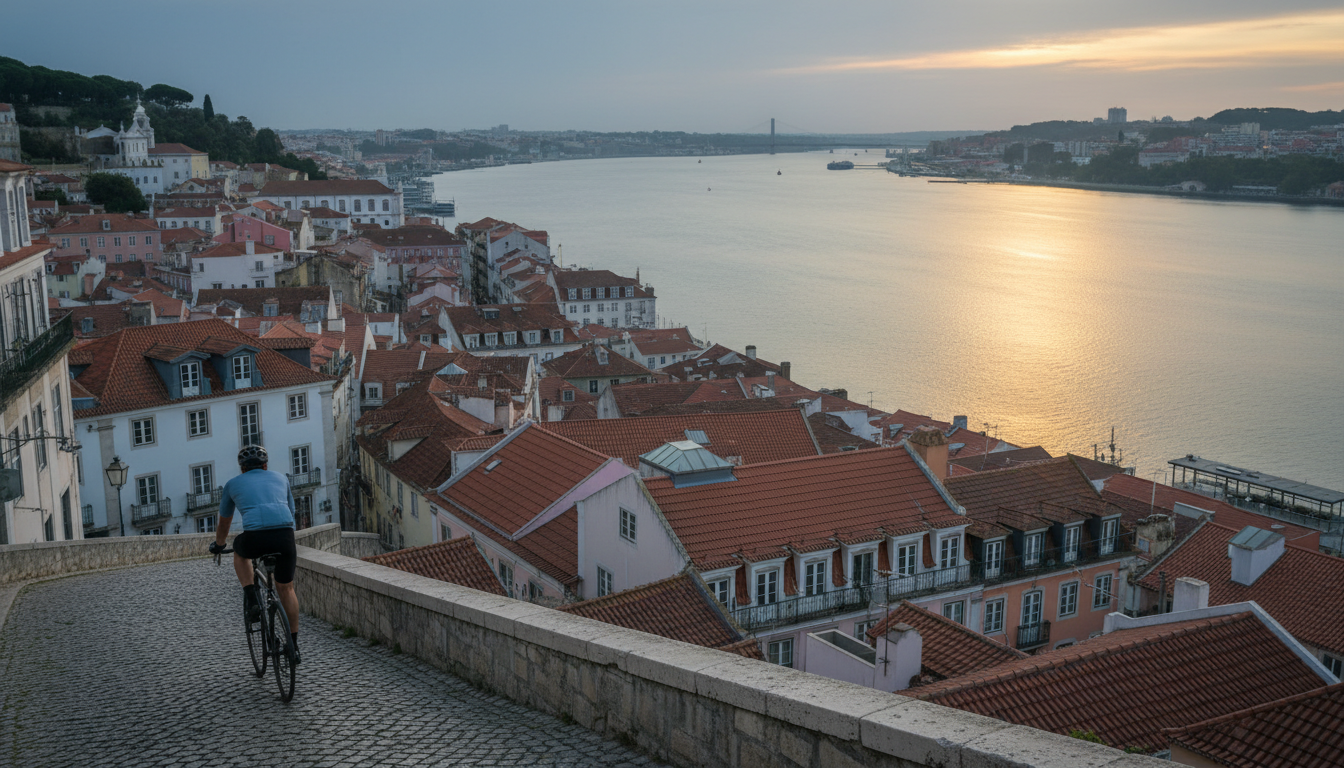 Early morning cyclist descending from Alfama toward the Tagus River, terracotta rooftops cascading b
Why Cycling in Lisbon Works Better from a Home Swap
Here's what most visitors miss: Lisbon's best cycling doesn't start in the center. It starts in the residential neighborhoods where SwappaHome members actually live—Alcântara, Belém, Marvila, Campo de Ourique. These areas offer direct access to the city's expanding 200+ kilometers of bike paths, without the tourist crush of Baixa or the punishing grades of Bairro Alto.
When you're staying in someone's actual home, you inherit their cycling infrastructure. That might mean a Dutch-style city bike in the hallway, a pump and basic tools in the closet, or—increasingly common among Lisbon's eco-conscious residents—an e-bike charging in the corner. SwappaHome members frequently mention bike availability in their listings, and it's worth filtering for this if cycling is central to your trip.
The financial math is straightforward. Bike rentals in Lisbon run €15-25 per day for a decent city bike, €35-50 for an e-bike. Over a week, that's €105-350 (roughly $115-385 USD) just for wheels. A home swap with an included bike eliminates that cost entirely—on top of the accommodation savings that typically run €80-150 per night in central Lisbon neighborhoods.
But the real advantage isn't financial. It's logistical. You start your ride from a residential street, not a rental shop in Praça do Comércio. You can leave mid-ride for a three-hour lunch at a tasca in Graça, knowing the bike is yours for the week. You return sweaty and triumphant to a shower that's actually yours, not a hotel room you're checking out of in two hours.
Itinerary 1: The Tagus Riverfront Classic (Belém to Parque das Nações)
This is Lisbon's signature cycling route, and for good reason. The 17-kilometer waterfront path from Belém to Parque das Nações is almost entirely flat, fully separated from traffic, and passes virtually every major landmark the city has to offer.
Best starting point: A home swap in Belém or Alcântara puts you directly on the path. Listings in these neighborhoods often include bikes—the area's cycling culture runs deep.
The route: Begin at Torre de Belém (the 16th-century fortress that's become Lisbon's postcard image) and head east. You'll pass the Padrão dos Descobrimentos monument, the MAAT contemporary art museum with its undulating rooftop, and the industrial-chic LX Factory complex. Cross under the 25 de Abril Bridge—yes, it looks exactly like San Francisco's Golden Gate, and yes, there's a reason—and continue through the regenerated dockyards of Santos and Cais do Sodré.
The middle section along Ribeira das Naus offers the best waterfront café stops. A galão (Lisbon's version of a latte) runs about €1.50-2, and the pastel de nata at Manteigaria or Aloma will cost €1.30-1.50. Budget €8-12 for a leisurely breakfast stop.
Continue past the Praça do Comércio—Lisbon's grand riverside square—and along the increasingly modern waterfront toward Santa Apolónia station. The final stretch to Parque das Nações passes through former industrial zones now converted to parks and residential towers, culminating at the Oceanário de Lisboa and the striking Vasco da Gama Bridge.
Distance: 17 km one-way, 34 km round trip Elevation gain: Essentially flat (under 50 meters total) Time: 2-3 hours one-way with stops, full day for round trip with exploration Difficulty: Beginner-friendly
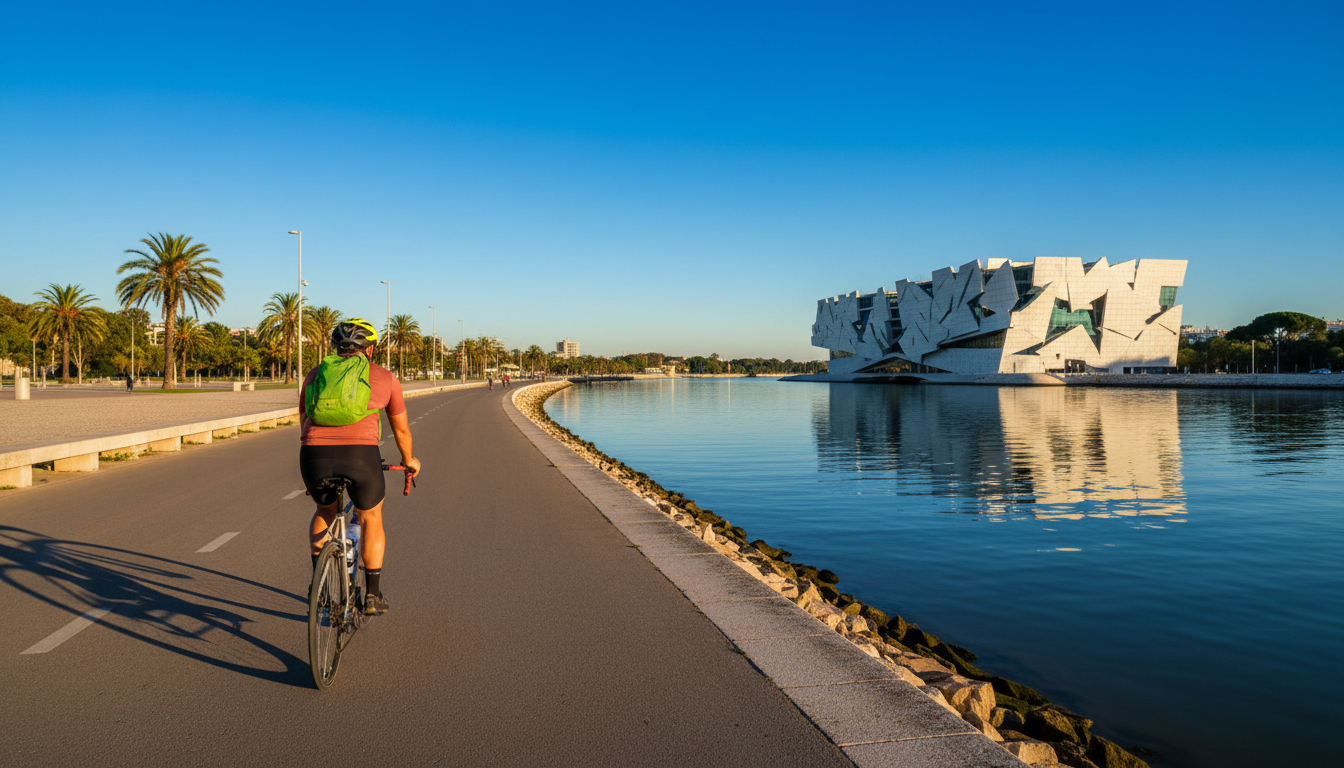 Cyclist on the wide riverside path near MAAT museum, the geometric white building reflecting in the
Itinerary 2: The Sintra Forest Escape (Day Trip from Lisbon)
Sintra sits 25 kilometers northwest of Lisbon, and while most tourists take the train, cycling there opens up the Sintra-Cascais Natural Park in ways the railway never could. This is a full-day adventure that rewards early starts and e-bike assistance.
Best starting point: A home swap in western Lisbon neighborhoods—Restelo, Belém, or Algés—cuts the urban cycling portion significantly. From Algés, you're already on the edge of the city.
The route: Take the riverside path west through Algés and Dafundo, then turn inland at Carcavelos. The climb begins gradually through Estoril's residential hills before steepening as you approach the Serra de Sintra. The final 8 kilometers gain nearly 400 meters of elevation—this is where an e-bike transforms the experience from grueling to exhilarating.
Once in Sintra, lock up and explore on foot. The Palácio da Pena (€14 entry, €20 with gardens) is the candy-colored Romantic palace that dominates every Portugal guidebook. The Quinta da Regaleira (€10) offers Gothic towers, initiatic wells, and gardens that feel lifted from a fantasy novel. For lunch, skip the overpriced tourist restaurants on the main square and cycle 2 kilometers to Café Saudade in São Pedro de Sintra—a local favorite with daily specials around €12-15.
The return: The descent through the forest is pure joy—cool air, eucalyptus scent, switchbacks through ancient estates. Many cyclists take the train back (bikes allowed on regional trains for €1.50 supplement), but the downhill ride is too good to miss if daylight permits.
Distance: 50-60 km round trip depending on route Elevation gain: 500-700 meters Time: 6-8 hours including sightseeing Difficulty: Intermediate to challenging (easier with e-bike)
Itinerary 3: The Seven Hills Challenge (For the Ambitious)
Lisbon's reputation as a cycling nightmare stems from its historic center—the seven hills that give the city its Rome-like topography. But here's the thing: those hills are spectacular. And with the right approach, they're rideable.
Best starting point: A home swap in Príncipe Real or Campo de Ourique gives you a hilltop base, meaning you start high and can choose your descents.
The route: This is less a linear itinerary and more a greatest-hits tour of Lisbon's miradouros (viewpoints). From Príncipe Real, descend to Bairro Alto and climb to the Miradouro de São Pedro de Alcântara. Drop down to Rossio, then grind up the brutal Calçada da Glória (or cheat with the funicular—no judgment). Continue to the Miradouro da Graça, the highest viewpoint in central Lisbon, where the entire city spreads below you.
The descent through Graça and into Alfama is technical—narrow lanes, blind corners, slippery cobblestones. Walk the steepest sections. The reward is arriving at the Miradouro das Portas do Sol, where the terracotta rooftops of Alfama tumble toward the river in the most photographed view in Portugal.
Practical notes: This route is genuinely difficult on a regular bike. E-bike assistance changes everything—what would be a sweaty, walk-heavy slog becomes a manageable urban adventure. If your home swap doesn't include an e-bike, Gira (Lisbon's bike-share system) has e-bikes available for €2 per 45 minutes, with stations throughout the center.
Distance: 12-15 km Elevation gain: 400-500 meters (cumulative, with multiple climbs) Time: 3-4 hours with viewpoint stops Difficulty: Challenging
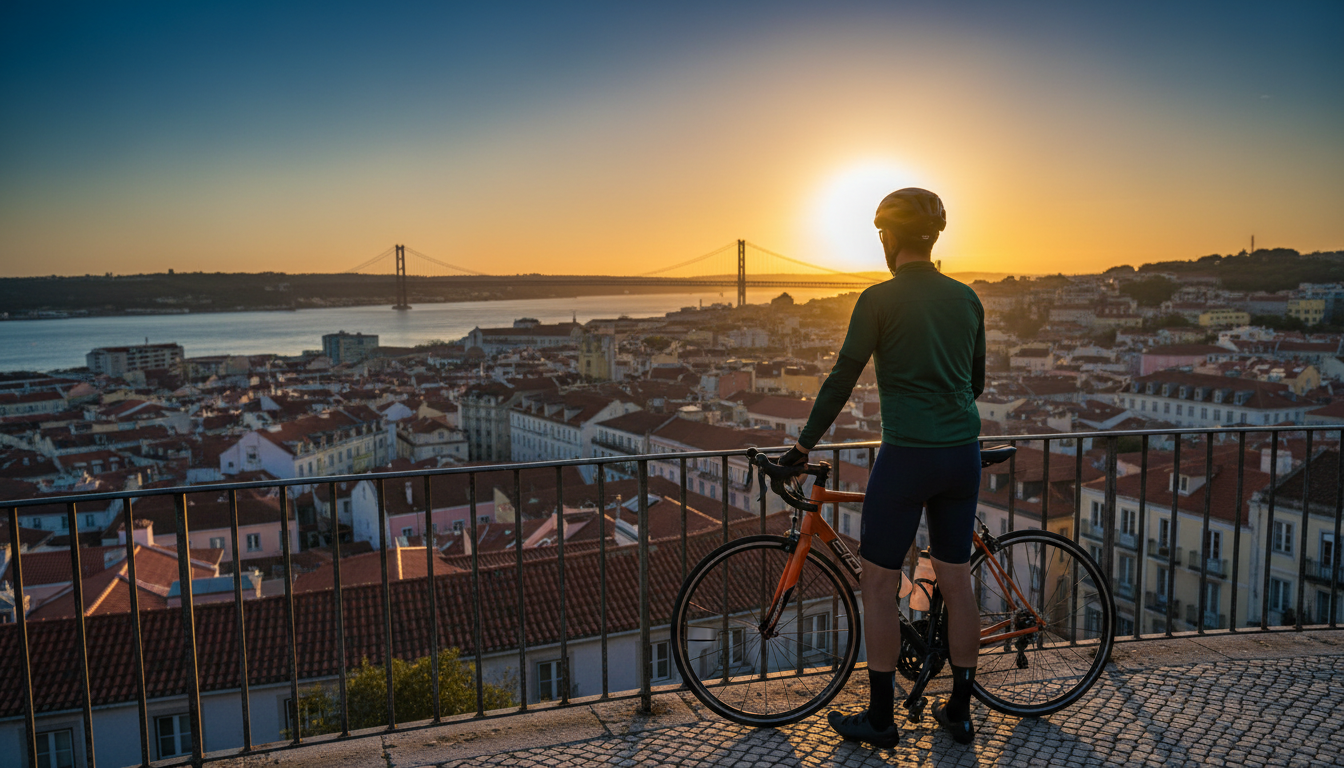 Cyclist pausing at Miradouro da Graa, bike leaning against the railing, panoramic view of Lisbons re
Itinerary 4: The Arrábida Coast Ride (South of the Tagus)
Cross the river and Lisbon transforms. The Arrábida Natural Park, 40 kilometers south, offers some of the most dramatic coastal cycling in Portugal—limestone cliffs, hidden beaches, and roads that cling to hillsides above impossibly blue water.
Best starting point: This works best as a car-assisted day trip, but adventurous cyclists can take the ferry from Cais do Sodré to Cacilhas (€1.30, bikes free) and ride from there. A home swap in Almada or Setúbal puts you closer to the action.
The route: The classic Arrábida loop starts in Sesimbra, climbs through the natural park, and descends to the beaches of Portinho da Arrábida and Figueirinha. The road through the park (N379-1) is narrow and winding, with limited shoulder—early morning rides (before 9 AM) avoid most car traffic.
The highlight is the descent to Portinho da Arrábida, a crescent beach backed by forested cliffs. The water is startlingly clear—this is one of the few places in the Lisbon region where swimming conditions are genuinely pristine. Pack a picnic; the beach restaurant runs pricey (€18-25 for basic fish dishes).
Distance: 45-60 km round trip depending on route Elevation gain: 600-900 meters Time: 5-7 hours Difficulty: Intermediate to challenging
Itinerary 5: The Marvila Art District Loop (Urban Exploration)
Marvila is Lisbon's Brooklyn—a former industrial zone now colonized by breweries, galleries, and creative studios. It's flat, it's fascinating, and it's almost entirely overlooked by tourists.
Best starting point: A home swap in Marvila itself is ideal (listings here tend to be larger and more affordable than central neighborhoods). Alternatively, start from Santa Apolónia and ride east.
The route: Begin at the Braço de Prata complex, a converted military warehouse now housing restaurants, a bookshop, and event spaces. Continue to Fábrica de Braço de Prata, then wind through the industrial streets to Dois Corvos brewery (craft beers €4-6, excellent food). The street art in this area rivals Berlin's—entire building facades covered in murals by artists like Vhils (who has a studio nearby) and Bordalo II.
Loop back via the waterfront, passing the new Beato Creative Hub and the historic Madre Deus church. End at LX Factory if you want contrast—the polished, tourist-friendly version of what Marvila is becoming.
Distance: 10-15 km Elevation gain: Minimal (under 50 meters) Time: 3-4 hours with gallery and brewery stops Difficulty: Beginner-friendly
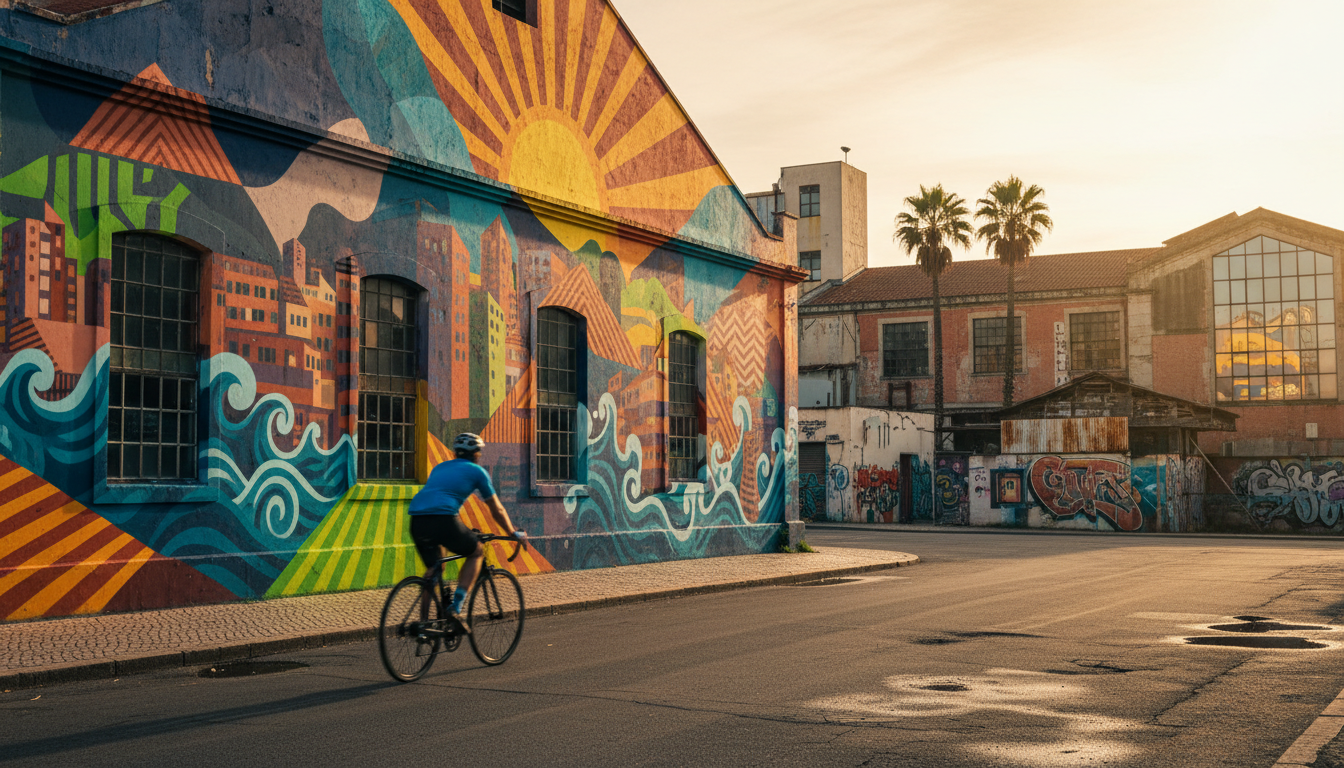 Cyclist passing a massive street art mural in Marvila, industrial buildings and converted warehouses
Itinerary 6: The Cascais Coastal Path (Seaside Serenity)
The Lisbon-Cascais cycling path ranks among the city's most popular recreational routes, and deservedly so. It's 25 kilometers of dedicated cycleway along the coast, passing beaches, fishing villages, and Belle Époque architecture.
Best starting point: A home swap in Belém or Algés puts you directly on the path. Alternatively, take the train to Cais do Sodré and start from there.
The route: Head west from Belém along the river, passing the Champalimaud Foundation (the futuristic medical research center) and continuing through Algés and Dafundo. The path hugs the coast through Oeiras, passing small beaches and seafood restaurants.
The section from São João do Estoril to Cascais is the most scenic—the path runs directly above the water, with waves crashing below. In Cascais, lock up and explore the old town, the marina, and the Casa das Histórias Paula Rego (€5, dedicated to Portugal's greatest contemporary artist).
For lunch, skip the tourist traps on the main square. Marisco na Praça (in the municipal market) serves excellent seafood at reasonable prices—a plate of grilled sardines with salad runs about €12-15.
The return: The ride back offers different light and perspectives. Alternatively, take the train from Cascais (bikes allowed, €2.50 ticket plus €1.50 bike supplement).
Distance: 25 km one-way, 50 km round trip Elevation gain: Minimal (under 100 meters) Time: 2-3 hours one-way, full day for round trip with exploration Difficulty: Beginner-friendly
Itinerary 7: The Monsanto Forest Circuit (Nature in the City)
Monsanto is Lisbon's lung—a 1,000-hectare forest park on the western edge of the city. It's crisscrossed with mountain bike trails, fire roads, and paved paths that offer genuine nature immersion minutes from downtown.
Best starting point: A home swap in Benfica, Campolide, or Alcântara provides direct access to the park entrances.
The route: Enter via the Monsanto cycling path from Alcântara, which climbs gradually through eucalyptus and pine forest. The main circuit follows fire roads through the park's interior, with optional detours to viewpoints like the Alto da Serafina (panoramic views of the 25 de Abril Bridge and the river).
For mountain bikers, the Monsanto Bike Park offers purpose-built trails ranging from beginner-friendly flow tracks to technical descents. The park is free to use and well-maintained.
The forest is also home to several restaurants with terraces overlooking the city. Ponto Final (not to be confused with the famous one in Cacilhas) serves traditional Portuguese food in a garden setting—expect €15-20 for a full meal.
Distance: 15-25 km depending on route Elevation gain: 200-400 meters Time: 2-4 hours Difficulty: Beginner to intermediate (depends on trail choice)
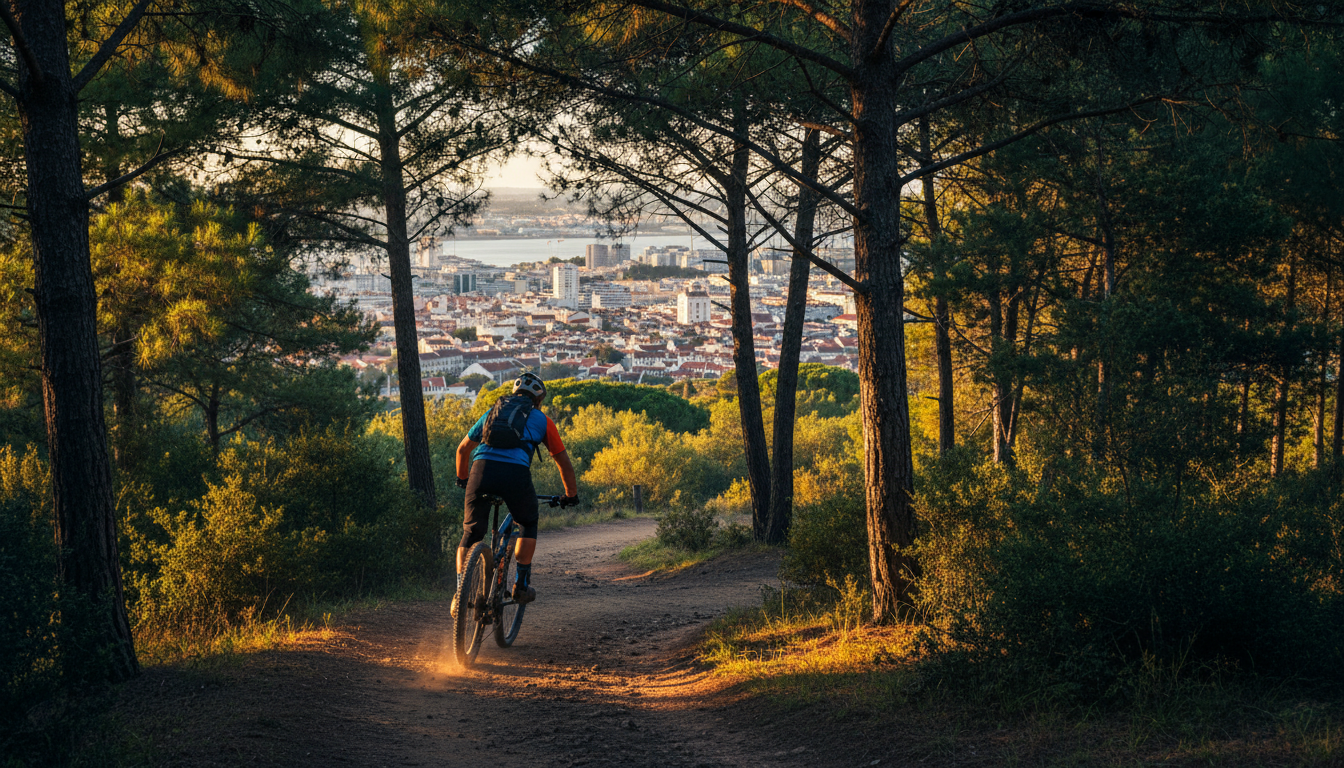 Mountain biker on a forest trail in Monsanto, dappled sunlight through pine trees, glimpse of the ci
Practical Cycling Tips for Lisbon Home Swappers
Bike availability: When searching SwappaHome listings in Lisbon, filter for mentions of bikes in the description. Many hosts explicitly offer bike use—it's become a selling point in cycling-friendly neighborhoods like Belém, Marvila, and Alcântara.
Rental backup: If your home swap doesn't include a bike, Lisbon has solid rental options. Bikeiberia near Cais do Sodré offers quality city bikes from €15/day and e-bikes from €35/day. For longer rentals, negotiate weekly rates (typically 20-30% discount).
Gira bike-share: Lisbon's public bike-share system has 1,400+ bikes (including e-bikes) at 140 stations. The annual pass is €25, daily passes €2—e-bikes cost €2 per 45 minutes on top. Useful for one-way trips or spontaneous rides, though availability can be spotty in tourist areas.
Safety considerations: Portuguese drivers are generally respectful of cyclists, but the historic center requires caution. Cobblestones are slippery when wet, tram tracks can catch wheels, and some streets are too narrow for safe cycling. When in doubt, walk.
Best seasons: April-June and September-October offer ideal cycling weather—warm but not oppressive, with minimal rain. July-August temperatures regularly exceed 35°C (95°F), making midday cycling inadvisable. Winter (December-February) is mild but wet; pack rain gear.
What to pack: Lisbon's bike infrastructure is good but not perfect. Bring a basic repair kit, a quality lock, and lights for evening rides. Helmets aren't legally required for adults but are strongly recommended.
The Home Swap Advantage: Why It Transforms Cycling in Lisbon
What the SwappaHome community consistently reports about cycling in Lisbon comes down to this: the experience is fundamentally different when you're based in a home rather than a hotel.
The practical advantages are obvious—free bikes, local starting points, flexible schedules. But the deeper benefit is integration. You're cycling from a neighborhood, not a tourist zone. You discover the bakery where locals grab pastries at 7 AM, the bike shop where the mechanic actually speaks English, the shortcut through the park that isn't on any map.
One pattern emerges clearly from member feedback: the best cycling home swaps in Lisbon are slightly outside the historic center. A listing in Marvila or Alcântara might seem less glamorous than one in Alfama, but it puts you on the bike path network immediately, with flat terrain in every direction. The tram ride to the center takes 15 minutes; the cycling access is incomparably better.
The credit system makes this especially practical. You're earning credits by hosting guests in your own home, then spending them on stays in cycling-friendly Lisbon neighborhoods. There's no price premium for waterfront locations or homes with bike storage—one credit equals one night, everywhere.
Making It Work: Your Lisbon Cycling Home Swap Checklist
Before confirming your swap, ask your host:
- Is a bike available? What type (city bike, e-bike, mountain bike)?
- Is there secure bike storage?
- Are there any local cycling routes they recommend?
- What's the nearest bike shop for repairs?
- Are there any bike-share stations nearby?
Pack these essentials:
- Lightweight helmet (if your host's bike doesn't include one)
- Basic multi-tool and spare tube
- Quality U-lock (theft happens, even in safe neighborhoods)
- Cycling-specific sunglasses (Lisbon light is intense)
- Lightweight rain jacket (weather changes fast near the coast)
The Honest Assessment: Is Lisbon Actually Good for Cycling?
The reputation precedes it: Lisbon is hilly, cobblestoned, and chaotic. That reputation isn't wrong—for the historic center. But modern Lisbon has invested heavily in cycling infrastructure, and the results are genuinely impressive.
The riverfront path from Belém to Parque das Nações is world-class—wide, smooth, scenic, and almost entirely car-free. The Cascais coastal route rivals anything in the Netherlands for accessibility. The Monsanto forest offers legitimate mountain biking minutes from downtown.
The hills remain challenging. Anyone claiming Lisbon is "easy cycling" is either selling e-bikes or stretching the truth. But with strategic route planning—or e-bike assistance—the hills become features rather than obstacles. The views from the miradouros are earned, and they're spectacular.
The home swap element transforms the calculation entirely. You're not trying to cram cycling into a hotel-based itinerary; you're building a trip around cycling, with a local base that supports it. That's a fundamentally different—and better—way to experience the city.
Lisbon isn't Amsterdam. It's not Copenhagen. But it's become a genuinely compelling cycling destination, especially for travelers willing to venture beyond the tourist center. And for home swappers with access to local bikes and neighborhood starting points, it's one of Europe's most rewarding cities to explore on two wheels.
Frequently Asked Questions
Is cycling in Lisbon safe for tourists?
Lisbon has become significantly safer for cycling in recent years, with over 200 kilometers of dedicated bike paths and increasing driver awareness. The riverfront routes are fully separated from traffic and suitable for all skill levels. The historic center requires more caution—cobblestones, tram tracks, and narrow streets present challenges. Stick to dedicated paths when possible, and walk through the steepest or most crowded areas.
Can you cycle up Lisbon's hills on a regular bike?
Technically yes, but it's demanding. The steepest grades in Alfama and Bairro Alto exceed 15%, which is challenging even for fit cyclists. E-bikes have transformed hill cycling in Lisbon—what was previously exhausting becomes manageable. If your home swap doesn't include an e-bike, consider renting one (€35-50/day) or using Gira's e-bike share for hill-heavy routes.
What's the best time of year for cycling in Lisbon?
April through June and September through October offer ideal conditions—temperatures between 18-25°C (64-77°F), minimal rain, and manageable tourist crowds. July and August bring temperatures exceeding 35°C (95°F), making midday cycling inadvisable. Winter is mild but wet; December through February sees the most rainfall, though dry spells are common.
How much does it cost to rent a bike in Lisbon for a week?
City bike rentals run €15-25 per day, or roughly €90-150 for a week with multi-day discounts. E-bikes cost €35-50 per day, or €200-300 weekly. Gira bike-share offers an annual pass for €25, with e-bikes costing €2 per 45 minutes additionally. A home swap with an included bike eliminates these costs entirely—a significant saving over a week-long cycling trip.
Are there good mountain biking trails near Lisbon?
Monsanto Forest Park offers the closest mountain biking, with purpose-built trails in the Monsanto Bike Park ranging from beginner flow tracks to technical descents. For more serious mountain biking, the Arrábida Natural Park (40 km south) and Sintra-Cascais Natural Park (25 km northwest) offer extensive trail networks through dramatic coastal and forest terrain. Both are accessible as day trips from Lisbon home swaps.

Published by
SwappaHome
SwappaHome Editorial Team
Home Exchange & Slow Travel Editorial
The SwappaHome Editorial Team brings together travel research, home-exchange community insights, and platform data to produce practical guides for first-time and experienced home swappers. Every article cites real platforms, current market rates, and verifiable city-level facts so readers can make informed decisions without guessing.
Ready to try home swapping?
Join SwappaHome and start traveling by exchanging homes. Get 7 free credits when you sign up!
Related articles
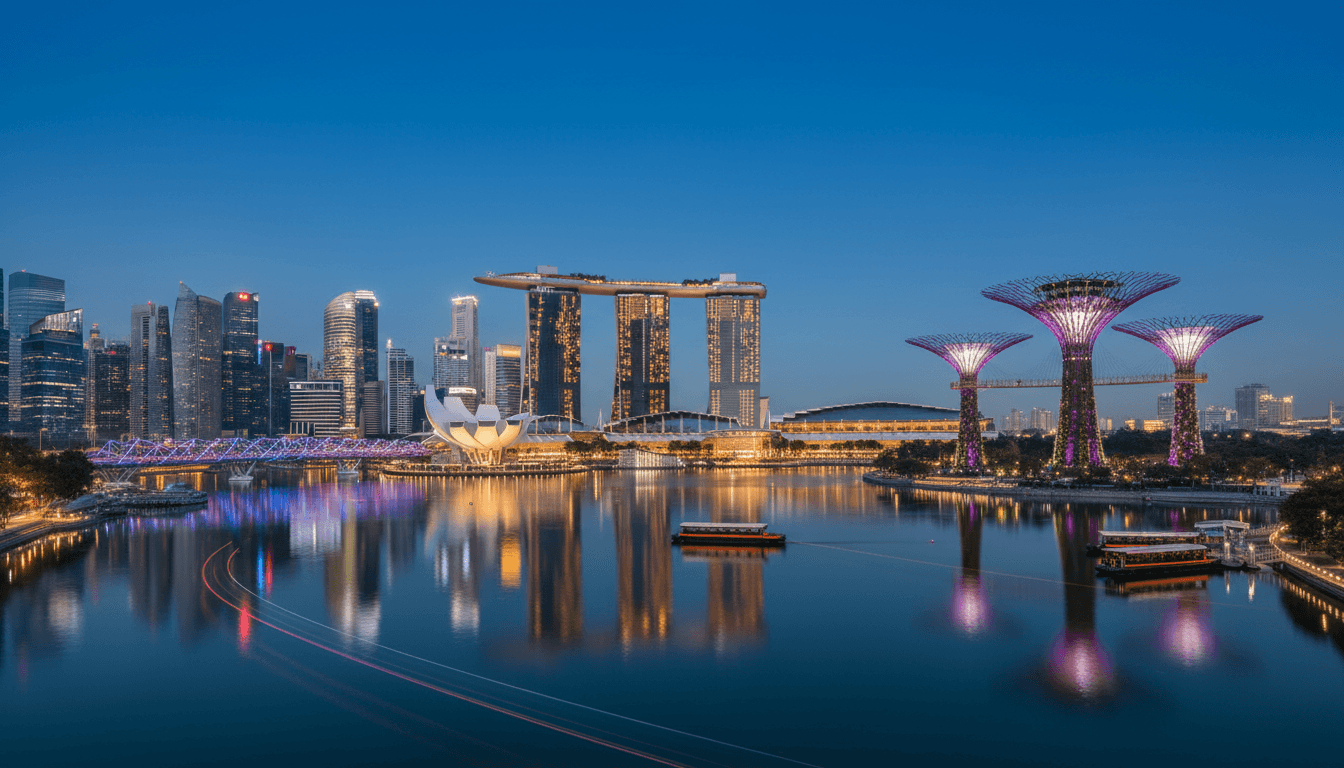
Bachelor and Bachelorette Parties in Singapore: The Complete Home Swap Group Guide for 2026
Planning a bachelor or bachelorette party in Singapore? Discover how home swapping lets groups of 6-12 stay together in luxury condos, saving thousands while partying in Marina Bay.
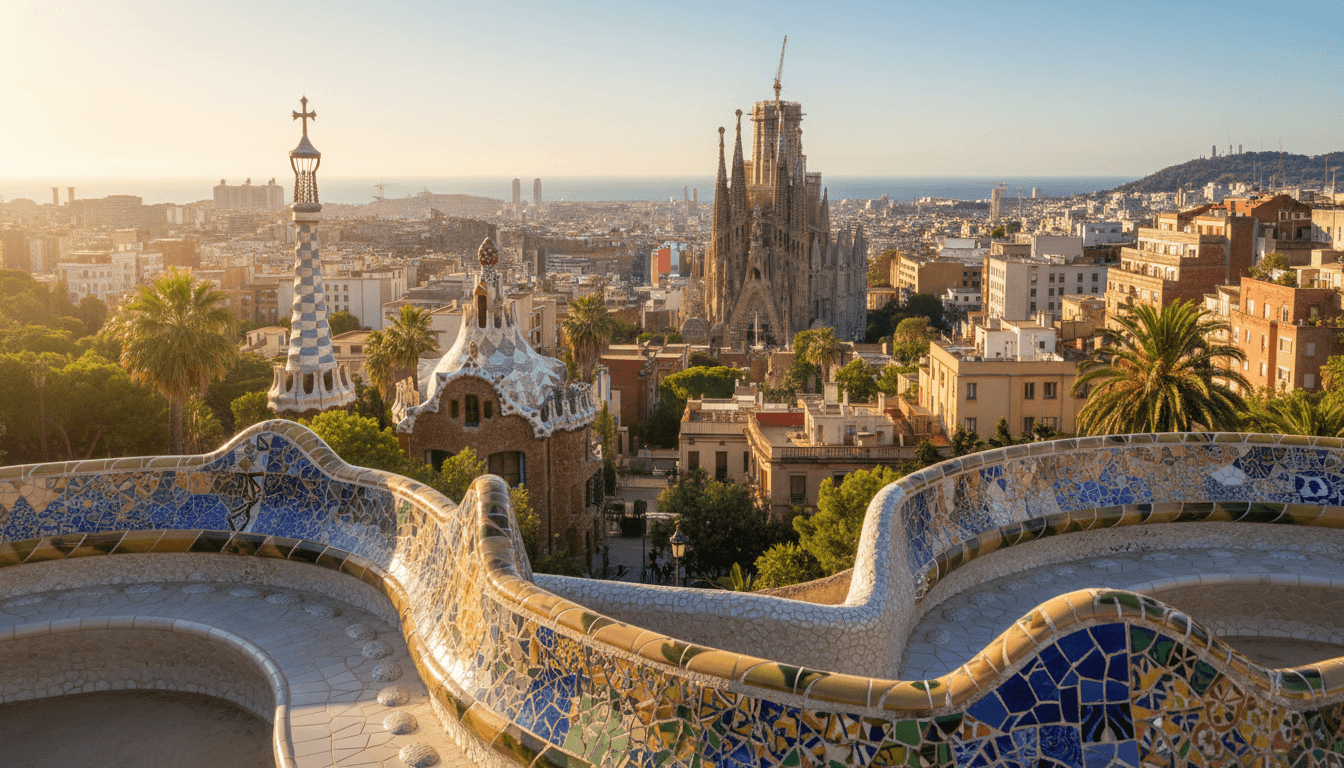
Graduation Trip to Barcelona: How Home Swapping Gives New Graduates the Ultimate Celebration
Planning a graduation trip to Barcelona? Discover how home swapping lets new graduates explore Spain's most vibrant city without the hostel crowds or hotel costs.
Literary Cape Town: A Home Swap Guide for Book Lovers Seeking South Africa's Stories
Discover Cape Town's literary treasures through home swapping—from Kloof Street bookshops to District Six's storytelling legacy. Your guide to South Africa's book lover paradise.