Graduation Trip to Barcelona: How Home Swapping Gives New Graduates the Ultimate Celebration

SwappaHome Editorial Team
Home Exchange & Slow Travel Editorial
Planning a graduation trip to Barcelona? Discover how home swapping lets new graduates explore Spain's most vibrant city without the hostel crowds or hotel costs.
You've just crossed the stage, diploma in hand, and the Mediterranean sun is calling. A graduation trip to Barcelona might be the perfect way to mark the end of one chapter and the beginning of everything else—but between student loans and entry-level salaries, the math rarely works in your favor. Unless you know about home swapping.
 Graduate throwing cap in the air on Barcelonas Barceloneta Beach with the W Hotel and Mediterranean
Here's what most new graduates discover too late: that €150-per-night boutique hotel in El Born? You could stay in someone's actual apartment there—with a kitchen, a terrace, maybe even a cat to feed—for zero accommodation cost. A graduation trip to Barcelona through home exchange isn't just budget-friendly; it transforms the entire experience from tourist to temporary local.
Why Barcelona Hits Different for a Graduation Trip
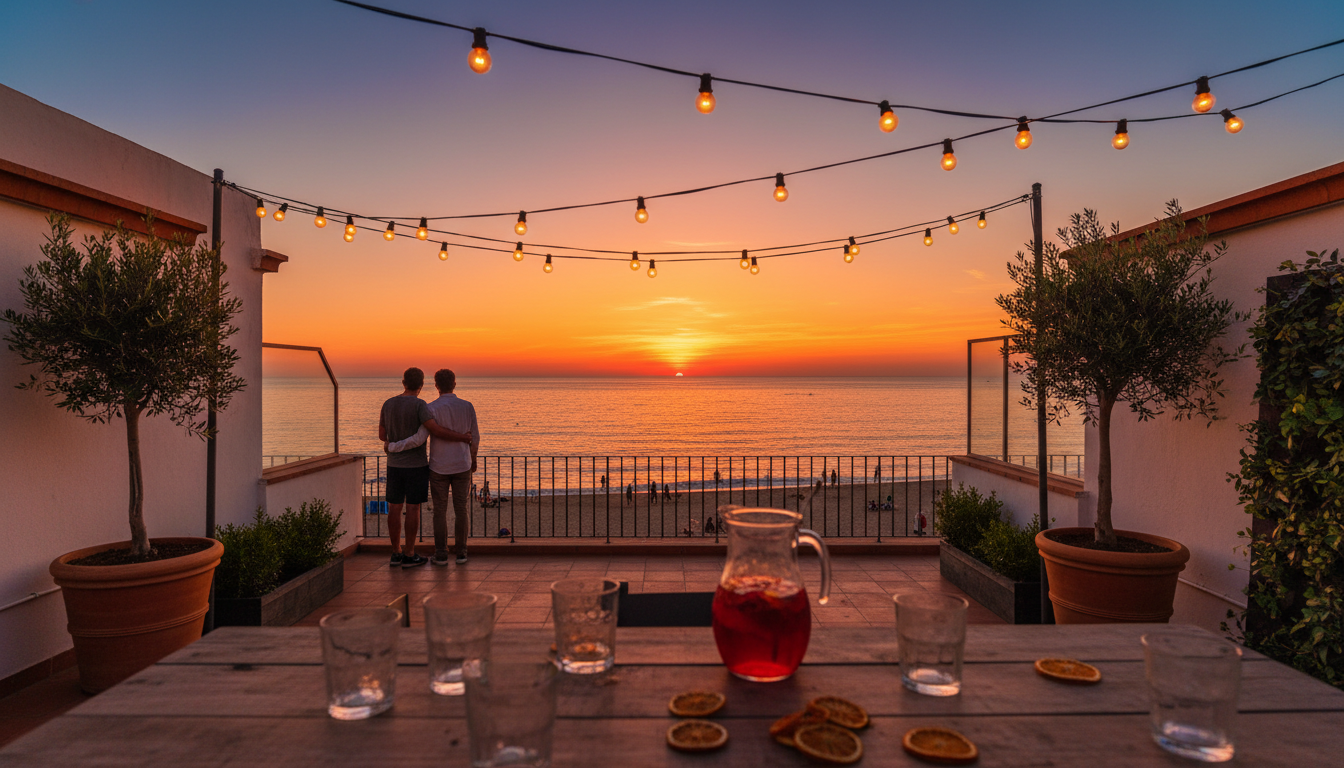
There's a reason Barcelona consistently ranks among the top destinations for young travelers. The city operates on a rhythm that suits recent graduates perfectly: late dinners around 10 PM, beach days that stretch into sunset drinks at chiringuitos along Barceloneta, and a nightlife that doesn't really start until most cities are winding down.
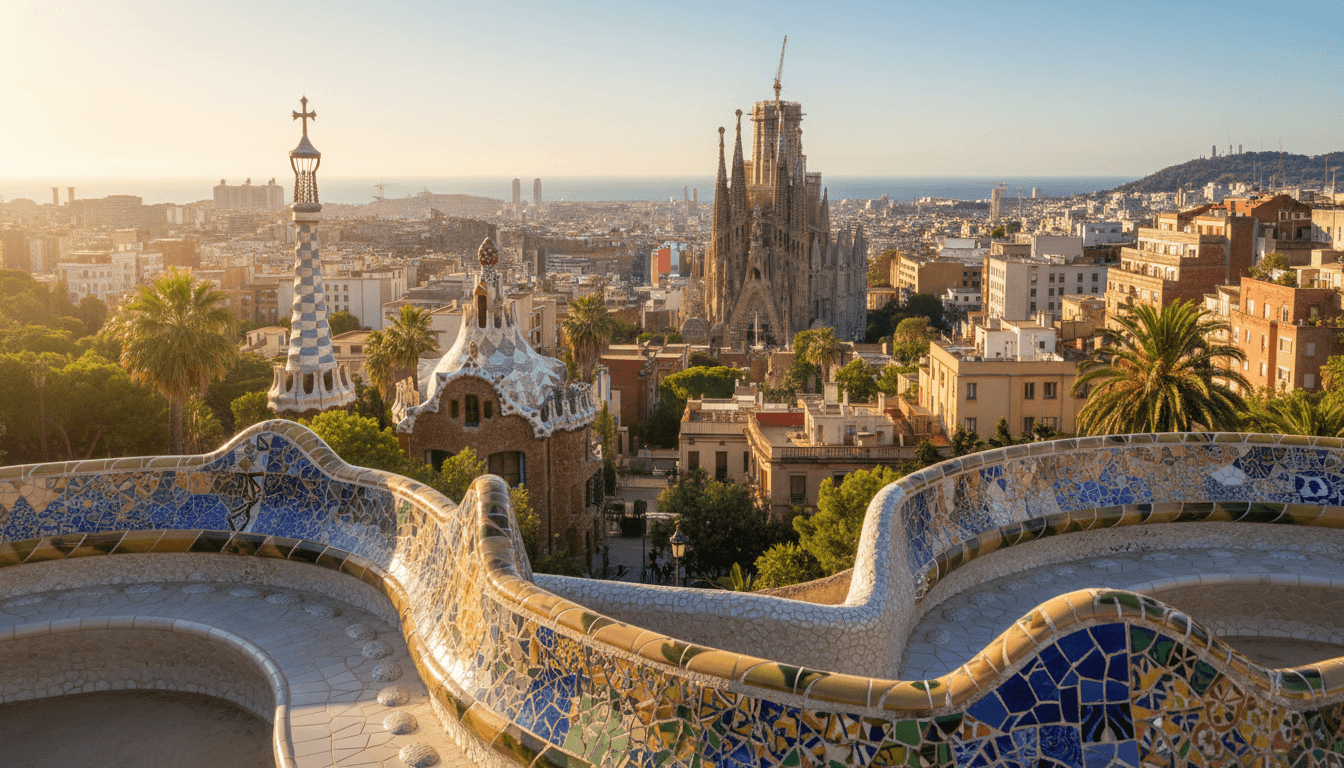
But beyond the obvious appeal, Barcelona offers something graduates specifically need right now—a city that celebrates transition. The Catalan capital has reinvented itself countless times, from Roman settlement to medieval maritime power to the modernist playground Gaudí transformed it into. Walking through the Gothic Quarter's narrow streets or standing beneath the still-unfinished Sagrada Familia, you're surrounded by evidence that great things take time to build.
The practical appeal matters too. Barcelona's metro system (TMB) runs until midnight on weekdays, 2 AM on Fridays, and 24 hours on Saturdays—perfect for graduates who want to explore without watching the clock. A T-Casual card covering 10 trips costs €11.35, and that'll get you from the Gràcia neighborhood's plaza-hopping scene to the Montjuïc cable car without decimating your post-graduation budget.
The Home Swap Advantage for New Graduates
Let's talk numbers. Graduates are nothing if not practical about money right now.
A week in Barcelona during peak graduation season (May through July) typically runs €35-55 per night for a private hostel room, €20-30 for a dorm bed, €120-180 for mid-range hotels, and €90-150 for Airbnb apartments—plus cleaning fees, plus service fees. A home swap? Zero accommodation cost. You're exchanging stays, not money.
The SwappaHome community includes plenty of Barcelona residents who'd love to explore your hometown while you're discovering theirs. Even if you're swapping from a small apartment in a less glamorous city, the credit system means you can stay anywhere—a modest studio in Columbus earns the same credits as a penthouse in Pacific Heights.
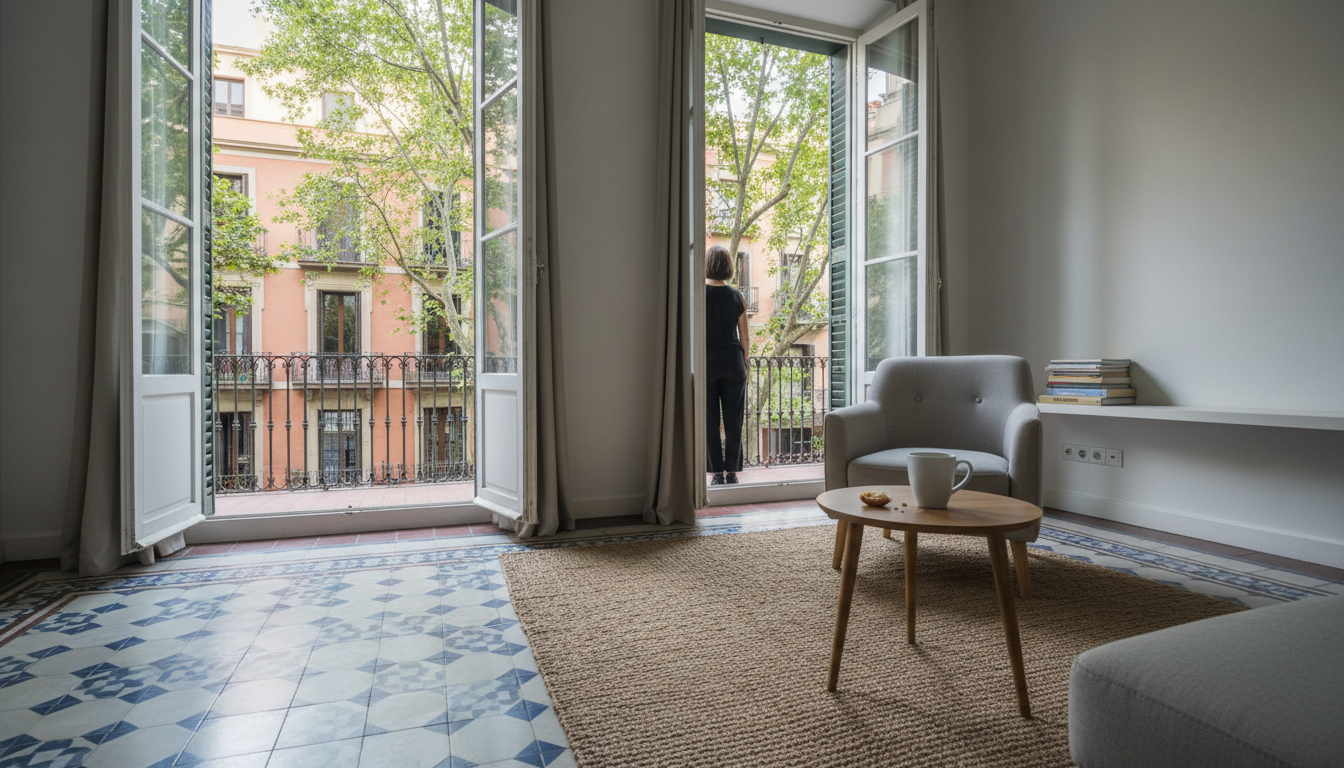
But the real advantage isn't just financial. Home swapping puts you in actual neighborhoods where actual people live. Instead of the tourist-saturated blocks around La Rambla (where pickpockets are genuinely a concern and restaurant prices run 40% higher than elsewhere), you might find yourself in Sant Antoni. The renovated Mercat de Sant Antoni hosts a Sunday book market there, and the vermouth bars along Carrer del Parlament serve €3 glasses of Yzaguirre with olives and chips.
 Cozy Barcelona apartment interior with tiled floors, balcony doors open to a leafy Eixample street,
Best Barcelona Neighborhoods for Your Graduation Home Swap
Gràcia: The Bohemian Heart
If your graduation trip to Barcelona is about feeling like you actually live somewhere rather than just visiting, Gràcia delivers. This former independent village—only absorbed into Barcelona in 1897—still maintains its own identity: plaças filled with locals, independent boutiques instead of chains, and a creative energy that attracts artists, musicians, and young professionals.
Home swaps in Gràcia often come with the kind of details that make a trip memorable. Rooftop terraces with Sagrada Familia views. Kitchens stocked with local olive oil and sea salt. Recommendations scribbled on notepads for the best botifarra at the neighborhood butcher. The area around Plaça del Sol gets lively at night but isn't overwhelmingly touristy—you'll hear as much Catalan as English.
Worth noting: Gràcia sits at the top of Passeig de Gràcia, meaning you're a 20-minute walk (or quick metro ride on L3) from the Eixample's modernist architecture. The Fontana metro stop puts you right in the neighborhood's center.
El Born: History Meets Nightlife
For graduates who want to be in the thick of things without staying in a hotel, El Born offers the best of both worlds. Medieval streets open suddenly into sun-drenched plazas. The stunning Basílica de Santa Maria del Mar (featured in the novel "Cathedral of the Sea") anchors the neighborhood. Some of Barcelona's best cocktail bars hide behind unmarked doors.
The Picasso Museum is here, housed in five medieval palaces—worth visiting early morning before the crowds arrive. So is the Born Centre de Cultura i Memòria, built over archaeological remains from 1714 discovered during renovation work.
Home swaps in El Born tend to be in older buildings with character: exposed brick, wooden beams, the occasional quirky layout where the bathroom is somehow on a different level than the bedroom. Expect to climb stairs—elevators are rare in these historic buildings.
Barceloneta: Beach Days on Repeat
If your graduation celebration centers on sun, sand, and seafood, Barceloneta is the obvious choice. This former fishing village juts into the Mediterranean, and home swaps here often include beach access within a five-minute walk.
The neighborhood has gentrified significantly—old-timers complain about it constantly—but it retains character. Laundry still hangs from balconies. The Mercat de la Barceloneta sells fresh fish daily. Restaurants like Can Paixano (known locally as La Xampanyeria) have been serving cava and sandwiches since 1969.
Fair warning: Barceloneta can be noisy in summer. Street noise, beach parties, and the general buzz of a tourist-heavy area mean light sleepers might struggle. But for graduates who plan to be out late anyway? Hardly matters.
 Sunset view from a Barceloneta rooftop terrace, Mediterranean Sea glowing orange, silhouettes of peo
Poble Sec: The Insider Pick
Here's a neighborhood most graduation trip guides won't mention: Poble Sec, tucked between Montjuïc and the Paral·lel avenue. It's where many Barcelona locals in their twenties actually live—affordable (by Barcelona standards), well-connected, and home to Carrer Blai, a street lined with pintxos bars where you can eat well for €15-20.
The neighborhood's proximity to Montjuïc means easy access to the Fundació Joan Miró, the botanical gardens, and the castle with its panoramic city views. Thursday nights, the Sala Apolo on Paral·lel hosts "Nasty Mondays" (yes, on Thursdays—don't ask), one of Barcelona's most popular club nights, with entry around €15.
Home swaps in Poble Sec often offer more space for your money. The buildings are newer than in the Gothic Quarter, and you're more likely to find apartments with full kitchens and modern bathrooms.
How to Score the Best Barcelona Home Swap
Timing matters enormously for graduation trips. May and June see the highest demand from other graduates and early-summer travelers, so start your search early—ideally three to four months before your trip.
Create a Listing That Attracts Barcelona Hosts
Barcelona residents who home swap are often looking for destinations they can't easily visit otherwise. If you're in a smaller American city, lean into that. A listing that says "Explore Austin's live music scene from a local's apartment" or "Experience Portland's food cart culture from our Pearl District home" will catch more attention than generic descriptions.
Include specific details: the coffee shop three blocks away that roasts its own beans, the hiking trail you can access without a car, the neighborhood bar where everyone knows each other. Barcelona hosts live in one of the world's most visited cities—they're looking for authentic experiences elsewhere.
Flexibility Expands Your Options
If your graduation date allows, consider traveling in early May or late June rather than the peak weeks. You'll find more available home swaps and better weather—July and August can push 35°C (95°F), which makes midday sightseeing genuinely uncomfortable.
Being flexible about neighborhoods helps too. A home swap in Les Corts (near Camp Nou, FC Barcelona's stadium) or Sant Andreu (an authentic neighborhood with excellent transit connections) might not sound as glamorous as El Born, but you'll experience a side of Barcelona most tourists never see.
Communication That Closes the Deal
When reaching out to potential Barcelona hosts, be specific about why you want to visit and what kind of traveler you are. Mentioning that you're celebrating graduation gives context and makes you relatable—Barcelona hosts remember their own post-graduation adventures.
Ask questions that show you've actually read their listing. "I noticed you mentioned the rooftop terrace—is it shared with other apartments or private?" demonstrates genuine interest. Offer information about your own home proactively: your neighborhood's best features, any quirks about the apartment, what you'll leave stocked for them.
 Young traveler sitting at a small caf table on a Barcelona side street, laptop open, cortado and cro
Making the Most of Your Barcelona Graduation Trip
The First 24 Hours
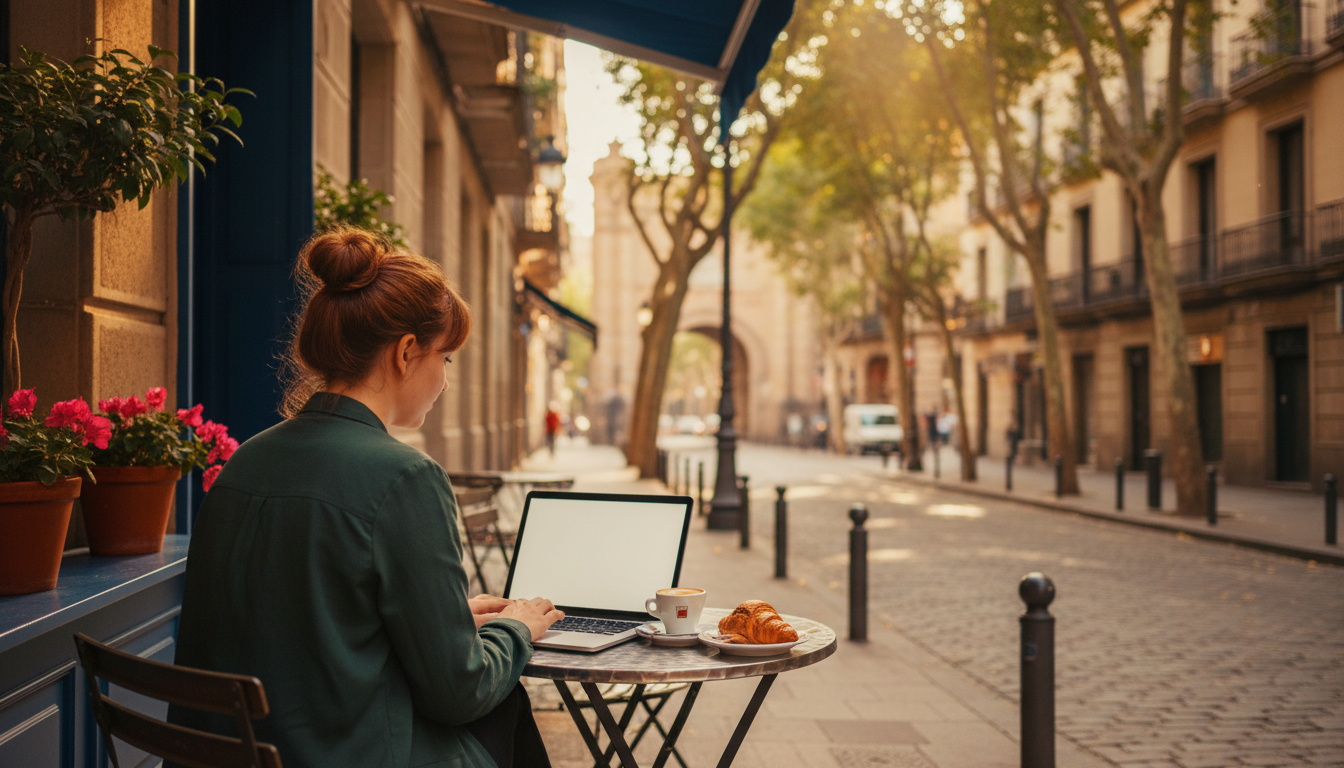
Flights from the US typically arrive at Barcelona-El Prat (BCN) in the morning, European time. You'll be jet-lagged but wired—use it. Drop your bags at your home swap, resist the urge to nap, and head to the nearest neighborhood café for a cortado (small coffee with milk, around €1.50-2).
Spend that first day walking. The Eixample district's grid layout makes it nearly impossible to get lost, and you'll pass Gaudí's Casa Batlló and La Pedrera without even trying. Push through until at least 9 PM local time, then eat a light dinner and crash. You'll wake up adjusted.
The Food Strategy
Home swapping means you have a kitchen, which changes everything about eating in Barcelona. The city's markets—La Boqueria (touristy but still good), Santa Caterina (less crowded, stunning architecture), and Sant Antoni (most local)—sell everything you need for breakfasts and light lunches at a fraction of restaurant prices.
Spend your restaurant budget on experiences that matter. A long lunch at a traditional Catalan restaurant—try Can Culleretes in the Gothic Quarter, operating since 1786—where you work through pa amb tomàquet (bread rubbed with tomato), escalivada (roasted vegetables), and botifarra amb mongetes (sausage with white beans). Or splurge on dinner at one of the city's creative tapas spots, like Tickets (if you can get a reservation) or the more accessible Bar Cañete on Carrer de la Unió.
For the graduation celebration meal itself, consider booking somewhere with a view. Martínez on Montjuïc overlooks the city and port, serving rice dishes and seafood at prices that feel reasonable for the setting (mains €18-35). Or go full splurge at Disfrutar, a two-Michelin-star restaurant where the tasting menu runs around €250—a genuine once-in-a-lifetime meal for a once-in-a-lifetime milestone.
Beyond the Tourist Checklist
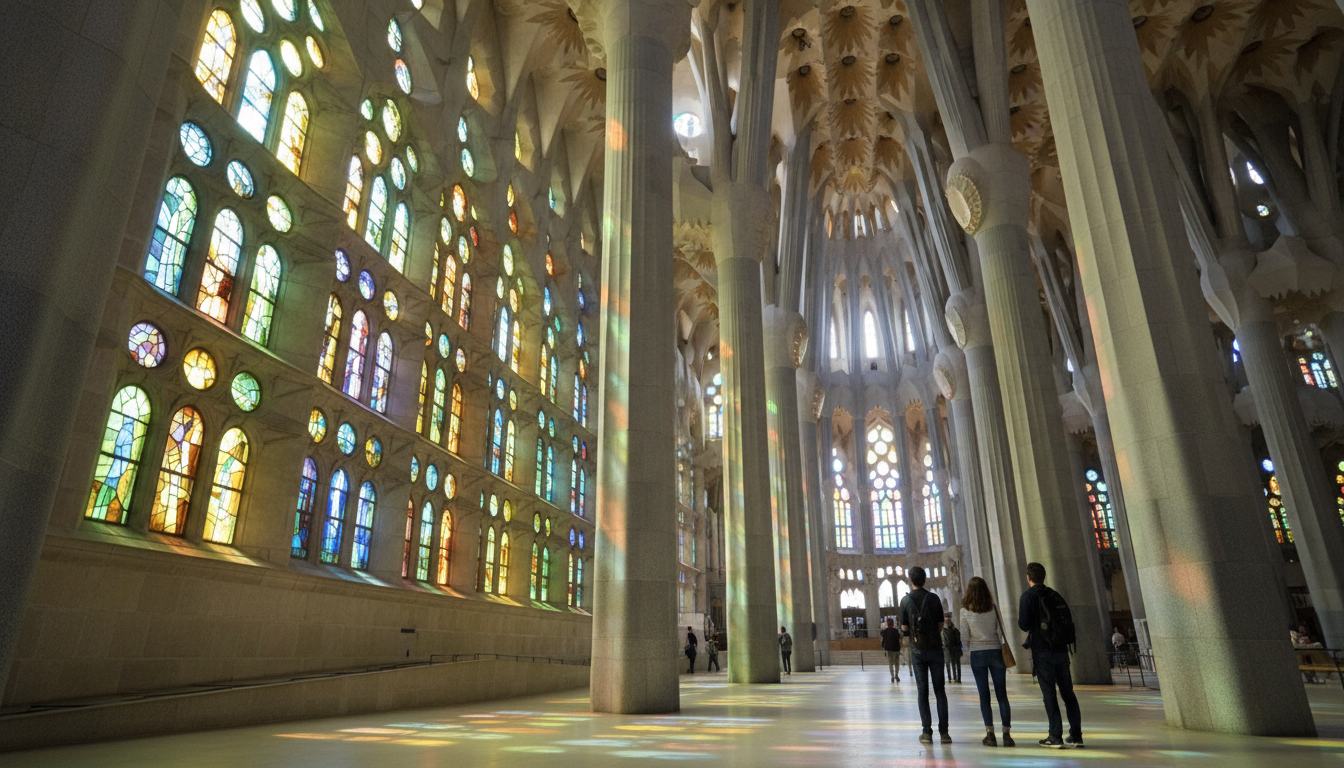
Yes, see the Sagrada Familia—book tickets online at least two weeks ahead, and choose a morning slot when the light through the eastern windows is most dramatic. Yes, walk through Park Güell, though the ticketed monumental zone is honestly skippable; the free areas offer the same views.
But your home swap gives you permission to go slower. Spend a morning at the Fundació Joan Miró, which rarely gets the crowds of the Picasso Museum but houses an equally important collection. Take the funicular up Tibidabo for amusement park kitsch and genuine panoramic views. Wander through the Poblenou neighborhood, Barcelona's former industrial zone now filled with design studios and craft breweries.
The beach at Barceloneta gets packed, but walk 20 minutes north to Nova Icària or Bogatell and you'll find more space. Better yet, take a morning train to Sitges (40 minutes, around €5), a beach town with better sand and a fraction of the crowds.
 Interior of the Sagrada Familia with morning light streaming through stained glass windows, creating
The Practical Stuff They Don't Tell You
Money Matters
Barcelona uses the euro. As of 2025, expect coffee to run €1.50-3, beer at a bar €2.50-4, a glass of wine €3-5, tapas plates €8-15, sit-down dinner €25-45 per person, metro single ride €2.55 (T-Casual 10-pack: €11.35), and museum entry €12-18.
Tipping isn't expected the way it is in the US. Round up or leave a euro or two for good service; anything more marks you as a tourist.
Safety Realities
Barcelona has a well-documented pickpocket problem, particularly on La Rambla, in the metro, and at tourist attractions. This isn't fearmongering—it's genuinely common. Keep your phone in a front pocket, don't leave bags on chair backs, and stay especially alert in crowded situations.
That said, violent crime is rare. Barcelona is statistically safer than most major American cities. Use the same common sense you'd apply anywhere, and you'll be fine.
The Language Situation
Barcelona is bilingual: Catalan is the local language, Spanish (Castilian) is also official, and English is widely spoken in tourist areas. Learning a few phrases in Catalan—"bon dia" (good morning), "gràcies" (thank you), "si us plau" (please)—will earn you genuine appreciation from locals.
Most signage and menus appear in Catalan first. Don't worry; it's similar enough to Spanish that you can usually figure things out, and English translations are common.
What Your Barcelona Host Might Leave You
One of home swapping's underrated pleasures is the local knowledge that comes with the apartment. SwappaHome members frequently report finding detailed neighborhood guides, hand-drawn maps of favorite spots, and recommendations that never make it into guidebooks.
A Barcelona host might point you toward the tiny vermouth bar on a Gràcia side street that doesn't appear on Google Maps, or the bakery in Poblenou that makes the city's best ensaïmada (spiral pastry). They might warn you that the restaurant on the corner is a tourist trap, but the place two doors down serves the same food for half the price.
This kind of insider knowledge transforms a graduation trip from a checklist of attractions into an actual experience of the city. You're not just visiting Barcelona; you're borrowing someone's Barcelona life for a week.
Coming Home Changed
A graduation trip to Barcelona through home swapping isn't just about saving money, though that matters when you're staring down student loan payments. It's about starting your post-graduation life the way you mean to continue: resourcefully, adventurously, and with the confidence that comes from navigating a foreign city on your own terms.
You'll come back with stories that aren't about hotel pools or resort buffets. You'll know what it feels like to buy groceries at a Barcelona market, to figure out the metro at 2 AM, to sit in a plaza and watch the city happen around you. That's the kind of travel that actually changes how you see the world—and yourself.
The SwappaHome community is full of travelers who started exactly where you are: newly graduated, budget-conscious, hungry for experience. Your first home swap might feel like a leap, but it's really just the beginning of a different way of traveling. Barcelona's waiting.
Frequently Asked Questions
Is a home swap in Barcelona safe for solo graduates?
Barcelona is generally safe for solo travelers, and home swapping adds an extra layer of security through community verification. SwappaHome members review each other after stays, building accountability. You'll have a real address in a residential neighborhood rather than an anonymous hotel room, and many hosts leave emergency contact information. Standard travel precautions apply—watch for pickpockets in tourist areas, don't walk alone in poorly lit areas late at night, and keep your home swap host informed of your general plans.
How far in advance should I book a Barcelona home swap for graduation season?
Start searching three to four months before your May or June graduation trip. Barcelona is extremely popular during these months, and the best home swap listings get booked quickly. Being flexible with exact dates and neighborhoods significantly improves your options. If you're set on a specific week in peak season, begin reaching out to potential hosts even earlier—some SwappaHome members plan exchanges six months ahead.
Can I do a home swap in Barcelona if I live with roommates or parents?
Absolutely. You just need permission from everyone who lives there and the ability to offer guests a private, comfortable space. Many graduates successfully list spare rooms or their portion of shared apartments. Be transparent in your listing about what you're offering—Barcelona hosts appreciate honesty and will often accept a modest space if the location or local experience is appealing. Your college town apartment might be more interesting to a European traveler than you'd expect.
What's the best neighborhood in Barcelona for a graduation celebration?
El Born and Gràcia offer the best balance of nightlife, restaurants, and authentic neighborhood character for celebrating graduates. El Born puts you walking distance from beach bars and the city's best cocktail scene, while Gràcia's plaza culture is perfect for long dinners and late-night conversations. Barceloneta works if beach access is your priority, though it's noisier and more tourist-heavy. Avoid staying near La Rambla—it's overpriced, overcrowded, and doesn't represent real Barcelona life.
How much can I realistically save on a graduation trip to Barcelona with home swapping?
For a one-week graduation trip to Barcelona, home swapping typically saves $700-1,200 compared to mid-range hotels or $400-700 compared to Airbnb rentals. Beyond accommodation, having a kitchen saves another $150-250 on meals—breakfast and lunch from market ingredients cost a fraction of restaurant prices. The total savings often cover your entire flight cost, effectively making the trip significantly more affordable than traditional options.

Published by
SwappaHome
SwappaHome Editorial Team
Home Exchange & Slow Travel Editorial
The SwappaHome Editorial Team brings together travel research, home-exchange community insights, and platform data to produce practical guides for first-time and experienced home swappers. Every article cites real platforms, current market rates, and verifiable city-level facts so readers can make informed decisions without guessing.
Ready to try home swapping?
Join SwappaHome and start traveling by exchanging homes. Get 7 free credits when you sign up!
Related articles
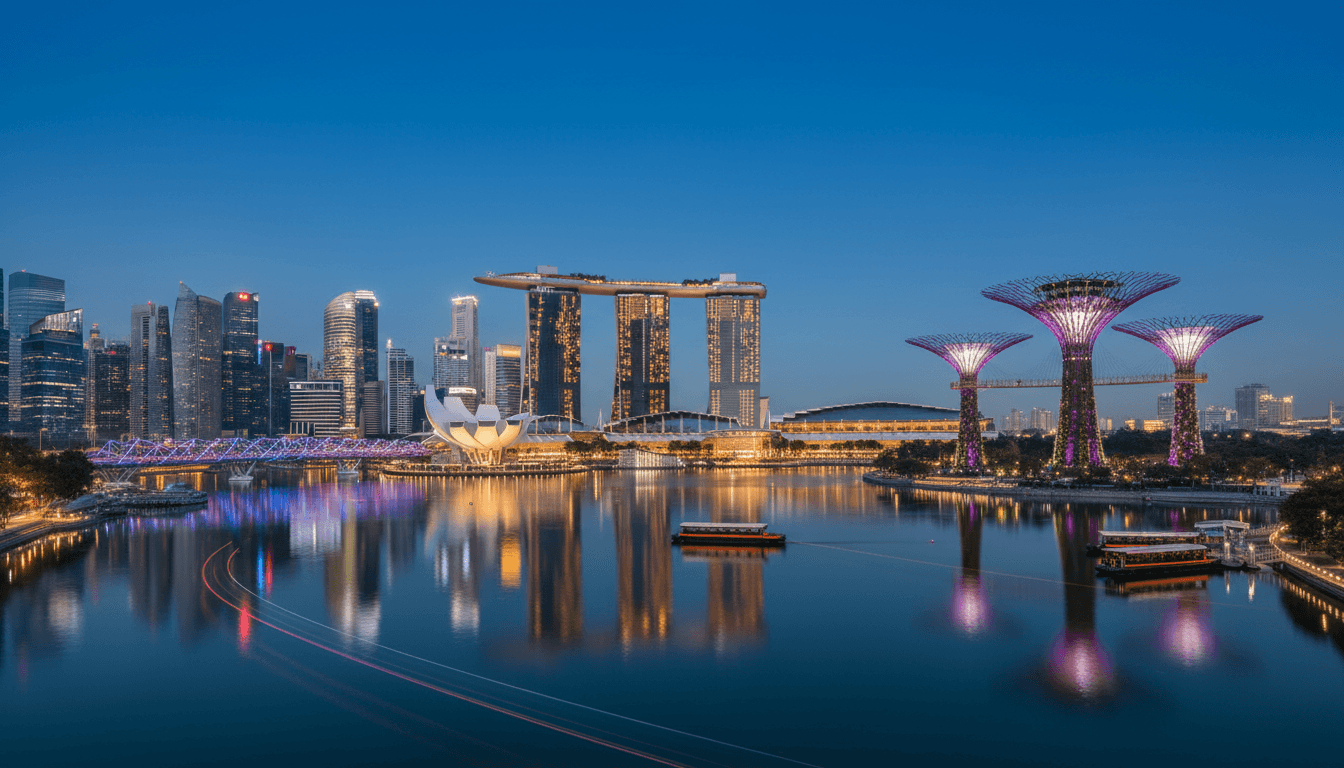
Bachelor and Bachelorette Parties in Singapore: The Complete Home Swap Group Guide for 2026
Planning a bachelor or bachelorette party in Singapore? Discover how home swapping lets groups of 6-12 stay together in luxury condos, saving thousands while partying in Marina Bay.
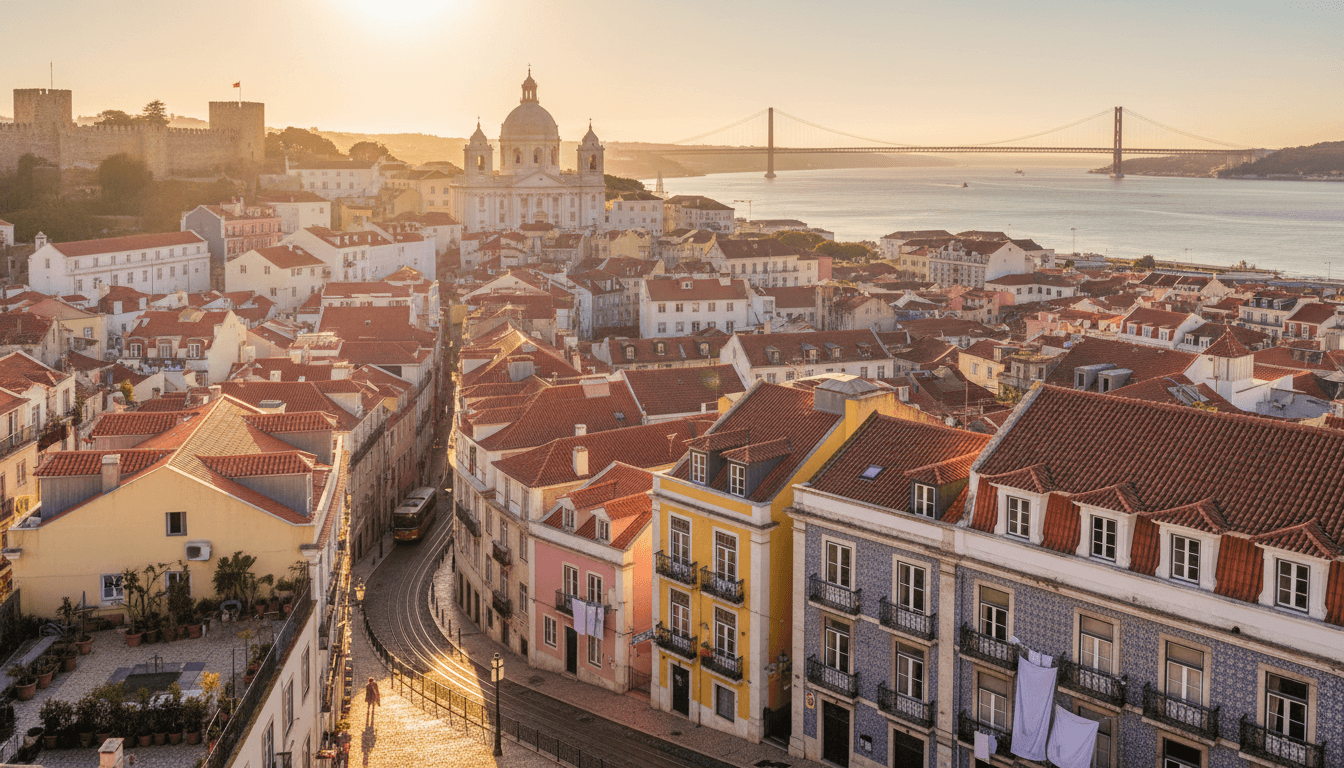
Cycling in Lisbon: 7 Home Swap Bike Tour Itineraries for Every Rider
Discover the best cycling routes in Lisbon with these home swap bike tour itineraries—from waterfront paths to hilltop adventures, all starting from your borrowed home.
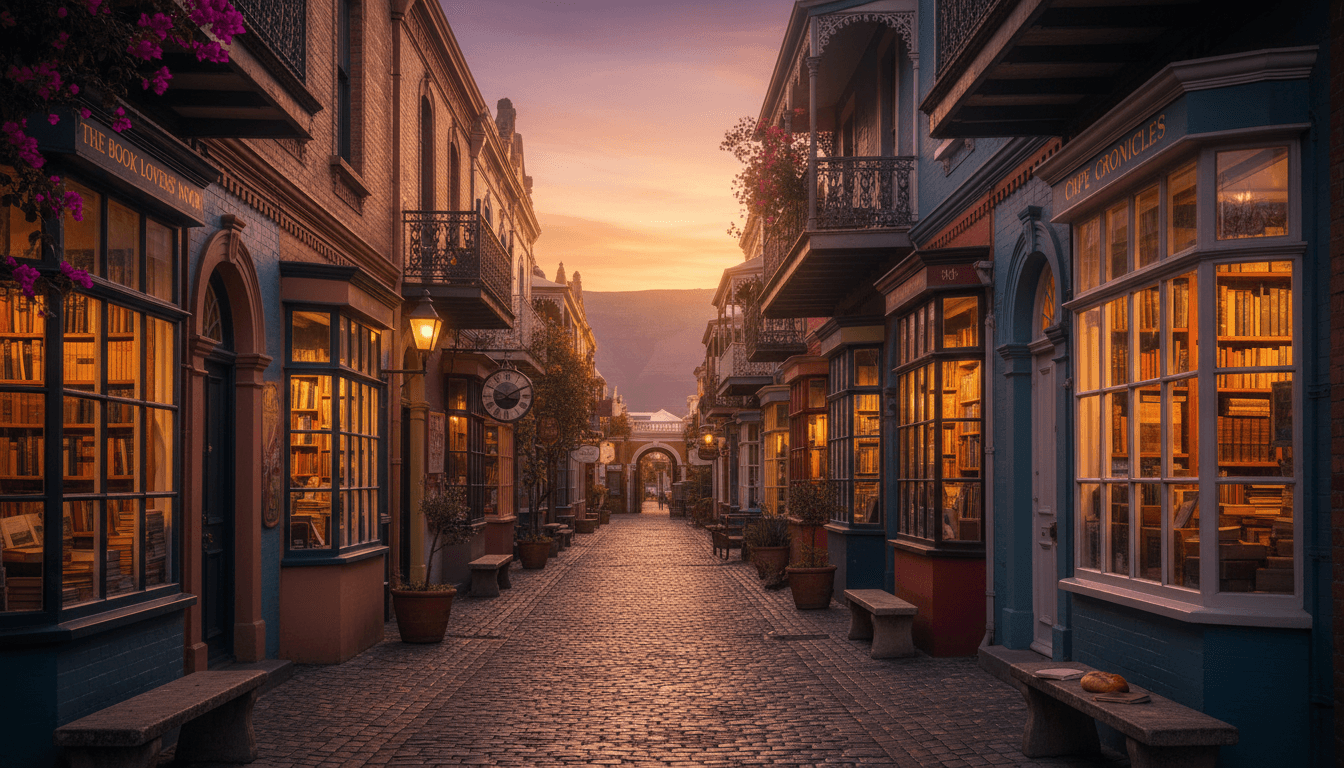
Literary Cape Town: A Home Swap Guide for Book Lovers Seeking South Africa's Stories
Discover Cape Town's literary treasures through home swapping—from Kloof Street bookshops to District Six's storytelling legacy. Your guide to South Africa's book lover paradise.