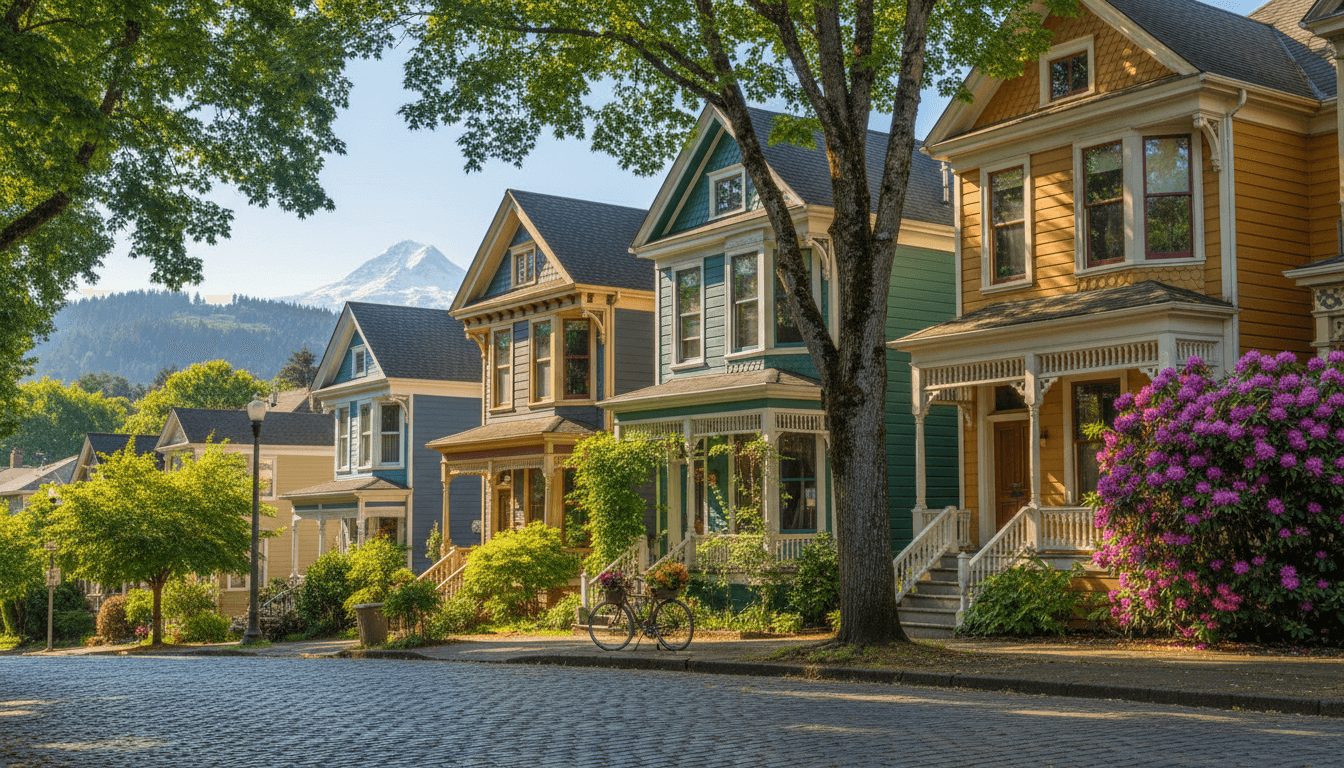
Home Exchange in Portland: 7 Underrated Neighborhoods the Tourists Miss
Maya Chen
Travel Writer & Home Exchange Expert
Skip the crowded downtown hotels. These hidden Portland neighborhoods offer authentic local experiences through home exchange—plus way better coffee.
I almost didn't book the home exchange in Portland's Montavilla neighborhood. The listing photos showed a modest 1920s bungalow on a quiet street, nothing Instagram-worthy. No downtown skyline views, no trendy Pearl District address. But the host mentioned her neighbor ran a backyard chicken coop and there was a Thai restaurant two blocks away that locals kept secret from Yelp reviewers.
That swap changed how I think about choosing destinations for home exchange in Portland—and honestly, anywhere else.
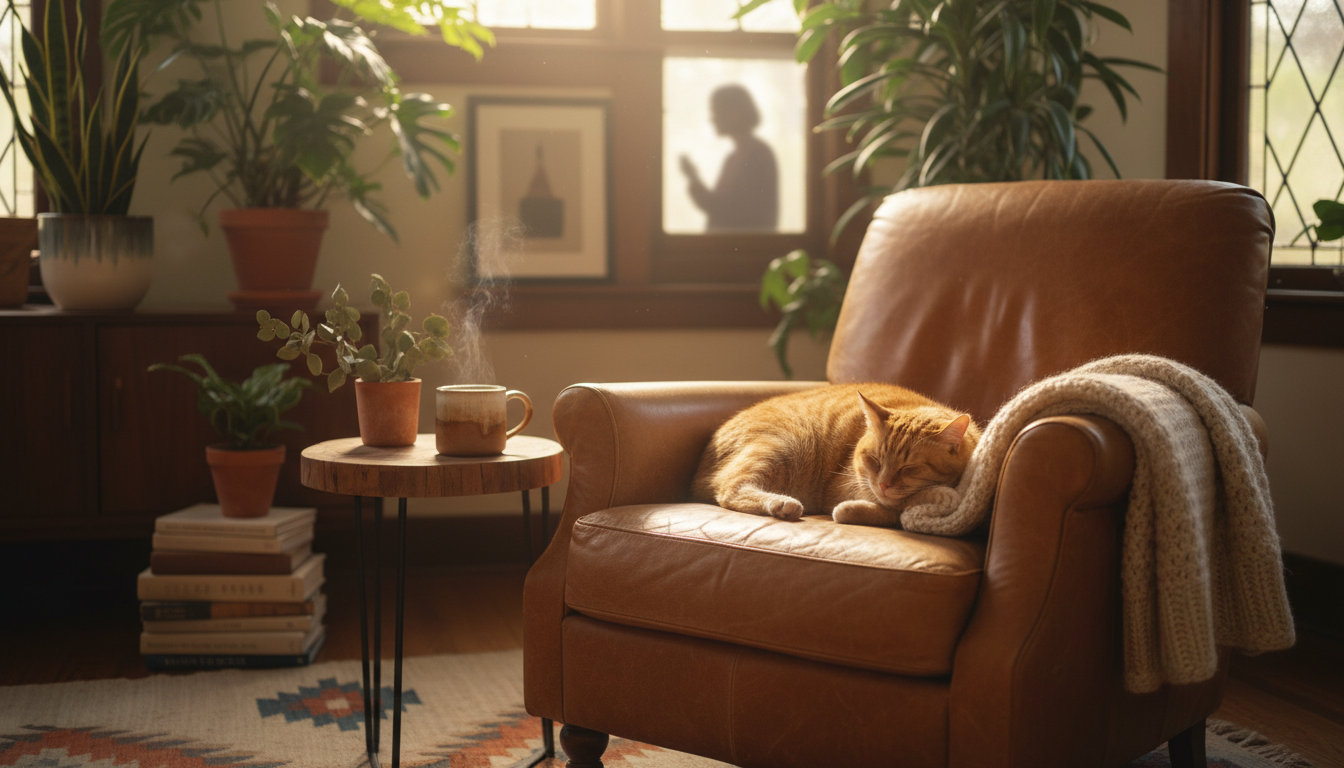 Morning light filtering through a craftsman bungalow window in Portland, vintage furniture mixed wit
Here's what I've learned after three separate Portland home swaps and countless conversations with local hosts: the neighborhoods everyone's heard of—Pearl District, Alberta Arts, Hawthorne—they're great, sure. But they're also where every tourist goes, where Airbnb prices have pushed out long-term residents, and where you'll find yourself surrounded by other visitors pretending to be locals.
The real Portland? It's in the neighborhoods that don't make the "Top 10" lists. And for home exchange, these underrated areas offer something even better than cool factor: genuine community, hosts who've lived there for decades, and the kind of local knowledge you can't Google.
Why Underrated Portland Neighborhoods Work Better for Home Exchange
So here's the thing about swapping in Portland's popular neighborhoods—you're often trading with someone who bought their place as an investment or moved there recently for the scene. Nothing wrong with that. But in the quieter, more residential neighborhoods? You're more likely to find hosts who've been there for years. Sometimes generations. Their recommendations aren't from blogs. They're from actual life.
My Montavilla host left me a handwritten list of her favorite spots. The dry cleaner who does alterations for $8. The taco truck that only shows up on Thursdays. The park where her kids learned to ride bikes. You can't buy that kind of information.
The other practical advantage: these neighborhoods tend to have more families, which means more space. Studios and one-bedrooms dominate the trendy districts. But in areas like Woodstock or Cully, you'll find three-bedroom houses with actual yards—perfect if you're traveling with kids or just want room to spread out.
Montavilla: For Food Lovers Who Hate Crowds
Montavilla sits about 20 minutes east of downtown, straddling the border between Southeast and Northeast Portland. Most tourists have never heard of it.
That's exactly the point.
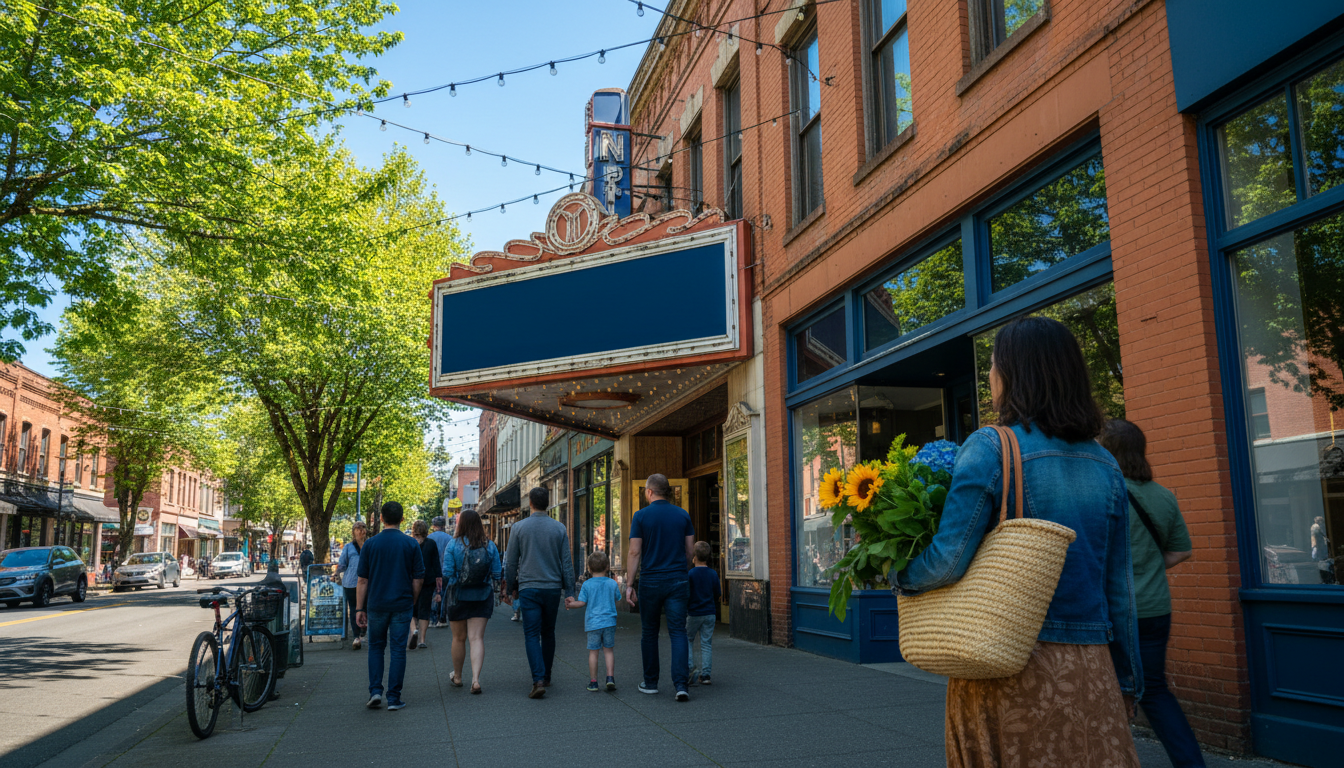 Montavillas main street on a Saturday morning, local families walking past a vintage movie theater m
The neighborhood centers around Stark Street, where you'll find a mix of old Portland—dive bars, a 1920s movie theater that still shows films for $6—and new Portland, with craft cocktail spots and a genuinely excellent ramen place. But unlike Hawthorne or Division, you can actually get a table without waiting 45 minutes.
My home exchange here was in a 1924 bungalow with original hardwood floors and a sunroom filled with plants. The host, a retired teacher named Diane, had been in the neighborhood for 22 years. Her insider tips included Country Cat for weekend brunch (go at 9 AM, not 11, unless you want to wait), Ya Hala for Lebanese food that locals drive across the city for—the lamb shank, trust me—and Bipartisan Café for pie that's worth the 15-minute walk.
The Academy Theater—that vintage movie house—does second-run films with beer and pizza. I watched a three-month-old blockbuster for $6 while eating surprisingly good margherita pizza. This is the kind of experience you don't get staying downtown.
For home exchange in Portland, Montavilla offers mostly single-family homes from the 1920s-1940s, many with finished basements or guest rooms. Expect craftsman bungalows, small but established yards, and neighbors who wave when you walk by.
Getting around from Montavilla: The MAX light rail stops at 82nd Avenue, about a 10-minute walk from the neighborhood center. Downtown is 25 minutes by train. But honestly, you'll want a car or good bike legs—this is a neighborhood for exploring Portland's east side, not for hopping to downtown attractions.
Woodstock: The Neighborhood That Feels Like a Small Town
Woodstock might be my favorite Portland neighborhood for home exchange, and I say that knowing it's not the flashiest choice. It's in Southeast Portland, about 15 minutes from downtown, and it has the vibe of a small town that happens to be inside a city.
The main drag on Woodstock Boulevard stretches maybe eight blocks. There's a vintage store, a bookshop, a few restaurants, a wine bar, and the legendary Woodstock Wine & Deli—cash only, best sandwiches in Portland, don't argue with me on this. On weekends, families walk their dogs, kids ride bikes, and everyone seems to know everyone.
I did a home exchange here in a 1940s Cape Cod with a backyard garden. The host grew tomatoes and left me instructions on which ones were ready to pick. She also left a note saying the neighbor's cat would probably visit—he did, every morning, expecting treats that she'd stocked in the pantry.
Woodstock's housing stock is perfect for home exchange: mostly single-family homes with 2-4 bedrooms, many with detached garages that hosts have converted into home offices or guest spaces. The neighborhood has been gentrifying slowly—you'll see longtime residents alongside younger families—but it hasn't lost its character yet.
The neighborhood itself is walkable for daily needs, but the real draw is proximity to some of Portland's best outdoor spaces. Crystal Springs Rhododendron Garden is a 10-minute walk—free admission most days, and genuinely stunning in spring. Reed College's campus, with its canyon trails and weird academic energy, is right next door.
For food, Otto's Sausage Kitchen has been making German sausages since 1936. Get a bratwurst and eat it in their tiny parking lot like a local. Escape From New York Pizza does solid slices. And Reverend's BBQ does Texas-style brisket that would hold up in Austin. Controversial opinion, but I stand by it.
Getting around from Woodstock: Bus lines run frequently to downtown (about 30 minutes). Having a car opens up easy access to Mt. Tabor, Sellwood, and the Springwater Corridor trail for biking.
Cully: Portland's Most Diverse Neighborhood (and Best Tacos)
If you want to experience a Portland that most tourists—and honestly, most Portlanders—don't know exists, Cully is your neighborhood.
Located in Northeast Portland, Cully is Portland's most ethnically diverse neighborhood. The main commercial street along Cully Boulevard has Vietnamese pho shops next to Mexican taquerias next to Ethiopian restaurants. There's a halal market, a tortilleria, and a Slavic bakery within a few blocks of each other.
I haven't done a home exchange in Cully yet, but I've visited multiple times while staying in other Portland neighborhoods, and I've been researching it for my next swap. The housing here is more affordable than most Portland neighborhoods, which means you'll find hosts who are working families, immigrants, and longtime residents rather than remote workers who moved for the vibes.
The neighborhood has a community garden—actually several—a nature park with hiking trails, and some of the most authentic international food in the Pacific Northwest.
King Burrito serves $8 burritos the size of your forearm, cash only, no frills. Pho Oregon has consistently great pho in a strip mall setting. Urdaneta offers upscale Basque food if you want a nicer meal—this one's a splurge at $40-60/person.
The Thomas Cully Park opened recently and has walking trails, a playground, and views of the surrounding hills. It's the kind of park where you'll see soccer games, family picnics, and people speaking five different languages.
For home exchange in Portland's Cully neighborhood, expect modest single-family homes, some duplexes, and a few newer apartment buildings. The architecture isn't as charming as Woodstock or Montavilla—more 1950s-1970s ranch houses—but the community feel and food scene more than compensate.
Getting around from Cully: You'll want a car or bike here. Bus service exists but isn't as frequent as inner Portland. The upside: you're close to the airport (15 minutes) and the Columbia River Gorge (30 minutes).
St. Johns: The Bridge Town Within the City
St. Johns feels like its own small city. Tucked into the northern tip of Portland where the Willamette River meets the Columbia, it's anchored by Cathedral Park—named for the gothic arches of the St. Johns Bridge overhead—and a walkable downtown that locals fiercely protect from chain stores.
I spent a week here on a home exchange two summers ago, staying in a 1910 farmhouse that had been updated with modern amenities but kept its original character. The host was an architect who'd restored the place himself. He left detailed notes about which floorboards creaked—"just step over the third one from the left."
St. Johns has a genuine downtown, not just a commercial strip. There's a hardware store, a pharmacy, a movie theater, and multiple restaurants that have been there for decades. The neighborhood takes pride in being slightly removed from the rest of Portland—it's a 20-minute drive to downtown, and residents like it that way.
Cathedral Park offers stunning views of the bridge and is great for picnics and photography. Tienda Santa Cruz is a Mexican grocery with a taco counter in back—carnitas, get the carnitas. Occidental Brewing serves excellent German-style beers in a converted industrial space. And John Street Café does classic American diner breakfast, cash only, expect to wait on weekends.
The housing in St. Johns is a mix: Victorian-era homes near downtown, mid-century ranches further out, and some newer construction. For home exchange, you'll find good variety—from small cottages to larger family homes with views of the river or bridge.
Getting around from St. Johns: The Yellow Line MAX runs through the neighborhood, connecting to downtown in about 25 minutes. But St. Johns is really designed for staying put—you can walk to everything you need, and the neighborhood rewards slow exploration.
Foster-Powell: The Underdog Coming Into Its Own
Foster-Powell—or "FoPo" if you want to sound like a local, though honestly most locals just say "Foster"—is Southeast Portland's scrappy underdog. It's been gentrifying for about a decade, but slowly. You'll still find $5 happy hour beers and auto shops next to craft cocktail bars.
The neighborhood runs along Foster Road, which has a reputation for being gritty. And yeah, it's not as polished as Division or Hawthorne. But that's exactly why I like it for home exchange in Portland. The hosts here tend to be artists, musicians, and people who got priced out of trendier neighborhoods—which means interesting homes and even more interesting recommendations.
I haven't done a full home exchange in Foster-Powell, but I've visited friends who live there and spent considerable time exploring. The neighborhood has a food cart pod—H.K. Café for the best Hong Kong-style breakfast—a great dive bar called The Lutz, and easy access to Powell Butte for hiking.
The housing stock is eclectic. 1920s bungalows, mid-century ranches, and some newer infill construction. Prices are lower than most inner Portland neighborhoods, which means hosts are more likely to be regular people rather than investment property owners. You'll find homes with character: converted garages as art studios, backyard chicken coops, and gardens that have been tended for decades.
Getting around from Foster-Powell: The 14 bus runs along Foster Road to downtown (about 35 minutes). Having a car is helpful for exploring, but the neighborhood itself is bikeable and walkable for daily needs.
Sellwood-Moreland: Antiques and Authenticity
Sellwood is probably the most well-known neighborhood on this list, but it still flies under the radar compared to the Pearl District or Alberta. It's in Southeast Portland, along the Willamette River, and it's famous for two things: antique shops and the Sellwood Bridge.
The antique thing is real—there are dozens of shops along SE 13th Avenue, ranging from serious vintage furniture dealers to junk-shop treasure hunts. But beyond the antiques, Sellwood has a genuine neighborhood feel that the trendier districts have lost.
I did a home exchange in Sellwood in a 1905 Victorian that had been in the host's family for three generations. The house was full of original details—stained glass windows, a claw-foot tub, built-in bookshelves—and the host left a binder of family history along with restaurant recommendations.
Sellwood works well for home exchange in Portland because it has excellent public transit (bus to downtown in 20 minutes), walkable streets, and a mix of housing types. You'll find everything from grand Victorians to modest bungalows to newer condos.
Oaks Bottom Wildlife Refuge covers 140 acres of wetlands and trails, right in the city. Jade Bistro serves Vietnamese food that rivals anything on 82nd Avenue. Mike's Movie Memorabilia is exactly what it sounds like, and worth browsing. And Sellwood Riverfront Park has great views and easy access to walking trails.
The neighborhood also has Oaks Amusement Park, a vintage amusement park that's been operating since 1905. It's delightfully weird—old-school roller skating, carnival rides, and a general vibe of "they don't make 'em like this anymore."
Kenton: Quirky Portland at Its Most Genuine
I'm ending with Kenton because it might be my top recommendation for first-time home exchange in Portland. It's in North Portland, about 15 minutes from downtown, and it has the perfect balance of quirky Portland character and actual livability.
The neighborhood is famous for Paul Bunyan—a 31-foot statue that's been standing on Denver Avenue since 1959. But beyond the photo op, Kenton has a walkable downtown with locally-owned restaurants, a great farmers market, and some of the best people-watching in the city.
I did a home exchange here in a 1940s bungalow that the host had filled with vintage Portland memorabilia—old Blazers tickets, concert posters from the 90s, a collection of Oregon pinot noir. She worked at a nonprofit and had been in the neighborhood for 15 years. Her recommendations were gold.
Posies Bakery & Café serves breakfast sandwiches and pastries worth waking up for. Swift Lounge mixes cocktails in a former auto shop—very Portland. Kenton Station has solid pub food and local beers. And The Meadow is the original location of this famous salt and chocolate shop.
Kenton's housing is mostly 1920s-1940s bungalows and small craftsman homes. The neighborhood has been gentrifying, but it's held onto its character—you'll still see longtime residents, working-class families, and the occasional chicken coop.
Getting around from Kenton: The Yellow Line MAX stops in the neighborhood, connecting to downtown in about 15 minutes. It's also very bikeable—flat terrain and good bike lanes.
How to Find Home Exchange Listings in These Neighborhoods
Now that you know where to look, here's how to actually find home exchange opportunities in these underrated areas.
On SwappaHome, you can search by neighborhood or zoom into specific areas on the map. When I'm looking for a Portland home exchange, I filter for the neighborhoods I've mentioned and then read the listing descriptions carefully. Hosts who've been in their neighborhood for years usually mention it—they're proud of their community and want guests who'll appreciate it.
The credit system makes this easy: you earn 1 credit per night when you host, and you spend 1 credit per night when you stay somewhere. A week in a Montavilla bungalow costs the same as a week in a Pearl District condo—7 credits either way. This levels the playing field and means you're choosing based on the experience, not the price tag.
When reaching out to potential hosts in these neighborhoods, mention why you're specifically interested in their area. "I saw your listing in Woodstock and I'm really interested in the neighborhood—I've heard great things about the community feel" goes a lot further than "I'm looking for a place to stay in Portland."
Practical Tips for Underrated Neighborhoods
A few things I've learned about home exchange in Portland's less-touristy areas:
Transportation matters more. Unlike staying downtown, these neighborhoods require some planning. Check the MAX and bus routes before you book. If you're planning to explore without a car, Kenton, Sellwood, and St. Johns have the best transit access. Montavilla and Woodstock are doable. Cully and Foster-Powell really benefit from having wheels.
Ask about parking. Many of these older neighborhoods have street parking only, and some homes don't have driveways. If you're renting a car, confirm the parking situation with your host.
Embrace the weather. Portland's rain is real, but it's usually a light drizzle rather than a downpour. Pack layers and a waterproof jacket, and don't let gray skies keep you indoors. The neighborhoods I've described are all walkable in the rain—that's part of the Portland experience.
Timing matters. Portland's best months are June through September, when the rain stops and everyone emerges from hibernation. But shoulder seasons—May and October—can be great for home exchange. Fewer tourists, hosts more available, and you'll experience the city more authentically.
Bring a gift. This is true for any home exchange, but especially in these community-oriented neighborhoods. Something from your hometown, a nice bottle of wine, or even just a handwritten thank-you note goes a long way.
Why I Keep Coming Back
I've done home exchanges in 25 countries, and Portland remains one of my favorite domestic destinations. Not because it's the most exciting or glamorous—it's not—but because the home exchange experience here is consistently excellent.
Portland hosts tend to be engaged and communicative. They leave detailed guides, respond quickly to messages, and genuinely care about your experience. The city's culture of local pride means hosts want you to discover their favorite spots, not just hit the tourist highlights.
And these underrated neighborhoods—Montavilla, Woodstock, Cully, St. Johns, Foster-Powell, Sellwood, Kenton—they're where that Portland spirit is strongest. The neighbors who wave. The coffee shops where they remember your order. The restaurants that have been there for decades. That's what you get when you skip the trendy districts and find a home exchange in the real Portland.
My next Portland swap is already in the works. I'm eyeing a listing in Cully—a host who's been there for 20 years and promises to introduce me to the neighborhood's best kept secrets. I can't wait to see what she's been hiding.
Frequently Asked Questions
Is home exchange in Portland safe in these underrated neighborhoods?
Yes, all the neighborhoods I've mentioned are safe for home exchange. Portland's "gritty" reputation is mostly outdated—areas like Foster-Powell and Cully have seen significant community investment. As with any home exchange, read reviews carefully, communicate with your host, and use common sense. SwappaHome's verification and review system helps you connect with trustworthy hosts.
How much can I save with home exchange in Portland vs. hotels?
Significant savings. A mid-range Portland hotel runs $150-250/night, while trendy Airbnbs in popular neighborhoods cost $120-200/night. With home exchange, you pay nothing for accommodation—just your SwappaHome membership and 1 credit per night. For a week-long stay, that's easily $1,000-1,500 in savings, plus you get a full kitchen to save on dining out.
What's the best neighborhood for home exchange in Portland with kids?
Woodstock and Kenton are my top picks for families. Both have excellent parks, walkable streets, family-friendly restaurants, and housing with yards and extra bedrooms. St. Johns is also great, with Cathedral Park offering plenty of space for kids to run around. These neighborhoods have genuine community feel, and hosts often have kid-friendly amenities already in their homes.
How far in advance should I book a Portland home exchange?
For summer visits (June-September), start looking 2-3 months ahead—these are Portland's most popular months and listings fill up. For shoulder seasons, 4-6 weeks is usually sufficient. The underrated neighborhoods I've described tend to have more availability than the Pearl District or Alberta, so you have more flexibility.
Do I need a car for home exchange in Portland's outer neighborhoods?
It depends on the neighborhood. Kenton, Sellwood, and St. Johns have good MAX light rail access and are walkable for daily needs. Montavilla and Woodstock are manageable with buses and bikes. Cully and Foster-Powell really benefit from having a car, especially if you want to explore beyond the immediate neighborhood. Ask your host about their transportation recommendations—they'll know the best options for their specific location.
40+
Swaps
25
Countries
7
Years
About Maya Chen
Travel Writer & Home Exchange Expert
Maya is a travel writer with over 7 years of experience in the home swapping world. Originally from Vancouver and now based in San Francisco, she has completed more than 40 home exchanges across 25 countries. Her passion for "slow" and authentic travel led her to discover that true luxury lies in living like a local, not a tourist.
Ready to try home swapping?
Join SwappaHome and start traveling by exchanging homes. Get 10 free credits when you sign up!
Related articles
Lyon Home Exchange: Your Complete Guide to France's Hidden Gem for Home Swapping
Discover why Lyon home exchange is booming among savvy travelers. From Croix-Rousse to Presqu'île, find the best neighborhoods and insider tips for your swap.

Zurich Bucket List: 47 Unforgettable Experiences to Enjoy During Your Home Swap
Discover the ultimate Zurich bucket list for home swappers—from secret swimming spots to fondue rituals locals actually do. Save thousands while living like a true Zürcher.
Dublin Home Exchange Utilities Guide: WiFi, Heating & Everything Your Guests Need
Master Dublin home exchange utilities—from dodgy WiFi fixes to heating quirks. Practical tips from 7 years of swapping homes across Ireland.