Family-Friendly Home Swapping in Portland: Your Complete Planning Guide for 2024
Maya Chen
Travel Writer & Home Exchange Expert
Plan the perfect family-friendly home swap in Portland with insider tips on neighborhoods, kid-approved attractions, and how to find homes that actually work for families.
My daughter was three the first time we did a family-friendly home swap in Portland, and I'll never forget watching her chase ducks at Laurelhurst Park while my husband and I actually finished our coffees. Hot coffees. The whole cup. If you're a parent, you know that's basically a miracle.
That trip changed how our family travels. We stayed in a craftsman bungalow in the Alberta Arts District—the kind of place with a fully stocked kitchen, a backyard with a swing set, and neighbors who waved at us like we belonged there. The kids had their own room. We had a dishwasher. And instead of burning through $400 a night on a cramped hotel room with nowhere to store the seventeen snacks my children apparently require for survival, we spent that money on experiences. Powell's Books. OMSI. So many food carts.
Family-friendly home swapping in Portland isn't just about saving money—though you absolutely will. It's about traveling in a way that actually works when you have kids in tow. Real kitchens for real meals. Neighborhoods instead of hotel corridors. Space to breathe.
This guide covers everything you need to know to plan your own Portland home exchange, from which neighborhoods work best for families to how to find homes with the amenities that matter (yes, I'm talking about washing machines and fenced yards).
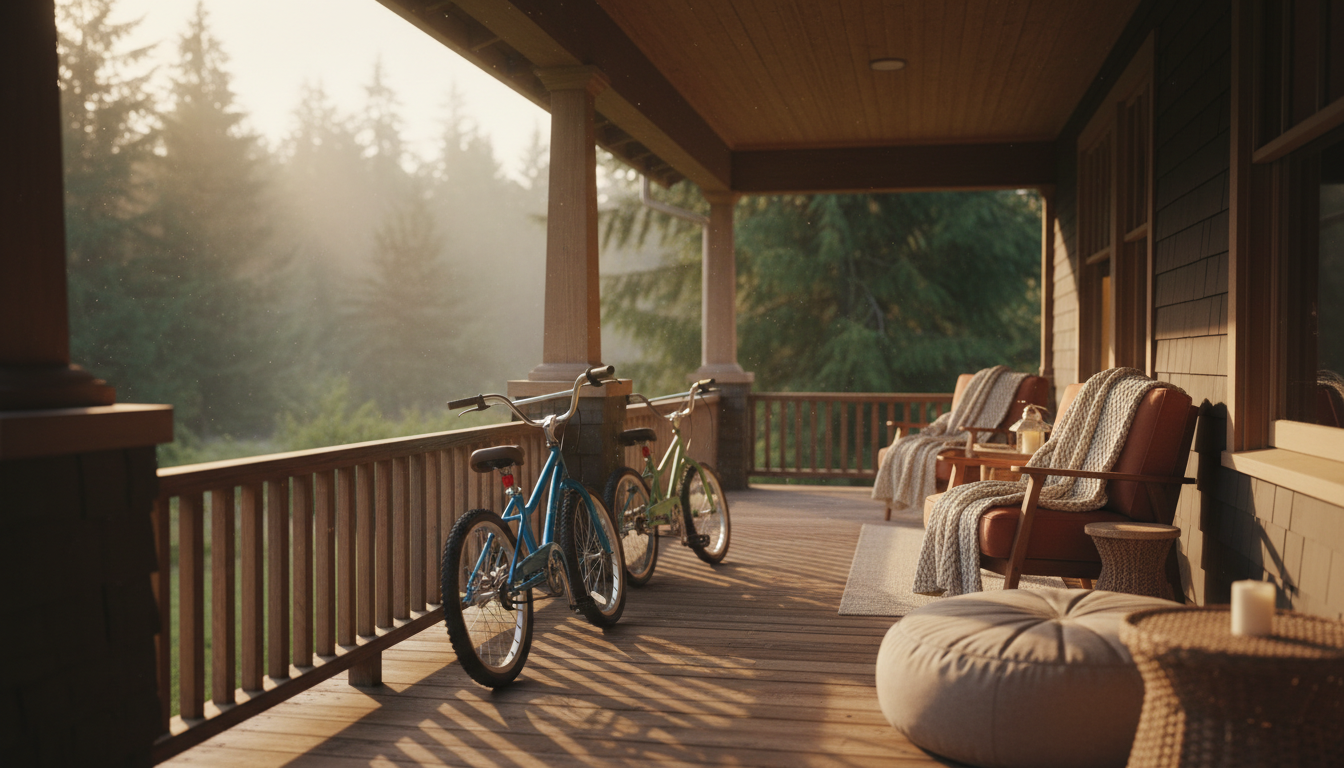 A cozy craftsman-style Portland home with a wraparound porch, kids bikes leaning against the railing
Why Portland Is Perfect for Family-Friendly Home Swapping
Portland has this reputation as a hipster paradise—all craft cocktails and vinyl records—but honestly? It's one of the most family-friendly cities I've ever visited. The pace is slower than Seattle or San Francisco. People are genuinely nice (like, Midwest nice but with better coffee). And the city is built for exploring with kids.
The neighborhoods are actually neighborhoods. Unlike cities where everything worth doing is downtown, Portland's best experiences are scattered across distinct districts. Alberta Street has galleries and ice cream. Hawthorne has bookshops and toy stores. Division Street has restaurants where kids are welcome, not just tolerated. When you stay in a home instead of a hotel, you're embedded in one of these neighborhoods—and that changes everything.
Nature is everywhere. Forest Park is literally the largest urban forest in the country—over 5,200 acres of trails, many of them perfect for little legs. The Willamette River runs through the city with waterfront parks on both banks. Mount Hood is ninety minutes away. You can do a morning hike, afternoon museum visit, and evening playground run without ever feeling rushed.
The food scene accommodates families without being boring. Portland's food cart pods are perfect for picky eaters—everyone gets exactly what they want. Restaurants here tend to be casual and kid-welcoming. And the coffee culture means you'll find excellent lattes everywhere, which matters when you're operating on toddler sleep schedules.
Public transit actually works. The MAX light rail, buses, and streetcar can get you most places you want to go. Kids under five ride free. This means you can skip the rental car stress if you're staying in a well-connected neighborhood.
Best Portland Neighborhoods for Family Home Exchanges
Not all Portland neighborhoods are created equal when you're traveling with kids. After four separate family trips here—and swapping in three different areas—I have strong opinions about where to base yourselves.
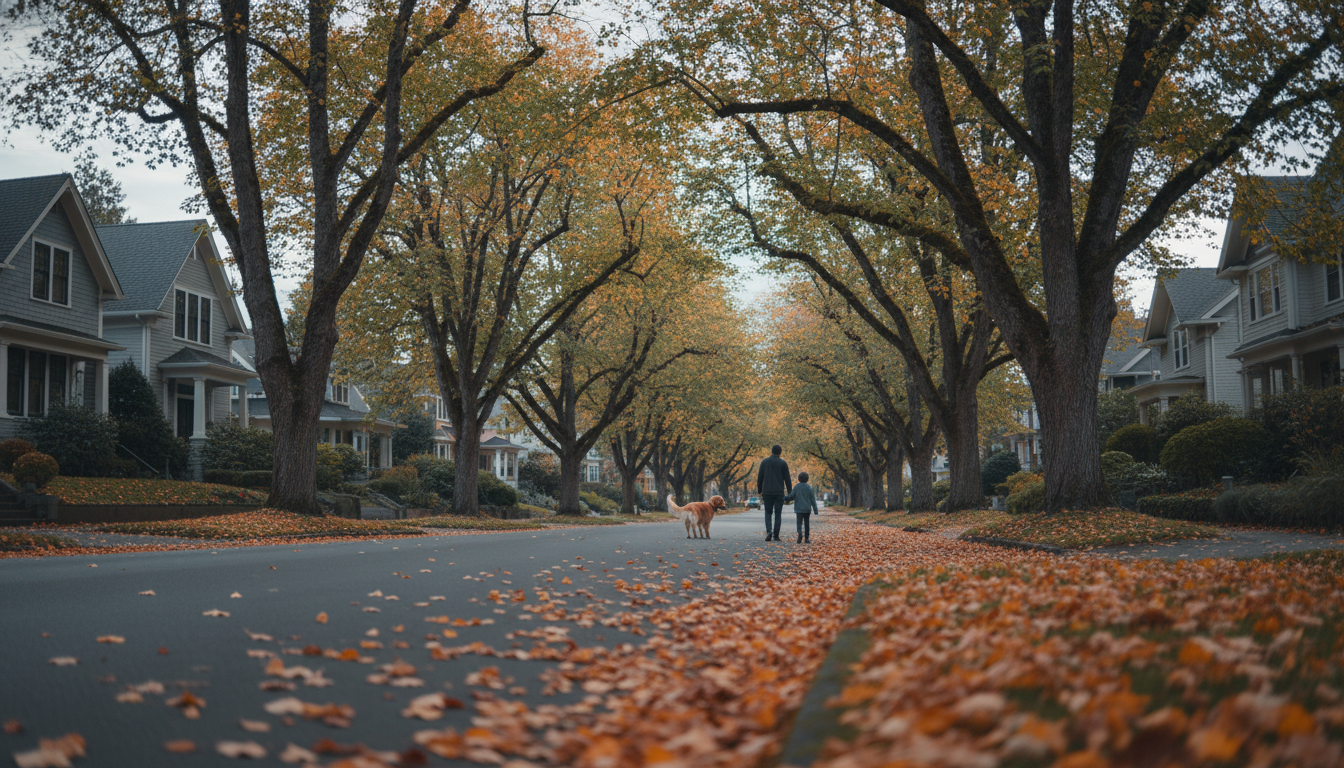 Tree-lined street in Portlands Laurelhurst neighborhood with historic homes, a family walking a gold
Alberta Arts District: Best for Creative Families
Alberta Street runs through one of Portland's most vibrant neighborhoods, and it's become my go-to recommendation for families with kids roughly 4-12. The street itself is walkable and interesting—murals everywhere, galleries, the kind of local shops where you'll find handmade toys and weird Portland souvenirs.
Salt & Straw ice cream is worth the line. Guardino Gallery offers free art browsing that even antsy kids can handle. And if you're visiting at month's end, the Last Thursday art walk is a scene. The neighborhood has several parks within walking distance, including Alberta Park with its big playground.
You'll find a mix of renovated craftsman homes and newer construction here. Many have yards—crucial for burning off energy. Look for listings that mention proximity to Alberta Street for maximum walkability. Homes here typically have 2-4 bedrooms, perfect for families. Bus lines run frequently along MLK Jr. Boulevard, connecting you to downtown in about 20 minutes.
Laurelhurst: Best for Nature-Loving Families
If your kids need green space and you want that classic Portland residential feel, Laurelhurst delivers. The neighborhood centers around Laurelhurst Park—39 acres of lawns, playgrounds, a spring-fed pond with ducks, and massive old trees perfect for climbing.
The park itself could occupy an entire day. The playground has structures for different age groups. In summer, the wading pool opens. The ducks are endlessly entertaining for toddlers. It's also close to the Hawthorne District for shopping and restaurants.
This is an established, affluent neighborhood with larger homes on bigger lots. You're more likely to find 3-4 bedroom houses with yards, garages, and the kind of kitchens that make cooking actually enjoyable. It's quieter than Alberta—better for naps and early bedtimes. The 75 bus connects to downtown, but honestly, this neighborhood works better if you have a car or don't mind longer transit times.
Sellwood-Moreland: Best for Younger Kids
Sellwood feels like a small town that happens to be inside Portland. The main drag, Sellwood Antique Row, is charming but the real draw for families is Oaks Bottom Wildlife Refuge and Sellwood Park.
Oaks Amusement Park is a throwback—affordable rides, a roller rink, and midway games that won't bankrupt you (around $3-5 per ride, or unlimited wristbands for $15-25). Sellwood Park has an excellent playground with views of downtown. The neighborhood pool opens in summer.
Sellwood homes tend toward smaller bungalows, but many have been renovated with families in mind. You'll find more modest square footage but often excellent yards. The neighborhood is safe for kids to bike around—a rarity. The 70 bus runs to downtown, and the Sellwood Bridge connects you to the east side. It's a bit more isolated than other neighborhoods, which is either a plus or minus depending on your style.
Mississippi District: Best for Foodie Families
Mississippi Avenue has transformed over the past decade into one of Portland's best food and drink streets. It's more urban than the other neighborhoods I've mentioned, but the walkability and restaurant density make it work well for families who prioritize eating.
Prost! has a huge outdoor area where kids can run while parents drink German beer. Lovely's Fifty Fifty does pizza that satisfies both kid palates and adult cravings. The Rebuilding Center is weirdly fascinating for older kids who like weird stuff.
Housing here is mixed—some renovated homes, some newer construction, some apartments. Yards are smaller or nonexistent. This neighborhood works better for families with older kids who don't need as much outdoor space at home. The Yellow Line MAX runs right through, connecting to downtown and the Pearl District easily.
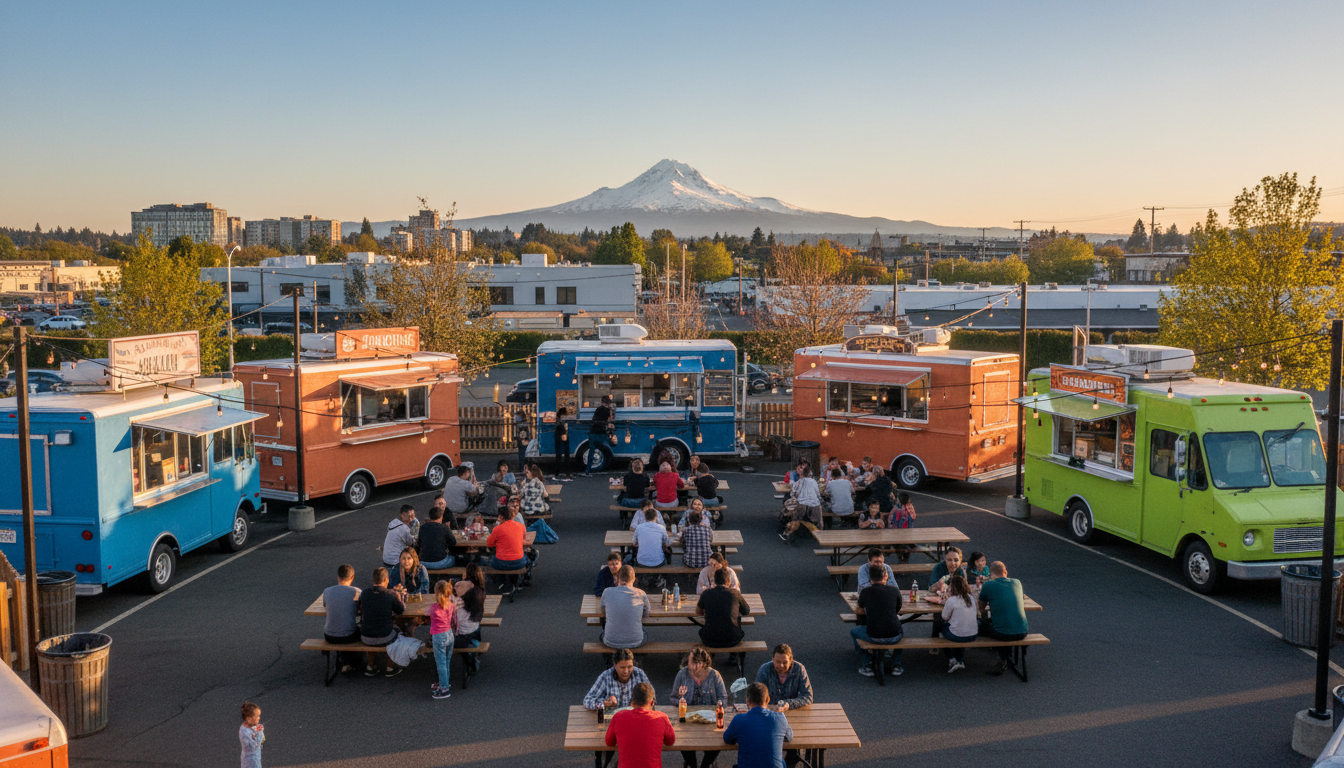 Overhead view of a Portland food cart pod with colorful carts, families sitting at picnic tables und
How to Find the Right Home Swap for Your Family
Finding a home that works for adults is easy. Finding one that works for your specific family configuration—with all the gear, the needs, the meltdown prevention requirements—takes more intention.
Start with Your Non-Negotiables
Before you even start browsing, make a list of what you actually need versus what would be nice. For our family, the non-negotiables are: separate sleeping space for kids (they wake up if we're in the room), fenced yard or very close park (for morning energy burns before anyone's had coffee), washer and dryer (because kids are disgusting), full kitchen with dishwasher (I refuse to hand-wash dishes on vacation), and street parking or driveway if we're renting a car.
Your list will be different. Maybe you need a crib, a high chair, or a home without stairs. Maybe you need to be walking distance to public transit. Get specific.
Reading Listings with a Parent's Eye
When browsing home swap listings on SwappaHome, look beyond the pretty photos. Here's what I've learned to check:
The neighborhood description matters more than the house description. A gorgeous home in an area without sidewalks or parks nearby will make your daily life harder.
Look for mentions of kids in the listing. Hosts who mention their own children usually have kid-friendly setups—outlet covers, cabinet locks, toys, books. Their homes are already childproofed.
Check the outdoor space carefully. Photos can be deceiving. A "backyard" might be a concrete patio. A "garden" might have a koi pond your toddler will definitely fall into. Ask directly about fencing, water features, and any hazards.
Read reviews from other families. If the listing has been used by families before, their reviews will tell you what worked and what didn't.
The Art of the Family-Specific Message
When you reach out to potential hosts through SwappaHome's messaging system, be specific about your family. I always mention ages of kids, our travel style (active, relaxed, mix), what we're hoping to do in the area, and any specific needs or questions about the home.
This isn't just politeness—it helps hosts determine if their home is actually a good fit. A family with teenagers has different needs than a family with a baby. Being upfront prevents mismatches.
Planning Your Portland Family Itinerary
One mistake I see families make: trying to do too much. Portland rewards a slower pace. Here's how I'd structure a week-long family home swap in Portland.
 Inside OMSI Oregon Museum of Science and Industry with children interacting with a hands-on physics
Day One: Settle In
Don't plan anything ambitious. Hit a grocery store (New Seasons Market is the local favorite—good prepared foods section for that first exhausted night). Walk around your neighborhood. Find the nearest playground. Let everyone decompress from travel.
Days Two and Three: Big Attractions
This is when you hit the must-dos while everyone still has energy.
OMSI deserves a full day. The submarine tour is worth the extra $8.50 per person. The hands-on science exhibits keep kids engaged for hours. There's a planetarium, an earthquake simulator, and enough buttons to push that even my button-obsessed four-year-old was satisfied. General admission runs about $17 for adults, $12 for kids 3-13, free for under 3.
Powell's City of Books is the world's largest independent bookstore, and yes, it's as overwhelming as it sounds. But the kids' section (the Rose Room) is excellent, and they do free story times. Budget at least two hours and accept that you'll leave with more books than you intended.
The Portland Children's Museum is ideal for the under-7 crowd. It's smaller than big-city children's museums but thoughtfully designed. The outdoor play area is great in good weather. About $14 per person, free for under 1.
Days Four and Five: Neighborhood Exploring
This is where staying in a home instead of a hotel pays off. Pick a neighborhood each day and really explore it.
Hawthorne District: Walk the strip, hit the toy stores (Presents of Mind has great stuff), get lunch at a food cart pod, find a coffee shop with outdoor seating. Let the day unfold.
Division Street: Newer development with excellent restaurants. Pok Pok (if it's reopened) put Portland Thai food on the map. Salt & Straw has another location here. The street is more spread out—better for families with strollers than Hawthorne.
Pearl District: Portland's fancy neighborhood. Jamison Square has a fountain that's basically a splash pad in summer—bring swimsuits. Powell's is here. The streetcar runs through if little legs get tired.
Day Six: Nature Day
Forest Park is the obvious choice. The Lower Macleay Trail to Pittock Mansion is about 5 miles round trip—doable for kids 6+ who are used to hiking. The Witch's Castle (an old stone restroom ruin) makes a good turnaround point for shorter legs.
Alternatively, drive 30 minutes to Multnomah Falls. It's touristy but genuinely spectacular. The short walk to the bridge viewpoint is stroller-accessible. Going to the top requires 1.2 miles of switchbacks—challenging but achievable for most school-age kids.
Day Seven: Wind Down
Keep it simple. Morning at your neighborhood park. Maybe a final food cart meal. Pack up slowly. Leave time for the inevitable "I forgot my stuffed animal" crisis.
What to Expect from Your Portland Host
Home swapping works on mutual trust and respect—you're staying in someone's actual home, and they're trusting you with their space. Portland hosts, in my experience, tend to be particularly welcoming to families.
Communication Before You Arrive
Good hosts will send you arrival information through SwappaHome's messaging system: door codes or key locations, WiFi passwords, parking instructions, and any quirks about the home ("the back door sticks" or "the garbage goes out Tuesday").
For family stays, I always ask where's the nearest playground, any kid-friendly restaurant recommendations, are there any hazards I should know about (pools, ponds, unfenced areas), and where do you keep cleaning supplies for inevitable spills.
House Rules and Kid Considerations
Most hosts understand that kids are kids. Accidents happen. That said, be respectful. If the listing says no shoes inside, enforce it with your kids. If there's a room that's off-limits, make sure everyone understands.
I always do a quick kid-proofing check when we arrive—moving breakables up high, checking for accessible cleaning supplies or medications, noting any hazards. Even in "kid-friendly" homes, your specific kids might find trouble the host's kids never did.
Leaving the Home
The golden rule: leave it as you found it. With kids, this requires extra time. I build in two hours on departure day just for cleaning and tidying. Strip beds, start laundry (or leave sheets in the washer as instructed), wash dishes, wipe down surfaces, take out trash.
I also leave a small thank-you—usually local treats from wherever we came from. It's not required, but it builds the kind of community that makes home swapping work.
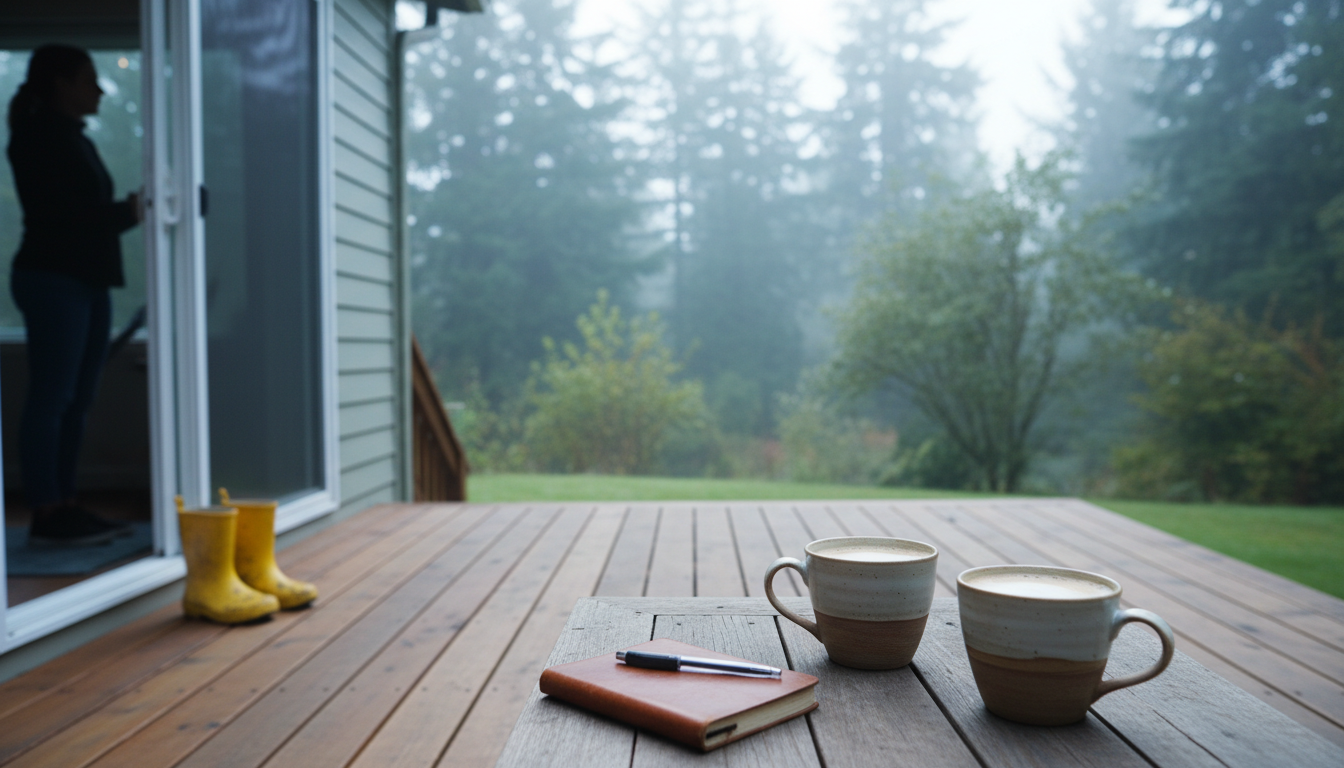 Morning scene on a Portland homes back deck two coffee cups on a wooden table, a childs rain boots b
Budgeting Your Portland Family Home Swap
Let's talk real numbers. Here's what a week in Portland typically costs for a family of four.
What You'll Save
A family-friendly hotel in a decent Portland location runs $200-350 per night. For a week, that's $1,400-2,450. With SwappaHome's credit system, your accommodation costs you credits, not cash—1 credit per night, regardless of the home's size or location. New members start with 10 free credits, so your first swap could be essentially free.
A full kitchen means you're not eating every meal out. We typically do breakfast and lunch at "home" and one dinner out per day. That alone saves us $100-150 per day compared to full restaurant dining.
What You'll Spend
Flights: From the West Coast, $150-300 per person round trip. From the East Coast, $300-500. Kids under 2 fly free on laps.
Car rental (optional): $40-70 per day depending on season. You can skip this if you stay in a transit-friendly neighborhood, but a car makes day trips easier.
Attractions: Budget $50-100 per day for a family of four. Many Portland attractions are free (parks, Forest Park, walking neighborhoods), which helps offset pricier spots like OMSI.
Food: With a kitchen, budget $100-150 per day for groceries plus one restaurant meal. Portland restaurants are reasonably priced—family dinners at good spots run $60-100 including tip.
Total realistic budget: $2,000-3,500 for a week, depending on where you're flying from and how much you do. Compare that to $4,000-6,000+ for the same trip staying in hotels and eating out every meal.
Practical Tips for Traveling with Kids to Portland
A few things I've learned the hard way.
Weather Reality
Portland's reputation for rain is earned, but it's not what you think. It rarely pours—it mists. It drizzles. It's gray. Pack layers and waterproof jackets, not umbrellas (locals will judge you). Summers are genuinely glorious—70s and 80s, almost no rain, long daylight hours.
Best months for families: June through September for weather. December for holiday lights and indoor coziness. Avoid November and February unless you truly don't mind gray.
Getting Around with Kids
The MAX light rail is stroller-friendly and kids find it exciting. Buses are fine but can be crowded. Rideshare works well—car seats are required by law, so bring yours or request one.
If you're renting a car, know that Portland drivers are... leisurely. People actually stop for pedestrians. It takes some adjustment if you're from an aggressive driving city.
Kid-Friendly Eating Strategies
Food cart pods are your best friend. Everyone picks their own cart, you meet at a communal table, nobody has to agree on a restaurant. Top picks: Cartopia (SE Hawthorne), Prost! (Mississippi), and the carts at Pioneer Courthouse Square downtown.
For sit-down restaurants, Portlanders eat early. Get to popular spots by 5:30 PM and you'll avoid waits. Screen Door (brunch) and Pok Pok (dinner) are famous for lines—go at off-hours or skip them entirely for equally good but less hyped spots.
Making the Most of SwappaHome for Family Travel
SwappaHome's credit system is particularly well-suited to family travel. Here's why.
Every night costs 1 credit, regardless of the home. That means a four-bedroom house with a yard in Portland costs the same as a studio apartment. For families who need space, this is huge. Hotels charge more for suites and family rooms; home swapping doesn't.
You can earn credits by hosting, then spend them anywhere. If you live in a desirable location, you might host several times a year and bank enough credits for a big family trip. We've hosted guests in San Francisco (which is apparently very popular) and used those credits for longer stays in less expensive destinations.
The review system helps you find family-tested homes. Look for reviews that mention kids, and you'll know the home actually works for families—not just in theory.
New members get 10 free credits to start. That's 10 nights of accommodation, which could cover a solid family vacation. It's enough to test whether home swapping works for your family before you commit to hosting.
Frequently Asked Questions
Is family-friendly home swapping in Portland safe?
Home swapping through SwappaHome is built on community trust and mutual respect. Members verify their identities, build reputations through reviews, and communicate directly before exchanges. For added peace of mind, consider getting your own travel insurance that covers personal belongings. Portland itself is a safe, family-friendly city with low violent crime rates.
How much can families save with home swapping in Portland compared to hotels?
Families typically save $1,500-2,500 per week by home swapping instead of booking hotels in Portland. A family-friendly hotel runs $200-350 nightly, while SwappaHome uses a credit system where every night costs 1 credit regardless of home size. New members receive 10 free credits to start.
What amenities should families look for in Portland home swap listings?
Prioritize separate sleeping spaces for kids, fenced yards or nearby parks, full kitchens with dishwashers, and washer/dryer access. Check for childproofing if you have toddlers. Look for listings where hosts mention their own children—these homes are typically already set up for families.
What's the best Portland neighborhood for a family home exchange?
Alberta Arts District and Laurelhurst are top picks for families. Alberta offers walkability, kid-friendly shops, and excellent parks. Laurelhurst centers around a 39-acre park with playgrounds and is quieter for naps and early bedtimes. Both neighborhoods have family homes with yards available for swapping.
When is the best time for a family home swap in Portland?
June through September offers the best weather—warm, dry, and perfect for outdoor activities. December works well for families who enjoy holiday festivities and don't mind rain. Avoid November and February unless gray skies don't bother you. Summer requires booking further in advance as Portland home swaps are most competitive then.
40+
Swaps
25
Countries
7
Years
About Maya Chen
Travel Writer & Home Exchange Expert
Maya is a travel writer with over 7 years of experience in the home swapping world. Originally from Vancouver and now based in San Francisco, she has completed more than 40 home exchanges across 25 countries. Her passion for "slow" and authentic travel led her to discover that true luxury lies in living like a local, not a tourist.
Ready to try home swapping?
Join SwappaHome and start traveling by exchanging homes. Get 10 free credits when you sign up!
Related articles

Lyon Home Exchange: Your Complete Guide to France's Hidden Gem for Home Swapping
Discover why Lyon home exchange is booming among savvy travelers. From Croix-Rousse to Presqu'île, find the best neighborhoods and insider tips for your swap.

Zurich Bucket List: 47 Unforgettable Experiences to Enjoy During Your Home Swap
Discover the ultimate Zurich bucket list for home swappers—from secret swimming spots to fondue rituals locals actually do. Save thousands while living like a true Zürcher.
Dublin Home Exchange Utilities Guide: WiFi, Heating & Everything Your Guests Need
Master Dublin home exchange utilities—from dodgy WiFi fixes to heating quirks. Practical tips from 7 years of swapping homes across Ireland.