Home Exchange in Rotterdam: 7 Underrated Neighborhoods Locals Don't Want You to Know
Maya Chen
Travel Writer & Home Exchange Expert
Skip the tourist traps. These underrated Rotterdam neighborhoods offer authentic home exchange experiences, lower costs, and the kind of local life guidebooks miss.
I almost didn't book the home exchange in Rotterdam that changed how I travel.
The listing was in Delfshaven—a neighborhood I'd never heard of, in a city most Americans skip entirely on their Netherlands itinerary. But the photos showed a 17th-century canal house with crooked stairs, a kitchen window overlooking historic windmills, and a host review that mentioned "the best Indonesian restaurant in the country is a 3-minute walk away."
Three weeks later, I was eating rijsttafel at that exact restaurant, watching the sun set over the oldest surviving part of Rotterdam, and wondering why everyone rushes straight to Amsterdam.
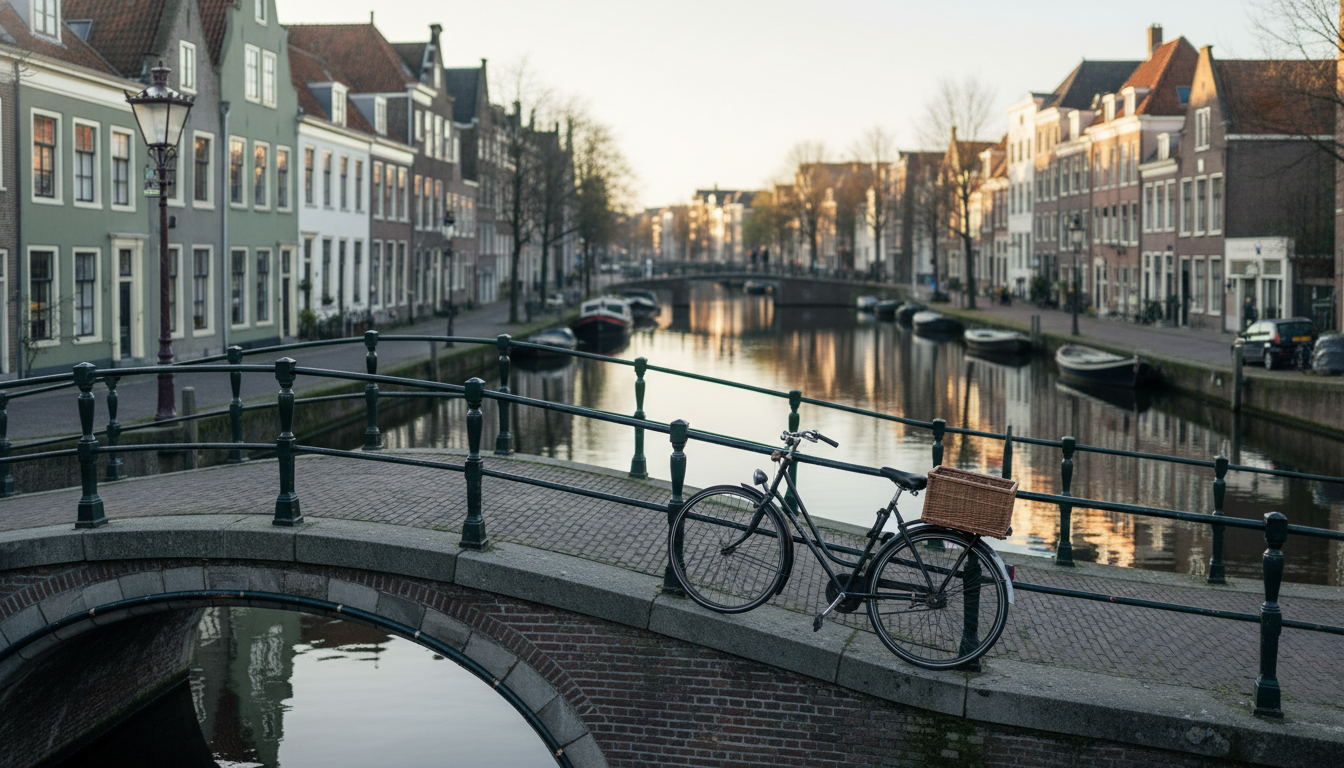 Golden hour light on Delfshavens historic canal with traditional Dutch houses reflected in still wat
Here's what I've learned after multiple home exchanges in Rotterdam: the city's most rewarding neighborhoods aren't the ones travel blogs obsess over. They're the areas where your home exchange host leaves you a handwritten note about which bakery has the best stroopwafels, where you'll be the only tourist at the Saturday market, and where a week's stay actually lets you understand how Rotterdammers live.
This guide covers seven underrated Rotterdam areas perfect for home exchange—places I've either stayed myself or had recommended by hosts I trust. Real neighborhoods with real character, not just "hidden gems" that are actually packed with Airbnb tourists.
Why Rotterdam Is Perfect for Home Exchange (And Why Most Travelers Miss It)
Rotterdam has an identity crisis that works in your favor.
Unlike Amsterdam—where home exchange demand is fierce and listings get snapped up months in advance—Rotterdam flies under the radar. It's the Netherlands' second-largest city, its most architecturally innovative, and arguably its most culturally diverse. But because it lacks the postcard-perfect canals of its northern neighbor, most tourists treat it as a day trip at best.
Their loss. Your opportunity.
Home exchange in Rotterdam means access to genuinely livable neighborhoods where your credits stretch further. On SwappaHome, Rotterdam listings often sit available while Amsterdam equivalents are booked solid. I've seen stunning loft apartments in Rotterdam's emerging districts go unbooked for weeks—the same quality in Amsterdam would have a waitlist.
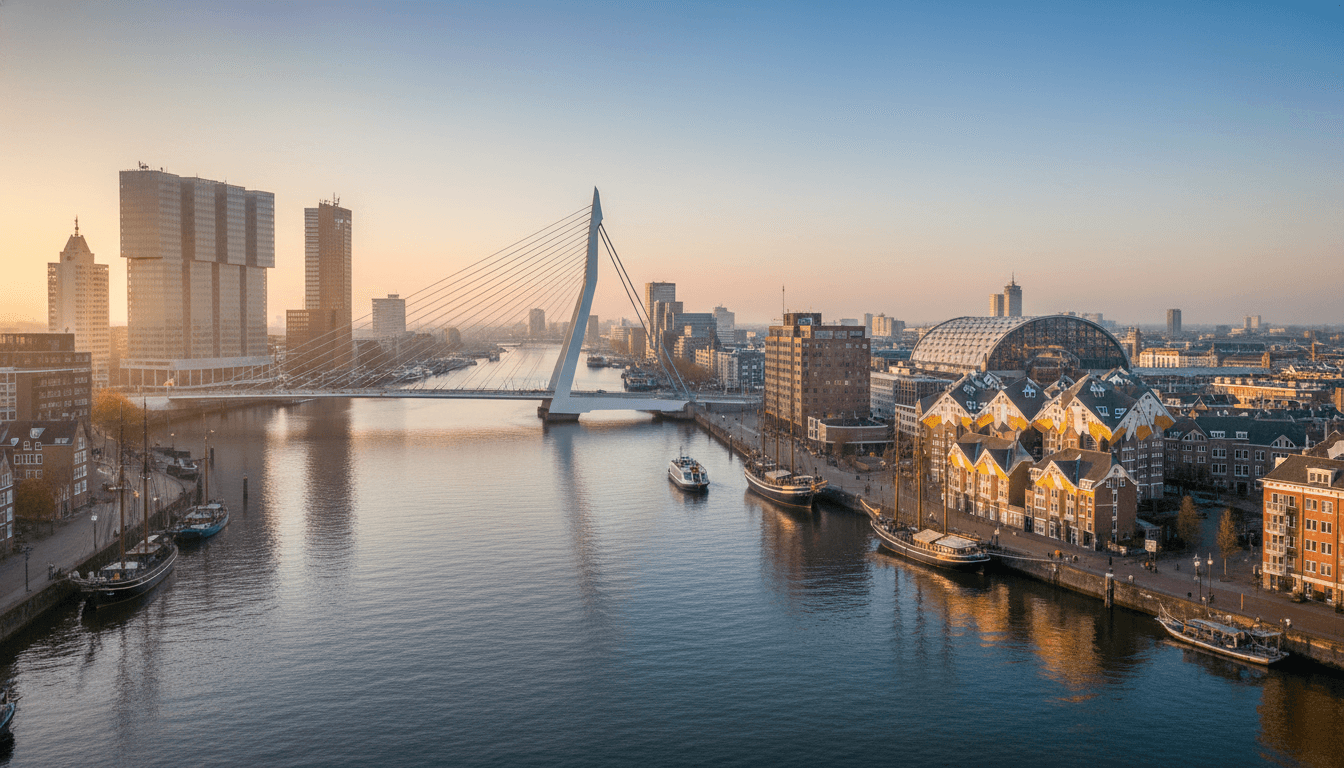
The other thing about Rotterdam? It was almost completely destroyed in World War II, then rebuilt with wild architectural ambition. The city doesn't feel "old European" in the expected way. It feels like the future crashed into the past. Cube houses perch at impossible angles. The Markthal looks like a spaceship landed downtown. And between these architectural statements, you'll find quiet residential pockets where neighbors actually know each other.
These are the neighborhoods we're exploring.
Delfshaven: The Historic Heart Most Tourists Never Find
Let me tell you about my morning routine during that first Rotterdam home exchange.
I'd wake up around 7:30, make coffee in my host's kitchen (she'd left me her favorite local roaster's beans—Man Met Bansen, €9 for 250g), and walk five minutes to the Pilgrim Fathers Church. This is where the Pilgrims held their last service before sailing to America. Most mornings, I had the entire waterfront to myself.
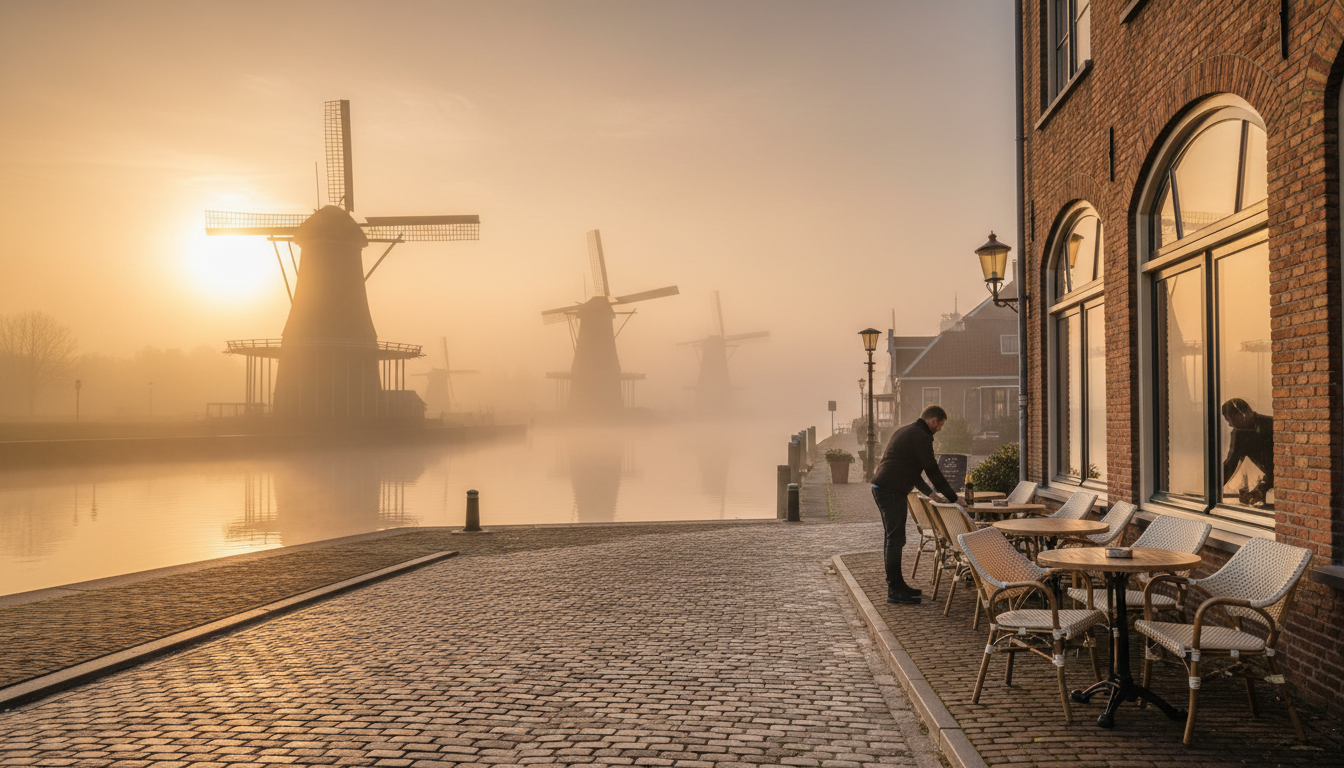 Early morning mist over Delfshavens Voorhaven canal, historic windmills in background, empty cobbles
Delfshaven survived the 1940 bombing that leveled most of Rotterdam, making it the only neighborhood that looks like what people imagine when they think "Dutch canal town." But because it's a 15-minute tram ride from Central Station, it gets a fraction of the foot traffic.
What You'll Find Here
Historic canal houses with character—crooked floors, steep stairs, and windows that have watched four centuries of Dutch life. Many have been modernized inside while keeping original facades. Expect to pay around 1 credit per night on SwappaHome (same as everywhere, but the value here feels exceptional).
The neighborhood has a genuine community feel. My host's neighbors waved at me by day three. There's a weekly market on Saturdays where you can buy cheese directly from farmers, and the Indonesian food scene is unmatched—Delfshaven has Rotterdam's largest Indonesian community, a legacy of colonial history that's created incredible culinary diversity.
For dinner, try Warung Mini (mains around €12-15, or roughly $13-16 USD). It's a no-frills spot where the rijsttafel is transcendent. Get there before 6 PM on weekends or you'll wait.
The Practical Stuff
Tram lines 4 and 8 connect Delfshaven to Central Station in about 12 minutes. The neighborhood has a small supermarket (Albert Heijn), several cafés, and a surprisingly good wine bar called Aloha that locals treat as their living room.
Best for: History lovers, food-focused travelers, anyone wanting a quiet base with character.
Katendrecht: From Rough Past to Rotterdam's Coolest Peninsula
Katendrecht has a reputation problem—and that's exactly why it's perfect for home exchange.
Until about 15 years ago, this peninsula jutting into Rotterdam's harbor was the city's red-light district. Sailors, dockworkers, and a certain seediness defined the area. Today? It's arguably Rotterdam's most exciting neighborhood, with that slightly rough-around-the-edges energy that artists and creative types gravitate toward before gentrification smooths everything out.
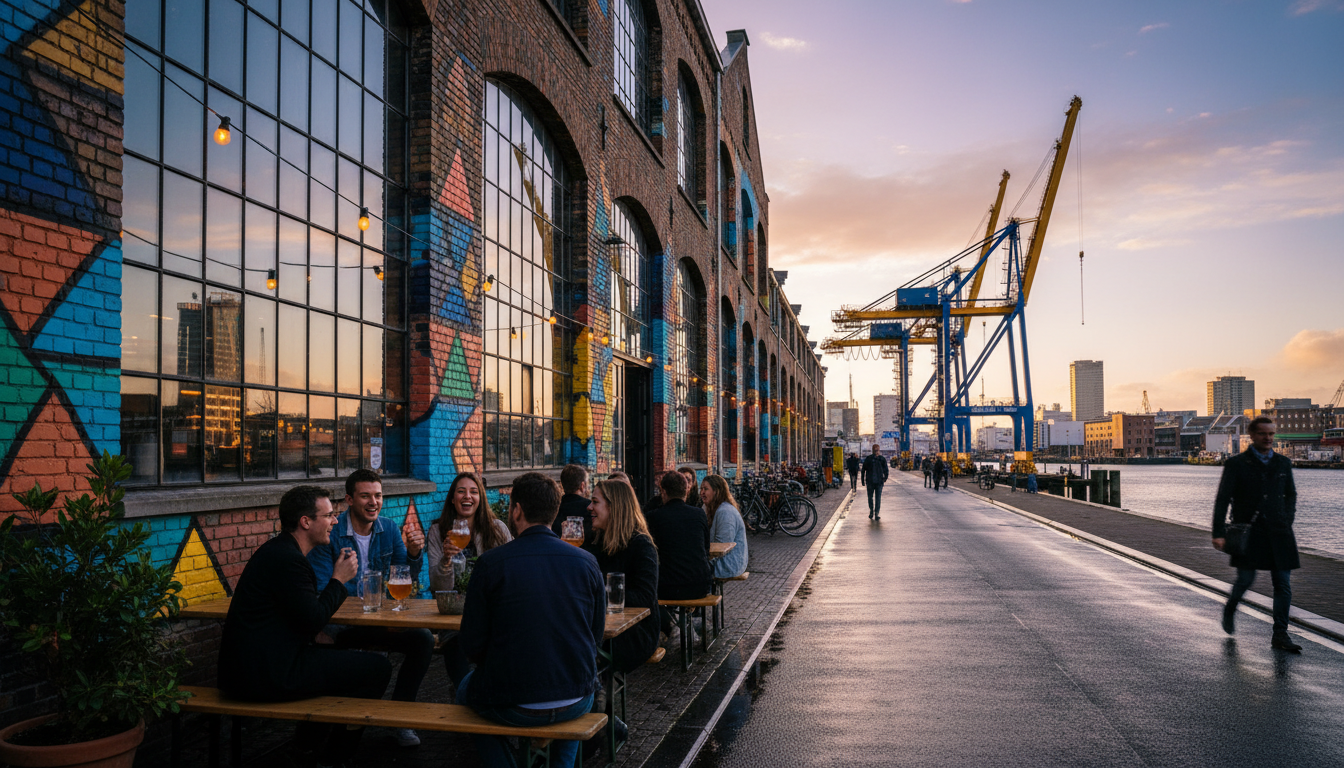 Street scene in Katendrecht showing converted warehouse with industrial windows, street art on brick
I stayed here during my second Rotterdam home exchange—a converted dock worker's apartment with exposed brick, massive windows overlooking the Maas River, and a rooftop where my host had set up a small garden. The neighborhood felt alive in a way that more established areas don't.
The Katendrecht Vibe
This is where Rotterdam's creative class lives. Warehouses have become galleries, studios, and loft apartments. The Fenix Food Factory—a covered market in a former warehouse—is the neighborhood's beating heart, with local vendors selling everything from craft beer to Surinamese roti to artisanal cheese.
The housing stock here tends toward industrial conversions. If you're doing a home exchange in Katendrecht, expect high ceilings, interesting architecture, and neighbors who are probably graphic designers or DJs.
Prices at Fenix Food Factory are reasonable: €8-12 ($9-13 USD) for most dishes, €5-6 ($5.50-6.50 USD) for craft beers. On sunny weekends, the outdoor terrace overlooking the water fills up by noon.
Getting Around
The Rijnhavenbrug pedestrian bridge connects Katendrecht to the city center—a 20-minute walk that takes you past Rotterdam's iconic skyline. Water taxis also run from the peninsula, which feels appropriately dramatic.
Best for: Creative travelers, architecture enthusiasts, anyone who likes neighborhoods with edge.
Blijdorp: The Family-Friendly Secret Near Rotterdam's Best Park
Not every home exchange needs to be in a trendy converted warehouse.
Blijdorp is where Rotterdam families actually live—tree-lined streets, pre-war houses with gardens, and the kind of neighborhood infrastructure (bakeries, butchers, a proper cheese shop) that makes daily life pleasant. It's also home to Rotterdam Zoo and adjacent to the massive Kralingse Bos park.
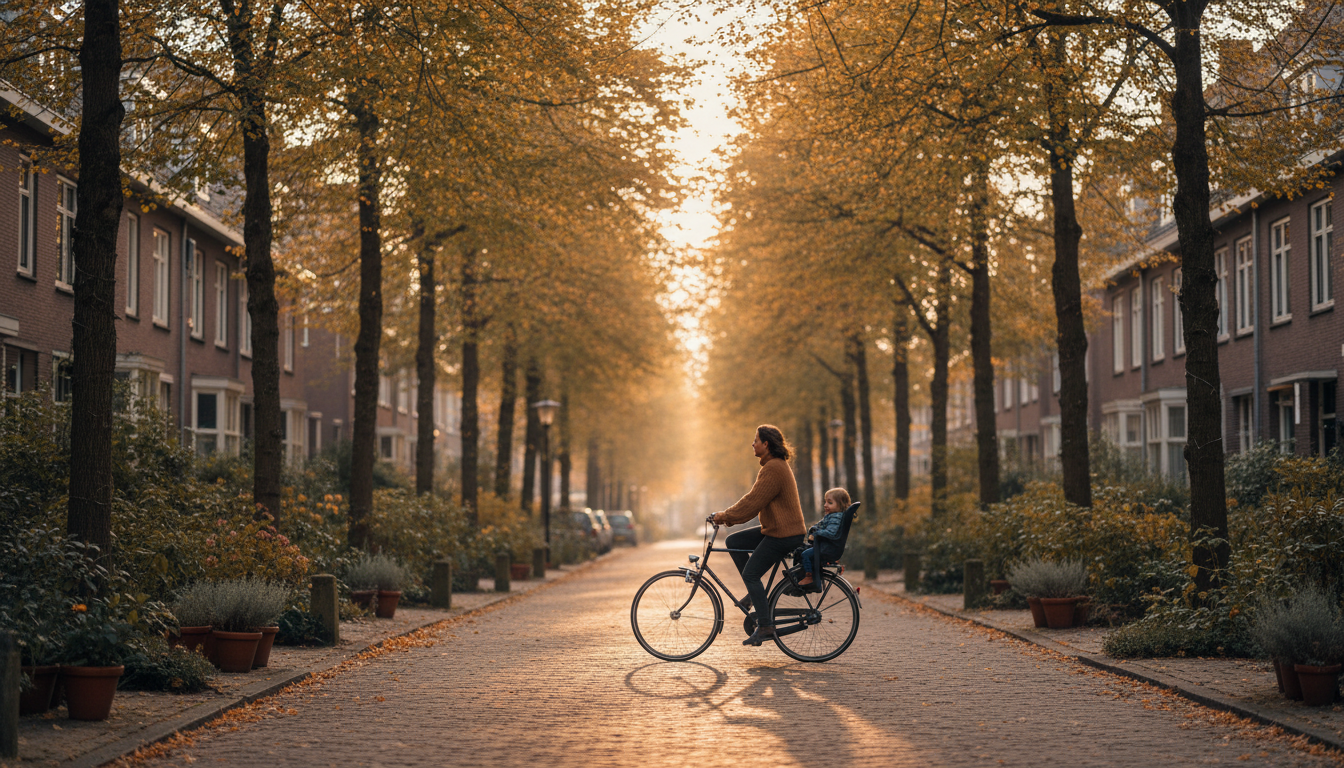 Quiet residential street in Blijdorp with mature trees creating a canopy, classic Dutch row houses w
I haven't done a home exchange here myself, but I've visited Blijdorp listings while helping a friend find a place for her family trip. The homes here tend to be larger—actual houses rather than apartments—which makes them ideal for families or groups.
Why Blijdorp Works for Home Exchange
The neighborhood sits about 15 minutes by tram from Central Station, but it feels like a different world. Streets are quieter. You'll hear birds instead of traffic. The houses often have backyards, which is rare in Dutch urban areas.
Rotterdam Zoo (Diergaarde Blijdorp) is genuinely excellent—one of the oldest zoos in the Netherlands with a fantastic aquarium. Adult tickets run €26.50 ($29 USD), but if you're staying for a week or more, the area's proximity to the zoo becomes a real perk.
For groceries, the neighborhood has a Jumbo supermarket and several specialty shops. There's a weekly market on Wednesdays.
The Trade-Off
Blijdorp is residential in a way that might feel too quiet for some travelers. The nightlife is essentially nonexistent, and you'll need to tram into the center for restaurants beyond the neighborhood basics. But if you want a home exchange that feels like actually living in Rotterdam—cooking dinner, walking to the park, nodding at neighbors—this is it.
Best for: Families, longer stays, travelers who prioritize comfort over scene.
Kralingen: Where Rotterdam's Old Money Meets Student Energy
Kralingen is weird in the best way.
On one side, you have Rotterdam's wealthiest residents in stately villas overlooking Kralingse Plas lake. On the other, you have Erasmus University students cramming for exams in budget cafés. Somehow, it works.
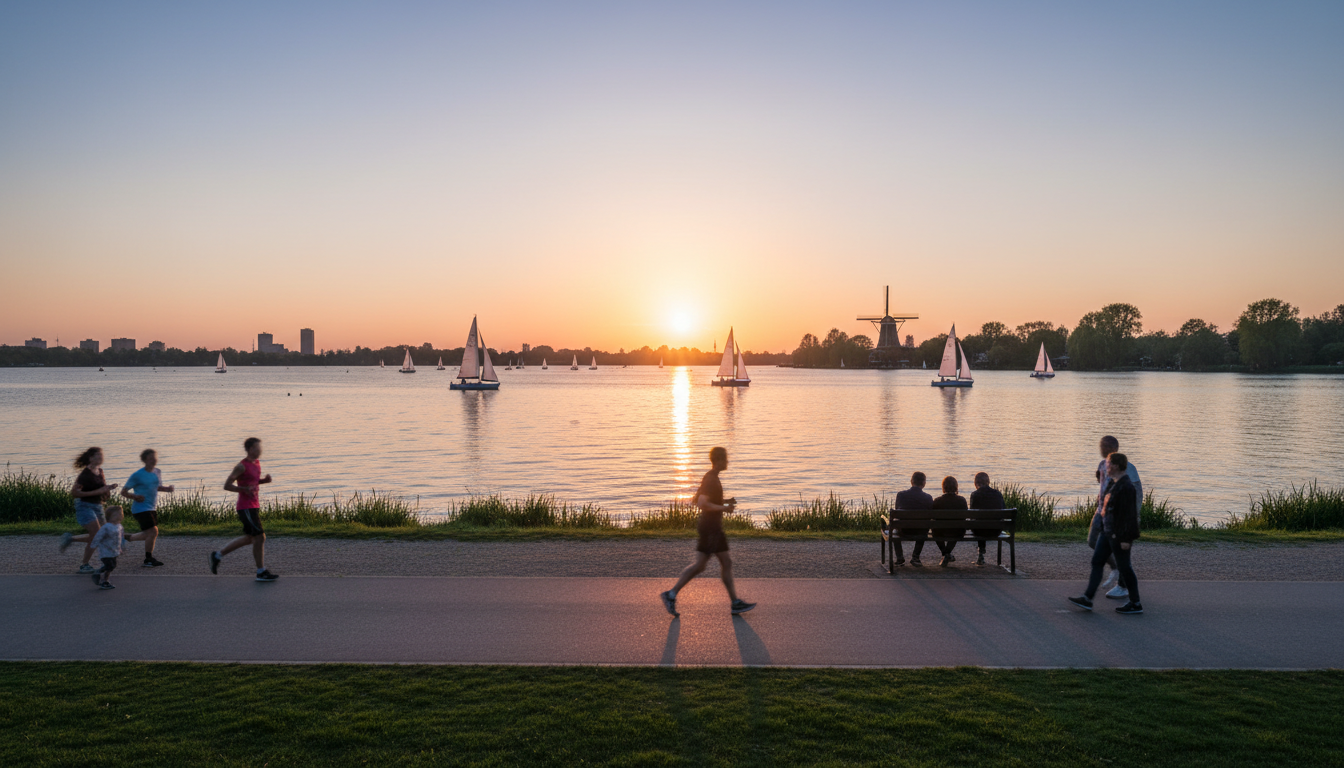 Sunset over Kralingse Plas lake with sailboats, joggers on the waterfront path, historic windmill vi
The home exchange opportunities here split into two categories: the lakeside villas (rare, but occasionally available) and the more affordable apartments near the university. Both have their appeal.
The Lakeside Experience
If you can score a home exchange near Kralingse Plas, you'll have access to one of Rotterdam's best urban escapes. The lake has a small beach (yes, really), sailing clubs, and a running/cycling path that circles the water. In summer, it feels almost Mediterranean.
The historic windmill De Ster sits on the lake's edge and still operates, grinding grain that you can buy. It's the kind of detail that makes a home exchange feel special—knowing you can walk to a working 18th-century windmill on a Tuesday morning.
The Student-Adjacent Side
Near Erasmus University, the vibe shifts younger and more international. Cafés cater to students, which means good coffee at reasonable prices (€3-4/$3.30-4.40 USD for a cappuccino). The diversity is notable—Erasmus draws students from everywhere, which translates to varied restaurant options.
Try Lokaal Espresso for coffee and Bazar for a Middle Eastern-inspired brunch that's become a Rotterdam institution (brunch around €15-18/$16-20 USD).
Best for: Outdoor enthusiasts, travelers wanting a mix of nature and city, longer stays where you'll appreciate the lake access.
Noord: The Up-and-Coming District That Hasn't Been "Discovered" Yet
Every city has a neighborhood that real estate agents describe as "emerging." In Rotterdam, that's Noord.
Five years ago, Noord was mostly working-class housing and light industry. Today, it's in that sweet spot where interesting things are happening but prices haven't caught up. Artists have moved into former workshop spaces. A few excellent restaurants have opened. And the housing stock—a mix of early 20th-century workers' cottages and newer apartments—offers genuine character.
What Makes Noord Interesting for Home Exchange
The neighborhood has a village-within-a-city feel. The main street (Zwart Janstraat) has independent shops, a fantastic Moroccan bakery, and the kind of no-nonsense brown cafés where locals have been drinking for decades.
Home exchange listings here tend to be more affordable-feeling—not in credits (always 1 per night on SwappaHome), but in the sense that you're getting more space. The apartments are larger, the streets are quieter, and you're still only 10 minutes by tram from Central Station.
The Moroccan and Turkish communities in Noord mean excellent kebab shops and bakeries. Try Bakkerij Oase on Zaagmolenkade for fresh flatbreads and pastries (most items €1-3/$1.10-3.30 USD).
The Reality Check
Noord isn't polished. Some streets are prettier than others. The nightlife is limited to a few local bars. But if you want to experience Rotterdam as Rotterdammers actually live it—diverse, unpretentious, evolving—Noord delivers.
Best for: Budget-conscious travelers (more space for your credits), cultural explorers, anyone tired of tourist-friendly neighborhoods.
Oude Noorden: The Multicultural Heartbeat
Oude Noorden shares a border with Noord but has its own distinct personality—more established, more diverse, and with a food scene that reflects Rotterdam's status as Europe's largest port city.
This is where I'd recommend home exchange for food-obsessed travelers. Within a 10-minute walk, you can eat Surinamese, Turkish, Moroccan, Chinese-Indonesian, Cape Verdean, and Dutch-traditional. The neighborhood market on Saturdays is a sensory overload in the best way.
The Food Scene (Because That's Why You're Here)
Roopram Roti on Hoogstraat serves what many consider the best roti in the Netherlands—massive portions of Surinamese flatbread with curried fillings for around €10-12 ($11-13 USD). There's usually a line, but it moves fast.
For Turkish breakfast, try Van Nelle Fabriek's café (a UNESCO World Heritage factory turned creative hub) or any of the neighborhood's traditional Turkish spots where €8 ($8.80 USD) gets you enough food for two meals.
Living in Oude Noorden
The housing here is mostly late 19th and early 20th century—brick apartment buildings with high ceilings and original details. Home exchange listings often feature those classic Dutch steep staircases and windows that flood rooms with light.
The neighborhood is lively, which means it's not quiet. If you're sensitive to street noise, ask your home exchange host about the specific location. But if you want to feel the pulse of multicultural Rotterdam, this is it.
Best for: Food lovers, cultural immersion seekers, travelers who want energy over tranquility.
Hillegersberg: The Lakeside Village That Doesn't Feel Like Rotterdam
Hillegersberg is Rotterdam's escape valve.
Technically part of the city, it feels like a separate village—historic center, lake views, and a pace of life that's noticeably slower. Dutch families who've "made it" often end up here, in houses with gardens and water access.
Why Consider Home Exchange Here
Hillegersberg offers something rare in Rotterdam: genuine waterfront living. The neighborhood wraps around Bergse Plas lake, and many homes have private docks or water access. If you're traveling with someone who needs daily nature immersion (or if you're that person), this neighborhood delivers.
The historic center has a church dating to the 15th century, a few quality restaurants, and the kind of quiet that lets you hear church bells clearly. It's a 20-minute tram ride to Central Station, but the commute feels worth it for the serenity.
The Hillegersberg Lifestyle
Expect home exchange hosts who have kayaks in their garage, gardens they're proud of, and recommendations for the best cycling routes around the lake. The neighborhood market on Fridays is small but excellent—mostly local produce and flowers.
For dining, Restaurant De Plek offers modern Dutch cuisine with lake views (mains €22-28/$24-31 USD), while Café Bergse Brug is a more casual spot for coffee and apple pie.
Best for: Nature lovers, travelers seeking quiet, families who want space to spread out.
How to Find the Best Rotterdam Home Exchange (Practical Tips)
After multiple Rotterdam home exchanges, here's what I've learned about finding the right fit:
Timing Matters
Rotterdam's home exchange market is less competitive than Amsterdam's, but certain periods still get busy. King's Day (April 27) sees increased demand across the Netherlands. Summer months (June-August) are popular but not impossible. Winter offers the most availability—and Rotterdam's indoor markets, museums, and café culture make it a solid cold-weather destination.
Read Between the Lines
On SwappaHome, pay attention to how hosts describe their neighborhoods. "Lively" often means "can be noisy." "Up-and-coming" means "not fully gentrified." "Quiet residential" means "you'll need to tram for nightlife." None of these are negatives—just useful context.
Ask About Transportation
Rotterdam's public transit is excellent (the metro, trams, and buses run frequently and on time), but some neighborhoods are better connected than others. Ask your potential host: How long does it take to reach Central Station? Is there a grocery store within walking distance? Where's the nearest tram stop?
The Verification Thing
I always look for verified members on SwappaHome. The platform offers identity verification, and while it's not required, it adds a layer of trust. Check reviews carefully—how do hosts describe their guests? How do guests describe the home versus the listing photos?
Consider Your Priorities
Be honest with yourself. Do you want nightlife access or morning quiet? Architectural interest or green space? Foodie neighborhoods or family-friendly parks? Rotterdam's diversity means you can optimize for almost anything—but you need to know what you're optimizing for.
Making Your Rotterdam Home Exchange Work
A few final thoughts from someone who's been there.
Rotterdam rewards curiosity. The city doesn't hand you its best parts on a tourist platter—you have to wander, try the random Indonesian place, take the tram to the end of the line. Home exchange facilitates this kind of travel in a way hotels can't.
Your host's recommendations are gold. Before my Delfshaven stay, my host sent me a Google Map with her favorite spots pinned—the bakery where she buys bread, the bar where her friends gather on Fridays, the bench with the best sunset view. This kind of local knowledge transforms a trip.
And honestly? Rotterdam itself is the hidden gem. While everyone fights for Amsterdam home exchanges, Rotterdam offers the same Dutch quality of life—the cycling infrastructure, the design sensibility, the café culture—without the crowds. The neighborhoods in this guide are hidden gems within a hidden gem.
If you're considering your first Rotterdam home exchange, I'd start with either Delfshaven (for history and character) or Katendrecht (for energy and architecture). Both offer that "I can't believe I'm staying here" feeling that makes home exchange worth the effort.
The credits you spend on SwappaHome—1 per night, same as anywhere—will feel like the best travel investment you've made. I've stayed in Rotterdam hotels that cost €150+ ($165+ USD) per night and felt less at home than I did in that crooked canal house in Delfshaven.
That's the thing about underrated neighborhoods in underrated cities. They're not trying to impress you. They're just being themselves. And when you stay in someone's actual home, in a neighborhood where they've built their actual life, you get to be yourself too.
Frequently Asked Questions
Is home exchange in Rotterdam safe for first-time swappers?
Rotterdam is one of Europe's safest major cities, and home exchange adds another layer of security through community accountability. On SwappaHome, members review each other, creating reputation-based trust. The neighborhoods in this guide are all residential areas where locals live—not tourist zones with associated risks. That said, always verify your host through the platform and consider personal travel insurance for peace of mind.
How much can I save with home exchange in Rotterdam versus hotels?
Significant savings. Mid-range Rotterdam hotels average €120-180 ($130-200 USD) per night, while home exchange costs only 1 SwappaHome credit per night regardless of neighborhood or home size. For a two-week stay, you're looking at potential savings of €1,680-2,520 ($1,850-2,770 USD). New SwappaHome members receive 10 free credits to start, covering nearly two weeks of accommodation.
What's the best Rotterdam neighborhood for home exchange with kids?
Blijdorp and Hillegersberg are ideal for families. Both offer larger homes (often with gardens), proximity to parks and green space, and quieter residential streets. Blijdorp's location near Rotterdam Zoo is a major perk for families with younger children. Kralingen also works well, with its lakeside beach and cycling paths providing outdoor activities.
How far in advance should I book a Rotterdam home exchange?
Rotterdam's home exchange market is less competitive than Amsterdam's, so 4-6 weeks advance booking typically works for most neighborhoods. For peak periods (King's Day in late April, summer school holidays), aim for 2-3 months ahead. Winter months offer the most flexibility—you can sometimes find great listings with just 2-3 weeks notice.
Which Rotterdam neighborhoods have the best food scenes for home exchange travelers?
Oude Noorden and Delfshaven top the list. Oude Noorden's multicultural population creates incredible diversity—Surinamese, Turkish, Moroccan, and Cape Verdean cuisines within blocks of each other. Delfshaven has Rotterdam's best Indonesian food scene, a legacy of the Netherlands' colonial history. Katendrecht's Fenix Food Factory offers a more curated food hall experience with local vendors and craft producers.
40+
Swaps
25
Countries
7
Years
About Maya Chen
Travel Writer & Home Exchange Expert
Maya is a travel writer with over 7 years of experience in the home swapping world. Originally from Vancouver and now based in San Francisco, she has completed more than 40 home exchanges across 25 countries. Her passion for "slow" and authentic travel led her to discover that true luxury lies in living like a local, not a tourist.
Ready to try home swapping?
Join SwappaHome and start traveling by exchanging homes. Get 10 free credits when you sign up!
Related articles
Lyon Home Exchange: Your Complete Guide to France's Hidden Gem for Home Swapping
Discover why Lyon home exchange is booming among savvy travelers. From Croix-Rousse to Presqu'île, find the best neighborhoods and insider tips for your swap.
Zurich Bucket List: 47 Unforgettable Experiences to Enjoy During Your Home Swap
Discover the ultimate Zurich bucket list for home swappers—from secret swimming spots to fondue rituals locals actually do. Save thousands while living like a true Zürcher.
Dublin Home Exchange Utilities Guide: WiFi, Heating & Everything Your Guests Need
Master Dublin home exchange utilities—from dodgy WiFi fixes to heating quirks. Practical tips from 7 years of swapping homes across Ireland.