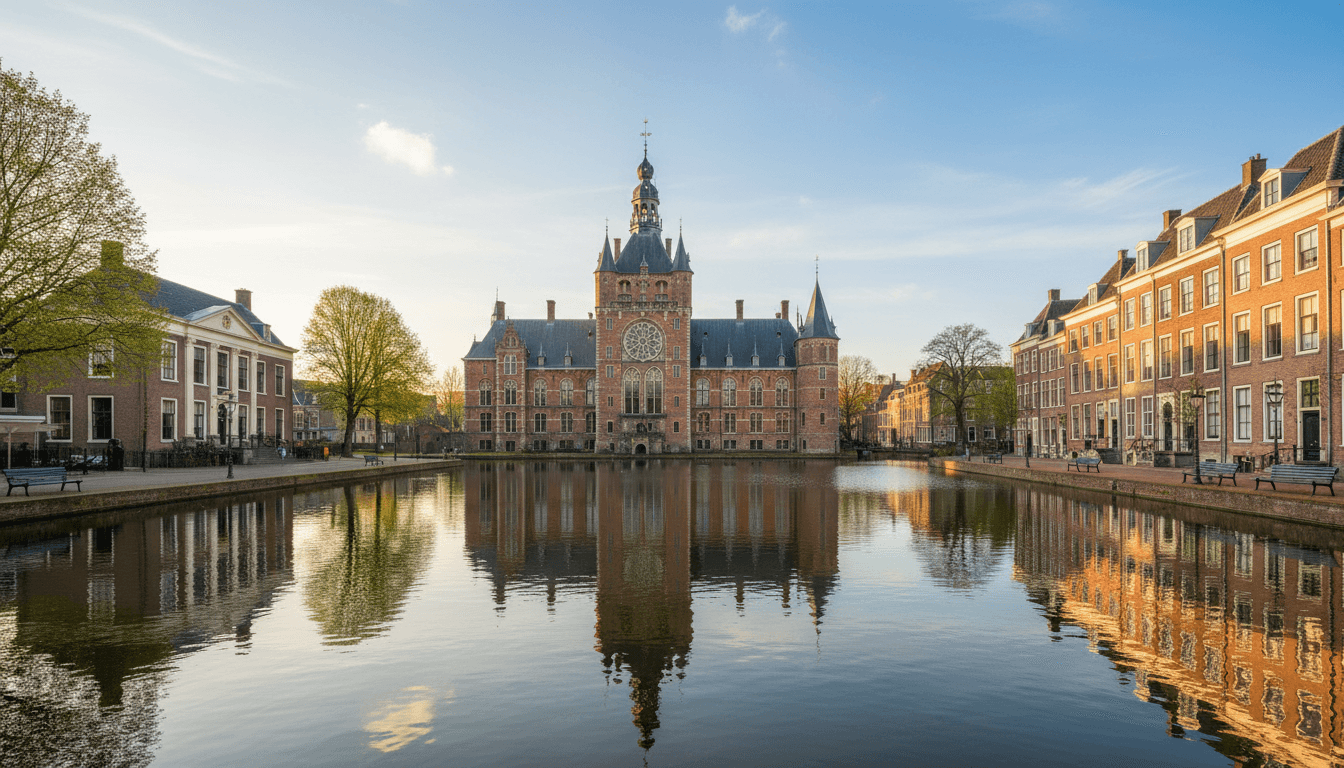
Home Swap in The Hague: Your Complete Guide to Neighborhoods, Local Secrets & Free Stays

SwappaHome Editorial Team
Home Exchange & Slow Travel Editorial
Discover how to home swap in The Hague like a local. From peaceful Statenkwartier to vibrant Zeeheldenkwartier, find your perfect Dutch neighborhood exchange.
I wasn't supposed to fall for The Hague. My original plan was Amsterdam—because isn't that everyone's plan? But a last-minute home swap in The Hague changed everything, and three years later, I've returned four times. There's something about this city that hooks you: the way the North Sea light filters through tall windows, the impossibly good Indonesian food on every corner, the fact that you can bike to the beach in fifteen minutes.
If you're considering a home swap in The Hague, you're already ahead of most travelers who overlook this gem for its flashier neighbor. And honestly? That's part of what makes it so special.
 Morning light streaming through a tall Dutch window in a Hague apartment, with a canal view visible
Why The Hague is Perfect for Home Exchange
Let me be real with you: The Hague isn't trying to impress you. It doesn't have Amsterdam's party scene or Rotterdam's architectural showboating. What it has is something better—a city that actually lives and breathes, where locals outnumber tourists by a comfortable margin, and where you can slip into Dutch daily life without feeling like you're performing it.
For home swappers, this matters enormously.
When I did my first home swap in The Hague back in 2021, I stayed in a third-floor apartment in Archipelbuurt. My host, a Dutch architect named Pieter, had left me a handwritten list of his favorite spots—the bakery where he bought his Friday morning croissants, the wine bar where the owner would remember your name after one visit, the specific bench in Westbroekpark where he read on Sunday afternoons.
You don't get that from a hotel. You don't even get that from most Airbnbs anymore.
The Hague works for home exchange because it's a residential city at heart. Despite being the seat of government and home to the International Court of Justice, it feels remarkably livable. The neighborhoods have distinct personalities. The apartments tend to be spacious by European standards—those Dutch know how to design interiors. And because it's not overrun with tourists, locals are genuinely curious about visitors rather than exhausted by them.
Best Neighborhoods for a Home Swap in The Hague
Choosing where to stay can make or break your experience. I've stayed in four different Hague neighborhoods over the years, and each one offered something completely different. Here's my honest take:
Statenkwartier: The Quiet Sophisticate
This is where I'd point my parents if they were visiting. Statenkwartier sits between the city center and Scheveningen beach, which means you get the best of both worlds without the noise of either. The streets are lined with elegant early-20th-century townhouses, most of which have been converted into apartments. Think high ceilings, original woodwork, and that particular Dutch coziness they call gezelligheid.
The vibe here is residential and refined. You'll find young families, professionals, and retirees who've lived in the same apartment for thirty years. The main street, Frederik Hendriklaan, has excellent food shops—a Turkish grocer with the freshest feta I've ever tasted, a cheese shop that'll ruin you for supermarket Gouda forever, and a fish stall that gets its catch from Scheveningen harbor every morning.
Home swap potential: High. Lots of families here who travel during school holidays and have spacious apartments perfect for couples or small families.
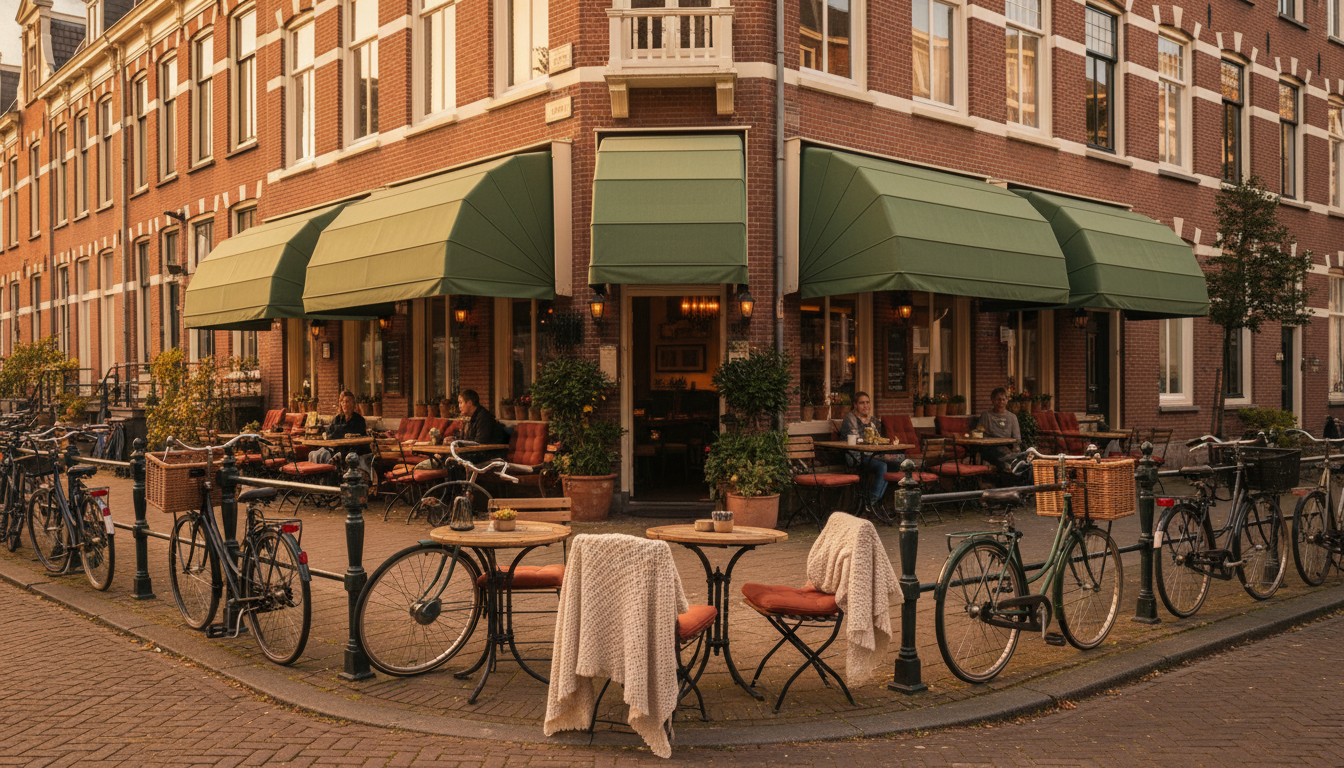 Tree-lined street in Statenkwartier with characteristic Dutch townhouses, bicycles parked against ir
Zeeheldenkwartier: The Creative Heart
If Statenkwartier is the quiet sophisticate, Zeeheldenkwartier is its artsy younger sibling who stayed out too late at a jazz bar and doesn't regret it. This neighborhood, tucked between the city center and the Peace Palace, has become The Hague's creative hub over the past decade.
The streets here are narrower, the buildings more varied—some grand, some charmingly scruffy. You'll find vintage shops, independent bookstores, specialty coffee roasters, and restaurants that range from hole-in-the-wall Indonesian to upscale farm-to-table Dutch. The Saturday market on the Prins Hendrikplein is one of my favorite markets in the Netherlands—smaller than Albert Cuyp in Amsterdam, but with better quality and none of the tourist crowds.
I stayed here on my second swap, in a converted attic apartment that belonged to a graphic designer. She'd left her record collection for me to explore and a note saying the neighbors wouldn't mind if I played music after 10 PM. They didn't. That's the kind of neighborhood this is.
Home swap potential: Very high. Lots of creative professionals, young couples, and solo dwellers with interesting spaces and flexible travel schedules.
Archipelbuurt & Willemspark: Old Money Elegance
These adjacent neighborhoods are where The Hague's diplomatic community has lived for over a century. The embassies are here. The grand villas are here. The sense that you've accidentally wandered into a period drama is definitely here.
Archipelbuurt gets its name from the Indonesian islands—the streets are named Javastraat, Sumatrastraat, Borneostraat—a reminder of the Netherlands' colonial history. The architecture is stunning: ornate facades, sweeping staircases, apartments with rooms the size of small ballrooms. Willemspark is similar but even more exclusive, with some of the most expensive real estate in the country.
I'll be honest: finding a home swap here can be tricky. The residents tend to be older, wealthier, and less likely to use platforms like SwappaHome. But when you do find one, it's usually spectacular. My architect host Pieter lived in Archipelbuurt, and his apartment had 12-foot ceilings and a balcony overlooking a private garden square.
Home swap potential: Moderate. Fewer listings, but the ones that exist tend to be exceptional.
Scheveningen: Beach Life, Dutch Style
Technically a separate district rather than a neighborhood, Scheveningen is The Hague's beach resort area. And before you ask—yes, you can absolutely do a home swap here and spend your mornings walking on the sand before biking into the city for museums.
Scheveningen has two personalities. The boulevard area near the pier is touristy in summer—think fish stands, carnival rides, and Dutch families on vacation. But move a few blocks inland to the old fishing village area, and you'll find narrow streets with fishermen's cottages, excellent seafood restaurants, and a completely different atmosphere.
I haven't done a full swap in Scheveningen, but I've visited friends who live there. The appeal is obvious: wake up, walk to the beach, get a coffee at one of the pavilions, watch the surfers (yes, people surf in the North Sea, and yes, they're slightly insane). Then hop on a tram and you're in the city center in twelve minutes.
Home swap potential: Moderate to high, especially in the old village area. Summer swaps book up fast.
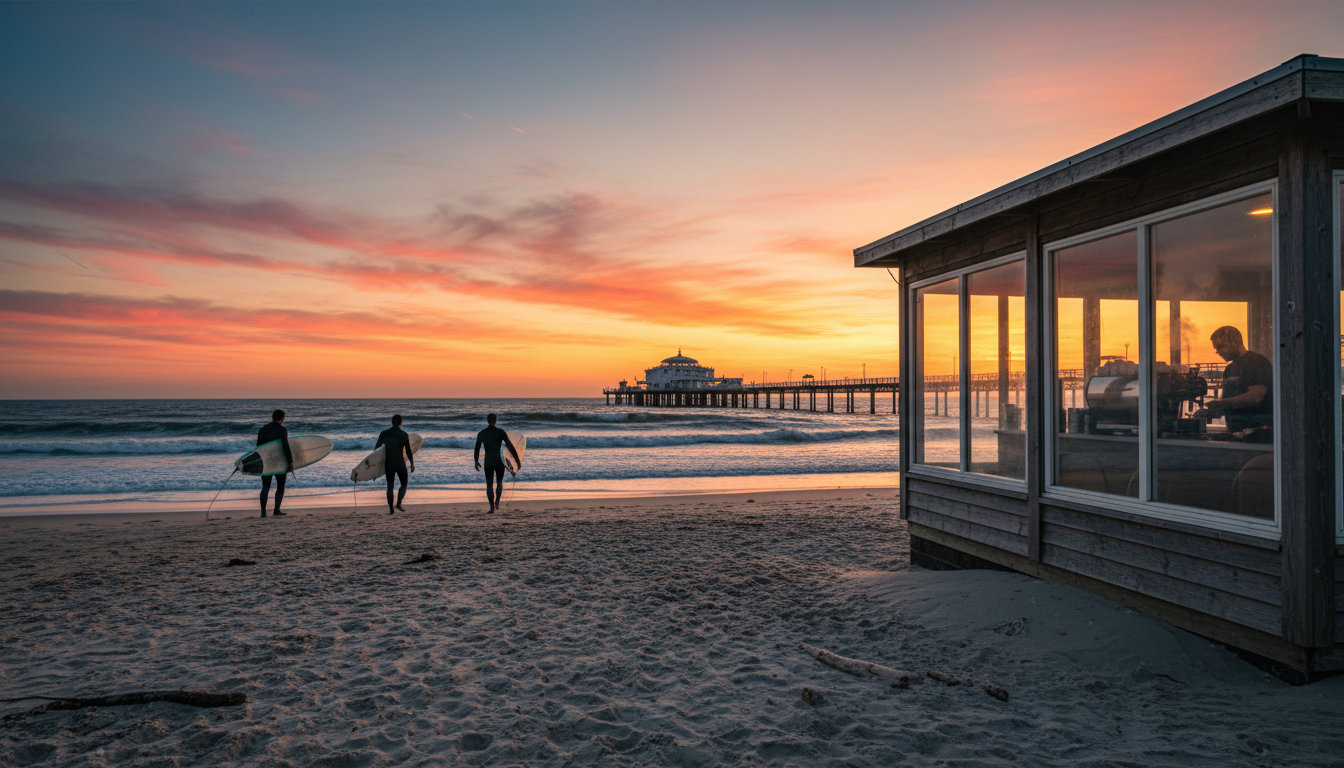 Early morning on Scheveningen beach with the iconic pier in the distance, a few surfers in wetsuits
Centrum: Right in the Mix
The city center is small enough to walk across in twenty minutes but packed with enough to keep you busy for weeks. This is where you'll find the Binnenhof (the Dutch parliament complex), the Mauritshuis museum (home to Vermeer's Girl with a Pearl Earring), and the main shopping streets.
Living in Centrum means everything is at your doorstep—which is both the appeal and the drawback. It's noisier than the residential neighborhoods, and the apartments tend to be smaller. But if you want to be in the thick of things, this is your spot.
One thing I love about The Hague's center: it empties out at night. Unlike Amsterdam, where the center stays chaotic until the early hours, The Hague's Centrum gets genuinely quiet after 11 PM. The Dutch go home, have dinner, watch television. It's refreshingly civilized.
Home swap potential: Moderate. Smaller apartments, but convenient for shorter stays.
How to Find the Perfect Home Swap in The Hague
Alright, let's get practical. Finding a home swap in The Hague isn't as straightforward as finding one in Paris or Barcelona—there are simply fewer listings because it's a smaller city. But that's actually good news: less competition, and the hosts who are on platforms like SwappaHome tend to be genuinely enthusiastic about home exchange rather than treating it as a side hustle.
Here's what I've learned from my four successful Hague swaps:
Start your search early—but not too early. Dutch people tend to plan their vacations 2-3 months in advance, especially for summer and school holidays. If you're looking for a summer swap, start browsing in March or April. For other times, 6-8 weeks ahead is usually sufficient.
Write a compelling request. This sounds obvious, but I've seen so many generic messages that I have to mention it. Dutch hosts appreciate directness and specificity. Tell them exactly when you want to come, why you're interested in The Hague specifically, and what kind of traveler you are. If you have pets or children, mention it upfront. If you're a quiet professional who works from home, say so.
Highlight your neighborhood. Dutch travelers love exploring different cities, so if you live somewhere interesting—whether that's San Francisco, rural Vermont, or a small town in Portugal—make sure your listing showcases what makes your area special. I've had Dutch hosts tell me they chose my swap request because they'd always wanted to explore the California coast.
Be flexible on dates if you can. The Hague has a lot of international professionals who travel for work conferences, diplomatic meetings, and EU summits. If you can offer a range of dates rather than fixed ones, you'll have more options.
On SwappaHome, you'll earn credits by hosting guests at your place—one credit per night, regardless of your home's size or location. Then you spend those credits to book stays elsewhere. New members start with 7 free credits, which is enough for a solid week-plus in The Hague to get you started.
 Cozy Dutch living room with a large bookshelf, comfortable seating, warm lighting, and a view of a c
What to Expect from Your Hague Home Swap Host
Dutch hosts are, in my experience, wonderfully practical. They won't smother you with attention, but they'll make sure you have everything you need. Expect clear, detailed instructions about the apartment—how to work the heating (important in winter), where to find extra blankets, which neighbors to say hello to.
Most will leave you a welcome guide of some kind. Pieter's handwritten list remains my favorite, but I've also received printed PDFs, annotated maps, and in one case, a custom Google Map with pins for every restaurant, shop, and hidden spot the host loved.
A few cultural notes that might help:
The Dutch are direct. If your host says the apartment will be clean but not spotless, they mean it. If they say the neighborhood is "lively," they're warning you it might be noisy. This directness isn't rudeness—it's honesty, and I've come to appreciate it.
They expect you to be self-sufficient. Unlike some cultures where hosts check in constantly, Dutch hosts will typically send you one message after arrival to make sure you got in okay, then leave you alone unless you reach out. This isn't coldness; it's respect for your independence.
Recycling is serious business. The Netherlands has one of the most complex recycling systems I've encountered. Your host will explain it, and you should follow it. Putting glass in the paper bin is a genuine faux pas.
Bikes are assumed. Many Hague hosts will offer you use of their bicycles—accept this gift enthusiastically. The city is built for cycling, and you'll cover three times as much ground on two wheels.
Local Secrets: What to Do During Your Home Swap in The Hague
I could write a separate 5,000-word guide on this (and maybe I will), but here are the spots and experiences I return to every time:
The Museums Nobody Talks About
Everyone visits the Mauritshuis, and you should too—seeing Girl with a Pearl Earring in person is genuinely moving. But The Hague has smaller museums that rarely make the guidebooks.
The Panorama Mesdag is a 360-degree painting of Scheveningen beach from 1881, housed in a purpose-built rotunda. You stand in the center and feel like you've time-traveled. It's surreal and beautiful and costs about €12.50 (around $13.50 USD).
The Escher Museum, in a former palace, showcases the mind-bending work of M.C. Escher. Even if you think you're not interested in optical illusions, give it an hour. Entry is €11 ($12 USD).
Museum Voorlinden, technically in nearby Wassenaar but easily reachable by bike or bus, is one of the best contemporary art museums in Europe. The building alone—all glass and clean lines—is worth the trip. Budget €17.50 ($19 USD) for entry.
The Food Scene
The Hague has the best Indonesian food in Europe, full stop. The Dutch colonial history means there's been an Indonesian community here for generations, and the restaurants reflect that depth.
Garoeda on Kneuterdijk is my go-to for rijsttafel—the elaborate multi-dish meal that's become a Dutch-Indonesian tradition. Expect to pay around €35-45 ($38-49 USD) per person for the full experience, and come hungry.
For something quicker, the toko (Indonesian delis) scattered throughout the city sell takeaway meals for €8-12 ($9-13 USD). The one on Prins Hendrikstraat in Zeeheldenkwartier has exceptional satay.
Beyond Indonesian, The Hague has embraced the global food scene. Chinatown, near the Centrum, has excellent Cantonese restaurants. The Turkish and Moroccan communities have brought incredible kebab shops and bakeries. And the Dutch classics—bitterballen, kroket, fresh herring from a street stall—are everywhere.
 Colorful rijsttafel spread at a Hague Indonesian restaurant, with dozens of small dishes arranged ar
The Beach Ritual
Even if you're not a beach person, do this at least once: take the tram to Scheveningen, walk to one of the beach pavilions (Beachclub Whoosah is my favorite), order a coffee or a local beer, and watch the North Sea do its thing.
The light on the Dutch coast is unlike anywhere else I've been. There's a reason so many painters settled here. On a clear day, the sky seems to stretch forever. On a cloudy day, the grays and silvers are somehow just as beautiful.
In summer, the pavilions serve full meals and stay open late. In winter, most close, but a few hardy ones remain open with blankets and heaters. The off-season beach experience—bundled up, watching the waves crash, drinking hot chocolate—is arguably better than the summer version.
The Day Trips
One advantage of basing yourself in The Hague: you're perfectly positioned for day trips. Delft is fifteen minutes by train—go for the pottery workshops and the Vermeer connections. Rotterdam is twenty-five minutes—go for the architecture and the Markthal food hall. Amsterdam is fifty minutes—go if you must, but honestly, you might find you don't miss it.
Leiden, home to the Netherlands' oldest university, is twenty minutes away and feels like a smaller, calmer Amsterdam. The botanical gardens there are spectacular in spring.
Practical Tips for Your Home Swap Stay
A few things I wish someone had told me before my first Hague swap:
The weather is unpredictable. I've experienced all four seasons in a single April day. Pack layers, always carry a light rain jacket, and don't let a gray morning stop you from going out—it'll probably clear up by noon.
Get an OV-chipkaart. This is the Dutch public transport card. You can buy an anonymous one at any train station for €7.50 ($8 USD) and load it with credit. It works on trams, buses, and trains throughout the country. Way easier than buying individual tickets.
Learn basic Dutch greetings. You don't need to speak Dutch—everyone speaks English—but saying "goedemorgen" (good morning) or "dank u wel" (thank you) goes a long way. The Dutch appreciate the effort.
Supermarkets close early on Sundays. Most Albert Heijn locations close by 6 PM on Sundays, and smaller shops may not open at all. Plan your grocery shopping accordingly.
The tap water is excellent. No need to buy bottled water. The Netherlands has some of the cleanest tap water in the world.
Tipping is modest. Round up to the nearest euro or add 5-10% for good service. The Dutch don't expect American-style tips.
The Money You'll Save (and How to Spend It)
Let's talk numbers, because this is where home swapping really shines.
A decent hotel in The Hague runs €120-180 ($130-195 USD) per night. A well-located Airbnb is €100-150 ($108-163 USD). Over a two-week stay, you're looking at €1,400-2,520 ($1,512-2,730 USD) just for accommodation.
With a home swap? Zero. You're exchanging the use of your home for theirs. The only costs are your SwappaHome membership and whatever you spend while you're there.
That freed-up budget means you can actually experience the city properly. Take the rijsttafel dinner you might have skipped. Visit all the museums instead of choosing one. Rent bikes for the whole trip instead of just one day. Buy that gorgeous piece of Delft pottery you've been eyeing.
Or—and this is what I often do—extend your trip. Two weeks instead of one. A month if you can swing it. Home swapping makes longer stays financially viable in a way that hotels never could.
When to Plan Your Home Swap in The Hague
The best time to visit depends on what you want:
April-May: Tulip season, mild weather, fewer tourists than summer. King's Day (April 27) is a massive street party if you're into that.
June-August: Peak season, warmest weather, beach days. Book your swap early—these months fill up fast.
September-October: My personal favorite. The summer crowds are gone, the weather is still pleasant, and the city settles back into its local rhythm.
November-March: Cold and gray, but the city has a cozy winter charm. Christmas markets in December, and accommodation is easiest to find.
A Final Thought
I've done home swaps in flashier cities—Paris, Barcelona, Lisbon. And I love those places. But there's something about The Hague that keeps pulling me back.
Maybe it's the scale of it—big enough to explore for weeks, small enough to feel like you know it. Maybe it's the Dutch approach to life: practical, unpretentious, quietly content. Maybe it's just that every time I'm there, I feel less like a tourist and more like a temporary resident.
That's the magic of home swapping, really. You're not visiting a city; you're borrowing someone's life in it. And The Hague is a very good life to borrow.
If you're ready to try it, SwappaHome is where I'd start. Browse the Hague listings, find a neighborhood that speaks to you, and send that first message. Your host might just leave you a handwritten list of their favorite spots—and three years from now, you might find yourself going back for the fourth time.
Frequently Asked Questions
Is home swapping in The Hague safe?
Yes, home swapping in The Hague is generally very safe. The Netherlands has low crime rates, and the home exchange community relies on mutual trust and accountability. SwappaHome's review system helps you vet potential hosts before committing. I'd recommend getting your own travel insurance for peace of mind, but in four Hague swaps, I've never had an issue.
How much can I save with a home swap in The Hague compared to hotels?
A two-week stay in a Hague hotel costs €1,400-2,520 ($1,512-2,730 USD). With home swapping, your accommodation cost is zero—you exchange credits earned by hosting others. Most travelers save €1,000-2,000+ ($1,080-2,160 USD) on a two-week trip, which can fund better food, activities, and longer stays.
What's the best neighborhood for a first-time home swap in The Hague?
Zeeheldenkwartier is ideal for first-timers. It's central, walkable, full of cafés and restaurants, and has a high concentration of home swap listings. Statenkwartier is perfect if you prefer a quieter, more residential experience with easy beach access.
Do I need to speak Dutch for a home swap in The Hague?
No, English is widely spoken throughout The Hague. Almost all Dutch people speak excellent English, and your host will communicate in English. Learning a few basic phrases like "dank u wel" (thank you) is appreciated but not required.
When should I book my home swap in The Hague?
Start searching 2-3 months before your trip for summer stays (June-August), as these book quickly. For other seasons, 6-8 weeks ahead is usually sufficient. Dutch hosts often plan vacations around school holidays, so those periods have the most swap availability.

Published by
SwappaHome
SwappaHome Editorial Team
Home Exchange & Slow Travel Editorial
The SwappaHome Editorial Team brings together travel research, home-exchange community insights, and platform data to produce practical guides for first-time and experienced home swappers. Every article cites real platforms, current market rates, and verifiable city-level facts so readers can make informed decisions without guessing.
Ready to try home swapping?
Join SwappaHome and start traveling by exchanging homes. Get 7 free credits when you sign up!
Related articles
How to Extend or Modify a Home Swap Mid-Stay: The Complete Flexibility Guide
Need to extend your home swap or change dates mid-trip? Here's exactly how to negotiate changes, handle credits, and keep both parties happy.

How to Visit Bali for Free with Home Exchange: The Complete 2026 Guide
Skip the $150/night villas. Home exchange in Bali lets you stay in Ubud rice field houses and Seminyak beach pads for zero accommodation cost. Here's exactly how.
How to Vet Home Swap Guests: 12 Red Flags Every Host Should Know
Learn how to vet home swap guests before handing over your keys. Spot the 12 red flags experienced hosts watch for—and protect your home with confidence.