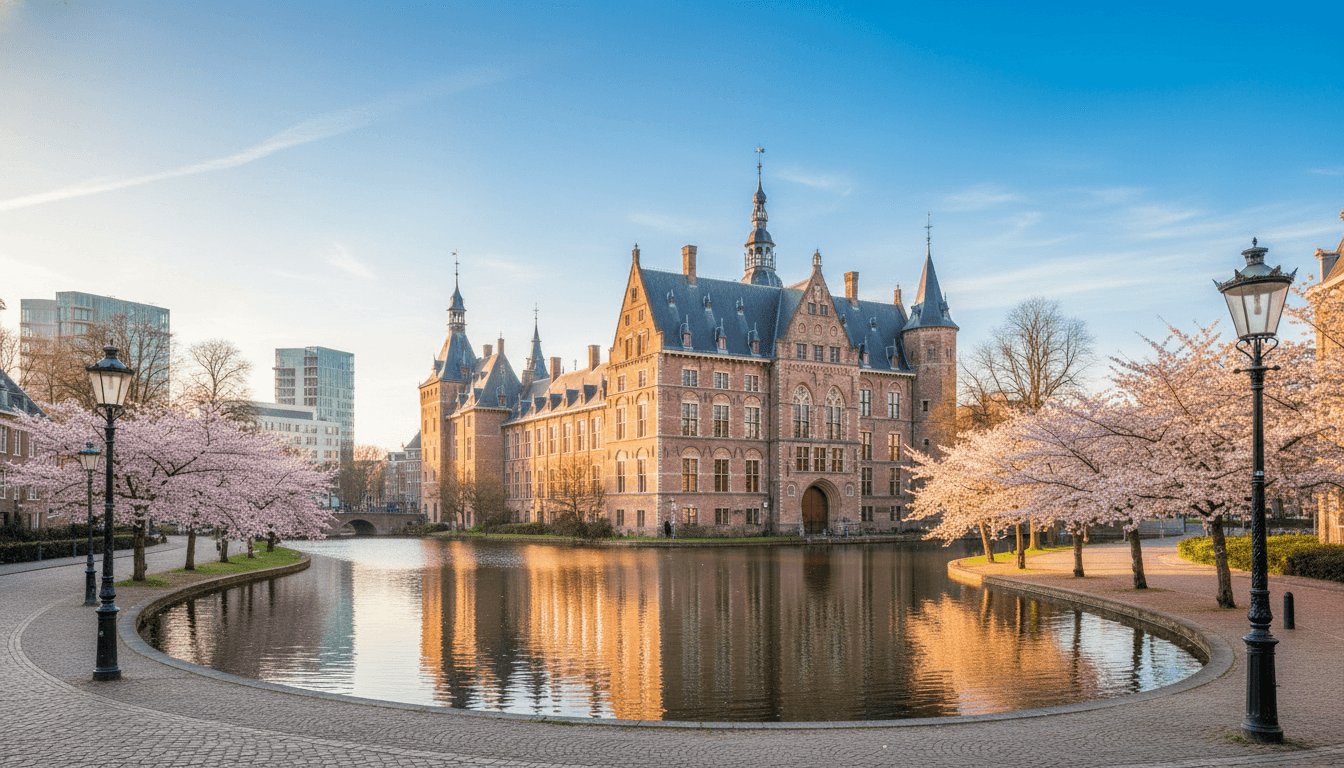
Home Exchange in The Hague for Solo Travelers: Your Complete Guide to Swapping Homes Alone

SwappaHome Editorial Team
Home Exchange & Slow Travel Editorial
Discover how solo travelers can master home exchange in The Hague—from finding the perfect swap to exploring this underrated Dutch gem on your own terms.
I wasn't supposed to be alone in The Hague.
My friend had bailed three days before our trip—something about a work crisis, though I suspect cold feet about the whole "staying in a stranger's apartment" thing. So there I was, solo, keys to a third-floor flat in Zeeheldenkwartier, wondering if this whole home exchange thing was brilliant or completely unhinged.
Spoiler: brilliant. And now, four solo home swaps later (two more in the Netherlands alone), I'm convinced The Hague might be the most underrated destination for solo home exchange in all of Europe.
Why The Hague Works So Well for Solo Home Exchange
Here's the thing—The Hague doesn't get the attention it deserves. Everyone flocks to Amsterdam, maybe Rotterdam if they're feeling architectural. But The Hague? It's where Dutch people actually want to live. That should tell you something.
For solo travelers doing home exchange, this city hits differently. Compact enough that you'll never feel lost, but substantial enough (half a million people) that you won't run out of things to do. Crime rates are remarkably low—I've walked home at 2 AM through the city center without a second thought. The public transport? Impeccable. Trams run until midnight, and you can reach the beach in 15 minutes.
But what really makes The Hague ideal for solo home swapping is the housing stock. Unlike Amsterdam's cramped canal houses or Rotterdam's modern micro-apartments, The Hague has space. Many of the homes available for exchange are in grand 19th-century buildings with high ceilings, separate bedrooms, and actual kitchens where you can cook a proper meal. When you're traveling alone, having room to breathe matters more than you'd think.
The city also attracts a certain type of resident—diplomats, international court employees, EU workers—which means the home exchange community here tends to be globally-minded and experienced with hosting. I've found that hosts in The Hague are particularly thoughtful about solo travelers' needs, often leaving detailed notes about which cafés are good for working alone and which parks feel safest at dusk.
Finding Your Perfect Solo Home Swap
Searching for a home exchange when you're traveling solo requires a slightly different approach. You're not looking for the biggest space or the most bedrooms—you want the right vibe, the right location, and honestly? The right host.
Reading Between the Lines
When I'm browsing potential swaps on SwappaHome, I've learned to look for subtle cues. Photos of a well-stocked bookshelf? That host probably gets what solo travelers need. A mention of "quiet neighborhood"? Perfect. References to "great for families" or "kid-friendly"? Might not be my scene.
For solo stays, I prioritize a workspace of some kind—even a small desk by a window. Natural light in the main living areas (winter in the Netherlands is dark, friends). Proximity to at least one good café within walking distance. A neighborhood that feels alive during the day but calm at night. And crucially, a host who seems communicative and responsive in their profile.
The Best Neighborhoods (Honest Assessment)
Not all neighborhoods are created equal when you're on your own.
Zeeheldenkwartier is where I stayed on that first solo trip, and I'd go back in a heartbeat. Residential but lively, full of independent boutiques and restaurants that locals actually frequent. The streets are tree-lined, the buildings are gorgeous, and there's a farmer's market on Saturdays. You'll find apartments here ranging from compact studios to sprawling family homes. Average hotel rates in this area run €120-150/night ($130-165 USD), so doing a home exchange here saves you serious money.
Statenkwartier is slightly posher, closer to the beach, with this wonderful village-within-a-city feel. Great if you want to run along the dunes in the morning. The homes here tend to be larger—think three-bedroom apartments in stately buildings—which might feel excessive for one person, but honestly, the extra space is lovely.
Noordeinde puts you in the heart of things, near the Royal Palace and the best shopping streets. Busier, but you're steps from everything. Solo travelers who like to walk out the door and immediately be in the action will love it here.
Scheveningen is the beach district. In summer, it's bustling and social—lots of beach bars, volleyball, that whole scene. In winter, it's moody and atmospheric, perfect for long walks and contemplation. The homes here often have sea views, which is pretty magical when you're having your morning coffee alone.
I'd skip the areas around Den Haag Centraal station—functional but soulless—and the outer suburbs unless you really want a car-dependent experience.
Preparing for Your Solo Adventure
The logistics of home exchange don't change dramatically when you're alone, but your mindset should. You're not just looking for accommodation—you're setting yourself up for an experience that could be transformative or lonely, depending on how you prepare.
Communication is Everything
When I'm arranging a solo swap, I'm extra communicative with my host. I let them know I'm coming alone, ask about the neighborhood's safety, and request recommendations specifically for solo activities. Most hosts are incredibly helpful once they understand your situation.
I also ask practical questions that might feel awkward but matter: Is the building well-lit at night? Are there other residents in the building? Is there a doorbell or intercom system? These aren't paranoid questions—they're smart ones.
On SwappaHome, the messaging system makes this easy. I usually send a detailed introduction that mentions I'm a solo traveler, explains why I'm interested in their specific home, and asks a few targeted questions. Hosts appreciate the thoughtfulness, and it helps build trust before you've even met.
The Practical Stuff
Solo travelers don't have a backup person to run to the store if something's missing, so I'm more thorough about confirming details.
Getting there: The Hague has excellent tram coverage, and you can get an OV-chipkaart (transit card) at any station. From Schiphol Airport, it's about 30 minutes by train to Den Haag Centraal (€12.40/$13.50 one way). I always confirm my host's address works with Google Maps before arriving—some Dutch addresses can be tricky.
Food: I ask hosts which supermarket is closest. Albert Heijn and Jumbo are everywhere, and both have apps for self-checkout that make solo shopping easier. Expect to spend €50-80/week ($55-87 USD) on groceries if you're cooking most meals.
Emergency contacts: I save the host's phone number, the building manager's number if there is one, and the local emergency number (112 in the Netherlands). I also share my itinerary with someone back home—not because The Hague is dangerous, but because solo travel means no one's automatically keeping tabs on you.
The Real Magic of Solo Home Exchange
Here's what guidebooks won't tell you: the real magic isn't in the sightseeing. It's in the ordinary moments that feel extraordinary because you're living them in someone else's life.
I remember my third morning in that Zeeheldenkwartier apartment. I'd figured out the coffee maker, found the perfect spot on the couch where the morning light hit just right, and was reading a book I'd found on my host's shelf—something about Dutch maritime history that I never would have picked up otherwise. The church bells rang. Someone cycled past, their basket full of flowers.
This is why I do this.
The Art of Being Alone in Public
Solo travel in The Hague is easy because the Dutch have mastered the art of leaving people alone while still being warm. You can sit in a café for three hours with a single koffie verkeerd (their version of a latte, €3.50/$3.80) and no one will rush you. You can eat dinner alone at a nice restaurant without getting pitying looks.
My favorite solo spots? Lola in Zeeheldenkwartier is perfect for working or reading—great coffee, relaxed vibe, and these incredible cakes that almost justify a second visit the same day. Walter Benedict near the Binnenhof does an excellent brunch and has window seats perfect for people-watching. Plein is the main square with outdoor terraces—touristy but fun for a solo beer in the afternoon sun. And Simonis near Scheveningen does the best herring in the city. Yes, you should try herring. Yes, you eat it raw. Trust me.
Cultural Experiences Worth Your Time
The Hague punches way above its weight culturally. The Mauritshuis is small enough to visit without museum fatigue—you can see Vermeer's Girl with a Pearl Earring and be done in 90 minutes. Entry is €19 ($21 USD), and it's genuinely worth it.
The Gemeentemuseum (now called Kunstmuseum Den Haag) has the world's largest Mondrian collection. If you're into modern art, budget half a day. €17.50 ($19 USD).
For something different, the Peace Palace offers tours—this is where the International Court of Justice sits, and it's genuinely fascinating. Tours are €11 ($12 USD) and need to be booked in advance.
Safety and Practical Considerations
I won't pretend that solo travel doesn't come with specific considerations. It does. But The Hague is genuinely one of the safest cities I've stayed in alone.
Staying Safe
The Netherlands consistently ranks among the safest countries in Europe. Violent crime is rare, and most issues tourists face are petty theft in crowded areas—which The Hague has fewer of than Amsterdam.
That said, I take standard precautions: I don't advertise that I'm staying alone, I keep my host's contact information handy, and I trust my instincts about neighborhoods and situations. The Schilderswijk area has a rougher reputation, though I've walked through it during the day without issues. At night, I stick to well-lit main streets.
For solo women specifically: I've felt completely safe in The Hague, including walking home late from restaurants or bars. The Dutch are direct but respectful, and street harassment is minimal compared to many other European cities.
Home Exchange Security
When you're doing a home exchange alone, you're the only one responsible for the space. I'm extra careful about locking up, keeping valuables secure, and following the host's instructions exactly.
A few things I always do: test all the locks on my first day, make sure I know how the alarm system works (if there is one), keep my passport and backup credit card in different locations, and save photos of how the apartment looked when I arrived—just in case.
SwappaHome's review system helps build accountability between members, which gives me confidence when I'm staying somewhere alone. I always read previous reviews carefully and look for mentions of how hosts handled any issues. If you want extra peace of mind, consider getting your own travel insurance that covers accommodation issues—it's not something SwappaHome provides, but it's worth having.
Health and Emergencies
The Dutch healthcare system is excellent. For emergencies, call 112. For non-emergencies, there are huisartsenposten (GP posts) that handle after-hours care. Pharmacies (apotheek) are well-stocked, and many staff speak English.
I always travel with basic medications and a small first-aid kit—when you're alone, you can't send someone to the pharmacy if you're sick.
Building Connection as a Solo Traveler
One of the unexpected joys of solo home exchange is how it opens you up to connection. When you're traveling with others, you have built-in company. Alone, you're more likely to chat with the barista, strike up conversations with other solo diners, or actually attend that neighborhood event your host mentioned.
The Host Relationship
Even if you never meet your host in person, the home exchange relationship can be surprisingly meaningful. I've had hosts who left me handwritten notes about their favorite spots, bottles of wine with instructions to "drink this while watching the sunset from the balcony," and even invitations to meet up if they happened to be in my city someday.
I always try to leave something for my host too—a small gift from home, a thank-you note, photos of how I enjoyed their space. These personal touches make home exchange feel like more than just free accommodation.
Meeting People
The Hague has a surprisingly vibrant expat community thanks to all the international organizations. If you're craving social interaction, there are regular meetups, language exchanges, and events. InterNations has an active The Hague chapter. Meetup.com lists everything from hiking groups to book clubs.
I've also found that simply being a regular at a café leads to organic connections. By my fourth day at Lola, the barista knew my order. By day six, I was chatting with another regular about where to find the best Indonesian food. (The Hague has incredible Indonesian cuisine, a legacy of colonial history—try Garoeda on Kneuterdijk.)
The Economics
Let's talk money, because this is where home exchange really shines for solo travelers.
A decent hotel in The Hague runs €100-180/night ($110-195 USD) for a standard room. Airbnbs average €80-140/night ($87-152 USD) for a one-bedroom. For a two-week solo trip, you're looking at €1,400-2,520 ($1,520-2,740 USD) just for accommodation.
With home exchange through SwappaHome, you're spending credits instead of cash—1 credit per night, regardless of the property. If you've hosted guests at your own place, you've already earned those credits. New members get 7 free credits to start, which covers a full week.
The savings are even more dramatic when you factor in kitchen access. I typically spend €15-25/day ($16-27 USD) on food when I'm cooking in a home exchange apartment, versus €50-80/day ($54-87 USD) when I'm eating out for every meal in hotels.
Over two weeks, home exchange can save a solo traveler €2,000+ ($2,170 USD) compared to traditional accommodation. That's enough for another trip.
A Perfect Solo Day
I want to give you a sense of what a perfect solo day looks like here.
Woke up around 8, made coffee in my host's beautiful ceramic pour-over setup, ate yogurt with the Dutch hagelslag (chocolate sprinkles) I'd become mildly obsessed with. Spent an hour reading on the balcony, watching the neighborhood come alive.
Around 10, I walked to the Mauritshuis. Spent longer than I expected in front of the Vermeer—there's something about seeing Girl with a Pearl Earring alone, without someone tugging your arm to the next room.
Lunch was a broodje haring (herring sandwich, €4.50/$4.90) from a stand near the Binnenhof, eaten on a bench overlooking the Hofvijver pond. I watched the swans and felt aggressively content.
Afternoon: took the tram to Scheveningen and walked along the beach for an hour. It was October, grey and windy, and absolutely perfect. Stopped at a beach pavilion for hot chocolate and watched the kite surfers.
Back home, I cooked a simple pasta with ingredients from the Albert Heijn around the corner. Ate it while watching the sunset from the living room window. Read more of that maritime history book. Went to bed early, completely at peace.
That day cost me maybe €35 ($38 USD) total, including museum entry. And I felt richer than I had in months.
Preparing Your Own Home
One thing solo home exchangers sometimes overlook: you need to make your own home appealing to potential guests while you're away.
This is actually easier as a solo person in some ways—you don't have to coordinate with a partner or family about what stays and what gets locked away. But it requires more planning since you're handling everything yourself.
Before my Hague trip, I spent a weekend deep-cleaning my San Francisco apartment, creating a welcome guide, and arranging for a friend to be my local contact in case guests had issues. I locked my personal documents in a small safe, cleared out half my closet for guest use, and stocked the kitchen with basics.
The effort paid off: I've had great reviews from guests, which makes it easier to book desirable swaps in places like The Hague.
When Things Go Wrong
I'd be lying if I said every solo home exchange goes perfectly. Things happen. The key is being prepared to handle them on your own.
On one swap (not in The Hague, thankfully), the heating stopped working on my second night. It was February. I messaged the host, who walked me through resetting the boiler via video call. Problem solved in 20 minutes.
Another time, I locked myself out. Left the keys on the kitchen counter like an absolute rookie. The host had given me a neighbor's number for emergencies, and that neighbor had a spare key. Crisis averted.
The lesson: always get emergency contact information before you arrive. Always know where the spare key is. And always keep your phone charged—it's your lifeline when you're solo.
For issues between you and your host, SwappaHome's messaging system keeps a record of all communications, which helps if there's any confusion about what was agreed. But honestly, most problems are minor and easily solved with good communication.
Why This Matters
There's a particular kind of freedom that comes from traveling alone and staying in someone's home. You're not a tourist in the traditional sense—you're a temporary resident, living a life that isn't quite yours but feels like it could be.
The Hague amplifies this feeling. It's a city that doesn't try to impress you; it just exists, beautifully and functionally, and invites you to exist alongside it. The grand apartments, the quiet streets, the accessible culture, the proximity to the sea—it all adds up to something special.
If you're considering your first solo home exchange, I can't think of a better place to start. And if you're already a seasoned solo swapper, The Hague deserves a spot on your list.
My friend, the one who bailed on that original trip? She eventually did a solo home exchange in Copenhagen and finally understood what I'd been raving about. Now she's hooked too.
Maybe you're next.
Frequently Asked Questions
Is home exchange in The Hague safe for solo travelers?
The Hague is one of Europe's safest cities, with low crime rates and excellent public infrastructure. Solo home exchangers benefit from staying in residential neighborhoods rather than tourist-heavy areas. The Dutch culture of respect for privacy means solo travelers rarely face harassment or unwanted attention. Standard precautions apply, but most solo travelers feel very comfortable here.
How much can I save with home exchange versus hotels in The Hague?
Solo travelers typically save €1,500-2,500 ($1,630-2,715 USD) on a two-week trip by choosing home exchange over hotels. Hotels in The Hague average €100-180/night, while home exchange costs only SwappaHome credits (1 credit per night). Additional savings come from cooking in your exchange home's kitchen rather than eating out for every meal.
What neighborhoods are best for solo home exchange in The Hague?
Zeeheldenkwartier and Statenkwartier are ideal for solo travelers—safe, residential, with excellent cafés and local shops. Noordeinde suits those who want to be in the city center, while Scheveningen appeals to beach lovers. Avoid areas near Den Haag Centraal station, which feel less characterful for extended stays.
Do I need to speak Dutch for home exchange in The Hague?
No—English is widely spoken throughout The Hague, especially given the city's large international community. Most home exchange hosts communicate in English, and you'll have no trouble navigating shops, restaurants, and public transport. Learning a few Dutch phrases ("dank je wel" for thank you) is appreciated but not necessary.
How do I find solo-friendly home exchange listings on SwappaHome?
Look for listings that mention workspace amenities, quiet neighborhoods, and detailed local recommendations. Read host profiles for communication style—responsive, detailed hosts tend to be more helpful for solo travelers. Message potential hosts explaining you're traveling alone and ask specific questions about the neighborhood and home setup before confirming your exchange.

Published by
SwappaHome
SwappaHome Editorial Team
Home Exchange & Slow Travel Editorial
The SwappaHome Editorial Team brings together travel research, home-exchange community insights, and platform data to produce practical guides for first-time and experienced home swappers. Every article cites real platforms, current market rates, and verifiable city-level facts so readers can make informed decisions without guessing.
Ready to try home swapping?
Join SwappaHome and start traveling by exchanging homes. Get 7 free credits when you sign up!
Related articles
How to Extend or Modify a Home Swap Mid-Stay: The Complete Flexibility Guide
Need to extend your home swap or change dates mid-trip? Here's exactly how to negotiate changes, handle credits, and keep both parties happy.

How to Visit Bali for Free with Home Exchange: The Complete 2026 Guide
Skip the $150/night villas. Home exchange in Bali lets you stay in Ubud rice field houses and Seminyak beach pads for zero accommodation cost. Here's exactly how.
How to Vet Home Swap Guests: 12 Red Flags Every Host Should Know
Learn how to vet home swap guests before handing over your keys. Spot the 12 red flags experienced hosts watch for—and protect your home with confidence.