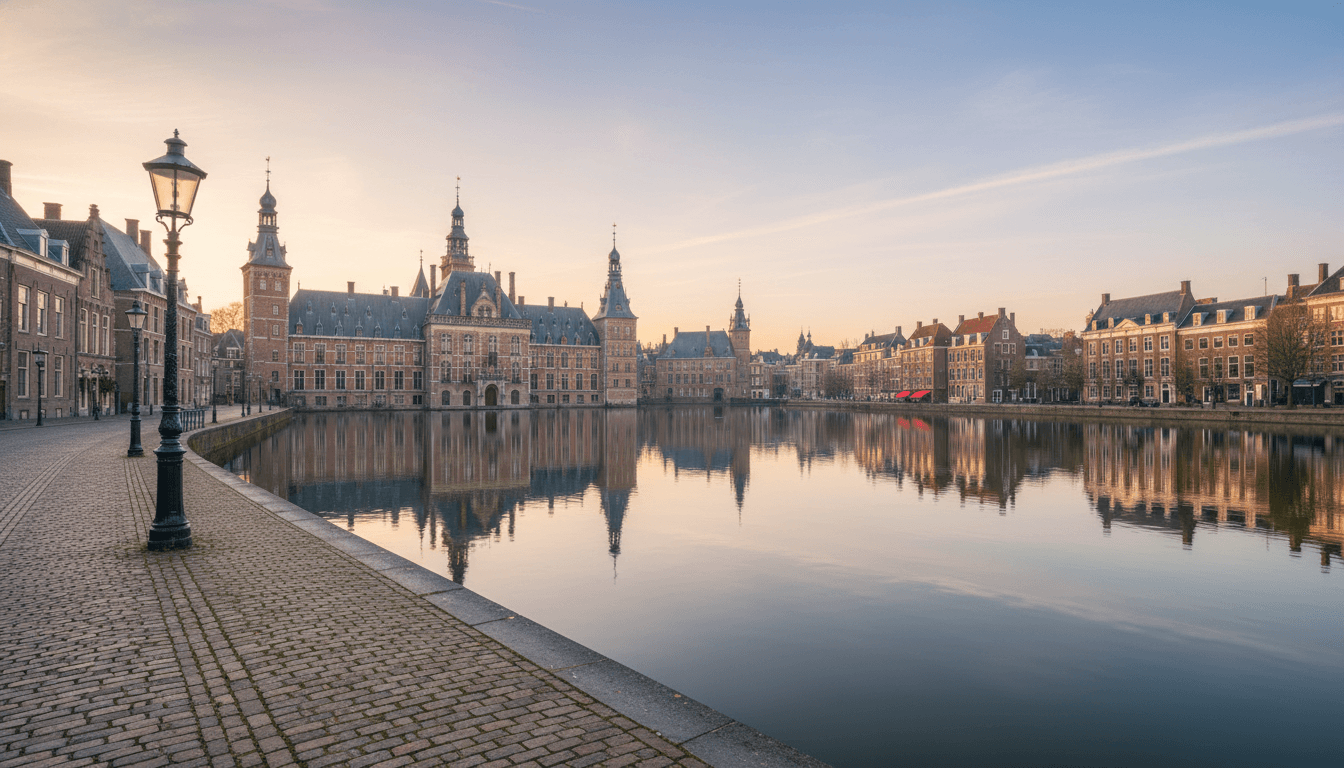
Home Exchange in The Hague: Your Complete Guide to Living Like a Local in the Netherlands

SwappaHome Editorial Team
Home Exchange & Slow Travel Editorial
Discover how home exchange in The Hague lets you experience Dutch life authentically—from cycling to the beach to browsing antique markets in Noordeinde.
I wasn't supposed to fall in love with The Hague. It was a placeholder, really—a convenient spot between Amsterdam and Rotterdam where I could work remotely for a few weeks while my San Francisco apartment hosted a lovely retired couple from Melbourne. But three days into my home exchange in The Hague, I found myself cycling past the Peace Palace at golden hour, and something just clicked.
The Hague isn't flashy. It doesn't have Amsterdam's canal-house charm or Rotterdam's architectural swagger. What it has is something rarer: the feeling of being let in on a secret. And when you're staying in someone's actual home—their books on the shelves, their favorite coffee mug in the cabinet, their handwritten note about the bakery around the corner—that secret becomes yours too.
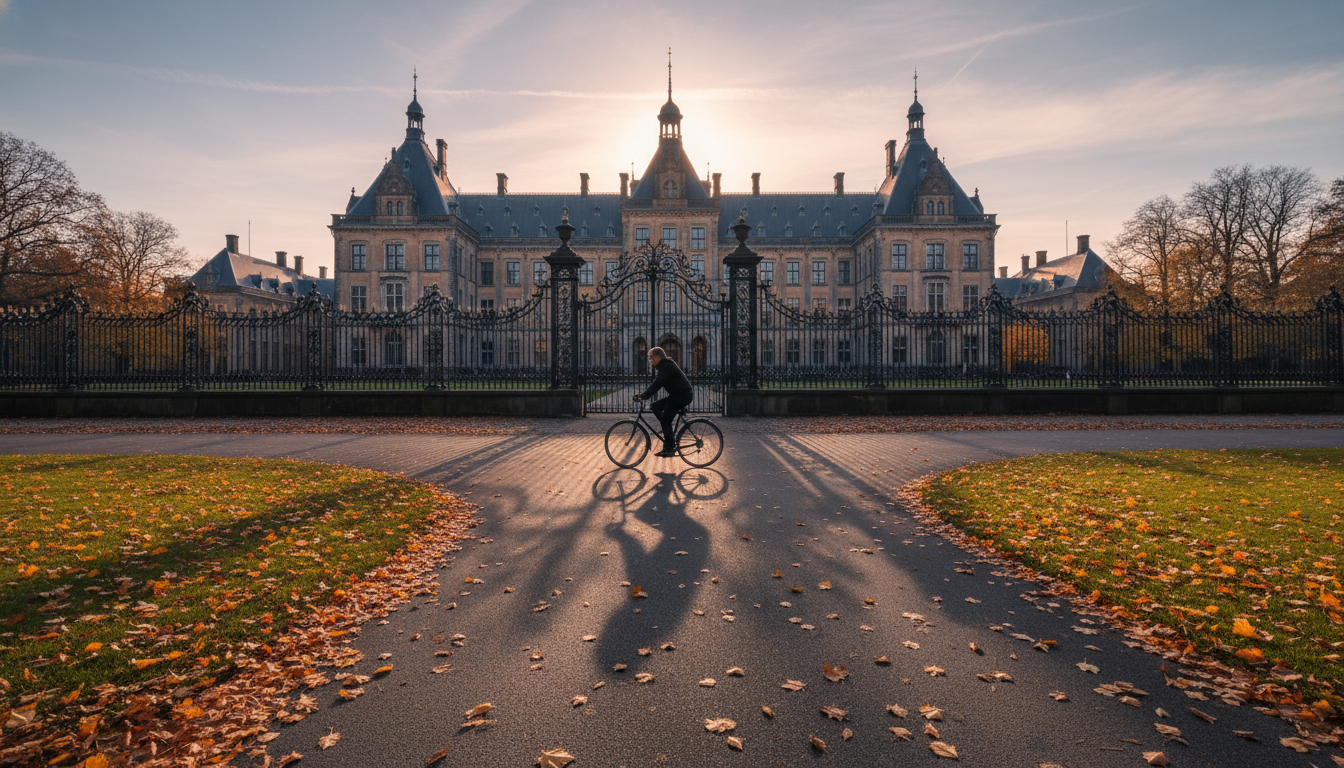 Golden hour light casting long shadows across the Peace Palace grounds, with a cyclist silhouetted a
Why The Hague Is Perfect for Home Exchange
So here's the thing about The Hague that most travel guides get wrong: they treat it as a day trip from Amsterdam. A quick jaunt to see Vermeer's Girl with a Pearl Earring at the Mauritshuis, maybe a photo op at the Binnenhof, then back on the train.
That approach misses everything.
The Hague rewards slow travel. It rewards waking up late and wandering to a neighborhood market. It rewards having a kitchen where you can cook mussels you bought from the fishmonger in Scheveningen. It rewards the kind of stay that home exchange makes possible—the kind where you stop checking things off a list and start actually living somewhere.
I've done hotel stays in The Hague too—a forgettable business trip years ago, a wedding weekend at a boutique place near Noordeinde. They were fine. But they kept me at arm's length from the city. When you're doing a home exchange in The Hague, you're not a tourist. You're temporarily Dutch. You figure out which cheese shop has the best aged Gouda (it's Kaashuis Tromp on Hoogstraat, by the way). You learn that Thursday is market day at the Haagse Markt, and it's absolute chaos, and you love it.
Real talk: the cost difference is significant too. A decent hotel in The Hague runs €150-200/night ($165-220 USD) in high season. A two-week stay? You're looking at €2,100-2,800 ($2,300-3,080 USD) just for accommodation. With SwappaHome's credit system, that same two weeks costs you 14 credits—credits you earned by hosting guests at your own place. No money changes hands. You're essentially living rent-free in a city where a basic Airbnb studio starts at €100/night.
Best Neighborhoods for Home Exchange in The Hague
Not all neighborhoods are created equal, and where you stay dramatically shapes your experience. After my first swap in Zeeheldenkwartier, I've since returned twice—once to Statenkwartier, once to the Archipelbuurt. Each felt like a different city entirely.
Zeeheldenkwartier: The Creative Heart
This is where I stayed on that first transformative trip, and I'm biased, but I think it's the best neighborhood for first-timers doing home exchange in The Hague. The streets are lined with independent shops, galleries, and cafés that haven't been Instagram-optimized into oblivion. My host's apartment was above a vintage record store, and I'd fall asleep to the faint sound of jazz from the bar across the street.
The neighborhood centers around Prins Hendrikstraat, which has this perfect mix of practical—a great Albert Heijn supermarket, a pharmacy, a bike repair shop—and delightful. Wine bars. A tiny Indonesian restaurant called Djago that I still dream about. Antique stores with genuinely interesting finds. You're a 15-minute bike ride to the beach, 10 minutes to the city center, and surrounded by locals who actually live here rather than rent to tourists.
Expect home exchange listings here to be apartments rather than houses—typically 60-80 square meters with one or two bedrooms. Many have small balconies. Parking is a nightmare, but honestly? You won't need a car.
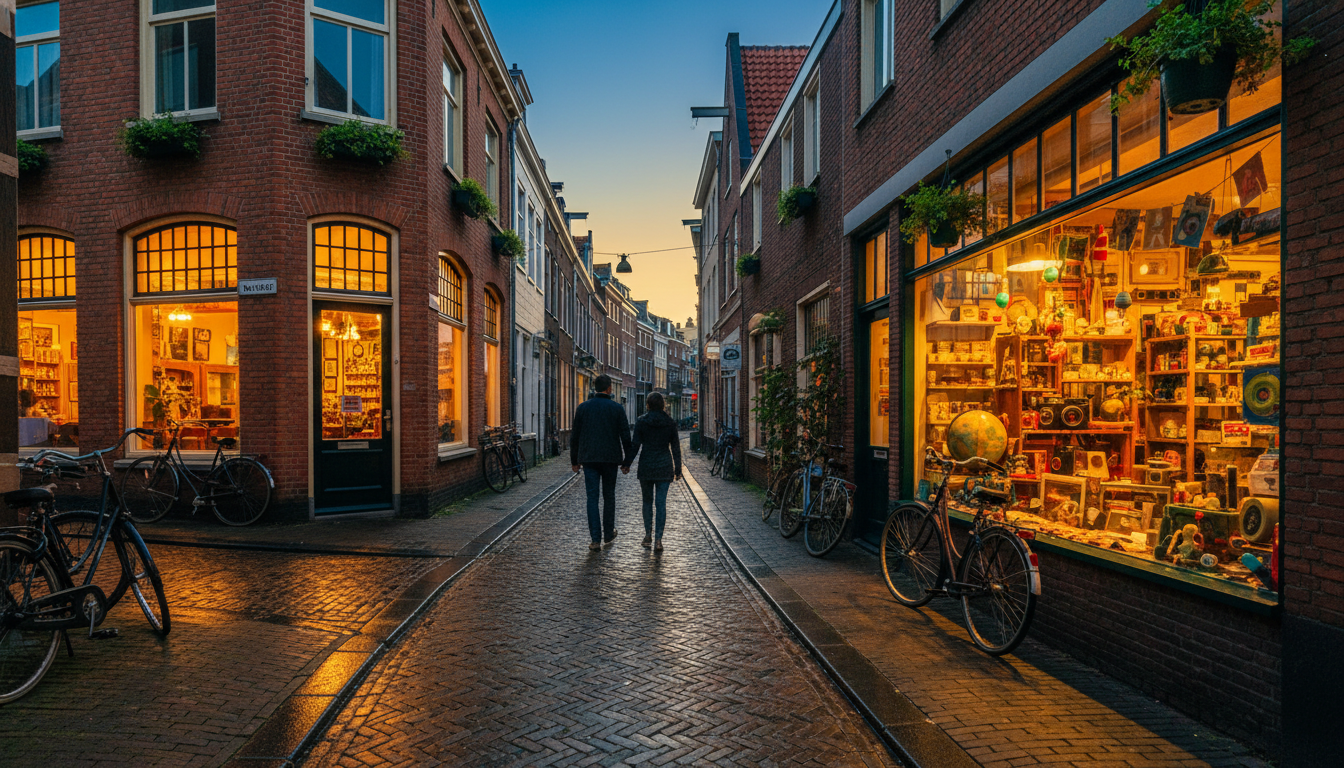 Narrow street in Zeeheldenkwartier at dusk, warm light spilling from caf windows, bicycles parked ag
Statenkwartier: Quiet Elegance
If Zeeheldenkwartier is the creative younger sibling, Statenkwartier is the sophisticated older one. This neighborhood sits closer to the beach and has a distinctly residential feel—wide streets, handsome early-20th-century townhouses, mature trees that form canopies in summer. It's where diplomats and professionals live, and the vibe is correspondingly polished.
My swap here was in a three-story townhouse with a garden—something that felt impossibly luxurious coming from my San Francisco apartment. The host left detailed notes about which neighbors to wave to (all of them, apparently; this is not an anonymous neighborhood) and which bakery had the best apple cake. Hessing on Frederik Hendriklaan. She was right.
Statenkwartier is ideal if you're traveling with kids or want space to spread out. The houses are larger, many have gardens, and you're close to the Westbroekpark, which has a stunning rose garden and a café where I spent entire afternoons reading. The trade-off is that nightlife and restaurants require a bit more effort to reach—though Frederik Hendriklaan has enough good options that you won't feel deprived.
Archipelbuurt: Historic Grandeur
This is The Hague at its most architecturally impressive. The Archipelbuurt is named after Indonesian islands (a remnant of Dutch colonial history), and its streets—Javastraat, Sumatrastraat, Borneostraat—are lined with ornate 19th-century mansions that were built for wealthy colonial administrators. Many have been converted into apartments, and they're stunning. High ceilings. Original moldings. Oversized windows that flood rooms with light.
I stayed here in a first-floor apartment with 12-foot ceilings and a bay window overlooking a quiet square. Every morning I'd take my coffee to that window and watch the neighborhood wake up—dog walkers, parents biking kids to school, the occasional ambassador's car gliding past.
The Archipelbuurt is central, which is both its strength and its weakness. You're walking distance to the Mauritshuis, the Binnenhof, and the main shopping streets. But it's also more touristy than the other neighborhoods I've mentioned, and the home exchange listings tend to be apartments rather than houses. Still, if you want to be in the thick of things without staying in a hotel, this is your spot.
Scheveningen: Beach Life
I'll be honest—I've never done a home exchange in Scheveningen, though I've been tempted. This is The Hague's beach district, and it has a split personality. The boulevard along the beach is touristy in the way beach towns everywhere are touristy: fish and chips shops, souvenir stores, a casino. But step a few blocks inland and you're in a genuine neighborhood with its own character.
The harbor area, Scheveningen Haven, is particularly appealing. It's a working fishing port with excellent seafood restaurants and a weekly fish market that's worth the trip alone. Home exchange listings here tend to be modern apartments—many in buildings constructed in the last 20 years—with the obvious advantage of beach access.
The downside? Scheveningen is technically part of The Hague, but it feels separate. You'll need to bike or tram into the city center for museums, and the neighborhood can feel deserted in winter. But if your ideal vacation involves morning swims and sunset walks on the pier, this is your place.
 Morning at Scheveningen harbor with fishing boats, a vendor selling fresh herring from a stall, seag
How to Find the Perfect Home Exchange in The Hague
Let me walk you through my actual process, because I've refined this over seven years and 40+ swaps.
Timing matters more than you might think. The Hague has distinct seasons, and they dramatically affect both availability and experience. Summer (June-August) is peak season—the beaches are packed, outdoor cafés overflow, and home exchange listings get snapped up quickly. You'll want to start reaching out to potential hosts 3-4 months in advance.
Spring (April-May) is my favorite time. The tulips are blooming in the Keukenhof (an easy day trip), the weather is mild enough for cycling, and the city hasn't hit peak tourist mode yet. Listings are more available, and hosts are often more flexible.
Winter (November-February) is quiet but has its own charm—the Binnenhof lit up at night, cozy café culture, and the famous herring stands still operating despite the cold. This is when you'll find the most available listings and the most enthusiastic hosts.
When browsing listings on SwappaHome, I look for specific things. Photos that show actual lived-in spaces rather than staged perfection—I want to see their books, their art, their slightly cluttered kitchen counter. Descriptions that mention the neighborhood specifically, not just "close to city center." And reviews from previous guests that mention communication, because a responsive host makes everything easier.
Once I've identified a few promising listings, I send personalized messages. Not "Hi, I'm interested in your home." Instead: "Hi! I'm Maya, a travel writer from San Francisco. I noticed you mentioned the Indonesian restaurant around the corner in your listing—I'm obsessed with rijsttafel and would love recommendations. I'm planning to be in The Hague for two weeks in May to work on a book project, and your apartment in Zeeheldenkwartier looks perfect."
Why does this work? It shows I've actually read their listing. I have a genuine reason for being there. I'm a real person with interests they might share. Response rates are dramatically higher than generic inquiries.
What to Expect from Your Dutch Host
Dutch people have a reputation for directness, and it extends to home exchange. Your host will probably give you very clear, practical information—not because they're cold, but because they respect your time and don't want to waste it with pleasantries. Embrace this. It's actually refreshing.
My Zeeheldenkwartier host left me a three-page document that included the WiFi password (obviously), but also which drawer had the good knives, which neighbor had a spare key in case of emergency, which tram line to take to the Mauritshuis, and—crucially—that the hot water took exactly 45 seconds to warm up and not to panic if it seemed cold at first.
Dutch homes tend to be smaller than American ones but impeccably organized. Storage is creative and efficient. You'll probably have a washing machine but possibly not a dryer—the Dutch often hang-dry clothes, even in apartments. The kitchen will likely have an electric kettle (tea culture is strong) and a coffee maker, but possibly not a microwave.
One cultural note: shoes off at the door. This isn't universal, but it's common enough that you should assume it unless told otherwise. And if your host has plants, they will definitely mention watering them. The Dutch take their houseplants seriously.
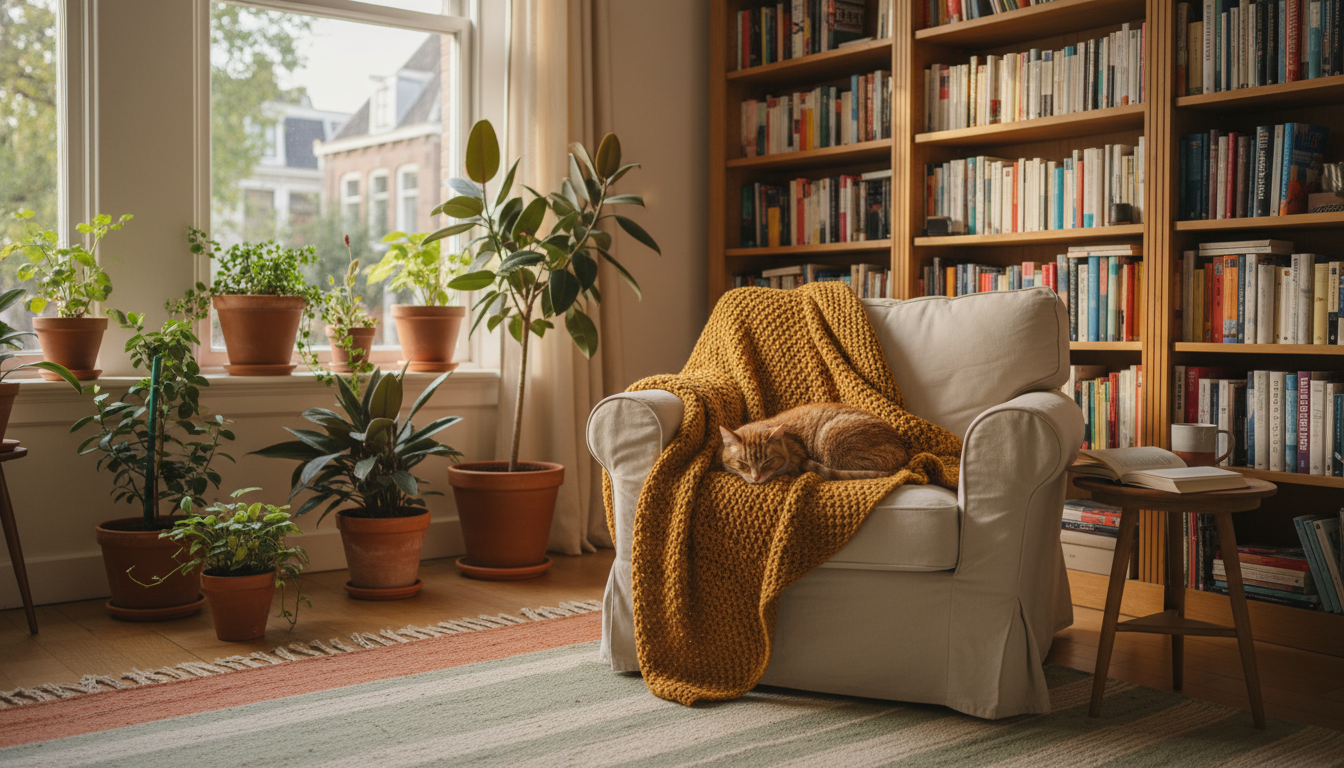 Cozy Dutch living room with large windows, built-in bookshelves, a comfortable reading chair, housep
Living Like a Local: Daily Life in The Hague
The rhythm of daily life here is what makes home exchange so much richer than hotel stays. Let me paint you a picture of a typical Tuesday during my last swap.
I woke up around 8, made coffee in my host's Bialetti (she'd left instructions and her favorite brand of beans), and ate yogurt with muesli at the small kitchen table by the window. Then I biked to the Haagse Markt—the largest outdoor market in the Netherlands—to stock up on vegetables, cheese, and those little Dutch pancakes called poffertjes that I'd become mildly addicted to.
The market is overwhelming in the best way. Over 500 stalls selling everything from Surinamese roti to Turkish textiles to second-hand books. I spent €23 ($25 USD) on enough food for three days, plus a vintage Delft tile that I definitely didn't need but couldn't resist.
Afternoon, I worked from a café called Lola—exposed brick, excellent flat whites, fast WiFi, and a no-laptop-shaming policy that made me feel welcome even when I camped out for three hours. Then I biked to the Mauritshuis to see the Vermeers (you can't not), wandered through the Binnenhof complex, and ended up at a wine bar in the Passage—a gorgeous 19th-century shopping arcade—as the sun set.
Dinner was simple: I cooked pasta with the vegetables from the market, drank a glass of wine on my host's tiny balcony, and read a book I'd found on her shelf. It was, objectively, an unremarkable day. But it was a day that felt like living somewhere rather than visiting it. And honestly? That's the whole point.
Practical Tips for Home Exchange in The Hague
Transportation is easy. The Hague has an excellent tram network, but honestly, biking is the way to go. Most home exchange hosts will either have bikes you can use or can point you to a rental shop. OV-fiets (the national bike rental system at train stations) costs about €4.55/day ($5 USD) if you have an OV-chipkaart, the Dutch transit card. Getting that card is worth it if you're staying more than a few days—you can use it on all public transit nationwide.
Groceries are affordable compared to other Western European capitals. Albert Heijn is the main supermarket chain, and there's one in virtually every neighborhood. For something fancier, Marqt has organic and specialty items. Budget about €50-70 ($55-77 USD) per week for groceries if you're cooking most meals.
The weather is... Dutch. Which means unpredictable. Pack layers, always have a rain jacket, and don't let a gray morning stop you from going out—it might be sunny by noon. The Dutch have a saying: "Er is geen slecht weer, alleen verkeerde kleding" (there's no bad weather, only wrong clothing). They're not wrong.
Day trips are easy from The Hague. Delft is 15 minutes by train (€3.50/$4 USD each way) and absolutely worth a visit for its pottery workshops and medieval center. Rotterdam is 25 minutes and offers completely different architecture and energy. Amsterdam is 50 minutes, though honestly, after experiencing The Hague, Amsterdam might feel a bit overwhelming.
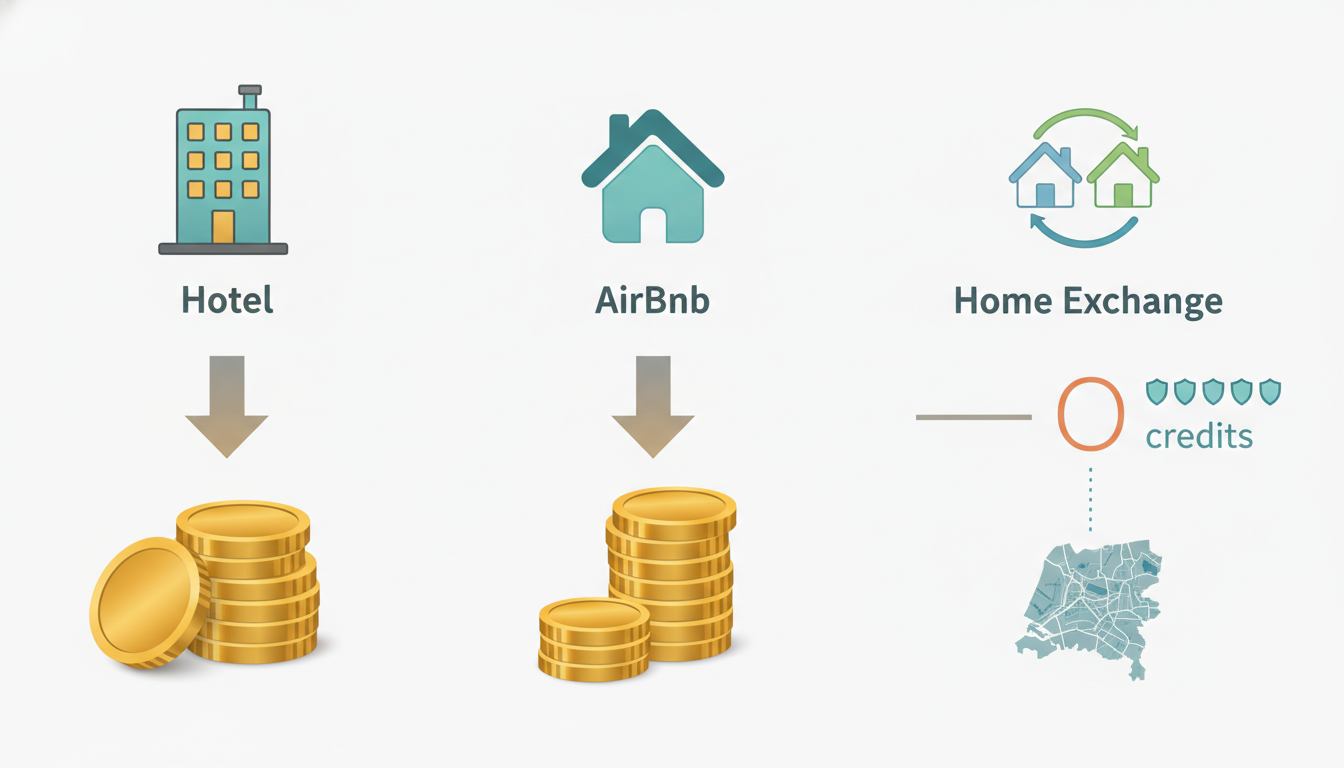 Comparison infographic showing costs of 2-week stay hotel 2,450, Airbnb 1,400, home exchange 0 14 c
Building Trust in the Home Exchange Community
I get asked about this constantly: "Aren't you nervous letting strangers stay in your home?"
And honestly? I was, at first. But seven years and 40+ exchanges later, I've never had a significant problem.
Here's why home exchange works: it's built on mutual vulnerability. I'm trusting you with my home, and you're trusting me with yours. That creates an accountability that hotel stays or even Airbnbs don't have. When my Statenkwartier host knew I was a real person with a real home in San Francisco that she could theoretically visit, there was an implicit contract between us.
SwappaHome's review system reinforces this. After every exchange, both parties leave reviews. A pattern of positive reviews builds your reputation, and that reputation is your currency in the community. People with established profiles and good reviews get more exchange requests. It's in everyone's interest to be excellent guests and hosts.
That said, I always recommend getting your own travel insurance and, if you're worried about your home, checking whether your homeowner's or renter's insurance covers short-term guests. SwappaHome connects you with other members, but the arrangement itself is between you and your exchange partner. Being clear about expectations upfront—in writing, through the platform's messaging system—prevents most issues before they start.
The verification process helps too. Members can verify their identity through SwappaHome, and I personally only exchange with verified members. It's an extra layer of confidence that the person I'm messaging is who they say they are.
The Emotional Return on Home Exchange
I've stayed in some objectively nicer hotels than any home exchange I've done. Places with rooftop pools and room service and those fancy rain showerheads. And I've enjoyed them. But I've never left a hotel feeling like I understood a place.
My Zeeheldenkwartier host, Marieke, left me a note recommending her favorite spot to watch the sunset—a bench near the Peace Palace that I never would have found on my own. When I sat there on my last evening, watching the sky turn pink over the spires, I felt something I rarely feel when traveling: like I belonged there, even temporarily.
That's what home exchange gives you. Not just free accommodation (though that's nice), not just more space than a hotel room (though that's nice too), but a sense of being welcomed into a place rather than just passing through it.
Getting Started with Your First The Hague Home Exchange
If you're new to home exchange, The Hague is a fantastic place to start. The city is safe, English is widely spoken (though learning a few Dutch phrases earns you serious goodwill), and the home exchange community here is active and welcoming.
Start by creating a detailed profile on SwappaHome. Include clear photos of your home, honest descriptions of your neighborhood, and something about yourself that helps potential hosts see you as a person. Mention your interests, your travel style, whether you have pets or allergies.
Then browse The Hague listings and start reaching out. Be patient—not every message will get a response, and timing doesn't always align. But when you find the right match, you'll know.
And then you'll be on a train from Schiphol Airport, watching the flat Dutch landscape roll past, knowing that someone's home is waiting for you. Their coffee mug. Their favorite chair. Their note about the bakery around the corner.
That's when the real trip begins.
Frequently Asked Questions
Is home exchange in The Hague safe for solo travelers?
Absolutely. The Hague is one of the safest cities in Europe, with low crime rates and well-lit streets. The home exchange community adds another layer of security through verified profiles and mutual reviews. I've done three solo exchanges here and always felt completely comfortable, even walking home late from restaurants in Zeeheldenkwartier.
How far in advance should I book a home exchange in The Hague?
For summer visits (June-August), start reaching out 3-4 months ahead. Spring and fall trips can often be arranged 6-8 weeks in advance. Winter has the most flexibility—I've arranged exchanges with just 3 weeks' notice in January. The earlier you start, the more options you'll have, especially in desirable neighborhoods like Statenkwartier.
How much money can I save with home exchange versus hotels in The Hague?
A two-week hotel stay in The Hague costs €2,100-2,800 ($2,300-3,080 USD) in high season. Mid-range Airbnbs run €1,400-1,800 ($1,540-1,980 USD) for the same period. Home exchange costs you 14 credits on SwappaHome—credits you earn by hosting guests at your own place. That's potentially thousands of dollars saved, which you can spend on rijsttafel dinners and day trips to Delft instead.
Do I need to speak Dutch for home exchange in The Hague?
No—English proficiency in the Netherlands is among the highest in the world, and virtually everyone in The Hague speaks it fluently. That said, learning basics like "dank je wel" (thank you) and "goedemorgen" (good morning) shows respect and often delights locals. Your host will almost certainly communicate in English, and all instructions will be in English too.
What's the best neighborhood in The Hague for families doing home exchange?
Statenkwartier is ideal for families. The townhouses are spacious with gardens, the streets are quiet and safe for kids, and you're close to Westbroekpark's playgrounds and the beach. Scheveningen is another good option if beach access is a priority. Both neighborhoods have larger homes than the central areas, with room for everyone to spread out.

Published by
SwappaHome
SwappaHome Editorial Team
Home Exchange & Slow Travel Editorial
The SwappaHome Editorial Team brings together travel research, home-exchange community insights, and platform data to produce practical guides for first-time and experienced home swappers. Every article cites real platforms, current market rates, and verifiable city-level facts so readers can make informed decisions without guessing.
Ready to try home swapping?
Join SwappaHome and start traveling by exchanging homes. Get 7 free credits when you sign up!
Related articles

Bachelor and Bachelorette Parties in Singapore: The Complete Home Swap Group Guide for 2026
Planning a bachelor or bachelorette party in Singapore? Discover how home swapping lets groups of 6-12 stay together in luxury condos, saving thousands while partying in Marina Bay.
Cycling in Lisbon: 7 Home Swap Bike Tour Itineraries for Every Rider
Discover the best cycling routes in Lisbon with these home swap bike tour itineraries—from waterfront paths to hilltop adventures, all starting from your borrowed home.

Graduation Trip to Barcelona: How Home Swapping Gives New Graduates the Ultimate Celebration
Planning a graduation trip to Barcelona? Discover how home swapping lets new graduates explore Spain's most vibrant city without the hostel crowds or hotel costs.