
Home Swap Communication: The Complete Etiquette Guide for Successful Exchanges
Maya Chen
Travel Writer & Home Exchange Expert
Master home swap communication with proven etiquette tips. From first messages to post-stay thank-yous, learn exactly what to say and when.
That message sat in my inbox for three days before I finally replied.
It wasn't that I didn't want to—I was just paralyzed by overthinking. What if I said too much? What if I came across as desperate? What if my casual tone made me seem unprofessional?
That was my first home swap communication attempt back in 2017, and honestly, I cringe thinking about how I almost blew a gorgeous apartment exchange in Copenhagen because I didn't know the unwritten rules of swap partner etiquette.
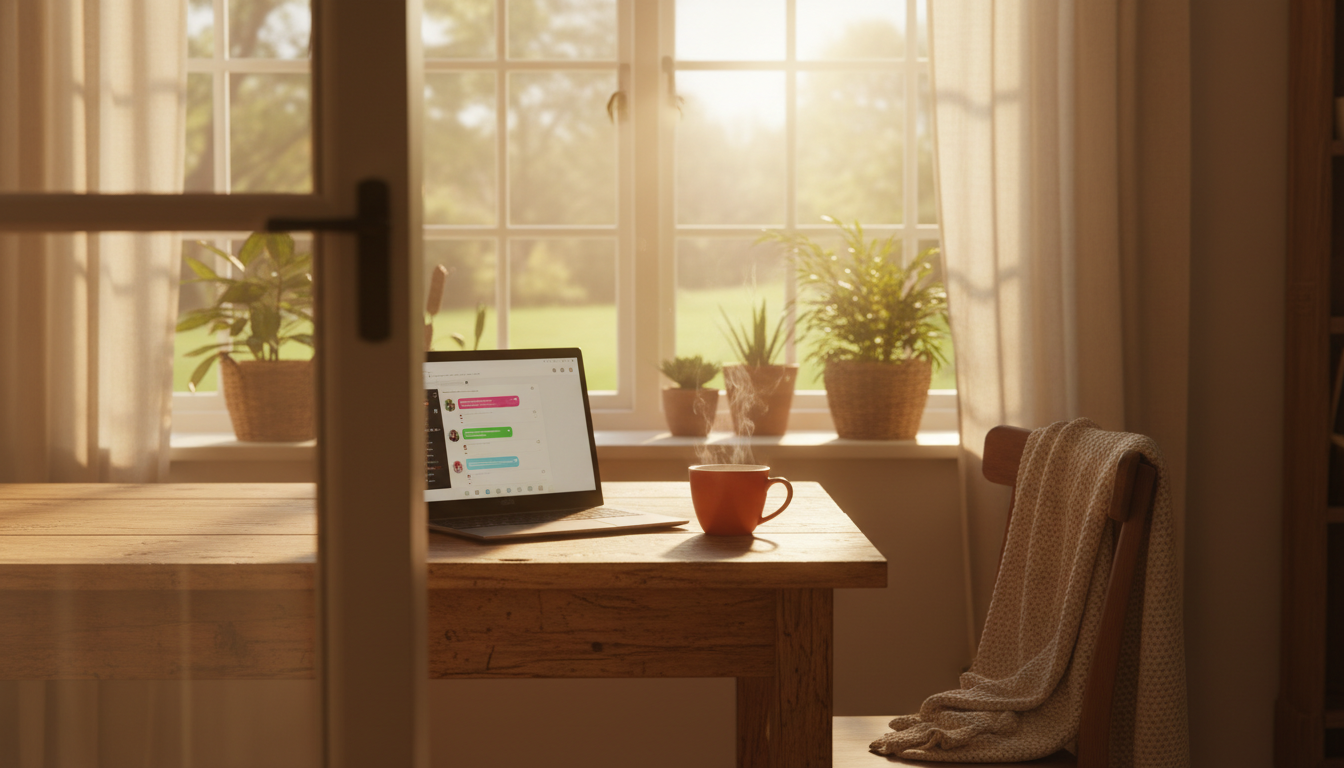 laptop open on a sunny kitchen table with a coffee cup, showing a messaging interface, morning light
Seven years and 40+ successful exchanges later, I've learned that home swap communication isn't about perfection—it's about clarity, respect, and building genuine connection with someone who's about to trust you with their home. Once you understand the etiquette, it becomes second nature.
Here's everything I wish someone had told me before I sent that awkward first message.
Why Home Swap Communication Makes or Breaks Your Exchange
Let me be direct: you could have the most stunning listing on SwappaHome, with professional photos and a killer description, but poor communication will tank your exchange faster than a broken dishwasher.
I've been on both sides of this. I once had a potential swap partner who took two weeks to respond to simple questions, gave one-word answers, and then seemed offended when I decided not to proceed. On the flip side, I've had exchanges where the communication was so smooth that by the time I arrived, I felt like I was staying with an old friend.
The difference? It's not about being a "good writer" or having perfect English. It comes down to responsiveness—replying within 24-48 hours, even if it's just to say "Got your message, will send details tomorrow!" It's about specificity, answering questions completely instead of vaguely. Warmth matters too—treating your swap partner like a human, not a hotel booking system. And there's proactivity, anticipating what they might need to know before they ask.
A study by home exchange platforms found that successful swaps have an average of 12-15 message exchanges before the stay. Unsuccessful ones? Usually fewer than 5. Communication isn't just nice—it's predictive.
The First Message: How to Reach Out to a Potential Swap Partner
Your first message is essentially a cover letter for your home and yourself. Get it wrong, and you'll hear crickets. Get it right, and you've already built the foundation for a great exchange.
 close-up of hands typing on a phone, casual setting like a caf or living room, warm afternoon lighti
What to Include in Your Initial Swap Request
After sending probably 200+ first messages over the years, here's the structure that actually gets responses.
Start with a genuine compliment or connection point—not generic flattery, but something specific. "I noticed you have a record player—my partner is a vinyl collector and would be in heaven!" beats "Your home looks nice" every time. Then give your dates and flexibility. Be specific but show wiggle room: "We're hoping for July 15-22, but we could adjust by a few days if that works better for you."
Tell them who's traveling. "It'll be me, my husband, and our two kids (ages 8 and 11)" or "Just me—I'm a solo traveler who works remotely." Explain why their location appeals to you—"We've been wanting to explore the Scottish Highlands for years" shows genuine interest. Include a brief intro to your home, not your whole listing, but a teaser: "Our apartment is in San Francisco's Mission District, walking distance to Dolores Park and about 50 great taco spots." And end with an open-ended question to invite dialogue: "Is there anything specific you'd like to know about our place or neighborhood?"
What NOT to Do in Your First Message
I've received some doozies. Please don't send a one-liner like "Your place available in August?" Too transactional. Don't write a 2,000-word autobiography—save it for the actual exchange. Don't immediately ask about valuables, security systems, or what could go wrong. That's red flag energy. Don't copy-paste the same generic message to 50 listings. We can tell. And don't pressure for an immediate response with "I need to know by tomorrow!"
Sample First Message That Actually Works
Here's a real message I sent that led to one of my favorite exchanges—a farmhouse in Provence:
"Hi Marie,
Your farmhouse stopped me mid-scroll—those lavender fields in your photos are exactly what I've been daydreaming about. My husband and I are hoping to escape San Francisco's fog for a week in late June (ideally the 20th-27th, but we're flexible).
We're both in our 30s, no kids, and we work remotely so we'd be spending most of our time exploring local markets and attempting to cook French food badly. Our apartment is in the Mission District—lots of street art, amazing burritos, and a sunny rooftop deck if that appeals to you.
Is your place available around those dates? And I'm curious—are there any local markets you'd recommend?
Thanks for considering us! Maya"
Notice what's happening here: I'm specific, I'm showing genuine interest, I'm giving her a sense of who we are, and I'm making it easy to respond.
Responding to Swap Requests: Etiquette for Hosts
Now let's flip the script. Someone's messaged you about your home. How you respond sets the tone for everything that follows.
The 48-Hour Rule
Respond within 48 hours. Always. Even if you're not interested, even if you're slammed at work, even if you need time to think.
If you can't give a full response, send a quick acknowledgment: "Hi! Thanks so much for reaching out. I'm traveling this week but will send you a proper response by Friday. Your place looks lovely!"
Ghosting is the cardinal sin of home swap communication. I've had people disappear after 10 messages deep into planning—don't be that person.
How to Politely Decline a Swap Request
Not every request will be a fit. Maybe the dates don't work. Maybe their home isn't what you're looking for. Maybe something in their profile gives you pause.
Decline gracefully: "Hi Tom, thanks so much for reaching out! Unfortunately, those dates don't work for us—we'll be hosting family that week. Your cabin looks incredible though, and I hope you find a great swap for your Portland trip. Best of luck!"
You don't owe anyone a detailed explanation. A simple, kind decline is enough. What you shouldn't do is ignore the message or give a wishy-washy "maybe" that strings them along.
When to Ask for More Information
Sometimes a request is promising but incomplete. Totally fine to ask things like "Could you tell me a bit more about who'll be staying?" or "I noticed you're new to SwappaHome—have you done home exchanges before?" or "What brings you to our area?"
These aren't interrogations. Frame them conversationally, and most people are happy to share more.
The Negotiation Phase: Dates, Details, and Expectations
You've found a match. Now comes the part where good communication really matters—working out the logistics.
Discussing Dates and Duration
Be upfront about your flexibility (or lack thereof). If you absolutely cannot adjust your dates, say so early: "We're locked into July 10-17 because of a family event, so unfortunately we can't shift those dates."
If you're flexible, make it clear: "We could do anywhere from 5-10 nights, depending on what works for you."
So here's the thing: if your dates don't align perfectly, don't force it. I've seen people try to make mismatched schedules work and end up stressed on both sides. Sometimes it's just not meant to be.
The Expectations Conversation
This is where many swaps go sideways—not because of bad intentions, but because of unspoken assumptions.
Have explicit conversations about cleaning expectations: "We'll do a full clean before we leave, including linens. Would you be able to do the same?" Never assume—some people think a quick tidy is sufficient. Talk about consumables: "Feel free to use any pantry staples, and we'll replace anything we use at your place. Does that work for you?" Discuss off-limits areas: "Our home office has work equipment, so we'd ask that room stay closed. Are there any spaces in your home we should avoid?" If either home has pets, discuss care arrangements, allergies, and expectations clearly. And cover the guest policy: "We won't have any visitors during our stay. Is that your expectation too?"
These conversations might feel awkward, but they prevent much bigger awkwardness later. I once assumed a swap partner would water my plants (I'd mentioned them casually) and came home to botanical carnage. Now I'm explicit about everything.
The Pre-Swap Video Call
For exchanges longer than a few nights, I always suggest a video call. It's not required, but it accomplishes several things: you get a real sense of each other (way better than text), you can do a virtual home tour, you can ask questions in real-time, and it builds trust and connection.
Keep it casual—15-20 minutes is plenty. I usually say something like: "Would you be up for a quick video chat before we finalize? I find it helps put faces to names and we can walk each other through our spaces."
I've never had anyone refuse, and it's always made the actual exchange smoother.
Pre-Arrival Communication: Setting Your Swap Partner Up for Success
The week before the exchange is when communication kicks into high gear. This is your chance to be an incredible host—even though you won't be there.
The Welcome Document
Create a comprehensive guide to your home. Not a novel, but everything they need to know: WiFi network and password, entry instructions (codes, keys, parking), appliance quirks ("The oven runs hot—reduce temps by 25°F"), heating and cooling controls, garbage and recycling schedule, emergency contacts (building super, trusted neighbor), and local recommendations—your favorite coffee shop, the grocery store you actually use, the restaurant for special occasions.
I keep a running Google Doc for my apartment that I update after each swap. It's currently 4 pages and includes everything from "how to work the finicky shower handle" to "the best sunset spot within walking distance."
Transportation and Arrival Details
Exchange the practical stuff: arrival and departure times, how they're getting there (do they need parking info?), key handoff logistics (lockbox code, neighbor with spare, etc.), and your phone number for day-of coordination.
The "Anything Else?" Message
A few days before arrival, send a final check-in:
"Hey! Getting excited for next week. Just wanted to check—is there anything else you need from me before you arrive? Any questions I haven't answered? I'll have my phone on me for the first couple days in case anything comes up."
This simple message has saved me multiple times. Once, a swap partner realized they'd never asked about parking and would have been circling the block for hours without the permit info.
During the Exchange: How Much Communication Is Too Much?
You've both arrived at your respective swaps. Now what?
The Arrival Message
Send a quick message when you arrive: "Made it! Your place is even lovelier than the photos. Everything working great so far. Hope your arrival went smoothly too!"
This serves two purposes: it confirms you're there safely, and it sets a positive tone. If something's wrong, you can address it. If everything's great, you've started with good energy.
When to Reach Out During the Stay
Here's my rule: reach out for genuine needs, not for validation.
Do message about something broken or not working ("The hot water seems to be out—is there a trick I'm missing?"), emergencies or urgent issues, genuine questions about the home or area, and something wonderful you want to share ("Your neighbor brought us homemade cookies—this community is incredible!").
Don't message about every minor thing ("Found the coffee filters!"), complaints about things you can handle yourself, or fishing for reassurance that you're being a good guest.
I typically exchange 2-3 messages during a week-long stay. Enough to stay connected, not so much that it feels like surveillance.
Handling Problems Mid-Swap
Things go wrong sometimes. The key is how you communicate about them.
If something breaks, tell your swap partner immediately, take responsibility if it was your fault, and offer solutions: "I'm so sorry—I accidentally knocked over the lamp in the bedroom and the shade cracked. I'd like to replace it. Can you send me a link to where you got it, or should I find something similar locally?"
If something's not as described, be honest but not accusatory: "Hey, I noticed the AC doesn't seem to be cooling the bedroom. Is there a setting I'm missing, or has it been having issues?"
If you're uncomfortable, trust your instincts, but communicate clearly. If something feels off about the home or situation, you're allowed to say so. Most issues have reasonable explanations—but if they don't, prioritize your safety.
Departure and Post-Swap Communication
The exchange isn't over when you leave. How you wrap things up matters for your reputation and future swaps.
The Departure Checklist Message
Before you leave, send a message confirming you've followed the checkout instructions, the state you're leaving the home in, anything they should know ("Ran the dishwasher—should be done by the time you're back"), and where you've left the keys.
"Hi! Just heading out now. Did a full clean, stripped the beds, and ran a load of towels. Left your keys in the lockbox. Had an absolutely wonderful time—your home was perfect. Safe travels back!"
Writing Reviews: The Etiquette of Honest Feedback
Reviews matter enormously in the home swap community. They build trust and help future swappers make decisions.
Be honest but kind. If something was imperfect, you can mention it without being harsh: "The apartment was cozy and well-located. The kitchen was smaller than photos suggested, but had everything we needed."
Be specific with praise. "Great place!" tells future swappers nothing. "The apartment was spotless, the welcome guide was incredibly detailed, and Sarah's restaurant recommendations led us to the best meal of our trip" is actually useful.
Timing matters too. Write your review within a week of the exchange while details are fresh. On SwappaHome, reviews are visible to both parties, so be prepared to stand behind what you write.
The Thank-You Message
This is optional but lovely. After a great exchange, I send a personal thank-you:
"Now that we're both home and settled, I just wanted to say thank you again. Your home was exactly what we needed, and your recommendations made our trip. I hope our place treated you well too. Maybe we'll swap again someday!"
I've maintained friendships with swap partners this way. One couple from Melbourne has become our go-to when we visit Australia. That started with a thank-you message.
Communication Red Flags to Watch For
Not every potential swap partner is a good match. Here's what should give you pause.
Slow or inconsistent responses are a warning sign—if they take a week to answer simple questions before the swap, imagine how they'll communicate if something goes wrong during it. Watch for vague or evasive answers too. "The neighborhood is fine" when you asked about safety. "The kitchen has stuff" when you asked about cooking equipment. If they won't give specifics, why?
Pressure tactics are another red flag. "I need an answer today" or "I have other offers" when you've asked for reasonable time to decide. Be wary of resistance to video calls or verification—not everyone is comfortable on camera, but if they refuse all attempts to verify who they are, that's concerning. And pay attention to mismatched expectations. If your communication styles are wildly different now, they won't magically align during the exchange.
Trust your gut. I've declined swaps because something felt off in the communication, even when I couldn't pinpoint exactly what. Every time, I've been glad I listened to that instinct.
Cultural Considerations in Home Swap Communication
Home swapping is global, which means you'll communicate with people from different cultural backgrounds. A few things to keep in mind.
Communication styles vary. Some cultures are more direct; others prioritize politeness over clarity. Germans might seem blunt to Americans; Americans might seem overly casual to Japanese hosts. Neither is wrong.
Time zones matter. If your swap partner is 12 hours ahead, don't expect immediate responses. And don't send urgent messages at 3 AM their time.
Language barriers are real. If English isn't their first language, keep your messages clear and simple. Avoid idioms, slang, and sarcasm that might not translate. I once confused a French swap partner by saying I was "tickled pink" about our exchange.
Expectations around hospitality differ too. In some cultures, leaving a small gift is expected. In others, it might feel strange. When in doubt, ask: "Is there anything I can bring you from our area?"
Building Long-Term Swap Relationships Through Communication
Some of my best travel experiences have come from repeat swaps—returning to homes I love with partners I trust.
This doesn't happen by accident. It happens through consistent, genuine communication: staying in touch occasionally (holiday greetings, sharing travel photos), referring them to friends looking for swaps in their area, and being the kind of communicator you'd want to swap with.
The home swap community is smaller than you'd think. Your reputation follows you. The way you communicate—responsive, clear, warm, honest—becomes part of that reputation.
Frequently Asked Questions
How quickly should I respond to home swap messages?
Aim to respond to home swap communication within 24-48 hours. Even if you need more time to decide, send a quick acknowledgment so your potential swap partner knows you've received their message. Ghosting damages your reputation and wastes everyone's time. If you're traveling or busy, a simple "Got your message, will reply properly by [date]" is perfectly acceptable.
What should I include in my first message to a swap partner?
Your first home swap communication should include your specific travel dates, who's traveling (ages, number of people), why you're interested in their location, a brief description of your home, and an open-ended question to start dialogue. Keep it personal but concise—around 150-200 words. Avoid generic copy-paste messages; mention something specific about their listing to show genuine interest.
Is it normal to do a video call before a home swap?
Yes, video calls before home exchanges are increasingly common and highly recommended, especially for longer stays. About 60% of experienced swappers do pre-swap video calls. It helps build trust, allows virtual home tours, and lets you ask questions in real-time. Keep it casual—15-20 minutes is enough. If a potential partner refuses all verification attempts, consider that a red flag.
How do I handle communication if something breaks during the swap?
Contact your swap partner immediately and honestly. Explain what happened, take responsibility if it was your fault, and offer solutions—whether that's replacing the item, arranging repairs, or compensating them. Most swap partners appreciate transparency and will work with you. Hiding damage or waiting until after the swap to mention it destroys trust and will result in negative reviews.
What's the etiquette for writing home swap reviews?
Write your review within a week while details are fresh. Be honest but constructive—mention positives and any issues factually without being harsh. Be specific rather than generic ("detailed welcome guide" beats "great host"). On SwappaHome, reviews are visible to both parties, so write what you'd be comfortable discussing face-to-face. Reviews build community trust and help future swappers make informed decisions.
Looking back at that Copenhagen message I agonized over seven years ago, I realize the stakes felt so high because I didn't have a framework. I didn't know what good home swap communication looked like.
Now I do. And honestly? It's not complicated. It's just being a decent human—responsive, clear, warm, and honest. The kind of communicator you'd want on the other end of your own exchange.
If you're new to home swapping, SwappaHome makes this easier with built-in messaging, member profiles, and a review system that rewards good communication. You start with 10 free credits, which means you can try your first exchange without any pressure.
But the platform is just a tool. The magic happens in the messages—in the connections you build with people who are trusting you with their home while you trust them with yours.
That's not just etiquette. That's the whole point.
40+
Swaps
25
Countries
7
Years
About Maya Chen
Travel Writer & Home Exchange Expert
Maya is a travel writer with over 7 years of experience in the home swapping world. Originally from Vancouver and now based in San Francisco, she has completed more than 40 home exchanges across 25 countries. Her passion for "slow" and authentic travel led her to discover that true luxury lies in living like a local, not a tourist.
Ready to try home swapping?
Join SwappaHome and start traveling by exchanging homes. Get 10 free credits when you sign up!
Related articles

Home Swapping in Manchester: Is It Worth It? A Local's Honest Take
Manchester home swapping offers incredible value with its booming cultural scene and affordable living. Here's what 3 swaps taught me about this underrated city.

Spring Getaway to Prague: Home Swap Travel Tips for an Unforgettable Czech Adventure
Planning a spring getaway to Prague? Discover insider home swap travel tips, the best neighborhoods to stay, and how to experience the Czech capital like a local.

Home Swapping in Charleston: Is This Southern Gem Worth Your Credits?
Discover why Charleston is becoming a home swap hotspot—from historic downtown gems to beach house trades. Real tips from 40+ swaps.