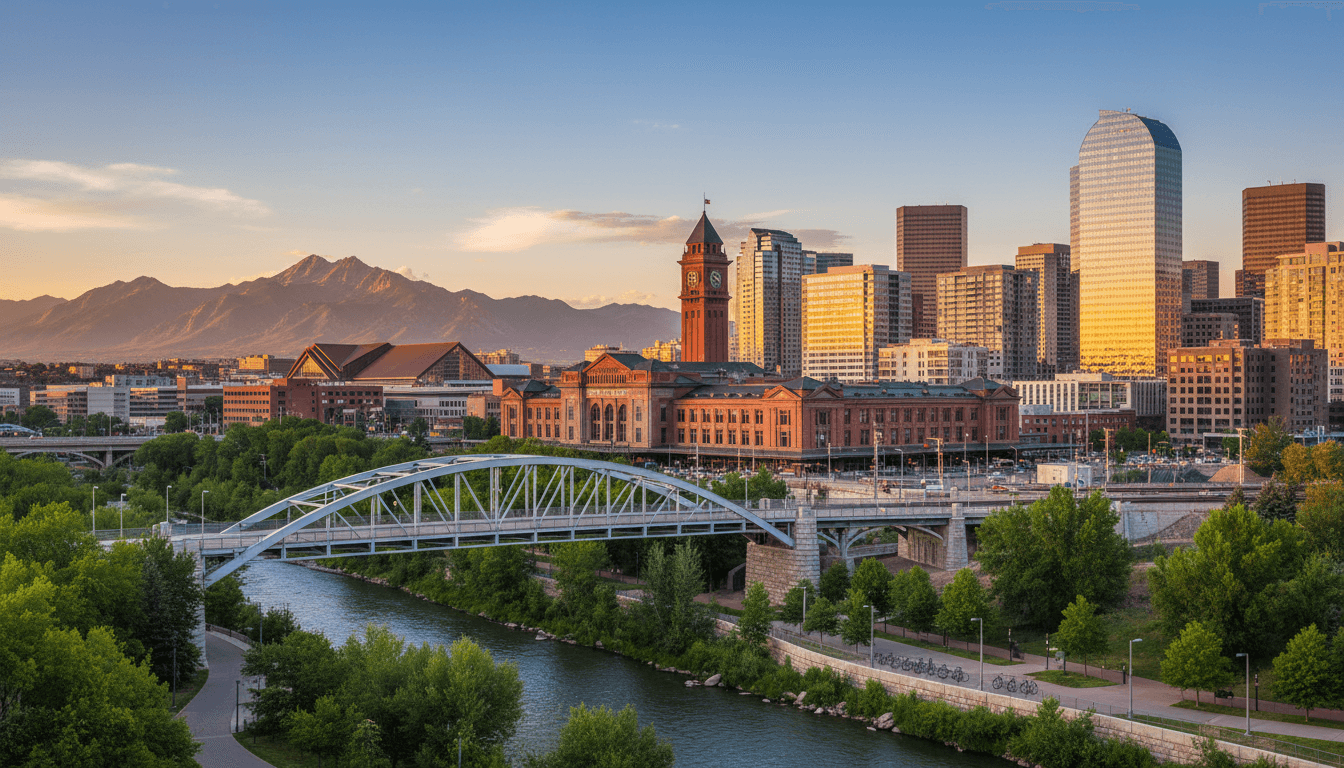
Home Swap in Denver: The Complete Packing List and Preparation Guide for Mile-High Exchanges

SwappaHome Editorial Team
Home Exchange & Slow Travel Editorial
Planning a home swap in Denver? Get Maya's tested packing list for Colorado's altitude, seasonal gear tips, and essential preparation steps for a seamless exchange.
I still remember standing in my San Francisco kitchen at 2 AM, frantically Googling "do I need altitude sickness pills for Denver" while trying to stuff hiking boots into an already-bursting suitcase. That was three years ago, before my first home swap in Denver—a cozy Capitol Hill bungalow that ended up being one of my favorite exchanges ever. But man, did I learn some lessons about preparation the hard way.
Here's the thing about a home swap in Denver that nobody tells you: packing for Colorado's capital isn't like packing for any other American city. The altitude changes everything. The weather can shift from summer to winter in a single afternoon. And if you're doing a home exchange rather than staying in some generic hotel, you've got a whole extra layer of preparation to think about—leaving your own place guest-ready while getting yourself ready for the Mile High City.
 A cozy Denver bungalow living room with exposed brick, mountain landscape art, and a window showing
After four separate home swaps in Denver (Capitol Hill, Highland, RiNo, and a gorgeous Victorian in Baker), I've finally nailed down exactly what you need to pack, what you can skip, and how to prep both yourself and your home for a seamless exchange.
Why Home Swap in Denver Requires Special Preparation
Denver sits at 5,280 feet above sea level—hence the whole "Mile High City" nickname. That might sound like just a fun fact for trivia night, but it genuinely affects how you should prepare for your trip.
My first morning in that Capitol Hill bungalow, I tried to go for a casual jog around Cheesman Park. Twenty minutes in, I was gasping like I'd just run a marathon. The dry air had my lips cracked by day two. And don't even get me started on how quickly you can get sunburned when there's 25% less atmosphere protecting you from UV rays.
Beyond the altitude, Denver's weather is genuinely unpredictable. I've experienced 70°F sunshine and a surprise snowstorm within the same 24-hour period—in April. The locals have a saying: "Don't like the weather? Wait fifteen minutes." They're not joking.
Then there's the home exchange element. When you're doing a home swap in Denver, you're not just packing for yourself. You're also preparing your own home for guests, coordinating logistics across time zones, and making sure you have everything you need to feel at home in someone else's space. It's a different kind of travel, and it requires a different kind of preparation.
The Essential Home Swap in Denver Packing List
After years of trial and error, I've developed what I call my "Denver-specific" packing approach. This isn't your standard travel list—it's specifically designed for Colorado's unique conditions and the home exchange experience.
Altitude and Climate Essentials
Let's start with the stuff that's genuinely non-negotiable.
A quality reusable water bottle is your best friend here—I'm talking a 32-ounce minimum. I use a Hydro Flask that I basically treat like a security blanket. At altitude, you need to drink significantly more water than usual. The general recommendation is half your body weight in ounces daily, plus extra if you're hiking or being active. I refill mine four to five times a day in Denver. No exaggeration.
High-SPF lip balm with sunscreen (SPF 30+) is something I now keep in every pocket, bag, and jacket. The combination of altitude, dry air, and intense sun will destroy your lips within 48 hours otherwise. I like the Burt's Bees tinted ones, but anything with serious SPF works. Bring at least two—you will lose one.
Sunscreen itself needs to be SPF 50 or higher. I learned this the hard way during a "quick" afternoon at Red Rocks. The sun at altitude is no joke, and even on cloudy days, you're getting more UV exposure than you'd expect.
Moisturizer—and I mean serious moisturizer—is essential for combating Denver's dry air. Your skin will feel like sandpaper by day three without it. I bring a heavy night cream and a lighter day version. If you have a humidifier at home, consider asking your swap host if they have one you can use.
And sunglasses? More than a fashion accessory here. The glare off snow (if there is any) and the general brightness at altitude can give you legitimate headaches.
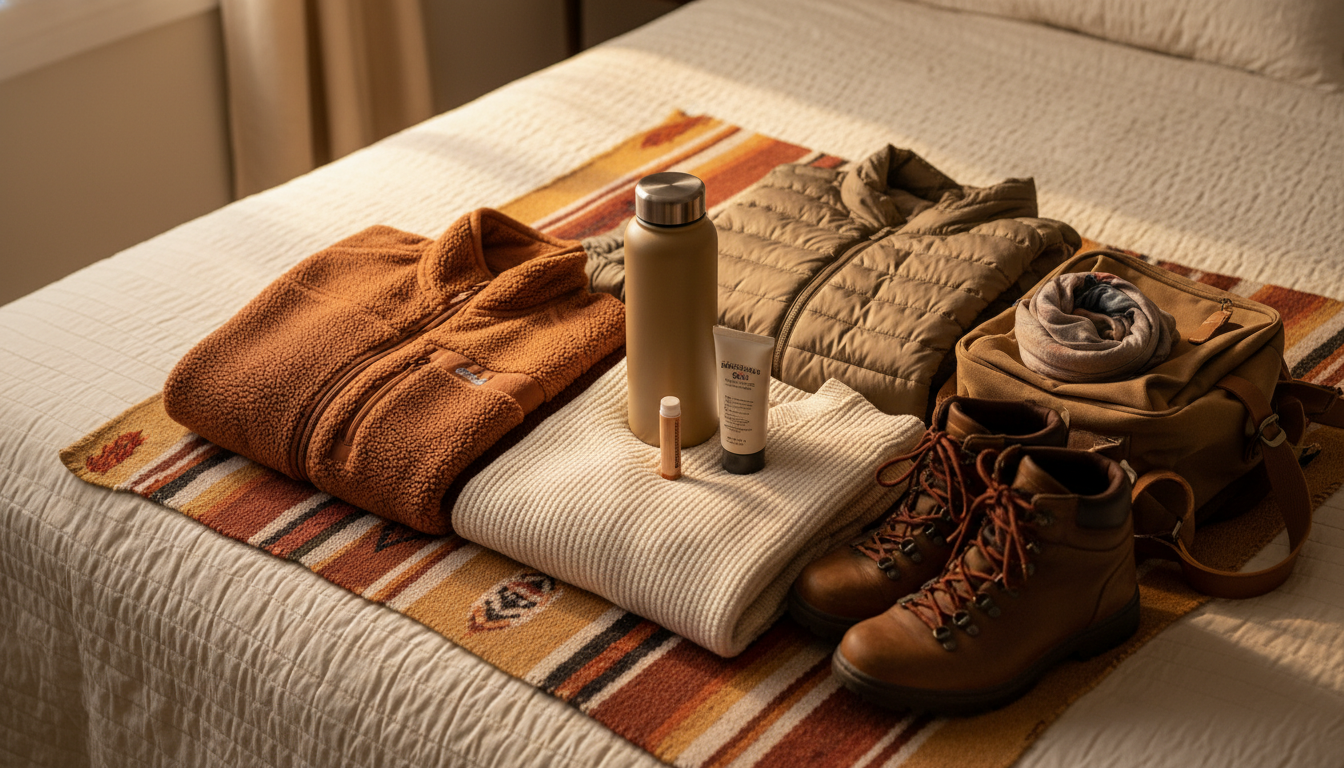 Flat lay of Denver packing essentials on a bed water bottle, sunscreen, lip balm, layers of clothing
Clothing Strategy for Denver's Four-Seasons-in-One-Day Weather
Here's my approach to Denver clothing: layers, layers, and more layers. Seriously, I've worn a tank top, a flannel, a light down jacket, and a rain shell all in the same day there.
Base layers should include a mix of short-sleeve and long-sleeve options. I usually pack three t-shirts and two long-sleeve lightweight shirts. Merino wool is ideal because it regulates temperature and doesn't get funky if you wear it multiple days—essential for packing light.
Mid-layers are where Denver packing gets strategic. A lightweight fleece or quarter-zip is perfect for morning coffee on the patio when it's still crisp. A light down jacket (packable is best) handles those sudden temperature drops. I also always bring one nicer sweater for dinners out in LoDo or RiNo.
For outer layers, a waterproof, breathable shell jacket is probably the single most important piece of clothing for Denver. Not a heavy winter coat—something lightweight that blocks wind and handles surprise rain or snow. Mine packs down to basically nothing and has saved me countless times.
Bottom-wise, I pack one pair of jeans, one pair of hiking pants or convertible pants, and one pair of athletic leggings. That covers everything from brewery hopping in the Highlands to hiking at Red Rocks to yoga in your swap home's living room.
Footwear requires thought. You'll want comfortable walking shoes for exploring downtown and the neighborhoods, proper hiking boots or trail runners if you're planning any outdoor adventures (and you should—that's half the point of Denver), and one pair of dressier shoes if you've got restaurant reservations. I usually wear my bulkiest shoes on the plane to save suitcase space.
Tech and Connectivity for Your Home Exchange
Since you're doing a home swap in Denver rather than staying in a hotel, there are some specific tech items worth bringing.
A portable phone charger is essential for long days exploring. Denver is spread out, and you'll likely be using GPS navigation, taking photos of those mountain views, and texting your swap host with questions. A dead phone in an unfamiliar city? Not fun.
Your own streaming service login info matters more than you'd think. Most home exchange hosts will have a smart TV, but they might not have the specific apps you use. Having your Netflix, Hulu, or HBO Max credentials ready means you can actually watch your shows during downtime.
A small portable speaker is something I always bring for home exchanges. It makes any space feel more like your own when you can play your music while cooking dinner or getting ready in the morning.
Health and Wellness Items for Altitude Adjustment
Okay, real talk about altitude sickness. Most people don't get seriously ill from Denver's elevation, but you'll probably feel something—headaches, fatigue, shortness of breath during exertion, trouble sleeping. Here's what I pack to minimize the discomfort.
Ibuprofen or aspirin helps with altitude headaches. I take one preventatively my first morning there. Melatonin or your preferred sleep aid can help since altitude often disrupts sleep patterns—I don't normally use sleep aids, but I make an exception for my first two nights in Denver.
Electrolyte packets (like Liquid IV or Nuun tablets) help you hydrate more effectively than water alone. I drop one in my water bottle each morning.
Some people swear by altitude sickness supplements like Altitude Rx or Chlorophyll drops. Honestly? I'm not sure if they work or if it's placebo, but I bring them anyway. Can't hurt.
And obviously, any prescription medications you take regularly, plus a few days' extra supply in case of travel delays.
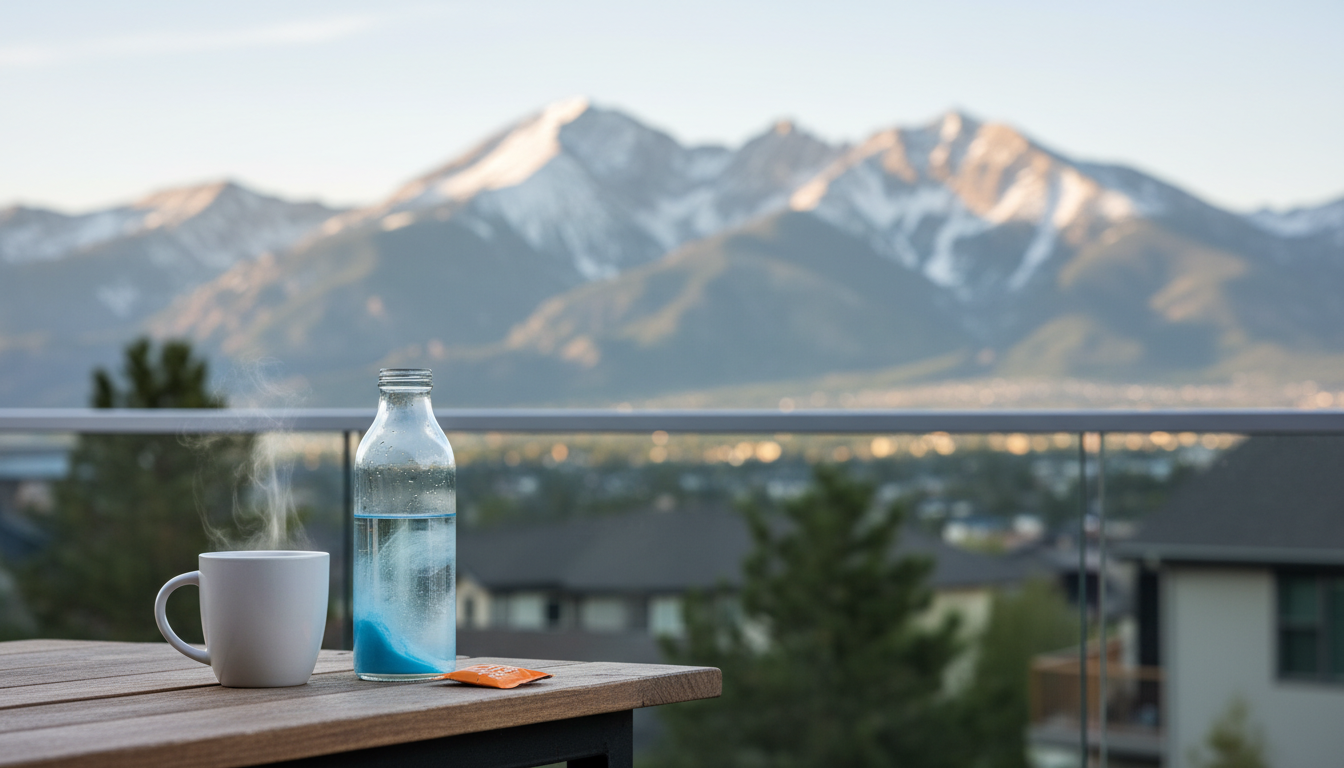 A morning scene on a Denver homes patio, showing coffee, a water bottle with electrolyte packet, and
Preparing Your Own Home for Your Swap Guests
Here's the part of home exchange preparation that's easy to overlook when you're focused on your own packing: getting your place ready for whoever's staying there while you're enjoying Denver.
I've developed a pretty solid system for this over my 40+ swaps. It takes some effort upfront, but it makes the whole exchange smoother for everyone.
The Deep Clean and Declutter
About a week before your swap, do a thorough cleaning of your home. I'm talking beyond your normal tidying—wipe down baseboards, clean inside the fridge, wash all the bedding. Your guests are trusting you with their home; show them you're trustworthy with yours.
Declutter personal items you don't want touched or seen. I have a closet I designate as "Maya's stuff—please don't open" and I put anything valuable or private in there. Most swap guests are respectful, but it's just easier for everyone if there's a clear boundary.
Clear out at least half your closet and dresser space for guests. Nothing's worse than arriving at a swap home and having nowhere to put your clothes.
The Welcome Guide
This is where you can really set your swap apart. I create a digital document (Google Doc works great) with everything my guests might need.
Wifi password and any smart home instructions—how to use the thermostat, which remote controls the TV, that sort of thing. Neighborhood recommendations—my favorite coffee shops, the best takeout, where to get groceries. Be specific. Not just "there's a good Thai place nearby" but "Thai Basil on 24th Street does amazing pad see ew, order the medium spice unless you really love heat."
Public transit info, parking situation, and any quirks about the space. ("The bathroom door sticks, just push firmly.") Emergency contacts—your number, a local friend who can help if something goes wrong, building management if applicable. House rules, but keep them reasonable. Things like "please don't smoke inside" are fair; a three-page list of restrictions will make guests feel unwelcome.
Stocking the Essentials
I always leave some basics for my guests. Toiletries they might have forgotten—a spare toothbrush, travel-size shampoo and conditioner, a fresh bar of soap. Coffee, tea, and a few breakfast basics. Nothing elaborate, but enough that they can have a cup of coffee their first morning without immediately having to find a grocery store. Clean towels prominently displayed so they know which ones are for them.
A small welcome gift is a nice touch but not required. I usually leave a bottle of local wine or some fancy chocolates.
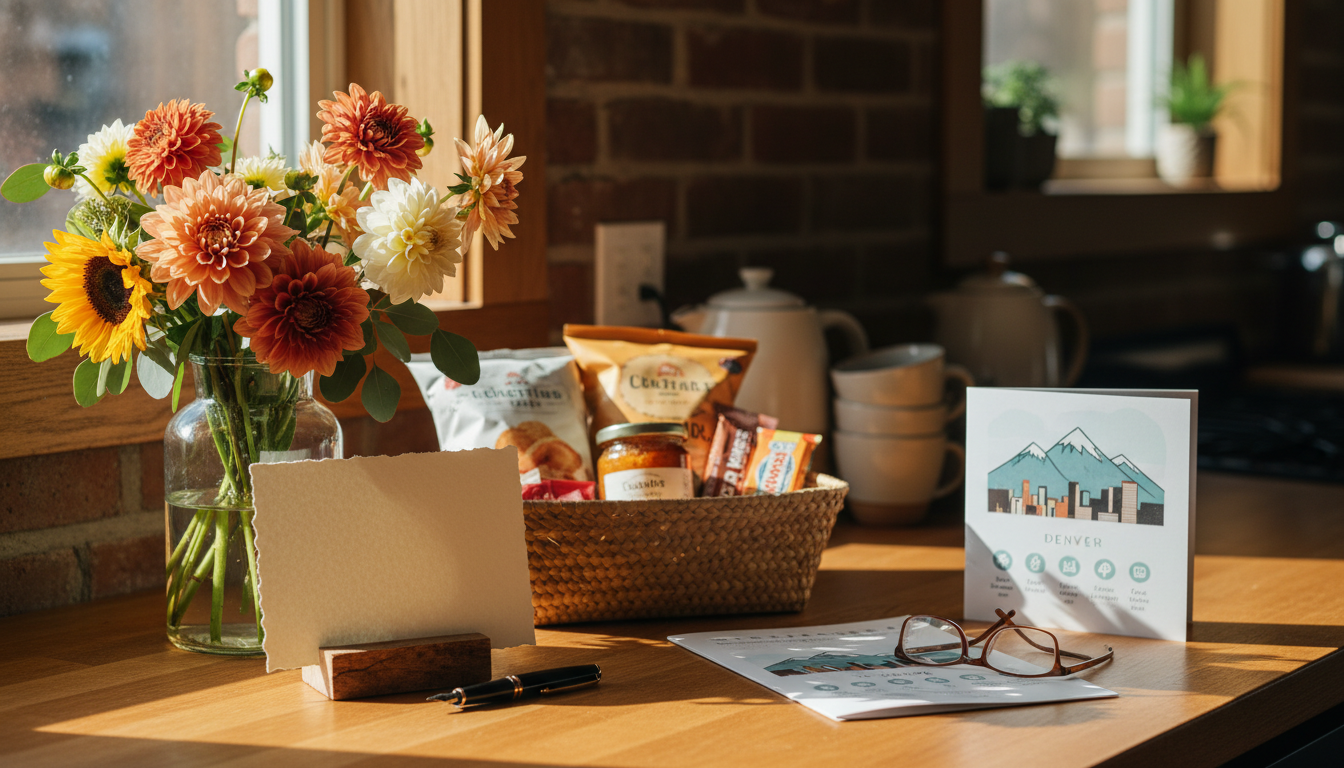 A thoughtfully prepared guest welcome setup fresh flowers, a handwritten note, local snacks, and a p
Coordinating the Logistics of Your Denver Home Swap
The weeks leading up to your swap involve some back-and-forth coordination. Here's how I handle it without getting overwhelmed.
Communication Timeline
About two weeks out, I send my swap partner a detailed message confirming dates, arrival times, and key exchange logistics. This is also when I share my welcome guide and ask if they have any questions about my place.
One week before, we finalize all the details. How will keys be exchanged? (I usually use a lockbox with a code.) What time can they check in? Are there any last-minute things either of us should know?
Two to three days before, a quick check-in message. "Hey, just confirming everything's set for Saturday! Let me know if anything's changed on your end."
Day of arrival, I send a "safe travels!" message and remind them to text me when they arrive so I know they got in okay.
Key Exchange Options
For my Denver swaps, I've used a few different methods. Lockbox on the property is my favorite—no coordination needed, guests can arrive whenever works for them. Meeting in person works if your schedules align, but I find it adds stress to travel days. Leaving keys with a neighbor or building manager is another solid option. Smart locks with temporary codes are increasingly common and super convenient.
Using SwappaHome's Platform Features
If you're using SwappaHome for your Denver home swap, take advantage of the secure messaging system to keep all your communication in one place. It's easier than hunting through email threads, and you have a record of everything you discussed.
The review system is also worth thinking about as you prepare. Knowing that your guests will review your home (and you'll review theirs) creates mutual accountability. It's one of the things I love about the home exchange community—everyone's invested in making it a good experience.
What to Do When You First Arrive in Denver
You've packed perfectly, your home is guest-ready, and you've just landed at DEN. Here's how to start your Denver home swap on the right foot.
Day One Priorities
Get groceries before you do anything else. Seriously. You'll be tired, probably a little altitude-foggy, and the last thing you want is to realize at 9 PM that there's no food in the house. Whole Foods in Capitol Hill, Sprouts in Highland, or King Soopers (Colorado's version of Kroger) anywhere in the city will have everything you need.
Hydrate aggressively. Start drinking water the moment you land and don't stop. Skip alcohol your first night—it hits harder at altitude and will make any adjustment symptoms worse.
Take it easy. I know you're excited to explore, but your first day should be low-key. A walk around the neighborhood, maybe dinner at a nearby restaurant, early to bed. Save the hiking and brewery crawls for day two or three once you've adjusted.
Familiarize yourself with the home. Figure out how everything works while you're still fresh—the coffee maker, the shower temperature, the heating/cooling system. There's nothing worse than trying to troubleshoot a finicky thermostat when you're exhausted.
 A traveler settling into a Denver home exchange, unpacking groceries in a sunny kitchen with mountai
Communicating with Your Host
Send a quick message to your swap host when you arrive. Something like: "Made it safely! The place is wonderful, thank you so much for the welcome basket. Everything's working great." This gives them peace of mind and opens the door for any questions.
If something isn't working or you can't find something, don't hesitate to ask. Most hosts are happy to help troubleshoot remotely. I've had swap guests text me about everything from "where's the extra toilet paper?" to "the wifi isn't connecting"—all easy fixes with a quick response.
Neighborhood-Specific Tips for Your Denver Home Swap
Where you're swapping in Denver affects what you should pack and how you'll spend your time. Here's what I've learned from stays in different parts of the city.
Capitol Hill and Cheesman Park Area
This is Denver's most walkable neighborhood, full of historic homes, excellent restaurants, and a vibrant LGBTQ+ community. If you're swapping here, you can probably get away with fewer driving days—pack comfortable walking shoes and plan to explore on foot. The Sunday farmers market at City Park is worth building your schedule around.
Highland and LoHi
Trendy, restaurant-heavy, and slightly more spread out. You'll want a car or be comfortable with rideshares. Pack something nice for dinner—places like Linger and Root Down have a scene. The views of downtown from Highland Bridge Park are spectacular at sunset.
RiNo (River North Art District)
Denver's arts and brewery district. If you're swapping here, pack layers for evening gallery walks and comfortable shoes for wandering between breweries. The street art is incredible—bring a good camera or make sure your phone's charged for photos.
Baker and South Broadway
Antique shops, dive bars, and some of Denver's best vintage shopping. Pack light so you have room to bring home finds. The vibe is more casual here—leave the dressy clothes at home.
Common Home Swap in Denver Mistakes to Avoid
I've made pretty much every mistake possible over my years of home exchanging. Learn from my errors.
Underestimating the altitude is the biggest one. Even if you're fit, even if you've been to other high-altitude places, give yourself time to adjust. I've seen people try to hike a 14er their first day and end up miserable.
Overpacking "just in case" cold weather gear in summer. Yes, Denver can get chilly, but in July and August, you don't need a heavy coat. Check the forecast before you finish packing and adjust accordingly.
Forgetting to leave clear instructions for your own guests. The more thorough your welcome guide, the fewer panicked messages you'll get while trying to enjoy Red Rocks.
Not building in buffer time for travel days. Flights get delayed, traffic happens, things go wrong. Don't schedule your swap so tightly that one delay throws everything off.
Skipping the grocery store run. I mentioned this already, but it bears repeating. Future-you will thank present-you for having breakfast supplies ready.
Final Thoughts on Your Denver Home Exchange
After four Denver swaps and countless trips to Colorado, I can honestly say it's one of my favorite places to do a home exchange. There's something special about waking up in a real Denver home, making coffee in a local's kitchen, and heading out to explore a neighborhood like you actually live there.
The preparation is more involved than a typical trip, sure. But that's part of what makes home swapping so rewarding. You're not just visiting Denver—you're temporarily living there, in a real neighborhood, with a real kitchen, and a real sense of what daily life in the Mile High City feels like.
If you're considering your first home swap in Denver, my advice is this: start planning early, pack thoughtfully for the altitude, prepare your own home with care, and then let yourself be surprised by what you discover. The best moments of my Denver swaps have been the unplanned ones—a neighbor's recommendation for breakfast tacos, stumbling onto a street festival in RiNo, watching a thunderstorm roll over the mountains from someone's backyard.
That's the magic of home exchange. You get to experience a place the way locals do, with all the little details that hotels and Airbnbs can't replicate. And Denver, with its mountain views, craft beer scene, and genuinely friendly people, is a pretty spectacular place to experience that way.
SwappaHome makes finding these kinds of exchanges straightforward—you can browse Denver listings, connect with hosts, and use the credit system to book your stay. With 7 free credits when you sign up, you've got enough for a full week in the Mile High City. Not a bad way to test out the home swap lifestyle.
Now go pack that water bottle. Your Denver adventure is waiting.
Frequently Asked Questions
What should I pack for a home swap in Denver?
For a home swap in Denver, prioritize altitude essentials: a large reusable water bottle, SPF 50+ sunscreen, moisturizing lip balm, and electrolyte packets. Pack layers for unpredictable weather—a waterproof shell jacket is non-negotiable. Include comfortable walking shoes, hiking footwear if you're planning outdoor activities, and your own streaming service logins for the swap home's TV.
How do I prepare my home for a home exchange guest?
Prepare your home by deep cleaning, clearing closet space, and creating a detailed welcome guide with wifi passwords, neighborhood recommendations, and house quirks. Stock basics like coffee, tea, and toiletries. Secure personal valuables in a designated private area. Share the guide with your swap partner about a week before arrival.
Does altitude sickness affect home swap travelers in Denver?
Yes, Denver's 5,280-foot elevation affects most visitors. Expect possible headaches, fatigue, and shortness of breath during your first two to three days. Combat symptoms by drinking extra water, avoiding alcohol initially, taking ibuprofen for headaches, and planning low-key activities for day one. Most people adjust within 48 to 72 hours.
How many days should I plan for a Denver home swap?
Plan at least five to seven days for a Denver home swap to properly adjust to altitude and explore the city. This allows two to three adjustment days plus time for hiking, brewery visits, and neighborhood exploration. Longer stays of ten to fourteen days let you truly settle into local life—the real benefit of home exchanging.
What neighborhoods are best for home swaps in Denver?
Capitol Hill offers walkability and historic charm. Highland and LoHi provide trendy restaurants and downtown views. RiNo is perfect for art and brewery lovers. Baker suits vintage shoppers and those wanting a casual vibe. Choose based on your interests—each neighborhood offers a distinctly different Denver experience through home exchange.

Published by
SwappaHome
SwappaHome Editorial Team
Home Exchange & Slow Travel Editorial
The SwappaHome Editorial Team brings together travel research, home-exchange community insights, and platform data to produce practical guides for first-time and experienced home swappers. Every article cites real platforms, current market rates, and verifiable city-level facts so readers can make informed decisions without guessing.
Ready to try home swapping?
Join SwappaHome and start traveling by exchanging homes. Get 7 free credits when you sign up!
Related articles
How to Extend or Modify a Home Swap Mid-Stay: The Complete Flexibility Guide
Need to extend your home swap or change dates mid-trip? Here's exactly how to negotiate changes, handle credits, and keep both parties happy.

How to Visit Bali for Free with Home Exchange: The Complete 2026 Guide
Skip the $150/night villas. Home exchange in Bali lets you stay in Ubud rice field houses and Seminyak beach pads for zero accommodation cost. Here's exactly how.
How to Vet Home Swap Guests: 12 Red Flags Every Host Should Know
Learn how to vet home swap guests before handing over your keys. Spot the 12 red flags experienced hosts watch for—and protect your home with confidence.