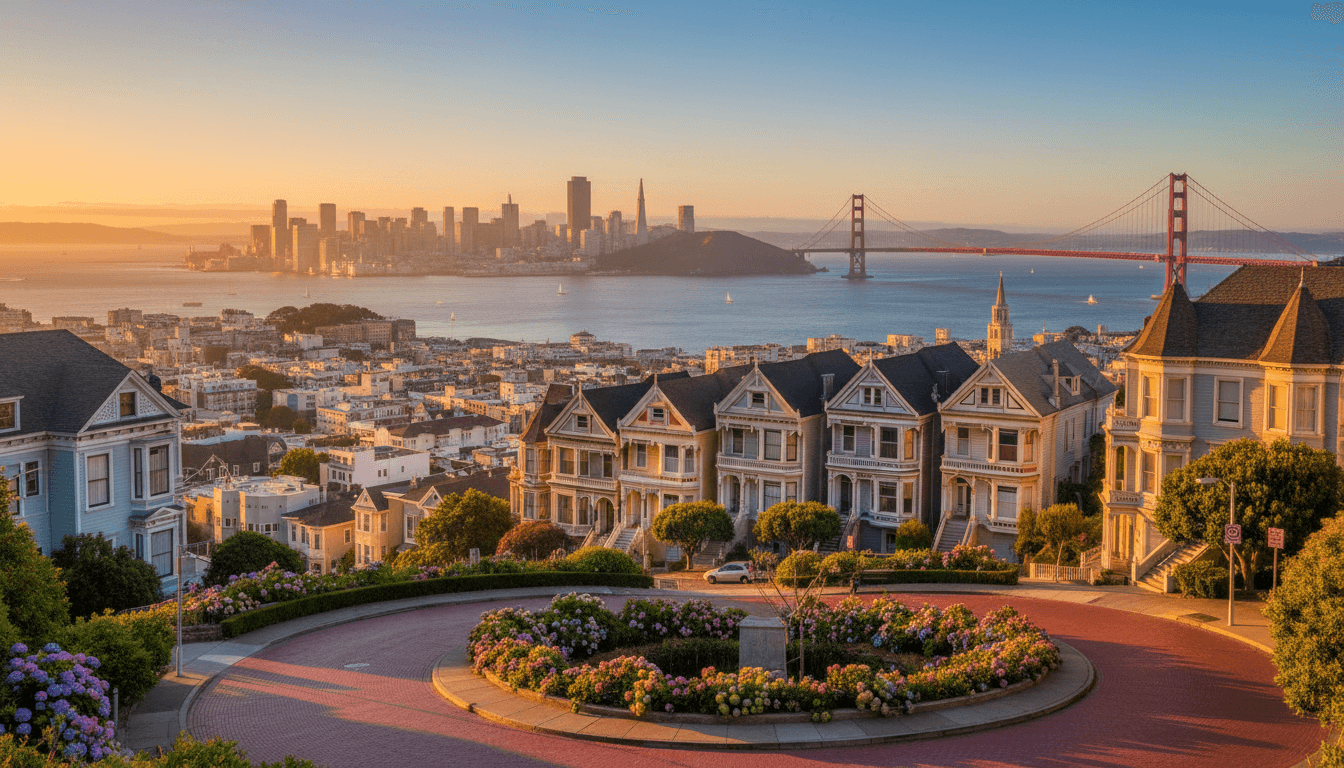
San Francisco for Home Swappers: Your Complete Guide to the City by the Bay

SwappaHome Editorial Team
Home Exchange & Slow Travel Editorial
Discover how to experience San Francisco like a local through home swapping. From iconic neighborhoods to hidden gems, here's everything you need to know.
San Francisco for Home Swappers: Your Complete Guide to the City by the Bay
Picture this: You wake up to the sound of fog horns echoing across the bay, sunlight filtering through Victorian windows, and the aroma of freshly roasted coffee drifting up from the café below. You pad barefoot to the kitchen—your kitchen for the next two weeks—and start the morning like a true San Franciscan. This isn't a hotel fantasy. This is what home swapping in San Francisco actually feels like.
San Francisco has always been a city that rewards the curious. It's a place where tech billionaires share sidewalks with Beat poets' ghosts, where you can eat your way through a dozen cultures in a single afternoon, and where the neighborhoods change character every few blocks like chapters in a really good novel. But here's the thing about SF—it's also notoriously expensive. A decent hotel room can easily run $300-500 per night, and even modest Airbnbs have price tags that make your eyes water.
That's exactly why home swapping has become such a game-changer for travelers who want to experience this magical, maddening, utterly unique city without taking out a second mortgage.
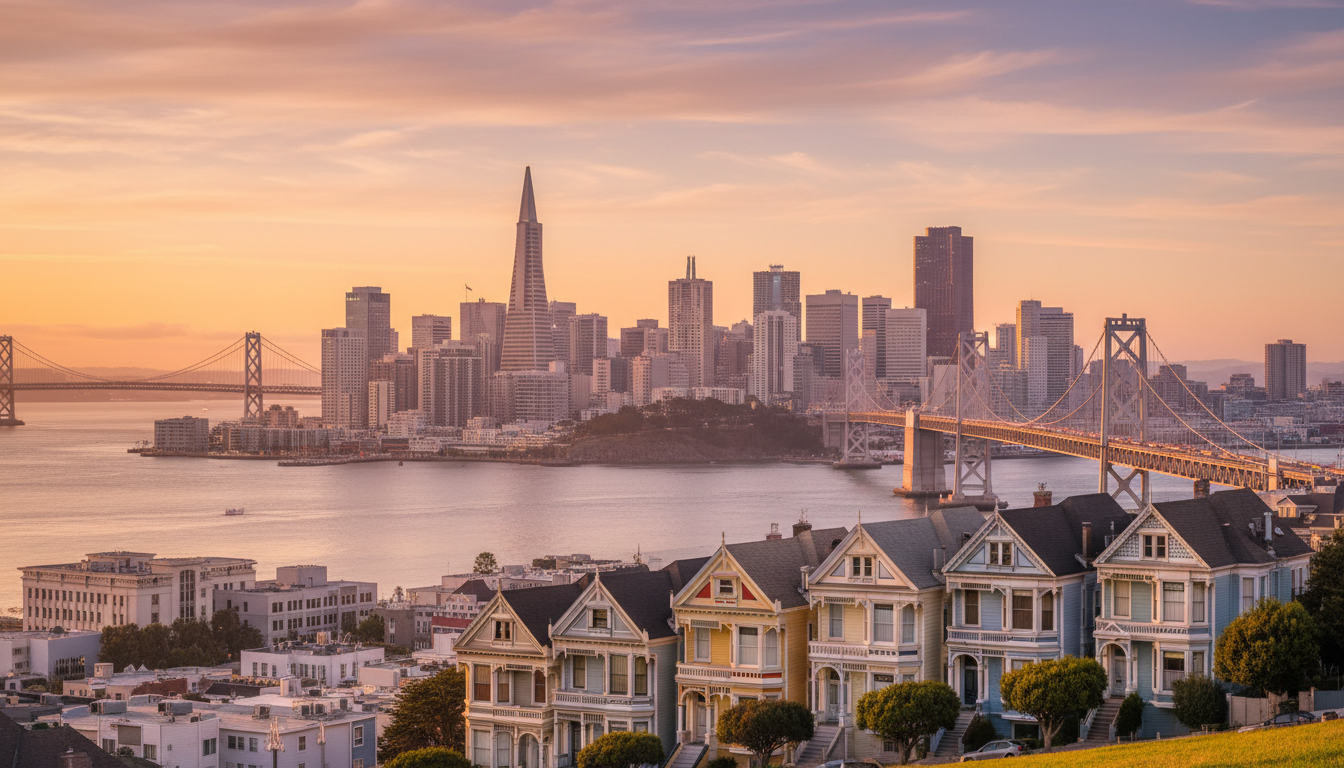 Panoramic view of San Franciscos iconic skyline at golden hour, showing the Victorian painted ladies
Why San Francisco Is Perfect for Home Swapping
Let me be honest with you: San Francisco isn't like other American cities. It's compact—just seven miles by seven miles—but packed with more personality per square foot than places ten times its size. And that density is precisely what makes it such an incredible home swap destination.
When you stay in a local's home here, you're not just getting a place to sleep. You're getting a neighborhood. You're inheriting their favorite coffee shop, their go-to taqueria, their secret shortcut to avoid the tourist crowds. You're getting the kind of insider knowledge that no guidebook can provide.
I spoke with Maria, a SwappaHome member who swapped her London flat for a home in the Mission District last spring. "The homeowner left me a handwritten list of recommendations," she told me. "But what really changed my trip was the casual mention that I should try the breakfast burrito at this tiny place on 24th Street—no sign, just a window. I walked past it three times before I found it. Best thing I ate in California."
That's the magic of home swapping. You're not a tourist anymore. You're a temporary local.
San Francisco also happens to have a surprisingly active home swapping community. The city attracts people who value experiences over possessions, who'd rather invest in travel than accumulate stuff. These are exactly the kind of people who get excited about the home swap concept. On platforms like SwappaHome, you'll find everything from cozy studios in Russian Hill to sprawling family homes in the Sunset District, from converted warehouse lofts in SoMa to classic Victorians in Noe Valley.
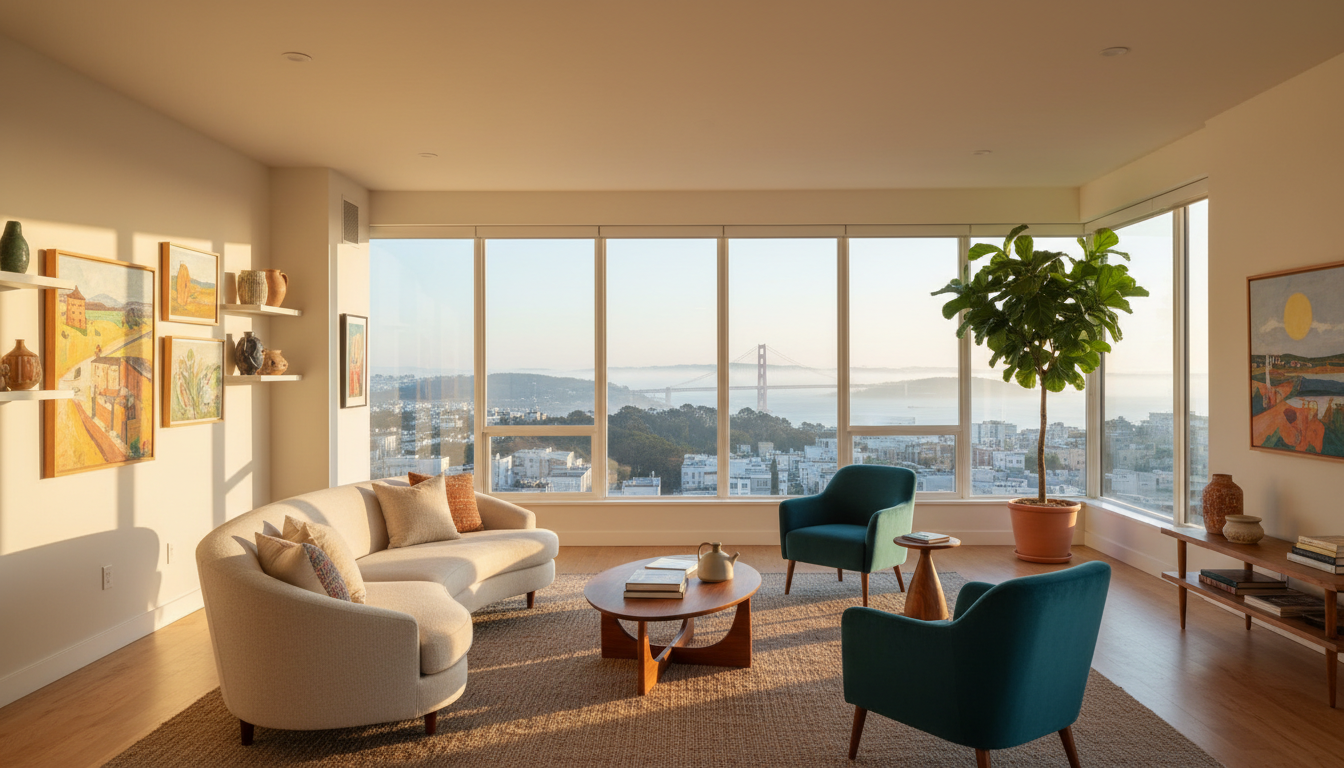 Interior of a bright, modern San Francisco apartment with large windows showing a view of the city,
The Neighborhoods: Where Should You Actually Stay?
This is where things get interesting. San Francisco's neighborhoods aren't just different—they're practically different cities. Choosing where to stay will fundamentally shape your experience, so let's walk through the options like we're strolling through the city itself.
The Mission District: Where Culture Comes Alive
If you want to feel the pulse of modern San Francisco, the Mission is calling your name. This historically Latino neighborhood has evolved into one of the city's most vibrant areas, where century-old taquerias sit next to craft cocktail bars, and murals cover seemingly every available surface.
The weather here is noticeably better than the rest of the city—the Mission sits in a microclimate that burns off the fog faster. You'll find yourself eating dinner outside in a t-shirt while your friends in the Marina are bundled up in fleece. Home swaps in the Mission tend to be in classic San Francisco buildings: Edwardian flats with high ceilings, bay windows, and that particular creaky charm that comes with century-old construction.
What I love about staying here is the walkability. Within ten minutes, you can reach Dolores Park (bring a blanket and some snacks—this is San Francisco's living room), Valencia Street's endless parade of boutiques and bookstores, and some of the best Mexican food north of the border. The 16th Street BART station also gives you easy access to the rest of the Bay Area.
Noe Valley: The Village Within the City
Walk a few blocks south from the Mission, up and over a hill, and you'll find yourself in Noe Valley—a neighborhood that feels like someone transplanted a small town into the middle of a major city. The main drag, 24th Street, is lined with independent shops, excellent bakeries, and the kind of cafés where the baristas know everyone's name.
This is prime territory for families and anyone who wants a quieter base. The homes here are stunning—many are beautifully maintained Victorians with gardens, something increasingly rare in San Francisco. If you're traveling with kids, the neighborhood playgrounds are excellent, and the general vibe is relaxed and welcoming.
The trade-off? You're a bit removed from the action. Getting to downtown or Fisherman's Wharf requires a bus ride or a drive. But honestly, after a few days in Noe Valley, you might not want to leave.
The Haight: For the Free Spirits
Yes, the Haight-Ashbury intersection is touristy. Yes, you'll see tie-dye shops and people selling "Summer of Love" memorabilia. But venture a few blocks in any direction, and you'll discover why locals still love this neighborhood.
The Lower Haight has some of the city's best dive bars and a genuinely eclectic community. The Upper Haight sits right at the edge of Golden Gate Park, giving you immediate access to one of the world's great urban green spaces. Home swaps here often come with the bonus of Victorian architecture at its most ornate—those famous "painted ladies" aren't just on postcards.
This neighborhood suits travelers who appreciate counterculture history, don't mind a bit of grit, and want to be within walking distance of both urban excitement and natural beauty.
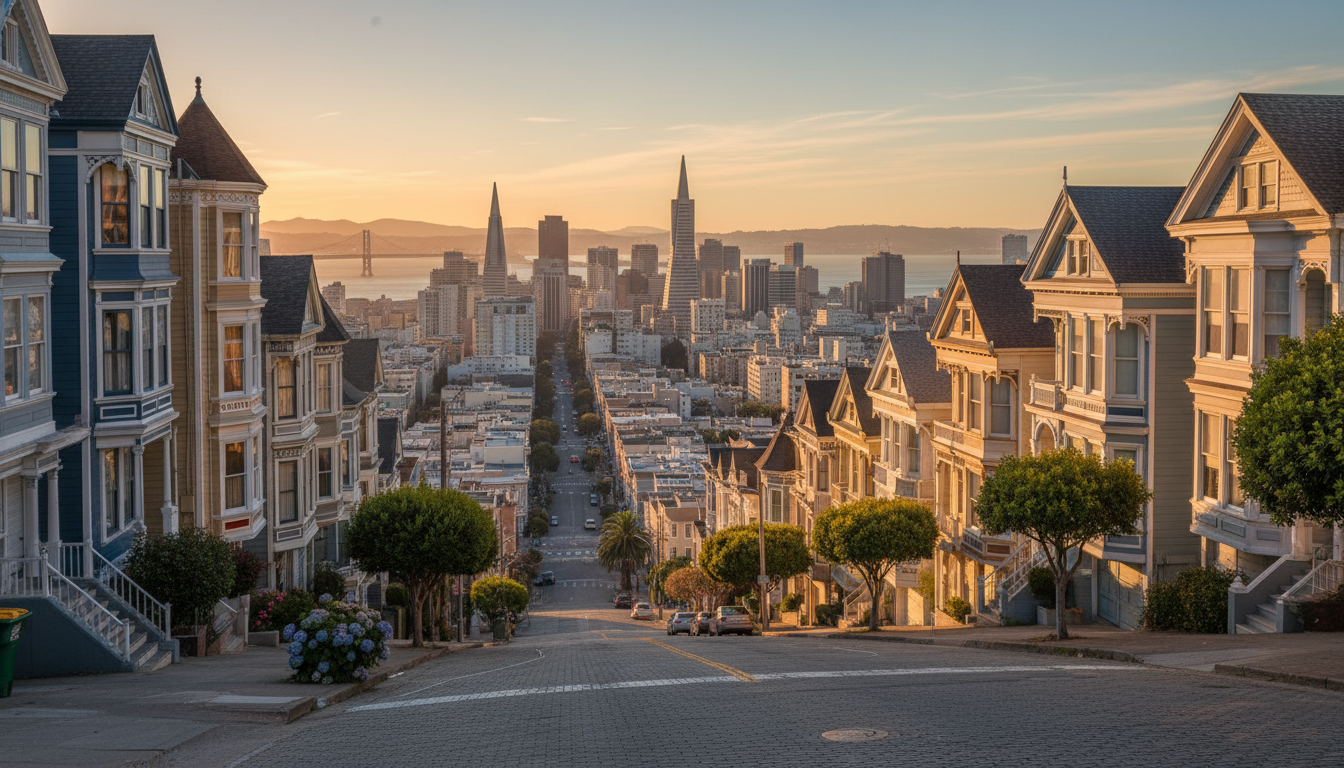 Colorful Victorian houses painted ladies on a steep San Francisco street with the city skyline visib
Pacific Heights and the Marina: Classic San Francisco Elegance
If your mental image of San Francisco involves elegant homes, bay views, and impeccably dressed people walking tiny dogs, you're picturing Pacific Heights and the Marina. These neighborhoods represent old San Francisco money and new San Francisco tech wealth living side by side.
The Marina offers flat streets (a rarity here), proximity to the waterfront, and easy access to the Golden Gate Bridge for walks or bike rides. Pacific Heights sits above it all—literally—with some of the most spectacular views in the city. Home swaps in these areas tend to be on the higher end, often in beautifully appointed apartments or historic mansions converted to flats.
The vibe is polished, maybe a little buttoned-up compared to other neighborhoods. But if you want to wake up to bay views and spend your afternoons exploring the Presidio, this is your spot.
SoMa and the Financial District: Urban Energy
These adjacent neighborhoods are where San Francisco does business. During the week, they hum with tech workers and financial professionals. On weekends, they quiet down considerably.
What makes these areas interesting for home swappers is the architecture. Many of the residential buildings here are converted warehouses or modern high-rises with amenities you won't find in older neighborhoods—rooftop decks, fitness centers, concierge services. If you're coming from a city where you're used to apartment living, you might feel right at home.
The location is incredibly convenient. You're walking distance from the Ferry Building (a food lover's paradise), Chinatown, and the downtown museums. The downside is that these neighborhoods can feel a bit soulless compared to the city's more residential areas.
The Richmond and Sunset Districts: The Real San Francisco
Here's a secret that most tourists never discover: some of the best food in San Francisco isn't downtown or in the Mission. It's out in the Richmond and Sunset districts, where immigrant communities have created culinary scenes that rival anything in their home countries.
The Richmond, in particular, has earned the nickname "New Chinatown" for its incredible concentration of Chinese restaurants, bakeries, and markets. But you'll also find Russian delis, Burmese restaurants, and some of the city's best Irish pubs. The Sunset offers similar diversity plus direct access to Ocean Beach—yes, San Francisco has a beach, and it's gorgeous in that wild, Northern California way.
These neighborhoods are residential, quiet, and foggy. The fog is real—it rolls in most afternoons and can make summer feel like winter. But if you want to experience how actual San Franciscans live, away from the tourist crowds, this is where you'll find it. Home swaps here often offer more space for your money, including houses with yards and garages.
Getting Around: Transportation Tips for Home Swappers
One of the beautiful things about staying in a local's home is that you often inherit their transportation wisdom. But let me give you a head start.
San Francisco is famously hilly, and those hills are no joke. What looks like a reasonable walk on Google Maps might actually involve a climb that leaves you gasping. The locals have learned to read the topography, and you'll want to as well. Generally, north-south streets are the steep ones; east-west streets tend to follow the contours of the hills.
The public transportation system, Muni, is... let's say "characterful." The buses and metro lines will get you where you need to go, but not always on schedule. The cable cars are genuinely fun and not just for tourists, though the lines at the Powell Street turnaround can be absurd. Pro tip: walk a few stops up the line and board where there's no queue.
BART, the regional rail system, connects San Francisco to the East Bay and the airport. It's reliable, relatively clean, and essential if you want to explore Oakland or Berkeley.
But here's what I really want to tell you: consider not having a car. Parking in San Francisco ranges from expensive to impossible, and the city is genuinely walkable once you learn to navigate the hills. If you need a car for a day trip to wine country or the coast, you can easily rent one. But for exploring the city itself, you'll have more fun without one.
Many home swap hosts will share their insider transportation tips—which bus lines are reliable, where to find the secret stairways that make hill-climbing easier, which neighborhoods are best explored on foot. This kind of local knowledge is worth its weight in gold.
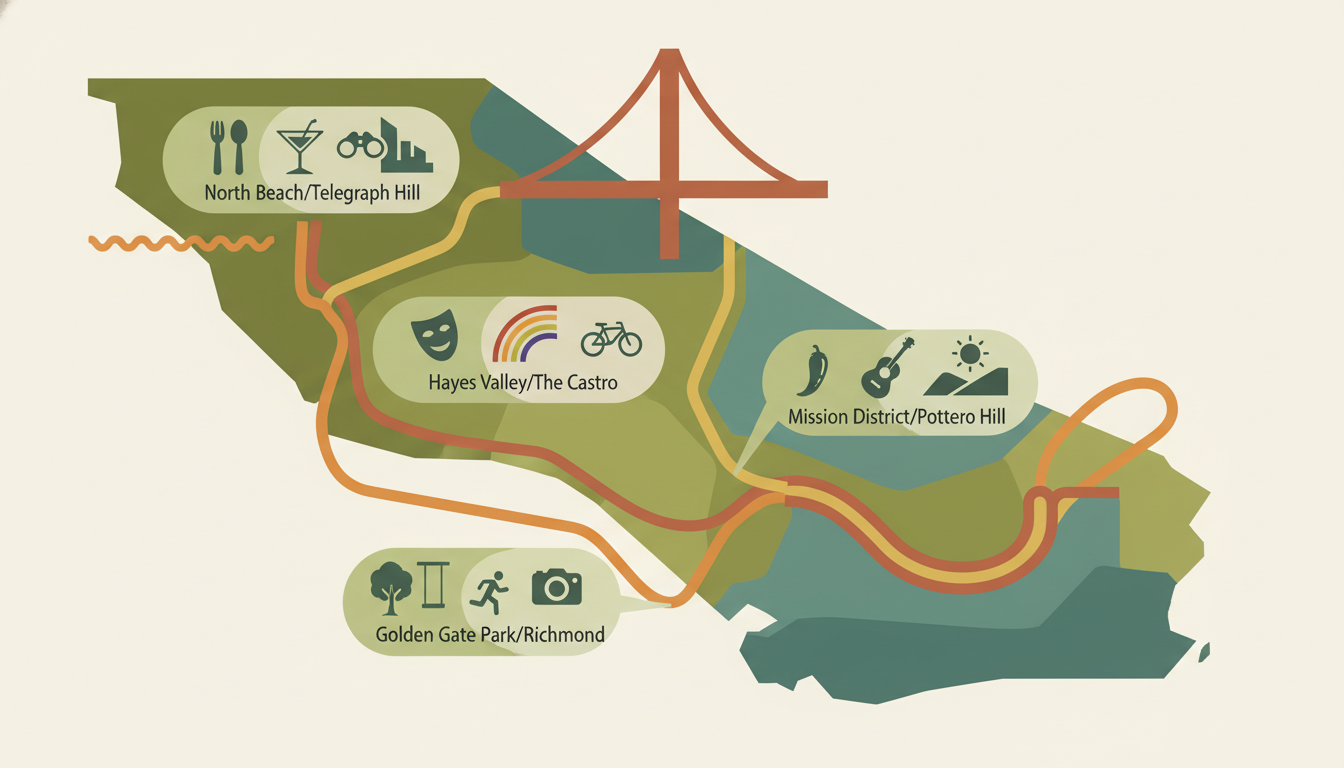 Infographic showing San Franciscos main neighborhoods on a stylized map, with icons indicating key c
The San Francisco Experience: What to Actually Do
I'm not going to give you a list of tourist attractions—you can find that anywhere. Instead, let me share the experiences that make San Francisco special, the things you'll have access to because you're staying in a real home in a real neighborhood.
Morning Rituals
San Francisco takes its morning coffee seriously. Every neighborhood has its beloved local roaster, and part of the joy of home swapping is discovering yours. In the Mission, it might be Ritual or Four Barrel. In Hayes Valley, Blue Bottle (before it was everywhere, it was here). In the Richmond, you might find yourself at a Hong Kong-style café drinking milk tea with your breakfast.
The farmers markets are another morning ritual worth embracing. The Ferry Building market on Saturday mornings is legendary—it's where chefs shop, where food obsessives gather, and where you can assemble the most incredible picnic from local producers. But there are smaller neighborhood markets throughout the week that offer a more intimate experience.
Afternoon Adventures
Golden Gate Park deserves more than a quick drive-through. This thousand-acre urban oasis contains multitudes: a world-class science museum, a stunning botanical garden, bison (yes, actual bison), and countless hidden corners perfect for getting lost. Rent bikes at the eastern edge and spend an afternoon exploring.
The Presidio, the former military base at the city's northern tip, has been transformed into one of America's most beautiful urban parks. The trails here offer views of the Golden Gate Bridge that will stop you in your tracks. Pack a lunch and find a spot overlooking the bay.
And then there's the water. San Francisco is surrounded by it, and getting out on the bay changes your entire perspective on the city. The ferry to Sausalito or Tiburon is affordable and scenic. Kayaking under the Golden Gate Bridge is unforgettable. Even just walking along the Embarcadero as the afternoon light turns golden will remind you why people fall in love with this place.
Evening Magic
San Francisco's food scene is ridiculous in the best way. You could eat here for a month and barely scratch the surface. But what makes it special isn't just the high-end restaurants (though those are excellent). It's the depth of the casual dining scene—the family-run dim sum places, the Mission taquerias, the Italian delis in North Beach that have been making the same sandwiches for generations.
When you're staying in a local's home, you have a kitchen. Use it. Hit up the farmers market or a neighborhood grocery store and cook a meal with California's incredible produce. There's something deeply satisfying about making dinner in a San Francisco kitchen, maybe with the windows open and the fog rolling in.
For entertainment, the city offers everything from world-class symphony and opera to experimental theater in converted warehouses. The comedy scene is thriving. The live music options range from intimate jazz clubs to legendary venues like the Fillmore. And sometimes the best evening is just finding a neighborhood bar, striking up a conversation with the person next to you, and hearing their San Francisco story.
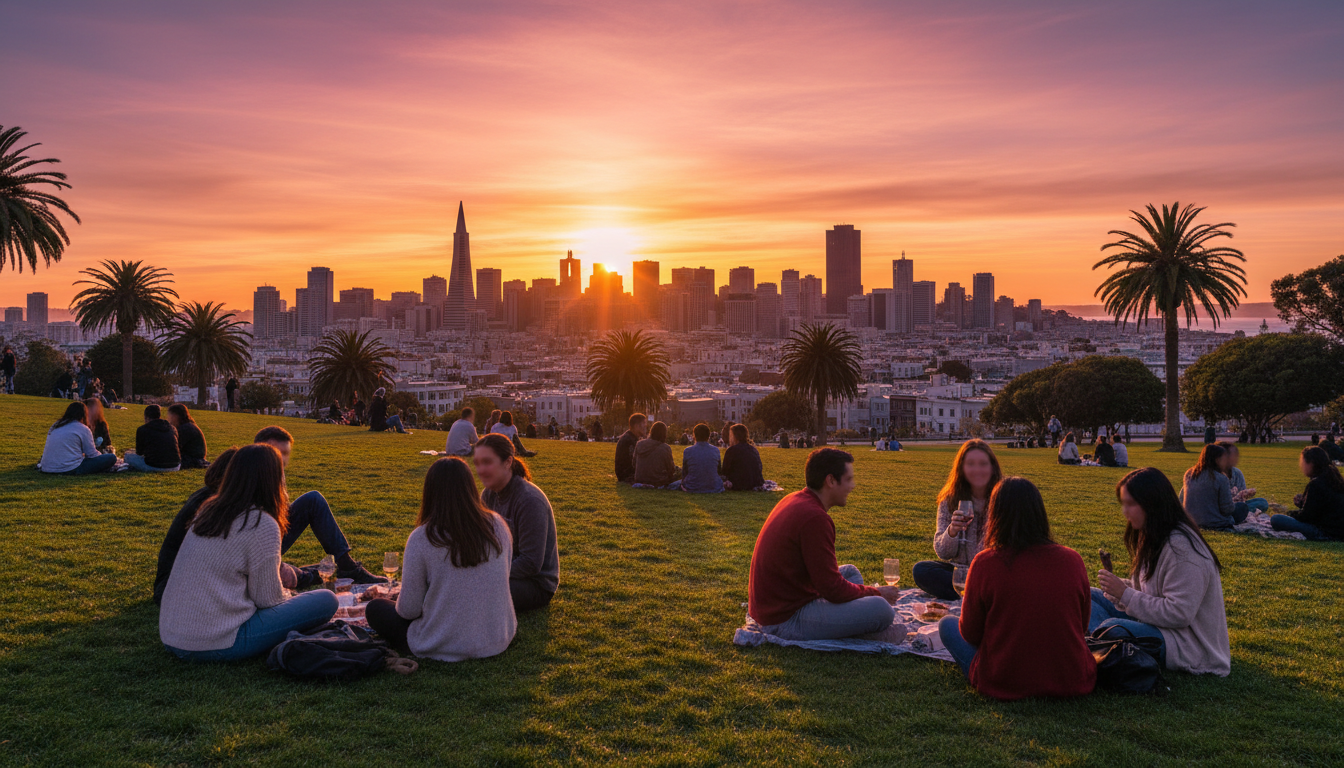 Sunset view from Dolores Park with San Franciscans picnicking on the grass, the downtown skyline sil
Practical Tips for Your San Francisco Home Swap
Let's get into the nitty-gritty of making your swap successful.
Timing Your Visit
Forget everything you think you know about California weather. San Francisco's summer is famously foggy and cold—Mark Twain's quote about the coldest winter being a San Francisco summer is cliché because it's true. The warmest, clearest months are actually September and October, when the rest of the country is heading into fall.
Spring (March through May) is lovely, with wildflowers blooming in the parks and generally mild weather. Winter is the rainy season, but San Francisco rain is usually gentle, and the city takes on a cozy quality.
For home swapping specifically, you'll find more availability during off-peak times. San Franciscans love to travel, and many are eager to escape during the foggy summer months—which works out perfectly if you're coming from somewhere hot and want to cool off.
What to Expect from San Francisco Homes
San Francisco housing has some quirks you should know about. Most buildings are old, which means character and charm but also creaky floors, radiator heating, and sometimes temperamental plumbing. Air conditioning is rare because it's rarely needed—but that also means homes can get warm during the occasional heat wave.
Parking, as I mentioned, is a challenge. If your swap includes a parking spot, consider it a major bonus. If it doesn't, you'll need to navigate street parking, which often requires moving your car for street cleaning (the signs are confusing; ask your host for guidance).
Laundry in the building is common; in-unit laundry is a luxury. Many San Franciscans use laundromats, and there's actually something pleasant about the neighborhood laundromat experience—bring a book, maybe grab a coffee from next door.
Making the Connection
The best home swaps start with genuine communication. When you reach out to potential swap partners in San Francisco, be specific about what draws you to their neighborhood. Ask questions about their favorite local spots. Share what makes your home special in return.
San Franciscans tend to be enthusiastic about their city and happy to share recommendations. Don't be shy about asking for their insider tips—most will be delighted to create a personalized guide for you. And when you arrive, those recommendations will transform your trip from a standard vacation into something much more memorable.
On SwappaHome, the credit system makes this even more flexible. You don't need to find a direct swap—if a San Francisco homeowner wants to stay somewhere you're not going, you can still make it work. You host them (or anyone) and earn credits, then use those credits for your San Francisco stay. It opens up possibilities that traditional home exchange can't match.
Day Trips: Exploring Beyond the City
One of the great advantages of having a home base in San Francisco is the access it gives you to Northern California's incredible diversity. Within an hour or two, you can reach wine country, redwood forests, dramatic coastline, and charming small towns.
Napa and Sonoma are the obvious wine country destinations, and they're obvious for a reason—the wines are world-class, the scenery is gorgeous, and the food scene rivals San Francisco's. But consider also the less-trafficked regions: the Anderson Valley, the Russian River area, or the emerging wineries of the Santa Cruz Mountains.
Muir Woods offers the closest redwood experience to the city. Yes, it's popular, and yes, you need reservations. But standing among those ancient trees, craning your neck to see the tops, never fails to inspire awe. For a less crowded redwood experience, head north to Armstrong Redwoods or south to Big Basin (currently recovering from fire but still magnificent).
The coast in both directions offers dramatic beauty. North, you'll find Point Reyes National Seashore—wild, windswept, and home to elephant seals, tule elk, and some of the best oysters you'll ever eat. South, Highway 1 winds past Half Moon Bay, Santa Cruz, and eventually Big Sur, one of the most spectacular stretches of coastline on Earth.
Having a home base makes these day trips so much more pleasant. You can leave early, come back late, and not worry about checking out of a hotel. You can stock the fridge with picnic supplies. You can collapse on a comfortable couch after a long day of exploring. That's the home swap advantage.
Your San Francisco Story Awaits
San Francisco has a way of getting under your skin. It's a city of contradictions—high-tech and old-fashioned, glamorous and gritty, fog-shrouded and sun-drenched. It frustrates people and enchants them, sometimes in the same afternoon.
What I love about experiencing San Francisco through home swapping is that it lets you see past the postcard version of the city. You're not just visiting; you're living, even if only for a week or two. You're shopping at the corner store, nodding hello to the neighbors, developing opinions about which bakery has the better croissant.
The city has always attracted dreamers and seekers, people who came looking for gold or freedom or reinvention. In a way, home swapping continues that tradition—it's about seeking authentic experiences, about believing that the best way to know a place is to live in it.
So start browsing the San Francisco homes on SwappaHome. Send some messages. Make some connections. Your San Francisco story is waiting to be written, and it starts with someone else's front door key in your hand.

Published by
SwappaHome
SwappaHome Editorial Team
Home Exchange & Slow Travel Editorial
The SwappaHome Editorial Team brings together travel research, home-exchange community insights, and platform data to produce practical guides for first-time and experienced home swappers. Every article cites real platforms, current market rates, and verifiable city-level facts so readers can make informed decisions without guessing.
Ready to try home swapping?
Join SwappaHome and start traveling by exchanging homes. Get 7 free credits when you sign up!
Related articles
Bachelor and Bachelorette Parties in Singapore: The Complete Home Swap Group Guide for 2026
Planning a bachelor or bachelorette party in Singapore? Discover how home swapping lets groups of 6-12 stay together in luxury condos, saving thousands while partying in Marina Bay.
Cycling in Lisbon: 7 Home Swap Bike Tour Itineraries for Every Rider
Discover the best cycling routes in Lisbon with these home swap bike tour itineraries—from waterfront paths to hilltop adventures, all starting from your borrowed home.
Graduation Trip to Barcelona: How Home Swapping Gives New Graduates the Ultimate Celebration
Planning a graduation trip to Barcelona? Discover how home swapping lets new graduates explore Spain's most vibrant city without the hostel crowds or hotel costs.