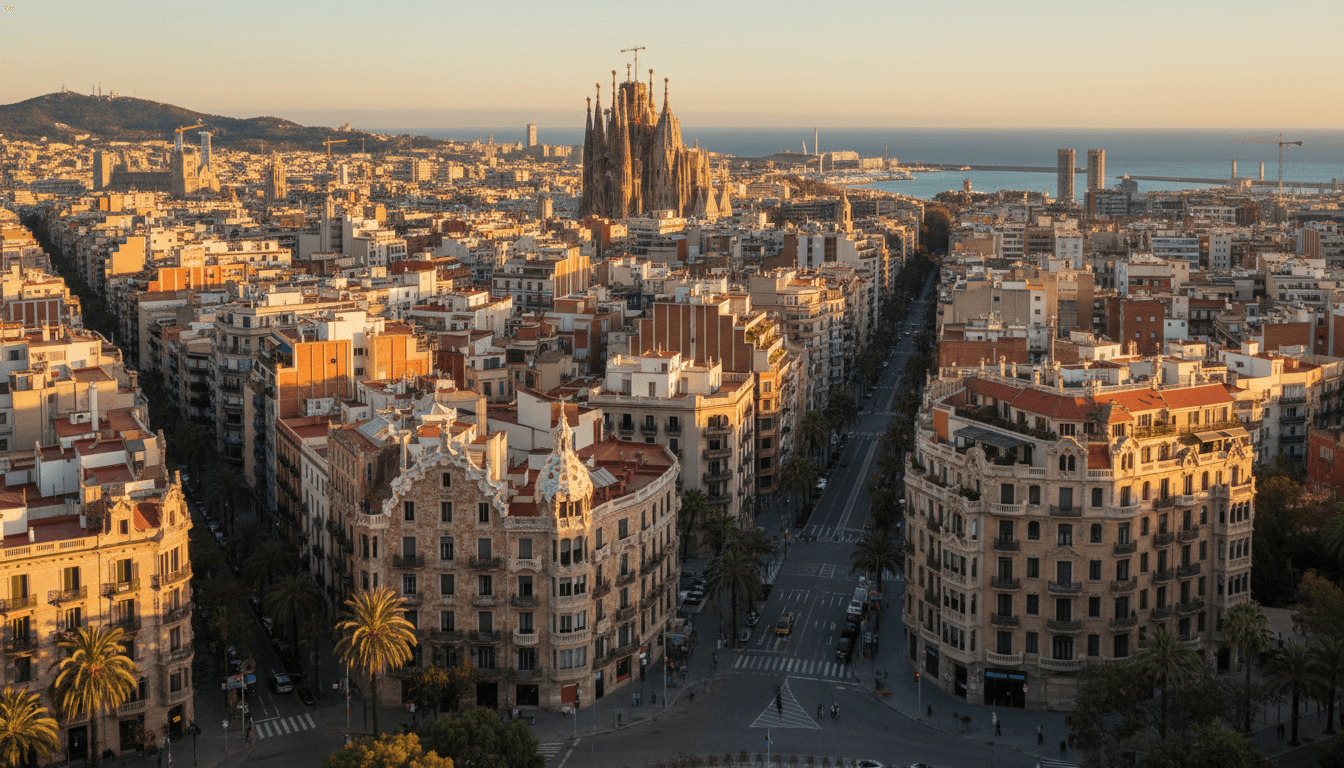
Discover Barcelona Through Home Swap: The Neighborhoods, Secrets, and Practical Tips You Actually Need

SwappaHome Editorial Team
Home Exchange & Slow Travel Editorial
Skip the tourist traps and live like a local in Barcelona. Our neighborhood-by-neighborhood guide reveals where to swap homes for an authentic Catalan experience.
Discover Barcelona Through Home Swap: The Neighborhoods, Secrets, and Practical Tips You Actually Need
Picture this: It's 10 AM on a Tuesday, and you're sipping a café con leche at a tiny bar where the owner already knows your name. Through the open door, you can hear the rhythmic clatter of a shop owner rolling up metal shutters, and somewhere above, laundry flaps lazily from wrought-iron balconies. A grandmother shuffles past with her wheeled shopping cart, heading to the same market stall she's visited for forty years.
This isn't the Barcelona of cruise ship excursions and selfie sticks at La Sagrada Familia. This is real Barcelona—the city that reveals itself only to those who stay long enough, live locally enough, and wander curiously enough to find it.
And here's the beautiful secret: you don't need to be wealthy or lucky to experience it. You just need a home to swap.
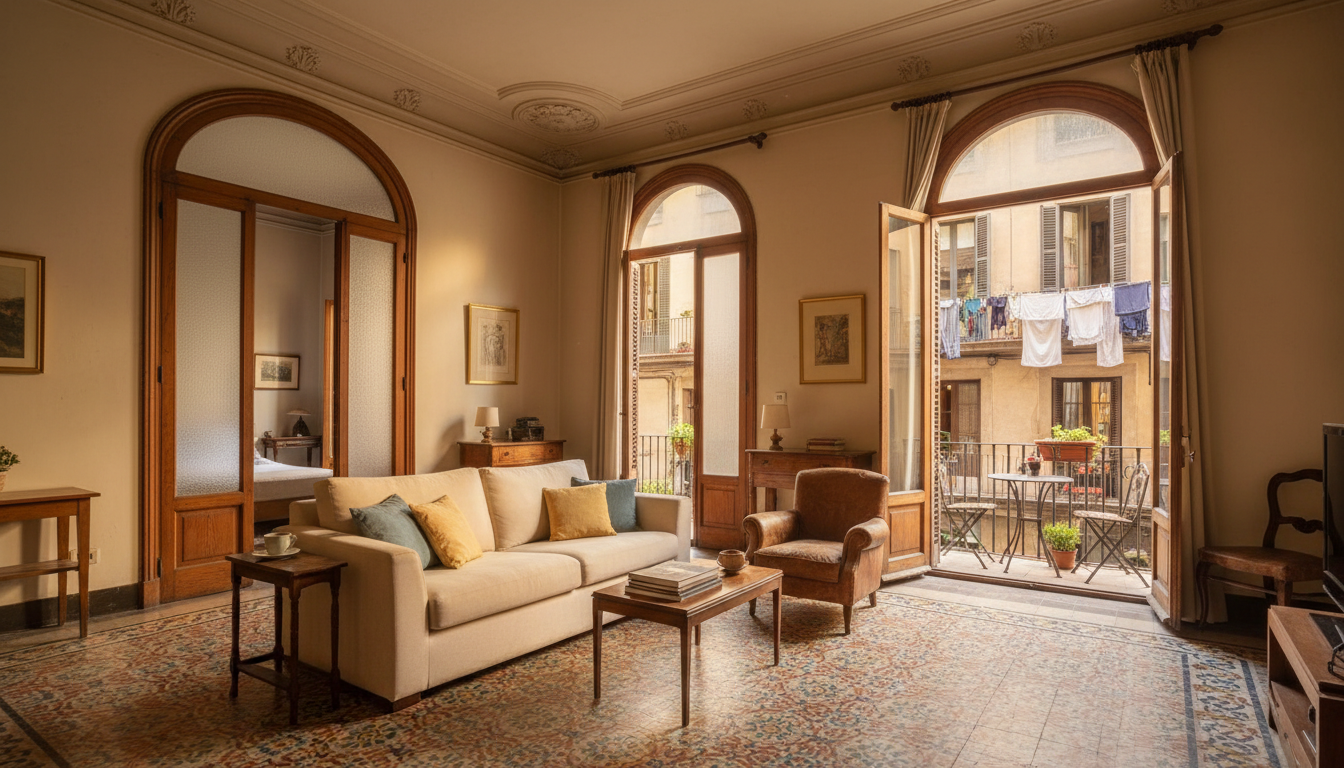 Morning light streaming into a traditional Barcelona apartment with high ceilings, mosaic tile floor
Why Barcelona Is Perfect for Home Swapping (And Why Hotels Miss the Point)
Barcelona is a city that lives in its neighborhoods. Ask any barceloní where they're from, and they won't say "Barcelona"—they'll say Gràcia, or Poble Sec, or Sant Andreu. Each barrio has its own personality, its own rhythm, its own fierce local pride. The family-run bakery on the corner. The specific bench in the plaza where the old men play dominoes. The bar that serves the best patatas bravas within a five-block radius (and everyone has an opinion about this).
When you stay in a hotel, you're a tourist. When you stay in someone's home, you inherit their neighborhood. You become, for a week or two, a temporary local. You learn which fruit vendor gives the ripest tomatoes, which café has the strongest wifi, which street turns magical when the evening light hits the buildings just right.
This is why home swapping and Barcelona are such a perfect match. The city rewards curiosity and punishes rushing. It reveals its treasures to those who linger in plazas, who return to the same vermutería twice, who take the time to learn that dinner doesn't start until 9 PM and that's not a suggestion—it's a way of life.
But here's the thing: not all Barcelona neighborhoods are created equal for home swappers. Some are tourist-clogged and overpriced. Others are up-and-coming gems where your swap credits stretch further and the local experience runs deeper. Let me walk you through them, neighborhood by neighborhood, so you can find your perfect Barcelona match.
The Neighborhood Guide: Where to Swap for the Barcelona You're Dreaming Of
Gràcia: The Village That Refuses to Be a Suburb
If Barcelona's neighborhoods were people at a dinner party, Gràcia would be the interesting one in the corner—the artist who reads poetry, grows herbs on their balcony, and knows all the best record shops. Originally a separate village until Barcelona swallowed it in 1897, Gràcia has never quite accepted its absorption. It still feels like its own little world.
The streets here are narrower, the plazas more intimate, the vibe decidedly bohemian. You'll find vintage clothing stores next to organic grocery co-ops, craft beer bars alongside century-old bodegas. The neighborhood's famous Festa Major in August transforms every street into a competitive art installation, with neighbors spending months designing elaborate decorations.
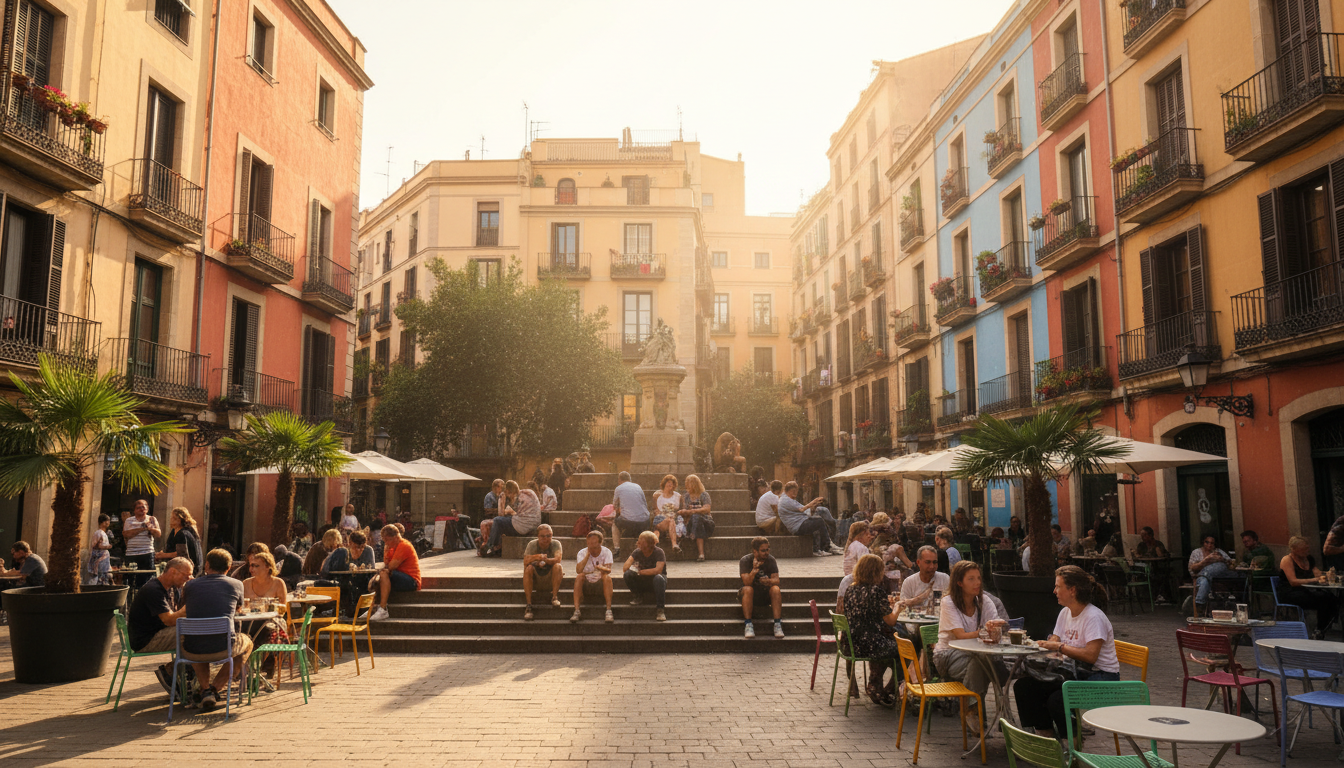 Plaa del Sol in Grcia at golden hour, showing people sitting on the plaza steps, outdoor caf terrace
For home swappers, Gràcia offers something precious: authenticity without isolation. You're a 20-minute walk from the city center, but you're living in a genuine neighborhood where tourists are visitors, not the majority. The apartments here tend to be in older buildings with character—think high ceilings, those gorgeous baldosa hidráulica tile floors, and balconies just big enough for morning coffee and people-watching.
The trade-off? Gràcia's popularity means swap options can be competitive. Start your search early, and be flexible with dates. Also worth knowing: the neighborhood gets loud on weekend nights, especially around Plaça del Sol. If you're a light sleeper, look for apartments on quieter side streets.
Best for: Creative types, foodies, anyone who wants neighborhood life with easy city access.
Poble Sec: The Best-Kept Secret (That Won't Stay Secret Much Longer)
Tucked between Montjuïc mountain and the Paral·lel avenue, Poble Sec is having a moment—but it hasn't lost its soul yet. This is where young barcelonins are moving when they're priced out of Gràcia, bringing with them a wave of natural wine bars, specialty coffee shops, and small-plate restaurants that would cost twice as much in trendier neighborhoods.
The name means "dry village" in Catalan, a reference to the neighborhood's historic lack of water (long since solved). What it has in abundance now is carrer Blai, a pedestrian street that's become Barcelona's unofficial tapas paradise. On any given evening, you'll find locals hopping from bar to bar, ordering montaditos (small topped toasts) and pintxos at prices that feel almost scandalous compared to the tourist center.
But Poble Sec isn't just about eating (though you could happily make it so). The neighborhood sits at the foot of Montjuïc, which means you can walk from your apartment to the mountain's gardens, museums, and viewpoints in minutes. The Grec Festival brings world-class theater and dance to the neighborhood every summer. And the recently renovated Paral·lel avenue connects you to the rest of the city via metro in no time.
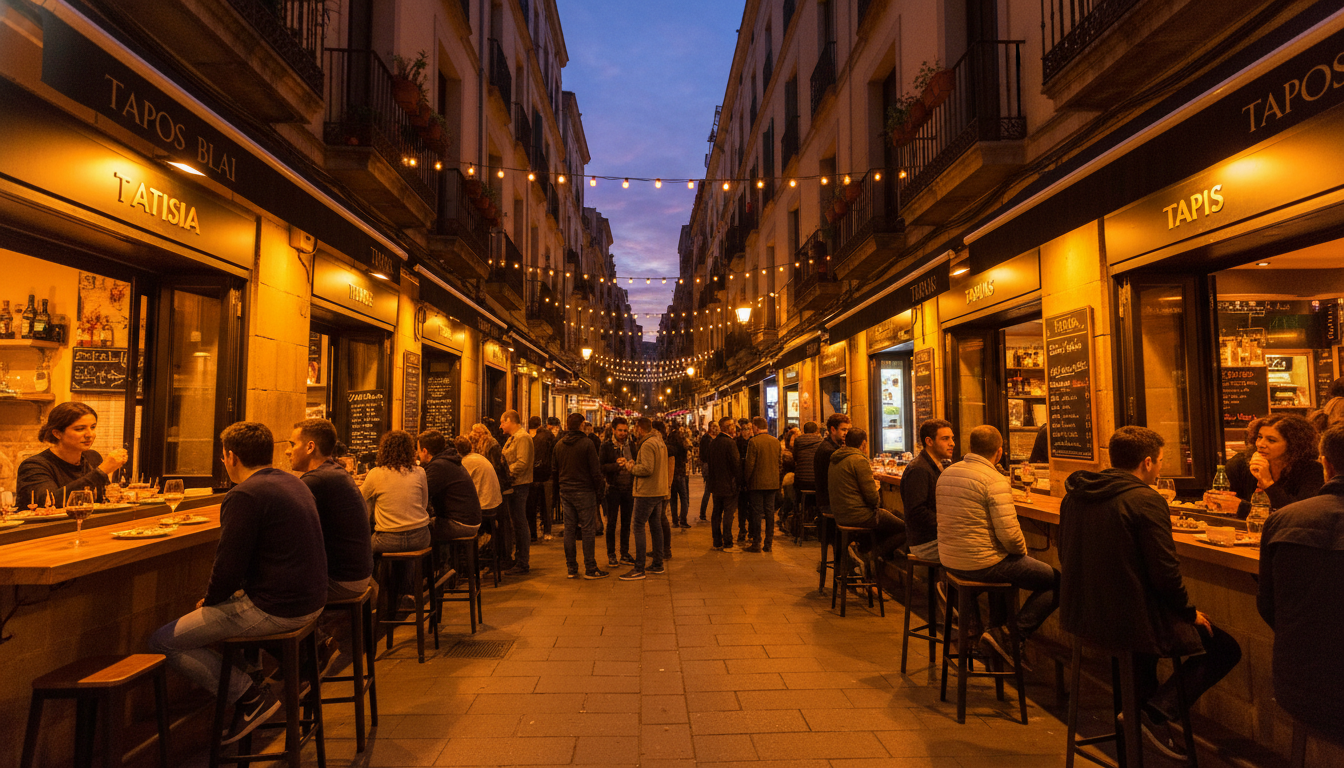 Carrer Blai in Poble Sec at night, showing the pedestrian street lined with tapas bars, people stand
For home swappers, Poble Sec offers excellent value. The apartments are often smaller than in other neighborhoods, but they're typically well-maintained and increasingly stylish. The local-to-tourist ratio is still heavily in favor of locals, which means you'll actually practice your Spanish (or Catalan, if you're ambitious) at the corner shop.
Best for: Food lovers, budget-conscious travelers, anyone who wants to feel like they've discovered something.
El Born and Sant Pere: History You Can Touch
If you want to wake up surrounded by medieval streets and Gothic architecture, the connected neighborhoods of El Born and Sant Pere deliver. This is old Barcelona—really old. You'll walk on stones that have been walked on for eight hundred years, past churches that were ancient when Columbus sailed to America, through passages so narrow that neighbors on opposite sides could shake hands from their balconies.
El Born, in particular, has transformed over the past two decades from a slightly sketchy area into one of the city's most desirable neighborhoods. The Picasso Museum draws crowds, but step two streets away and you'll find yourself alone with a 14th-century façade. The neighborhood's centerpiece, the Born Centre Cultural, is a stunning iron-and-glass market building that was converted into a cultural center after archaeological excavations beneath it revealed an entire neighborhood destroyed in 1714.
The cocktail bars here are some of Barcelona's best. The boutiques are curated and creative. The restaurants range from traditional Catalan to experimental fusion. And the proximity to Barceloneta beach means you're never more than a 15-minute walk from the Mediterranean.
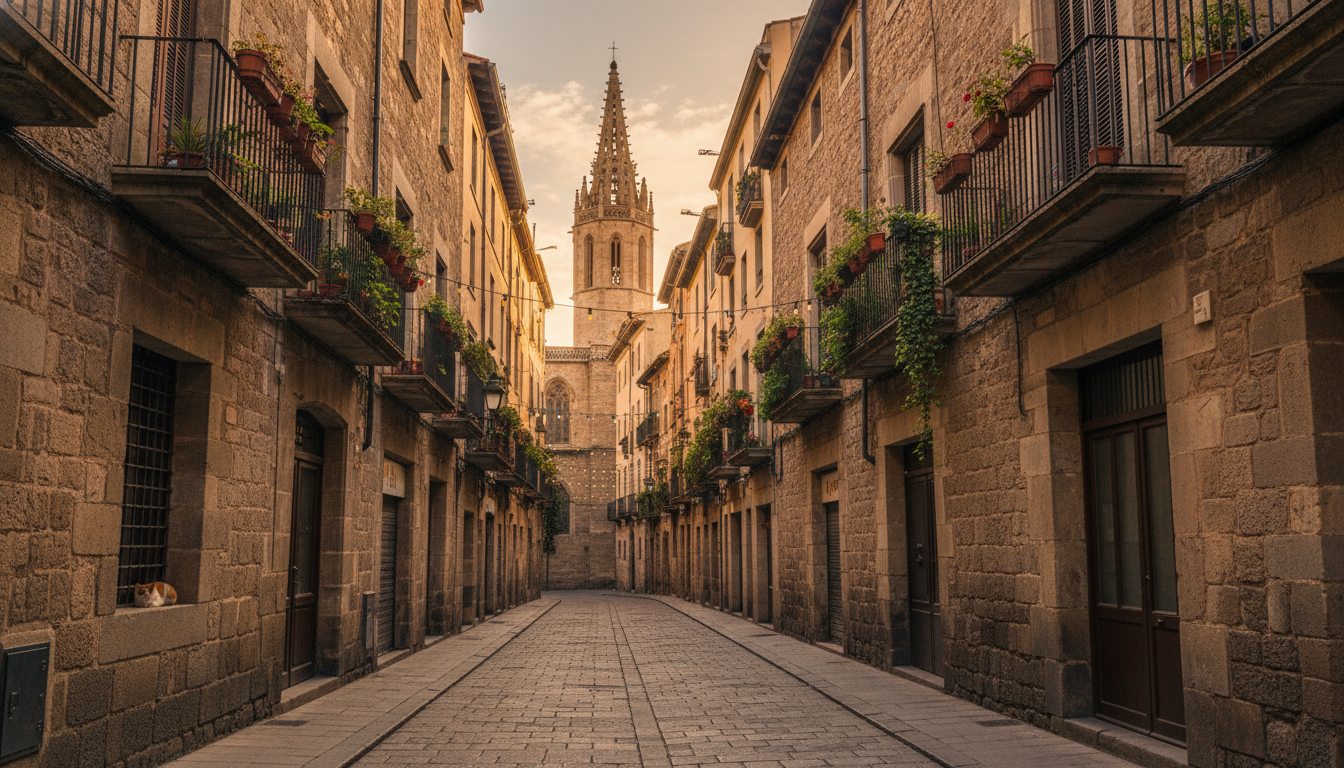 A narrow medieval street in El Born with stone buildings, wrought-iron balconies with plants, and a
The catch for home swappers? This is prime real estate, and swap options can be limited and competitive. The apartments themselves are often gorgeous—exposed stone walls, wooden beams, the kind of character you can't fake—but they can also be small and dark (those narrow streets that look so romantic also block a lot of sunlight). Summer brings serious crowds to the area, so consider shoulder season visits if you want a more peaceful experience.
Best for: History buffs, architecture lovers, anyone who wants to be in the heart of things.
Barceloneta: For Those Who Need the Sea
Some people can't be happy unless they can see water. If that's you, Barceloneta is your neighborhood. This former fishing village, built on a triangular spit of land jutting into the Mediterranean, has maintained its maritime character despite decades of development pressure.
The streets here follow a grid pattern—unusual for Barcelona—laid out in the 18th century to house workers from the demolished Ribera neighborhood. The buildings are low, the apartments are small, and the sense of community is strong. Old fishermen still gather in the morning to discuss the catch (or lack thereof). Grandmothers hang laundry from lines strung across streets. And the beach, while crowded in summer, is right there—your morning swim is a five-minute walk away.
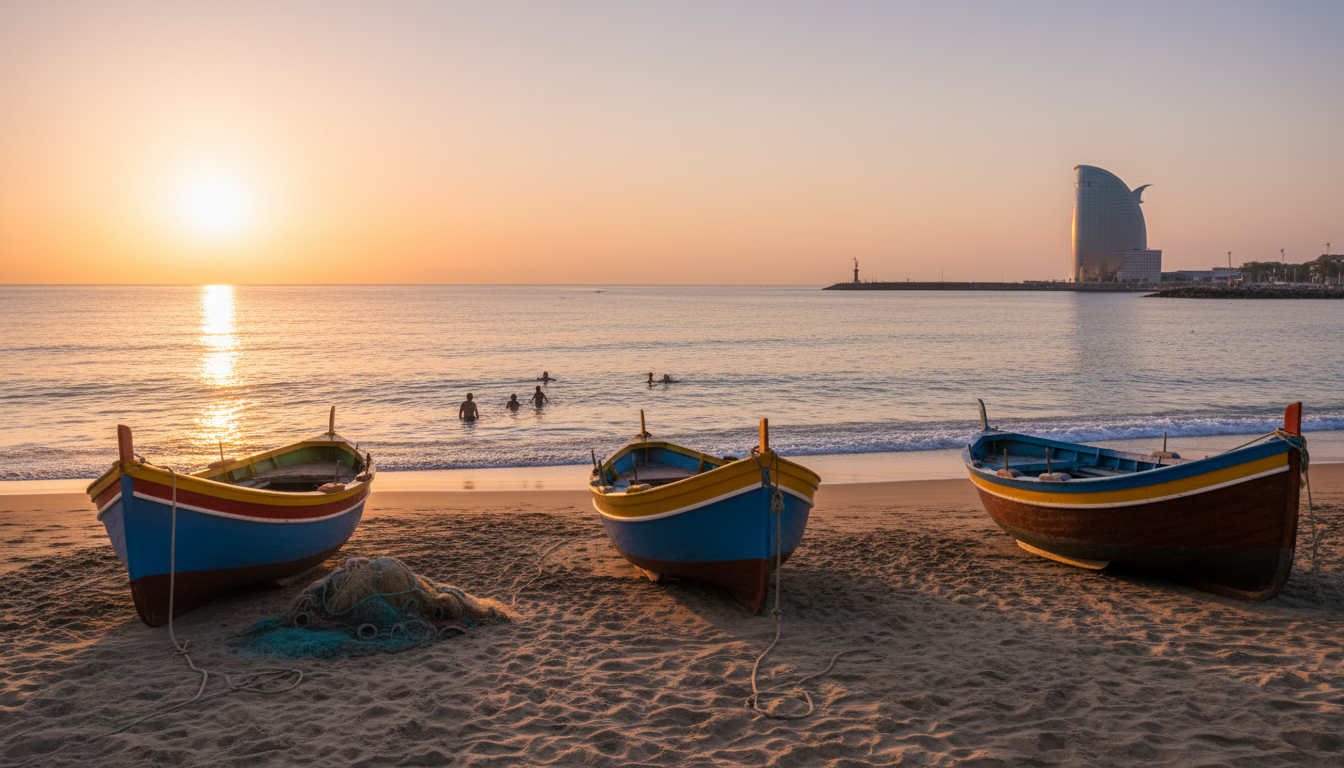 Barceloneta beach in early morning with a few swimmers in the water, traditional fishing boats pulle
Barceloneta has its challenges. The neighborhood has become increasingly touristy, with some streets feeling more like an extension of the beach boardwalk than a real neighborhood. Noise can be an issue, especially in summer when beach bars pump music late into the night. And the apartments, while often charming, tend to be genuinely tiny—Barceloneta was built for fishermen who spent most of their time on boats, not for modern living.
But for the right traveler, none of that matters. You wake up, you swim, you eat grilled fish at a chiringuito, you watch the sunset paint the water gold. That's Barceloneta.
Best for: Beach lovers, swimmers, anyone who needs daily ocean access to feel alive.
Eixample: The Grand Dame of Barcelona Living
When most people picture Barcelona, they're picturing Eixample—even if they don't know the name. This is the neighborhood of wide, tree-lined avenues, elegant chamfered corners, and Modernista masterpieces. Gaudí's La Pedrera and Casa Batlló are here. So are countless other architectural gems, from lesser-known Modernista buildings to Art Deco storefronts that time forgot.
Eixample (which means "expansion" in Catalan) was built in the late 19th century according to a utopian urban plan. Every block was designed with interior courtyards and gardens. The chamfered corners were meant to improve visibility and create small plazas at every intersection. The result is a neighborhood that feels spacious and breathable, even when it's busy.
For home swappers, Eixample offers what many Barcelona apartments lack: space and light. The apartments here tend to be larger, with high ceilings, big windows, and those famous Modernista details—stained glass, ornate moldings, original tile floors. The neighborhood is also incredibly well-connected, with multiple metro lines and easy access to everywhere.
The trade-off is that Eixample can feel less "neighborhood-y" than other areas. It's more commercial, more spread out, less intimate. You won't have the same corner-bar-where-everyone-knows-you experience as easily. But if you value beautiful living spaces and don't mind walking a bit further for that local vibe, Eixample delivers.
Best for: Architecture enthusiasts, anyone who needs space, those who want central location without tourist-center chaos.
The Hidden Gems: Neighborhoods Most Tourists Never See
Now, let me tell you about the neighborhoods that don't make it into guidebooks—the places where your swap credits go furthest and your local experience runs deepest.
Sant Andreu, in the north, was an independent town until 1897 and still feels like one. The Rambla de Sant Andreu is a genuine local promenade, lined with shops that serve residents, not tourists. The neighborhood has its own Modernista gems, its own food market, its own fierce identity. Swap options here are excellent value, and you'll likely be the only tourist on your street.
Sants, near the main train station, is a working-class neighborhood that's slowly gentrifying but hasn't lost its character. The Mercat de Sants is one of Barcelona's best food markets, and the neighborhood's parks and plazas are filled with local families, not selfie sticks.
Poblenou, the former industrial district, has transformed into Barcelona's tech and creative hub. Old factories now house coworking spaces, galleries, and some of the city's most interesting restaurants. The beach is close, the Rambla del Poblenou is charming, and the neighborhood still has that slightly rough-around-the-edges energy that creative types love.
Practical Tips for Your Barcelona Home Swap
Now that you know where to look, let's talk about how to make your Barcelona swap successful. Because even the perfect neighborhood won't save a swap that's poorly planned.
Timing Is Everything
Barcelona has a rhythm, and smart swappers learn to work with it. The city empties in August when locals flee to the beach or the mountains. This means more swap availability but also closed neighborhood shops and a slightly ghost-town feel in residential areas. September and October are golden—the weather is still warm, the tourists are thinning, and the city is fully alive. Spring (April-May) is similarly excellent.
Avoid major events unless you specifically want to experience them. Mobile World Congress (late February) fills every hotel and apartment in the city. La Mercè festival (late September) is incredible but means crowded streets and late-night noise. Same with the Gràcia Festa Major in August—amazing if you're prepared for it, overwhelming if you're not.
What to Offer in Your Listing
Barcelona residents are savvy travelers themselves, and they're looking for specific things in a swap. If your home offers any of these, highlight them:
- Outdoor space: Barcelona apartments rarely have gardens or terraces. If you have a backyard, a patio, or even a decent balcony, that's gold.
- Quiet location: Barcelona is loud. Residents dream of peaceful nights.
- Nature access: Easy hiking, beaches, or countryside nearby will catch attention.
- A car: Public transport is excellent in Barcelona, so locals often don't own cars. Access to a vehicle opens up possibilities they don't usually have.
Navigating the Apartment Reality
Barcelona apartments have quirks that might surprise you. Here's what to expect:
Many buildings don't have elevators, even in five-story walkups. Ask before you book if mobility is a concern. The apartments that do have elevators often have tiny ones—think "two people with no luggage" tiny. Plan accordingly.
Air conditioning is less common than you'd expect. Barcelona's sea breezes traditionally kept summers bearable, though climate change is testing that theory. If you're visiting in July or August, confirm AC availability or prepare for warm nights.
Those beautiful tile floors? They're cold in winter. Barcelona doesn't really do central heating—most apartments have individual gas heaters or radiators that work fine but require some figuring out. Your swap host should explain the system before you arrive.
The Logistics: Getting There and Getting Around
Barcelona's El Prat airport is well-connected to the city by metro (L9 Sud), bus (Aerobus), and taxi. If you're swapping in a central neighborhood, you won't need a car—in fact, a car would be more hassle than help. Parking is expensive and scarce, and the public transport system is excellent.
The metro runs from 5 AM to midnight on weekdays, with extended hours on weekends. But honestly, Barcelona is a walking city. Most of the neighborhoods I've described are within walking distance of each other, and you'll discover more on foot than you ever would underground.
Bicycles are increasingly popular, with a city bike-share system (Bicing) available to residents. As a visitor, you can rent bikes from numerous shops, and the city has been building out bike lanes aggressively. Just watch out for pedestrians—Barcelona's sidewalks are a contact sport.
Money Matters and Daily Life
Spain runs on cash more than you might expect. Small bars, market stalls, and neighborhood shops often prefer it. ATMs are everywhere, but your bank might charge fees—check before you go.
Grocery shopping is a joy in Barcelona. The big chains (Mercadona, Carrefour, Dia) are fine for basics, but the real experience is in the neighborhood markets. Every barrio has one, and they're not tourist attractions—they're where locals actually shop. The produce is better, the prices are often lower, and you'll practice your Spanish with vendors who've been selling tomatoes since before you were born.
Dining out follows Spanish rhythms. Lunch is the big meal, typically from 1:30-3:30 PM, and many restaurants offer excellent menú del día deals—three courses plus wine for €12-18. Dinner starts at 9 PM at the earliest. If you show up at 7 PM, you'll be eating alone with the staff watching you curiously.
Making the Most of Your Swap: Beyond the Tourist Checklist
Yes, you should see La Sagrada Familia. It's genuinely extraordinary, and the interior—especially in the morning when light pours through the stained glass—is one of the most beautiful spaces humans have ever created. Book tickets online, go early, and ignore anyone who tells you it's overrated.
But here's what I really want you to do: spend at least one day with no agenda at all. Wake up in your swapped apartment, make coffee in someone else's kitchen, and just... wander. Get lost in the Gothic Quarter's medieval maze. Sit in a plaza and watch the city happen around you. Follow an interesting street until it leads somewhere unexpected.
Barcelona rewards this kind of aimless exploration. The city is dense with details—a Modernista pharmacy you'd never notice if you were rushing, a hidden courtyard glimpsed through an open door, a tiny bar with no sign that turns out to serve the best vermouth you've ever tasted. These discoveries don't happen on a schedule.
If you need more structure, here are a few experiences that feel particularly suited to home-swap travelers:
Take a cooking class focused on market shopping. Several excellent schools start with a trip to a local market, where you'll learn to choose ingredients like a local before cooking them. This knowledge will serve you for the rest of your stay.
Hike up to the Bunkers del Carmel at sunset. This former anti-aircraft battery offers the best views of the city, and the crowd is almost entirely local—young couples, groups of friends with guitars and wine, families watching the city light up below.
Explore Montjuïc without a plan. The mountain is full of gardens, viewpoints, and quiet corners. Take the cable car up, then wander down through the botanical gardens, past the Miró Foundation, through the sculpture gardens, until you emerge back in Poble Sec ready for tapas.
Attend a concert at the Palau de la Música Catalana. Even if you're not a classical music fan, the building itself—a Modernista fever dream of stained glass and mosaic—is worth the ticket price. Check their schedule for everything from flamenco to jazz.
Your Barcelona Story Starts With a Swap
I've been to Barcelona as a tourist, rushing from landmark to landmark, checking boxes on a list. And I've been to Barcelona as something closer to a local, living in a borrowed apartment, buying bread from the same bakery every morning, learning which plaza catches the afternoon sun just right.
They're not the same city.
The tourist Barcelona is impressive but exhausting. The local Barcelona is intimate and inexhaustible. You could spend a month in Gràcia alone and not run out of corners to explore, bars to try, conversations to have.
This is what home swapping makes possible. When you exchange your home for someone's Barcelona apartment through a platform like SwappaHome, you're not just finding accommodation—you're finding a neighborhood, a daily rhythm, a version of the city that most visitors never see. You're earning credits when guests stay at your place, then spending them on experiences that no hotel could provide.
So start browsing. Look at apartments in Poble Sec and imagine yourself on Carrer Blai at midnight, hopping from tapas bar to tapas bar. Picture waking up in Gràcia to the sound of the neighborhood coming alive. Think about which Barcelona neighborhood matches the traveler you want to be.
Your Barcelona story is waiting. It starts with a swap.

Published by
SwappaHome
SwappaHome Editorial Team
Home Exchange & Slow Travel Editorial
The SwappaHome Editorial Team brings together travel research, home-exchange community insights, and platform data to produce practical guides for first-time and experienced home swappers. Every article cites real platforms, current market rates, and verifiable city-level facts so readers can make informed decisions without guessing.
Ready to try home swapping?
Join SwappaHome and start traveling by exchanging homes. Get 7 free credits when you sign up!
Related articles
Bachelor and Bachelorette Parties in Singapore: The Complete Home Swap Group Guide for 2026
Planning a bachelor or bachelorette party in Singapore? Discover how home swapping lets groups of 6-12 stay together in luxury condos, saving thousands while partying in Marina Bay.
Cycling in Lisbon: 7 Home Swap Bike Tour Itineraries for Every Rider
Discover the best cycling routes in Lisbon with these home swap bike tour itineraries—from waterfront paths to hilltop adventures, all starting from your borrowed home.
Graduation Trip to Barcelona: How Home Swapping Gives New Graduates the Ultimate Celebration
Planning a graduation trip to Barcelona? Discover how home swapping lets new graduates explore Spain's most vibrant city without the hostel crowds or hotel costs.