Lyon Neighborhood Guide for Home Swappers: From Trendy to Traditional

SwappaHome Editorial Team
Home Exchange & Slow Travel Editorial
Discover Lyon's diverse neighborhoods for your next home swap. From the silk-weaving history of Croix-Rousse to the foodie paradise of Les Halles.
Picture yourself waking up in a sun-drenched apartment, the smell of fresh croissants drifting up from the boulangerie below, and the gentle hum of a city that somehow manages to feel both cosmopolitan and intimately French. This is Lyon—France's third-largest city and arguably its most underrated destination for travelers who want to experience authentic French life rather than tourist-packaged versions of it.
But here's the thing about Lyon: where you stay dramatically shapes your experience. Choose the wrong neighborhood, and you might find yourself in a soulless business district wondering what all the fuss was about. Choose the right one, and you'll understand why Lyonnais are fiercely proud of their city, often preferring it to Paris (though they'd never admit this too loudly).
For home swappers, Lyon presents an extraordinary opportunity. Unlike hotels clustered in predictable tourist zones, home exchanges scatter you across the city's diverse neighborhoods, each with its own personality, history, and morning coffee ritual. Let me take you on a journey through Lyon's quartiers, from the artists' haven perched on a hill to the riverside districts where tradition and innovation dance together.
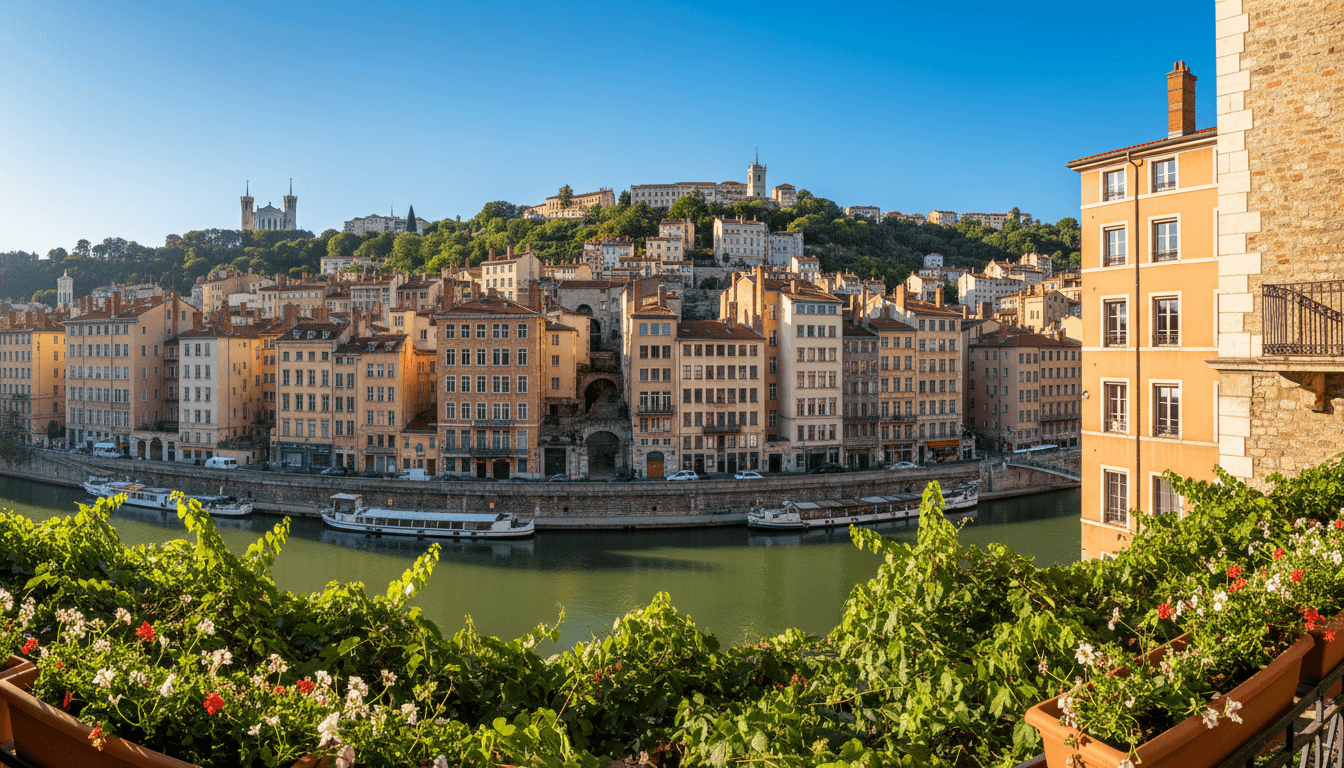
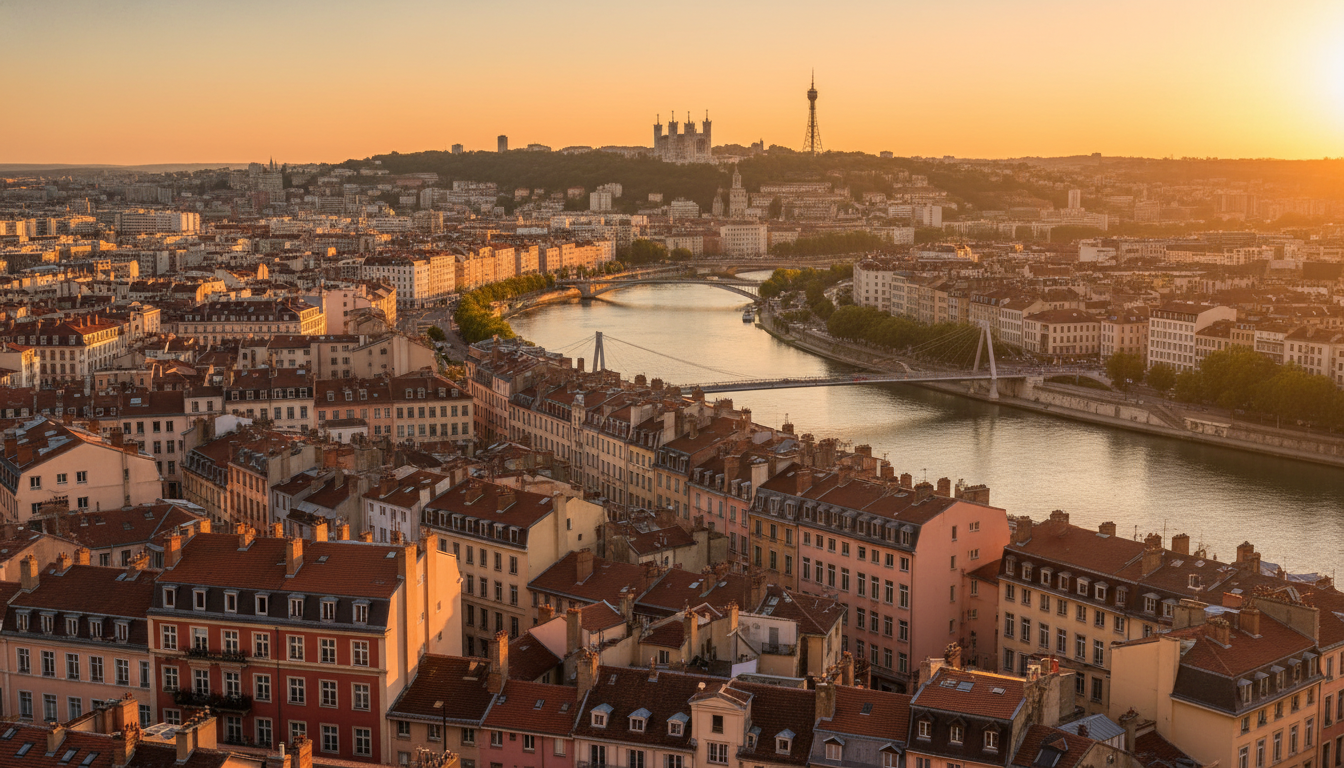 Panoramic view of Lyon showing the confluence of the Rhne and Sane rivers, with Fourvire hill in the
Vieux Lyon: Where Medieval Meets Magical
If Lyon were a novel, Vieux Lyon would be its opening chapter—the part that hooks you and refuses to let go. This UNESCO World Heritage site sprawls at the foot of Fourvière hill, a labyrinth of cobblestone streets and Renaissance architecture that somehow survived both time and urban planners.
Walking through Vieux Lyon feels like stepping into a beautifully preserved time capsule. The buildings here date back to the 15th and 16th centuries when Lyon was the silk capital of Europe, and wealthy merchants built townhouses with Italian-influenced facades and hidden courtyards. But what makes this neighborhood truly unique are the traboules—secret passageways that cut through buildings, connecting parallel streets in ways that would make any urban explorer's heart race.
These traboules weren't built for tourists' Instagram feeds, though they certainly deliver on that front. Silk workers used them to transport their precious fabrics without exposing them to rain, and during World War II, the Resistance used them to evade Nazi patrols. Today, you can push open unmarked doors and discover these hidden corridors yourself, emerging into unexpected courtyards where neighbors tend potted plants and cats sun themselves on ancient stone steps.
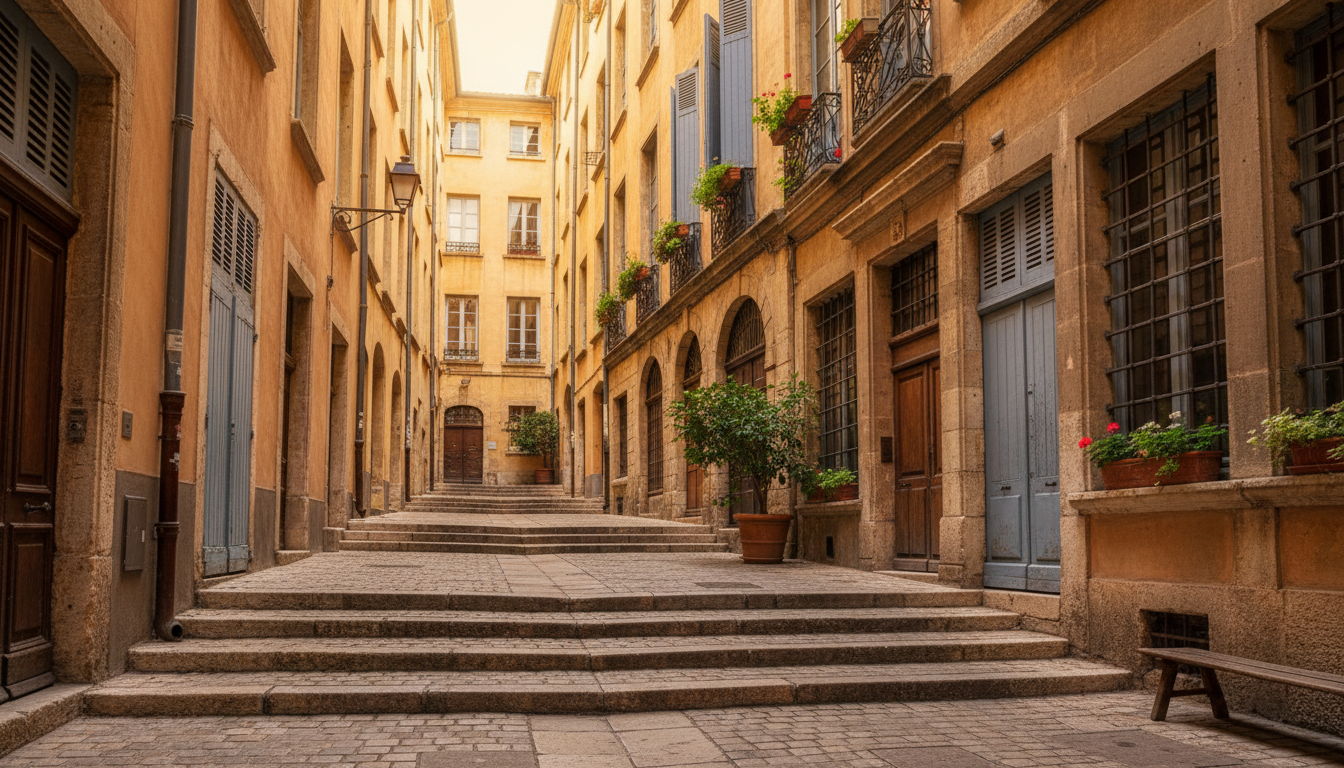 A narrow traboule passageway in Vieux Lyon, showing Renaissance architecture, worn stone steps, and
For home swappers, Vieux Lyon offers something rare: the chance to live inside history. Imagine cooking dinner in a kitchen whose walls have stood for five centuries, or falling asleep to the sound of the cathedral bells echoing off medieval stone. The apartments here tend to be compact—this is historic architecture, after all—but what they lack in square footage, they make up for in character.
The neighborhood pulses with life well into the evening, particularly around Rue Saint-Jean, where traditional bouchons (Lyon's famous bistros) serve hearty local cuisine alongside more contemporary restaurants. You'll find yourself nodding to the same faces at the morning market, picking up cheese from vendors who remember your preferences, and feeling less like a visitor and more like a temporary local.
One word of caution: Vieux Lyon's popularity means it can feel crowded during peak tourist season, particularly on weekends when day-trippers flood in from Paris. If you're swapping here, embrace the early mornings when the neighborhood belongs to residents walking their dogs and café owners hosing down the cobblestones.
Croix-Rousse: The Village on the Hill
Climb the steep streets leading up from the Saône river, and you'll feel Lyon's industrial past with every step. Croix-Rousse sits on a hill so steep that the city installed a funicular to help residents avoid the cardiovascular workout of daily errands. But this challenging geography is precisely what gave the neighborhood its distinctive character.
In the 19th century, this was the heart of Lyon's silk-weaving industry. The canuts—silk workers—needed tall ceilings to accommodate their massive Jacquard looms, so the buildings here were constructed with unusually high floors. When the silk industry declined, artists and bohemians moved into these light-filled spaces, attracted by the cheap rents and the views that stretched across the city to the Alps on clear days.
That bohemian spirit never left. Today, Croix-Rousse feels like a village that happens to be attached to a major city. The main boulevard bustles with a daily market that's become legendary among food lovers—not the tourist-oriented kind, but the real deal where Lyonnais come to stock their kitchens with regional cheeses, charcuterie, and produce from nearby farms.
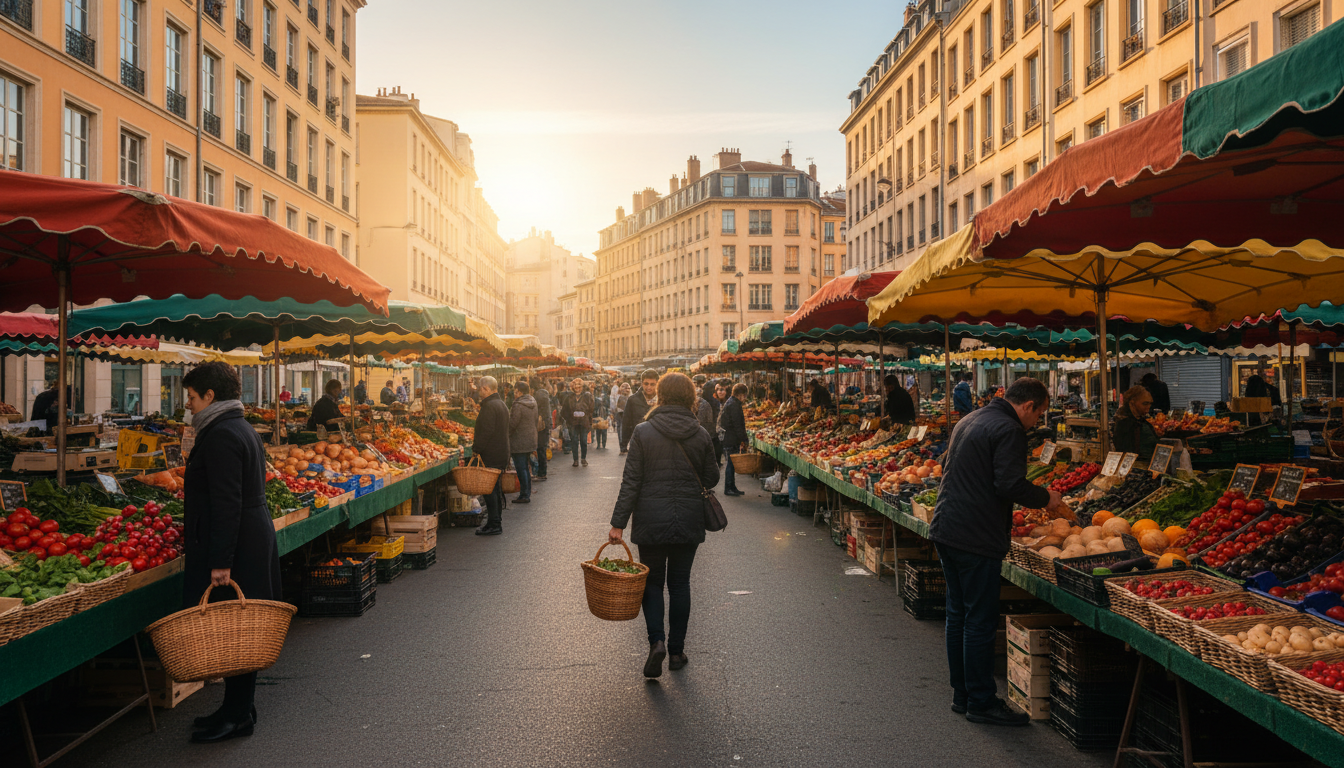 The bustling Croix-Rousse morning market with colorful produce stalls, local shoppers with wicker ba
The neighborhood divides loosely into two parts: the slopes (les pentes) that tumble down toward the Presqu'île, and the plateau at the top. The slopes attract a younger, artier crowd, with vintage shops, independent bookstores, and bars that feel genuinely local rather than performatively cool. The plateau has more of a family feel, with playgrounds, schools, and the kind of neighborhood restaurants where the owner knows everyone's name.
For home swappers, Croix-Rousse offers perhaps the most authentic Lyon experience. The apartments here often feature those legendary high ceilings and original architectural details, and you'll be living among Lyonnais rather than other tourists. The trade-off is the hills—if you have mobility issues or simply hate walking uphill, this might not be your neighborhood. But if you can embrace the elevation, you'll be rewarded with a perspective on Lyon that most visitors never see.
Spending a week in Croix-Rousse means developing routines: your favorite coffee spot, your preferred cheese vendor at the market, the bench with the best sunset views. It's the kind of slow, immersive travel that hotels simply can't offer.
Presqu'île: The Elegant Heart
Between the Rhône and Saône rivers lies Lyon's peninsula, or Presqu'île—a narrow strip of land that functions as the city's commercial and cultural center. If Vieux Lyon is medieval and Croix-Rousse is bohemian, then Presqu'île is unapologetically elegant, a showcase of Haussmann-style architecture and grand public squares.
Place Bellecour anchors the neighborhood, one of Europe's largest pedestrian squares and Lyon's unofficial living room. On any given day, you'll find skateboarders practicing tricks, couples meeting for dates, and tourists photographing the equestrian statue of Louis XIV. From here, the neighborhood unfolds in all directions: north toward the opera house and Hôtel de Ville, south toward the Perrache train station, and everywhere in between.
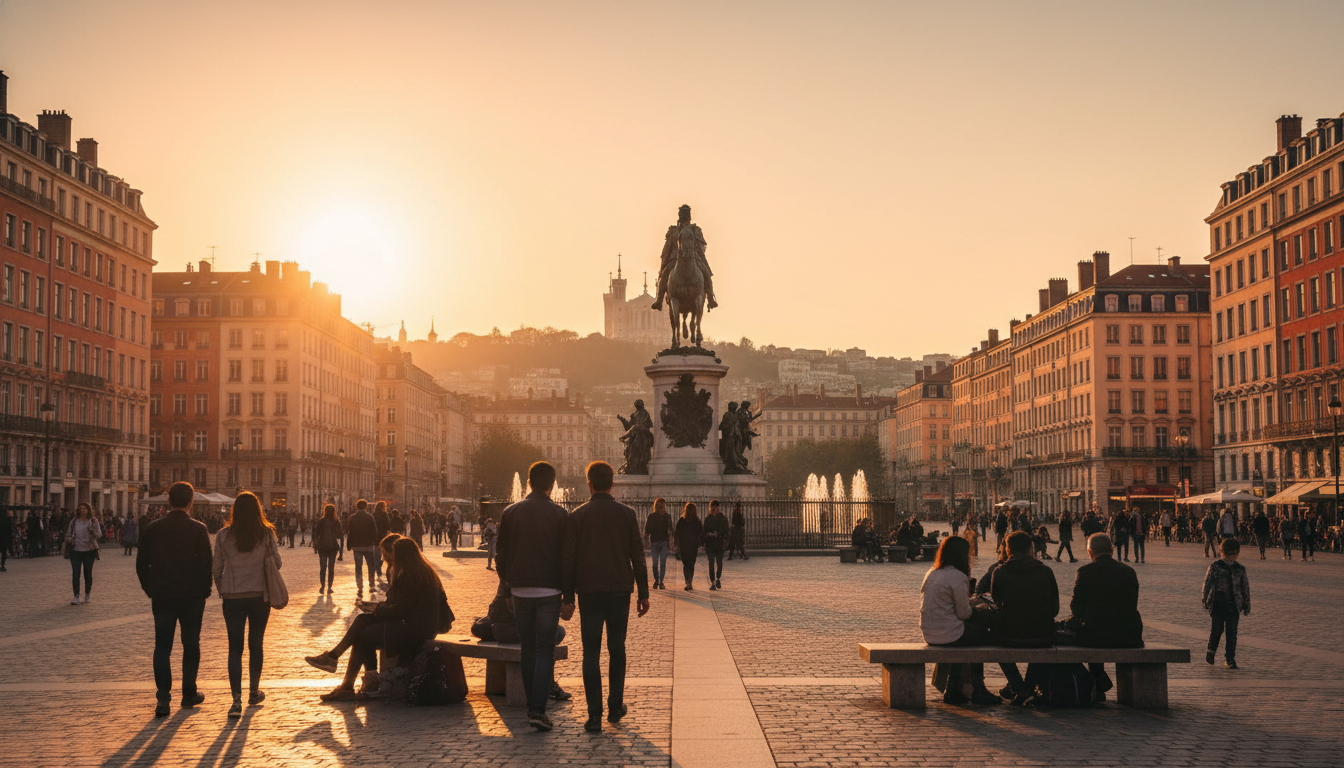 Place Bellecour at golden hour with the Louis XIV statue, Fourvire basilica visible on the hill behi
The Presqu'île is where Lyon shops, dines, and sees and is seen. Rue de la République offers mainstream retail, but the real treasures hide in the side streets—antique dealers, independent boutiques, and specialty food shops that have been family-run for generations. The covered passages, reminiscent of Paris's famous arcades, shelter everything from rare book dealers to artisanal chocolate makers.
For food lovers, the Presqu'île delivers on Lyon's reputation as France's gastronomic capital. Les Halles de Lyon Paul Bocuse—the city's famous covered market—sits just east of the peninsula, a temple to French cuisine where you can breakfast on oysters and Champagne or assemble the ingredients for an unforgettable home-cooked meal. The market's vendors take their craft seriously; this is not a place for rushed transactions but for conversations about the best way to prepare that particular cheese or which wine would complement tonight's dinner.
Home swaps in the Presqu'île tend toward the sophisticated—think high ceilings, parquet floors, and balconies overlooking tree-lined boulevards. You'll pay more in terms of credit usage (these are desirable properties), but you'll be walking distance from virtually everything. The neighborhood works particularly well for first-time Lyon visitors who want to explore the city efficiently, or for those who prioritize cultural institutions—the opera, the Museum of Fine Arts, and numerous theaters cluster here.
The downside? The Presqu'île can feel a bit impersonal compared to Lyon's residential neighborhoods. It empties out after the shops close, and you're more likely to be surrounded by fellow visitors than by locals going about their daily lives. But if you want Lyon's greatest hits in one convenient package, this is your neighborhood.
Confluence: Lyon's Bold Experiment
At the southern tip of the Presqu'île, where the Rhône and Saône rivers finally merge, something unexpected is happening. Confluence is Lyon's newest neighborhood, a former industrial wasteland transformed into an eco-district that feels like it belongs to a different city entirely.
The architecture here makes a statement. Gone are the Haussmann facades and Renaissance details; in their place rise bold contemporary buildings designed by international architects. The Musée des Confluences—a deconstructivist structure that looks like a spaceship crash-landed at the river's edge—has become the neighborhood's icon, housing collections that span natural history, science, and anthropology.
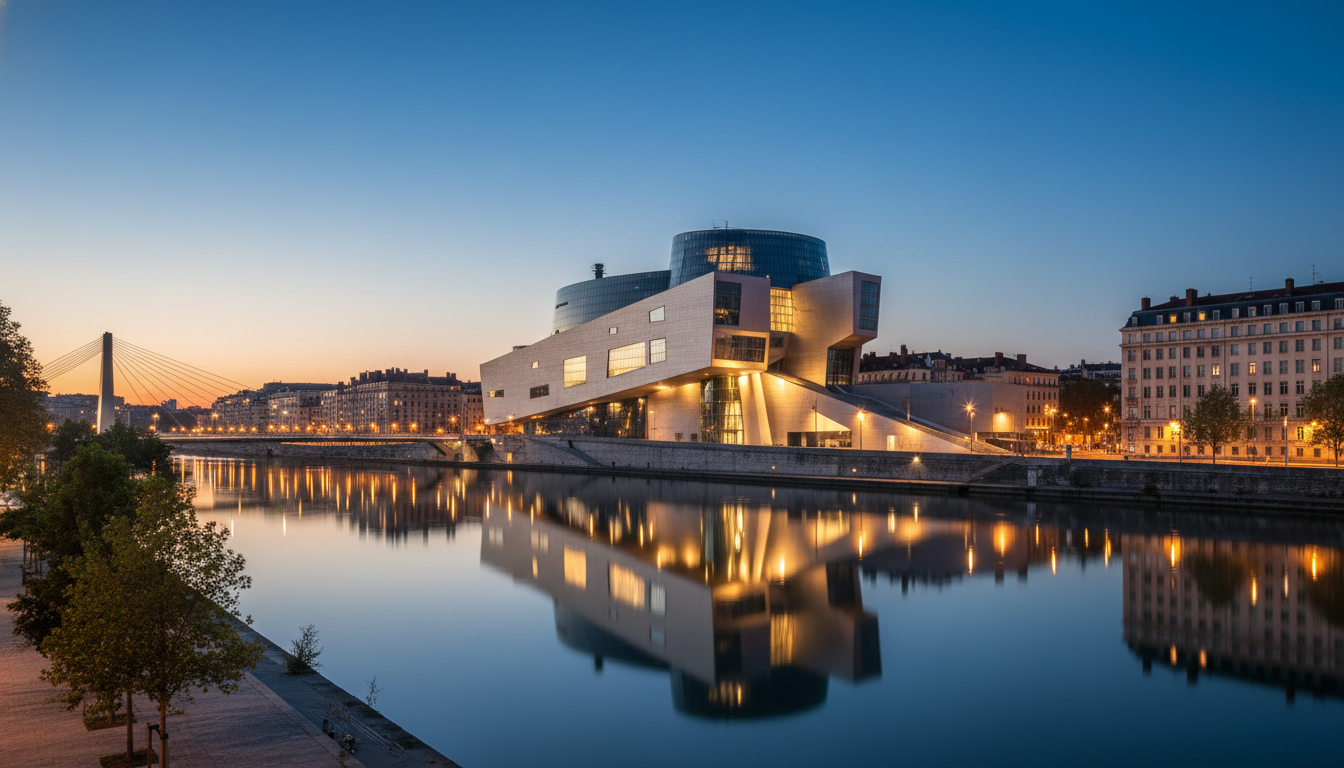 The striking modern architecture of the Muse des Confluences at dusk, with its crystalline structure
Confluence divides opinion among Lyonnais. Some love its forward-thinking design and sustainability credentials; others find it soulless, a neighborhood that looks impressive in architectural magazines but lacks the organic character that makes Lyon special. The truth, as usual, lies somewhere in between.
What Confluence offers home swappers is space and modernity. The apartments here are newer, often with open floor plans, contemporary kitchens, and the kind of amenities—gyms, rooftop terraces, underground parking—that older neighborhoods can't match. If you're traveling with children, the wide promenades and riverfront parks provide room to run that the narrow streets of Vieux Lyon simply don't.
The neighborhood also connects you to a different side of Lyon. The shopping center here hosts international brands alongside local boutiques, and the restaurants skew contemporary rather than traditional. It's a good base for exploring the city's outdoor offerings—bike paths run along both rivers, and you can rent kayaks to paddle the very spot where the waters meet.
But I'll be honest: if you're visiting Lyon for the first time and want to understand what makes this city tick, Confluence probably shouldn't be your first choice. It's excellent for what it is, but what it is doesn't capture Lyon's soul. Save it for a return visit when you've already fallen in love with the city's historic quarters and want to see its future.
Guillotière and the 7th: The Multicultural Melting Pot
Cross the Rhône to the east bank, and Lyon's character shifts again. Guillotière and the surrounding 7th arrondissement have historically been the city's immigrant neighborhood, a place where successive waves of newcomers—Italian, North African, Vietnamese, Chinese—have made their homes and left their marks.
This is Lyon at its most diverse and, arguably, its most exciting for food lovers. Rue Pasteur and its side streets offer a culinary world tour: Vietnamese pho shops next to Tunisian bakeries, Chinese grocery stores across from Portuguese rotisseries. The prices here are lower than in central Lyon, and the authenticity is higher. When local chefs need ingredients for their own kitchens, many of them shop here.
Place Gabriel Péri serves as the neighborhood's heart, a bustling square where market vendors set up stalls and café terraces fill with a mix of students, artists, and longtime residents. The energy here is different from the polished Presqu'île—rougher around the edges, yes, but also more vital, more real.
For home swappers seeking an authentic urban experience, Guillotière delivers. The apartments tend to be more affordable (in terms of credits) than central Lyon, and you'll be living in a genuinely mixed neighborhood rather than a tourist enclave. The 7th also offers excellent access to Parc de la Tête d'Or, Lyon's magnificent urban park, and the universities that give this part of the city its youthful energy.
A word of context: some travel guides describe Guillotière as "edgy" or "up-and-coming," which is often code for "we're not sure if it's safe." The reality is more nuanced. Like any urban neighborhood with economic diversity, Guillotière has its challenges, but it's not dangerous for visitors exercising normal city awareness. What it is, undeniably, is interesting—a neighborhood where Lyon's future is being negotiated in real time.
Practical Wisdom for Lyon Home Swappers
Now that you've got a sense of Lyon's neighborhoods, let me share some practical insights that will make your home swap smoother and more rewarding.
Timing matters enormously in Lyon. The city transforms during the Fête des Lumières in early December, when buildings across the city become canvases for spectacular light installations. It's magical but crowded; book your swap months in advance and expect premium properties to be in high demand. Summer brings the opposite challenge—August sees many Lyonnais flee to the countryside, which means quieter neighborhoods but also closed shops and restaurants.
Transportation in Lyon is excellent, which means your neighborhood choice matters less than you might think. The metro connects most areas efficiently, and the city's bike-share system (Vélo'v) is one of France's best. That said, if you're planning to explore the region—the Beaujolais vineyards, the Rhône Valley, the Alps—having a car becomes valuable, and not all neighborhoods offer easy parking.
When evaluating potential home swaps on SwappaHome, look beyond the photos to the neighborhood details. A beautiful apartment in a soulless location will disappoint, while a modest flat in a vibrant quartier can exceed expectations. Read the descriptions carefully, check the proximity to metro stations and markets, and don't hesitate to ask hosts about their neighborhood's character.
Consider what kind of Lyon experience you want. Are you here for the food? Prioritize neighborhoods near Les Halles or the Croix-Rousse market. Interested in history and architecture? Vieux Lyon puts you at the center of the action. Want to live like a local? Croix-Rousse or the 7th offer immersion in everyday Lyonnais life. There's no wrong answer, but there is a right answer for you.
Finding Your Lyon
Lyon rewards the curious traveler, the one willing to wander down unmarked streets, push open mysterious doors, and strike up conversations with strangers. It's a city that reveals itself gradually, neighborhood by neighborhood, meal by meal, until you realize you've fallen in love without quite knowing when it happened.
The beauty of home swapping is that it places you inside this process rather than outside it. You're not observing Lyon from a hotel window; you're living it, shopping at the local market, nodding to neighbors on the stairs, discovering the café that becomes "your" café. Each neighborhood offers a different version of this experience, a different lens through which to see the city.
Whether you choose the medieval romance of Vieux Lyon, the artistic energy of Croix-Rousse, the elegant convenience of the Presqu'île, the bold modernity of Confluence, or the multicultural vitality of Guillotière, you'll find a Lyon that feels personal, specific, and entirely your own.
Platforms like SwappaHome make this kind of immersive travel accessible, connecting you with Lyonnais who are equally eager to explore your corner of the world. It's an exchange in the truest sense—not just of homes, but of perspectives, of daily rhythms, of what it means to live in a particular place.
So start browsing, start dreaming, and start planning your Lyon adventure. The city's neighborhoods are waiting, each with its own stories to tell and secrets to share. All you have to do is choose your door and step through.

Published by
SwappaHome
SwappaHome Editorial Team
Home Exchange & Slow Travel Editorial
The SwappaHome Editorial Team brings together travel research, home-exchange community insights, and platform data to produce practical guides for first-time and experienced home swappers. Every article cites real platforms, current market rates, and verifiable city-level facts so readers can make informed decisions without guessing.
Ready to try home swapping?
Join SwappaHome and start traveling by exchanging homes. Get 7 free credits when you sign up!
Related articles
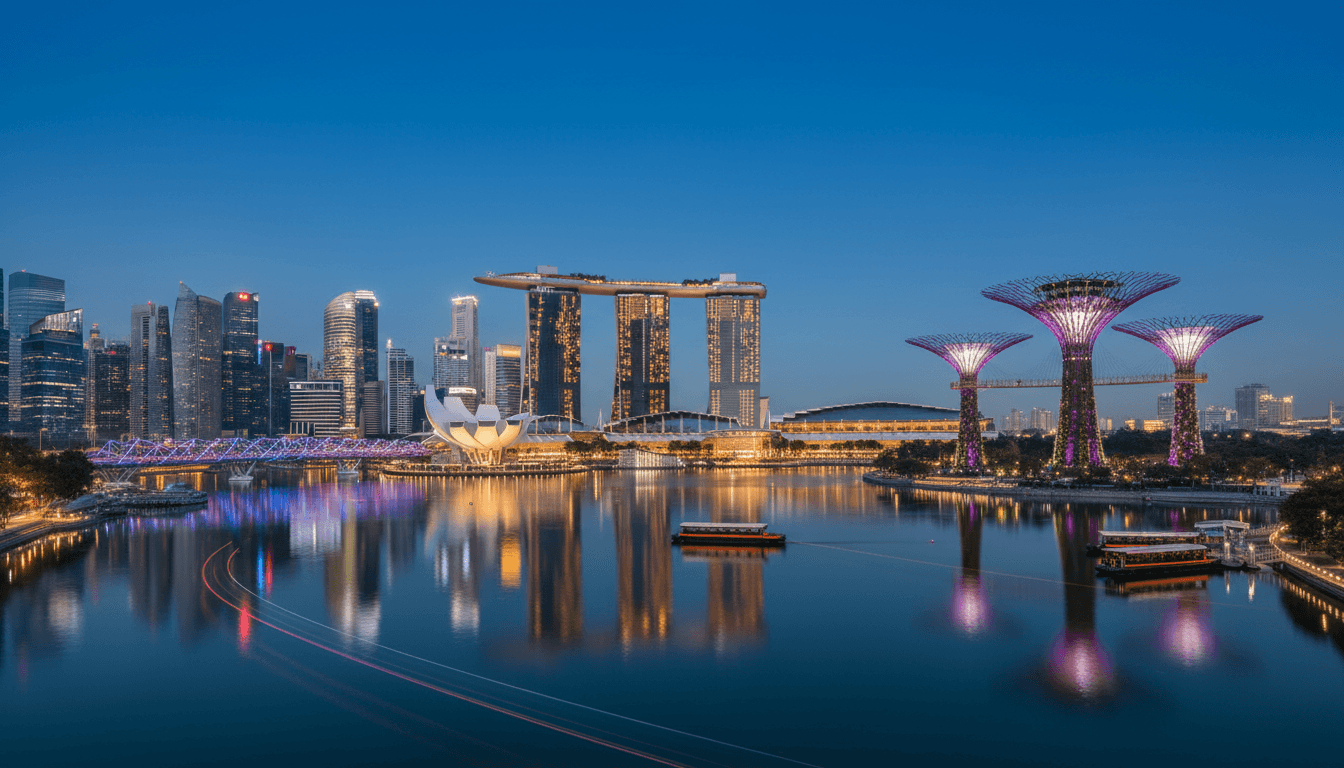
Bachelor and Bachelorette Parties in Singapore: The Complete Home Swap Group Guide for 2026
Planning a bachelor or bachelorette party in Singapore? Discover how home swapping lets groups of 6-12 stay together in luxury condos, saving thousands while partying in Marina Bay.
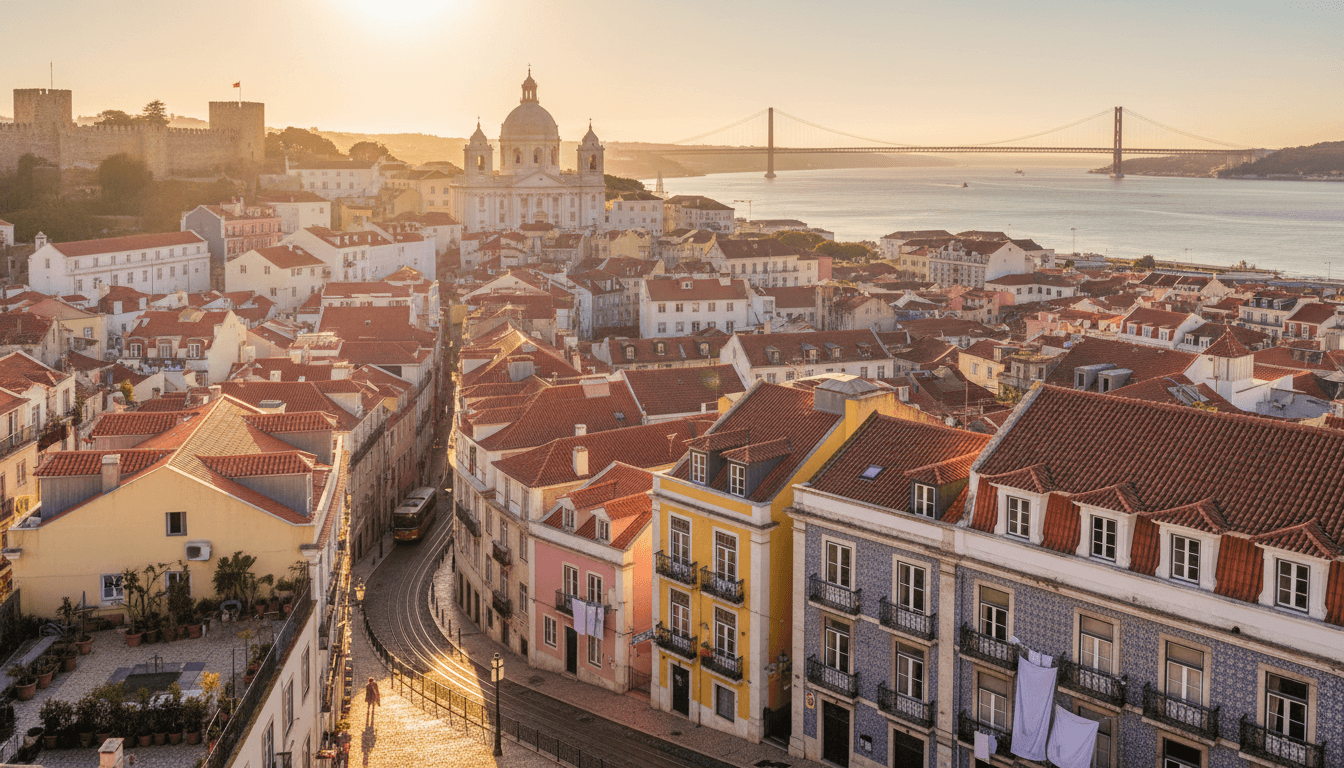
Cycling in Lisbon: 7 Home Swap Bike Tour Itineraries for Every Rider
Discover the best cycling routes in Lisbon with these home swap bike tour itineraries—from waterfront paths to hilltop adventures, all starting from your borrowed home.
Graduation Trip to Barcelona: How Home Swapping Gives New Graduates the Ultimate Celebration
Planning a graduation trip to Barcelona? Discover how home swapping lets new graduates explore Spain's most vibrant city without the hostel crowds or hotel costs.