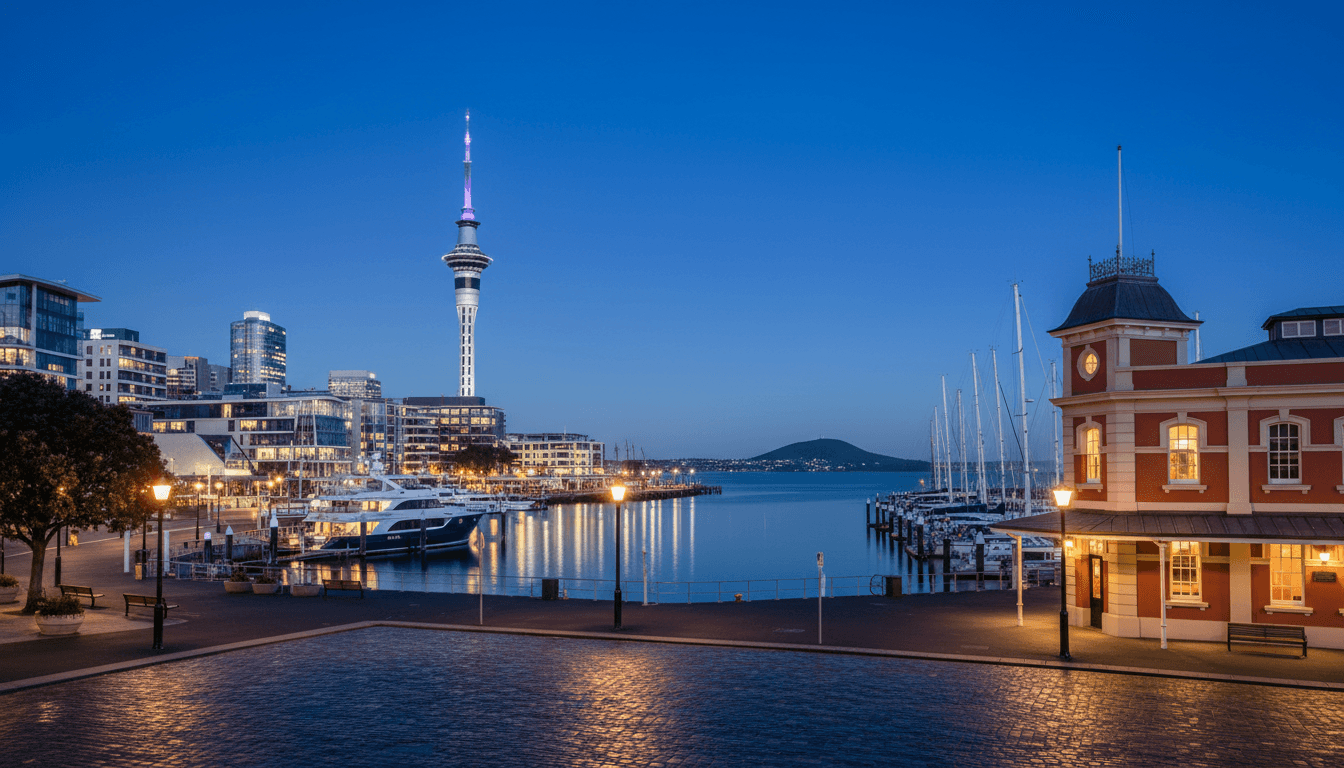
Home Swap vs Hotel in Auckland: The Real Cost Comparison That Changed How I Travel

SwappaHome Editorial Team
Home Exchange & Slow Travel Editorial
I tracked every dollar during my Auckland trip comparing home swap vs hotel costs. The results? A $2,847 difference that funds my next adventure.
I was standing in a stranger's kitchen in Ponsonby at 7 AM, making coffee in my pajamas while watching tūī birds fight over a feijoa tree in the backyard. My phone buzzed—a friend asking how my Auckland hotel was treating me.
"I'm not in a hotel," I typed back. "And I just saved enough money to extend my trip by a week."
That home swap vs hotel in Auckland comparison I'd been mentally running? It wasn't even close. And after seven years of swapping homes across 25 countries, Auckland might have delivered the most dramatic cost difference I've ever documented.
Here's the thing—I'm a numbers person when it comes to travel. I track everything. So when I planned my three-week Auckland adventure last November, I decided to do something I'd been meaning to do for years: run an actual, line-by-line comparison of what my trip would have cost in a hotel versus what I actually spent through home exchange.
The results genuinely surprised me. Not just the total savings (though $2,847 NZD is nothing to sneeze at), but where the savings came from.
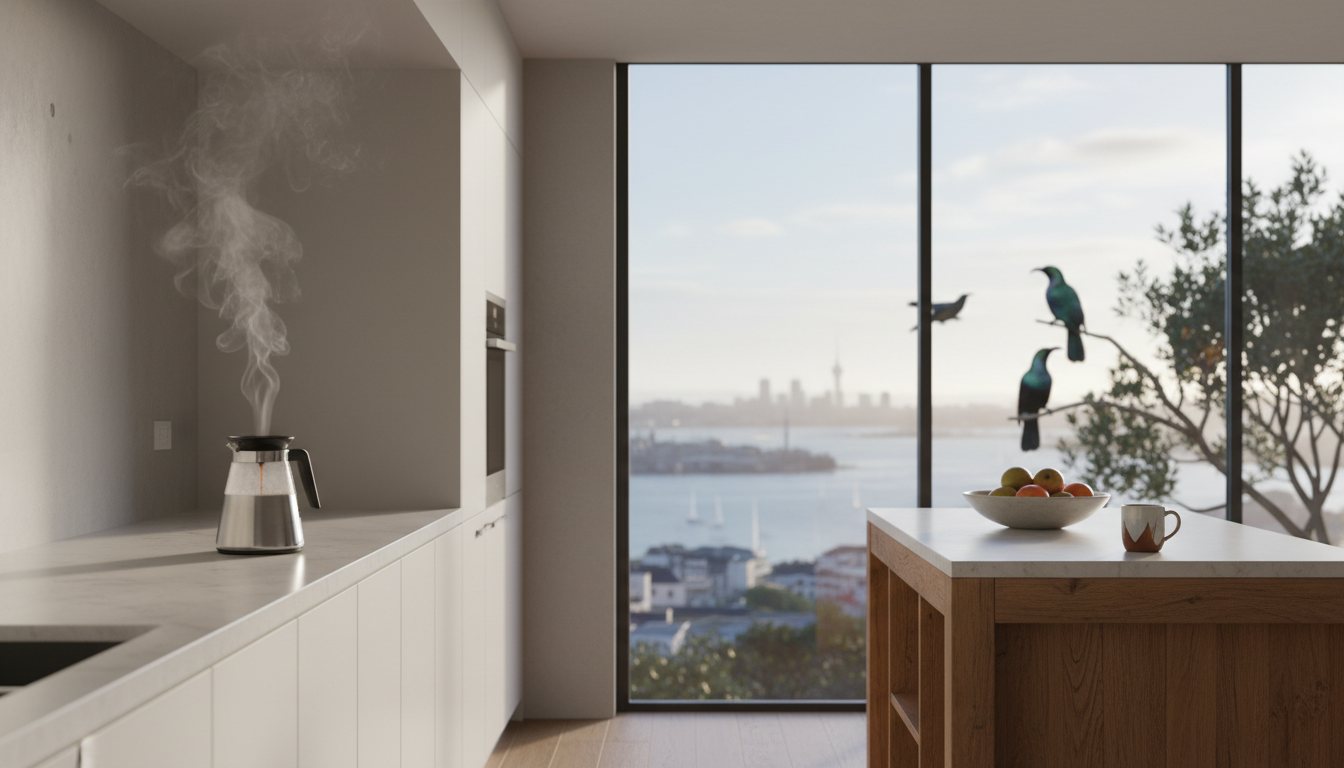 Morning light streaming through a modern Auckland kitchen with harbor views, coffee brewing on the c
Breaking Down Hotel Costs in Auckland: What You'd Actually Pay
Let's start with the uncomfortable truth about Auckland accommodation. This city isn't cheap—it consistently ranks among the most expensive in the Southern Hemisphere, and hotel prices reflect that.
For my three-week stay (21 nights), I researched what I'd actually book. Not the cheapest hostel dorm, not the penthouse suite at the Park Hyatt. A solid mid-range hotel in a neighborhood where I'd actually want to stay—somewhere like Ponsonby, Grey Lynn, or the CBD fringe.
Here's what I found for November 2024:
Mid-range hotel (3-star, central location): $189-$245 NZD per night ($115-$150 USD) Average across 21 nights: $4,515 NZD ($2,760 USD)
But that's just the room rate. Anyone who's traveled knows the hotel bill is never just the room rate.
Breakfast: Most Auckland hotels charge $35-$45 NZD for their buffet. Even grabbing coffee and toast at a nearby café runs $18-$25 NZD. Over 21 days, eating breakfast out every morning: approximately $525 NZD.
Laundry: Three weeks means laundry. Hotel laundry services in Auckland average $8-$12 NZD per item. Even using the self-service machines (if they exist), you're looking at $15-$20 per load. Budget: $80-$120 NZD.
Workspace fees: I write for a living. Many Auckland hotels now charge for "premium WiFi" or access to business centers. Some boutique hotels add workspace fees of $25-$40 NZD per day. I'd need at least 10 work days: $250-$400 NZD.
In-room dining/snacks: That minibar. The room service when you're jet-lagged. The $8 bottle of water. Conservative estimate over three weeks: $150 NZD.
The "I need space" premium: After a week in a hotel room, I always end up spending money just to escape the four walls—coffee shops, co-working spaces, anywhere with a different view. That's easily $30-$50 NZD per day in incidental spending.
Running total for 21 nights in an Auckland hotel: approximately $6,120 NZD ($3,740 USD)
And honestly? That's conservative. I didn't factor in parking ($35-$50 NZD per day in central Auckland), the premium for a room with a kitchen (add 30-40%), or the reality that November is shoulder season heading into summer—peak season rates jump another 25-40%.
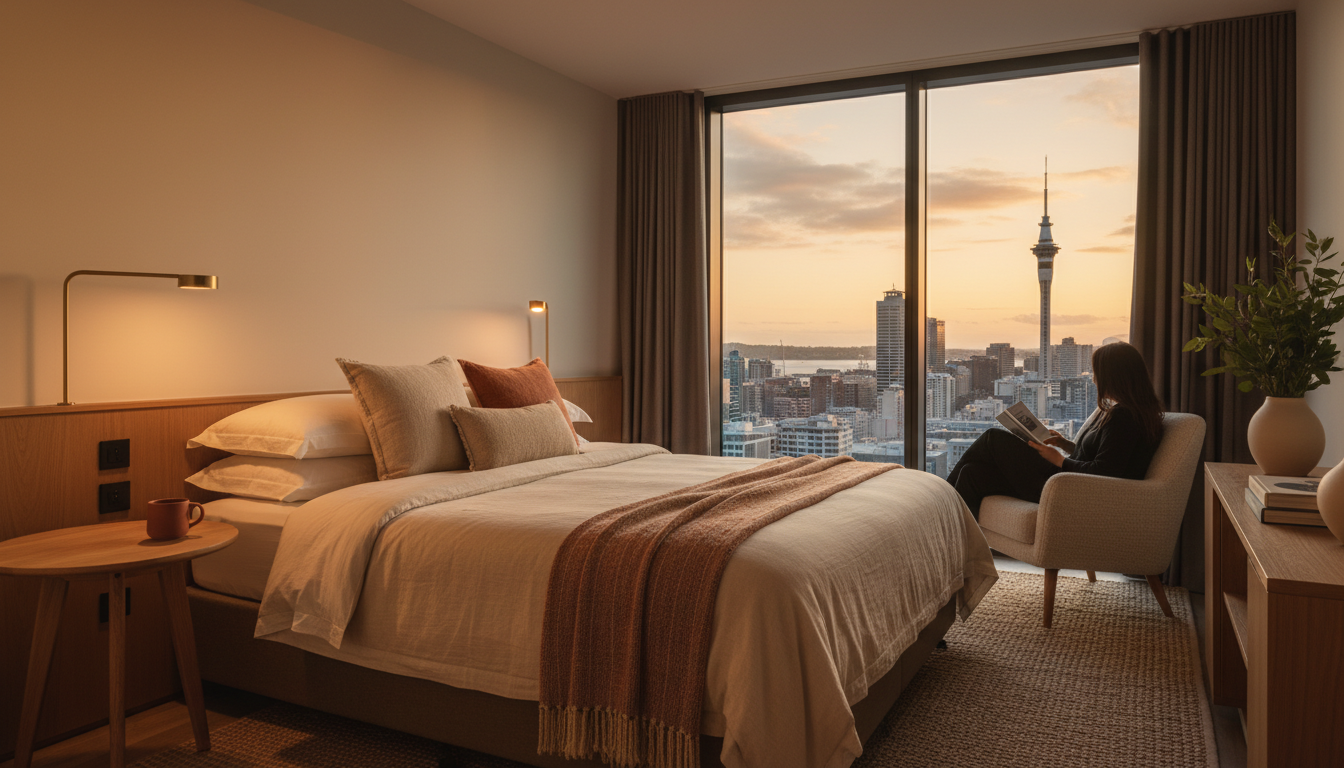 Auckland CBD hotel room interior, compact but modern, city view through window, showing typical mid-
What My Auckland Home Swap Actually Cost: A Line-by-Line Breakdown
Now for the home exchange side of this Auckland cost comparison.
Through SwappaHome, I connected with a couple from Ponsonby who wanted to spend three weeks in San Francisco. Perfect timing—they'd stay in my place, I'd stay in theirs. The credit system made it beautifully simple: they earned credits hosting me, I earned credits hosting them. No money changed hands for accommodation.
But let me be completely transparent about what I did spend:
SwappaHome membership: I was already a member, but annual membership runs about $150 USD. Prorated for this trip: roughly $30 NZD.
Cleaning before my guests arrived: I hired my regular cleaner for a deep clean—$180 USD ($295 NZD). Not required, but I wanted my place spotless.
Welcome gift for my hosts' home: A nice bottle of New Zealand wine and local chocolates to say thanks—$65 NZD.
Utilities contribution: Many home swappers don't ask for this, but I offered to cover the electricity bump from my stay—$85 NZD.
Groceries: Here's where home exchange really shines. With a full kitchen, I cooked most meals. My total grocery spending for three weeks: $380 NZD. That's breakfast, lunch, and probably 15 dinners at home.
Eating out: I still enjoyed Auckland's food scene—maybe 6-7 dinners out, plus weekend brunches. Total: $420 NZD.
Running total for 21 nights home swapping in Auckland: approximately $1,275 NZD ($780 USD)
The difference? $4,845 NZD ($2,960 USD) saved.
I'll be honest—I double-checked these numbers three times because they seemed almost too dramatic. But they held up.
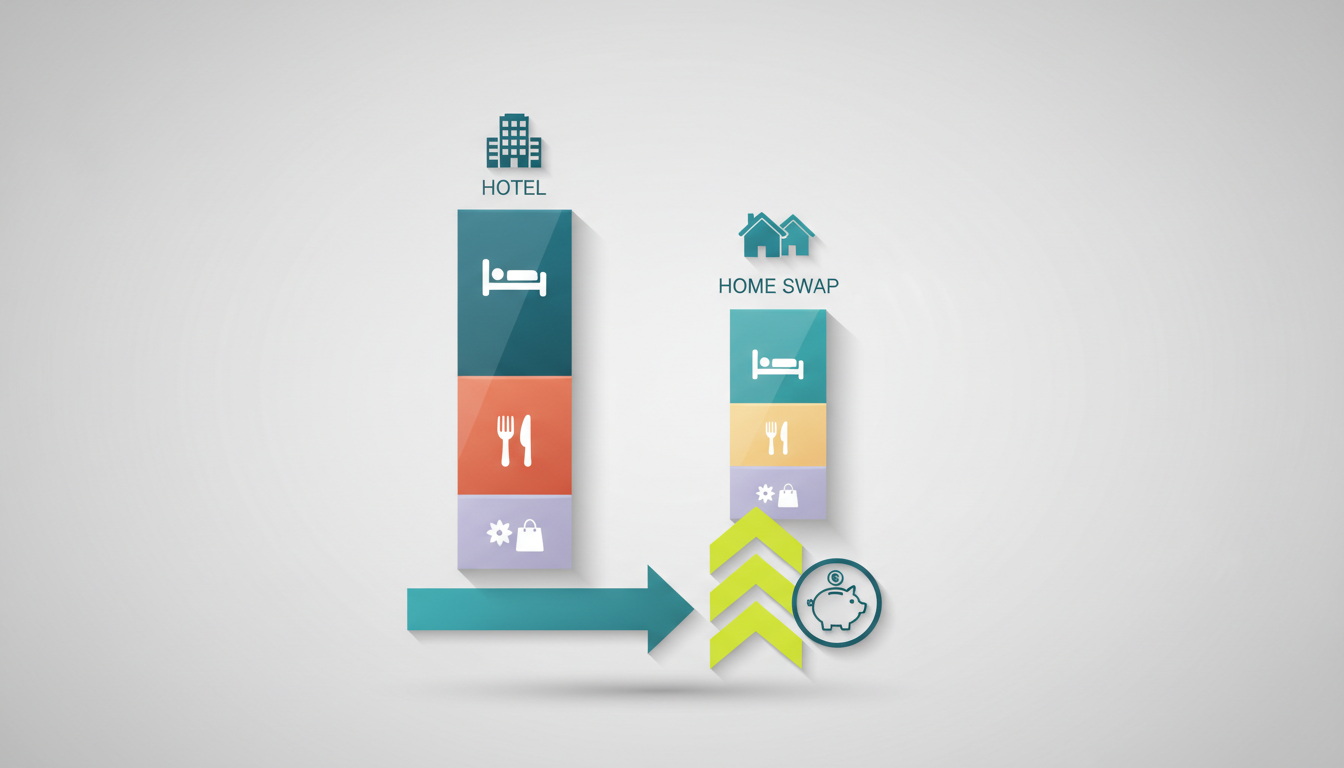 Infographic showing side-by-side cost comparison bars - hotel costs vs home swap costs broken down b
The Hidden Value That Doesn't Show Up in Spreadsheets
Here's where the home swap vs hotel comparison in Auckland gets interesting beyond the raw numbers.
The Ponsonby house I stayed in wasn't just "accommodation." It was a three-bedroom character villa with a proper office space (hello, productivity), a backyard where I could work outside, and a kitchen that made me actually want to cook. Try finding that in a $189/night hotel.
My hosts left me their car—a 2019 Mazda CX-5 that would have cost $85-$120 NZD per day to rent. I only used it for day trips (Auckland's public transport and walkability are solid), but those five day trips saved me another $500+ NZD in rental fees.
They also left detailed notes about their neighborhood: which butcher has the best sausages (Grey Lynn Butcher, get the lamb merguez), where to find the hidden beach access at the end of their street, which café makes proper flat whites versus the tourist traps. You can't put a price on arriving somewhere and immediately feeling like a local rather than a tourist.
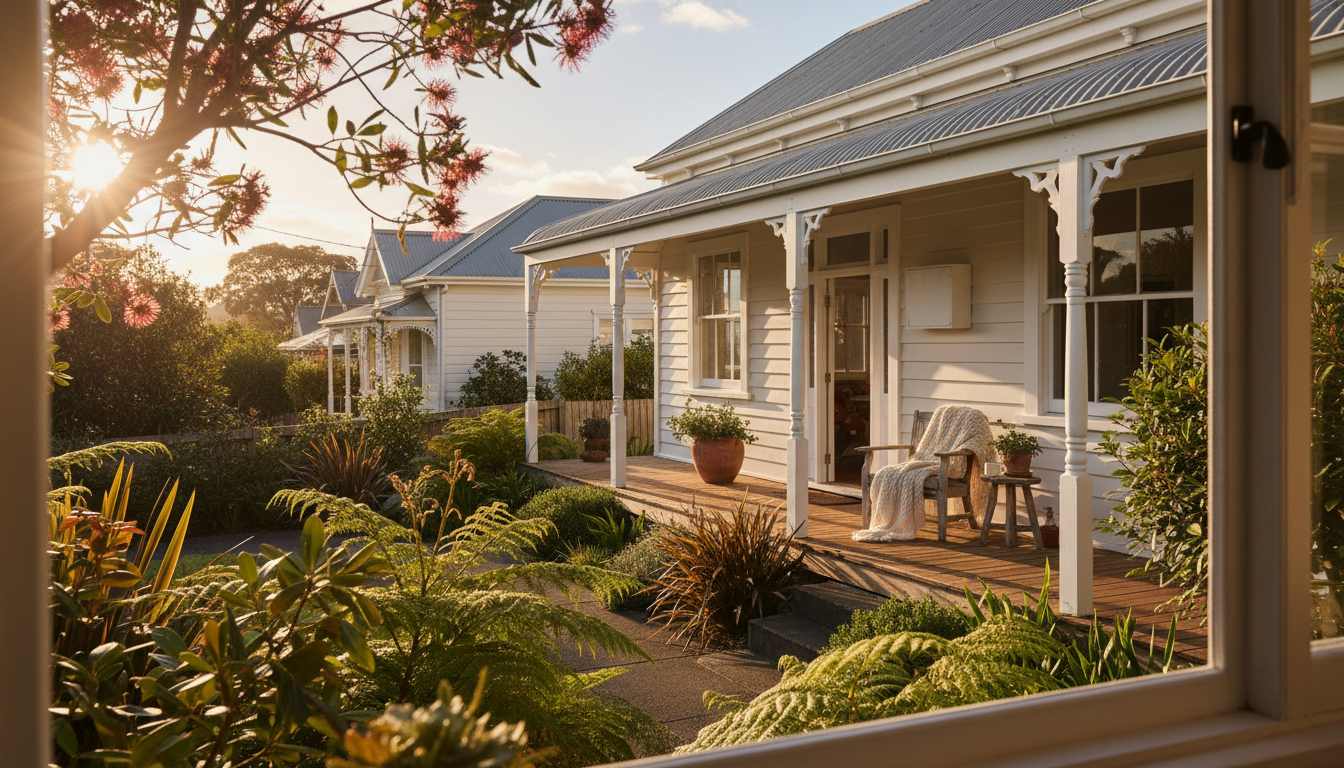 Charming Auckland villa exterior in Ponsonby, white weatherboard with native garden, veranda with mo
Auckland Neighborhoods: Where Home Swaps Make the Biggest Difference
If you're considering a home swap in Auckland, location matters enormously—both for experience and value.
Ponsonby and Grey Lynn
This is where I stayed, and I'd argue it's the sweet spot for home exchange in Auckland. These inner-west suburbs have the city's best café culture, walkable streets lined with Victorian villas, and easy access to both the CBD and western beaches.
Hotel options here? Almost nonexistent. You'd be looking at Airbnbs starting at $250 NZD/night for anything decent, or commuting from the city center. Home swap advantage: massive. You're getting access to a neighborhood that's essentially hotel-free.
Devonport
Across the harbor, this village-like suburb has maybe two boutique hotels, both charging $300+ NZD per night. But it's full of beautiful old homes owned by people who travel frequently. The ferry to the CBD takes 12 minutes. The views of the city skyline? Worth waking up early for.
Mount Eden and Kingsland
Closer to Eden Park stadium and the trendy Kingsland strip. Hotels here are budget chains or nothing. But the residential streets are full of 1920s bungalows with character you simply cannot buy in a hotel room.
Waiheke Island
Okay, this is where home swapping in Auckland becomes almost absurd value-wise.
Waiheke accommodation during summer starts at $350 NZD per night for basic options. The vineyard lodges and boutique stays? $600-$1,200 NZD. But Waiheke residents are often travelers themselves—artists, wine industry folks, remote workers who bought property when it was affordable. They're prime home swap candidates.
I met a SwappaHome member who did a two-week Waiheke swap. She calculated her savings at over $8,000 NZD compared to equivalent accommodation. Her hosts stayed in her Brooklyn apartment. Everyone won.
 Waiheke Island vineyard view from a private home terrace, wine glasses on outdoor table, olive grove
The Practical Reality: What Auckland Home Swapping Actually Looks Like
I want to be real about what home exchange requires, because it's not for everyone.
You need a home to offer. This isn't a one-way transaction. My San Francisco apartment isn't fancy, but it's in a desirable location with character. That matters.
Communication takes effort. My Ponsonby hosts and I exchanged probably 30 messages before the swap—discussing everything from how the coffee machine works to whether I minded their cat (I didn't, she was lovely).
Flexibility helps. Direct swaps—where you stay in each other's homes simultaneously—require calendar alignment. SwappaHome's credit system helps here: I've hosted guests from countries I have no immediate plans to visit, banking credits for future trips.
Trust is essential. You're staying in someone's home, surrounded by their belongings, their photos, their life. And they're doing the same in yours. The review system builds accountability, but ultimately, home swapping works because most people are genuinely good.
I've done 40+ swaps. I've had exactly one minor issue (a guest broke a wine glass and replaced it with a nicer one). The community self-selects for respectful, responsible travelers.
The Auckland-Specific Factors That Amplify Savings
Some cities show modest savings with home exchange. Auckland amplifies them dramatically. Here's why:
Geographic sprawl: Auckland's best neighborhoods are residential, not hotel districts. Staying where locals actually live requires either expensive short-term rentals or home exchange.
Car dependency: While the CBD is walkable, exploring Auckland properly—the west coast beaches, wine regions, the Coromandel Peninsula—requires wheels. Home swaps often include car access.
Kitchen culture: New Zealanders take food seriously. Auckland homes typically have proper kitchens, not the afterthought kitchenettes of hotel suites. Farmers markets here are exceptional—La Cigale French Market in Parnell, the Ponsonby Community Centre market on Saturdays. Cooking becomes a pleasure, not a compromise.
Long-stay pricing: Hotels rarely offer meaningful discounts for stays beyond a week. Home exchange costs the same whether you stay 3 nights or 30.
Seasonal extremes: Auckland hotel pricing swings wildly between winter (June-August) and summer (December-February). Home exchange remains consistent year-round.
A Week-by-Week Breakdown of My Auckland Trip
Let me walk you through how the savings actually accumulated:
Week 1: Settling In
Arrived jet-lagged, grateful for a real bed in a quiet neighborhood rather than a hotel room overlooking a construction site (Auckland has a lot of those right now). Spent the first three days working from the home office, cooking simple meals, walking the neighborhood.
Hotel equivalent spending: $1,800 NZD Actual spending: $180 NZD (groceries, coffee, one dinner out)
Week 2: Exploring
Used the hosts' car for day trips—Piha Beach, Matakana wine region, the Waitākere Ranges. Came home each evening to cook dinner with ingredients from roadside farm stands.
Hotel equivalent spending: $2,100 NZD (including car rental) Actual spending: $350 NZD (petrol, activities, groceries, two dinners out)
Week 3: Living Like a Local
By now I had routines. Morning coffee at Atomic Roasters. Afternoon work sessions in the backyard. Evening walks to Western Springs park. A few nice dinners out to properly experience Auckland's restaurant scene.
Hotel equivalent spending: $2,220 NZD Actual spending: $420 NZD (groceries, dining, activities)
Three-week total comparison:
- Hotel route: $6,120 NZD
- Home swap route: $1,275 NZD (including membership, gifts, and contributions)
- Savings: $4,845 NZD ($2,960 USD)
What I Did With the Savings
This is the part that matters, right? Those savings aren't theoretical—they translate into real experiences.
With my $4,845 NZD savings, I extended my trip by 5 days (using credits for another swap in Wellington), splurged on a helicopter tour of the volcanic islands ($450 NZD), took a sailing trip on the Hauraki Gulf ($280 NZD), bought way too much New Zealand wine to ship home ($600 NZD, no regrets), and banked the rest toward my next adventure (currently eyeing Japan).
The home swap didn't just save money—it funded experiences I wouldn't have otherwise had.
The Honest Downsides of Home Swapping in Auckland
I'd be doing you a disservice if I didn't mention the challenges.
Limited luxury options: If you want five-star hotel amenities—daily housekeeping, room service, concierge—home exchange won't deliver that. You're trading luxury for authenticity and savings.
Responsibility: You're caring for someone's home. That means being mindful of their belongings, following house rules, and communicating promptly if anything goes wrong. It's not the "someone else handles everything" ease of a hotel.
No guarantees: SwappaHome connects members, but the platform doesn't provide insurance or damage coverage. If something goes wrong, you're working it out directly with your swap partner. I always recommend getting your own travel insurance that covers home exchange stays.
Availability varies: Auckland's home swap inventory fluctuates. Peak summer season (December-February) sees more demand than supply. Planning ahead—3-4 months minimum—helps significantly.
It requires trust: You're letting strangers into your home. The review system and verification help, but ultimately you're relying on mutual respect between community members. In seven years, that trust has never failed me. But it's worth acknowledging.
How to Find Your Auckland Home Swap
If you're convinced (or at least curious), here's my practical advice for finding an Auckland home exchange:
Start early. Auckland members often plan swaps 4-6 months ahead, especially for summer travel.
Make your listing compelling. Photos matter. Descriptions matter. Highlight what makes your home special—the neighborhood, the quirks, the local recommendations you'd give.
Be flexible on dates. The more flexible you are, the more options open up. Even shifting by a week can double your potential matches.
Reach out proactively. Don't just wait for requests. Browse Auckland listings on SwappaHome and message members whose homes interest you. Explain who you are, when you're hoping to travel, and what you can offer in return.
Use the credit system strategically. If you can't find a direct swap, host guests from anywhere to earn credits, then use those credits for your Auckland stay. I've hosted people from Germany, Brazil, and Japan—none of whom I've visited yet—and used those credits across New Zealand.
The Bottom Line on Auckland Home Swap vs Hotel Costs
After tracking every dollar, every experience, every moment of my three-week Auckland trip, here's what I know:
Home swapping saved me $4,845 NZD compared to an equivalent hotel stay. But more than that, it gave me a trip I couldn't have had any other way—mornings in a real neighborhood, a kitchen that felt like mine, a backyard where tūī birds became my daily companions.
The Auckland home swap vs hotel comparison isn't just about money, though the money is significant. It's about what kind of traveler you want to be.
Do you want to visit Auckland, or do you want to live there, even briefly?
I know my answer. And my bank account thanks me for it.
Thinking about trying home exchange for your next trip? SwappaHome makes it surprisingly easy to connect with hosts worldwide. New members start with 7 free credits—enough for a solid Auckland adventure. Just saying.
Frequently Asked Questions
Is home swapping in Auckland safe for first-time exchangers?
Home swapping in Auckland is generally very safe, especially through established platforms like SwappaHome that offer member verification and review systems. The community self-selects for responsible travelers. I recommend starting with members who have multiple positive reviews, communicating thoroughly before your swap, and getting your own travel insurance for peace of mind. After 40+ exchanges, I've never had a significant safety issue.
How much can I realistically save with home exchange vs hotels in Auckland?
Based on my detailed tracking, a three-week Auckland home swap saved approximately $4,845 NZD ($2,960 USD) compared to equivalent hotel accommodation. For a typical one-week stay, expect savings of $1,500-$2,000 NZD. The savings increase dramatically for longer stays, peak season travel, and desirable neighborhoods like Ponsonby or Waiheke Island where hotel options are limited or expensive.
What's included in a typical Auckland home swap?
Most Auckland home swaps include full access to the home, kitchen, laundry facilities, WiFi, and often a car. Hosts typically leave fresh linens, basic pantry items, and detailed neighborhood guides. Utilities are usually included, though some hosts appreciate a small contribution for longer stays. Each swap is different—always confirm specifics through messaging before committing.
How far in advance should I plan an Auckland home exchange?
For Auckland, I recommend planning 3-4 months ahead for shoulder season (March-May, September-November) and 4-6 months for summer (December-February). Winter months (June-August) offer more flexibility with 6-8 weeks often being sufficient. Starting your search early gives you more options and better matches, especially for popular neighborhoods.
Can I home swap in Auckland if I live in an apartment, not a house?
Absolutely. Many Auckland families specifically seek apartments in cities like New York, London, or San Francisco for their travels. Your apartment's location and character matter more than size. I've successfully swapped my modest San Francisco one-bedroom for houses across New Zealand, Europe, and Australia. Highlight your neighborhood's walkability, nearby attractions, and what makes your space special.

Published by
SwappaHome
SwappaHome Editorial Team
Home Exchange & Slow Travel Editorial
The SwappaHome Editorial Team brings together travel research, home-exchange community insights, and platform data to produce practical guides for first-time and experienced home swappers. Every article cites real platforms, current market rates, and verifiable city-level facts so readers can make informed decisions without guessing.
Ready to try home swapping?
Join SwappaHome and start traveling by exchanging homes. Get 7 free credits when you sign up!
Related articles
People Like Us vs SwappaHome: Which Home Exchange Platform Wins in 2026?
Comparing People Like Us vs SwappaHome for home exchange in 2026. Real fee breakdowns, credit systems, and which platform fits your travel style.
SwappaHome Credits vs Cash: When to Use Which for Smarter Travel
Should you spend SwappaHome credits or save them? Here's exactly when each strategy maximizes your travel budget—with real scenarios and math.
Home Swapping vs House Sitting: Which Free Accommodation Option Is Right for You?
Confused about home swapping vs house sitting? After 7 years of both, here's the real difference—and which one saves you more money.