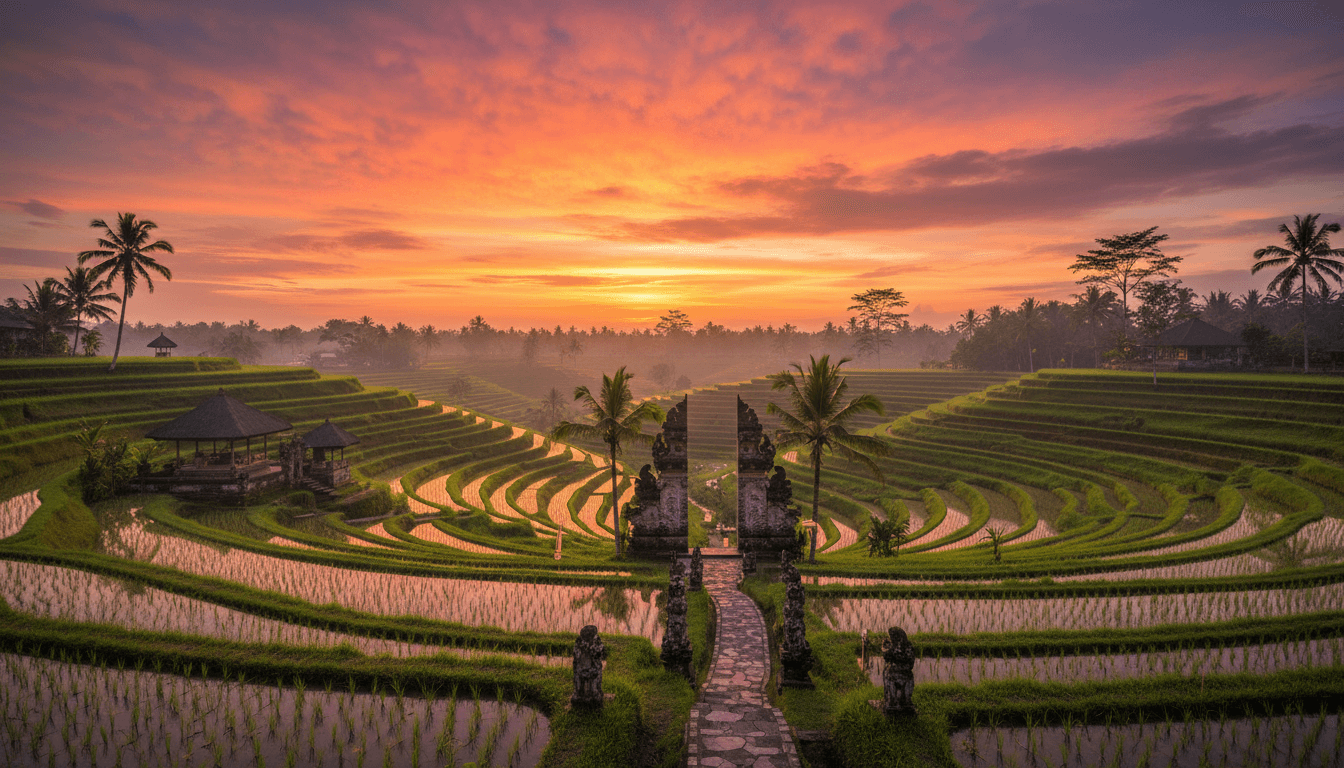
Free Activities in Bali: How to Experience Paradise Without Spending a Rupiah

SwappaHome Editorial Team
Home Exchange & Slow Travel Editorial
Discover the best free activities in Bali during your home exchange—from secret temples to sunrise hikes and local ceremonies that cost nothing but leave you breathless.
The first morning I woke up in my home exchange in Ubud, I made a rookie mistake. I grabbed my phone, started googling "things to do in Bali," and immediately felt my wallet wince. Cooking classes for $75. Waterfall tours for $60. Temple visits that somehow required a $50 guide. I closed the browser, made myself a coffee from the kitchen I'd borrowed from a lovely couple now staying at my place in San Francisco, and decided to figure out what the locals actually do—for free.
That decision changed everything about how I travel to Bali now.
After four separate home exchanges on this island over the past five years, I've put together what I genuinely believe is the most comprehensive guide to free activities in Bali you'll find anywhere. And I'm not talking about the "technically free but you need to tip $20" kind. Actually, completely, gloriously free.
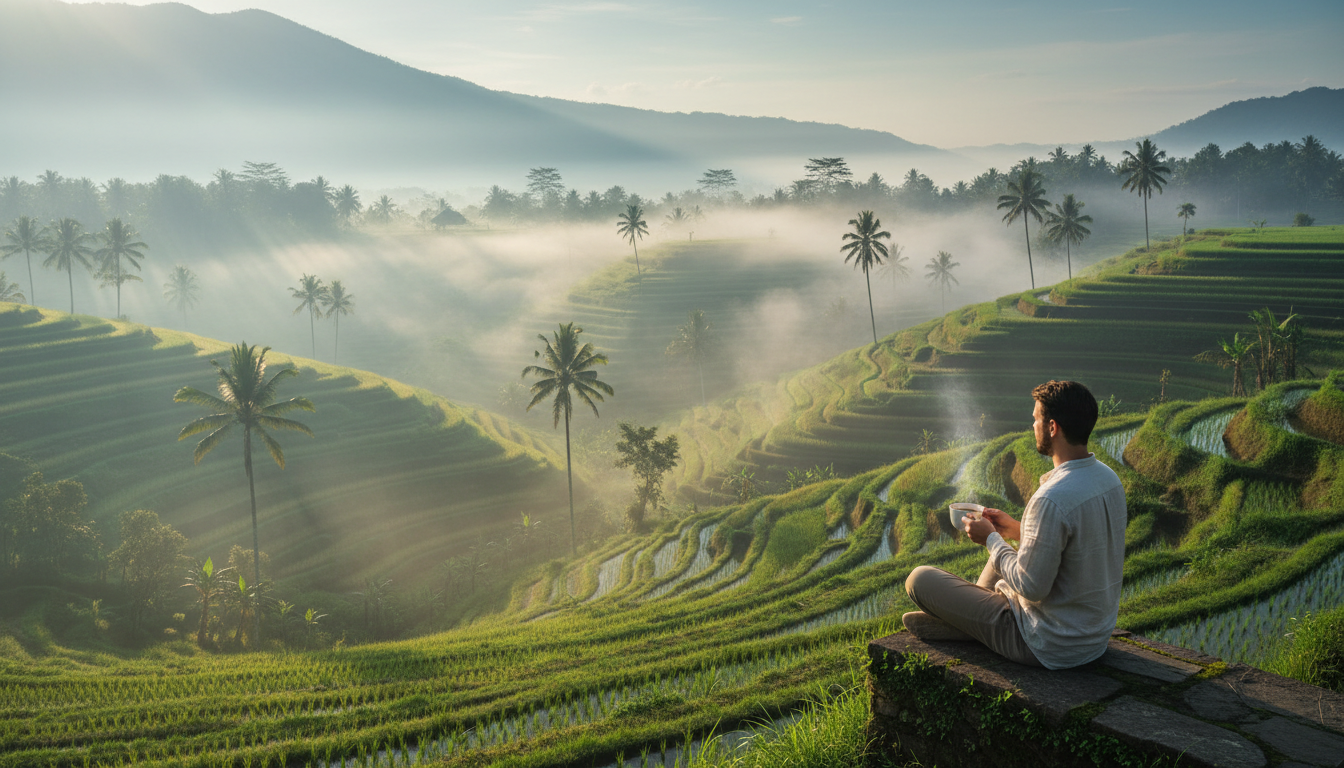 Morning mist rising over terraced rice paddies in Tegallalang with a solo traveler sitting on the ed
Why Free Activities in Bali Hit Different During a Home Exchange
Here's something I didn't expect when I started home swapping: having a real kitchen, a real neighborhood, and real neighbors completely transforms how you experience free activities.
When you're staying in a hotel in Seminyak, you're a tourist. When you're staying in someone's home in Sanur—borrowing their motorbike, getting tips from their housekeeper about which temple ceremony is happening this week—you're something closer to a temporary local.
My host in Canggu, a surf instructor named Made, left me a hand-drawn map of his favorite free spots. Not a single one appeared in any guidebook I'd read. His note said: "These are for friends, not tourists." That map is now laminated and lives in my travel bag.
The credit system on SwappaHome makes this kind of deep, slow travel actually possible. I'd hosted a family from Melbourne for a week (7 credits earned), and used those same credits for my Bali stay. No money exchanged for accommodation means more freedom to say yes to experiences rather than calculating if they're "worth it."
The Best Free Temples in Bali (That Aren't Overrun)
Let's get the obvious out of the way: yes, Bali has temples. Thousands of them. And while everyone flocks to Tanah Lot and Uluwatu (which, honestly, have become more Instagram backdrop than spiritual experience), the island is scattered with temples that cost nothing to enter and offer something the famous ones can't—actual peace.
Pura Dalem Ubud: The Temple Everyone Walks Past
Right in central Ubud, maybe 200 meters from the Monkey Forest entrance where tourists pay 80,000 IDR ($5), sits Pura Dalem Ubud. It's a death temple—dedicated to Shiva in his role as destroyer and recycler of the universe. Sounds intense, I know. But the energy there is contemplative, not creepy.
I've visited at least a dozen times, usually in the late afternoon when the light turns everything amber. There's no entrance fee. No pushy sarong rental guys. Just you, ancient stone carvings, and the occasional offering being placed by a local woman who barely glances at you because you're not the spectacle—the divine is.
What you need to know: Bring your own sarong (every home exchange I've stayed at has had one in the closet). Cover your shoulders. Don't point your feet at shrines. And if a ceremony is happening, you can usually watch from the outer courtyard—just stay quiet and respectful.
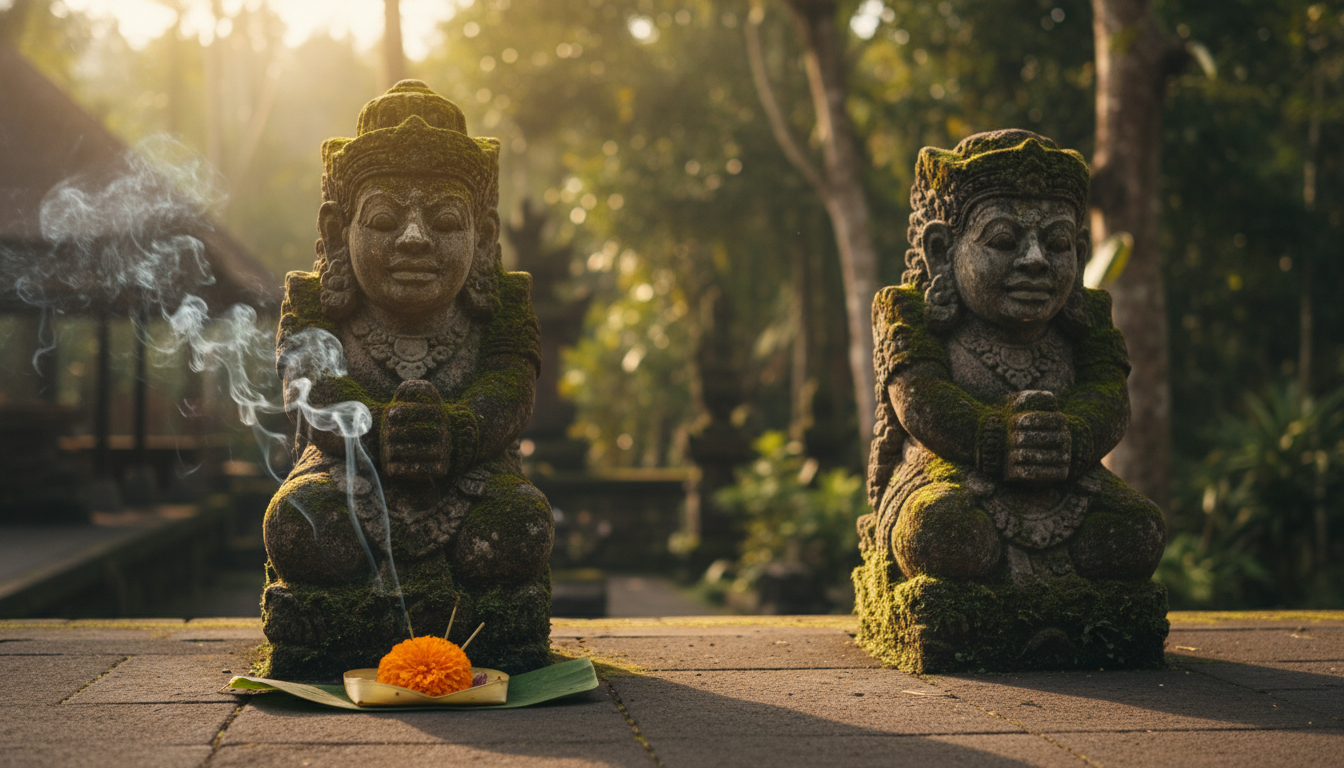 Moss-covered stone statues at Pura Dalem Ubud in late afternoon golden light, incense smoke curling
Pura Gunung Lebah: Ubud's Hidden Water Temple
At the bottom of the Campuhan Ridge—which I'll get to in a minute—sits this 8th-century water temple that most people literally walk over without noticing. The path to Campuhan Ridge crosses above it, and everyone's so focused on the ridge walk that they miss the temple entirely.
The entrance is free. The setting, where two rivers merge, is considered one of the most spiritually charged spots in Ubud. I once sat there for an hour watching a priest perform a water blessing ceremony. No tourists. No tickets. Just me accidentally stumbling into something sacred.
Village Temples: Ask Your Host
This is where home exchange becomes genuinely magical.
Every Balinese village has at least three temples: one for Brahma (the creator), one for Vishnu (the preserver), and one for Shiva (the destroyer). These aren't tourist attractions—they're active places of worship. But if you're staying in someone's home, you can often ask if any ceremonies are coming up.
During my stay in Sanur, my host's neighbor invited me to a tooth-filing ceremony at their family temple. It's a coming-of-age ritual where a priest files down the canine teeth to symbolize the removal of negative qualities. I watched for three hours, was offered food and tea multiple times, and left with a deeper understanding of Balinese Hinduism than any guided tour could provide.
Cost: Free. Experience: Absolutely priceless. (Sorry, I had to.)
Free Hikes and Nature Walks That Rival Any Paid Tour
Bali's natural beauty isn't behind a paywall—you just have to know where to look. The tourism industry has done a spectacular job convincing visitors that you need a guide for everything, but some of the best experiences require nothing but your own two feet.
Campuhan Ridge Walk: The Classic That Deserves Its Fame
Yes, it's in every guidebook. Yes, you'll see other tourists. But Campuhan Ridge at sunrise is still one of the most stunning free activities in Bali, and I'll defend it until I die.
The trick is timing. Go at 5:45 AM, before the Instagram crowds arrive around 7. The path stretches along a narrow ridge between two river valleys, with elephant grass swaying on both sides and Mount Agung visible in the distance on clear days. It takes about 45 minutes each way, and the only cost is waking up early.
Pro tip from a home exchanger: If you're staying in Ubud, this is the perfect pre-breakfast activity. Walk the ridge, stop at Karsa Kafe on the way back for their 35,000 IDR ($2.25) coffee with a view, then return to your borrowed kitchen to make a proper meal.
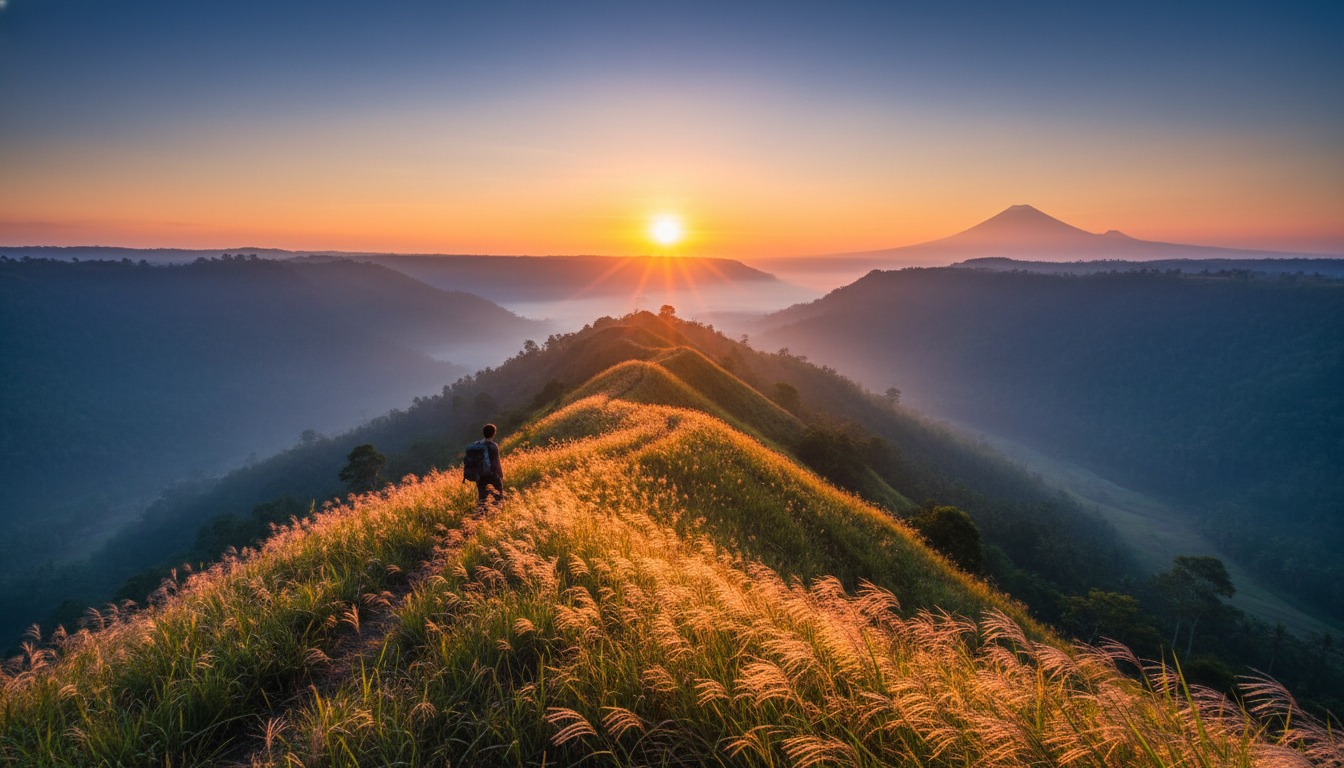 Silhouette of a solo hiker on Campuhan Ridge at sunrise, elephant grass glowing gold, misty valleys
Tegallalang Rice Terraces: Free If You Know the Secret
Here's something the tourism boards don't advertise: the famous Tegallalang Rice Terraces technically have no entrance fee. What happens is that local farmers have set up "donation" checkpoints along the most popular paths, and tourists feel obligated to pay (usually 10,000-20,000 IDR per checkpoint, which adds up).
But the terraces are vast, and there are multiple access points.
If you have a scooter from your home exchange, drive past the main tourist parking area to the village of Cekingan, about 1.5 km north. There's a small path between two warungs (local restaurants) that leads directly into the terraces—no checkpoints, no crowds, no guilt.
I discovered this on my second Bali trip when my host in Ubud, a rice farmer herself, laughed at the idea of paying to see rice paddies. "That's like paying to see the sky," she said. She drew me a map. I've used it every trip since.
Mount Batur Sunrise Without a Tour
Okay, this one requires some caveats.
The "official" stance is that you need a guide to hike Mount Batur, and local guide associations have been known to turn away independent hikers. But it's not actually illegal to hike alone, and plenty of people do it.
The trailhead in Toya Bungkah is easy to find. The path is well-worn and impossible to lose. Bring a headlamp, start at 4 AM, and you'll reach the summit for sunrise. Total cost: zero.
The reality check: Guides exist for good reasons—the volcano is active, conditions change, and having someone who knows the mountain is genuinely valuable. If you're not an experienced hiker, consider the 400,000-600,000 IDR ($25-38) guided option. But if you've done similar hikes elsewhere and you're comfortable with basic navigation, going solo is absolutely possible.
I've done it both ways. Solo was more meditative. Guided was more informative. Both were unforgettable.
Free Beaches Beyond the Tourist Strips
Bali's beaches are public. All of them. This is actually Indonesian law—you cannot own a beach. Yet somehow, beach clubs have convinced millions of tourists that you need to pay $50 for a daybed to enjoy the sand.
You don't.
Nyang Nyang Beach: The Stairs Are the Price
There's a reason this beach stays empty: getting there requires descending about 500 steps carved into a cliff face. No elevator. No shortcut. Just you, your determination, and the promise of a virtually private beach at the bottom.
Nyang Nyang is on the Bukit Peninsula, about 20 minutes from Uluwatu. The beach stretches for nearly a kilometer, with dramatic cliffs, an abandoned plane fuselage (yes, really—it was supposed to be a restaurant that never happened), and maybe three other people on a busy day.
Bring water. Bring snacks. Bring a book. And mentally prepare for the climb back up, which is significantly harder than the descent.
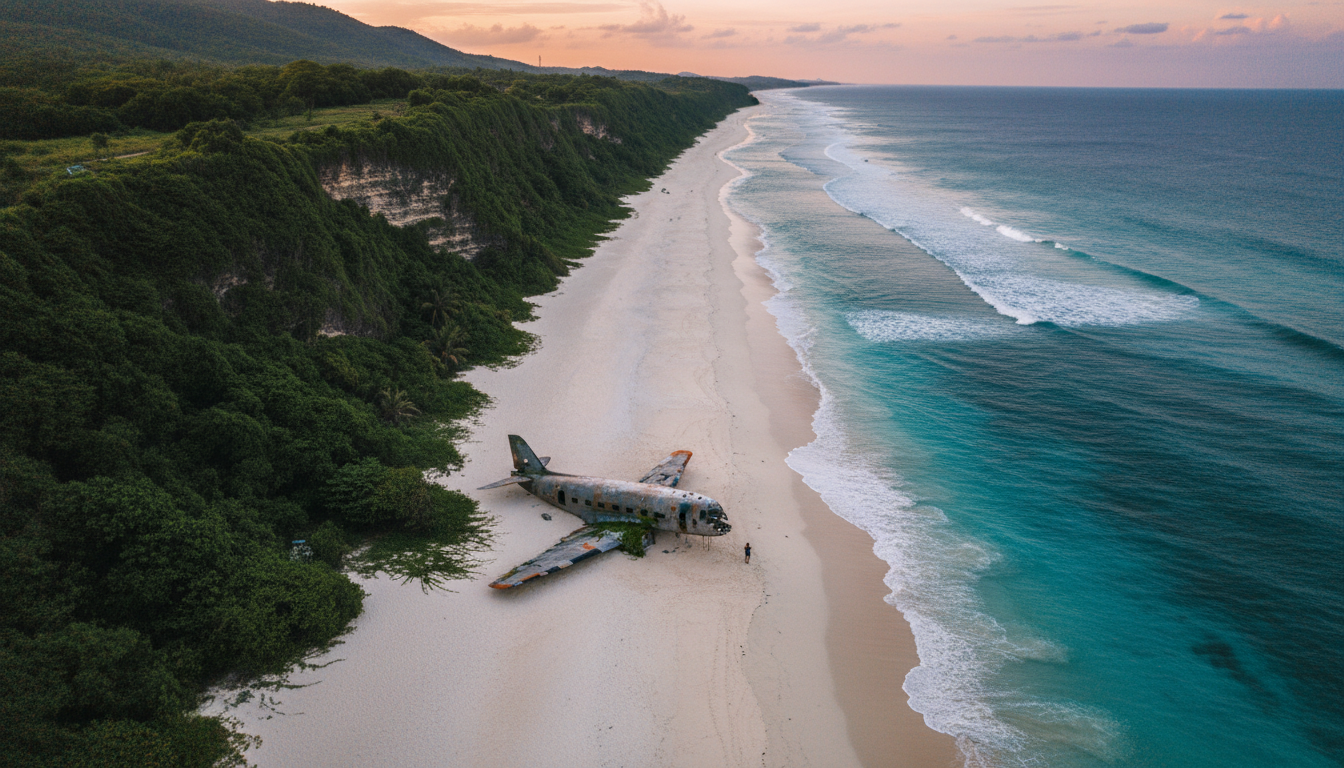 Aerial view of Nyang Nyang Beach showing the dramatic cliff descent, white sand stretching into the
Green Bowl Beach: Sunrise Solitude
Another cliff-descent beach (sensing a theme?), Green Bowl requires about 300 steps and rewards you with a small cove, caves to explore, and—if you time it right—sea turtles.
I went at 6 AM during my Uluwatu home exchange and had the entire beach to myself for two hours. The caves at the back have small shrines inside, and the limestone formations are genuinely otherworldly. By 10 AM, a handful of tourists had arrived. By noon, it was getting crowded. Early morning is non-negotiable.
Sanur Beach: The Anti-Seminyak
If steep cliff descents aren't your thing, Sanur offers something different: a mellow, local beach with a paved promenade, affordable warungs, and zero pretension.
The beach itself is free (obviously). The sunrise here is legendary—Sanur faces east, unlike most of Bali's famous beaches. And the vibe is older, calmer, more Balinese. Families having picnics. Old men playing chess. Kids learning to swim.
I did a two-week home exchange in Sanur specifically because I wanted a break from the Canggu hustle. Every morning, I walked the beach path at dawn, stopped for a 15,000 IDR ($1) black rice pudding from a beach vendor, and watched the fishing boats come in. It cost nothing and gave me everything.
Free Cultural Experiences That Feel Like Secrets
This is where home exchange truly shines. When you're embedded in a neighborhood, you hear about things that never make it to TripAdvisor.
Ubud Palace Performances: Not All Require Tickets
The nightly dance performances at Ubud Palace cost around 100,000 IDR ($6.50). But here's what most visitors don't know: during temple ceremonies and special occasions, there are free performances in the palace courtyard that are actually more authentic than the tourist shows.
These aren't scheduled on any website. You find out about them by walking past the palace and seeing a crowd gathering, or by asking locals, or by being lucky. During my last Ubud stay, I stumbled into a Barong dance performance during Galungan (a major Balinese holiday) that was completely free and absolutely mesmerizing.
Cremation Ceremonies: Witnessing the Sacred
This might sound morbid to Western ears, but in Bali, cremation ceremonies (ngaben) are celebrations, not somber affairs. They're public events, and respectful tourists are genuinely welcome to observe.
These ceremonies happen frequently—Balinese Hinduism considers cremation essential for releasing the soul—and they're announced in local communities days in advance. Your home exchange host can tell you if one is coming up nearby.
I attended one in a village near Ubud where the entire community had gathered. There was a massive paper bull being carried through the streets, gamelan music, and hundreds of people in ceremonial dress. I stood at the edge, clearly a foreigner, and multiple people smiled and gestured for me to come closer. The ceremony lasted hours. I cried at parts. It cost nothing but changed how I think about death.
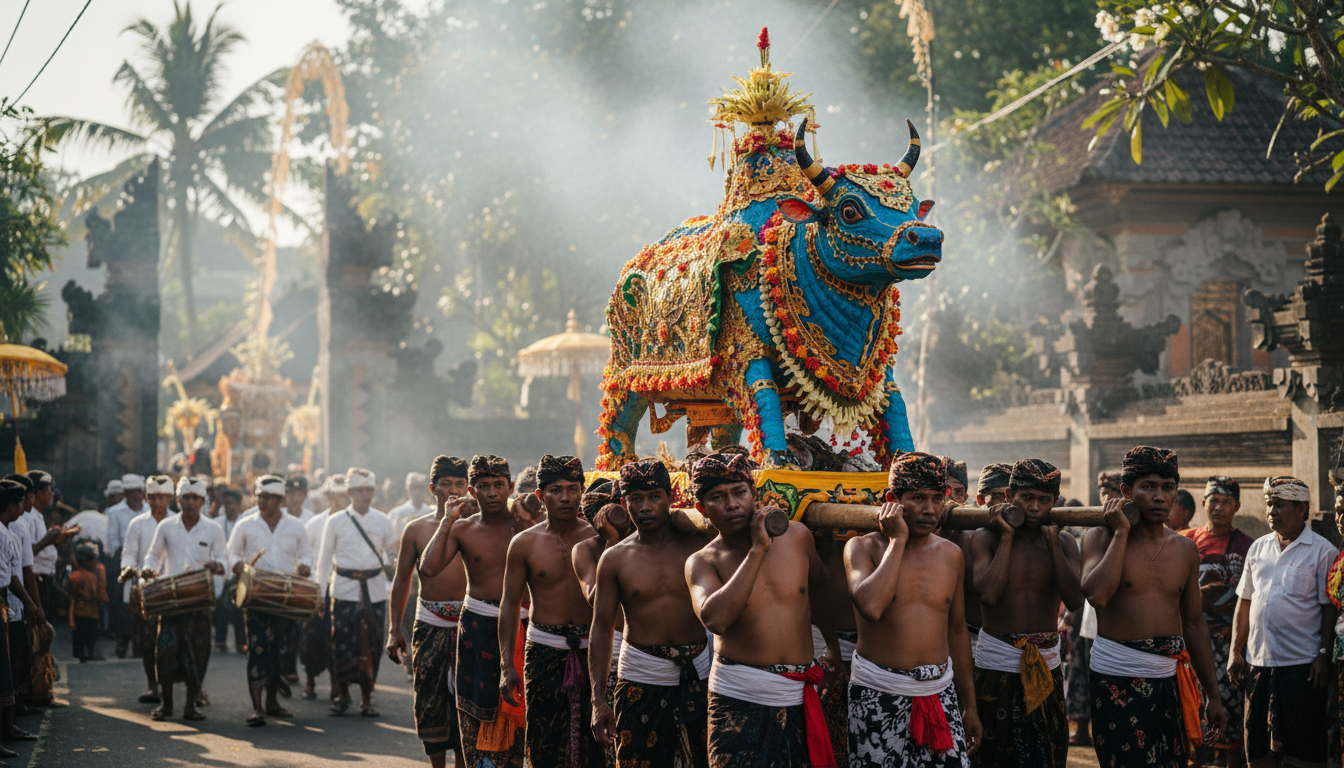 Elaborate cremation ceremony procession in a Balinese village, colorful paper bull structure being c
Full Moon Ceremonies at Any Temple
Every full moon (purnama) and new moon (tilem), temples across Bali hold ceremonies. These aren't tourist events—they're genuine religious observances—but respectful visitors can usually watch from the outer courtyard.
The largest full moon ceremony happens at Pura Besakih, Bali's "mother temple," but honestly, the smaller village temple ceremonies are more intimate and accessible. Ask your host when the next full moon is and which temple in their neighborhood will be most active.
I've attended maybe a dozen of these over the years. The combination of incense, gamelan music, elaborate offerings, and genuine devotion creates an atmosphere that no paid "cultural experience" can replicate.
Free Food Experiences (Yes, Really)
Okay, food isn't technically free. But there are ways to eat in Bali that feel like gifts rather than transactions.
Temple Ceremony Offerings
If you attend a temple ceremony (as discussed above), you'll often be offered food afterward. This is called "ngejot"—sharing blessed food with the community. It would be rude to refuse.
The food is simple: rice, vegetables, maybe some satay. But it's been blessed, it's shared with warmth, and it connects you to something larger than yourself.
Warung "Pay What You Can"
In Ubud, there's a small warung near the Monkey Forest (I won't give the exact location because I don't want it overrun, but ask around for "the donation warung") that operates on a pay-what-you-can basis. It's run by a local family as a form of karma yoga—selfless service.
The food is vegetarian, the portions are generous, and you leave whatever donation feels right. I've seen tourists leave 100,000 IDR ($6.50) and locals leave 5,000 IDR ($0.30). Both are equally welcome.
Cooking Lessons from Your Host
This is a home exchange hack I've used multiple times: offer to cook dinner for your host before they leave, or ask if they'll show you how to make one local dish. Most people are thrilled to share their food culture, and you end up with a cooking lesson that would cost $50-100 at a formal class.
My host in Sanur taught me to make lawar (a traditional Balinese salad with coconut and minced meat) in exchange for me showing her how to make sourdough bread. No money changed hands. Just knowledge, shared freely.
The Free Activity That Changed How I Travel
I want to tell you about something that isn't in any guidebook, doesn't have a name, and can't be planned.
During my first home exchange in Ubud, I was walking back from the market when I passed an open gate. Inside, I could see a courtyard where a woman was making offerings—intricate little baskets of flowers, rice, and incense that Balinese place everywhere, every day.
I stopped to watch. She noticed me and waved me in.
For the next two hours, she taught me how to make canang sari, the daily offerings that are the foundation of Balinese spiritual life. She didn't speak much English. I don't speak any Balinese. But she guided my hands, corrected my folding technique, and laughed kindly at my clumsy attempts.
When I left, she gave me a stack of offerings I'd made and gestured that I should place them around my borrowed home. I did. Every morning for the rest of my stay, I made offerings—badly, imperfectly, but sincerely.
That experience cost nothing. It wasn't advertised anywhere. It happened because I was walking slowly, staying curious, and living in a neighborhood rather than a hotel.
This is what home exchange makes possible. Not just free accommodation, but free access to a different way of being in the world.
Practical Tips for Maximizing Free Activities in Bali
After all that philosophical wandering, let me get practical.
Transportation: Rent a scooter. It's the only way to access most free activities, and it costs about 70,000-100,000 IDR ($4.50-6.50) per day. Many home exchange hosts include scooter access or can arrange rentals through neighbors at local rates.
Timing: Bali's free activities are almost universally better at sunrise. The light is magical, the crowds are minimal, and the heat is bearable. Plan your days to peak early and rest during midday.
Sarongs: Keep one in your bag at all times. You'll need it for any temple visit, and buying one at a tourist spot costs 3x what you'd pay at a local market.
Cash: Many free activities have optional donation boxes. Carry small bills (10,000-20,000 IDR) to contribute when it feels appropriate.
Connectivity: Download offline maps before you go. Many of the best free spots have no cell service.
Making Home Exchange Work for Your Bali Adventure
I've stayed in hotels in Bali. I've stayed in Airbnbs. And I've done home exchanges. The difference isn't just cost—though saving on accommodation obviously means more flexibility for spontaneous experiences.
The difference is integration.
When you're in someone's home, you inherit their neighborhood. Their fruit vendor knows you're staying there. Their neighbor waves when you pass. The temple down the street becomes your temple, in a small way.
SwappaHome's credit system means this kind of slow, embedded travel is accessible to anyone willing to open their own home to travelers. Host a family for a week, earn 7 credits, use those credits for a week in Bali. The math is simple. The experiences are anything but.
What I Wish Someone Had Told Me
Before my first Bali trip, I read approximately 47 blog posts about "must-do experiences." Most of them involved paying $50-100 for things that, I later discovered, existed in free or nearly-free versions if you knew where to look.
The best activities in Bali aren't attractions. They're moments.
Watching a grandmother make offerings at dawn. Swimming in a waterfall you found by following a hand-painted sign. Sitting in a temple courtyard during a ceremony you stumbled into.
These moments can't be bought. They can only be discovered. And they're discovered by people who have time—time that comes from not spending $300 a night on accommodation, time that comes from having a kitchen to cook in rather than restaurants to hunt for, time that comes from feeling at home rather than feeling like a tourist.
That's what home exchange gave me in Bali. Not just free accommodation, but the freedom to experience the island the way it deserves to be experienced—slowly, openly, and without a credit card constantly in hand.
Your version of Bali will be different from mine. The ceremonies you stumble into, the neighbors who wave you over, the hidden beaches you discover—they'll be yours alone. But they're waiting for you, completely free, if you're willing to look.
Frequently Asked Questions
Are free activities in Bali actually free, or are there hidden costs?
Most genuinely free activities in Bali—like temple visits, beach access, and hiking trails—have no mandatory fees. You may encounter optional donation boxes, parking fees (usually 2,000-5,000 IDR), or sarong rentals at temples. Bringing your own sarong and small bills for parking eliminates most incidental costs.
What's the best time of year for free outdoor activities in Bali?
Dry season (April-October) offers the best conditions for free outdoor activities like hiking, beach visits, and temple exploration. Shoulder months (April-May and September-October) combine good weather with fewer tourists. Rainy season (November-March) can limit hiking but offers dramatic skies and lush landscapes.
Can I visit Balinese temples for free without a guide?
Yes, most Balinese temples are free to enter without a guide. You'll need to wear a sarong and sash (bring your own or rent for 10,000-20,000 IDR), and some temples request small donations. Major tourist temples like Tanah Lot charge entrance fees, but thousands of village temples remain free and often more spiritually authentic.
How much money can I save combining home exchange with free activities in Bali?
A typical two-week Bali trip with hotels and paid tours costs $2,500-4,000. Using home exchange for accommodation (free with SwappaHome credits) and focusing on free activities can reduce this to $500-800 for the entire trip, covering only flights, food, transportation, and occasional splurges.
Is it safe to do free activities in Bali independently?
Bali is generally very safe for independent travelers. Free activities like beach visits, temple exploration, and village walks pose minimal risk. For activities like volcano hiking, assess your experience level honestly—while guides aren't legally required, they add safety value. Always tell someone your plans and carry a charged phone with offline maps.

Published by
SwappaHome
SwappaHome Editorial Team
Home Exchange & Slow Travel Editorial
The SwappaHome Editorial Team brings together travel research, home-exchange community insights, and platform data to produce practical guides for first-time and experienced home swappers. Every article cites real platforms, current market rates, and verifiable city-level facts so readers can make informed decisions without guessing.
Ready to try home swapping?
Join SwappaHome and start traveling by exchanging homes. Get 7 free credits when you sign up!
Related articles
Bachelor and Bachelorette Parties in Singapore: The Complete Home Swap Group Guide for 2026
Planning a bachelor or bachelorette party in Singapore? Discover how home swapping lets groups of 6-12 stay together in luxury condos, saving thousands while partying in Marina Bay.

Cycling in Lisbon: 7 Home Swap Bike Tour Itineraries for Every Rider
Discover the best cycling routes in Lisbon with these home swap bike tour itineraries—from waterfront paths to hilltop adventures, all starting from your borrowed home.

Graduation Trip to Barcelona: How Home Swapping Gives New Graduates the Ultimate Celebration
Planning a graduation trip to Barcelona? Discover how home swapping lets new graduates explore Spain's most vibrant city without the hostel crowds or hotel costs.