
Home Swapping in Budapest for Seniors: Your Complete Comfort-First Travel Guide
Maya Chen
Travel Writer & Home Exchange Expert
Discover why Budapest is perfect for senior home swappers—from elevator-equipped apartments to thermal baths steps away. Real tips from 40+ exchanges.
My mother called me last October with news that made me genuinely nervous. "I booked a home swap in Budapest," she announced, at 68 years old, having never done an exchange before. "You've been talking about it for years. I finally listened."
Three weeks later, she sent me a photo from a sunlit apartment in District V, thermal bath towel draped over a chair, a plate of rétes pastry on the table. The caption? "Why didn't I do this sooner?"
Here's the thing about home swapping in Budapest for seniors—it's not just possible, it's genuinely ideal. This city was practically designed for comfortable, unhurried travel. The thermal bath culture means rest is built into daily life. The café scene encourages lingering. And the architecture? You can spend entire afternoons just sitting on a bench, watching light play across Art Nouveau facades.
But I'll be honest with you: not every Budapest home swap will work for senior travelers. Some fifth-floor walk-ups in Pest would challenge anyone's knees. Some neighborhoods require more walking than others. And the language barrier can feel steeper here than in Western Europe.
That's exactly why I wrote this guide. After helping my mom plan her trip, fielding questions from readers over 60, and doing two Budapest swaps myself (one in a gloriously accessible apartment near the Opera House), I've learned what actually matters for comfortable senior travel here.
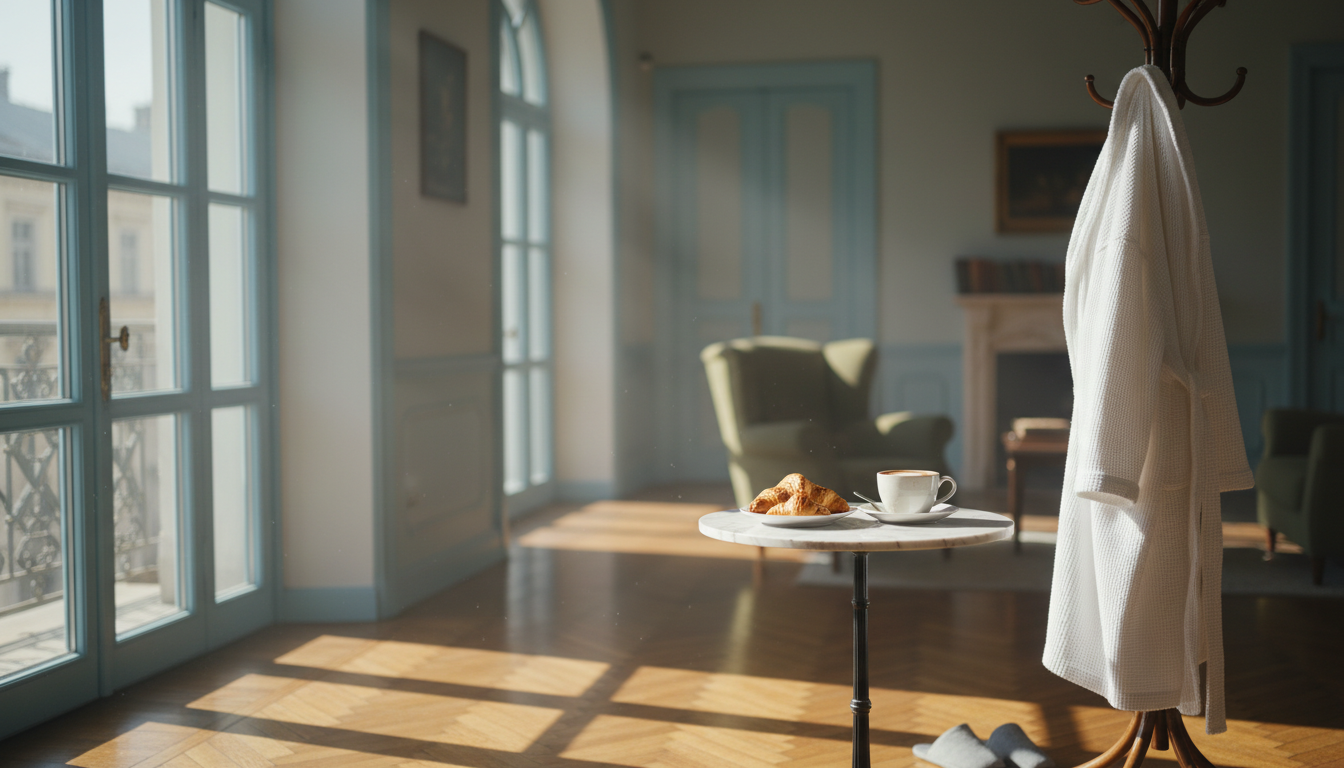 Golden morning light streaming through tall windows of a classic Budapest apartment, parquet floors
Why Budapest Is Perfect for Senior Home Swapping
Let me tell you what surprised my mother most about Budapest: the pace.
She'd expected a bustling European capital. What she found was a city that actively encourages slowness. Hungarians don't rush through their coffees—they nurse them for hours in grand café houses. The thermal baths aren't quick dips; they're half-day rituals. Even the tram system seems designed for contemplation, those yellow vintage cars rattling along the Danube at a pace that lets you actually see things.
For seniors considering home swapping in Budapest, this cultural rhythm is a gift. You're not fighting against a city that expects you to keep up. You're settling into one that matches a more measured tempo.
Then there's the cost factor. Hungary uses the forint, and your dollars stretch remarkably far. A three-course lunch at a traditional étterem runs about $12-15 USD. A full morning at Széchenyi Thermal Bath? Roughly $25 USD. Coffee and cake at the legendary Café Gerbeaud will set you back around $10 USD, and you can sit there for three hours without anyone giving you a look.
When you're home swapping instead of paying for hotels, those savings compound dramatically. My mom calculated she spent about $65 USD per day total during her two-week stay—including food, activities, and local transport. A comparable hotel trip would have cost her $180-220 daily, minimum.
But here's what really makes Budapest work for senior travelers: the infrastructure actually accommodates you. Unlike some European cities where accessibility feels like an afterthought, Budapest has invested heavily in making its public spaces navigable. Most metro stations on the M4 line have elevators. Trams are increasingly low-floor. And the thermal baths—originally built in the Ottoman era—have been retrofitted with ramps, handrails, and seating areas throughout.
Finding the Right Budapest Apartment for Comfortable Home Swapping
This is where senior home swapping gets specific. Not every charming Budapest flat will work for you, and that's okay. The key is knowing exactly what to look for—and what questions to ask before you commit.
Elevator access is non-negotiable for most seniors. Hungarian buildings use a quirky system: the ground floor is floor 0, so a "first floor" apartment is actually one flight up. Always clarify. And here's something I learned the hard way during my first Budapest swap—even buildings with elevators sometimes have 4-5 steps at the entrance before you reach the lift. Ask specifically: "Are there any stairs between the street and the elevator?"
The best districts for accessible senior home swapping? District V (Belváros-Lipótváros), District VI (Terézváros), and parts of District I on the Buda side. These areas have the highest concentration of renovated buildings with modern elevators, plus they're flat—crucial when you're walking to dinner or the pharmacy.
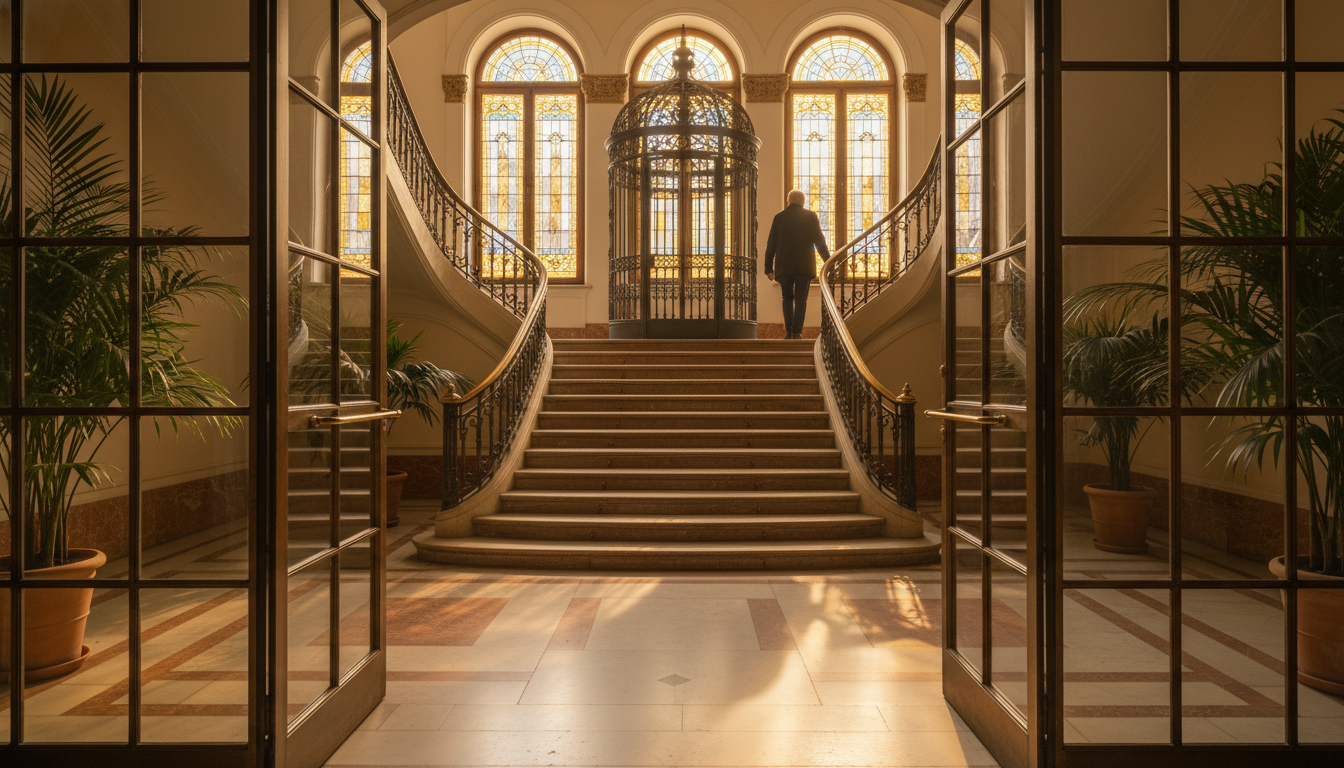 Elegant Budapest apartment building entrance with ornate iron elevator cage visible through glass do
District VII (the Jewish Quarter) is trendy and full of ruin bars, but I'd caution senior travelers here. The streets are cobblestoned, the buildings older and less likely to have lifts, and the nightlife can mean noise until 3 AM. Charming for a younger crowd; potentially exhausting for anyone seeking restful sleep.
When browsing home swap listings on SwappaHome, look for these specific phrases: "Lift to floor" or "elevator access," "Walk-in shower" (Hungarian bathtubs can be high-sided and slippery), "Quiet courtyard" or "faces inner garden" (street noise in Pest can be significant), and "Near tram stop" or "metro accessible."
Don't be shy about messaging potential swap partners with detailed questions. In my experience, Hungarian hosts are remarkably thorough in their responses—they'll often send additional photos of bathroom grab bars, measure doorway widths, or describe the exact walking route to the nearest pharmacy.
One more thing: consider swapping with fellow seniors. On SwappaHome, you can often tell from profile photos and descriptions whether hosts are in a similar life stage. My mom's Budapest hosts were a retired couple in their early 70s. They'd already thought of everything she needed—a list of English-speaking doctors, the location of the nearest 24-hour pharmacy, even a step stool for reaching upper kitchen cabinets.
Best Budapest Neighborhoods for Senior Home Swappers
Let me walk you through the areas I'd actually recommend—and a few I'd suggest avoiding.
District V: The Safest Choice for First-Time Senior Swappers
This is Budapest's historic heart, home to the Parliament building, St. Stephen's Basilica, and the famous Váci utca pedestrian street. It's also the flattest, most accessible, and most tourist-friendly district.
The sidewalks here are wide and well-maintained. You're never more than a 10-minute walk from a pharmacy, café, or grocery store. The M1, M2, and M3 metro lines all converge at Deák Ferenc tér, making the rest of the city easily reachable.
What can you expect to find? Renovated apartments in Austro-Hungarian buildings, many with elevators added in the 2000s. Higher-end finishes. Listings on SwappaHome tend to be popular here, so list your home early if you're hoping to secure a District V swap.
My mom stayed on Október 6 utca, a quiet side street five minutes from the Basilica. She could walk to three different thermal baths within 20 minutes, had a Spar grocery store on the corner, and found an English-speaking GP two blocks away (Dr. Kovács at FirstMed—highly recommend for peace of mind).
District VI: Culture and Convenience
Andrássy Avenue runs through District VI like a grand Parisian boulevard, lined with embassies, theaters, and the magnificent Opera House. This is where I did my most recent Budapest swap, in a third-floor apartment with a creaky but reliable lift and windows overlooking a hidden courtyard garden.
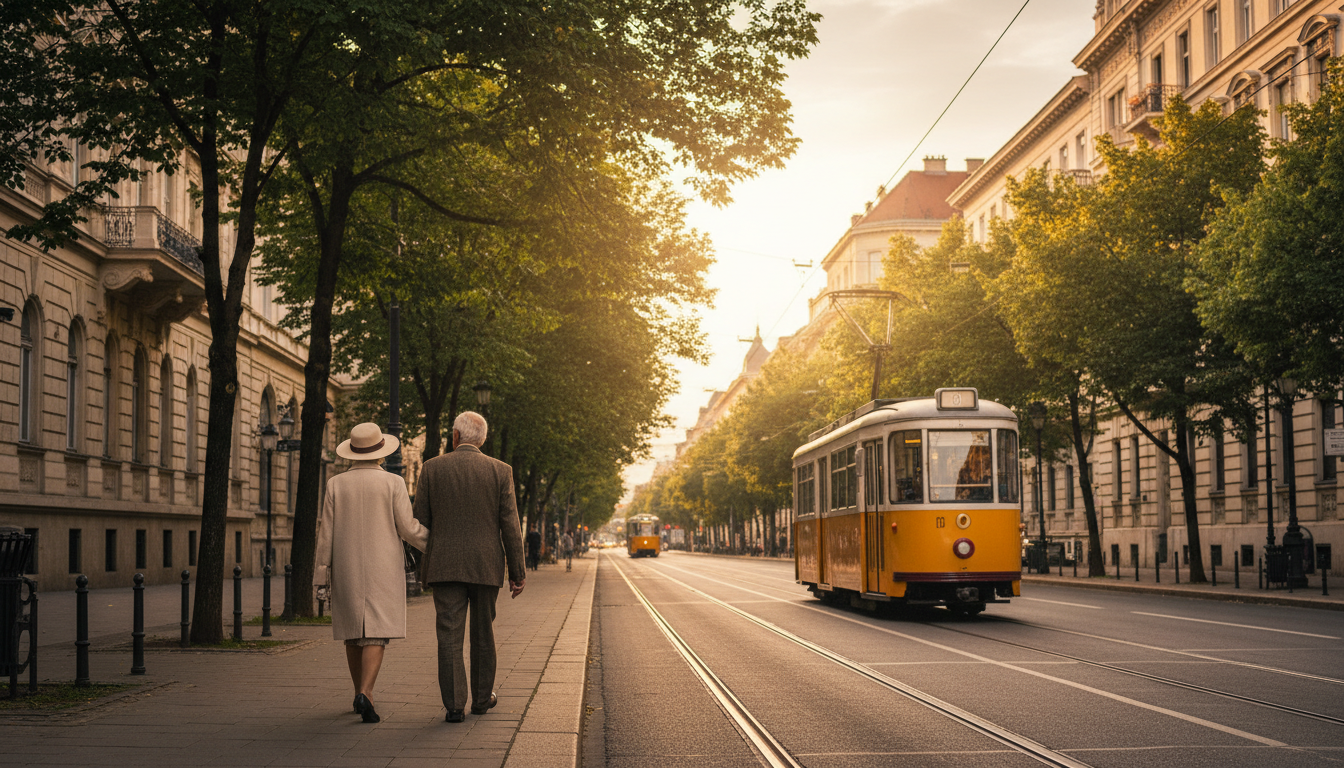 Tree-lined Andrssy Avenue in Budapest at golden hour, elegant 19th-century buildings on both sides,
The neighborhood is slightly more residential than District V, which means quieter nights and more local restaurants (read: cheaper). The Liszt Ferenc tér is perfect for afternoon people-watching—grab an outdoor table at Menza and order the chicken paprikás ($11 USD).
Accessibility note: The M1 metro line (the oldest on the European continent) does NOT have elevators at most stations. Tram lines 4 and 6 run along the district's southern edge with low-floor cars, though, and you can reach most attractions on foot if you're comfortable with 15-20 minute walks.
District I (Castle District): Beautiful but Challenging
I need to be honest here. The Castle District on the Buda side is stunningly gorgeous—medieval streets, panoramic Danube views, the Royal Palace. But for senior travelers, it presents real challenges.
The entire district sits on a hill. Streets are cobblestoned. Many buildings predate elevators by centuries. The funicular (Budavári Sikló) that climbs Castle Hill is charming but has limited capacity and occasional closures.
If you're a senior with strong mobility and you've done home swaps before, a Castle District apartment can be magical. But for first-timers or anyone with joint concerns? I'd suggest visiting as a day trip rather than staying there.
Districts to Approach Carefully
District VIII (Józsefváros) is rapidly gentrifying but remains uneven—some blocks are lovely, others feel neglected. District VII's ruin bar scene means noise. Districts beyond the Grand Boulevard (körút) become increasingly residential and less English-friendly, which can complicate things if you need medical help or directions.
The Thermal Bath Experience: Budapest's Greatest Gift to Senior Travelers
Real talk: the thermal baths alone are worth planning a Budapest home swap around.
I'm not exaggerating when I say these places changed how my mother thinks about travel. She'd always associated European trips with packed itineraries—see the museum, check the church, rush to dinner. Budapest's bath culture gave her permission to do absolutely nothing productive for four hours, and call it cultural immersion.
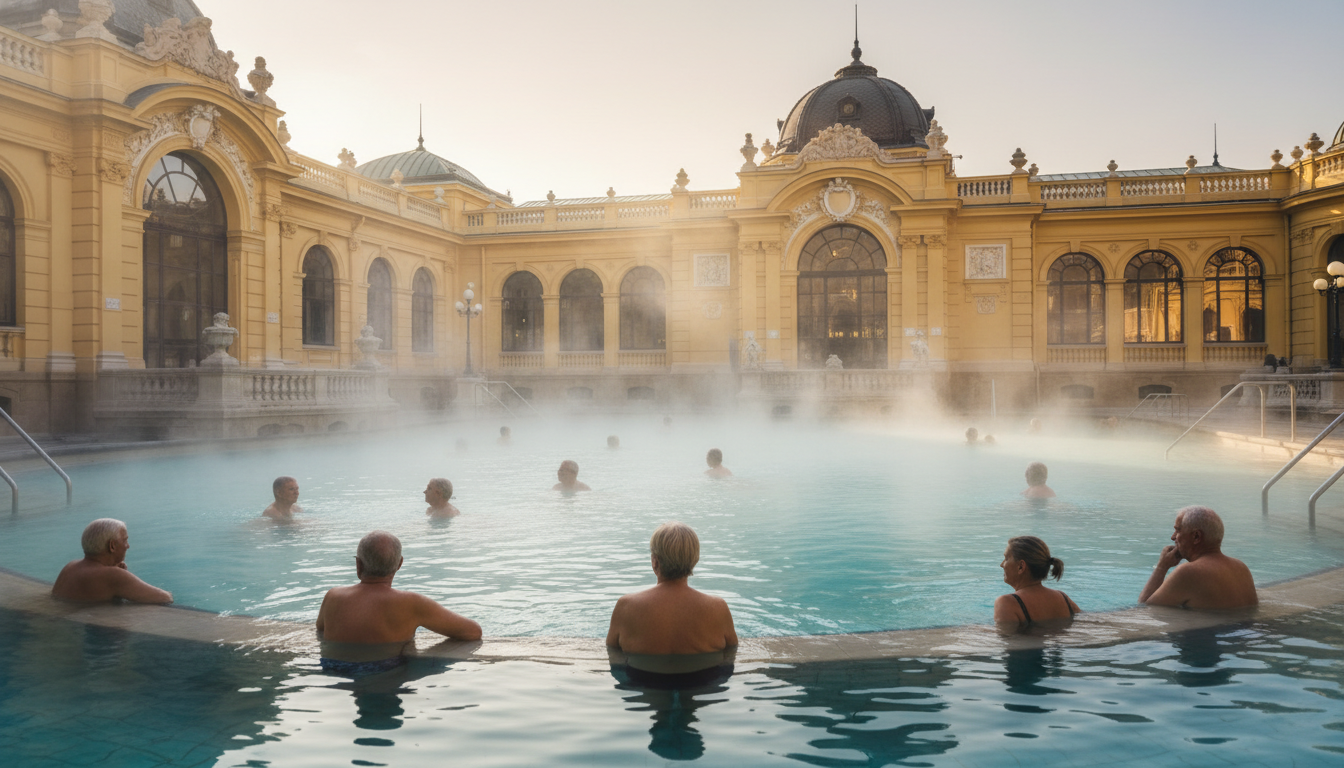 Interior of Szchenyi Thermal Bath showing the grand neo-baroque outdoor pool with steam rising, seni
Széchenyi Thermal Bath is the most famous and, honestly, the most senior-friendly. It's enormous (18 pools!), which means it never feels crowded. The outdoor pools are heated to 38°C (100°F) year-round—yes, even in winter, which is actually magical. There are handrails everywhere, plenty of seating, and the staff are accustomed to helping older visitors. Entry is about 7,500 HUF ($21 USD) for a day pass with locker. Bring your own towel or rent one for 2,000 HUF ($5.50 USD).
Gellért Thermal Bath is more elegant, with Art Nouveau interiors that make you feel like you've stepped into a 1920s film. It's smaller and can feel more intimate. The changing facilities are older, though, and some areas require navigating stairs. I'd recommend this for seniors who are comfortable with moderate mobility challenges and want a more refined atmosphere.
Rudas Thermal Bath has been renovated beautifully and offers a rooftop pool with panoramic city views. The main Ottoman-era pool is atmospheric but dimly lit and requires descending stairs. Best for adventurous seniors; skip if you have vision concerns.
Király Thermal Bath is small, historic, and local—fewer tourists, more neighborhood regulars. Also requires some stair navigation.
My advice for senior first-timers: Start with Széchenyi. Go on a weekday morning when it's quietest. Bring water sandals (the floors can be slippery), your own flip-flops, and a book. Plan to stay at least three hours. The rhythm is: warm pool, rest, cooler pool, steam room, rest, warm pool again. Don't rush it.
One thing that surprised my mom: the baths are genuinely social. She ended up chatting with a retired Hungarian teacher who spent two hours explaining the city's history. "I learned more from Éva in that pool," she told me, "than I would have from any tour guide."
Practical Tips for Senior Home Swappers in Budapest
Let me share the specific, actionable stuff that guidebooks often skip.
Healthcare access: Hungary has excellent medical care, but navigating the public system requires Hungarian. For English-speaking doctors, use FirstMed (private clinic in District V, walk-ins accepted, consultation around $80-120 USD) or Dr. Rose Private Hospital. Travel insurance that covers Hungary is essential—make sure it includes repatriation if needed.
Pharmacies (gyógyszertár): Green cross signs mark pharmacies everywhere. Most close by 6 PM, but each district has a rotating 24-hour pharmacy (called "ügyeletes"). Your swap host should know the nearest one. Common medications may have different brand names—bring a list of generic drug names, not just brands.
Language: Hungarian is notoriously difficult, and few older Hungarians speak English (younger generations are much better). Learn these phrases: "Beszél angolul?" (Do you speak English?) — BESS-ayl ON-go-lool. "Köszönöm" (Thank you) — KUH-suh-nuhm. "Segítség" (Help) — SHEH-geet-shayg.
Money: Hungary uses forints (HUF). As of late 2024, roughly 360 HUF = $1 USD. Cards are widely accepted in central areas, but carry some cash for smaller shops, market vendors, and tips. ATMs (bankautomata) are everywhere; avoid exchange bureaus, which often have terrible rates.
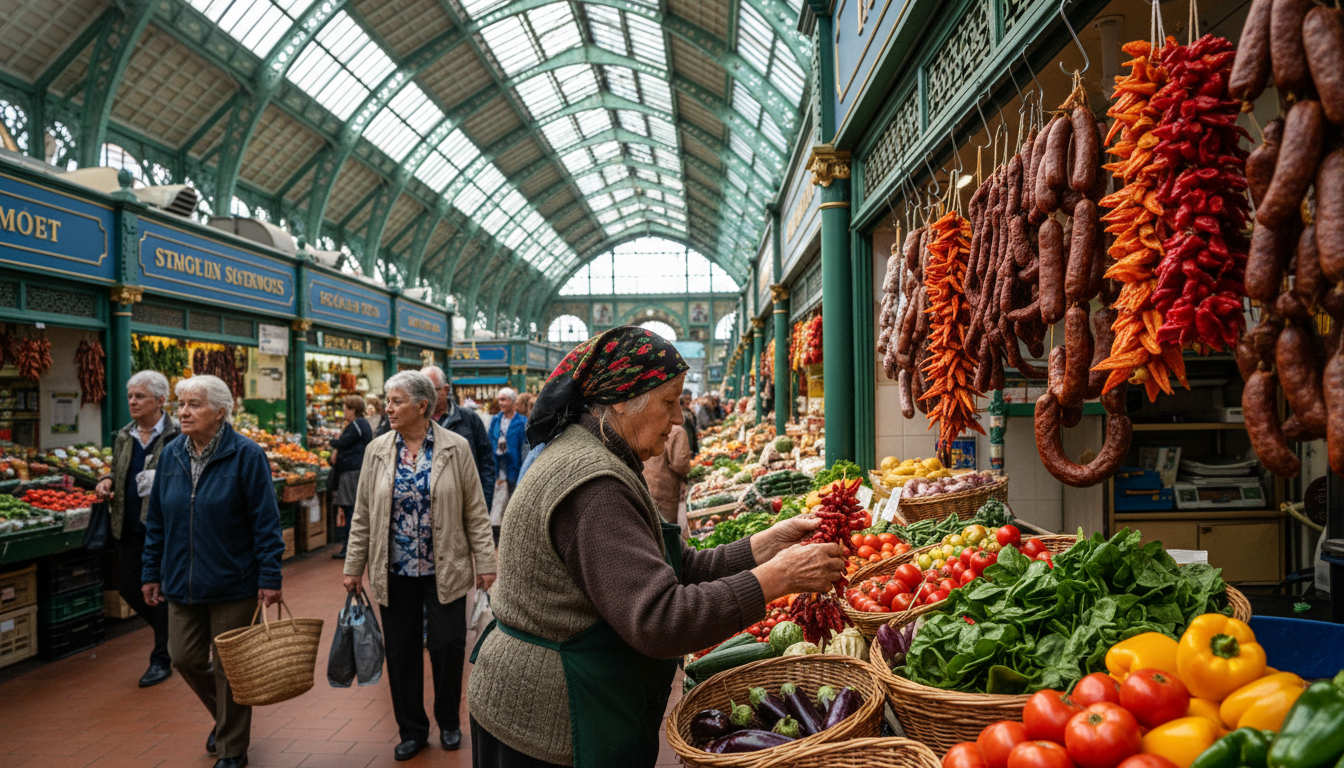 Colorful produce stalls at Budapests Great Market Hall, elderly Hungarian vendor arranging paprika a
Getting around: The BKK public transport system is excellent. Buy a 7-day Budapest Card (around 17,000 HUF / $47 USD) for unlimited travel plus museum discounts. Trams 2, 4, and 6 are the most useful for central sightseeing. Download the BudapestGO app for real-time schedules.
Tipping: 10% is standard at restaurants. Round up for taxis. Thermal bath attendants appreciate 500-1000 HUF if they've been helpful.
Grocery shopping: Spar and Tesco are the main chains. For a more local experience, visit the Nagy Vásárcsarnok (Great Market Hall) near Fővám tér—the ground floor has produce and meat, while upstairs has souvenirs and food stalls. Go early (opens 6 AM) to avoid crowds.
Planning Your Senior Home Swap Timeline
Budapest works beautifully for longer stays—and as a senior home swapper, longer is almost always better. You're not paying nightly hotel rates, so why rush?
I'd recommend a minimum of 10-14 days. Here's why:
Days 1-3 are always adjustment. You're figuring out the apartment, locating groceries, getting over jet lag (if coming from North America), and finding your rhythm. Rushing into sightseeing during this phase leads to exhaustion.
Days 4-10 are your golden window. You know the neighborhood. You've found your favorite café. You can actually enjoy things instead of constantly orienting yourself.
Days 11-14 allow for spontaneity—a day trip to Szentendre (charming artist village 40 minutes north), a return visit to that thermal bath you loved, or simply a slow morning reading in a sunny courtyard.
Best seasons for senior travelers:
Spring (April-May) offers mild weather (15-22°C / 60-72°F), blooming chestnut trees, and manageable tourist crowds. My top recommendation.
Early fall (September-October) brings harvest season, wine festivals, and golden light on the Danube. Slightly busier than spring but gorgeous.
Summer (June-August) can be hot (30°C+ / 86°F+) and crowded. If you visit then, plan activities for early morning and evening; rest during midday heat.
Winter (November-February) is cold but magical—Christmas markets, thermal baths steaming in frigid air, far fewer tourists. Just ensure your swap apartment has good heating (ask specifically).
Making Your SwappaHome Listing Appeal to Budapest Hosts
Here's something many first-time swappers don't realize: the exchange goes both ways. To secure a great Budapest apartment, you need to make YOUR home appealing to Hungarian travelers.
Hungarians are increasingly interested in North American destinations—particularly national parks, California, Florida, and New York. If you're near any of these, highlight it. But even if you're in a smaller city, emphasize what makes your area special: local restaurants, nearby nature, cultural attractions.
In your SwappaHome profile, mention accessibility features of your own home (elevator, single-story, walk-in shower), your experience level with home swapping, your age range and travel style (Hungarians appreciate knowing they're swapping with fellow retirees), and specific dates you're flexible on.
When you message potential Budapest hosts, be specific about your needs. "I'm 67 and have mild arthritis—could you tell me about the stairs situation?" is much better than a generic "Is your place accessible?" Hungarian hosts, in my experience, respond warmly to direct, honest communication.
Remember: on SwappaHome, every night you host earns you one credit, and every night you stay costs one credit. It's beautifully simple. Those 10 free credits you get when joining? That's 10 nights in Budapest, just for signing up and listing your home.
What My Mother Learned (And What You Will Too)
Six months after her Budapest trip, my mom has done two more home swaps—Lisbon and Vienna. She's become, at 68, the home exchange evangelist I always hoped she'd be.
But when I asked her what specifically made Budapest work so well for her first senior home swap, she thought for a moment.
"It's the only place I've traveled where rest was the point," she said. "I didn't feel guilty soaking in a thermal bath for four hours. I didn't feel lazy for taking a nap after lunch. The city itself gave me permission to travel at my own pace."
That's what I want you to take from this guide. Budapest isn't just a destination that tolerates senior travelers—it actively welcomes the kind of slow, comfortable, immersive travel that home swapping makes possible.
You don't have to prove anything. You don't have to keep up. You just have to show up, settle into your borrowed apartment, and let this strange, beautiful city reveal itself at whatever pace feels right.
Start browsing Budapest listings on SwappaHome. Message a few hosts. Ask your questions—about elevators, about bathrooms, about the walk to the nearest thermal bath.
And then go. Your sunlit apartment, your morning rétes, your hours floating in 38-degree water—they're waiting.
Frequently Asked Questions
Is home swapping in Budapest safe for seniors traveling alone?
Yes, Budapest is considered one of Europe's safer capitals for senior travelers. Violent crime is rare in central districts, and the tourist infrastructure is well-developed. The SwappaHome review system helps you verify hosts before committing. That said, use normal precautions: stay aware in crowded areas, keep valuables secure, and share your itinerary with family back home. Consider getting your own travel insurance for added peace of mind.
How much can seniors save with home swapping in Budapest versus hotels?
Substantial savings are typical. A comfortable central Budapest hotel costs $120-180 USD per night, while home swapping costs only SwappaHome credits (1 credit per night). Over a two-week stay, that's $1,680-2,520 USD saved on accommodation alone. Add kitchen access for home-cooked meals, and total savings often reach $2,500-3,000 USD compared to traditional hotel travel.
What accessibility features should senior home swappers look for in Budapest apartments?
Prioritize elevator access (confirm no stairs before the lift), walk-in showers rather than high bathtubs, ground-floor or low-floor units, and locations in flat districts (V, VI, or VII). Ask hosts specifically about grab bars in bathrooms, bed height, kitchen accessibility, and the walking distance to public transport. Most Hungarian hosts will happily provide photos or measurements.
Are Budapest's thermal baths suitable for seniors with mobility issues?
Széchenyi Thermal Bath is the most accessible, with ramps, handrails throughout, poolside seating, and staff experienced with older visitors. Gellért and Rudas baths are beautiful but require navigating some stairs. All major baths have changing facilities with benches and non-slip flooring. Bring water sandals for extra grip, and visit on weekday mornings when pools are least crowded.
What's the best length of stay for a senior home swap in Budapest?
I recommend 10-14 days minimum for senior travelers. This allows 2-3 days for adjustment and jet lag recovery, a full week of comfortable exploration, and buffer days for rest or spontaneous activities. Longer stays reduce daily stress and let you truly settle into neighborhood rhythms—exactly what makes home swapping superior to hotel-hopping for seniors.
40+
Swaps
25
Countries
7
Years
About Maya Chen
Travel Writer & Home Exchange Expert
Maya is a travel writer with over 7 years of experience in the home swapping world. Originally from Vancouver and now based in San Francisco, she has completed more than 40 home exchanges across 25 countries. Her passion for "slow" and authentic travel led her to discover that true luxury lies in living like a local, not a tourist.
Ready to try home swapping?
Join SwappaHome and start traveling by exchanging homes. Get 10 free credits when you sign up!
Related articles
Lyon Home Exchange: Your Complete Guide to France's Hidden Gem for Home Swapping
Discover why Lyon home exchange is booming among savvy travelers. From Croix-Rousse to Presqu'île, find the best neighborhoods and insider tips for your swap.

Zurich Bucket List: 47 Unforgettable Experiences to Enjoy During Your Home Swap
Discover the ultimate Zurich bucket list for home swappers—from secret swimming spots to fondue rituals locals actually do. Save thousands while living like a true Zürcher.
Dublin Home Exchange Utilities Guide: WiFi, Heating & Everything Your Guests Need
Master Dublin home exchange utilities—from dodgy WiFi fixes to heating quirks. Practical tips from 7 years of swapping homes across Ireland.