
Home Swapping in Johannesburg: The 8 Best Neighborhoods for Your Stay

SwappaHome Editorial Team
Home Exchange & Slow Travel Editorial
Discover the best neighborhoods for home swapping in Johannesburg—from artsy Maboneng to leafy Rosebank. Local tips, safety insights, and where to find the best swaps.
The first time I landed in Johannesburg, I'll admit I was nervous. Everything I'd read online painted a picture of a city you survive rather than enjoy. Three home swaps later, I can tell you that narrative is exhaustingly incomplete. Home swapping in Johannesburg opened doors—literally and figuratively—to a city that's creative, resilient, and genuinely warm once you know where to look.
My first Joburg swap was in a converted warehouse in Maboneng. I remember standing on the rooftop at sunset, watching the city lights flicker on across the skyline, thinking: this is nothing like what I expected. The host had left me a hand-drawn map of her favorite coffee spots, a bottle of local pinotage, and a note that said "Welcome to the real Jozi." That's the thing about home exchange—you don't just get accommodation. You get context.
But here's what nobody tells you: Johannesburg is massive. Like, sprawling-for-an-hour-in-traffic massive. Choosing the right neighborhood isn't just about aesthetics—it's about how you want to experience the city. Get it wrong and you'll spend your entire trip in Ubers. Get it right and you'll walk to markets, stumble into gallery openings, and eat pap and chakalaka at spots tourists never find.
So let me break down the best neighborhoods for home swapping in Johannesburg based on my own stays, conversations with local hosts, and countless hours wandering streets I probably shouldn't have wandered alone (more on safety later).
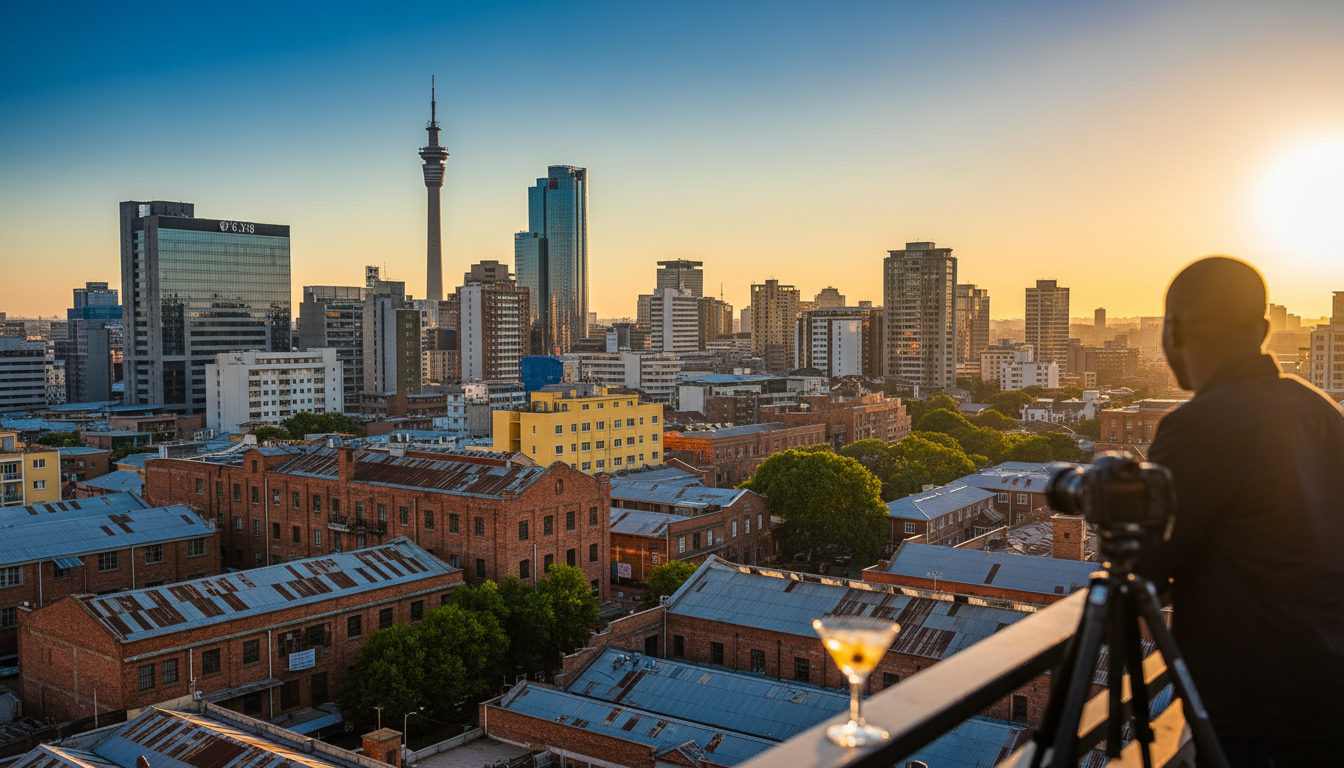 Johannesburg skyline at golden hour viewed from a rooftop in Maboneng, showing the contrast of indus
Why Johannesburg is Perfect for Home Swapping
Before we get into neighborhoods, let's talk about why Joburg is actually ideal for home exchange. Hotels here are expensive—we're talking $150-250 USD per night for anything decent in safe areas. Meanwhile, the home swap scene is thriving because South Africans are natural hosts. Braai culture (that's barbecue, but elevated to an art form) means entertaining at home is practically a national sport.
The other thing? Joburg homes are incredible. The architecture ranges from mid-century modern gems in the northern suburbs to industrial lofts downtown to sprawling estates with gardens that would make English manor houses jealous. And because the exchange rate favors most international currencies, South African members on SwappaHome are often eager to swap for destinations that would otherwise be budget-breakers for them.
I've found that Joburg hosts tend to be exceptionally detailed in their house manuals. Maybe it's because they know the city has a learning curve, or maybe it's just the hospitality culture. Either way, you'll often get better local intel from a home swap than from any guidebook.
Sandton: Luxury Home Swaps in Johannesburg's Financial Hub
Let's start with the obvious choice for first-timers: Sandton. This is Johannesburg's glittering financial district, home to the stock exchange, international hotels, and Nelson Mandela Square with its towering bronze statue.
Why swap here: If safety is your primary concern, Sandton delivers. It's heavily secured, walkable within the central area, and has the Gautrain station connecting you to OR Tambo airport and Pretoria. The homes available for swap tend to be high-end apartments in secure complexes or houses in nearby Sandhurst and Hyde Park.
The vibe: Corporate. Polished. A bit sterile, honestly. You'll find excellent restaurants—I had life-changing lamb curry at Tashas—and shopping at Sandton City is world-class. But this isn't where you'll feel the pulse of Johannesburg's creative energy.
Average home swap options: Modern 2-bedroom apartments in complexes like Michelangelo Towers or Sandton Skye. Expect amenities like pools, gyms, and 24-hour security. Some standalone homes in Sandhurst offer gardens and pools, though these are rarer on swap platforms.
Local tip: Walk to Sandton Central during the day, but Uber everywhere after dark—not because it's dangerous, but because the area empties out and gets eerily quiet.
Best for: Business travelers, first-time Joburg visitors, families wanting maximum security.
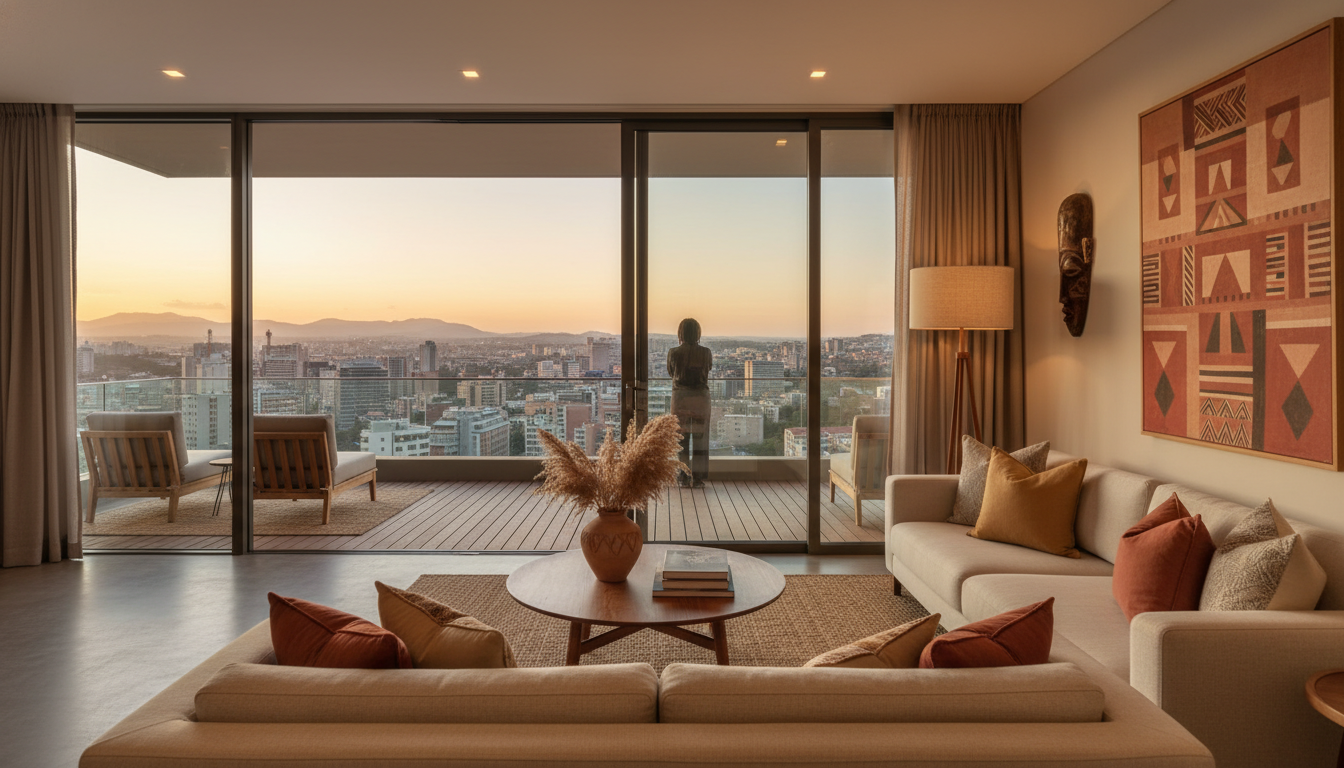 Modern apartment interior in Sandton with floor-to-ceiling windows overlooking the city, minimalist
Rosebank: The Best Neighborhood for Home Swapping Near Everything
Rosebank is my personal sweet spot for home swapping in Johannesburg. It hits that perfect balance—safe enough to walk around, interesting enough to explore, and central enough to reach everywhere else without losing your mind in traffic.
Why swap here: The Rosebank Gautrain station makes airport runs painless. The neighborhood has genuine street life, which is rare in Joburg. Sunday's Rosebank Rooftop Market is one of the best in the city—live music, local designers, food stalls serving everything from bunny chow to Ethiopian injera.
The vibe: Upscale but unpretentious. You'll see suited executives grabbing lunch next to art students covered in paint. The streets around Keyes Art Mile are walkable and filled with galleries, boutiques, and excellent coffee shops.
What I loved: During my Rosebank swap, I walked to the Everard Read Gallery on a Thursday evening for a free opening—champagne, incredible contemporary African art, and conversations with collectors and artists alike. My host had mentioned it in her notes, and it became the highlight of my trip.
Average home swap options: Apartments in secure complexes, townhouses in the surrounding suburbs of Parkwood and Parkhurst. Some beautiful older homes with character if you're lucky.
Prices for context: A hotel in Rosebank runs $120-180 USD/night. A home swap? One credit on SwappaHome, same as anywhere else.
Best for: Solo travelers, couples, anyone wanting a base for exploring both northern and central Joburg.
Maboneng: Johannesburg's Creative Heart for Adventurous Swappers
Okay, real talk: Maboneng is not for everyone. This is inner-city Johannesburg, which means you need to be street-smart, aware of your surroundings, and comfortable with urban grit. But if you can handle that? Maboneng is where Joburg's soul lives.
Why swap here: This former industrial district has been transformed into an arts precinct with galleries, rooftop bars, street art, and a creative energy that reminds me of Brooklyn circa 2010 or Berlin's Kreuzberg. The Sunday market at Arts on Main is legendary—thousands of people, live performances, and some of the best street food in South Africa.
The vibe: Young, creative, diverse. You'll hear a dozen languages walking down Fox Street. The architecture is raw—converted warehouses, exposed brick, graffiti murals covering entire buildings.
Safety reality check: Maboneng is safe during the day and during events, but I wouldn't wander alone at night. Stick to the main precinct, use Ubers after dark, and you'll be fine. The hosts I've connected with here are incredibly helpful about specific do's and don'ts.
Average home swap options: Loft apartments in converted buildings like Main Street Life or Arts on Main. These are often architect-designed with industrial aesthetics—concrete floors, high ceilings, original features.
My experience: I stayed in a third-floor loft with a view of the city's water towers. Every morning, I'd walk to a café called Living Room for flat whites made by a barista who remembered my order by day three. Saturday night, there was a jazz performance on the rooftop next door. I felt like I was living inside a documentary about urban renewal.
Best for: Artists, photographers, young travelers, anyone who values authenticity over comfort.
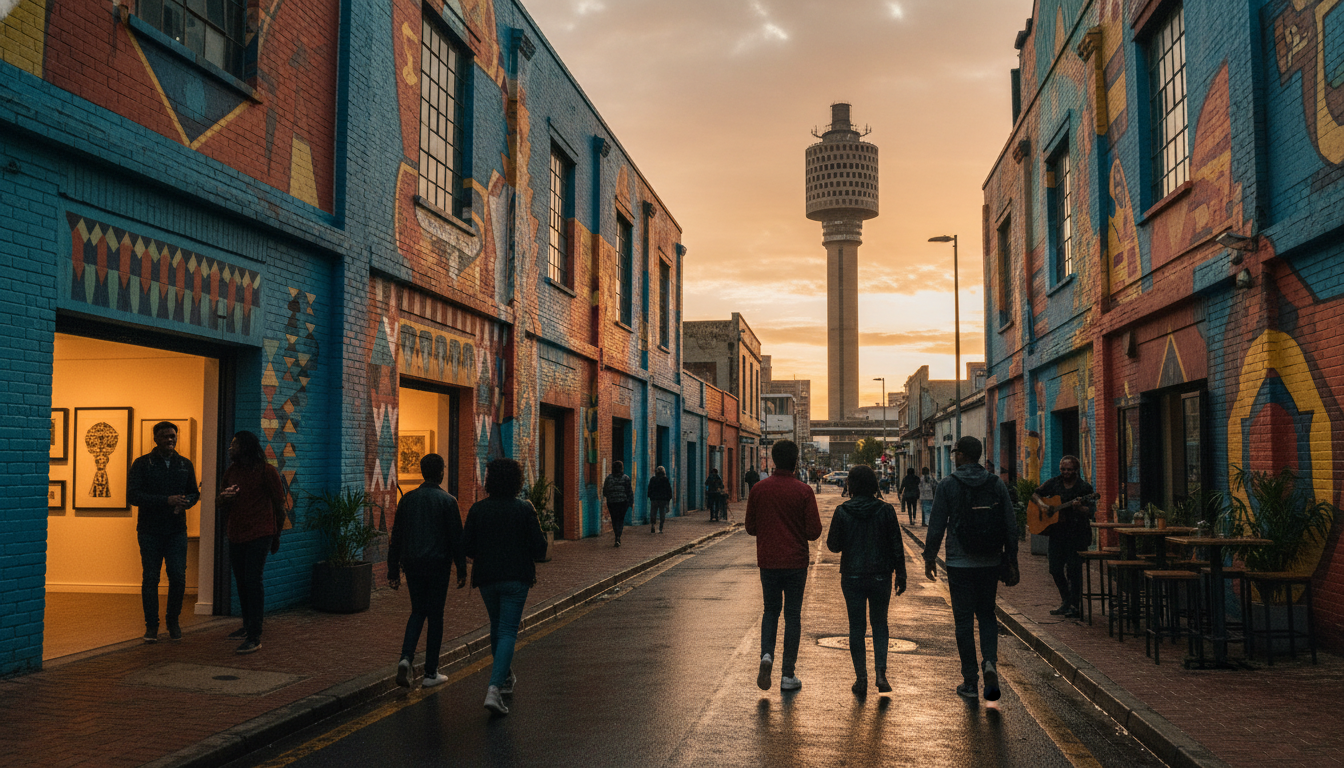 Street scene in Maboneng showing colorful murals on warehouse walls, people walking past galleries a
Parkhurst: Home Swapping in Johannesburg's Most Charming Village
Parkhurst is what happens when a Johannesburg neighborhood decides it wants to be a small European village. Fourth Avenue is lined with cafés, boutiques, and restaurants—all walkable, all lovely, all feeling like they belong in a different city entirely.
Why swap here: This is the most pedestrian-friendly neighborhood in Johannesburg. Full stop. You can spend an entire day wandering Fourth Avenue, browsing vintage shops, eating at sidewalk cafés, and never once needing a car.
The vibe: Leafy, relaxed, slightly bougie. Young families, creative professionals, and retirees who've traded their suburban estates for village life. The jacaranda trees in October are absurdly beautiful—purple blossoms carpeting every street.
What makes it special: Parkhurst has actual community. People know their neighbors. The Saturday morning farmers' market feels like a social event. When I swapped here, my host's neighbor brought over homemade rusks (South African biscotti, essentially) because she'd heard an American was staying.
Average home swap options: Charming older homes with gardens, some renovated cottages, occasional apartments. The housing stock is older and more characterful than the northern suburbs.
Practical note: You'll need a car to reach other parts of Joburg, but within Parkhurst, walking is not just possible—it's the point.
Best for: Foodies, anyone wanting a slower pace, couples seeking romance, people who hate feeling like tourists.
Melville: Bohemian Home Swaps with Nightlife Access
Melville is Parkhurst's edgier cousin. Seventh Street is the main drag—a strip of restaurants, bars, vintage stores, and that particular energy of neighborhoods where students and artists can still afford rent.
Why swap here: Nightlife. If you want to experience Johannesburg after dark without the corporate sterility of Sandton, Melville delivers. Live music venues, craft beer spots, and restaurants open late.
The vibe: Bohemian, diverse, slightly grungy. The kind of place where you might find yourself at 2am in a jazz bar talking to a philosophy professor and a taxi driver.
Safety consideration: Melville has had some crime issues, particularly on quieter side streets. Stick to Seventh Street, don't flash valuables, and you'll be fine. But this isn't the neighborhood for nervous travelers.
Average home swap options: Older homes with character, some subdivided into apartments. The architecture is 1920s-1940s, lots of original features.
Local tip: Sunday afternoon at the Melville Rooftop Market is perfect—good food, live music, and a crowd that's actually local rather than tourist-oriented.
Best for: Night owls, music lovers, budget-conscious travelers who want character over polish.
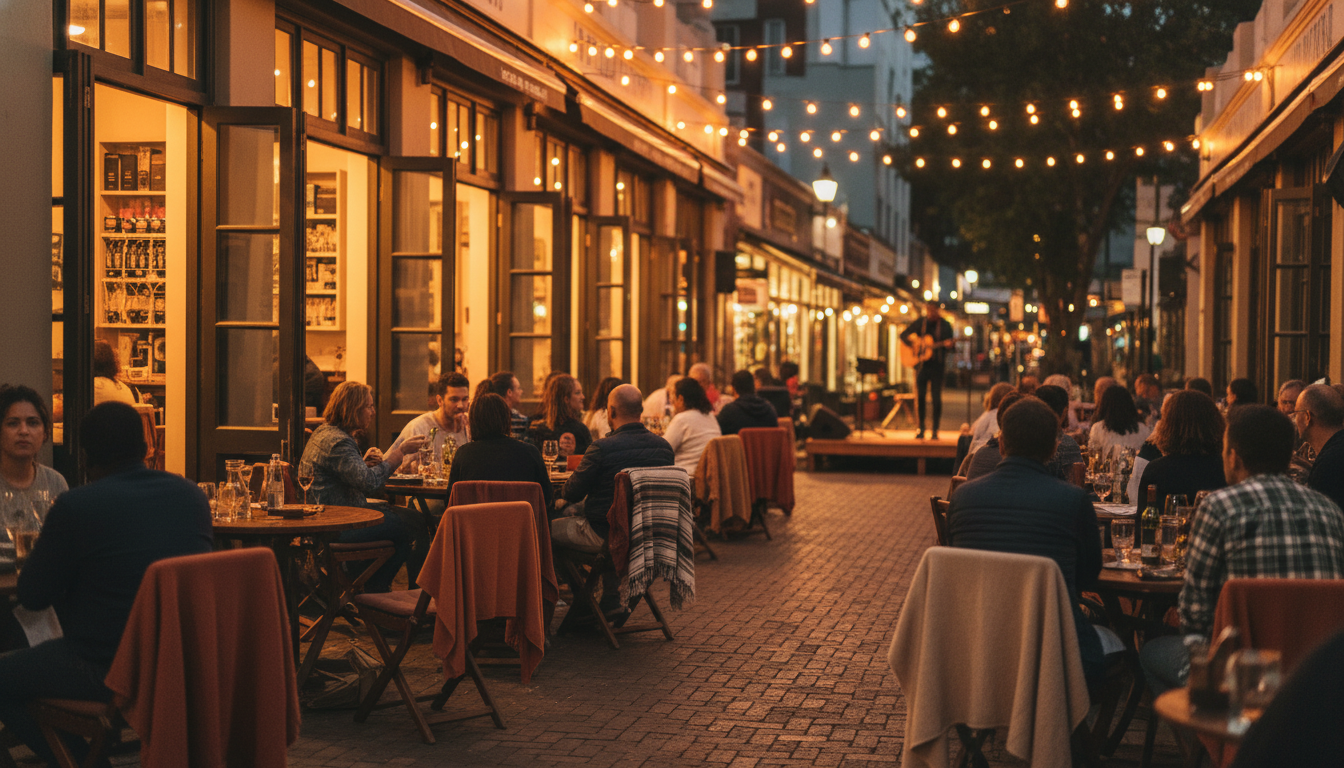 Evening scene on Seventh Street Melville with warm light spilling from restaurants, people gathered
Greenside: The Under-the-Radar Gem for Home Swapping in Johannesburg
Greenside doesn't make most tourist lists, which is exactly why I'm including it. This neighborhood sits between Parkhurst and Melville, offering walkable streets without the premium prices or weekend crowds.
Why swap here: Gleneagles Road has quietly become one of Joburg's best dining streets. Less famous than Fourth Avenue but equally good, with restaurants ranging from Portuguese to Vietnamese to contemporary South African.
The vibe: Residential, unpretentious, genuinely local. This is where Joburg professionals actually live—not where tourists stay.
What I noticed: During my Greenside swap, I was the only obvious foreigner at most restaurants. People assumed I lived there. That anonymity let me experience the city differently than I would have in more tourist-oriented areas.
Average home swap options: Family homes with gardens, some townhouse complexes. Good value for space compared to trendier neighborhoods.
Best for: Travelers wanting authentic local life, families needing space, anyone tired of tourist bubbles.
Braamfontein: Urban Energy Near Johannesburg's Best Culture
Braamfontein is Johannesburg's answer to a university district—young, energetic, and constantly evolving. It's adjacent to the Wits University campus and has transformed dramatically over the past decade.
Why swap here: The Neighbourgoods Market on Saturday mornings is essential Joburg. The area also has excellent access to cultural institutions—Constitution Hill, the Apartheid Museum, and various galleries.
The vibe: Youthful, urban, progressive. Street art everywhere. Coffee shops doubling as coworking spaces. A sense that things are happening.
Safety note: Like Maboneng, this is inner-city. Great during the day and for events, requires more caution at night. The area around Neighbourgoods Market is well-patrolled on Saturdays.
Average home swap options: Apartments in newer developments, some converted office buildings. Less availability than suburban areas, but growing.
Best for: Young travelers, culture seekers, anyone wanting urban energy over suburban quiet.
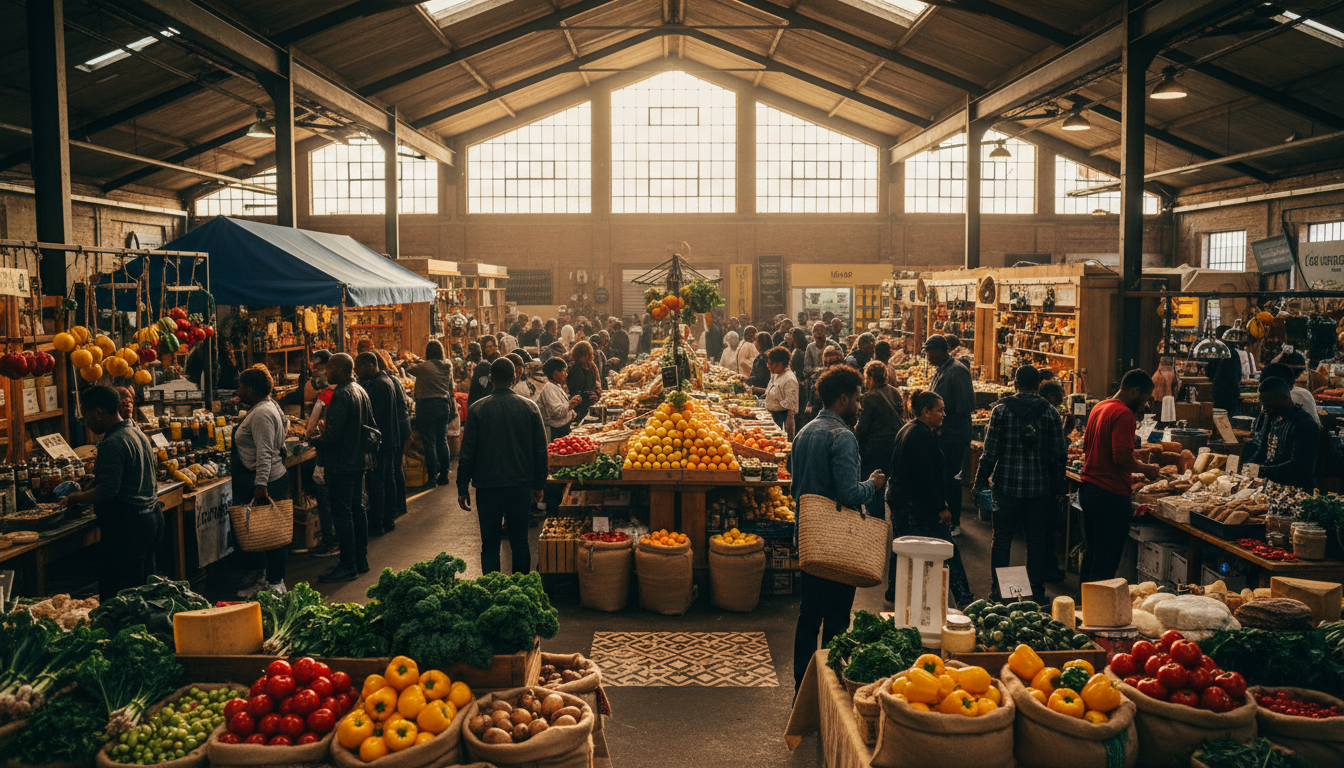 Saturday morning at Neighbourgoods Market in Braamfontein, showing crowds browsing food stalls under
Craighall Park and Craighall: Quiet Luxury for Family Home Swaps
These neighboring suburbs north of Rosebank offer something rare in Johannesburg: genuine peace and quiet combined with excellent location.
Why swap here: Large properties with gardens and pools, safe streets for walking (within the suburbs), and easy access to both Sandton and Rosebank via short drives.
The vibe: Established, wealthy, residential. This is old Johannesburg money—beautiful homes, mature gardens, the sound of hadeda ibises at dawn (you'll either love them or want to throw things at them).
Average home swap options: Substantial family homes, often with domestic worker quarters, pools, and gardens. These are the swaps where you'll feel like you've upgraded your entire life.
Practical note: You absolutely need a car here. There's no walkable commercial area, though Rosebank is just 5-10 minutes away.
Best for: Families, anyone wanting space and quiet, travelers with cars, people who want to experience how wealthy South Africans actually live.
How to Choose the Right Johannesburg Neighborhood for Your Home Swap
After three trips and countless conversations with local hosts, here's my framework:
Choose Sandton or Rosebank if: You're a first-timer, prioritize safety above all else, want Gautrain access, or are traveling for business.
Choose Parkhurst or Greenside if: You want walkability, love café culture, prefer residential vibes, or are traveling as a couple.
Choose Maboneng or Braamfontein if: You're comfortable with urban environments, want creative energy, love markets and street art, or are a solo traveler seeking community.
Choose Melville if: Nightlife matters, you're on a budget, or you want bohemian character.
Choose Craighall if: You're traveling with family, want space and pools, or prefer quiet evenings at home.
Practical Tips for Home Swapping in Johannesburg
Getting around: Uber works excellently in Joburg and is affordable—a 20-minute ride rarely exceeds $8 USD. The Gautrain connects the airport to Sandton and Rosebank but doesn't reach other neighborhoods. Renting a car gives you freedom but means navigating Joburg traffic, which can be brutal during rush hour.
Safety essentials: Johannesburg's reputation is outdated but not entirely unearned. Common sense applies: don't walk alone at night outside of busy areas, keep valuables out of sight, use Uber rather than hailing taxis, and listen to your host's specific advice about their neighborhood. Most crime is opportunistic—remove the opportunity and you'll be fine.
Load shedding reality: South Africa experiences scheduled power outages called load shedding. Ask your host if they have a generator, inverter, or solar backup. Most homes in swappable neighborhoods do. Download the EskomSePush app to track the schedule.
What to ask your host: Beyond the usual home swap questions, ask about load shedding backup, water situation (some areas have tanks), security features, and their specific safety recommendations for the neighborhood.
Best time to visit: April-May (autumn) and September-October (spring) offer perfect weather. October brings jacaranda season—the purple blossoms are genuinely spectacular. Winter (June-August) is dry and sunny but cold at night, and many homes don't have central heating.
Why Home Swapping Works Especially Well in Johannesburg
I've swapped homes in dozens of cities, and Johannesburg stands out for a few reasons.
First, the value proposition is exceptional. Hotels in safe areas are expensive, and Airbnbs often lack the security features that make Joburg comfortable—gated properties, alarm systems, sometimes guards. Home swaps give you access to properly secured homes that would cost a fortune otherwise.
Second, the local knowledge is invaluable. Johannesburg isn't a city you can figure out from TripAdvisor. Having a host who tells you which roads to avoid during rush hour, which restaurants require reservations, and which markets are worth the trip—that's worth more than any guidebook.
Third, South Africans are genuinely hospitable. The braai culture, the "come over for a drink" mentality, the way hosts often connect you with their friends and neighbors—it's not performative. It's just how people are.
On SwappaHome, I've noticed Johannesburg listings tend to be detailed and honest. Hosts here know their city has a learning curve, so they put effort into making your stay smooth. That's the kind of community that makes home exchange work.
Making Your Johannesburg Home Swap Happen
Ready to experience Jozi like a local? Here's how to find your perfect swap.
Start by browsing listings in your preferred neighborhoods on SwappaHome. Look for hosts with detailed descriptions and reviews—these tend to be the most responsive and helpful. Be specific in your request about what matters to you: security features, load shedding backup, proximity to public transport, garden space for kids. Joburg hosts appreciate directness.
Offer something genuine in return. South Africans are particularly keen to swap for European cities, coastal destinations, and North American locations. Make your own listing compelling.
And remember: every credit works the same whether you're staying in a Sandton penthouse or a Melville cottage. That's the beauty of the system—it's about community, not commerce.
Johannesburg surprised me. It challenged me. And ultimately, it charmed me in ways I didn't expect. The city is complicated—its history, its present, its contradictions. But standing on that Maboneng rooftop, watching the sunset paint the skyline gold, I understood why people fall in love with it.
Your Jozi story is waiting. You just need to find the right home to start it from.
Frequently Asked Questions
Is home swapping in Johannesburg safe?
Home swapping in Johannesburg is generally safe when you choose neighborhoods with good security infrastructure and follow local advice. Most swap-worthy homes have gated properties, alarm systems, and sometimes security guards. Stick to recommended areas like Sandton, Rosebank, Parkhurst, and Greenside for maximum peace of mind. Always ask hosts about specific safety features and neighborhood tips.
What are the best neighborhoods for first-time visitors doing a home swap in Johannesburg?
For first-time visitors, Rosebank and Sandton offer the best combination of safety, walkability, and convenience. Both have Gautrain access to the airport, secure residential options, and plenty of restaurants and shops within easy reach. Parkhurst is excellent if you prefer a village atmosphere with walkable streets.
How much can I save with home swapping vs hotels in Johannesburg?
Hotels in safe Johannesburg neighborhoods typically cost $150-250 USD per night. A two-week stay would run $2,100-3,500 in hotel costs alone. With home swapping on SwappaHome, you'd use 14 credits—which you can earn by hosting guests at your own home. The savings are substantial, especially for longer stays or family trips requiring multiple rooms.
Do I need a car for home swapping in Johannesburg?
It depends on your neighborhood. Parkhurst, Rosebank, and Maboneng offer walkable areas where you can manage with Uber for longer trips. Sandton's central area is also walkable. However, Craighall, Greenside, and most suburban areas require a car for daily activities. Uber is reliable and affordable throughout the city—expect to pay $5-15 USD for most trips.
What should I ask a Johannesburg home swap host before booking?
Key questions include: What load shedding backup do you have (generator, inverter, solar)? What security features does the property have? Are there specific safety recommendations for your neighborhood? Is the area walkable or will I need a car? What's the water situation (municipal or tank backup)? These practical details significantly impact your stay comfort.

Published by
SwappaHome
SwappaHome Editorial Team
Home Exchange & Slow Travel Editorial
The SwappaHome Editorial Team brings together travel research, home-exchange community insights, and platform data to produce practical guides for first-time and experienced home swappers. Every article cites real platforms, current market rates, and verifiable city-level facts so readers can make informed decisions without guessing.
Ready to try home swapping?
Join SwappaHome and start traveling by exchanging homes. Get 7 free credits when you sign up!
Related articles
Home Swap in Rome: Where to Find the Best Properties for Your Italian Exchange
Discover where to find the best home swap properties in Rome—from Trastevere's cobblestone charm to Testaccio's local authenticity. Real neighborhoods, real advice.

Home Swap in Bangkok: Where to Find the Best Properties for Free Stays
Discover where to find the best home swap properties in Bangkok—from riverside condos in Charoen Krung to family homes in Ari. Real neighborhoods, real savings.
Home Swap for Beach Lovers: 12 Coastal Destinations Ranked for 2026
Discover the best coastal destinations for home swapping in 2026. From Portugal's Algarve to Australia's Gold Coast, find your perfect beach exchange.