Home Swapping in Wellington: Your Complete Insider's Guide to New Zealand's Coolest Capital

SwappaHome Editorial Team
Home Exchange & Slow Travel Editorial
Discover how home swapping in Wellington lets you live like a local in NZ's creative capital—from Cuba Street coffee to coastal walks, all without hotel prices.
The wind nearly knocked me sideways as I stepped out of my borrowed Thorndon apartment, coffee in hand, watching the harbour turn silver in the early morning light. That's Wellington for you—dramatic, unpredictable, and absolutely magnetic.
Home swapping here changed everything about how I experience this city. Instead of another anonymous hotel room in the CBD, I've woken up in a Victorian villa in Mount Victoria, a modern apartment overlooking Oriental Bay, and a cozy cottage in Brooklyn with views that made me forget to check my phone for three days straight. Each swap revealed a different Wellington, one that tourists rushing between Te Papa and the cable car never get to see.
So here's everything I wish someone had told me before my first Wellington home exchange—the neighborhoods that actually matter, the local secrets that make this city unforgettable, and the practical stuff that'll save you from rookie mistakes.
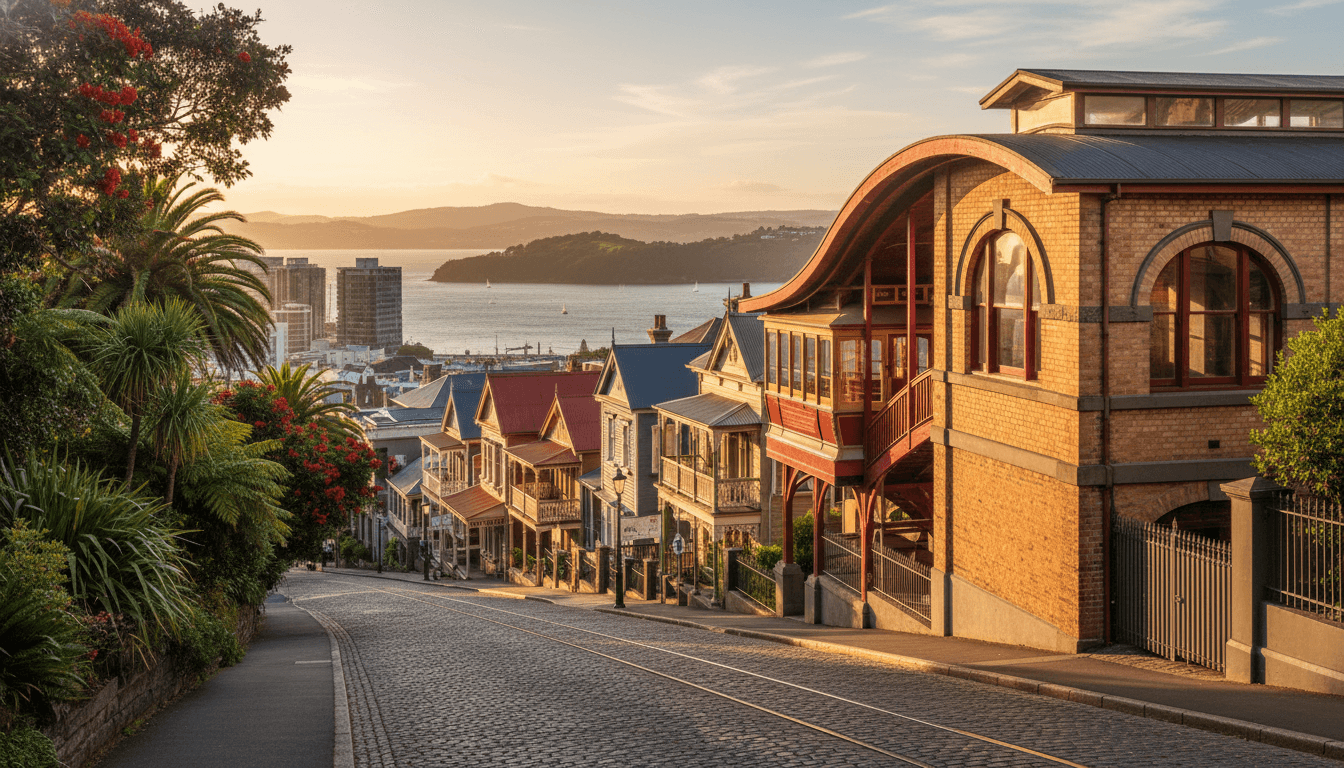
 panoramic view of Wellington harbour at dawn from Mount Victoria lookout, with the city lights still
Why Wellington is Perfect for Home Swapping
Here's what most travel guides won't tell you: Wellington is expensive. Like, genuinely budget-crushing expensive. A decent hotel room in the city center runs $180-250 NZD ($110-155 USD) per night. Airbnbs aren't much better, with central listings averaging $150-200 NZD ($93-124 USD). Over a two-week trip? You're looking at $2,500+ USD just for accommodation.
Home swapping flips that equation entirely.
On SwappaHome, you're spending credits you've earned by hosting others—one credit per night, regardless of whether you're staying in a studio apartment or a four-bedroom house with a harbour view. Those 7 free credits you get when you join? That's a full week of free accommodation in one of the world's most liveable cities.
But honestly, cost isn't even the best part.
Wellington is a city built on neighborhoods, each with its own personality, its own coffee roaster, its own preferred walking route. When you're home swapping, you're dropped into the middle of that local ecosystem. You inherit a favorite bakery, a go-to wine bar, sometimes even a neighbor who waves good morning. Last time I swapped in Aro Valley, my host left me a hand-drawn map of her "essential Wellington" spots—a map that led me to a tiny record store, a hidden waterfall, and the best flat white I've ever had.
No hotel concierge can replicate that.
The Best Wellington Neighborhoods for Home Exchange
Wellington is compact—you can walk across the central city in about 25 minutes—but each neighborhood feels like its own small town. Where you stay shapes your entire experience.
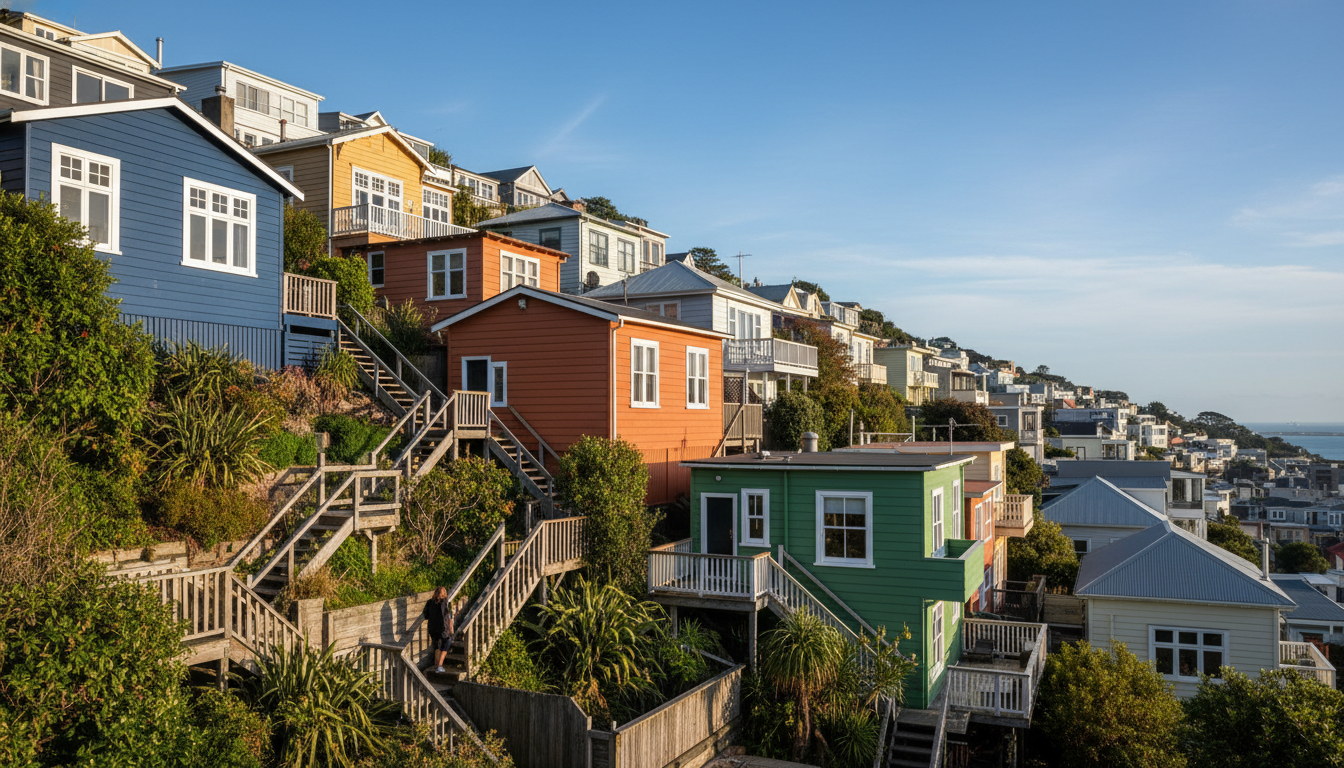 colorful wooden houses climbing up the hillside in Mount Victoria, with narrow staircases between pr
Mount Victoria: The Postcard-Perfect Starting Point
If this is your first Wellington home swap, Mount Victoria ("Mount Vic" to locals) is where I'd point you. It's a five-minute walk from Courtenay Place's restaurants and bars, but feels completely removed from the city bustle. The houses here are mostly Victorian wooden villas painted in every color imaginable—deep blues, sage greens, burnt oranges—climbing up the hillside on streets so steep they'd give San Francisco a run for its money.
The Mount Victoria lookout is a 20-minute walk from anywhere in the neighborhood. Watching the sunset from up there with a bottle of local wine? Basically a Wellington rite of passage. Morning coffee at Prefab (on Jessie Street, technically in the neighboring Te Aro area) becomes a daily ritual fast.
Home swap availability: High. Mount Vic has a good mix of young professionals and families who travel frequently. Expect charming older homes with character features—and occasionally, character heating systems that take some figuring out.
Thorndon: History and Proximity
Thorndon is Wellington's oldest suburb, full of heritage buildings, diplomatic residences, and tree-lined streets that feel almost European. It's where you'll find the Beehive (New Zealand's Parliament), the Botanic Gardens, and some of the city's best-preserved colonial architecture.
I stayed in Thorndon during my second Wellington swap, in a 1890s cottage that had been in the host's family for three generations. The wooden floors creaked, the garden was overgrown in the best possible way, and I could walk to the cable car in eight minutes flat.
For home swappers, Thorndon offers excellent proximity to everything without feeling touristy. The Saturday farmers market at the nearby Harbourside is worth setting an alarm for.
Home swap availability: Moderate. Thorndon skews older and more established, so listings tend to be families with school-aged kids or retired couples. Book well in advance for school holiday periods.
Cuba Street Area (Te Aro): Creative Chaos
Cuba Street is Wellington's beating heart—a pedestrianized stretch of vintage shops, independent cafes, street art, and buskers that somehow manages to feel authentic despite being the city's main tourist draw. The surrounding Te Aro neighborhood is where Wellington's creative class lives, works, and argues about which coffee roaster is superior. (It's Peoples, but don't tell the Flight Coffee devotees I said that.)
Staying near Cuba Street means you're walking distance to basically everything: Te Papa museum, the waterfront, Courtenay Place nightlife, and enough restaurants to eat somewhere new every night for a month. The trade-off is noise—this is the liveliest part of the city, and weekend nights can get rowdy.
Home swap availability: High, but competitive. Lots of young professionals and creative types who travel for work or festivals. Apartments tend to be smaller but well-designed. If you see a listing here, jump on it.
Brooklyn: The Local's Local Choice
Brooklyn sits on a ridge above the city, accessible by a genuinely terrifying (in the best way) road that winds up the hillside. It's where Wellingtonians go when they want space, views, and a slightly slower pace without leaving the city entirely.
My Brooklyn swap was in a 1960s modernist house with floor-to-ceiling windows facing the harbour. I spent entire mornings just sitting with coffee, watching the Interislander ferry cross to the South Island. The neighborhood has its own village center with an excellent cafe (Cafe Reka), a community garden, and the kind of neighbors who actually say hello.
The catch: you'll want a car, or at least be comfortable with the bus. It's a 15-minute drive to the city center, or about 40 minutes on the number 7 bus.
Home swap availability: Moderate. Brooklyn attracts families and people who've "graduated" from inner-city living. Homes tend to be larger, often with gardens and parking—great for longer stays or if you're traveling with kids.
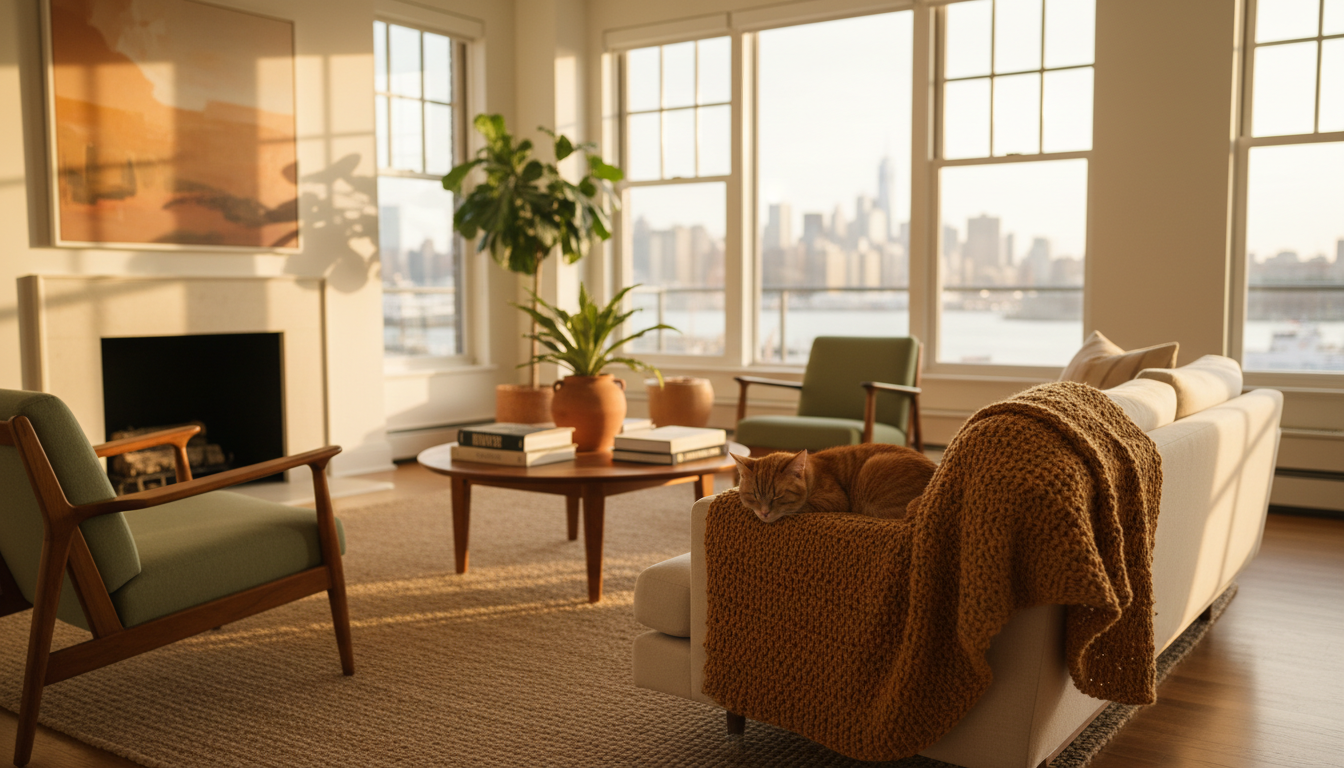 interior of a sunny Brooklyn living room with mid-century furniture, large windows showing harbour v
Oriental Bay and Roseneath: Waterfront Living
Oriental Bay is Wellington's beach suburb—though "beach" is generous for the small sandy stretch that gets absolutely packed on the rare sunny days. The real appeal is the promenade, the art deco apartment buildings, and the feeling of being on the water while still in the city.
Roseneath, just over the hill, offers the same harbour proximity with more residential calm. Both neighborhoods are expensive to rent or buy in, which means home swapping here gets you access to properties that would otherwise be completely out of reach.
Fair warning: these areas can feel a bit sterile compared to the character neighborhoods. Great for a short stay, but I'd choose Mount Vic or Brooklyn for anything longer than a week.
Home swap availability: Lower. These are premium locations, and listings go fast. Worth checking regularly if waterfront living is your priority.
How to Find the Perfect Wellington Home Swap
I've done enough swaps to know that finding the right match is part strategy, part patience, and part trusting your gut.
Start Your Search Early
Wellington isn't a massive city—population around 215,000—so the home swap inventory is smaller than you'd find in London or Sydney. I recommend starting your search at least 3-4 months before your trip, especially if you're targeting a specific neighborhood or traveling during peak season (December-February, when Kiwis are on summer holiday).
On SwappaHome, set up alerts for Wellington listings so you're notified when new properties come available. The best homes get snapped up quickly.
Write a Genuine Request
When you reach out to potential hosts, be specific about why you want to stay in their home and their neighborhood. "Your place looks nice" is forgettable. "I noticed you're near the Brooklyn wind turbine—I'm a renewable energy nerd and would love to walk up there" starts a conversation.
Mention your own home, too. Even though SwappaHome's credit system means they don't need to stay at your place, hosts like knowing who's sleeping in their bed. A few sentences about your neighborhood, your home's vibe, and why you love it goes a long way.
Ask the Right Questions
Before confirming any Wellington home swap, I always ask: How's the heating situation? (Wellington homes can be notoriously cold, especially older villas without modern insulation. You want to know if there's a heat pump, a wood burner, or just a prayer and a hot water bottle.) What's the parking like? (Street parking in central Wellington is a nightmare. If you're renting a car, confirm there's off-street parking.) Any quirks I should know about? (The best hosts will tell you about the temperamental shower, the neighbor's dog who barks at possums, or the trick to opening the front door. This honesty is actually a good sign.) And finally—what are your three favorite local spots? This question has led me to some of my best Wellington discoveries.
Consider the Timing
Wellington's weather is... let's say "characterful." The city averages 173 days of rain per year, and the wind is legendary—locals joke that horizontal rain is just Wellington's way of saying hello.
That said, a sunny Wellington day is genuinely spectacular. Summer (December-February) offers the best weather odds, but also the highest prices and biggest crowds. I personally love autumn (March-May), when the hills turn golden, the tourists thin out, and the cafes feel cozier.
Winter (June-August) is cold and wet, but if you score a home swap with good heating, it's actually a magical time to visit. Fewer crowds at Te Papa, roaring fires at the pubs, and the best excuse to spend entire afternoons in bookshops.
 Wellington street scene on a rainy day, with people carrying colorful umbrellas past steamy cafe win
What to Expect from Your Wellington Home Swap
Every home exchange is different, but here's what I've learned from my Wellington swaps specifically.
The House Manual is Your Friend
Wellington homes often come with... personality. That's a polite way of saying things might work differently than you expect. The best hosts leave detailed instructions—how to work the coffee machine, which recycling goes in which bin (Wellington takes this seriously), where to find extra blankets when the southerly hits.
Read the manual before you arrive, and save your host's contact details somewhere accessible. I've had to message hosts about everything from where they hide the spare toilet paper to how to convince their cat to stop yelling at 6am.
Embrace the Local Routine
One of my favorite parts of home swapping is inheriting someone else's life for a while. In Wellington, that might mean walking to the same corner dairy for milk, nodding at the same neighbors on the morning dog walk, discovering your host's secret stash of local craft beer in the garage, or finding a handwritten note recommending the Tuesday night quiz at the Southern Cross.
Lean into it. This is the whole point.
Respect the Space
This should go without saying, but: treat the home better than you'd treat your own. In my experience, Wellington hosts are particularly house-proud—they've often put real effort into making their space comfortable and personal. Leave it cleaner than you found it, replace anything you use up, and send a genuine thank-you message after you leave.
SwappaHome's review system means your reputation follows you. A string of glowing reviews opens doors to better swaps in the future.
Insider Tips for Your Wellington Home Swap
After multiple trips, here's what I wish I'd known from day one.
Get a Snapper Card Immediately
Wellington's public transport runs on the Snapper card system. You can buy one at the airport, most dairies, or the Wellington i-SITE visitor center. Load it up and you're set for buses, the cable car, and the harbour ferry. Way easier than fumbling for cash.
The Supermarket Situation
New World and Countdown are the main supermarkets. New World Metro on Willis Street is central and convenient, but pricey. For better value, the Countdown at Lambton Quay or the larger New World in Thorndon have better selections. Moore Wilson's on College Street is where locals shop for fancy cheese, good wine, and the kind of ingredients that make home cooking feel special—perfect when you've got a full kitchen to play with.
Coffee is a Religion Here
Wellington takes coffee extremely seriously. Some starting points: Flight Coffee (multiple locations), Peoples Coffee (Constable Street in Newtown is the original), Customs by Coffee Supreme (waterfront), and Raglan Roast if you venture to Petone. Ask your host for their recommendation—it'll tell you a lot about them.
The Wind is Real
I cannot stress this enough. Wellington's wind can be genuinely dangerous on bad days—I've seen umbrellas turned inside out, people knocked off balance, and even the harbour ferry cancelled. Always carry a wind-proof layer, check the forecast before planning outdoor activities, and embrace it as part of the experience. Wellingtonians are proud of their wind.
Don't Skip the Day Trips
If your home swap gives you more than a few days, use it. The Wairarapa wine region is 90 minutes over the Rimutaka Range—Martinborough alone is worth the drive. Kapiti Island nature reserve requires advance booking but offers incredible bird encounters. The Hutt Valley has excellent mountain biking and the Rimutaka Rail Trail.
Having a home base makes day-tripping so much easier than hotel hopping.
 vineyard landscape in Martinborough with rows of vines, distant mountains, and a rustic tasting room
Making the Most of Wellington's Neighborhoods on a Home Swap Budget
One of the best things about home swapping is how much money you free up for actually experiencing a city. Here's how I'd spend those savings in Wellington.
Food and Drink
Wellington punches way above its weight for dining. With the money you're saving on accommodation, treat yourself to Loretta on Cuba Street for brunch that's worth the wait (the corn fritters are legendary—budget around $25-35 NZD per person). Hillside Kitchen in Miramar is a bit out of the way, but the modern New Zealand cuisine is the best I've found—dinner for two with wine runs about $150-200 NZD. Shepherd on Eva Street is tiny, inventive, always surprising, with a tasting menu around $85 NZD. And Havana Bar on Wigan Street is perfect for late-night cocktails and live music in a space that feels like someone's eccentric living room.
Experiences
Zealandia ($21 NZD) is genuinely world-class—go at dusk for kiwi spotting. The Weta Workshop Tour ($65 NZD) is incredible even if you're not a Lord of the Rings fan; the craftsmanship alone is worth it. The Cable Car + Botanic Gardens ($10 NZD round trip) is touristy, but the views earn it. And City Gallery Wellington is free, always has something interesting on, and the building itself is stunning.
Free Wellington
Plenty of the best Wellington experiences cost nothing: walking the waterfront from Te Papa to Oriental Bay, hiking the Southern Walkway (starts in the city, ends in Island Bay—about 4 hours), browsing the Cuba Street shops and galleries, catching a sunset from Mount Victoria lookout, exploring the Botanic Gardens, or people-watching at the Wellington Night Market on Friday and Saturday nights.
Common Questions About Home Swapping in Wellington
Based on messages I get from readers considering their first Wellington swap, here are the things people actually want to know.
"Is Wellington too small for home swapping?"
Wellington's size is actually an advantage. The city is walkable, neighborhoods are distinct but close together, and you can experience multiple areas even on a short trip. The home swap inventory is smaller than major cities, yes—but so is the demand. I've never had trouble finding a great Wellington swap with 2-3 months' notice.
"What about earthquakes?"
Wellington sits on fault lines, and yes, earthquakes happen. Most are minor tremors you might not even notice. Newer buildings are constructed to strict seismic codes, and older buildings have largely been strengthened. Your home swap host can point out the safest spots in their home, and the Get Ready website (getready.govt.nz) has practical advice. Honestly, I've experienced more earthquakes in San Francisco than Wellington.
"Do I need a car?"
For central Wellington? Absolutely not. The city is compact, public transport is decent, and parking is a headache. For day trips to Martinborough, Kapiti Coast, or the Wairarapa, you'll want to rent a car for those specific days. Many home swap hosts include parking if they have it—worth asking.
"What if something goes wrong with the swap?"
Communication is everything. If there's an issue with the home—heating not working, something broken, a question about how things work—message your host first. Most problems are easily solved with a quick conversation. For anything more serious, you're dealing with it directly with your swap partner. This is why choosing hosts with good reviews matters, and why I always recommend travelers get their own travel insurance that covers accommodation issues.
Your Wellington Home Swap Awaits
I keep coming back to Wellington. Not because it's the most famous city, or the most glamorous, or even the warmest. I come back because every swap reveals something new—a hidden garden, a neighborhood bar, a walking track I hadn't discovered, a conversation with someone who's lived here for decades and still finds things to love.
Home swapping here isn't just about free accommodation, though that's a genuine perk in an expensive city. It's about belonging somewhere, even temporarily. It's about having a kitchen where you can cook market vegetables, a couch where you can read during a southerly storm, a neighborhood where the barista starts to recognize your order.
If you've been thinking about trying home exchange, Wellington is a beautiful place to start. The community is welcoming, the homes have character, and the city rewards the kind of slow, local exploration that swapping makes possible.
Check what's available on SwappaHome, reach out to a few hosts, and start planning. I'll probably see you at Prefab, arguing about coffee.
Frequently Asked Questions
Is home swapping in Wellington safe for first-time exchangers?
Wellington is consistently ranked among the world's safest cities, and the home swap community here tends to be experienced and welcoming. SwappaHome's verification and review system helps you choose trustworthy hosts. Read reviews carefully, communicate clearly before your trip, and consider getting travel insurance for extra peace of mind. Most first-time swappers find Wellington an ideal starting point.
How much money can I save home swapping in Wellington versus hotels?
Significant savings are possible. Central Wellington hotels average $180-250 NZD ($110-155 USD) per night, while home swapping costs one credit per night regardless of property size or location. Over a two-week stay, that's roughly $1,500-2,100 USD in accommodation savings. Plus, having a kitchen means you can cook some meals, stretching your budget even further.
When is the best time for a Wellington home swap?
Summer (December-February) offers the best weather but highest demand—book 4-6 months ahead. Autumn (March-May) is my personal favorite: mild weather, golden light, and easier swap availability. Winter swaps work well if you confirm good heating. Avoid booking during major events like WOW (World of Wearable Art) in September-October unless you plan very early.
What neighborhoods have the most Wellington home swap listings?
Mount Victoria, Te Aro (Cuba Street area), and Thorndon typically have the highest availability on SwappaHome. These central neighborhoods attract young professionals and families who travel frequently. Brooklyn and Oriental Bay have fewer listings but often feature larger homes with better views. Set alerts for your preferred areas and be ready to book when good listings appear.
Do I need a car for a Wellington home swap?
Not for exploring central Wellington—the city is very walkable, and public transport covers most areas. However, you'll want a rental car for day trips to Martinborough wine country, Kapiti Island, or the Wairarapa. Many Wellington home swap hosts include parking with their listing, which is valuable given how difficult street parking can be. Ask about parking before confirming your swap.

Published by
SwappaHome
SwappaHome Editorial Team
Home Exchange & Slow Travel Editorial
The SwappaHome Editorial Team brings together travel research, home-exchange community insights, and platform data to produce practical guides for first-time and experienced home swappers. Every article cites real platforms, current market rates, and verifiable city-level facts so readers can make informed decisions without guessing.
Ready to try home swapping?
Join SwappaHome and start traveling by exchanging homes. Get 7 free credits when you sign up!
Related articles

Bachelor and Bachelorette Parties in Singapore: The Complete Home Swap Group Guide for 2026
Planning a bachelor or bachelorette party in Singapore? Discover how home swapping lets groups of 6-12 stay together in luxury condos, saving thousands while partying in Marina Bay.

Cycling in Lisbon: 7 Home Swap Bike Tour Itineraries for Every Rider
Discover the best cycling routes in Lisbon with these home swap bike tour itineraries—from waterfront paths to hilltop adventures, all starting from your borrowed home.

Graduation Trip to Barcelona: How Home Swapping Gives New Graduates the Ultimate Celebration
Planning a graduation trip to Barcelona? Discover how home swapping lets new graduates explore Spain's most vibrant city without the hostel crowds or hotel costs.