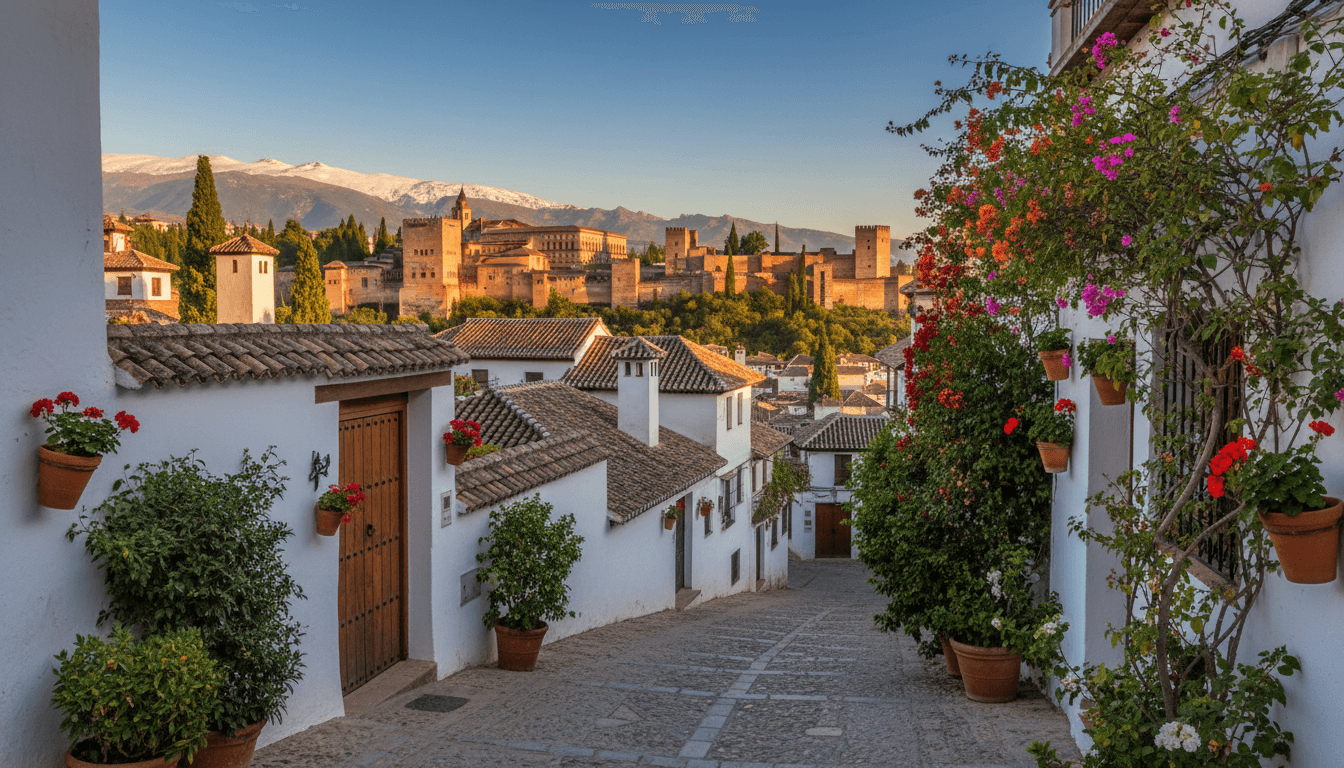
Home Swaps in Granada: The Ultimate Guide for Remote Workers and Digital Nomads

SwappaHome Editorial Team
Home Exchange & Slow Travel Editorial
Discover the best home swaps in Granada for working professionals. From Albaicín's cave houses to modern Realejo apartments with fiber internet.
The first time I tried to take a video call from a home swap, I was in a gorgeous 18th-century apartment in Seville. Thick stone walls, hand-painted tiles, romantic as hell—and absolutely zero WiFi signal. My client saw approximately three frozen frames of my face before the call dropped entirely.
I learned my lesson. Now, when I'm scouting home swaps in Granada for working professionals, I check the internet speed before I even look at the photos. And let me tell you, Granada has become one of my favorite cities in Spain for combining serious work with that slow-paced Andalusian lifestyle that makes you wonder why you ever lived anywhere else.
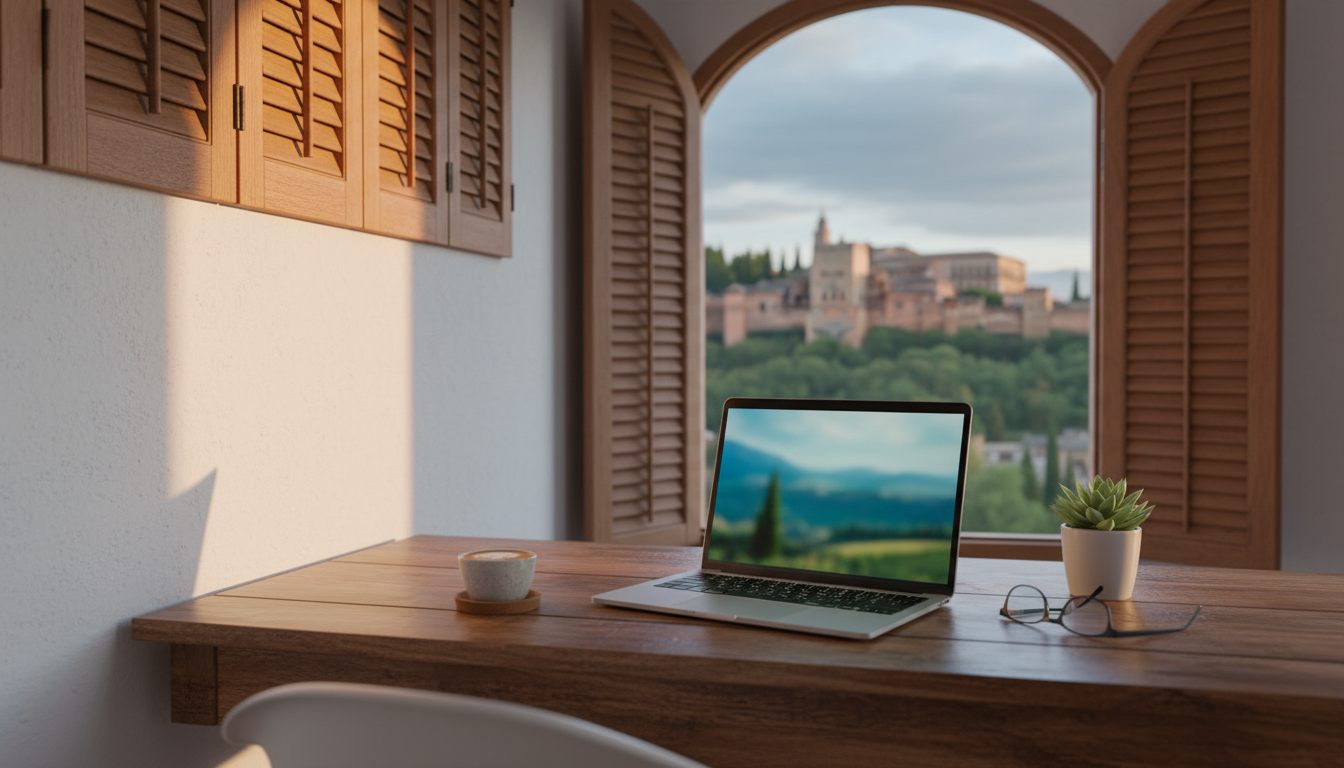 Morning light streaming through wooden shutters into a bright home office space with views of the Al
Why Granada Is Perfect for Home Swaps as a Remote Worker
Here's what nobody tells you about Granada: it's dramatically cheaper than Barcelona or Madrid, but the quality of life might actually be higher. A coffee costs €1.20. Tapas still come free with your drink (yes, really—this isn't a myth). And the city has invested heavily in fiber optic infrastructure over the past five years, meaning you can get 600 Mbps connections in apartments that look like they haven't changed since the Moorish era.
The city sits at the foot of the Sierra Nevada mountains. You're 30 minutes from ski slopes in winter and hiking trails year-round. The University of Granada brings in 60,000 students, creating this energetic, youthful vibe that keeps the city from feeling like a museum. Coworking spaces are popping up everywhere, but honestly? Most of the home swaps I've done here have been so well-equipped for remote work that I barely needed them.
What really sells Granada for working professionals, though, is the rhythm of the city. Spaniards eat dinner at 10 PM, which means your afternoon "ends" around 2 PM for a long lunch break, and you can pick work back up at 5 or 6 when your US colleagues are just waking up. It's the perfect time zone hack for anyone working with American clients.
Best Neighborhoods for Home Swaps in Granada: A Working Professional's Breakdown
Not all Granada neighborhoods are created equal when you're trying to balance cobblestone charm with stable video calls. I've stayed in four different areas over my various trips, and here's my honest take on each.
Albaicín: The Instagrammable Choice (With Caveats)
The Albaicín is that white-washed, winding-street neighborhood you've seen in every Granada travel photo. It's a UNESCO World Heritage site, and staying here feels like living inside a postcard. The views of the Alhambra at sunset? Unreal. I once spent an entire evening just sitting on a mirador with a glass of wine, watching the fortress turn gold, then pink, then deep amber.
But—and this is a big but—working from the Albaicín requires some planning.
The streets are steep. Like, genuinely steep. If you're someone who takes calls while pacing (guilty), you'll want to know that stepping outside for a "quick walk" means either climbing or descending what feels like a StairMaster. The older buildings can have spotty internet, though I've found several home swaps here with modern fiber installations. Just ask your host directly about speeds before booking.
The trade-off is worth it for many remote workers. The neighborhood is quiet during work hours—most tourists don't venture up until late afternoon. There are tiny plazas with cafés where you can work outside, and the sense of history is genuinely inspiring. My most creative work has happened in Albaicín apartments. Something about the atmosphere.
Expect to pay around €0 in accommodation costs through SwappaHome (that's the beauty of the credit system), but budget about €15-20 per day for meals if you're eating out. A menu del día lunch runs €10-12 at most local spots.
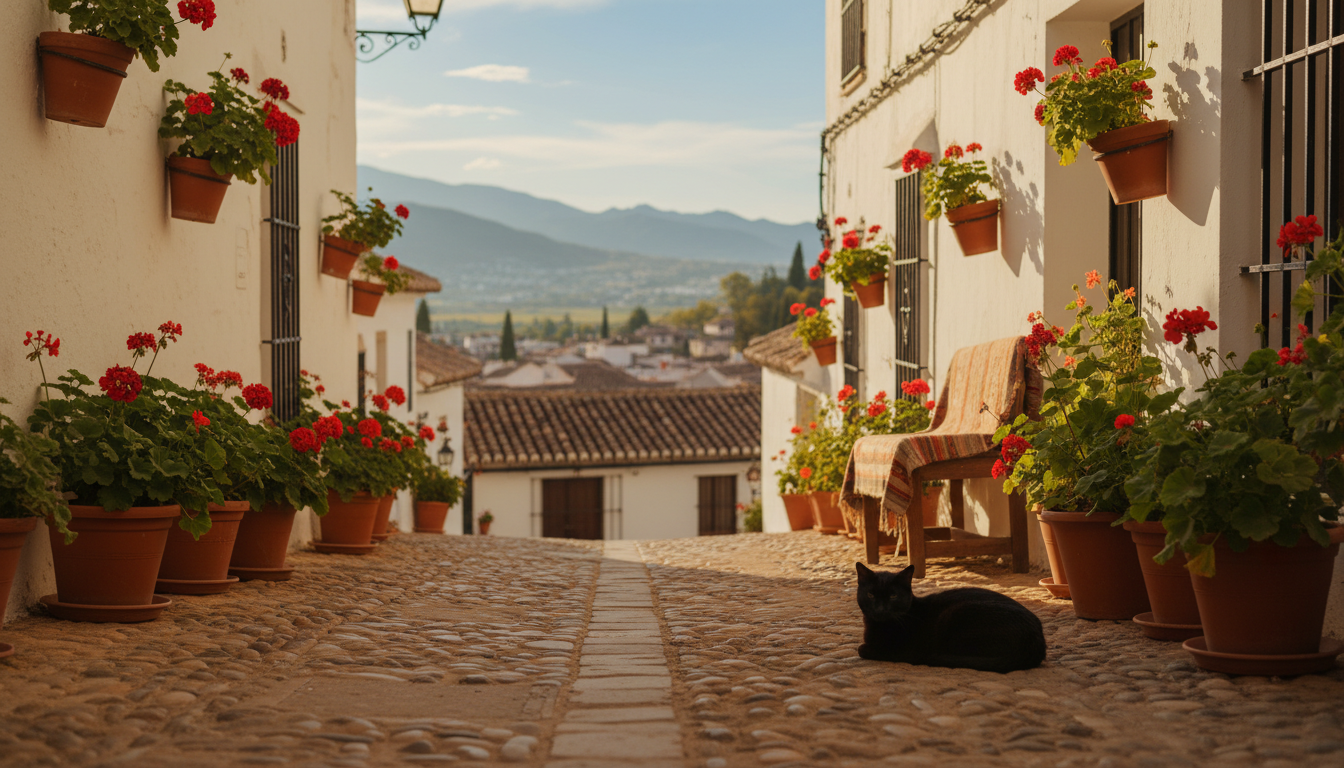 Narrow whitewashed alley in Albaicn with potted geraniums, a black cat lounging on warm cobblestones
Realejo: My Personal Favorite for Remote Work
If I'm being completely honest, Realejo is where I'd live if I moved to Granada permanently. It's the old Jewish quarter, sitting just below the Alhambra, and it hits this sweet spot between historic character and modern convenience that's hard to find elsewhere.
The streets are flatter than Albaicín (your knees will thank you). The neighborhood has excellent cafés with WiFi—Café Fútbol on Plaza Mariana Pineda has been my go-to for afternoon work sessions when I need a change of scenery. There's a great mix of locals and expats, so you won't feel isolated, but it's not overrun with tourists either.
Home swaps in Realejo tend to be in renovated apartments with reliable internet. I stayed in a two-bedroom place last fall with a dedicated home office, 300 Mbps fiber, and a small terrace where I'd take my morning calls. The owner was a Spanish architect who worked remotely herself, so she'd set up the space with professionals in mind—good desk chair, ring light, even a second monitor I could use.
The neighborhood is walkable to everything: 10 minutes to the cathedral, 15 to the Albaicín, 5 to the best tapas street in the city (Calle Navas, you're welcome). Grocery stores, pharmacies, and a morning market are all within a few blocks.
Centro: Convenient but Noisy
The city center around Gran Vía and Plaza Nueva is the most convenient location in Granada. You're steps from everything, public transport is right there, and the infrastructure is modern. Plenty of home swaps available here, often in grand old buildings with high ceilings and those gorgeous traditional tiles.
The downside? Noise.
Granada's nightlife is legendary, and in Centro, you'll hear it. Thursday through Saturday nights can get loud until 3 or 4 AM, which is fine if you're a night owl but rough if you have 8 AM calls with London. I'd recommend Centro for shorter stays or if you're someone who sleeps through anything. The apartments here often have double-glazed windows now, which helps, but ask your host about street noise before committing.
Zaidín: The Local's Secret
Zaidín is where actual Granadinos live. It's south of the center, not particularly beautiful in a historic sense, but it's authentic in a way that tourist neighborhoods aren't. Rent is cheaper here (though that doesn't affect your SwappaHome credits), which means the home swaps tend to be larger—full houses instead of apartments, sometimes with gardens.
I stayed in a three-bedroom house in Zaidín last year while working on a big project. The owner had converted the garage into a proper home office with air conditioning, a standing desk, and the fastest internet I've encountered in Spain. It was a 20-minute walk to the center, but I had a full kitchen, a washing machine, and space to spread out. For longer stays of a month or more, Zaidín makes a lot of sense.
The neighborhood has excellent local restaurants where you'll be the only foreigner, which I personally love. Fewer English menus, more pointing at what other people are eating. My Spanish improved dramatically during that stay.
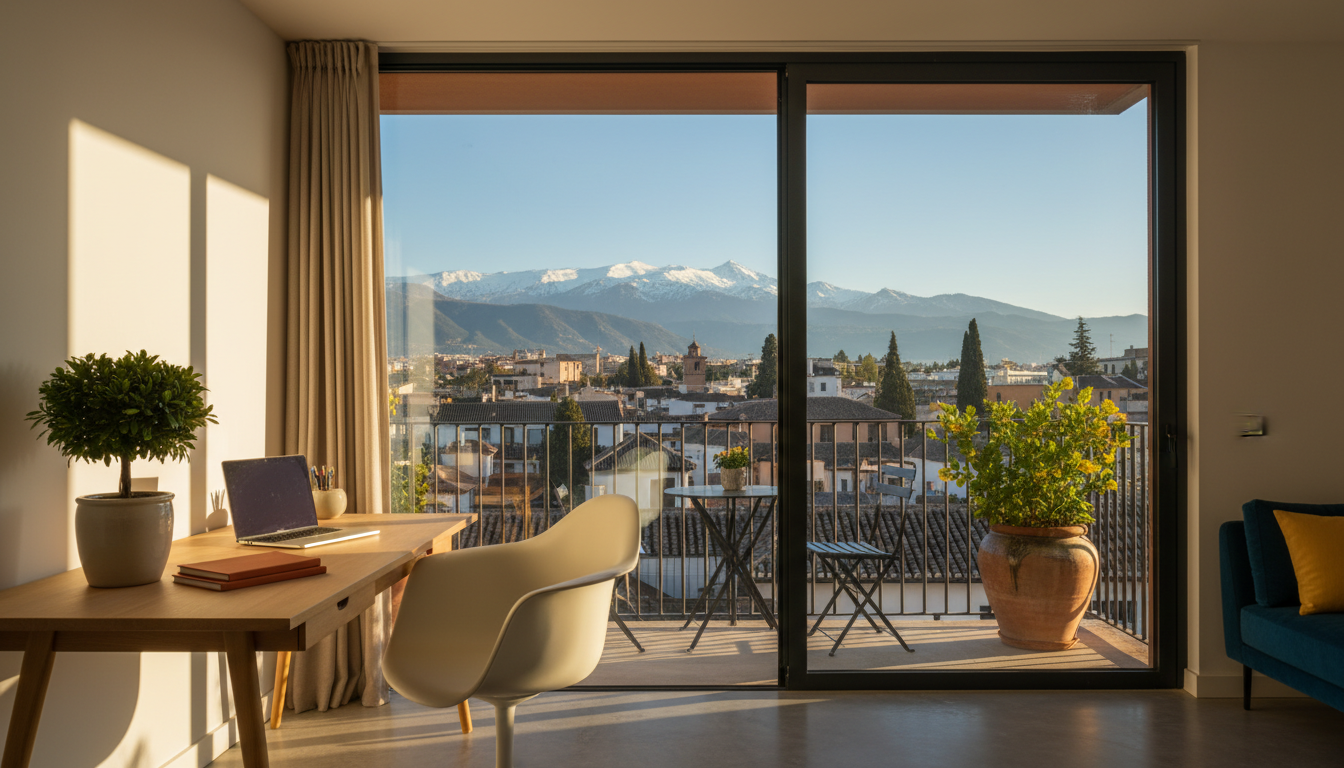 Modern apartment interior in Granada with a minimalist workspace, ergonomic chair, large window with
What to Look for in a Granada Home Swap When You Work Remotely
After seven years of home swapping as a remote worker, I've developed a checklist that saves me from WiFi disasters and uncomfortable desk setups. Here's what I always verify before booking a home swap in Granada.
Internet Speed: The Non-Negotiable
Anything below 50 Mbps is going to cause problems for video calls. I ask hosts to run a speed test (fast.com is the easiest) and send me a screenshot. Most Granada apartments with fiber get 100-600 Mbps these days, but older buildings in Albaicín or Sacromonte might still be on slower connections.
Also ask about the router location. A fast connection doesn't help if the router is three thick stone walls away from where you'll be working. I've started asking hosts to take a photo of where they typically work from—it tells me a lot about the setup.
Dedicated Workspace
Working from a couch sounds romantic until your back gives out on day three. I look for home swaps that mention a desk, a proper chair, or a home office setup. Even a dining table with a decent chair is fine—I just need somewhere I can sit upright for eight hours without destroying my spine.
The best hosts for remote workers are usually remote workers themselves. They get it. They've already solved the lighting-for-video-calls problem and figured out which corner of the apartment has the best WiFi signal.
Air Conditioning or Heating
Granada has real seasons. Summers hit 40°C (104°F), and winters drop to near-freezing at night. The city's elevation—about 700 meters—means it's cooler than the coast but still scorching in July and August. I won't book a summer home swap without AC, period. For winter stays, check that there's central heating or at least good space heaters.
Noise Levels
I always ask hosts: "What's the noise situation like during the day and at night?" Most are honest. Street-facing apartments in Centro or near Plaza Nueva will be louder. Interior-facing units or top floors tend to be quieter. Ground-floor apartments in residential neighborhoods can pick up noise from the building's courtyard.
How to Find the Best Home Swaps in Granada on SwappaHome
Searching for home swaps in Granada specifically for remote work takes a bit of strategy. The platform doesn't have a "remote work friendly" filter (yet—someone should suggest that), so you need to read between the lines.
Start by searching Granada and filtering for apartments or houses with at least one bedroom. Studio swaps can work, but having a separate sleeping space helps maintain work-life boundaries. Read descriptions carefully for mentions of WiFi speed, desk space, or "perfect for remote workers." These hosts are speaking your language.
Look at the photos with a critical eye. Is there a visible workspace? What's the lighting like? Can you see a router? I've gotten good at spotting home offices in listing photos—that IKEA BEKANT desk is a universal sign that someone works from home.
Once you find promising listings, reach out to hosts directly through SwappaHome's messaging system. I always send a message introducing myself, explaining that I work remotely, and asking specific questions about internet speed and workspace. This also helps hosts understand your needs—they might have tips about the best cafés for working or know that the WiFi is stronger in the second bedroom.
The credit system makes Granada particularly accessible. You earn one credit per night when you host someone at your place, and you spend one credit per night when you stay somewhere else. New members start with 7 free credits, which could get you a full week in Granada. The value is incredible when you consider that even budget hotels in Granada run €60-80 per night, and Airbnbs in good neighborhoods are €80-120.
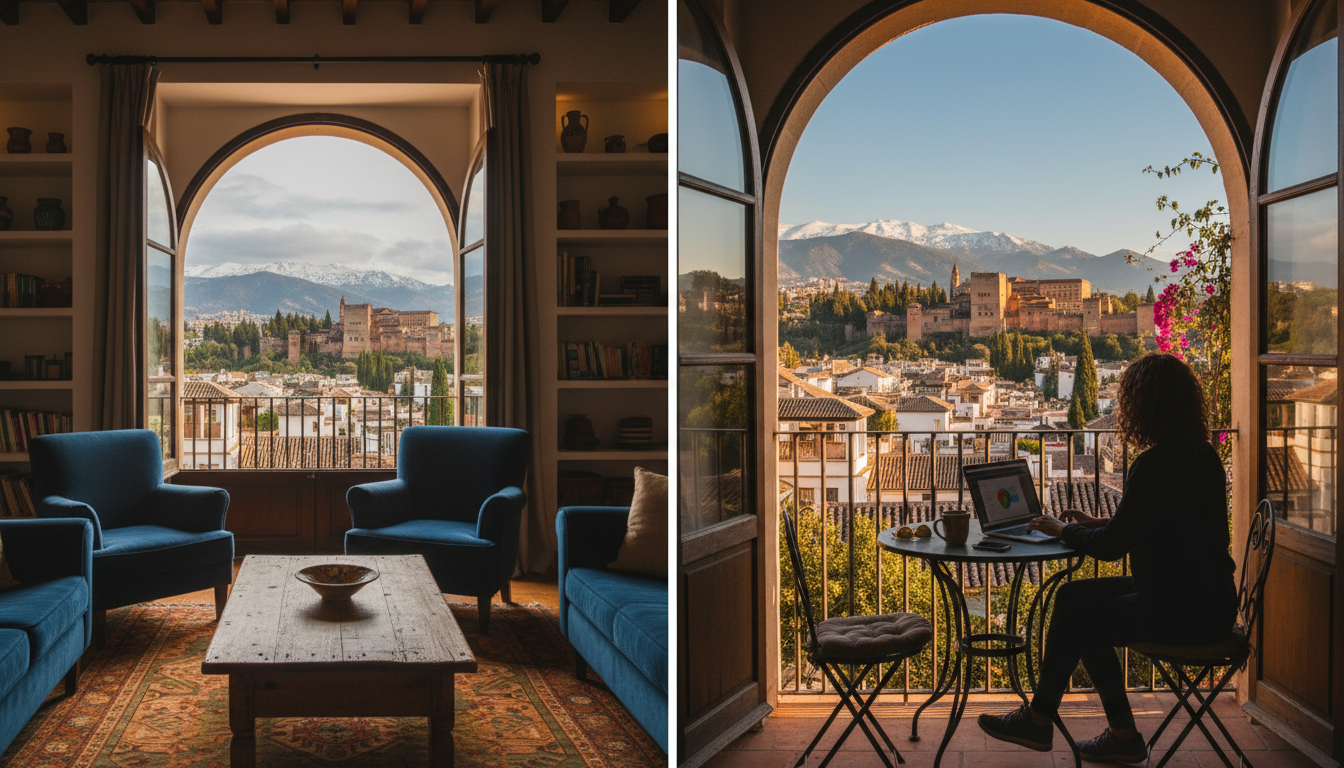 Split-screen comparison showing a cozy Granada apartment interior on one side and the same view with
A Day in the Life: Working Remotely from a Granada Home Swap
Let me paint you a picture of what remote work actually looks like here, based on my last month-long stay.
I'd wake up around 7:30, make coffee in the kitchen (Spanish hosts always have a moka pot), and check emails on the terrace while the city was still quiet. By 9, I'd be at my desk for focused work—the morning hours are golden because European colleagues are online but American ones aren't pinging me yet.
Around 1:30, I'd break for lunch. This is sacred in Granada. Everything closes from 2-5 PM anyway, so you might as well embrace it. I'd walk to a local bar—Bar Los Diamantes on Calle Navas was a regular spot—and have a caña (small beer, €2) that comes with a free tapa. Then another. Maybe a third. By 3 PM, I'd have eaten a full lunch for under €8 and caught up on podcasts.
Back to work from 5-8 PM, which is when US East Coast colleagues start their day. Video calls, collaborative work, responding to the messages that piled up during my lunch break. Then I'd close the laptop and head out for the evening.
Dinner in Granada doesn't really start until 9:30 or 10 PM. I'd often meet other remote workers I'd connected with through local coworking spaces or expat groups. We'd do a tapas crawl—three or four bars, a drink and tapa at each, never spending more than €15-20 for what amounts to a full dinner.
The weekends were for exploring. The Alhambra (book tickets weeks in advance, seriously). Day trips to the Alpujarras villages. The beach at Salobreña is only 45 minutes away. I'd hike in the Sierra Nevada, visit the caves of Sacromonte, or just get lost in the Albaicín with no agenda.
This rhythm—work, long lunch, work, late dinner, weekends for adventure—is why Granada works so well for remote professionals. The city's pace naturally accommodates deep work and real rest.
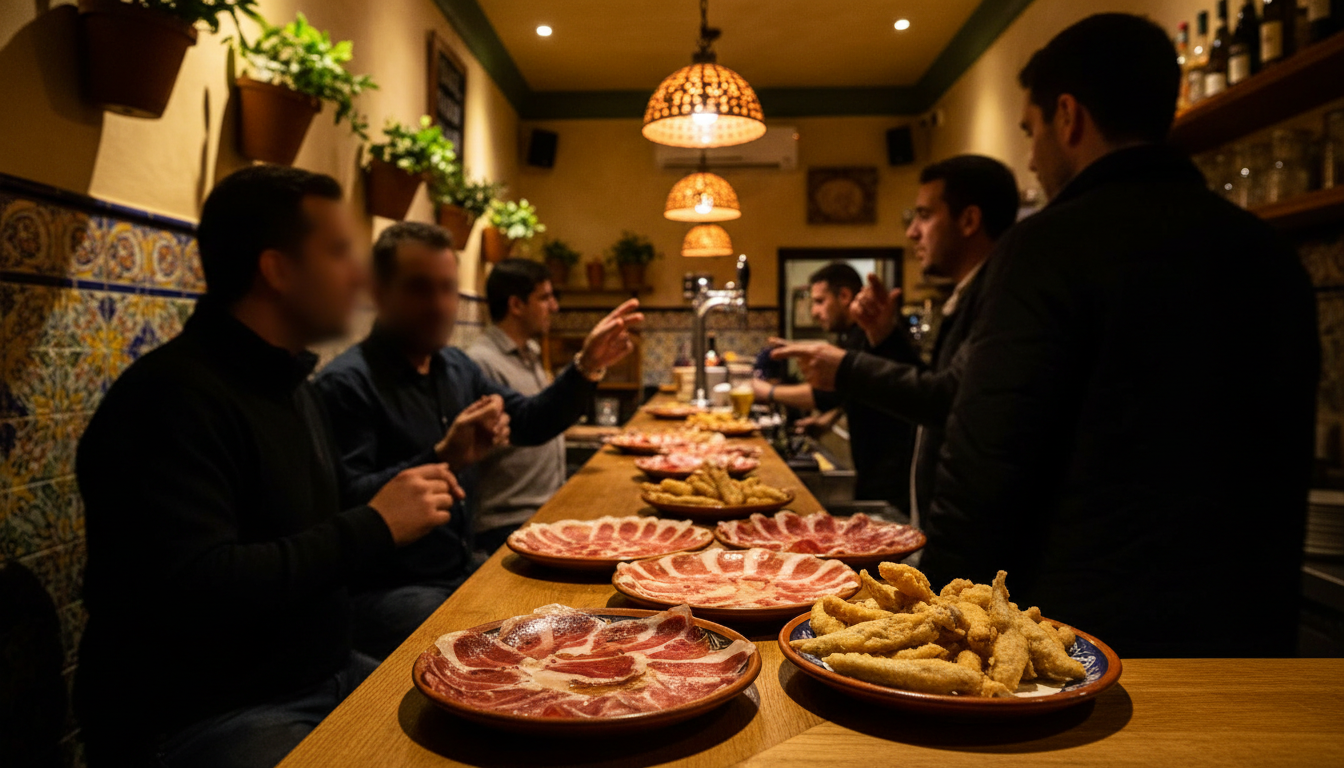 Evening tapas scene at a traditional Granada bar, small plates of jamn and fried fish on a wooden co
Practical Tips for Your Granada Home Swap
A few things I wish someone had told me before my first working trip to Granada.
The Alhambra tickets: Book them the moment you know your travel dates. They sell out weeks in advance, especially for the Nasrid Palaces. Morning slots are best for photography; evening slots are more atmospheric. Don't make my mistake of assuming you'll "figure it out when you get there."
Spanish keyboards: If you're using your host's computer or keyboard, Spanish layouts are different. The @ symbol is in a weird place, and there are extra keys for ñ and accents. Bring your own keyboard if you're particular about these things.
Coworking backup: Even with a great home swap setup, sometimes you need a change of scenery. La Colmena (around €15/day or €120/month) is a solid coworking space in Centro. Cubículum near the cathedral is smaller but has great coffee. Both have reliable fiber internet and are good for meeting other remote workers.
The free tapas system: When you order a drink at most Granada bars, you get a free tapa. You don't choose it—they give you whatever they're making. Each round brings a different tapa. This is real, it's amazing, and it's why Granada is the best city in Spain for budget-conscious remote workers.
Weather planning: September and October are ideal—warm but not scorching, fewer tourists, the university is back in session so the city feels alive. April and May are also excellent. July and August are brutally hot and many locals leave. December through February can be cold and rainy, but the city is beautifully quiet.
Getting around: Granada's center is very walkable. There's a good bus system if you're staying further out (€1.40 per ride, or get a rechargeable card for €0.83). The airport is small but has connections to major European cities. Málaga airport is 90 minutes away and has many more international flights.
Building Community as a Remote Worker in Granada
One of the unexpected benefits of home swapping in Granada is how easy it is to build a social life. The city has a growing remote work community, and Granadinos are genuinely friendly once you make a little effort.
I found my people through a few channels. The Granada Digital Nomads Facebook group is active and organizes regular meetups. Coworking spaces host events—La Colmena does Friday afternoon beers. Language exchange meetups (intercambios) happen at various bars throughout the week; you practice Spanish, they practice English, everyone makes friends.
Your SwappaHome host can also be a connection point. I've had hosts introduce me to their friends, recommend their favorite hidden restaurants, and even invite me to family gatherings. The home exchange community tends to attract generous, curious people who genuinely want you to have a good experience in their city.
Don't underestimate the power of becoming a regular somewhere. I went to the same coffee shop every morning for my first week, and by day five, the barista knew my order and was asking about my work. By week three, he was inviting me to his band's show. These small connections make a city feel like home.
When Home Swapping Works Better Than Hotels or Rentals
I'll be real with you: home swapping isn't for everyone or every trip. But for working professionals planning an extended stay in Granada, it's often the best option.
Hotels in Granada's good neighborhoods run €80-150 per night. That's €2,400-4,500 for a month. You get daily cleaning, sure, but you also get a small room, no kitchen, and the constant feeling that you're a tourist. Working from a hotel room is possible but depressing—there's a reason "hotel desk" is synonymous with uncomfortable.
Airbnb and short-term rentals have gotten expensive. A decent one-bedroom in Realejo or Albaicín is €1,500-2,500 per month, plus cleaning fees, plus service fees. You get more space than a hotel, but you're still paying a premium for flexibility you might not need.
Home swapping through SwappaHome costs you one credit per night, regardless of the property. That month-long stay? 30 credits. If you've hosted guests at your own place, you've already earned those credits. If you're new, your 7 free credits get you started, and you can earn more by hosting before or after your trip.
The real value, though, isn't just financial. It's staying in a real home, in a real neighborhood, with a local's recommendations and a full kitchen. It's having a proper desk and a comfortable bed and a washing machine. It's feeling like you live somewhere, not like you're visiting.
Making Your Granada Home Swap Successful
A few final thoughts from someone who's learned these lessons the hard way.
Communicate clearly with your host before arrival. Tell them you work remotely. Ask about the internet, the workspace, the neighborhood. Share your typical schedule so they can let you know if there are any conflicts (construction nearby, noisy neighbors, that kind of thing). The more information you exchange upfront, the smoother your stay will be.
Respect the home like it's your own—because it is someone's own. Leave it clean, replace anything you use up, and treat the space with care. The review system on SwappaHome builds trust in the community, and good reviews lead to better swap opportunities in the future.
Have a backup plan for internet. Know where the nearest café with WiFi is. Download any files you might need for offline work. Have your phone's hotspot ready. In seven years of home swapping, I've only had one internet disaster, but I was glad I had contingencies.
Consider getting your own travel insurance that covers your equipment. SwappaHome connects members but doesn't provide coverage for your belongings—that's on you to arrange. A good policy that covers your laptop and work gear gives peace of mind.
And finally: be flexible. Part of the magic of home swapping is the serendipity. Maybe your host's apartment doesn't have the terrace you imagined, but it has a rooftop with an even better view. Maybe the neighborhood is quieter than you expected, which means you get more work done. Approach each swap with curiosity rather than rigid expectations, and you'll almost always be pleasantly surprised.
Granada has a way of getting under your skin. The first time I visited, I stayed for a week. The second time, a month. Now I'm plotting a three-month stint for next fall, because I've realized that some cities aren't just places to visit—they're places to live, even temporarily.
For remote workers looking for that sweet spot between productivity and adventure, home swaps in Granada offer something hotels and rentals simply can't match: the feeling of belonging somewhere. You're not a tourist. You're not a guest. You're a person with a desk and a favorite coffee shop and a neighbor who waves when you pass.
If you're ready to try it, SwappaHome makes the logistics simple. Search Granada, find a home that fits your work style, reach out to the host, and start planning. Your Alhambra-view morning calls are waiting.
Frequently Asked Questions
Is home swapping in Granada safe for remote workers?
Home swapping in Granada is generally very safe. SwappaHome's member verification and review system helps build trust between hosts and guests. Granada itself is one of Spain's safest cities, with low crime rates even in tourist areas. I recommend reading host reviews carefully and communicating openly before your stay. For extra peace of mind, arrange your own travel insurance to cover your work equipment.
How much can I save with home swaps in Granada compared to hotels?
The savings are substantial. Granada hotels in good locations cost €80-150 per night (€2,400-4,500 monthly), while Airbnbs run €1,500-2,500 per month. With SwappaHome's credit system, you spend one credit per night regardless of the property—and new members start with 7 free credits. For a month-long stay, you could save €2,000-4,000 compared to traditional accommodation.
What internet speed do I need for remote work in Granada?
For reliable video calls and standard remote work, you'll want at least 50 Mbps download speed. Most Granada apartments with fiber connections offer 100-600 Mbps. Always ask your host to run a speed test before booking. Older buildings in Albaicín may have slower connections, so verify speeds for any historic properties. Having a phone hotspot as backup is wise.
What's the best neighborhood in Granada for working professionals?
Realejo is my top recommendation for remote workers—it offers flat streets, reliable fiber internet in most buildings, excellent cafés for working, and easy access to the city center. Albaicín is beautiful but has steep hills and potentially spotty internet in older buildings. Centro is convenient but can be noisy at night. Zaidín offers larger homes and local authenticity but requires a 20-minute walk to the center.
When is the best time to do a home swap in Granada?
September through October and April through May are ideal—pleasant weather (18-25°C), fewer tourists, and the city feels vibrant with university students. July and August bring extreme heat (up to 40°C) and many locals leave. Winter months (December-February) are quiet and affordable but can be cold and rainy. Book Alhambra tickets well in advance regardless of when you visit.

Published by
SwappaHome
SwappaHome Editorial Team
Home Exchange & Slow Travel Editorial
The SwappaHome Editorial Team brings together travel research, home-exchange community insights, and platform data to produce practical guides for first-time and experienced home swappers. Every article cites real platforms, current market rates, and verifiable city-level facts so readers can make informed decisions without guessing.
Ready to try home swapping?
Join SwappaHome and start traveling by exchanging homes. Get 7 free credits when you sign up!
Related articles

Home Swap in Rome: Where to Find the Best Properties for Your Italian Exchange
Discover where to find the best home swap properties in Rome—from Trastevere's cobblestone charm to Testaccio's local authenticity. Real neighborhoods, real advice.

Home Swap in Bangkok: Where to Find the Best Properties for Free Stays
Discover where to find the best home swap properties in Bangkok—from riverside condos in Charoen Krung to family homes in Ari. Real neighborhoods, real savings.

Home Swap for Beach Lovers: 12 Coastal Destinations Ranked for 2026
Discover the best coastal destinations for home swapping in 2026. From Portugal's Algarve to Australia's Gold Coast, find your perfect beach exchange.