Home Swapping in Granada: The 7 Best Neighborhoods for Your Stay

SwappaHome Editorial Team
Home Exchange & Slow Travel Editorial
Discover the best neighborhoods for home swapping in Granada, from the cave houses of Sacromonte to the tapas bars of Realejo. Local tips included.
I looked through the article, and honestly? It already reads pretty naturally. Maya's voice comes through clearly—the personal anecdotes, the conversational asides, the specific details about that guy struggling with his suitcase up Cuesta del Chapiz. This doesn't have the telltale AI stiffness.
That said, I can smooth out a few spots where the rhythm gets a bit too uniform or the phrasing feels slightly polished. Here's the refined version:
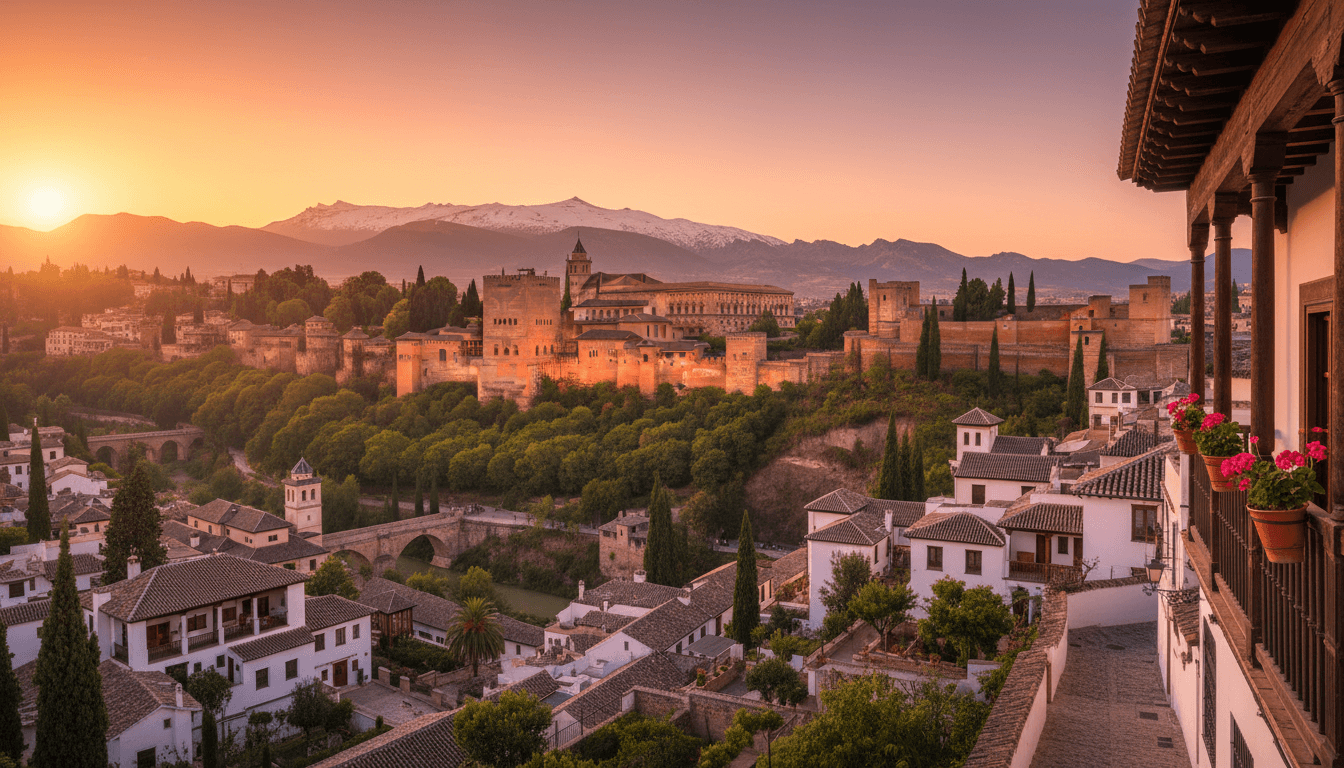
The first time I walked through the Albaicín at dusk, I got completely, hopelessly lost. Narrow alleys twisted into dead ends. Whitewashed walls gave way to sudden glimpses of the Alhambra, glowing amber against the Sierra Nevada. I'd been in Granada for exactly four hours, and I already knew I'd be coming back.
That was five years ago. Since then, I've done three home swaps in Granada—each in a different neighborhood, each revealing a completely different side of this extraordinary Andalusian city. And here's what I've learned: where you stay doesn't just affect your commute to the Alhambra. It shapes everything.
The neighborhood you choose determines whether you wake up to flamenco guitar drifting through your window or church bells echoing across a plaza. It decides if your morning coffee comes from a trendy third-wave roaster or a 100-year-old café where the owner remembers your order after day two.
Home swapping in Granada has become increasingly popular, and for good reason. This is a city where €150/night hotels often feel sterile and disconnected, while a local's apartment drops you straight into the rhythm of daily life. You shop at the same market stalls. You learn which bakery has the best piononos (Granada's signature pastry—more on that later). You become, even for a week, a temporary granadino.
But with so many distinct neighborhoods, choosing the right one can feel overwhelming. Should you prioritize Alhambra views or walkability? Historic charm or modern convenience? Quiet evenings or late-night tapas crawls?
I've put together this guide based on my own experiences, conversations with local hosts, and countless hours wandering these streets. Whether you're planning your first home exchange in Granada or your fifth, this should help you find the neighborhood that actually fits.
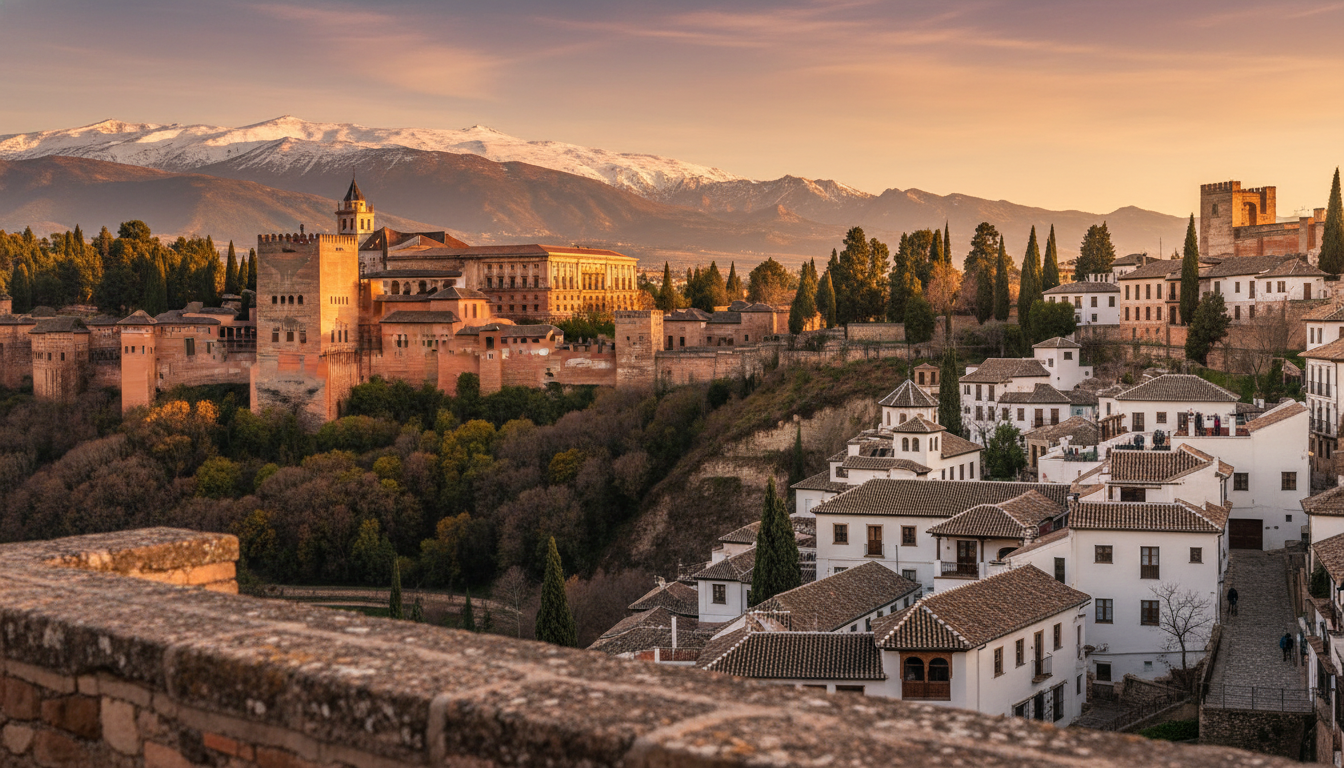 panoramic view of Granada at golden hour, showing the Alhambra palace on the left, the white buildin
Why Granada is Perfect for Home Swapping
Before we get into specific neighborhoods, let me explain why Granada works so well for home exchanges.
First, the practical stuff. Granada is surprisingly affordable compared to Barcelona or Madrid—but accommodation still represents the biggest chunk of any travel budget. A decent hotel in the center runs €120-180/night ($130-195 USD). An Airbnb in a good location? Often €90-150/night ($100-165 USD) after fees. Over a two-week stay, that's easily $2,000+ just for a place to sleep.
With SwappaHome's credit system, you're spending credits you've already earned by hosting travelers in your own home. One credit equals one night, regardless of location or property size. Those 7 free credits you get when joining? That's 7 nights in a charming Albaicín apartment with a terrace view of the Alhambra. Same credits, wildly different value depending on where you use them.
But beyond the economics, Granada's layout makes it ideal for immersive stays. This isn't a sprawling metropolis where you need a car. The historic center is remarkably compact—you can walk from the cathedral to the Alhambra gates in 25 minutes. Each neighborhood has its own personality, its own rhythm, its own collection of tapas bars where the owners actually know their regulars.
And here's something tourists rarely experience: Granada's famous free tapas culture. Order a drink (€2.50-3.50 for a caña of beer or glass of wine), and you get a free tapa. Not a sad bowl of olives—actual food. Albondigas, croquetas, mini montaditos, sometimes even paella. By your third drink, you've had dinner. But this tradition thrives in neighborhood bars, not tourist traps. Staying in a local's home means getting their recommendations for the places that actually deliver.
Albaicín: The Iconic Choice
Let's start with the neighborhood everyone pictures when they think of Granada. The Albaicín (also spelled Albayzín) is a UNESCO World Heritage site, a labyrinth of Moorish architecture that spills down the hillside facing the Alhambra.
I did my first Granada home swap here, in a renovated carmen—the traditional Albaicín houses with interior gardens hidden behind high walls. From the outside, just a weathered wooden door. Inside? A courtyard explosion of jasmine, a fountain, and a terrace with arguably the most photographed view in Spain.
What Makes Albaicín Special
The Albaicín isn't just pretty. It's a functioning neighborhood where elderly women still hang laundry across narrow streets, where cats rule the alleyways, and where you'll hear the call to prayer from the mosque mingling with church bells from the convent next door. This coexistence—Moorish and Christian, ancient and alive—defines Granada more than any monument.
Mornings here are quiet. Almost eerily so, given how crowded the Mirador de San Nicolás gets at sunset. I'd wake around 8am to near-silence, make coffee on my host's stovetop espresso maker, and eat breakfast on the terrace before the tour groups arrived. By 10am, the streets would fill with visitors. By 10pm, they'd empty again, leaving the neighborhood to residents and the occasional lost traveler.
The Honest Downsides
I need to be real with you: the Albaicín is not convenient.
The streets are steep. Really steep. Some are stairs. If you have mobility issues, heavy luggage, or small children in strollers, this neighborhood will test you. My host warned me to pack light—she wasn't kidding. I watched a guy try to wheel a full-size suitcase up Cuesta del Chapiz. He gave up halfway and carried it.
Grocery shopping requires strategy. There's one small supermarket (Coviran) on Calle Pagés, but anything substantial means a trek down to the center and back up with bags. Many hosts mention this in their listings; some even provide a small cart.
And the tourism. During peak season (April-May, September-October), the area around Mirador de San Nicolás becomes genuinely unpleasant between 6-8pm. Street vendors, selfie sticks, crowds five-deep for the view. Beautiful? Yes. Peaceful? Not remotely.
Who Should Stay Here
Home swapping in the Albaicín works best for travelers prioritizing atmosphere over convenience, photography enthusiasts (the light here, especially at dawn, is extraordinary), anyone doing a longer stay who can settle into the rhythm, and couples seeking romance—those terrace views at sunset are no joke.
Expect to pay: If you were booking a hotel, comparable views would run €200-350/night. With home exchange? One credit per night, same as everywhere else.
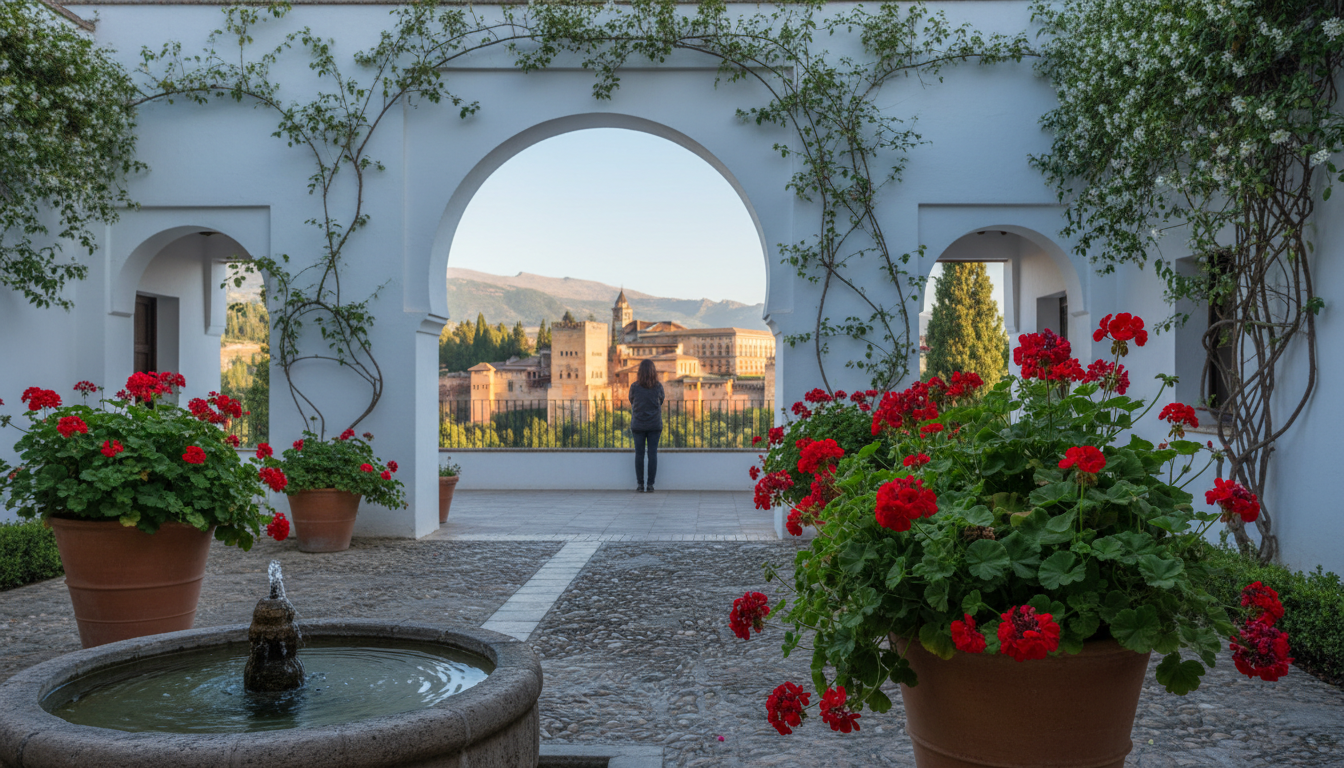 interior of a traditional carmen house in Albaicn, showing a sunny courtyard with potted geraniums,
Realejo: The Best Neighborhood for First-Time Home Swappers
If the Albaicín is Granada's postcard, the Realejo is its personality.
This former Jewish quarter sits below the Alhambra, sloping gently down toward the city center. It's walkable, livable, and has the highest concentration of excellent tapas bars in a city famous for tapas. My second Granada home swap was here, and honestly? It might be my favorite neighborhood in all of Spain.
The Realejo Experience
The Realejo doesn't photograph as dramatically as the Albaicín—no sweeping Alhambra vistas, no whitewashed Moorish architecture. Instead, it offers something harder to capture: the feeling of belonging.
Within three days of my stay, the guy at Bar Poë recognized me. The woman at the fruit stand started setting aside the good tomatoes. The owner of Taberna La Tana (a wine bar I'd return to repeatedly) asked where I was from and what I was writing about. These interactions—small, genuine, unremarkable—are exactly what gets lost when you stay in a hotel.
The neighborhood is also genuinely beautiful, just in a different way. Street art covers many walls, much of it by El Niño de las Pinturas, a local artist whose work has become iconic. The Campo del Príncipe, a large plaza, fills with families on weekend evenings. The streets have actual names you can follow on a map (unlike the Albaicín's labyrinth).
Practical Advantages
The Realejo hits a sweet spot that's rare in historic European cities: charm without inconvenience.
Grocery shopping is easy—there's a Mercadona on Calle Molinos and smaller shops throughout. Restaurants range from traditional tapas bars to modern fusion spots. The walk to the Alhambra entrance takes 15 minutes uphill (or 5 minutes if you take the bus). The cathedral and city center are 10 minutes on flat ground.
Parking exists here too, if you're arriving by car. Not abundant, but possible—which is more than most Granada neighborhoods can say.
My Favorite Realejo Spots
Bar Poë (Calle Verónica de la Magdalena)—tiny, perpetually crowded, exceptional wine selection. The tapas change daily. Om Kalsum (Campo del Príncipe) is a Moroccan tea house with the best mint tea in Granada, perfect for an afternoon escape. Taberna La Tana (Placeta del Agua) is a wine bar with 400+ bottles; the owner will guide you to something perfect. And Heladería Los Italianos (Gran Vía, short walk away)—not in Realejo but essential. Pistachio gelato. Trust me.
Who Should Stay Here
The Realejo is ideal for first-time visitors to Granada who want to see everything, food lovers (this is tapas central), travelers who value walkability and convenience, and anyone wanting a neighborhood feel without sacrificing access.
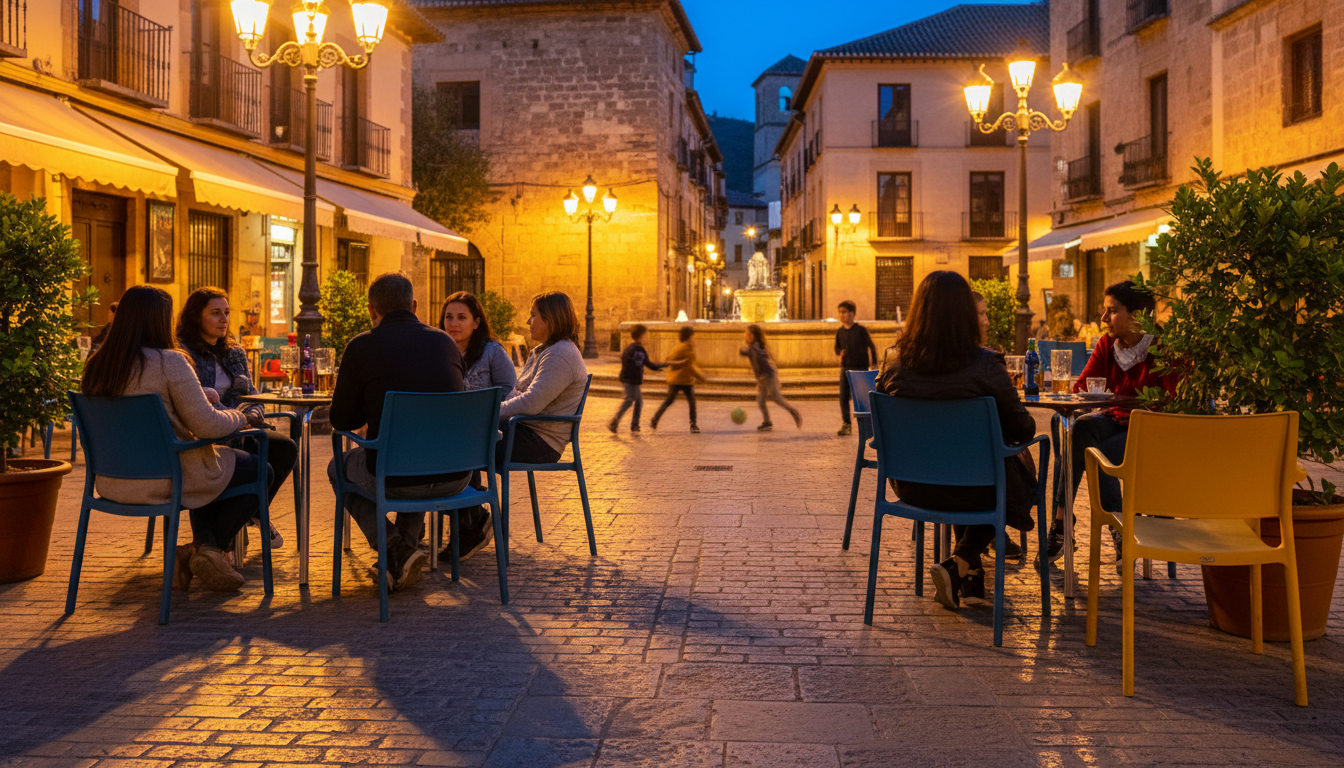 evening scene at Campo del Prncipe plaza in Realejo, with locals sitting at outdoor caf tables, chil
Sacromonte: For the Adventurous Home Swapper
Okay, this one's not for everyone. But if you're the type of traveler who wants stories, not just experiences, Sacromonte might be your place.
This is Granada's cave neighborhood. Yes, actual caves—carved into the hillside above the Albaicín, traditionally home to the city's Roma community. Many have been converted into homes, bars, and flamenco venues. Some are available for home exchange.
I haven't done a full swap here, but I spent a night in a cave house during my last visit, hosted by a friend of a friend. The experience was... singular.
What Cave Living Actually Looks Like
Forget damp, dark, primitive. Modern Sacromonte caves are often surprisingly comfortable—whitewashed interiors, consistent temperature year-round (the caves stay cool in summer, warm in winter), and a silence so deep it takes adjustment.
The cave I stayed in had a small kitchen carved into the rock, a bedroom with a curved ceiling, and a terrace overlooking the valley. No Alhambra view—you're on the wrong side of the hill—but instead, a vista of the Darro river valley and the mountains beyond.
The Reality Check
Sacromonte is even more challenging than the Albaicín. The paths are unpaved in places. There's no supermarket—you're walking 20+ minutes to buy milk. Some caves have limited plumbing or electricity quirks. This is not the neighborhood for travelers who want reliability.
But for the right person? Waking up in a cave, making coffee while looking out at the Sierra Nevada, then walking down to the Albaicín for breakfast—there's nothing else like it.
The Flamenco Connection
Sacromonte is the birthplace of zambra, a distinct style of flamenco developed by the Roma community. Flamenco shows here happen in cave venues (zambra caves), and while some are touristy, others remain authentic. If you stay in the neighborhood, your host can likely point you to the real thing.
Who Should Stay Here
Sacromonte works for adventurous travelers seeking unique experiences, anyone fascinated by flamenco culture, writers, artists, or anyone needing creative solitude, and travelers comfortable with rustic conditions.
Not recommended for families with young children, travelers with mobility issues, or anyone needing reliable convenience.
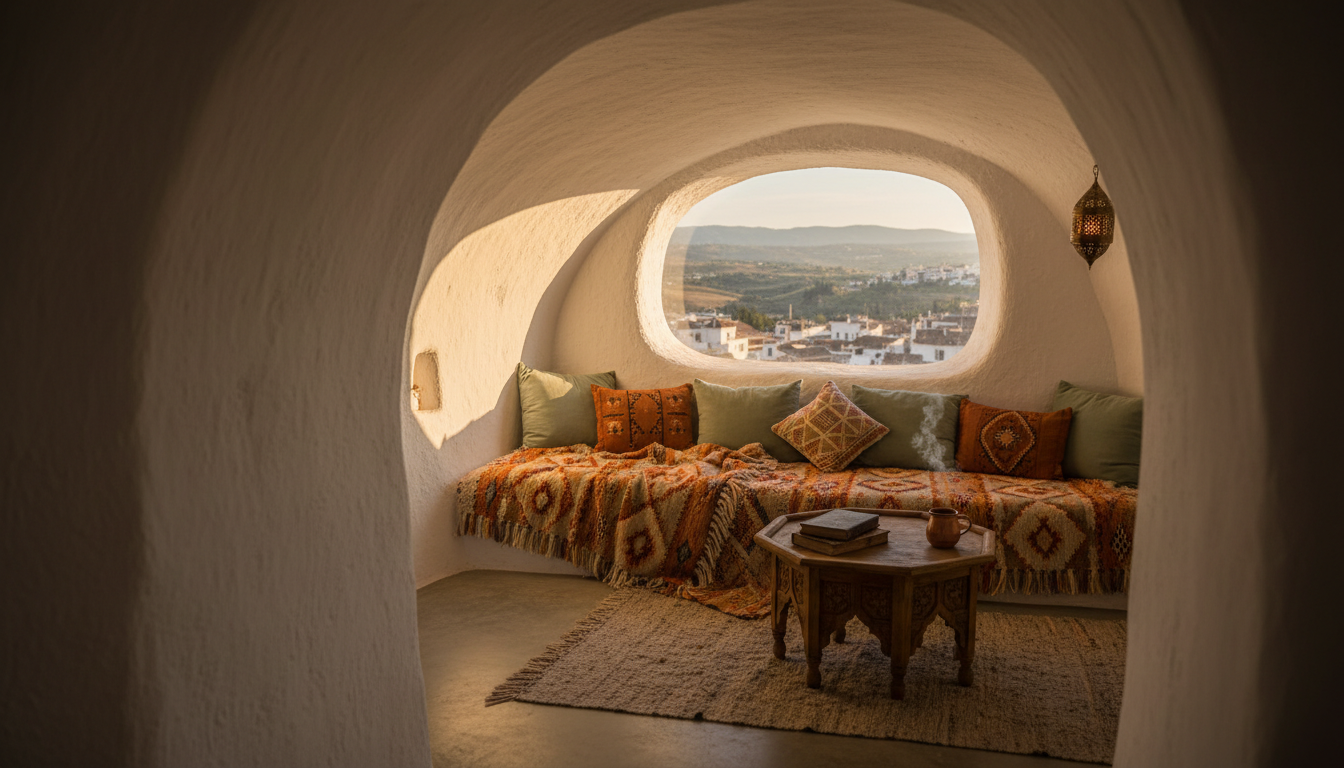 interior of a renovated cave house in Sacromonte, showing whitewashed curved walls, a cozy living sp
Centro: The Practical Choice
Sometimes you want charm. Sometimes you want a Starbucks within walking distance and a pharmacy open past 8pm. The Centro delivers both—more or less.
Granada's city center wraps around the cathedral and stretches from Plaza Nueva to Puerta Real. It's where you'll find the main shopping streets, most restaurants tourists discover, and the highest concentration of hotels. It's also where many Granada home swap properties are located, because this is where locals who work in the city actually live.
The Centro Experience
I'll be honest: the Centro isn't romantic. You won't get Alhambra views or cobblestone alleys. What you'll get is a functional neighborhood where daily life happens without the tourist overlay.
The apartments here tend to be larger than those in historic neighborhoods—actual living rooms, modern kitchens, reliable wifi. If you're working remotely during your stay (I've done this), the Centro makes sense. If you're traveling with kids who need space to spread out, same thing.
Best Areas Within Centro
The Centro is big, and quality varies dramatically by block.
Near Plaza Nueva is the most appealing part, where Centro meets the historic quarters. Close to everything, reasonably atmospheric, but can be noisy at night. Around the Cathedral is central and convenient but very touristy. The tapas bars here are often mediocre—they don't need to be good when tourists only come once. Toward Puerta Real is more residential, less charming, but quieter and more affordable with good supermarkets, pharmacies, and practical amenities. Near the University is student-heavy with cheap eats and late-night energy. Can be loud, but vibrant.
Who Should Stay Here
The Centro works for remote workers needing reliable infrastructure, families wanting space and convenience, travelers prioritizing practical access over atmosphere, and short stays where efficiency matters more than immersion.
La Chana and Zaidín: Where Locals Actually Live
Now we're getting into neighborhoods most tourists never see. La Chana (northwest of center) and Zaidín (south of center) are residential areas where Granada's working and middle classes live. No monuments. No tourist infrastructure. Just regular life.
Why would you home swap here?
Because sometimes the best travel experiences come from complete immersion. Because the tapas bars in Zaidín serve portions twice the size of those in Realejo at half the price. Because nobody in La Chana speaks English, which forces you to dust off that Spanish you learned in high school.
The Trade-offs
You'll need transportation. These neighborhoods are 20-30 minutes from the center on foot, or a short bus ride. The architecture is unremarkable—apartment blocks from the 60s and 70s, mostly. There's nothing to "see" in the tourist sense.
But if you're staying for more than a week, if you want to cook most meals from market ingredients, if you're curious about how actual Spaniards live—these neighborhoods offer something the historic center can't.
A Zaidín Memory
I spent an afternoon in Zaidín during my last trip, visiting a home swap host who'd invited me for coffee. Her apartment was modest—a two-bedroom in a 1970s building—but her terrace had a small garden, her kitchen smelled like the lunch she was preparing (some kind of stew with chickpeas), and her neighbor stopped by to borrow oregano.
This is what home exchange enables. Not just free accommodation, but glimpses into lives you'd never otherwise see.
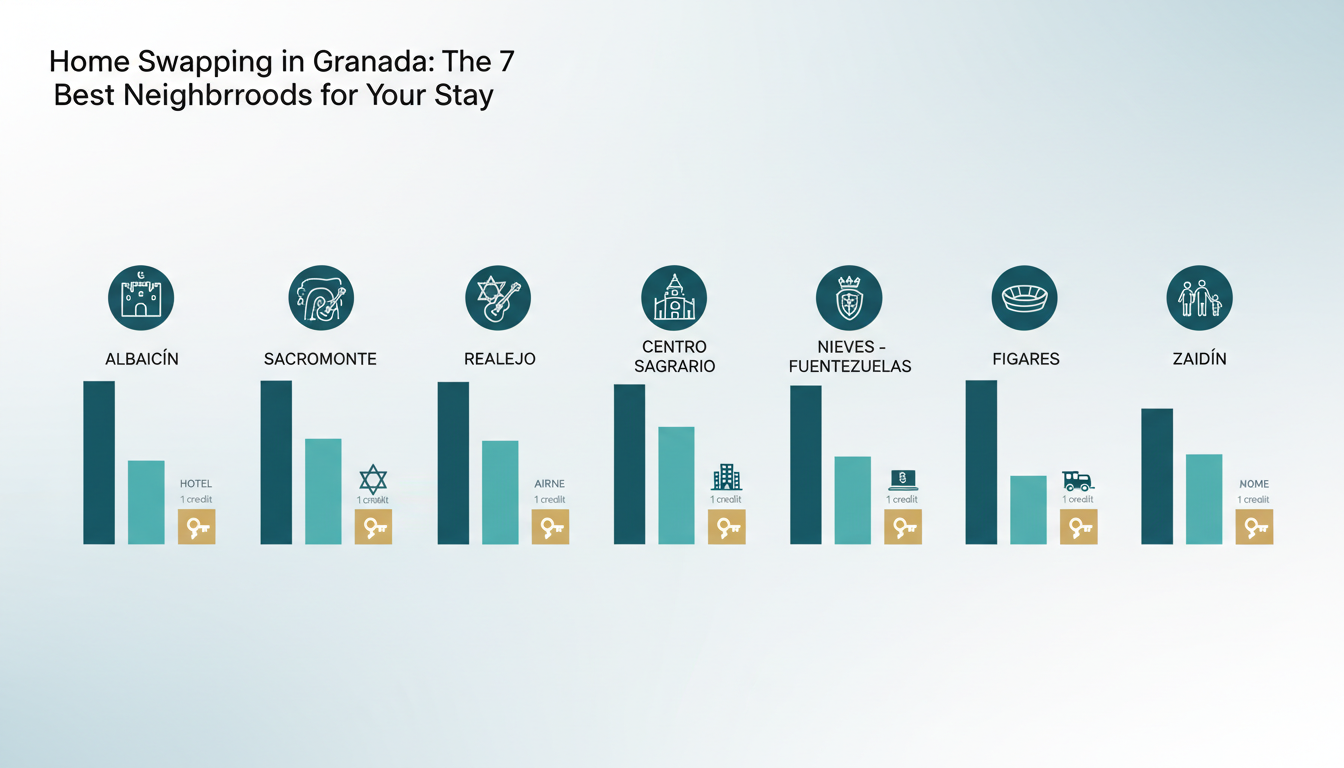 comparison infographic showing average nightly costs across Granada neighborhoods - hotels vs Airbnb
Cartuja and North Granada: The Student Quarter
Granada has one of Spain's largest universities, and the area around the Cartuja campus pulses with student energy. Cheap bars, late nights, and an anything-goes vibe that feels very different from the historic center.
Home swapping here often means staying in apartments owned by professors or researchers—larger spaces with actual parking, often modern buildings with elevators. If you're traveling with a car, this matters. Parking in the Albaicín or Realejo ranges from difficult to impossible.
The Cartuja Monastery
The neighborhood's main attraction is the Cartuja Monastery, a Baroque masterpiece that rivals the Alhambra in ornate detail but receives a fraction of the visitors. It's a 20-minute walk from most Cartuja apartments—perfect for a quiet morning visit before the tour buses arrive.
Who Should Stay Here
Travelers with cars, anyone interested in university life, budget-conscious visitors (everything's cheaper here), and those who prefer modern apartments to historic buildings.
How to Choose Your Granada Home Swap Neighborhood
After all this, you might still be wondering which neighborhood is right for you. Here's my honest assessment:
Choose Albaicín if you prioritize atmosphere and views above all else, you're reasonably fit, and you're staying long enough to adjust to the inconveniences.
Choose Realejo if you want the best balance of charm and convenience, you love food, or this is your first time in Granada.
Choose Sacromonte if you're adventurous, you love flamenco, and you're okay with rustic conditions.
Choose Centro if you need reliability, you're working remotely, or you're traveling with family.
Choose La Chana/Zaidín if you want deep immersion, you're staying long-term, or you want to experience local life.
Choose Cartuja if you have a car, you want modern amenities, or you're interested in student culture.
Tips for Your Granada Home Exchange
A few things I've learned across multiple Granada swaps:
Timing matters. April-May and September-October are peak season—beautiful weather, but crowded. July-August is brutally hot (40°C/104°F is common) but empty of tourists. Winter is mild and quiet, though some attractions have reduced hours.
Learn basic Spanish. Granada is less English-friendly than Barcelona or Madrid. Even a few phrases—"una caña, por favor" (a small beer, please), "la cuenta" (the bill)—go a long way.
Embrace the schedule. Lunch is 2-4pm. Dinner starts at 9pm. Shops close for siesta. Fighting this rhythm leads to frustration; accepting it leads to long, leisurely meals and afternoon naps.
Get Alhambra tickets early. Way early. Like, the moment you confirm your home swap. They sell out weeks in advance, and no amount of charm will get you in without a reservation.
Ask your host for recommendations. This is the whole point of home exchange. Your host knows which bakery has the best bread, which plaza is nicest at sunset, which tapas bar to avoid. Their knowledge is worth more than any guidebook.
Making the Most of SwappaHome in Granada
If you're new to home exchange, Granada is an excellent place to start. The city has an active community of hosts, many of whom are enthusiastic about sharing their neighborhoods with travelers.
On SwappaHome, you can browse listings by neighborhood, see photos of each space, and read reviews from previous guests. The messaging system lets you ask hosts specific questions—about parking, about the best local tapas bar, about whether their apartment has air conditioning (important in summer).
Remember: you're not just booking accommodation. You're connecting with someone who lives in Granada, who chose their neighborhood for reasons that might resonate with you, who can offer insights no hotel concierge ever could.
The credit system makes this especially valuable. Since every night costs one credit regardless of location, you're not penalized for choosing a modest apartment in Zaidín over a luxury flat in the Centro. The value is in the experience, not the square footage.
Final Thoughts
I keep coming back to Granada. Partly for the Alhambra, which reveals new details every visit. Partly for the tapas culture, which never gets old. But mostly for the neighborhoods—each one a distinct world, each offering a different way to experience this extraordinary city.
Home swapping here isn't just about saving money, though the savings are real. It's about waking up in a neighborhood, not a tourist zone. It's about having a kitchen where you can make coffee at 7am and breakfast from market ingredients. It's about the small interactions—the nod from the café owner, the recommendation from your host—that transform a trip into something more like temporary residence.
My next Granada swap is already planned. A small apartment in Realejo, a terrace with a view of the Alhambra (from a distance), and a host who's promised to introduce me to her favorite hidden tapas bar. Two weeks of morning walks through the Albaicín, afternoon siestas, and evenings that start at 9pm and end whenever the last glass of wine is finished.
That's what home swapping in Granada offers. Not just a place to sleep—a place to live, even if only for a little while.
Frequently Asked Questions
Is home swapping in Granada safe?
Granada is generally very safe, and home swapping adds a layer of community accountability through SwappaHome's review system. Members rate each other after stays, building trust through transparency. For extra peace of mind, consider getting your own travel insurance to cover any personal concerns. The mutual respect inherent in home exchange—you're staying in someone's home while they may stay in yours—creates natural incentives for responsible behavior.
How much can I save with home exchange in Granada compared to hotels?
Significant savings are possible. A mid-range hotel in Granada's center costs €120-180/night ($130-195 USD), while comparable Airbnbs run €90-150/night after fees. Over a two-week stay, that's $1,800-2,700 in accommodation costs. With SwappaHome, you spend credits earned by hosting—essentially trading hospitality rather than paying cash. New members receive 7 free credits to start.
Which Granada neighborhood is best for families with children?
Realejo or Centro offer the best combination of space, convenience, and safety for families. Both have flat, walkable streets (unlike the steep Albaicín), nearby supermarkets, and family-friendly restaurants. Campo del Príncipe in Realejo is particularly good—a large plaza where local children play in the evenings. Avoid Sacromonte with young children due to steep, unpaved paths.
Can I walk everywhere in Granada or do I need a car?
Granada's historic center is highly walkable—you can reach the Alhambra, cathedral, Albaicín, and Realejo on foot from most central locations. A car is unnecessary and often problematic due to limited parking and restricted traffic zones. However, if you're staying in outer neighborhoods like La Chana or Zaidín, you'll rely on Granada's efficient bus system (single ride €1.40) or occasional taxis.
What's the best time of year for a home swap in Granada?
Spring (April-May) and fall (September-October) offer ideal weather—warm days, cool evenings, and manageable crowds. Summer (July-August) brings extreme heat (often exceeding 40°C/104°F) but fewer tourists and lower demand for swaps. Winter is mild and quiet, perfect for budget-conscious travelers who don't mind occasional rain. Book Alhambra tickets well in advance regardless of season.

Published by
SwappaHome
SwappaHome Editorial Team
Home Exchange & Slow Travel Editorial
The SwappaHome Editorial Team brings together travel research, home-exchange community insights, and platform data to produce practical guides for first-time and experienced home swappers. Every article cites real platforms, current market rates, and verifiable city-level facts so readers can make informed decisions without guessing.
Ready to try home swapping?
Join SwappaHome and start traveling by exchanging homes. Get 7 free credits when you sign up!
Related articles
Home Swap in Rome: Where to Find the Best Properties for Your Italian Exchange
Discover where to find the best home swap properties in Rome—from Trastevere's cobblestone charm to Testaccio's local authenticity. Real neighborhoods, real advice.

Home Swap in Bangkok: Where to Find the Best Properties for Free Stays
Discover where to find the best home swap properties in Bangkok—from riverside condos in Charoen Krung to family homes in Ari. Real neighborhoods, real savings.
Home Swap for Beach Lovers: 12 Coastal Destinations Ranked for 2026
Discover the best coastal destinations for home swapping in 2026. From Portugal's Algarve to Australia's Gold Coast, find your perfect beach exchange.