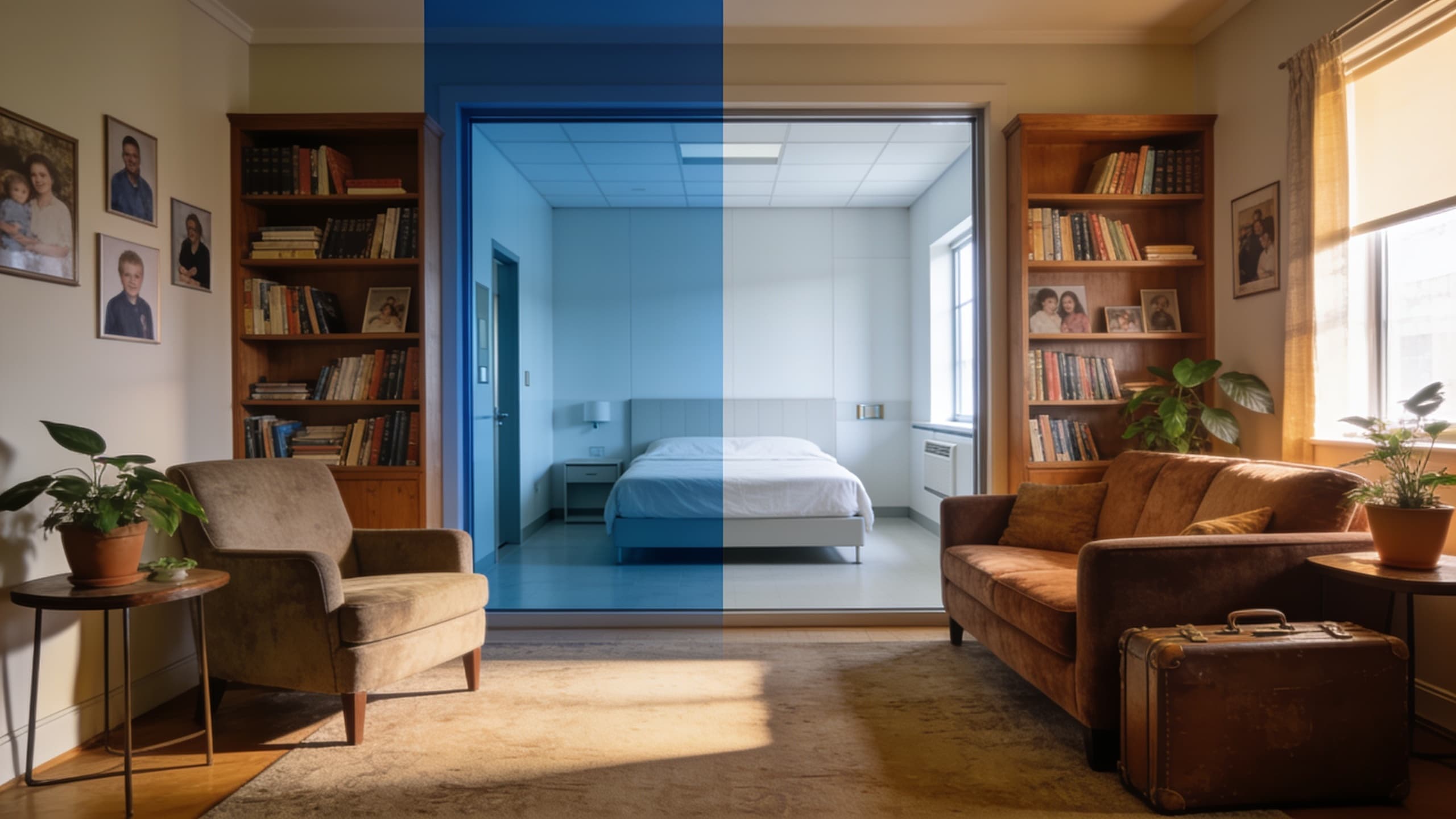
How Home Swapping Is Changing the Future of Travel

SwappaHome Editorial Team
Home Exchange & Slow Travel Editorial
The future of travel looks a lot less like a hotel lobby and a lot more like somebody else's living room. And I mean that literally. As inflation keeps chewing through vacation budgets and remote...
The future of travel looks a lot less like a hotel lobby and a lot more like somebody else's living room. And I mean that literally.
As inflation keeps chewing through vacation budgets and remote work cuts people loose from a single zip code, home swapping has quietly graduated from a niche thing that retirees with beach houses did to something families, digital nomads, and regular budget travelers actually plan their trips around. The platforms connecting homeowners willing to trade stays are rewriting the sharing economy playbook, and you can feel the ripples in hospitality, real estate, even at the local tourism-board level.
So let me walk you through what's actually driving this, the numbers that back it up, and what it means if you're sitting there wondering where to go next.
Table of Contents
- What Is Home Swapping, and Why Is It Reshaping the Future of Travel?
- The Numbers Behind the Sharing Economy's Travel Boom
- Key Home Exchange Trends Shaping Travel Right Now
- How Does Home Swapping Compare to Hotels and Short-Term Rentals?
- Who Is Home Swapping Really For?
- Is Home Swapping Safe? Trust, Technology, and Peace of Mind
- What the Future of Travel Looks Like With Home Exchanges
- How to Get Started With Home Swapping
- Frequently Asked Questions
What Is Home Swapping, and Why Is It Reshaping the Future of Travel?
Home swapping is a deal where two households agree to stay in each other's homes, either at the same time or through a points system, instead of shelling out for hotels or paid rentals. The reason it's reshaping travel is simple: it kills the single biggest line item on almost any trip budget. Lodging. Gone. And in its place you get a full kitchen, an actual neighborhood, and a host who knows which coffee shop is worth walking to.
The idea itself is old, by the way. Organized swapping clubs go all the way back to the 1950s, when European teachers started trading houses over summer break. So no, nobody invented this last Tuesday. What changed is everything around it. Mobile apps, verified reviews, in-app messaging, photo verification. All of that turned a slow, handshake-based hobby into a searchable marketplace you can scroll through on your phone. It's basically the same arc ride-sharing and short-term rentals went through a decade earlier, which is exactly why industry folks keep bringing up home swapping whenever the conversation turns to where travel is headed.
And honestly, it's not just about the money. Staying in someone's real home, with their bookshelf and their weird-but-charming kitchen setup and their scribbled note about how the local buses actually work, gives you a kind of depth you just can't fake in a Marriott. That's the thing people are really shopping for now. Not a bed. An experience.
The Numbers Behind the Sharing Economy's Travel Boom
The travel slice of the sharing economy went from curiosity to multi-billion-dollar force, and home exchange is one of its fastest-growing corners. According to Statista, the global vacation rental market (the broader bucket home exchange sits inside) was worth over $87 billion in 2023, and it's projected to keep climbing through the decade as more people ditch standard hotel stays for something more residential.
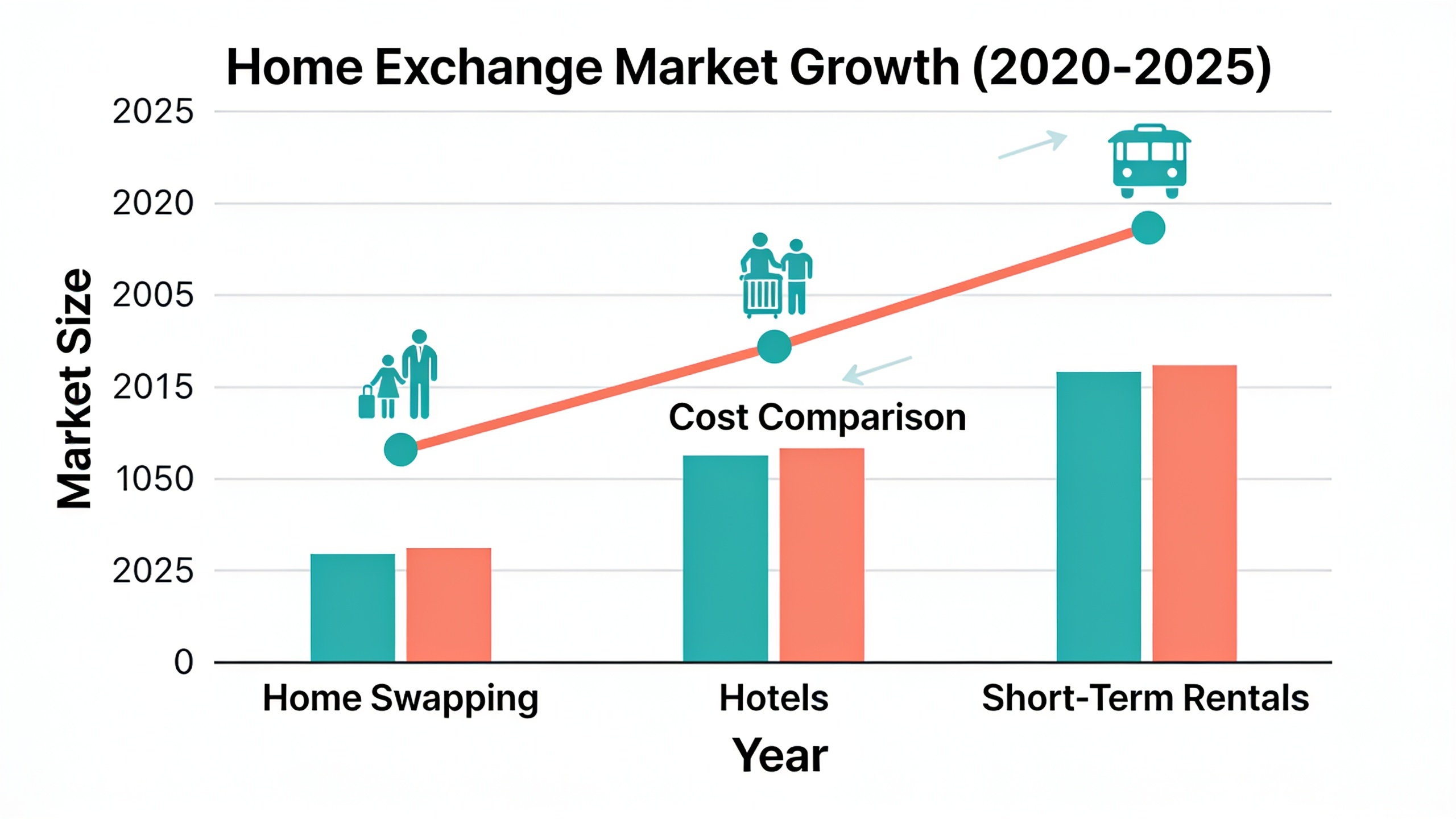 Market growth chart showing rising trend of home exchange platforms and cost comparison between home swapping, hotels, and rental services
Cost is the obvious engine here. A 2023 Bankrate survey found that more than half of American travelers said inflation had changed their vacation plans, with a lot of them cutting trips short or downgrading where they stayed just to make the budget work. Home swapping basically shrugs off that whole problem. When nobody's paying for the stay itself, a family that would've dropped $1,500 a week on a rental can pour that money into flights, activities, or, you know, actually keeping it.
Membership platforms have been reporting steady year-over-year growth in active users and completed swaps too, which lines up with data from the U.S. Travel Association showing leisure travel spending has climbed past pre-pandemic levels even while people say their household budgets feel tighter. Which tells you something interesting: people aren't traveling less. They're just getting a lot smarter about how they pay for it.
Key Home Exchange Trends Shaping Travel Right Now
A few things are happening at once, and together they're what's pushing swapping from a fringe move to a genuine default for anyone who cares about value. Longer stays, points systems, and a big overlap with the remote-work crowd.
Longer, Slower Trips
The old model was a clean one-week-for-one-week trade. Now? People are booking multi-week and even month-long stays. Remote workers and retirees especially are using swaps to live somewhere for a season instead of just breezing through, which fits neatly into the whole slow-travel thing that's been building for years.
Points-Based and Non-Simultaneous Swaps
You no longer need both households traveling at the same time, and thank goodness for that. Loads of platforms run on credits now. Host a guest in March, bank the credit, spend it on a trip in October. This one change solved what used to be the single most annoying part of home swapping: trying to line up two families' calendars like some impossible scheduling puzzle.
Digital Nomad Integration
Remote workers increasingly treat home exchange as a housing strategy, not a vacation perk. A developer in Austin swaps with a graphic designer in Lisbon for six weeks, both keep their jobs, and the only thing that changes is the view out the window. It dovetails perfectly with the "workation" trend hospitality analysts have been tracking since 2021.
Community and Trust Infrastructure
As these platforms scale, they're pouring money into verification, identity checks, and reputation systems. Same trust layer that made ride-sharing and short-term rentals feel safe enough for regular people. It's why a lot of travelers kicking the tires on this start by reading something like Is Home Swapping Safe? Everything You Need to Know before they ever commit to a trade.
Destination Diversification
Home exchange used to cluster around the same handful of European capitals and tidy North American suburbs. Not anymore. Swappers are branching into secondary cities, coastal towns, even rural spots, partly because remote work untethered people from the big metro hubs. If you're hunting for somewhere off the beaten path that still nails the affordability-plus-charm combo, curated lists like Top 15 Destinations Perfect for Your Next Home Swap are a good place to start.
How Does Home Swapping Compare to Hotels and Short-Term Rentals?
Home swapping usually costs less than hotels or paid rentals because there's no nightly rate on the stay itself, but it does ask more of you: more planning, more flexibility, and more trust between two households. Here's how the three shake out on the stuff that actually matters when you're booking.
| Factor | Home Swapping | Hotels | Short-Term Rentals (e.g., paid rental platforms) |
|---|---|---|---|
| Typical lodging cost | Usually a flat membership/annual fee only; no nightly rate | $150–$400+ per night on average in major U.S. cities | $100–$350+ per night, plus cleaning and service fees |
| Space and amenities | Full home: kitchen, laundry, multiple bedrooms | Single room, limited kitchen access | Full home, but at a premium price |
| Local authenticity | High — real neighborhoods, local host tips | Low — standardized experience | Medium — depends on host involvement |
| Booking flexibility | Requires matching schedules or using points/credits | High — book same day in most cases | High — instant booking common |
| Trust/verification needed | High — two households exchanging access | Low — professional staff manages property | Medium — host and guest reviews |
| Best for | Longer stays, families, budget travelers, retirees | Short business trips, last-minute travel | Groups wanting rental convenience without swapping |
Bottom line, it's pretty clean-cut. Hotels win on convenience and booking at the last second. Paid rentals sit somewhere in the middle. And home swapping wins hands-down on cost and depth of local experience, as long as you're the type who can plan a few weeks or months out.
Who Is Home Swapping Really For?
Home swapping works best for people who'd rather have flexibility and authenticity than instant convenience, which is exactly why it's caught on hardest with four groups: budget travelers, families, retirees, and remote workers.
The budget-conscious 25-to-45 crowd tends to find it first, because the math is almost embarrassingly good. A couple who'd otherwise drop $2,000 on lodging for two weeks in Europe pays a small annual membership fee instead and funnels the rest into flights and actual experiences. Families come for the same savings but stay for the practical stuff, because a real house with a washer, a dryer, and a kitchen makes traveling with kids about ten times easier than cramming everyone into one hotel room. Retirees, a lot of whom own their homes free and clear and have wide-open schedules, are using swaps to travel for long stretches without paying for two places to live at once. And digital nomads? They treat it like a housing hack, living proof that where you work barely matters anymore as long as there's solid Wi-Fi and a decent desk waiting on the other end.
Is Home Swapping Safe? Trust, Technology, and Peace of Mind
Home swapping is generally safe as long as you stick to reputable platforms with identity verification, actually read the reviews, and take basic precautions like photographing the home's condition before and after. And here's the part that surprises people: the real risk usually isn't theft or damage. It's miscommunication. Fuzzy expectations, unclear house rules, who's responsible for what when the dishwasher acts up.
Modern platforms have quietly cleared away most of the old worries about letting a stranger into your place. Identity verification, message histories you can look back on, public reviews. It's the same trust scaffolding that made ride-sharing feel normal. And plenty of swappers layer on their own common-sense moves that have nothing to do with any app: locking away valuables, spelling out guidelines, and for pricier properties, arranging some professional oversight. Some homeowners in higher-value or higher-crime neighborhoods go a step further and hire services like Stormhammer Security to patrol the place during a swap, especially on those longer exchanges where the house sits empty (or full of guests) for weeks.
If you want the full rundown on vetting hosts, insurance stuff, and what to actually do if something goes sideways mid-trip, the Is Home Swapping Safe? Everything You Need to Know guide covers the safeguards experienced swappers lean on before they hand over a single key.
Tech matters here more than you'd think, too. These platforms live or die on their digital infrastructure. Secure logins, verified profiles, support that actually responds. Behind the curtain, a lot of travel and hospitality companies bring in specialists like Digital Fusion Hub to build the kind of polished, trustworthy sites that make a total stranger comfortable enough to share their front-door code. A clunky, outdated platform torches trust in about four seconds. A well-built one earns it before two people have even swapped a message.
What the Future of Travel Looks Like With Home Exchanges
The future of travel is looking decentralized, residential, and community-driven, less about chain hotels and resort strips and more about regular neighborhoods. Home exchanges are the canary in that coal mine, because they turn ordinary streets, not just tourist zones, into places worth traveling to.
Analysts have been saying for years that experience-driven, cost-smart travel would outrun the old model, and the numbers keep proving them right. Travelers, younger ones especially, consistently rank "authentic local experience" above brand consistency when they pick where to stay, per the hospitality trend reports coming out of outlets like Skift. Home exchange delivers that by design. You're living inside somebody's real routine, not a curated guest experience someone assembled for tourists.
There's a bigger parallel here worth pointing out. Just like businesses eventually figured out that genuine community and reputation beat paid ads alone, travel platforms are leaning into peer trust and community verification, the same way SEO-savvy companies use tools like RobinRank to build credibility through real backlink exchange and community validation instead of manufactured hype. Home swapping runs on that exact fuel. Real people vouching for real people. And that's precisely why it scales so much better than a cold, transactional booking service ever could.
The next phase? Expect tighter hooks into remote-work tools, more non-simultaneous point trading, and a steady push into secondary and rural markets as people chase both cheaper trips and something new. Hospitality companies that shrug this off are gambling with an entire generation of travelers who've stopped believing a mandatory nightly room rate is just the price of seeing the world.
How to Get Started With Home Swapping
Getting started boils down to three steps: build a detailed, honest listing of your home, browse and message potential matches, and lock in clear house rules before you finalize any dates. Most first-timers burn way more time on step one than they expect, and honestly, that's a good thing. The effort pays off in better matches.
A strong listing means recent photos of every room, a straight-shooting description of the neighborhood (is it walkable, is it loud, what's the transit like), and the nitty-gritty on parking, laundry, and Wi-Fi speed. That last one? Remote workers will absolutely grill you on it. When you're the one browsing, message a bunch of hosts instead of betting everything on one dreamy property, because availability and interest move fast on the popular platforms. And before you confirm anything, both sides should agree in writing on check-in and check-out logistics, house rules (pets, smoking, extra guests), emergency contacts, and, crucially, what happens if something breaks while you're there.
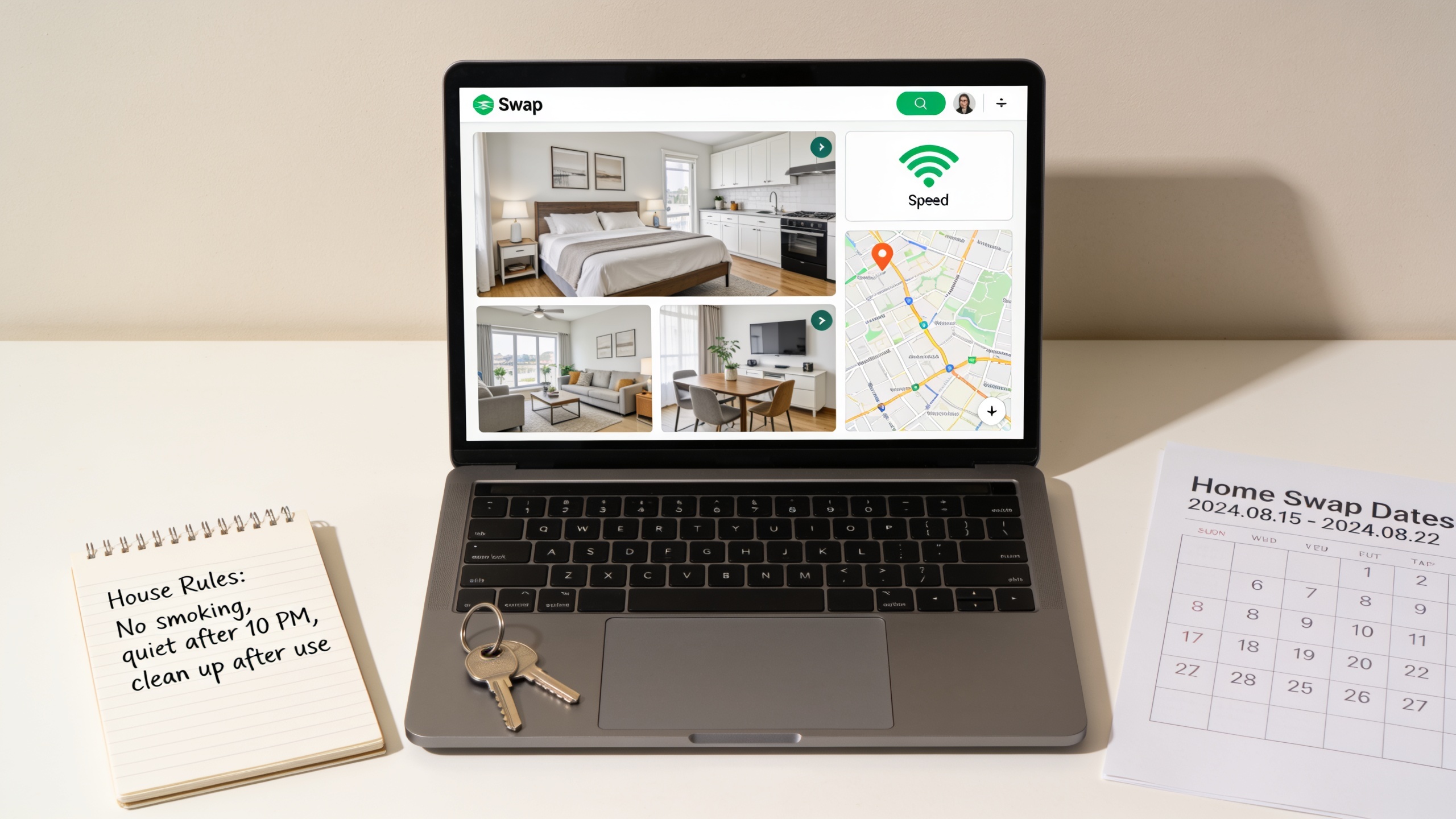 Home swap listing setup showing laptop with property photos, neighborhood details, house rules checklist, and keys representing preparation for successful home exchange
A lot of first-timers start small. A weekend swap with a nearby city before they graduate to some ambitious international trade. I think that's smart. It gets you comfortable with how the whole thing works and, just as important, it builds a track record of good reviews for both households. Which makes the bigger swaps way easier to pull off later.
Frequently Asked Questions
Do I have to own my home outright to do this? Nope. Renters can play too, as long as your lease allows subletting or short-term guests, which honestly depends a lot on your city and your landlord. Most platforms ask you to say up front whether you own or rent, so your potential swap partner knows the deal.
Okay, but what does it actually cost me? Most platforms charge an annual membership fee, usually somewhere in the $100–$200 range, instead of a nightly rate. Past that, you're generally just covering utilities, maybe a security deposit in some cases, and your own travel stuff like flights and food.
What if my swap partner trashes my place? Reputable platforms nudge you to document the home's condition with before-and-after photos, and most offer dispute resolution if things go wrong. Plenty of homeowners also carry supplemental insurance or add a short-term rider to their existing homeowner's policy, just for that extra peace of mind during a swap.
Can I swap if I don't want to travel at the same time as my guest? Yes, and this is exactly what the points and credit systems were built to fix. You host a guest on your schedule, earn the credit, and spend it on a future trip whenever it suits you. No simultaneous-travel gymnastics required.
Is this realistic for a two-week family vacation? Realistic? It's one of the best use cases there is. A full home with a kitchen, laundry, and separate bedrooms wipes out most of the headaches families deal with in a cramped hotel room, and over two weeks the savings versus a similarly sized paid rental can be genuinely huge.
Home swapping isn't some pandemic fad or a temporary duct-tape fix for a rough economy. It's a real shift in how people think about lodging, community, and what "authentic travel" even means anymore. And as more folks catch on that a great trip doesn't require a great big hotel bill, the model's going to keep growing right alongside the sharing economy it came from.

Published by
SwappaHome
SwappaHome Editorial Team
Home Exchange & Slow Travel Editorial
The SwappaHome Editorial Team brings together travel research, home-exchange community insights, and platform data to produce practical guides for first-time and experienced home swappers. Every article cites real platforms, current market rates, and verifiable city-level facts so readers can make informed decisions without guessing.
Ready to try home swapping?
Join SwappaHome and start traveling by exchanging homes. Get 7 free credits when you sign up!