
Japan Digital Nomad Visa Requirements: Your Guide to Working Remotely in the Land of the Rising Sun

SwappaHome Editorial Team
Home Exchange & Slow Travel Editorial
Here are the main things to remember when looking into the Japan digital nomad visa requirements. Keep these points in mind to make your application process…
Here are the main things to remember when looking into the Japan digital nomad visa requirements. Keep these points in mind to make your application process smoother.
Key Takeaways
- Make sure you meet the basic eligibility rules, like having a job you can do remotely and earning enough money.
- Gather all the necessary documents beforehand, like your passport, proof of income, and health insurance details.
- Understand the application process, whether you apply through an embassy or a consulate.
- Plan your finances carefully, as Japan has specific income requirements for digital nomads.
- Get your health insurance sorted out and think about where you'll stay and how you'll get around.
Understanding the Japan Digital Nomad Visa Requirements
So, you're thinking about working remotely from Japan? That's awesome! But before you start packing your bags and dreaming of sushi, you'll need to get your head around the visa requirements. It's not super complicated, but there are definitely a few key things you need to know to make sure your application goes smoothly.
First things first, who can even apply for this visa? Japan has set some specific criteria to make sure they're attracting the right kind of remote workers. You'll need to be a citizen of a country that has a tax treaty with Japan. This is a pretty important detail, so double-check if your home country is on that list. Also, you can't be self-employed or working for a company based in Japan. Your work needs to be for a business located outside of Japan.
The digital nomad visa is designed for individuals who can support themselves financially and contribute to the economy through their remote work, without taking jobs away from local Japanese workers.
Gathering the right paperwork is probably the most time-consuming part of the whole process. You'll need to be super organized. Here's a general rundown of what you can expect to need:
- Passport: Make sure it's valid for at least six months beyond your intended stay and has blank pages.
- Visa Application Form: Downloaded from the Japanese embassy or consulate website in your country and filled out completely.
- Photographs: Recent passport-sized photos, usually two.
- Proof of Income: This is a big one. You'll need to show you earn enough to support yourself. We'll get into the specifics of this in the next section, but think pay stubs, tax returns, and bank statements.
- Proof of Employment: A letter from your employer confirming your remote work status and your role.
- Health Insurance: You'll need to prove you have adequate health insurance coverage for your entire stay in Japan. More on this later!
- Travel Itinerary: While not always strictly required for the initial application, having a rough idea of your plans can be helpful.
- Proof of Accommodation: Sometimes you'll need to show where you plan to stay, at least initially. This could be a hotel booking or, if you're thinking ahead, maybe exploring options like home exchange for a more local feel.
Once you've got all your documents in order, it's time to actually apply. The process usually involves submitting your application and supporting documents to the Japanese embassy or consulate in your home country. You might need to schedule an appointment, so check their specific procedures online. Be prepared for an interview, though it's usually quite straightforward, mostly to confirm the details in your application.
- Check Embassy Website: Always start by visiting the official website of the Japanese embassy or consulate in your country. Requirements can vary slightly.
- Submit Application: Follow their instructions for submitting your documents, whether in person, by mail, or online if available.
- Attend Interview (if required): Be punctual and ready to answer questions about your work and your plans in Japan.
- Wait for Decision: Processing times can vary, so apply well in advance of your planned travel date.
It might seem like a lot, but breaking it down makes it manageable. The key is to be thorough and start early!
Financial Proof for Your Japanese Digital Nomad Visa
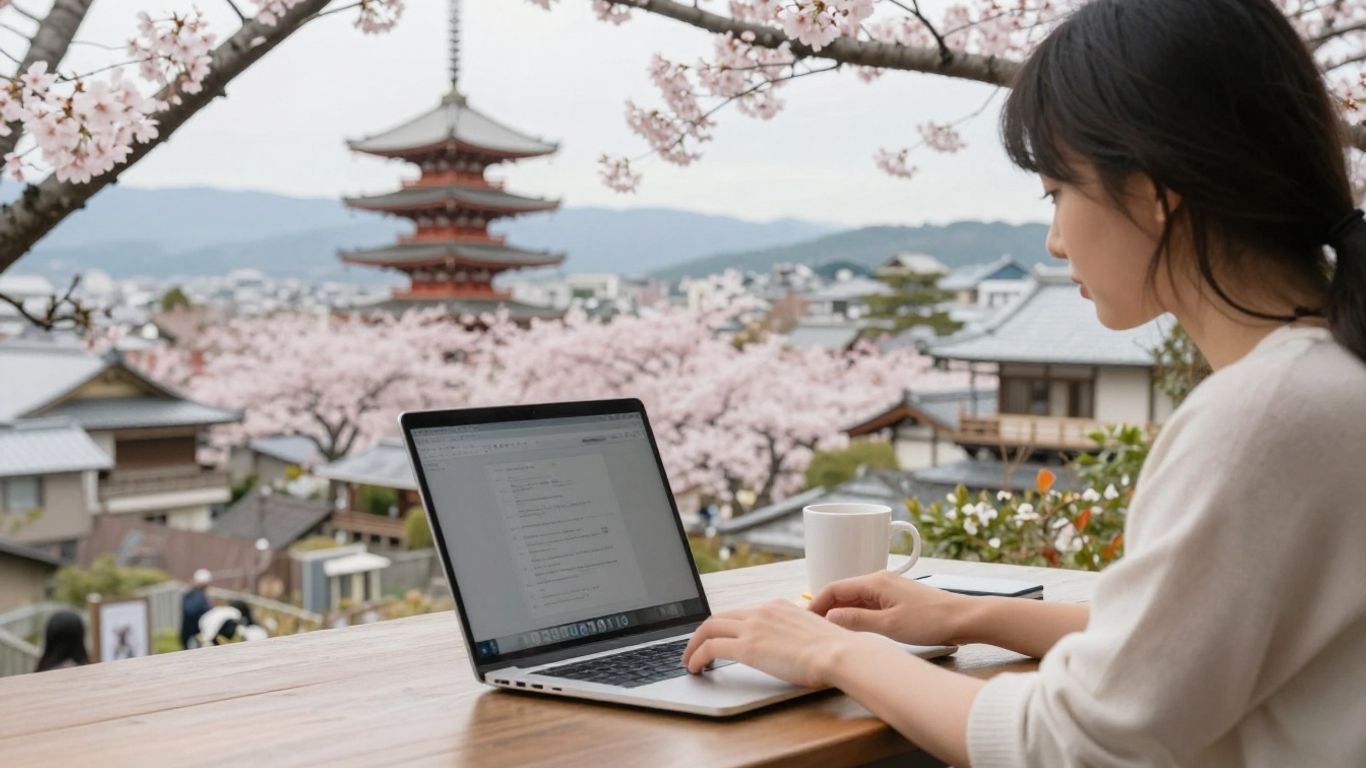 Digital nomad working remotely in Japan with cityscape.
Okay, so you're dreaming of working from a cozy cafe in Kyoto or a beachfront spot in Okinawa. Awesome! But before you start practicing your Japanese greetings, let's talk about the money stuff. Japan, like most countries, wants to see that you can actually support yourself while you're there. This isn't about being rich, it's about showing you're not going to be a burden on their system.
This is probably the first thing people ask about. How much do you actually need to be earning? While the exact figures can shift a bit depending on the latest government guidelines, the general idea is that you need to demonstrate a stable and sufficient income. Think of it as proving you have a reliable job that pays the bills, and then some, for your time in Japan.
| Income Type | Minimum Monthly Amount (JPY) |
|---|---|
| Salary/Wages | 300,000 |
| Freelance/Self-Employed | 350,000 |
Note: These are approximate figures and can change. Always check the official Japanese immigration website for the most current numbers.
So, how do you actually show them this money? You can't just say, "Trust me, I've got it." You'll need official documents. The goal here is to provide a clear picture of your financial health over a period of time, usually the last few months.
Here's a list of what they typically look for:
- Bank Statements: These are super important. You'll usually need statements from the past 3-6 months showing consistent income and a healthy balance. Make sure your name is clearly visible on these.
- Tax Returns: Official tax documents from your home country can also be a good way to prove your income over a longer period.
- Employment Contract: If you're employed by a company, a copy of your contract detailing your salary and terms is a must.
- Payslips: Recent payslips (usually the last 3-6 months) will back up your bank statements and employment contract.
- Invoices and Payment Records: If you're a freelancer or run your own business, you'll need to show invoices you've sent out and proof of payment received. This is where documents like dividend certificates or executive compensation minutes might come into play if you're a business owner.
Beyond just showing a monthly income, they also want to see that you have enough saved up to cover your initial expenses and any unexpected costs. This is where your bank balance really matters.
It's not just about hitting a magic number each month. Immigration officials want to see a pattern of financial stability. This means consistent income, reasonable spending habits reflected in your statements, and a buffer for emergencies. Think of it as building a case for your financial reliability, not just meeting a minimum requirement.
Essentially, you need to paint a picture that says, "I'm financially responsible, I earn enough to live comfortably in Japan, and I won't need to rely on public assistance." Gathering these documents might seem like a chore, but it's a really important step in making your Japan digital nomad dream a reality. And hey, if you're looking for ways to potentially cut down on accommodation costs during your travels, you might want to explore options like home exchange networks for future trips, though this won't directly impact your visa application's financial proof requirements.
Health Insurance and Travel Considerations
Okay, so you've got your visa sorted and you're ready to pack your bags for Japan. But before you get too excited, let's talk about something super important: health insurance and making sure your trip goes smoothly. This isn't the most glamorous part of planning, but trust me, you don't want to skip it.
Mandatory Health Insurance Coverage
When you're applying for the digital nomad visa, Japan requires you to have health insurance. This is a pretty standard requirement for most countries, and it's there to protect you in case of any unexpected medical issues. You can't just rely on the Japanese national health system if you're on this specific visa; you need your own coverage. This means you'll need to secure an international health insurance plan that meets Japan's standards before you even apply. It’s a good idea to look into this early in your application process.
Duration of Coverage Requirements
Your insurance needs to cover you for the entire duration of your intended stay in Japan. So, if your visa is for a year, your insurance policy needs to be valid for a full year. It's not just about having insurance; it's about having it for the right amount of time. Make sure the policy clearly states the start and end dates, and that these align with your visa and travel plans. Some policies might have specific clauses about coverage within Japan, so read the fine print carefully. You don't want to find out your coverage stops a week before you plan to leave.
Choosing the Right Travel Insurance Plan
Picking the right travel insurance can feel a bit overwhelming with all the options out there. You'll want a plan that covers medical emergencies, hospital stays, and possibly even things like trip cancellation or lost luggage, though the visa requirement focuses on medical. Look for providers that have a good reputation and offer clear policy details. Some plans are designed specifically for digital nomads, which might be a good fit. It's worth comparing a few different options to see what best suits your needs and budget. Remember, this is about peace of mind so you can actually enjoy your time working from Japan and exploring all it has to offer, maybe even checking out some cool spots like Turin if you decide to explore beyond Japan later on.
Accommodation and Living Arrangements
Finding a place to stay and figuring out daily life are big parts of planning your move to Japan. It's not just about having a roof over your head; it's about finding a spot that works for your work and your lifestyle.
Securing Temporary or Long-Term Housing
When you first arrive, you'll probably want something short-term. This could be a hotel, a short-stay apartment rental, or even a capsule hotel if you're on a tight budget and don't need much space. These options are great for getting your bearings and exploring different neighborhoods before committing to something longer.
For longer stays, things get a bit more involved. You might look into serviced apartments, which are often furnished and come with amenities like Wi-Fi and cleaning services, making the transition easier. Another popular option for digital nomads is home exchange. This way, you can live in a local's home, often with more space and a kitchen, which can be a huge money-saver compared to hotels. It's a fantastic way to live like a local and get a feel for different areas.
Here's a quick look at some common housing types:
- Short-Term Rentals: Hotels, Airbnb, serviced apartments (good for initial settling).
- Long-Term Rentals: Apartments, houses (often require a guarantor and Japanese bank account).
- Home Exchange: Trading your home for someone else's (great for longer stays and saving money).
Understanding Local Living Costs
Japan can be surprisingly affordable, especially outside of major city centers like Tokyo. Your biggest expenses will likely be accommodation and food. Rent varies wildly depending on the city and the size of the place, but generally, you can expect to pay more in Tokyo, Osaka, and Kyoto.
- Rent: A one-bedroom apartment in a city center might range from ¥80,000 to ¥150,000+ per month. Outside the city center, you could find places for ¥50,000 to ¥100,000.
- Utilities: Expect to pay around ¥10,000 to ¥20,000 per month for electricity, gas, water, and internet.
- Food: Eating out can be cheap if you stick to local eateries and convenience stores (¥3,000-¥5,000 per day). Groceries offer even more savings.
- Transportation: Public transport is excellent and relatively affordable, especially with monthly passes.
Keep in mind that initial setup costs for rentals can be high, often including a security deposit, key money (non-refundable fee to the landlord), and agency fees. This is where options like home exchange can really cut down on upfront expenses.
Finding Suitable Workspaces in Japan
While many digital nomads are happy working from their accommodation, sometimes you need a change of scenery or a more professional setup. Japan has a growing number of co-working spaces, especially in larger cities. These offer reliable internet, dedicated desks, meeting rooms, and a community of like-minded individuals.
- Co-working Spaces: Look for options in major cities like Tokyo, Osaka, and Fukuoka. Many offer daily, weekly, or monthly passes.
- Cafes: Many cafes offer free Wi-Fi, but they can be noisy and aren't always ideal for long work sessions or important calls. Some cafes are more geared towards remote workers, though.
- Libraries: Public libraries often have quiet areas and free Wi-Fi, though they might have time limits or require a local library card.
If you're considering a longer stay, exploring home exchange options could provide you with a comfortable and dedicated workspace right in your temporary home, often in diverse neighborhoods across Japan.
Visa Validity and Extension Possibilities
So, you've got your digital nomad visa sorted and you're ready to soak in all that Japan has to offer. But what happens when your initial visa period starts to run out? It's a common question, and thankfully, Japan has a system in place for this.
Standard Visa Duration
Typically, the digital nomad visa for Japan is issued for a period of six months. This gives you a decent chunk of time to get settled, explore, and really get a feel for life in Japan. It's not a super short stint, but it's also not a permanent residency, so planning ahead is key.
Conditions for Visa Extension
Extending your visa isn't automatic, and there are specific conditions you'll need to meet. You generally can't just walk into an immigration office and ask for more time. You'll need to demonstrate a continued need to stay and that you still meet the original requirements. This often includes proving you still have sufficient funds and that your work situation remains stable. It's also important to note that extensions are usually granted for shorter periods, often three months at a time. You'll need to apply well before your current visa expires.
- Sufficient Financial Resources: You must show you can still support yourself without relying on public funds.
- Continued Employment/Self-Employment: Proof that your remote work is ongoing is usually required.
- Valid Health Insurance: Maintaining adequate health coverage throughout your stay is a must.
- No Criminal Record: A clean record is, of course, expected.
Applying for an extension involves submitting a new application to the regional immigration services bureau. It's wise to start this process at least a month before your current visa expires to avoid any last-minute stress. Make sure all your documents are up-to-date and ready to go.
Re-application Procedures
If an extension isn't possible or you're looking to stay for a significantly longer period beyond what an extension allows, you might need to consider re-applying. This usually means leaving Japan and applying for a new visa from outside the country. The exact process can vary, so it's always best to consult with the Japanese embassy or consulate in your home country or the country you are residing in. They can provide the most current information on visa requirements and application procedures. Sometimes, depending on your circumstances and the specific visa type, you might be able to apply for a different, longer-term visa if you meet those criteria. It's a bit of a dance, but with careful planning, you can manage your stay effectively.
Life as a Digital Nomad in Japan
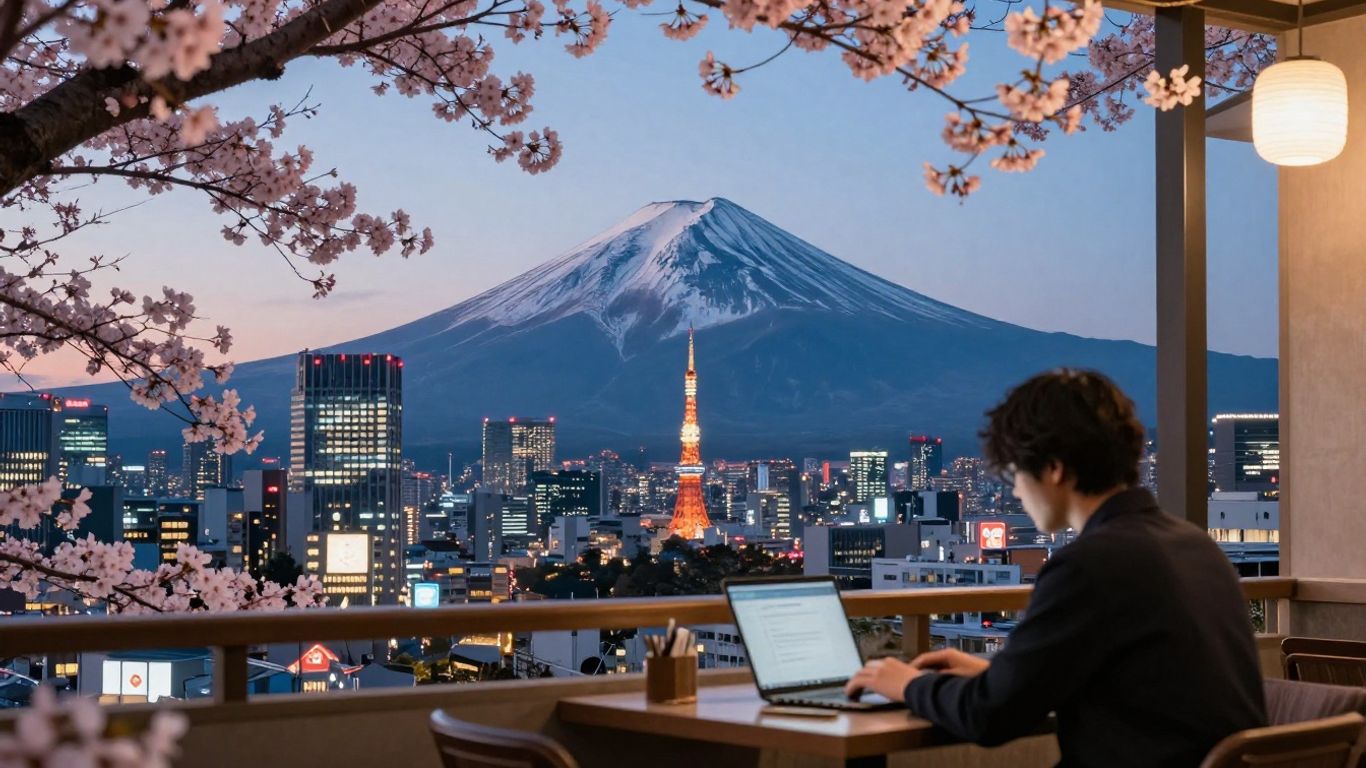 Digital nomad working remotely in Japan with Mount Fuji.
So, you've got the visa, you've figured out the finances, and now you're actually going to live and work in Japan as a digital nomad. Pretty cool, right? It's a whole different ballgame once you're actually there, though. It's not just about finding a good Wi-Fi spot; it's about fitting into a new culture and making the most of your time.
Cultural Etiquette for Remote Workers
Japan has a strong culture of respect and politeness, and it's good to be aware of this, especially when you're working remotely. Things like being punctual for online meetings are important, just like they would be at home, but there's also a subtle emphasis on not disturbing others. This can translate to keeping your voice down in public spaces, even when you're on a call, and being mindful of noise levels in shared accommodations.
- Respecting Personal Space: While not as strict as some cultures, be mindful of how close you stand to people, especially in crowded areas.
- Gift-Giving: If you're invited to someone's home or meet people regularly, a small gift (omiyage) is a nice gesture. Think local snacks from your home country or something small and thoughtful.
- Business Card Etiquette (Meishi): Even if you're not in traditional business, if you exchange contact info, present and receive cards with two hands and take a moment to look at it before putting it away. It shows respect.
- Silence is Golden: In many situations, silence is not awkward; it's comfortable. Don't feel the need to fill every pause in conversation.
Remember that while Japan is modernizing, traditional values still hold significant weight. Observing and adapting to local customs will make your experience smoother and more enjoyable.
Connectivity and Internet Access Across Japan
Getting online is usually pretty straightforward in Japan's major cities. Most cafes offer free Wi-Fi, and hotels and apartments are generally well-connected. However, if you plan on venturing off the beaten path, it's wise to have a backup plan. Pocket Wi-Fi devices are a popular option for reliable internet on the go, and you can rent them at airports or have them delivered to your accommodation. SIM cards are also readily available if you prefer a local data plan. Reliable internet is key for any digital nomad, and Japan generally delivers, but always check the specifics for your chosen location.
Here's a quick look at common internet options:
- Public Wi-Fi: Widely available in cities, but can be spotty and less secure. Good for quick checks, not for sensitive work.
- Pocket Wi-Fi: Portable routers you can rent. Great for consistent access across multiple devices and locations.
- Local SIM Card: Offers data and calling. You can get these at electronics stores or airports.
- Home Internet: If you're staying long-term, consider setting up a home internet plan. This can take a little time and paperwork.
Balancing Work and Exploring Japanese Culture
This is where the real magic happens. Japan offers an incredible blend of ancient traditions and futuristic cityscapes. You can spend your mornings working from a quiet cafe in Kyoto, then spend your afternoon exploring a serene temple garden. Or, perhaps you're in Tokyo, finishing up a project and then heading out to experience the vibrant nightlife or a world-class museum. The key is to plan, but also to leave room for spontaneity. Don't try to cram too much into every day; allow yourself time to just wander and discover. Consider using a service like home exchange to find unique places to stay that feel more like a home and less like a hotel, which can really help you settle in and live like a local, even for a short while. This can free up budget for experiences, too.
Conclusion
So, you're thinking about working from Japan as a digital nomad? It's definitely an exciting prospect! While the process might seem a bit involved, understanding the Japan digital nomad visa requirements is the first big step. By getting your paperwork in order, proving you have the funds, and planning your stay, you can make this dream a reality. Japan offers a unique blend of ancient traditions and modern convenience, making it a fantastic place to live and work remotely. Just remember to be respectful of the culture, stay connected, and take time to explore all the amazing things this country has to offer. Happy travels and happy working!
Frequently Asked Questions
What is a digital nomad visa for Japan?
It's a special visa that lets people who work online for companies outside of Japan live and work there for a certain amount of time. Think of it as a way to work from your laptop while enjoying Japan.
How much money do I need to earn to get this visa?
Japan has a minimum income requirement. Usually, you need to show you earn at least 3 million Japanese yen per year, which is about $20,000 USD. This shows you can support yourself without needing to work for a Japanese company.
Do I need health insurance to apply?
Yes, you absolutely do. You'll need to have health insurance that covers you for your entire stay in Japan. This is really important because it makes sure you're covered if you get sick or have an accident.
Can I bring my family with me on this visa?
This is still a bit tricky. The current rules are mostly for individual applicants. While some countries allow family members, Japan's digital nomad visa is primarily for single individuals right now. You might need to check the very latest rules or consider other visa types if you want to bring family.
How long can I stay in Japan with this visa?
The visa is usually given for a short period, often around 6 months. If you want to stay longer, you might be able to extend it, but there are specific rules for that. You can't just keep extending it forever without re-applying or changing your visa status.
What kind of documents do I need to prepare?
You'll need things like your passport, photos, proof of your income (like pay stubs or tax documents), a letter from your employer saying you can work remotely, and proof of health insurance. Sometimes they ask for a criminal record check too. It's best to check the exact list with the Japanese embassy or consulate in your country.

Published by
SwappaHome
SwappaHome Editorial Team
Home Exchange & Slow Travel Editorial
The SwappaHome Editorial Team brings together travel research, home-exchange community insights, and platform data to produce practical guides for first-time and experienced home swappers. Every article cites real platforms, current market rates, and verifiable city-level facts so readers can make informed decisions without guessing.
Ready to try home swapping?
Join SwappaHome and start traveling by exchanging homes. Get 7 free credits when you sign up!