
Local Cuisine in Cambridge: Your Complete Guide to Cooking and Dining During a Home Swap

SwappaHome Editorial Team
Home Exchange & Slow Travel Editorial
Discover Cambridge's food scene through a home swap lens—from market shopping to pub dinners, plus tips for cooking in your borrowed kitchen.
The first morning I woke up in my Cambridge home swap, I padded downstairs in borrowed slippers to find a note on the kitchen counter: "The coffee's in the blue tin, the market's a 10-minute walk, and whatever you do, try the sausage rolls at Fitzbillies."
That note changed everything.
Instead of defaulting to tourist-trap restaurants clustered around King's College, I spent the next two weeks shopping where locals shop, cooking with ingredients I'd never seen in American grocery stores, and discovering that Cambridge's food scene is far more interesting than its "university town" reputation suggests.
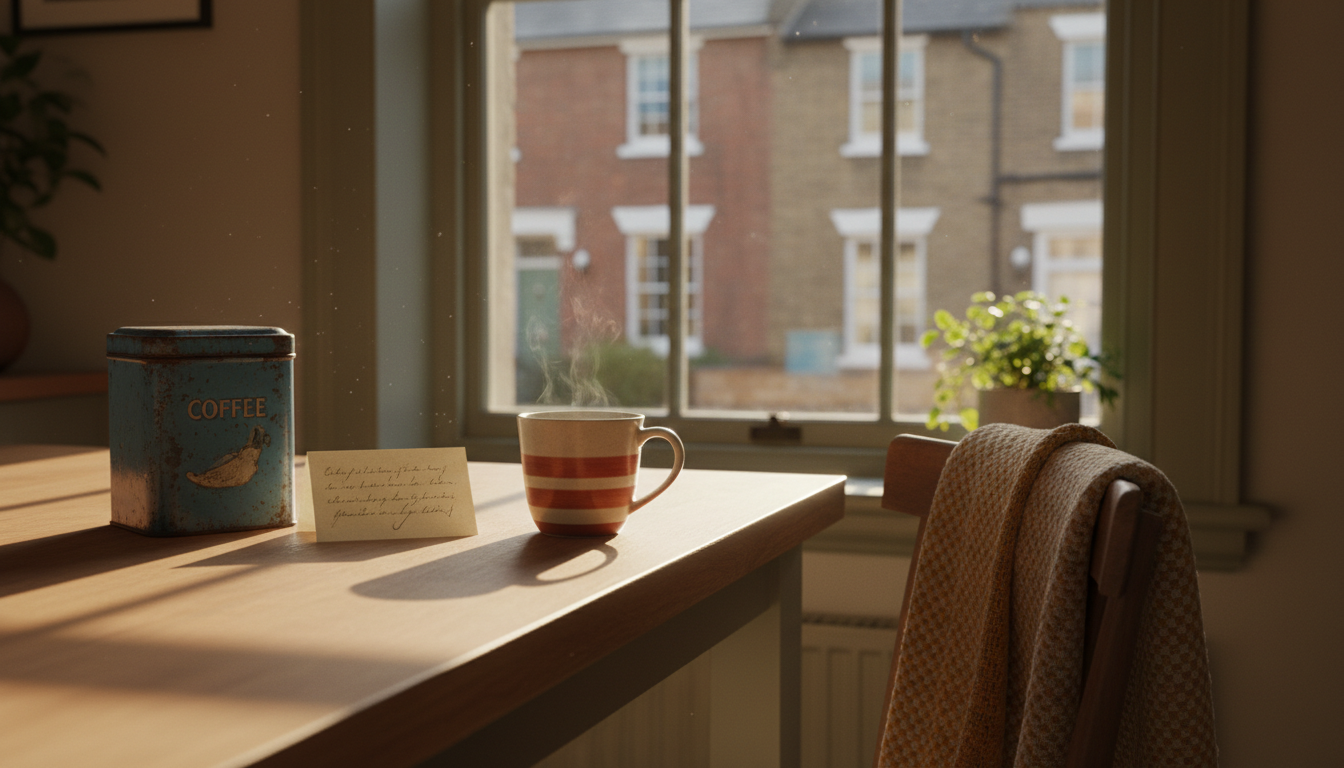 Morning light streaming through a Cambridge kitchen window, a handwritten note beside a blue coffee
If you're planning a home swap in Cambridge—or even just mulling one over—the kitchen access alone makes it worthwhile. But knowing how to actually use that kitchen? Where to source ingredients? Which restaurants deserve your precious dinner-out budget? That's what separates a good trip from one that fundamentally shifts how you travel.
Why Cambridge Home Swap Dining Beats Hotel Stays
Here's something I've learned after 40+ home exchanges across 25 countries: the kitchen is the secret weapon.
Hotels give you a mini-fridge and a kettle if you're lucky. A home swap gives you a full kitchen, local recommendations straight from your host, and the freedom to eat like a resident rather than someone ticking boxes off a guidebook.
In Cambridge specifically, this matters more than you'd think. The city has had a complicated relationship with food—for decades, it was known for mediocre student fare and overpriced college-adjacent restaurants. But something shifted in the last ten years. Independent restaurants started popping up in Arbury and Mill Road. Farmers' markets expanded. The food scene grew up.
The problem? Most of these gems aren't in the guidebooks. They're tucked into neighborhoods where people actually live—exactly where home swaps tend to be.
My Cambridge host's flat was in Romsey Town, a ten-minute cycle from the city center. I'd never have booked a hotel there. But it put me steps from Mill Road, which turned out to be Cambridge's most exciting food corridor—Ethiopian grocers next to Vietnamese restaurants next to traditional British butchers. The kind of street that rewards wandering with no particular plan.
Essential Cambridge Markets for Home Swap Cooking
If you're going to cook during your Cambridge home swap, you need to know the markets. Not the tourist ones. The real ones where locals actually buy their weekly groceries.
Cambridge Market Square
The Market Square has been operating since the Middle Ages, and honestly? It feels like it. In the best way.
Open Monday through Saturday from around 10am to 4pm, it's a mix of produce stalls, hot food vendors, and the occasional antique seller who seems to have wandered in from a different century. For home swap cooking, focus on the produce stalls toward the back. The prices are reasonable—I paid about £2.50 ($3.15) for a bag of mixed greens that would've been twice that at Waitrose. The seasonal vegetables here are genuinely seasonal, which means you might find purple sprouting broccoli in March or gooseberries in July that you've never encountered in a supermarket.
Pro tip from my host: go between 3pm and 4pm on Saturdays for the best deals. Vendors start discounting anything that won't keep over the weekend.
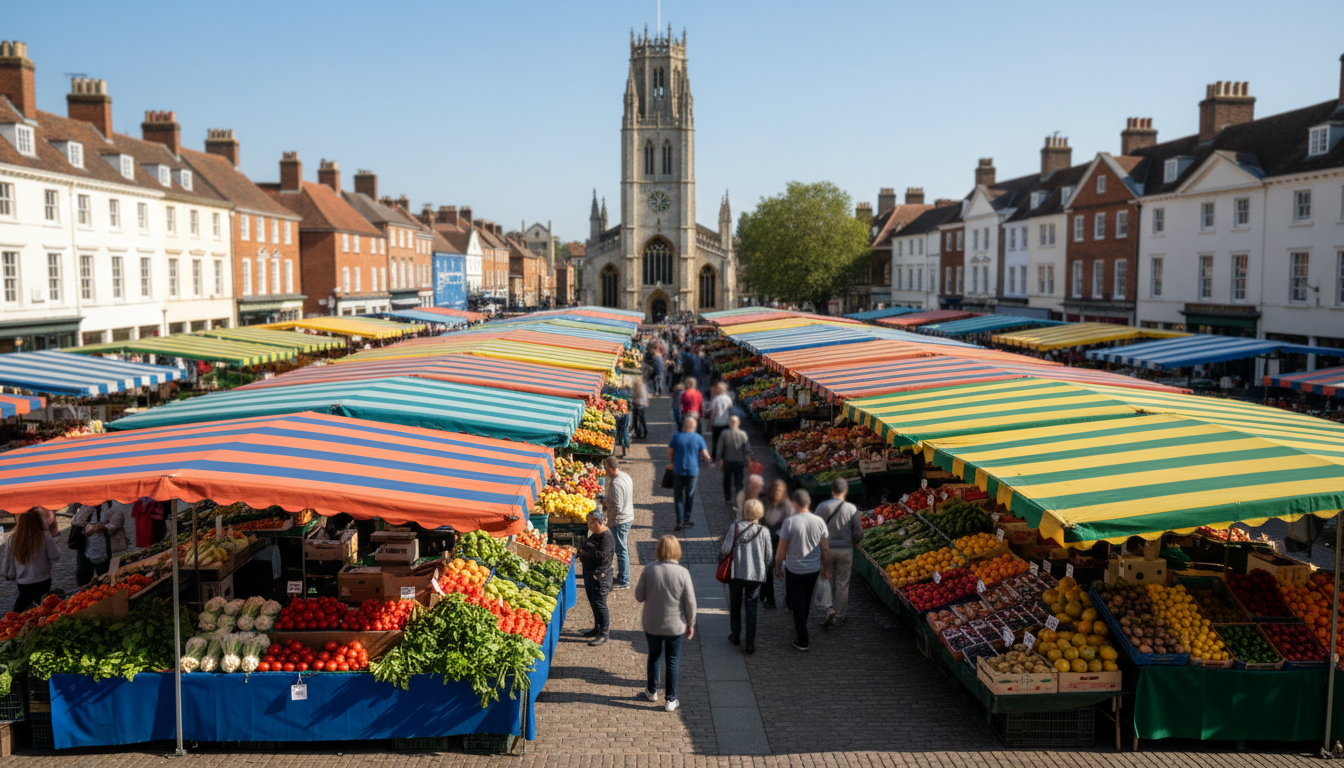 Overhead view of Cambridge Market Square on a busy Saturday morning, colorful produce stalls with st
Mill Road Shops
Mill Road isn't a market in the traditional sense—it's more like a mile-long international food corridor. This is where Cambridge's immigrant communities have set up shop, and the result is a grocery experience unlike anything else in the city.
At Al-Amin (around 198 Mill Road), I found spices at a fraction of supermarket prices. A massive bag of cumin seeds cost me £1.80 ($2.25). The Turkish grocery a few doors down had fresh flatbreads and feta that elevated my lunch salads immeasurably. Cho Mee, the Chinese supermarket, stocks ingredients I usually have to order online in San Francisco—Shaoxing wine, proper dark soy sauce, fresh rice noodles.
What I love about cooking from Mill Road ingredients is the improvisation it forces. I went in planning to make a basic stir-fry and came out with Korean gochujang, Ethiopian berbere spice, and absolutely no plan. The resulting fusion dinner was... experimental. But that's the point, isn't it?
Ely Farmers' Market (Worth the Day Trip)
If your Cambridge home swap falls on a Saturday and you have access to a car—or feel like a 20-minute train ride—Ely's farmers' market is worth the detour. It runs from 8:30am to 1:30pm on the second and fourth Saturdays of each month.
The Fenland produce here is exceptional. I'm talking about vegetables grown in the black peat soil that makes this region one of England's most fertile. Potatoes that taste like potatoes used to taste. Carrots with actual flavor. Wild game from local estates if you're feeling adventurous.
I bought a whole pheasant there for £8 ($10) and spent a very satisfying afternoon figuring out how to roast it in my swap home's unfamiliar oven. The host had left instructions for the oven's quirks—"runs about 10 degrees hot, use the fan setting for roasting"—which saved me from disaster.
Stocking Your Cambridge Home Swap Kitchen
Most home swap hosts leave basics: salt, pepper, cooking oil, maybe some dried pasta. But you'll want to supplement with local ingredients that make Cambridge cooking special.
What to Buy First
English mustard—not French, not American, but proper Colman's English mustard. It's sharper and hotter than what you're used to, and it transforms everything from roast beef sandwiches to salad dressings. A jar costs about £1.50 ($1.90) at any supermarket.
Local honey from the market stalls. Cambridgeshire has excellent wildflower honey, and it's one of those ingredients that reminds you why people go crazy for "local" food. Around £6-8 ($7.50-10) for a decent-sized jar.
British bacon, which is nothing like American bacon. It's meatier, less fatty, and comes from a different cut of the pig entirely. Get it from a butcher on Mill Road or the market, not the supermarket. You'll pay about £4-5 ($5-6.25) for a good pack.
Crumpets. I know they seem like a cliché, but fresh crumpets toasted with salted butter are a legitimate breakfast revelation. Warburtons makes the best supermarket version; about £1 ($1.25) for a pack of six.
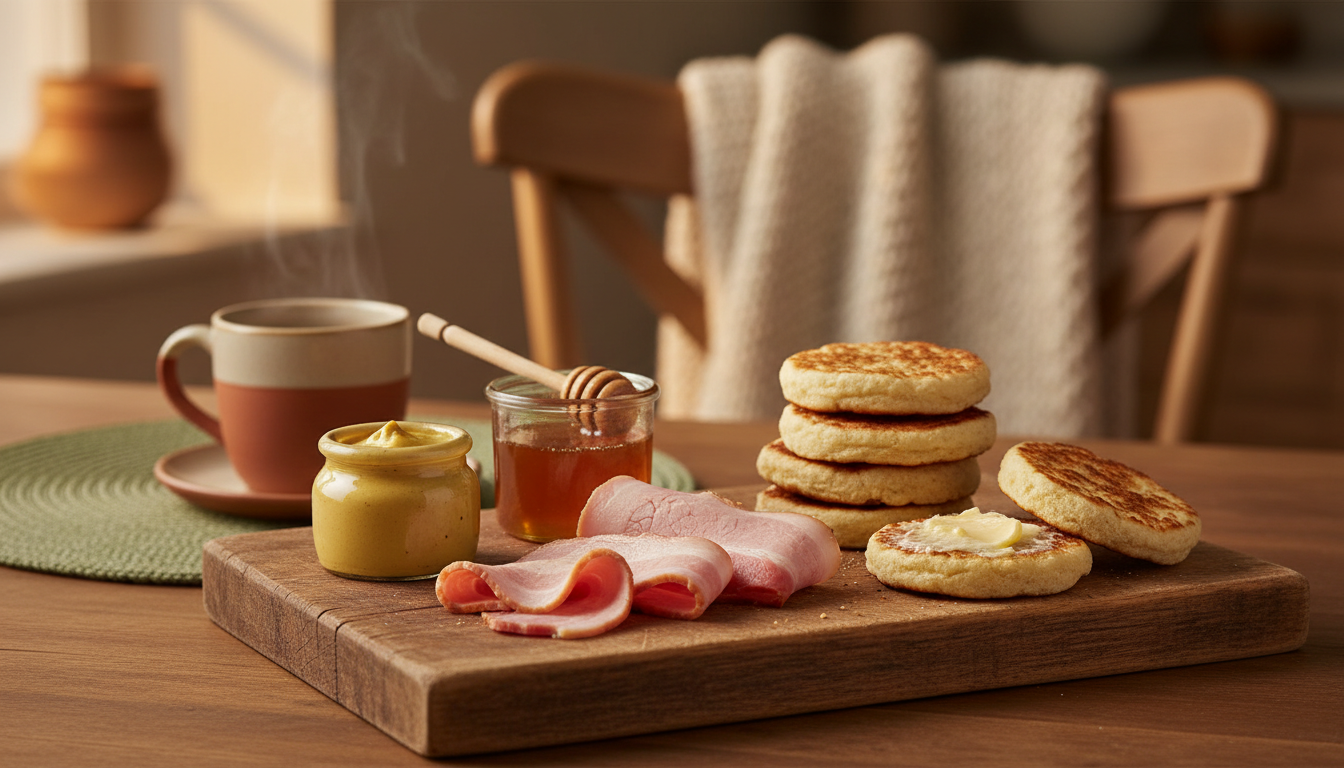 A rustic wooden cutting board with English mustard jar, local honey, British bacon, and crumpets arr
Supermarket Strategy
Cambridge has all the major UK supermarkets, but they're not created equal for home swap cooking.
Waitrose (on Sidney Street) is expensive but has the best quality prepared foods and specialty ingredients. This is where you go for that one weird ingredient your recipe demands. Budget about 30-40% more than other supermarkets.
Sainsbury's (there's a big one on Sidney Street and another in the Beehive Centre) hits the sweet spot of quality and price. Their "Taste the Difference" line is genuinely good. A full week's groceries for two people runs about £60-80 ($75-100).
Aldi and Lidl have locations slightly outside the center but offer the best prices by far. If you're on a tight budget and have a bike or car, stock up on basics here. Same groceries might cost £40-50 ($50-62).
Avoid the Tesco Express and Sainsbury's Local shops for anything beyond emergencies—the prices are marked up significantly for the convenience.
Best Cambridge Restaurants Worth Leaving Your Swap Kitchen For
Look, I love cooking in a home swap. But part of experiencing local cuisine in Cambridge means eating out strategically—saving your restaurant budget for places that offer something you genuinely can't replicate at home.
Fine Dining That's Actually Worth It
Midsummer House is Cambridge's only two-Michelin-star restaurant, and before you roll your eyes at the pretension, hear me out. Chef Daniel Clifford has been there since 1998, and the tasting menu (around £185/$230 per person) is genuinely one of the best meals I've had in England. It's located in a Victorian villa on Midsummer Common, and the setting alone—overlooking the River Cam—makes it feel special.
Is it expensive? Absolutely. Is it worth it for a special occasion during your home swap? If you care about food as an experience, yes.
Restaurant Twenty Two is the more accessible fine dining option. A set menu runs about £65-75 ($80-95) per person, and the cooking is technically excellent without being fussy. The building is a gorgeous Victorian townhouse on Chesterton Road. Book at least a week ahead.
Casual Spots That Locals Actually Love
The Cambridge Chop House (on King's Parade) sounds touristy but genuinely isn't. It's been serving proper British food since 1990—think steak and kidney pie, treacle tart, excellent steaks. Main courses run £18-28 ($22-35). The sticky toffee pudding is mandatory.
Pint Shop on Peas Hill does elevated pub food with an excellent craft beer selection. Their scotch eggs are famous locally, and the meat boards are perfect for sharing. Budget about £25-35 ($31-44) per person with drinks.
Hot Numbers has two locations and serves the best brunch in Cambridge. The original on Trumpington Street is tiny and always packed; the Gwydir Street location has more space. Avocado toast, shakshuka, excellent coffee. About £12-18 ($15-22) for brunch.
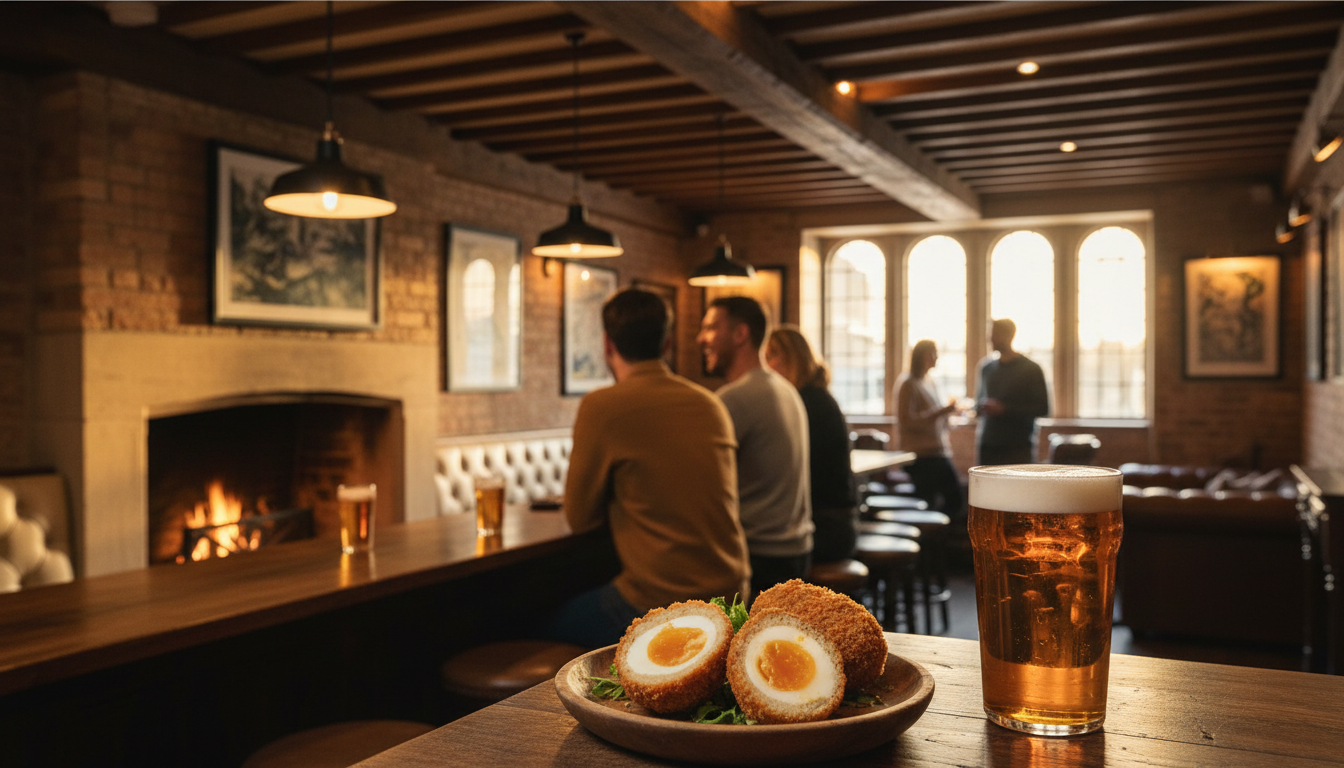 Interior of a cozy Cambridge pub with wooden beams, locals at the bar, a plate of scotch eggs and a
The Pub Dinner Experience
You cannot do a Cambridge home swap without at least one proper pub dinner. This is non-negotiable.
The Free Press on Prospect Row is my favorite—a tiny, no-music, no-phones pub with genuinely good food. It's in a residential area near Mill Road, exactly the kind of place you'd never find without local knowledge. The fish and chips are excellent, and a meal with a couple of pints runs about £20-25 ($25-31).
The Wrestlers on Newmarket Road is a proper old-school pub with a surprisingly good Thai kitchen in the back. Yes, really. The combination sounds strange but works perfectly. Pad Thai and a pint of Greene King IPA for about £15 ($19).
The Clarendon Arms on Clarendon Street is where Cambridge academics go when they want to argue about obscure topics over pints. The food is standard pub fare—nothing revolutionary—but the atmosphere is peak Cambridge. Expect to overhear at least one conversation about medieval manuscripts.
Cooking Cambridge Classics in Your Swap Kitchen
Having a kitchen means you can try your hand at regional dishes. Here are three that are doable for a home cook and genuinely taste better homemade.
Fenland Celery Soup
The Fens around Cambridge are famous for celery—it's been grown here since the 1800s. This simple soup is warming, cheap, and uses an ingredient you can find at any Cambridge market.
You'll need about 500g of celery (including leaves), an onion, a potato for thickening, chicken or vegetable stock, and cream. Sweat the vegetables, add stock, simmer until tender, blend, finish with cream. The whole thing takes 40 minutes and costs maybe £4 ($5) in ingredients.
The trick? Using the celery leaves, which most people throw away. They add an intensity that store-bought celery soup never has.
Proper English Roast Dinner
If your home swap falls on a Sunday, you're legally obligated to attempt a roast dinner. I don't make the rules.
Start with a joint of beef from a proper butcher—expect to pay £15-20 ($19-25) for enough to feed four. The key to British roast beef is cooking it at high heat initially (230°C/450°F) to get the crust, then lowering to 160°C/320°F for the rest. Most British ovens have a fan setting; use it.
Yorkshire puddings are the make-or-break element. The batter is just equal parts flour, eggs, and milk, but the execution is everything. The tin must be smoking hot with beef dripping before the batter goes in. Don't open the oven door for at least 20 minutes. Resist the urge.
Roast potatoes need to be parboiled, roughed up, and roasted in goose fat or beef dripping at high heat. This is not the time for olive oil and restraint.
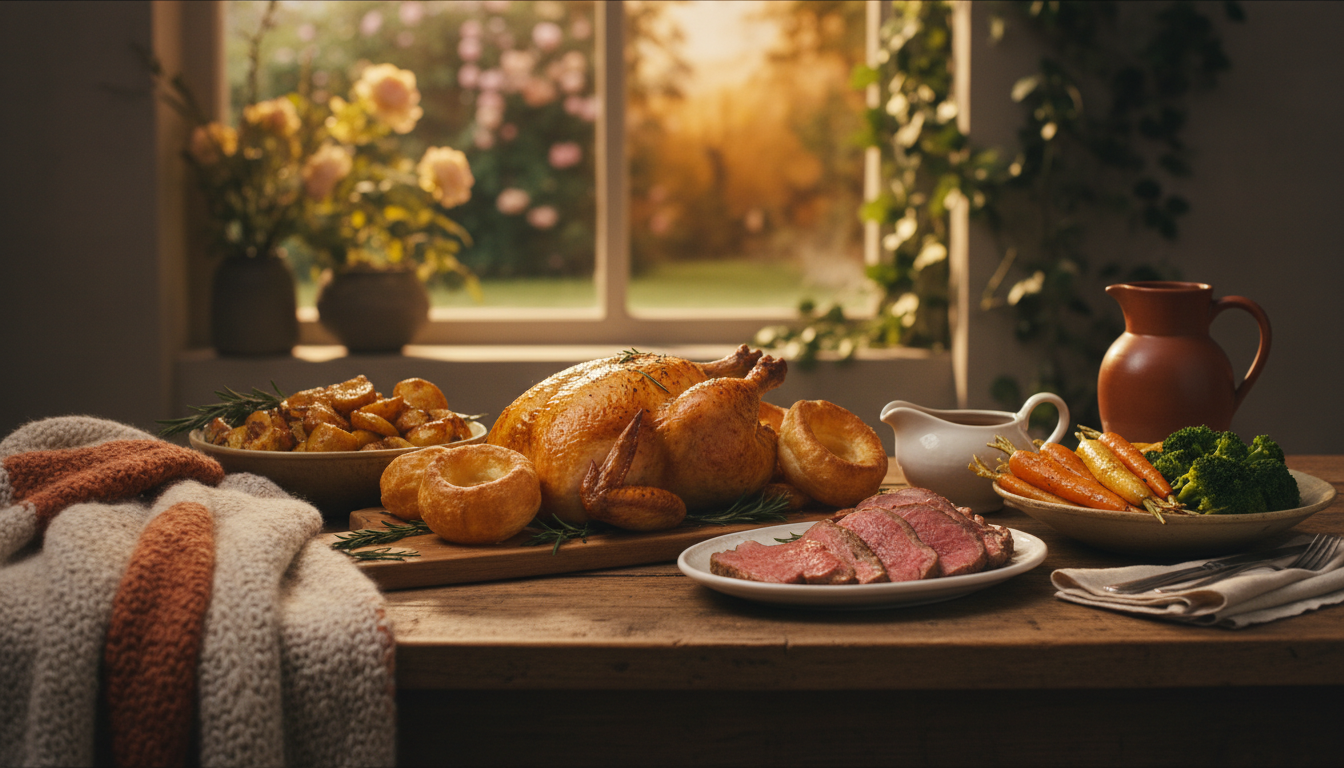 A proper Sunday roast spread on a wooden tablegolden Yorkshire puddings, pink roast beef, crispy pot
Cambridge Burnt Cream (The Original Crème Brûlée)
Here's a fun fact: Trinity College claims to have invented crème brûlée in the 1600s, calling it "Cambridge burnt cream." Whether or not this is historically accurate, it gives you an excuse to make custard.
The recipe is simpler than French versions—just cream, egg yolks, sugar, and vanilla. No tempering, no water bath. You bake it gently, chill it, then torch the sugar top. The college recipe supposedly uses a branding iron, but a kitchen torch works fine.
I made this in my Cambridge swap kitchen using cream from the market and eggs from a farm stall. The result was richer than any restaurant version I've had—probably too rich, honestly, but in the best way.
Navigating Dietary Restrictions in Cambridge
Cambridge is surprisingly accommodating for dietary restrictions, probably because the university population includes people from everywhere.
Vegetarian and Vegan
Rainbow Café on King's Parade has been serving vegetarian food since 1977 and recently went fully vegan. It's in a basement with a slightly hippie vibe, and the food is hearty rather than fancy. Mains around £12-15 ($15-19).
Vanilla Black (if you can get to London, about an hour by train) is worth the trip for a special vegan meal, but locally, The Ivy Cambridge Brasserie has a surprisingly good plant-based menu.
For cooking, the Mill Road shops are your best bet for vegan ingredients—the Asian and Middle Eastern grocers stock tofu, tempeh, and plant-based proteins that Sainsbury's doesn't carry.
Gluten-Free
Cambridge hasn't fully caught up with gluten-free dining, but it's improving. Steak & Honour (a burger spot with a permanent location on Wheeler Street) does gluten-free buns that don't taste like cardboard. Fitzbillies now offers gluten-free Chelsea buns on certain days—call ahead.
For cooking, Waitrose has the best gluten-free selection. The free-from aisle is extensive, and their own-brand gluten-free pasta is genuinely good.
Making the Most of Your Home Swap Kitchen
A few practical notes from someone who's cooked in a lot of strangers' kitchens.
Always check what equipment your host has before planning elaborate meals. My Cambridge host had a Le Creuset Dutch oven (amazing) but no food processor (less amazing). Adjust your cooking plans accordingly.
Bring your own sharp knife if you're serious about cooking. Most home kitchens have dull knives that make prep work frustrating. A small chef's knife in your checked luggage is worth the space.
Leave the kitchen better than you found it. This is home swap etiquette 101, but it especially applies to food. Clean the oven if you splattered it. Empty the fridge before you leave. Replace any staples you used up—your host will notice if their olive oil bottle went from full to empty.
And finally? Take notes. I keep a running document of what I cooked in each home swap, what worked, what didn't, and what local ingredients I discovered. It's become a kind of culinary travel journal, and flipping through it reminds me of trips more vividly than any photo album.
Cambridge Food Experiences Beyond Restaurants
College Formal Halls
If you can wrangle an invitation (usually through a friend who's a fellow or student), attending a formal hall dinner at one of the colleges is an unforgettable experience. The food itself is institutional—decent but not remarkable—but eating in a medieval dining hall by candlelight, surrounded by oil paintings of long-dead scholars, is something else entirely.
Some colleges occasionally open formal halls to visitors for special events. Check the individual college websites or ask your home swap host if they have any connections.
Fitzbillies Chelsea Buns
I've mentioned Fitzbillies a few times, and that's because it's a Cambridge institution. The bakery has been making Chelsea buns since 1922, and they're unlike any other version you'll find—sticky, spiced, and somehow both dense and fluffy at once.
The shop on Trumpington Street always has a queue, but it moves fast. A Chelsea bun costs about £3.50 ($4.40). Get there before 10am on weekends or they sell out.
The Orchard Tea Garden in Grantchester
About two miles from Cambridge (a lovely walk or cycle along the river), the Orchard Tea Garden has been serving cream teas since 1897. Virginia Woolf, Rupert Brooke, and the Bloomsbury set used to hang out here.
The scones are good, the setting is idyllic, and the experience is quintessentially English. Budget about £15-20 ($19-25) for a full cream tea for two.
Planning Your Cambridge Food Home Swap
If you're specifically interested in a food-focused Cambridge home swap, here's what to look for in a listing.
Location matters more than size. A small flat near Mill Road will serve you better than a large house in the suburbs. Look for swaps in Romsey Town, Petersfield, or the Kite—all walkable to the best food shopping.
Kitchen photos tell you everything. Look for a proper oven (not just a microwave), a decent-sized fridge, and counter space. Bonus points for a gas hob—many British kitchens have them, and they're far better for cooking than electric.
Ask your host about their favorite local spots. Most home swap hosts are happy to share recommendations, and their insider knowledge is worth more than any guidebook.
That note on my first Cambridge morning—the one about the blue coffee tin and Fitzbillies—ended up being the template for how I approach every home swap now. I leave similar notes for my own guests, pointing them toward the farmers' market three blocks away, the taqueria that doesn't look like much but makes incredible carnitas, the coffee shop where the barista remembers your order.
Food is how we make a temporary home feel like a real one. And Cambridge, with its markets and pubs and unexpectedly global food scene, is one of the better places I've found to do exactly that.
Frequently Asked Questions
What is the best area in Cambridge for food lovers doing a home swap?
Mill Road and the surrounding neighborhoods (Romsey Town, Petersfield) offer the best combination of diverse grocery shopping, independent restaurants, and local pubs. This area puts you within walking distance of international food shops, the city center markets, and authentic neighborhood eateries that tourists rarely discover. Look for home swap listings in these areas for the most food-focused experience.
How much should I budget for food during a Cambridge home swap?
With kitchen access, expect to spend £50-80 ($62-100) per person per week on groceries from markets and supermarkets. Add £100-150 ($125-190) per person weekly for eating out at pubs and casual restaurants. A two-week Cambridge home swap food budget of £300-400 ($375-500) per person covers comfortable cooking and dining—significantly less than restaurant-only travel.
Are Cambridge restaurants accommodating for dietary restrictions?
Cambridge is reasonably accommodating, especially for vegetarian and vegan diets. Rainbow Café is fully vegan, and most restaurants offer vegetarian options. Gluten-free options are improving but less consistent—Steak & Honour and some bakeries offer alternatives. For specialized diets, cooking in your home swap kitchen using ingredients from Mill Road's diverse grocers gives you the most control and variety.
What local Cambridge foods should I try during my home swap?
Prioritize Fitzbillies Chelsea buns (a Cambridge institution since 1922), Fenland vegetables from the market (especially celery and root vegetables), proper English bacon from a local butcher, and a cream tea at the Orchard in Grantchester. For cooking, try making Cambridge burnt cream (the original crème brûlée) and a Sunday roast with Yorkshire puddings using local market ingredients.
Can I visit Cambridge college dining halls during a home swap?
Formal hall dinners at Cambridge colleges typically require an invitation from a current fellow or student. However, some colleges occasionally open special events to visitors—check individual college websites. Your home swap host may have university connections and could potentially arrange an invitation, so it's worth asking when you exchange messages before your stay.

Published by
SwappaHome
SwappaHome Editorial Team
Home Exchange & Slow Travel Editorial
The SwappaHome Editorial Team brings together travel research, home-exchange community insights, and platform data to produce practical guides for first-time and experienced home swappers. Every article cites real platforms, current market rates, and verifiable city-level facts so readers can make informed decisions without guessing.
Ready to try home swapping?
Join SwappaHome and start traveling by exchanging homes. Get 7 free credits when you sign up!
Related articles

Bachelor and Bachelorette Parties in Singapore: The Complete Home Swap Group Guide for 2026
Planning a bachelor or bachelorette party in Singapore? Discover how home swapping lets groups of 6-12 stay together in luxury condos, saving thousands while partying in Marina Bay.

Cycling in Lisbon: 7 Home Swap Bike Tour Itineraries for Every Rider
Discover the best cycling routes in Lisbon with these home swap bike tour itineraries—from waterfront paths to hilltop adventures, all starting from your borrowed home.

Graduation Trip to Barcelona: How Home Swapping Gives New Graduates the Ultimate Celebration
Planning a graduation trip to Barcelona? Discover how home swapping lets new graduates explore Spain's most vibrant city without the hostel crowds or hotel costs.