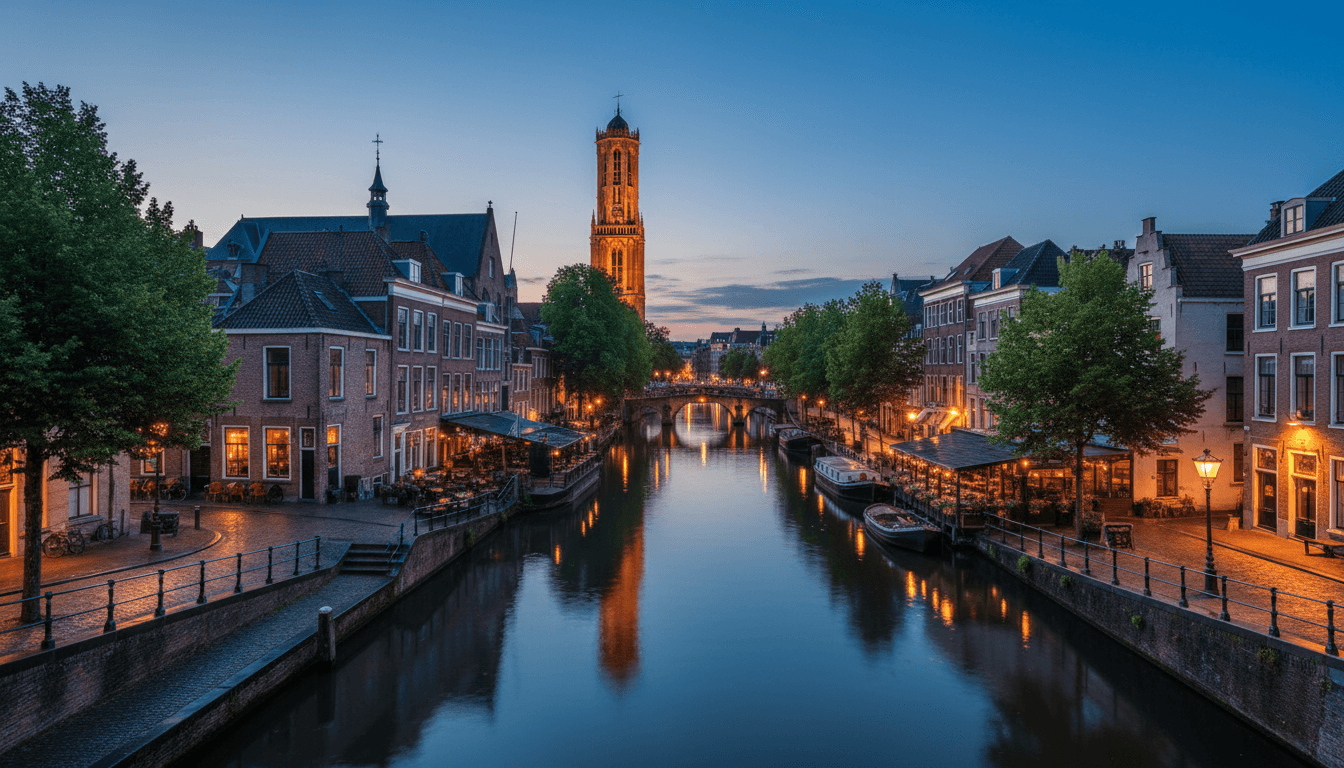
Local Cuisine in Utrecht: Your Complete Guide to Cooking and Dining During a Home Swap

SwappaHome Editorial Team
Home Exchange & Slow Travel Editorial
Discover Utrecht's food scene through a home swap lens—from market shopping to stroopwafel secrets. Your kitchen-first guide to eating like a local.
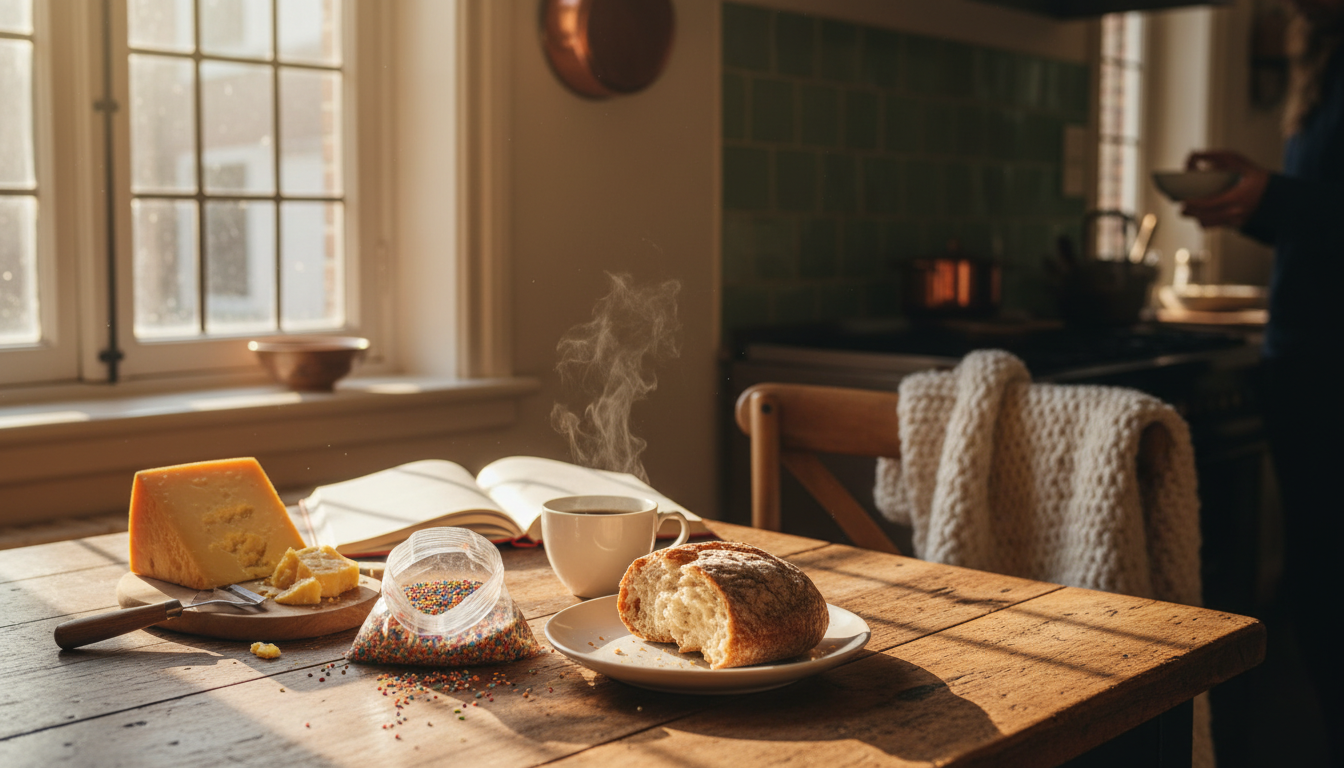
The first morning I woke up in my Utrecht home swap, I padded into the kitchen in my socks and found a handwritten note tucked under a jar of hagelslag—those Dutch chocolate sprinkles that adults genuinely eat for breakfast. "The cheese shop on Voorstraat closes at 5, but the Turkish bakery stays open late. The coffee grinder is temperamental. Welcome to our home." That note, scribbled on the back of a grocery receipt, taught me more about local cuisine in Utrecht than any restaurant guide ever could.
There's something almost subversive about experiencing a city through its kitchens rather than its tourist menus. And Utrecht—this underrated gem sitting in the shadow of Amsterdam—rewards that approach more than most places I've swapped. The city is compact enough to walk everywhere, old enough to have proper food traditions, and young enough (thanks to its massive university) to keep reinventing them.
 Morning light streaming through a tall Dutch window onto a wooden breakfast table with hagelslag, fr
Why Utrecht Is Perfect for a Food-Focused Home Swap
I've done home exchanges in cities famous for their food scenes—Lyon, Barcelona, Tokyo—but Utrecht surprised me. It's not trying to impress anyone. The food culture here is genuinely domestic, which means when you're cooking in a local's kitchen, you're tapping into something real.
The city has this incredible density of specialty food shops within walking distance of almost any neighborhood. We're talking dedicated cheese shops (not tourist traps—actual places where Dutch people buy their weekly Gouda), Indonesian toko groceries, organic farm stands, and bakeries that have been making the same ontbijtkoek for generations.
And here's what makes it work for home swapping specifically: Dutch kitchens are genuinely well-equipped. I've stayed in gorgeous Parisian apartments with a single dull knife and a camping stove. My Utrecht swap had a proper chef's knife, a poffertjes pan (those tiny fluffy pancakes), and a spice drawer that made me emotional. The Dutch take home cooking seriously—they just don't brag about it.
Grocery costs here are reasonable too. I spent about €45 ($49) feeding myself for a full week, cooking most meals, and that included splurging on fancy cheese and wine. Try that in Paris.
Navigating Utrecht's Markets and Food Shops
The Saturday Market on Vredenburg
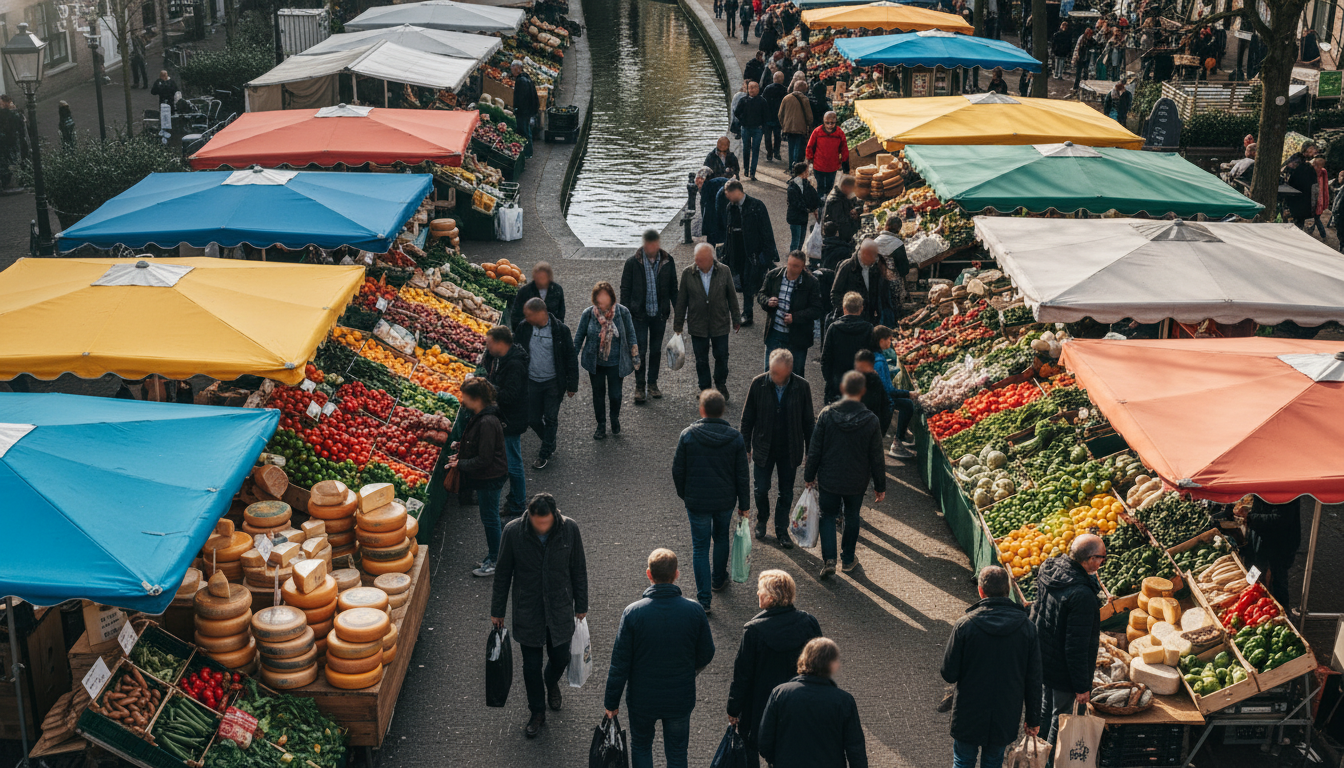
Real talk: you need to go to the Vredenburg market on Saturday morning. Not because it's a hidden secret—it's actually one of the largest markets in the Netherlands—but because it's genuinely where Utrecht shops. Get there by 9 AM if you want the good stuff without fighting crowds.
The flower section will distract you (Dutch flowers are obscenely cheap—€3/$3.25 for tulips that would cost $15 in San Francisco), but push through to the food stalls. Fresh stroopwafels from the stand near the center are non-negotiable—watch them press them hot, then eat immediately. €2 for one the size of your face. The packaged ones in stores are fine, but these? Transcendent. Grab some kibbeling (battered fried cod) from any of the fish trucks too, about €5-6 for a portion with garlic sauce. This is Dutch street food at its finest.
The cheese stalls will try to give you samples, and you should absolutely let them. Ask for "belegen" (aged) Gouda if you want actual flavor, not the mild stuff they export. A wedge that'll last you a week runs about €6-8.
 Overhead shot of the bustling Vredenburg Saturday market with colorful produce stalls, cheese wheels
The Specialty Shops Worth Finding
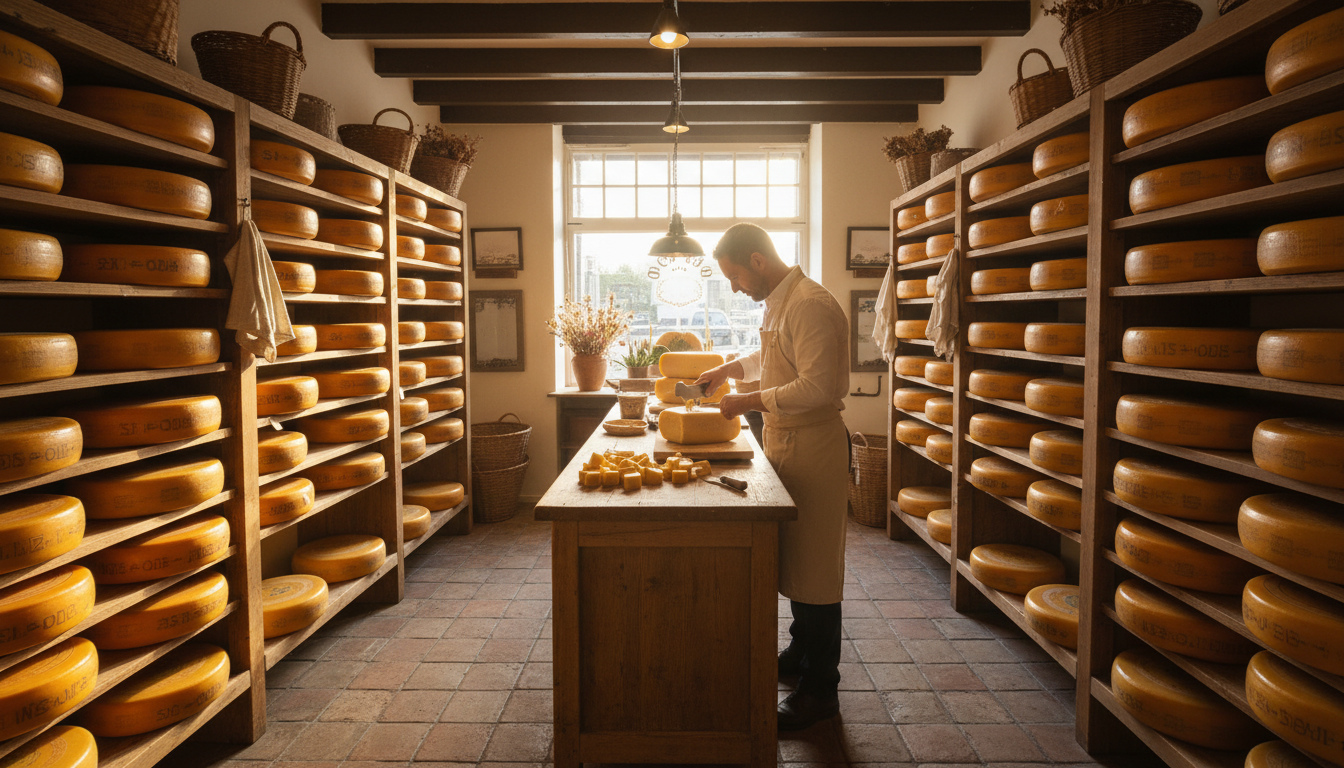
Voorstraat—the oldest street in Utrecht—has this cluster of food shops that feels almost anachronistic. There's a cheese shop, a wine shop, a butcher, and a bakery all within a two-minute walk. It's like a time capsule of how people used to shop before supermarkets swallowed everything.
De Kaasspecialist on Voorstraat is my cheese spot. The owner will ask what you're using it for—sandwich? Cooking? Wine pairing?—and recommend accordingly. Don't be intimidated by the Dutch efficiency; they're not being rude, they're being helpful. Budget about €10-15 for a selection that'll genuinely impress you.
For Indonesian ingredients—and you'll want them, because Dutch-Indonesian food is a whole thing here—hit up Toko Oen near the Neude square or any of the smaller toko shops in Lombok neighborhood. Sambal, ketjap manis, bumbu spice pastes, krupuk crackers. A full Indonesian pantry raid costs maybe €15 and transforms what you can cook.
Simon Lévelt for coffee and tea. They've been roasting since 1839, and the Utrecht shop smells like heaven. Grab a bag of their house blend (€8-10) and use your host's coffee setup—most Dutch homes have surprisingly good gear.
The Supermarket Situation
For everyday groceries, you'll likely end up at Albert Heijn (the dominant Dutch chain—there's one every 500 meters, I swear) or Jumbo. Both are solid. Albert Heijn's "AH Excellent" line is genuinely good quality for things like pasta, olive oil, and prepared foods.
Pro tip: the Albert Heijn "Bonus" deals change weekly and can be absurdly good. I once got a kilo of chicken thighs for €3. Check the app or the flyers at the entrance.
For organic and specialty items, Ekoplaza has locations throughout the city. Pricier, but the produce quality is noticeably better, and they stock things like good sourdough bread and Dutch craft beers.
 Interior of a traditional Dutch cheese shop with wheels of Gouda stacked floor to ceiling, a wooden
Cooking Local Cuisine in Your Utrecht Home Swap Kitchen
Dutch Breakfast: Embrace the Chaos
Dutch breakfast is... a lot. And I mean that affectionately. Your host's kitchen will probably have hagelslag (chocolate sprinkles), muisjes (anise sprinkles), pindakaas (peanut butter that's somehow better than American versions), and multiple types of bread.
Here's the key insight: Dutch breakfast is about assembly, not cooking. Good bread (grab a loaf of volkoren whole wheat from any bakery), butter, cheese, cold cuts, and then whatever sweet toppings appeal to you. It sounds chaotic, but it works.
If you want to actually cook, uitsmijter is the move—it's basically a Dutch open-faced sandwich with fried eggs on top, usually with ham and cheese. Dead simple, deeply satisfying. Most hosts will have eggs in the fridge.
The Indonesian Connection
Here's something that surprised me on my first Utrecht swap: Dutch home cooking is heavily influenced by Indonesian cuisine, a legacy of colonialism that's evolved into something genuinely beloved. Your host might have a jar of sambal in the fridge like it's ketchup.
If you've never made nasi goreng (Indonesian fried rice), a Dutch kitchen is the place to try. It's practically a national dish here. You'll need day-old rice (crucial—fresh rice gets mushy), ketjap manis (sweet soy sauce—find it at any supermarket), sambal or fresh chilies, eggs, vegetables, and whatever protein you have. Krupuk crackers for serving.
The whole thing comes together in 15 minutes and costs maybe €4 to make enough for two people. Serve it with a fried egg on top and those crackers on the side. This is what Dutch people actually eat at home.
Bami goreng (fried noodles) follows the same logic. Grab a packet of bami noodles from the Asian section of Albert Heijn—they're designed for this exact dish.
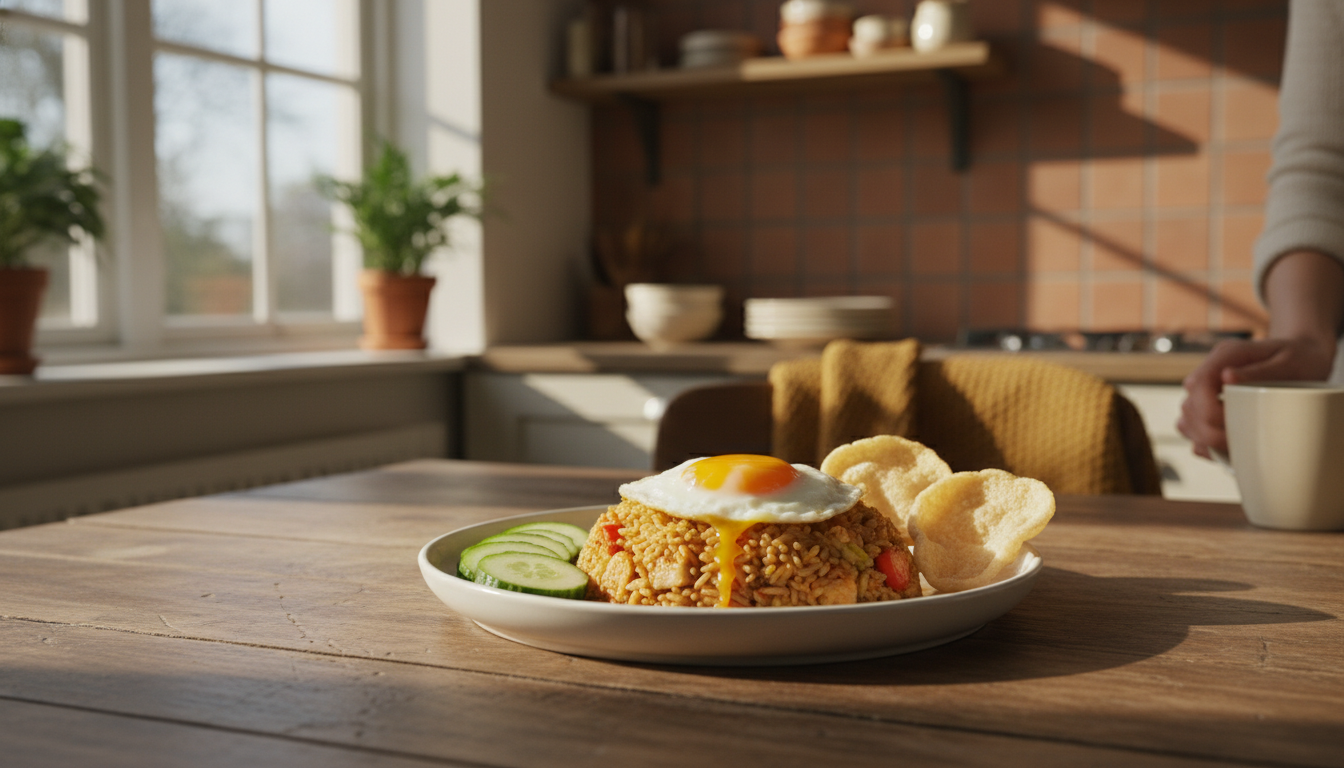 A home-cooked plate of nasi goreng with a sunny-side-up egg, krupuk crackers, and fresh cucumber sli
Stamppot: The Ultimate Dutch Comfort Food
If you're swapping in fall or winter, you need to make stamppot at least once. It's the Dutch answer to mashed potatoes, but more interesting—potatoes mashed with vegetables (kale, sauerkraut, carrots, endive) and served with rookworst (smoked sausage).
Boerenkool stamppot (with kale) is the classic. Boil potatoes until falling apart (Dutch potatoes are starchier than American ones—they mash beautifully), steam or boil curly kale until tender, then mash everything together with butter and milk. Make a well in the center, fill with gravy, and serve with rookworst (buy it pre-cooked from any supermarket, just heat it).
Total cost: about €6-8 to feed two people generously. Total effort: minimal. Total comfort: maximum.
Your host's kitchen will definitely have a potato masher. The Dutch are constitutionally incapable of not owning one.
Baking Dutch Treats
If your host has a poffertjes pan (many do—it looks like a mini muffin tin with tiny wells), you're legally obligated to use it. Poffertjes are those tiny, fluffy pancakes dusted with powdered sugar that you see at markets.
You can buy pre-made batter at the supermarket (look for "poffertjes beslag" in the refrigerated section), or make your own with buckwheat flour, yeast, and milk. The technique takes practice—you flip them with a fork when bubbles form—but even ugly poffertjes taste incredible.
Appeltaart (Dutch apple pie) is another home-baking tradition. It's denser and spicier than American apple pie, almost like a cake. If you're feeling ambitious, the recipe is straightforward: butter crust, apples mixed with cinnamon and raisins, lattice top. But honestly? Buy a slice from Theo Blom bakery and save yourself the effort. They've been perfecting it since 1926.
Dining Out: Where to Eat When You're Not Cooking
Casual Spots for Lunch
Even when you're cooking most meals, you'll want to eat out occasionally. Utrecht's lunch scene is strong.
Broers on the Oudegracht canal has the best broodjes (sandwiches) I've found—try the one with aged cheese and mustard. About €8-10 for a sandwich and coffee. The terrace overlooks the canal, and on sunny days, it's packed with locals.
De Rechtbank is a former courthouse turned food hall with multiple vendors. Good for when you can't agree on what to eat—someone can get Vietnamese, someone else can get pizza. Mains run €10-15.
For Indonesian lunch, Deli Toko Sonja does a mean rijsttafel (rice table—lots of small dishes) for around €15. It's in Lombok, Utrecht's historically Indonesian neighborhood, which is worth exploring anyway.
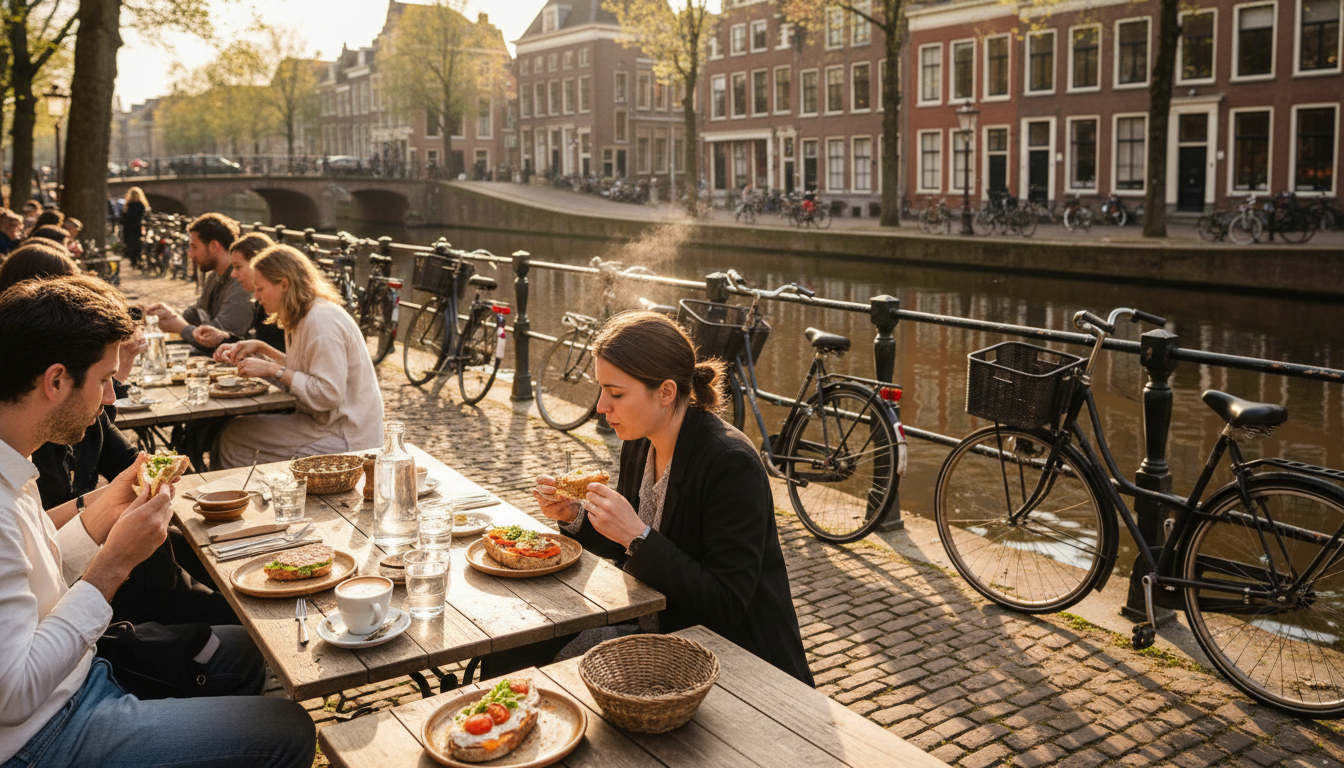 Canal-side terrace dining in Utrecht with people eating broodjes and drinking coffee, bicycles parke
Dinner Worth Dressing Up For
Utrecht isn't a Michelin-star city, but it has some genuinely excellent restaurants if you want one nice dinner out.
Restaurant Quintus does modern Dutch cuisine—think local ingredients treated with French technique. Expect €50-70 per person with wine. Reservations essential.
Blauw is the city's best Indonesian restaurant, and it's spectacular. Their rijsttafel for two (around €45 per person) is 17 different dishes and will absolutely ruin you for lesser Indonesian food. Book ahead.
For something more casual but still special, Gys does creative small plates in a cozy space. €30-40 per person, excellent natural wine list.
The Brown Café Experience
Dutch bruine kroegen (brown cafés—named for their dark wood interiors and nicotine-stained ceilings) are an essential Utrecht experience. These aren't restaurants exactly, but many serve food, and all serve atmosphere.
Café Olivier is housed in a former church and serves Belgian beers alongside decent pub food. The interior is genuinely stunning—vaulted ceilings, stained glass, and a bar where the altar used to be. A beer and a bitterbal (fried meat ragout ball) will run you about €8.
Café België has 150+ beers and a terrace on one of the prettiest canal stretches. The vlaamse friet (Belgian fries with various sauces) are legitimately good—about €5 for a cone.
Neighborhood Food Guides for Your Home Swap Location
If You're Staying in the City Center
You're walking distance from everything, which is both a blessing and a curse—too many options. Focus on the Oudegracht canal for dining, Voorstraat for specialty shopping, and the Vredenburg market on Saturdays.
Morning coffee ritual: Blackbird Coffee on Mariaplaats. Small, excellent, no-nonsense. Espresso €2.50, oat flat white €4.
If You're Staying in Lombok/Oost
Jackpot for food lovers. This neighborhood has the best concentration of Indonesian shops, Middle Eastern bakeries, and multicultural grocery stores. Kanaalstraat is the main drag—walk it slowly and duck into whatever looks interesting.
Toko Semarang is a legendary Indonesian grocery. Damascus Bakery does fresh flatbreads and spinach pies for almost nothing. The vibe is less polished than the center, but the food is more interesting.
If You're Staying in Wittevrouwen/Northeast
Quieter, more residential, excellent for families. The Breedstraat has a small cluster of nice shops and cafés. Poké Perfect does surprisingly good Hawaiian bowls. The Saturday organic market at Janskerkhof is smaller than Vredenburg but more curated.
Practical Tips for Cooking During Your Utrecht Home Swap
Communicating with Your Host About Kitchen Use
Before your swap, ask your host a few key questions: Any ingredients in the fridge or pantry you're welcome to use? (Most hosts leave basics like oil, salt, spices.) Any equipment that's off-limits or temperamental? Where do they shop for groceries? Any local food recommendations?
That last question is gold. Your host knows which bakery has the best bread, which cheese shop gives the biggest samples, which market stall to avoid. This insider knowledge is half the reason to home swap in the first place.
Stocking a Dutch Pantry
Assuming your host has the basics, here's what I usually buy on day one: fresh bread (daily—Dutch bread goes stale fast), eggs, butter (Dutch butter is excellent), a wedge of aged Gouda, whatever vegetables look good, ketjap manis and sambal if not already there, coffee or tea to your preference, and wine or beer for cooking and drinking.
Budget about €25-30 for this initial shop, then €15-20 for top-ups throughout the week.
Dealing with Dutch Appliances
A few things that might confuse Americans: ovens are often fan-assisted ("hetelucht")—reduce temperatures by about 20°C from American recipes. Stovetops are frequently induction—check if your pans work before planning a big cook. Kettles are electric and everywhere—the Dutch drink a lot of tea. Dishwashers are common but often half-size. And garbage sorting is serious—ask your host about recycling rules.
Timing Your Food Shopping
Dutch shopping hours can be weird. Most shops close by 6 PM, some by 5 PM. Sundays, many shops are closed or open limited hours (12-5 PM typical). Supermarkets stay open later—usually until 9 or 10 PM. Markets are morning affairs—go early.
Plan your specialty shopping for weekday afternoons. Don't leave it until Sunday.
The SwappaHome Advantage for Food Travelers
I'll be honest—I became a home swap convert specifically because of kitchens. Hotels in Utrecht run €150-200/night for anything decent, and you get a mini fridge and a kettle if you're lucky. A home swap gives you a full kitchen, a local's recommendations, and the freedom to cook whatever you want.
Through SwappaHome, I've stayed in Utrecht apartments with canal views and kitchens better equipped than my own. The credit system means I hosted a lovely couple from Rotterdam in my San Francisco place, then used those credits for a week in Utrecht. No money changed hands. I saved probably €1,200 on accommodation and spent a fraction of that on incredible local food.
The platform's review system meant I knew my Utrecht hosts were reliable before I arrived. And their note about the cheese shop and Turkish bakery? That kind of local knowledge doesn't exist in any guidebook.
A Sample Food-Focused Day in Utrecht
Here's how I'd structure a perfect food day, mixing cooking and exploring:
8:00 AM - Wake up, make coffee in the kitchen, Dutch breakfast with hagelslag and cheese
9:30 AM - Walk to Vredenburg market, grab a fresh stroopwafel and browse the stalls
11:00 AM - Stop at the cheese shop on Voorstraat, pick up provisions for the week
12:30 PM - Light lunch at home—bread, cheese, maybe some market kibbeling
2:00 PM - Explore Lombok neighborhood, stock up on Indonesian ingredients at Toko Semarang
4:00 PM - Coffee and appeltaart at a canal-side café
6:00 PM - Start cooking nasi goreng in your swap kitchen
7:30 PM - Dinner at home with a bottle of Dutch wine (try something from Limburg—yes, the Netherlands makes wine now)
9:00 PM - Evening walk along the Oudegracht, maybe a beer at Café België
Total spent: maybe €30-40, including market treats and café stops. You've eaten incredibly well, experienced the city like a local, and still have money left for tomorrow.
Frequently Asked Questions
What is local cuisine like in Utrecht compared to Amsterdam?
Utrecht's food scene is less touristy and more authentically Dutch than Amsterdam. You'll find the same Indonesian influence and traditional dishes like stamppot, but with fewer overpriced tourist traps. Local cuisine in Utrecht focuses on quality neighborhood spots, specialty food shops, and genuine home cooking traditions. Prices are generally 15-20% lower than Amsterdam for comparable quality.
Can I cook in a home swap kitchen in the Netherlands?
Absolutely—Dutch home swap kitchens are typically well-equipped with quality cookware, proper knives, and often specialty items like poffertjes pans. Most hosts leave basic pantry items (oil, spices, salt) and will tell you what you're welcome to use. Always confirm kitchen access and any restrictions with your host before booking through SwappaHome.
How much does food cost in Utrecht for a week?
Cooking most meals in your home swap kitchen, expect to spend €45-60 ($49-65) per person weekly on groceries, including good cheese, fresh bread, and market treats. Eating out for lunch averages €10-15, dinner at a nice restaurant €30-50 per person. A food-focused week mixing home cooking with occasional dining out typically costs €100-150 total.
What Dutch foods should I cook during a home swap in Utrecht?
Start with nasi goreng (Indonesian fried rice)—it's practically a Dutch national dish and easy to make. Try stamppot (mashed potatoes with vegetables) for comfort food, especially in colder months. Dutch breakfast is about assembly: good bread, aged Gouda, hagelslag chocolate sprinkles. If your host has a poffertjes pan, make those tiny Dutch pancakes at least once.
Where is the best place to buy groceries in Utrecht?
The Vredenburg Saturday market offers the freshest produce, best stroopwafels, and excellent cheese at fair prices. For daily groceries, Albert Heijn supermarkets are everywhere and reliable. Specialty shops on Voorstraat (cheese, wine, bakery) offer higher quality. For Indonesian ingredients, try the toko shops in Lombok neighborhood, especially Toko Semarang on Kanaalstraat.
That note I found under the hagelslag jar? I kept it. It's tucked into my travel journal now, a reminder that the best food experiences aren't in restaurants—they're in someone's kitchen, following their handwritten directions to the cheese shop that closes at 5. Utrecht taught me that. And honestly, I can't wait to go back and learn what else I missed.

Published by
SwappaHome
SwappaHome Editorial Team
Home Exchange & Slow Travel Editorial
The SwappaHome Editorial Team brings together travel research, home-exchange community insights, and platform data to produce practical guides for first-time and experienced home swappers. Every article cites real platforms, current market rates, and verifiable city-level facts so readers can make informed decisions without guessing.
Ready to try home swapping?
Join SwappaHome and start traveling by exchanging homes. Get 7 free credits when you sign up!
Related articles

Bachelor and Bachelorette Parties in Singapore: The Complete Home Swap Group Guide for 2026
Planning a bachelor or bachelorette party in Singapore? Discover how home swapping lets groups of 6-12 stay together in luxury condos, saving thousands while partying in Marina Bay.

Cycling in Lisbon: 7 Home Swap Bike Tour Itineraries for Every Rider
Discover the best cycling routes in Lisbon with these home swap bike tour itineraries—from waterfront paths to hilltop adventures, all starting from your borrowed home.

Graduation Trip to Barcelona: How Home Swapping Gives New Graduates the Ultimate Celebration
Planning a graduation trip to Barcelona? Discover how home swapping lets new graduates explore Spain's most vibrant city without the hostel crowds or hotel costs.