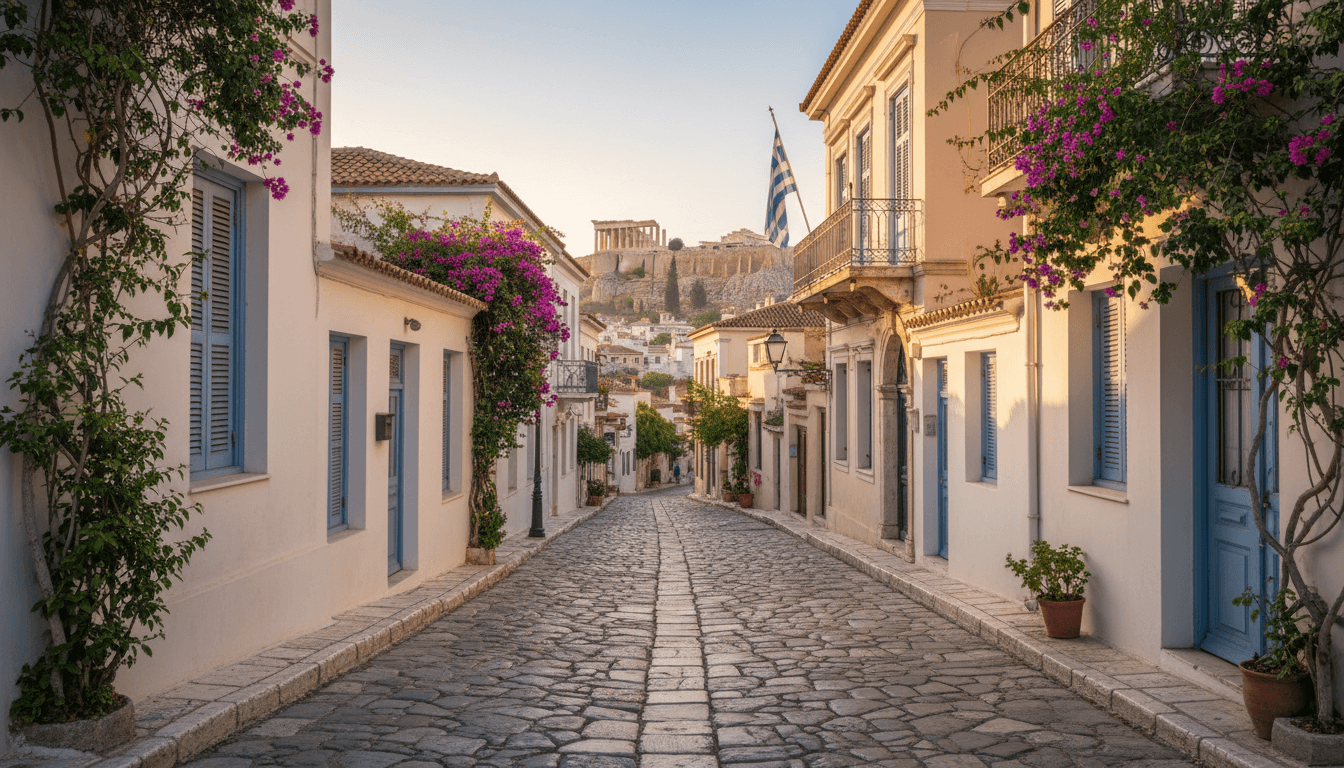
New Year's Eve Home Swap in Athens: How to Celebrate Like a Local in 2025

SwappaHome Editorial Team
Home Exchange & Slow Travel Editorial
Skip the tourist traps and ring in the New Year like an Athenian. Your guide to the best neighborhoods, local traditions, and how to score the perfect home swap in Athens.
The clock struck midnight, and I was standing on a rooftop terrace in Koukaki, champagne in hand, watching fireworks explode over the Acropolis while my Greek neighbors sang "Χρόνια Πολλά" at the top of their lungs. No velvet rope, no €200 prix fixe menu, no fighting for a taxi at 2 AM. Just me, a borrowed apartment with a killer view, and the kind of New Year's Eve you can't buy—only experience.
That was three years ago. And honestly? It ruined fancy hotel celebrations for me forever.
A New Year's Eve home swap in Athens isn't just a budget hack (though saving $300+ per night doesn't hurt). It's a completely different way to experience one of the world's oldest cities during its most festive season.
 Fireworks illuminating the Acropolis at midnight on New Years Eve, viewed from a residential rooftop
So here's the thing—if you're considering spending December 31st in the Greek capital, you absolutely should. And I'm going to tell you everything I've learned about making it happen through home exchange. The neighborhoods where locals actually celebrate, the traditions that'll make you feel like an honorary Athenian, all of it.
Why Choose a Home Swap in Athens for New Year's Eve
Let me paint you two scenarios.
Scenario A: You book a hotel in Syntagma Square. It's nice. Clean. The breakfast buffet has those little croissants. You watch the countdown on TV because the rooftop bar is booked solid, then fall asleep to the sound of drunk tourists in the hallway. Cost: €250-400 per night during peak season.
Scenario B: You stay in a local's apartment in Pangrati. There's a balcony overlooking a plateia where families gather. Your host left you a bottle of local wine and instructions to their favorite taverna. At midnight, you step outside and your neighbors invite you to toast with them. You eat vasilopita at 1 AM with people whose names you'll remember forever. Cost: 1 credit per night on SwappaHome.
I'm not saying hotels are bad. But there's something about waking up in someone's actual home—their books on the shelf, their coffee maker, their neighborhood bakery around the corner—that transforms a trip from "vacation" to "experience."
And here's what most people don't realize: Athens during New Year's Eve is all about the neighborhoods. Greeks don't congregate in one central spot like Times Square. They celebrate in their local plateia, at house parties, on rooftops with views of the city. Staying in a home puts you exactly where the real magic happens.
Best Athens Neighborhoods for Your New Year's Home Exchange
Not all Athenian neighborhoods are created equal—especially for New Year's Eve. Here's where I'd actually recommend booking your home swap in Athens, based on what kind of celebration you're after.
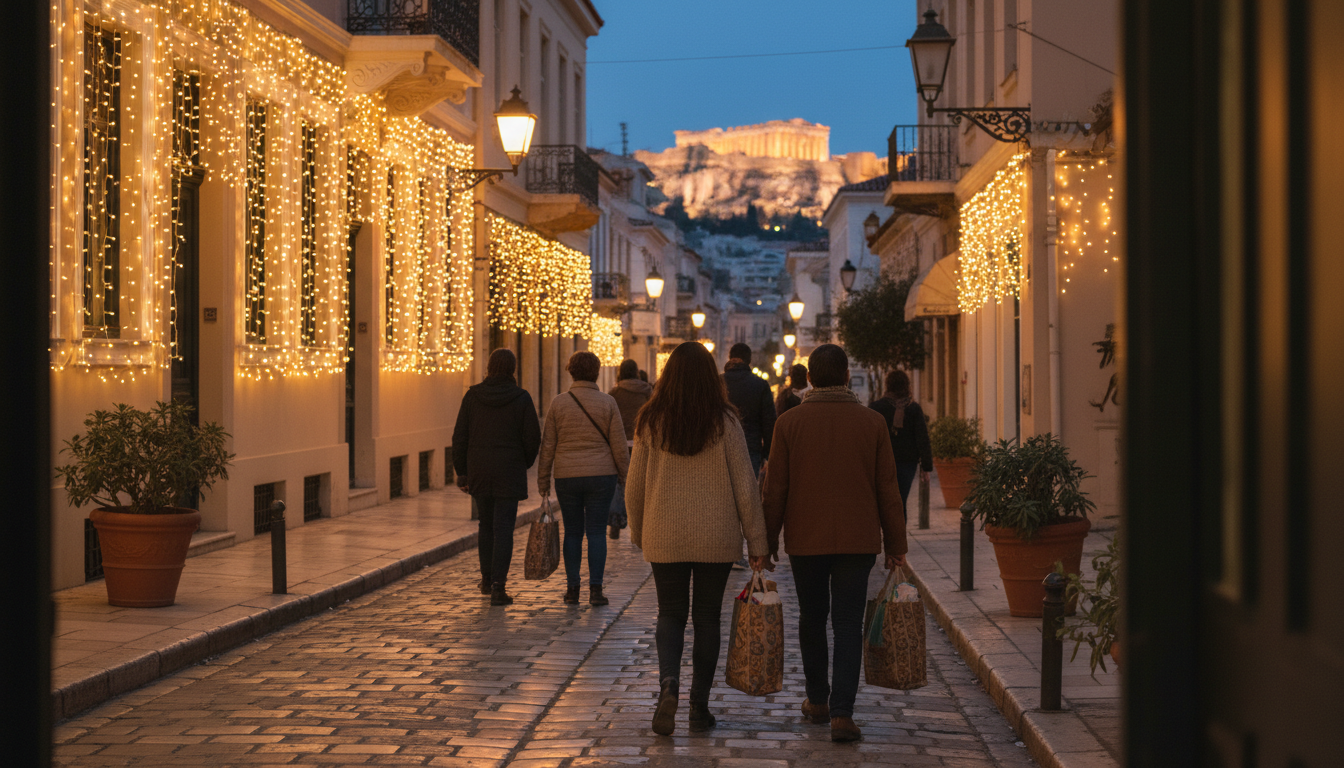 Narrow pedestrian street in Plaka at dusk with neoclassical buildings draped in Christmas lights, lo
Koukaki: Best for Rooftop Views and Local Vibes
This is where I stayed during my most memorable Athens New Year's, and I'm still a little obsessed. Koukaki sits right at the foot of the Acropolis, which means many apartments have terraces with direct views of the Parthenon. Imagine watching fireworks with that backdrop.
The neighborhood itself is residential but not sleepy. Plenty of wine bars, meze spots, and the kind of corner periptera (kiosks) where you can grab last-minute champagne at 11:45 PM. The main plateia fills up with families on New Year's Eve—kids running around, grandparents toasting, that warm chaos that Greeks do so well. Average home swap listing here: 1-2 bedroom apartments, many with balconies or terraces. High demand during holidays, so book early.
Pangrati: The Authentic Athenian Experience
If Koukaki is the cool younger sibling, Pangrati is the intellectual older one. This neighborhood east of the Panathenaic Stadium is where young Athenian professionals actually live. Think indie coffee shops, vinyl record stores, and tavernas that haven't updated their menus since 1985 (in the best way).
New Year's Eve here centers around Plateia Proskopon and Plateia Varnava. Locals spill out of apartments, kids set off small fireworks—it's chaotic and wonderful—and there's usually someone playing bouzouki badly but enthusiastically. Pangrati is also home to some of Athens' best bakeries, which is crucial for scoring fresh vasilopita on January 1st.
Plaka: Charming but Tourist-Heavy
I'll be honest: Plaka is gorgeous. The neoclassical buildings draped in lights, the winding streets, the proximity to everything ancient and important. But on New Year's Eve, it can feel more like a tourist attraction than a neighborhood.
That said, if this is your first time in Athens and you want that postcard-perfect experience, Plaka delivers. Just know you'll be sharing the streets with a lot of other visitors. The upside? Plenty of restaurants stay open late, and you're walking distance from Syntagma Square if you want to catch the official countdown.
Exarchia: For the Alternative Crowd
Exarchia has a reputation. It's Athens' anarchist, artistic, counter-cultural heart—covered in street art, home to underground bars, and definitely not for everyone. But if you're the type who'd rather ring in the New Year at a DIY concert venue than a champagne toast, this is your spot.
New Year's Eve in Exarchia is unpredictable. Sometimes there are street parties. Sometimes it's quieter than you'd expect. The neighborhood has incredible energy, but I'd only recommend it if you're comfortable with a bit of edge.
Kifisia: Upscale Suburban Vibes
Want to see how wealthy Athenians celebrate? Head north to Kifisia. This leafy suburb feels more like a European village than a city neighborhood—boutique shops, manicured gardens, fancy patisseries. New Year's Eve here means elegant house parties and upscale restaurants. Home swaps in Kifisia tend to be larger (think houses with gardens rather than apartments), which is great if you're traveling with family. The trade-off: you're 30-40 minutes from central Athens by metro.
Greek New Year's Eve Traditions You'll Experience
One of the best parts of a home swap? Your host can clue you in on traditions you'd never discover in a hotel. Here's what to expect—and participate in—during an Athenian New Year's.
 Close-up of hands cutting into a golden vasilopita cake on a festive table, with a hidden coin visib
Vasilopita: The Lucky Cake
This is non-negotiable. Vasilopita is a sweet bread or cake baked with a coin hidden inside. At midnight (or sometimes on New Year's Day), families cut it ceremonially—one slice for each person, one for the house, one for any absent loved ones, and one for St. Basil. Whoever finds the coin gets good luck for the year.
I've never found it, but I keep trying.
Your host might leave you instructions on where to buy vasilopita (most bakeries sell them starting December 26th), or if you're lucky, they'll leave one for you. A good one costs around €15-25 ($16-27 USD).
Pomegranate Smashing
At midnight, Greeks smash a pomegranate on their doorstep. The more seeds that scatter, the more luck and prosperity for the coming year. It's messy, it's symbolic, and it's genuinely fun. If you're staying in an apartment building, check with your host about whether this is appropriate (some buildings are more traditional than others). Pro tip: buy your pomegranate from a laiki agora (street market) for about €1-2.
Hanging an Onion
This one's older and less common in urban Athens, but some traditional families still hang an onion on their door. It symbolizes rebirth and tears of joy. You probably won't need to participate, but don't be surprised if you see them around.
First Footing
The first person to enter a home after midnight is called the "podariko" and is supposed to bring luck. Ideally, this person should enter right foot first (hence the name) and bring gifts—usually something sweet, money, or a pomegranate. If your neighbors invite you over after midnight, bring something. A bottle of wine, some chocolates, anything. Greeks are incredibly generous hosts, and showing up empty-handed is a faux pas.
Cards and Gambling
Greeks love to gamble on New Year's Eve. Card games, dice, backgammon—it's all considered good luck. Don't be surprised if your host mentions this or if you hear animated shouting from neighboring apartments. It's not fighting; it's just competitive prefa (a Greek card game).
How to Find and Book Your Athens New Year's Home Swap
Alright, let's get practical. New Year's Eve in Athens is peak season, so you can't just waltz in and expect availability. Here's my strategy for securing a great home exchange.
Start Early (Like, Now)
If you're reading this in October, you're in decent shape. November? Getting tight. December? You'll need luck and flexibility. I start browsing SwappaHome listings 3-4 months before peak travel dates. For New Year's Eve specifically, I'd recommend reaching out to potential hosts by early November at the latest.
Be Specific in Your Request
When you message potential hosts, don't just say "I'd love to stay at your place." Tell them your exact dates (and whether you're flexible by a day or two), who's traveling with you, why you chose Athens for New Year's, and a bit about your own home and what makes it appealing. Greek hosts, in my experience, are warm and curious. They want to know who's staying in their space. A personal message goes a long way.
Look for Hosts Who've Traveled During Holidays
This is a sneaky trick: check if your potential host has reviews from December/January trips. If they've done holiday home swaps before, they understand the appeal and are more likely to be available (or have a network of friends whose places might be free).
Consider Nearby Areas
If central Athens is fully booked, look at Piraeus (the port city, 20 minutes by metro), Glyfada (a coastal suburb), or even Aegina (an island just an hour by ferry). New Year's Eve in a Greek island village is its own kind of magic.
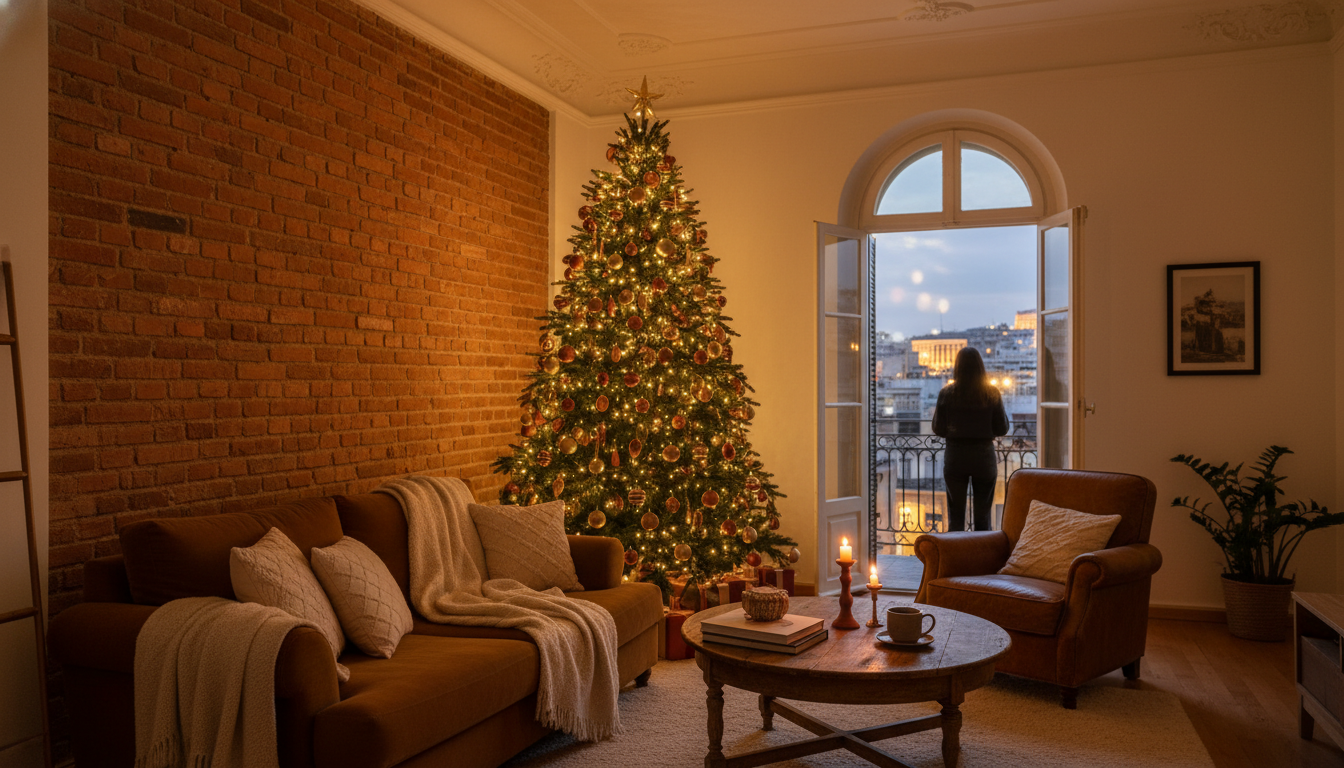 Cozy living room in a traditional Athenian apartment with high ceilings, exposed brick, a decorated
What to Do in Athens During the New Year's Holiday
You've got your home swap locked in. Now what? Here's how to spend the days around New Year's Eve like an actual Athenian.
December 30th: Explore and Stock Up
Use this day to get oriented. Walk your neighborhood, find the nearest bakery and supermarket, locate a good wine shop. You'll want provisions for New Year's Eve—Greeks don't eat out as much on the 31st; they gather at home.
Must-buy items: a bottle of Greek sparkling wine (try Amalia Brut, around €12-15), melomakarona and kourabiedes (traditional Christmas cookies), a pomegranate for smashing, vasilopita if your host didn't leave one, and cheese and cured meats for a midnight spread.
If the weather's nice, hike up Filopappou Hill for sunset views of the Acropolis. It's free, it's beautiful, and it's where Athenians actually go (versus the crowded Areopagus).
December 31st: The Main Event
Mornings on New Year's Eve are surprisingly quiet in Athens. Many shops close early, and families spend the day preparing food and resting up for the late night ahead. This is a great time to visit the Acropolis if you haven't yet—it's less crowded than usual. Entry is €20 ($22 USD) in winter, and the light in late afternoon is spectacular.
By evening, head back to your neighborhood. Most tavernas that stay open require reservations, so book ahead or plan to eat at home. Greeks typically have a big meal around 9-10 PM, then the real celebration starts around 11 PM.
If you want to be in the center of things, Syntagma Square has an official countdown with music and fireworks. It's crowded but festive. Monastiraki Square is another popular spot—more chaotic, younger crowd, lots of energy.
But honestly? My favorite New Year's Eves have been spent on a balcony or rooftop, watching fireworks pop up across the entire city skyline. When you're in a home rather than a hotel, you have options.
January 1st: Recovery and Tradition
New Year's Day in Athens is slow. Very slow. Most things are closed, and the city has a pleasant, hungover energy.
This is the day for cutting vasilopita (if you didn't at midnight), long coffee breaks, and maybe a walk along the coast if you're feeling ambitious. The tram runs from Syntagma to Glyfada and Voula—about 45 minutes—and the seaside promenade is perfect for clearing your head. Many museums are closed on January 1st, but churches are open if you want to experience Greek Orthodox traditions. The Athens Cathedral (Mitropoli) in Plaka is worth a visit.
January 2nd Onward: Beat the Crowds
The days after New Year's are ideal for sightseeing. Tourists start leaving, but the holiday decorations are still up. Hit the National Archaeological Museum (€12/$13 USD), wander through the Monastiraki flea market, or take a day trip to Cape Sounion to see the Temple of Poseidon.
 Morning light streaming into a Greek kitchen with a moka pot on the stove, fresh bread on a wooden c
Practical Tips for Your Athens New Year's Home Swap
A few things I've learned the hard way so you don't have to.
Weather and Packing
Athens in late December averages 10-15°C (50-59°F) during the day, dropping to 5-8°C (41-46°F) at night. It's not freezing, but it's not warm either. Pack layers, a good jacket, and comfortable walking shoes. Rain is possible but not constant.
Getting Around
The Athens metro is excellent and runs until about 12:30 AM most nights—but on New Year's Eve, it typically runs extended hours (check the STASY website closer to your trip). A single ticket is €1.20, and a 5-day pass is €8.20. Taxis are plentiful but can be hard to find at midnight. Download the BEAT app (Greece's version of Uber) ahead of time.
Money Matters
Greece uses the euro. ATMs are everywhere, and most places accept cards, but smaller tavernas and kiosks might be cash-only. Always have €20-30 in cash on you. Tipping isn't expected like in the US, but rounding up or leaving 5-10% for good service is appreciated.
Communication with Your Host
Before you arrive, ask your host about how heating works (Greek apartments often use individual units), where to find extra blankets, their favorite local spots for New Year's Eve, any building rules about noise or guests, and emergency contacts if something goes wrong. Greek hosts are generally very helpful, but they might be traveling themselves, so get this info before they leave.
Safety and Insurance
Athens is generally safe, even on New Year's Eve. The usual precautions apply—watch your belongings in crowded areas, don't flash expensive items, be aware of your surroundings. For your home swap, I always recommend getting your own travel insurance that covers accommodation issues. SwappaHome connects you with hosts, but any arrangements for coverage are between you and your insurance provider. It's worth the peace of mind.
Making the Most of Your Home Exchange Experience
Here's what separates a good home swap from a great one: engagement.
Leave your host a small gift. It doesn't have to be expensive—something from your hometown, a nice bottle of wine, a handwritten thank-you note. I once left a jar of California honey for my Athens host, and she still mentions it when we message.
Take care of the space like it's your own. Run the dishwasher before you leave. Take out the trash. Strip the beds if that's the house rules. These small gestures build the kind of trust that makes the home swap community work. And write a thoughtful review afterward. Mention specifics—the great coffee maker, the helpful neighborhood tips, the incredible view. Future travelers (and your host) will appreciate it.
Why Athens Might Just Be the Perfect New Year's Destination
I've done New Year's Eve in a lot of places. The organized chaos of Tokyo. The freezing crowds of Edinburgh. The over-the-top excess of Dubai. And while those were all memorable in their own way, Athens hit different.
Maybe it's the way the ancient and modern coexist so easily—fireworks over a 2,500-year-old temple, techno music drifting from a bar next to a Byzantine church. Maybe it's the Greek approach to celebration, which is less about spectacle and more about connection. Or maybe it's just that staying in someone's home, in their neighborhood, with their recommendations, makes you feel less like a tourist and more like a temporary local.
Whatever it is, a New Year's Eve home swap in Athens offers something you can't get from a hotel booking or a package tour. It offers belonging, even if just for a few nights.
If you're considering it, start browsing SwappaHome now. Look for apartments in Koukaki or Pangrati. Message hosts with genuine curiosity about their city. And when midnight strikes and you're standing on a rooftop with the Acropolis glowing in the distance, raise a glass to the strangers who became neighbors, even if only for a night.
Χρόνια Πολλά. Happy New Year. See you in Athens.
Frequently Asked Questions
Is a home swap in Athens safe for New Year's Eve?
Yes, Athens is generally very safe for home swapping during New Year's Eve. The city has low crime rates, and residential neighborhoods like Koukaki and Pangrati are family-friendly. Use SwappaHome's verification and review system to choose trusted hosts, and consider getting your own travel insurance for extra peace of mind.
How much can I save with a New Year's Eve home swap in Athens compared to hotels?
Significant savings are possible. Athens hotels during New Year's Eve typically cost €150-400 per night, while a home swap on SwappaHome costs just 1 credit per night regardless of dates or location. Over a week-long stay, you could save $1,000-2,500 USD while getting more space and a local experience.
When should I book my Athens home swap for New Year's Eve?
Start searching 3-4 months in advance—ideally by early October for a December 31st trip. New Year's Eve is peak season in Athens, and the best home swap listings get booked quickly. Contact potential hosts by early November to secure your dates.
What neighborhoods are best for a New Year's home exchange in Athens?
Koukaki offers the best rooftop views of Acropolis fireworks and a local atmosphere. Pangrati provides an authentic Athenian experience with great cafes and tavernas. Plaka is charming but more touristy. Choose based on whether you prioritize views, local culture, or proximity to central celebrations.
What should I bring to my Athens home swap for New Year's Eve?
Pack layers for 10-15°C (50-59°F) weather, comfortable walking shoes, and a good jacket. Bring a small gift for your host from your hometown. Once in Athens, buy vasilopita (lucky cake), a pomegranate for the midnight smashing tradition, and Greek sparkling wine to celebrate like a local.

Published by
SwappaHome
SwappaHome Editorial Team
Home Exchange & Slow Travel Editorial
The SwappaHome Editorial Team brings together travel research, home-exchange community insights, and platform data to produce practical guides for first-time and experienced home swappers. Every article cites real platforms, current market rates, and verifiable city-level facts so readers can make informed decisions without guessing.
Ready to try home swapping?
Join SwappaHome and start traveling by exchanging homes. Get 7 free credits when you sign up!
Related articles

Bachelor and Bachelorette Parties in Singapore: The Complete Home Swap Group Guide for 2026
Planning a bachelor or bachelorette party in Singapore? Discover how home swapping lets groups of 6-12 stay together in luxury condos, saving thousands while partying in Marina Bay.

Cycling in Lisbon: 7 Home Swap Bike Tour Itineraries for Every Rider
Discover the best cycling routes in Lisbon with these home swap bike tour itineraries—from waterfront paths to hilltop adventures, all starting from your borrowed home.

Graduation Trip to Barcelona: How Home Swapping Gives New Graduates the Ultimate Celebration
Planning a graduation trip to Barcelona? Discover how home swapping lets new graduates explore Spain's most vibrant city without the hostel crowds or hotel costs.