Romantic Home Swap in Florence: The Couples' Getaway Guide for 2026

SwappaHome Editorial Team
Home Exchange & Slow Travel Editorial
Plan a romantic home swap in Florence with this couples' guide—from Oltrarno apartments to sunset aperitivo spots, plus how to save 70% on your Italian escape.
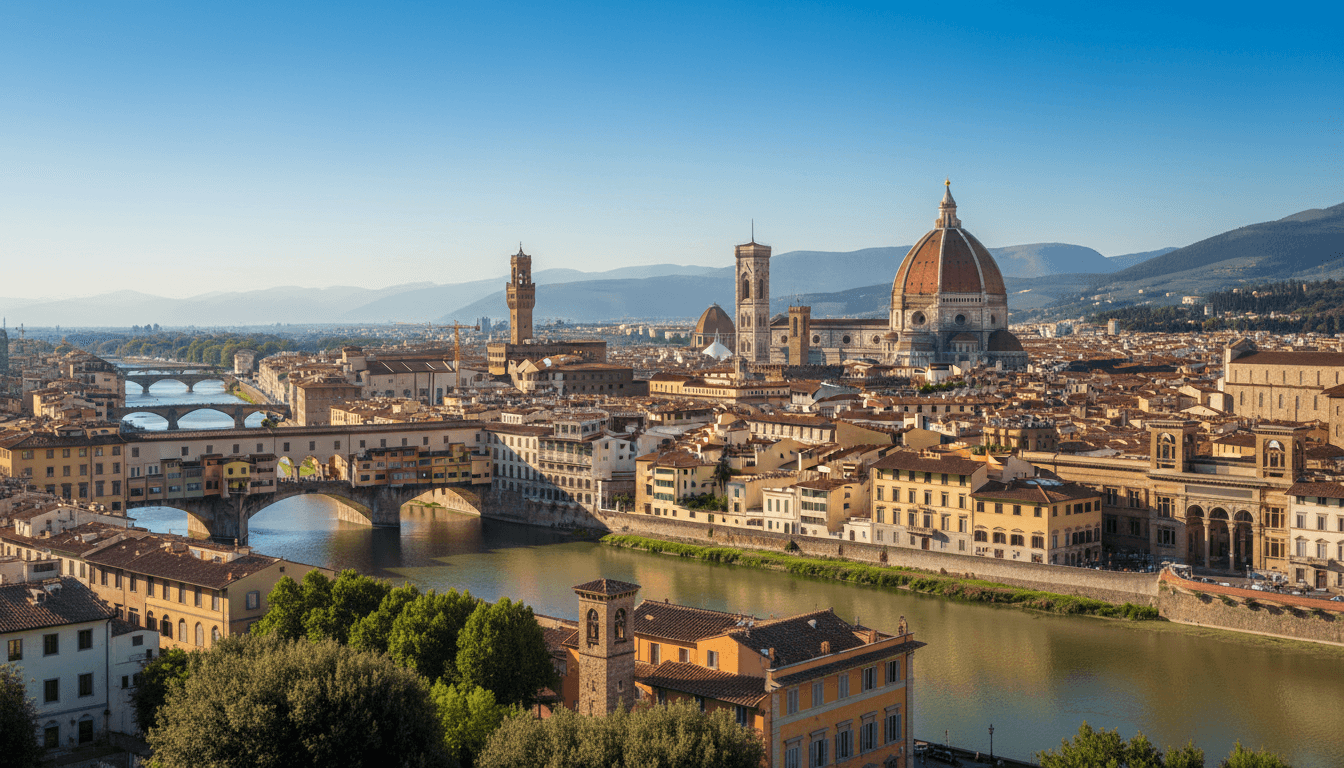
The light in Florence does something particular around 6 PM in late spring. It turns the Arno River into molten copper, gilds the Ponte Vecchio's medieval silhouette, and makes every terrace in the city feel like it was designed specifically for two people sharing a bottle of Chianti Classico.
Now imagine experiencing that light from your own apartment balcony in Santo Spirito, rather than rushing back to a €300-per-night hotel room before the minibar charges kick in.
That's the promise of a romantic home swap in Florence—and based on what SwappaHome members consistently report after returning from Tuscan exchanges, this city was practically designed for couples who want depth over tourist checkboxes.
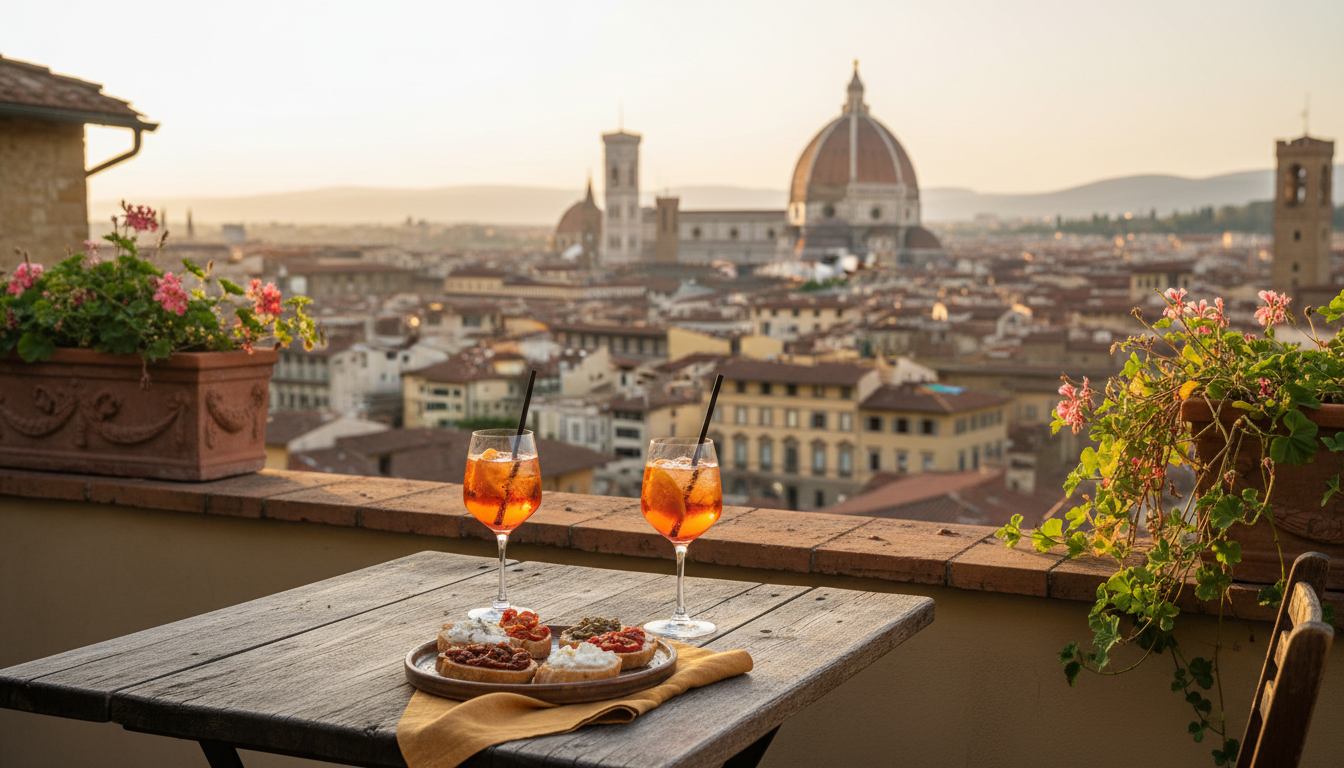 Golden hour view from a terrace in Florences Oltrarno district, overlooking terracotta rooftops towa
Why Florence Rewards Couples Who Skip the Hotel Route
Here's the honest truth about Florence: it's a city of 380,000 people that receives over 10 million tourists annually. That math creates a particular kind of experience—one where you're constantly navigating crowds at the Uffizi, waiting 45 minutes for a table at any restaurant within sight of the Duomo, and paying premium prices for the privilege of feeling like you're on a conveyor belt.
But Florence has another side. The Florence where nonnas hang laundry between buildings in San Frediano. Where artisan leather workshops in Santa Croce still operate the way they did in the 1950s. Where a neighborhood bar serves €4 negronis to the same regulars who've been coming for decades.
Accessing that Florence requires one thing: staying somewhere that isn't designed for tourists.
A romantic home swap puts you in an actual Florentine apartment—often in neighborhoods where English menus don't exist because they're not needed. You wake up to church bells from San Lorenzo rather than hotel housekeeping knocking. You make morning espresso in a moka pot on a gas stove, the way 90% of Italians actually start their day.
Couples consistently rate Florence among their top three European destinations for home exchanges, and the reasons go beyond cost savings (though saving €200-400 per night certainly doesn't hurt). It's about intimacy. Privacy. The ability to return from a day of Renaissance art with a bag of fresh pasta from Mercato Centrale and cook dinner together while the city's bells mark the evening.
The Best Florence Neighborhoods for a Couples' Home Swap
Neighborhood choice can make or break a romantic getaway. The wrong location means fighting crowds to reach your accommodation, overpaying for mediocre food, and missing the atmospheric qualities that make Florence special.
Oltrarno: The Artisan Heart
Cross the Arno via Ponte Vecchio, and you enter a different Florence. The Oltrarno district—encompassing Santo Spirito, San Frediano, and San Niccolò—remains the city's creative soul, home to restoration workshops, independent boutiques, and the kind of lived-in piazzas where locals actually spend time.
Piazza Santo Spirito serves as the neighborhood's living room. On any given evening, couples share bottles of wine on the church steps, kids play calcio in the square, and the surrounding bars spill onto the cobblestones. It's the Florence that existed before Instagram.
Home swaps in Oltrarno typically occupy converted Renaissance-era buildings—think exposed beam ceilings, terracotta floors, and windows that open onto narrow streets where you can hear neighbors' dinner conversations. Listings in this area often include small terraces or interior courtyards, perfect for morning coffee rituals.
The neighborhood's practical advantages for couples: walkable to all major attractions (the Pitti Palace is literally here), but far enough from the Centro Storico crowds to feel residential. Excellent dinner options at spots like Trattoria 4 Leoni or Il Guscio that cater primarily to Florentines.
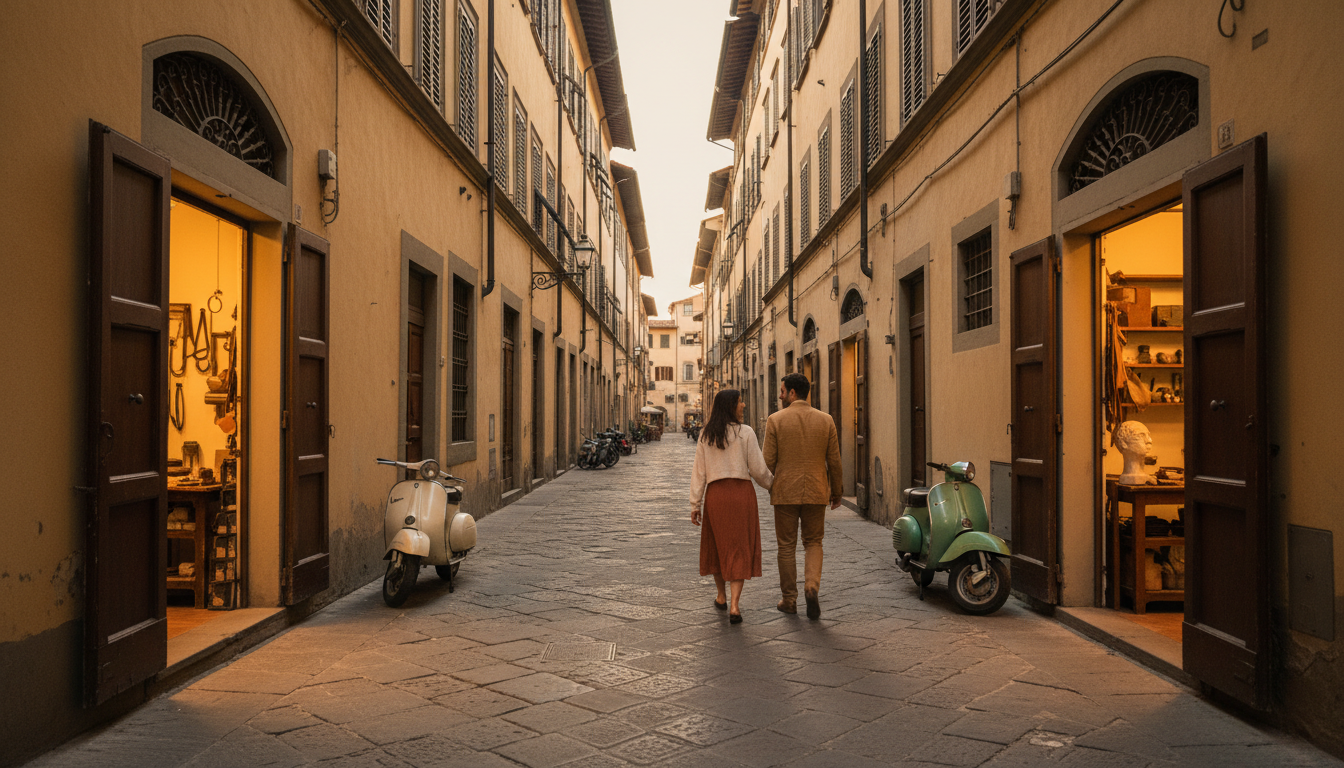 Narrow cobblestone street in San Frediano at dusk, artisan workshop doors open with warm light spill
San Lorenzo and San Marco: Central Without Being Chaotic
If you want to be steps from the Duomo without sleeping in tourist central, the area around San Lorenzo and San Marco offers a compelling middle ground. This is where you'll find the Mercato Centrale (Florence's magnificent food hall), the Medici Chapels, and the Fra Angelico frescoes at the San Marco monastery.
The neighborhood feels more local than you'd expect given its central location. Residential streets branch off from the market area, lined with alimentari (delis), wine bars, and the occasional workshop. Home swaps here put you within a 10-minute walk of essentially everything, while still offering the apartment-living experience that makes Florence feel like home.
Expect slightly smaller spaces compared to Oltrarno—this is prime real estate—but often with charming details like interior garden views or rooftop terraces with Duomo sightlines.
Santa Croce: Leather, Aperitivo, and Local Life
The Santa Croce district wraps around its namesake basilica (where Michelangelo, Galileo, and Machiavelli are buried) and extends into one of Florence's most authentic residential areas. The neighborhood's leather-working heritage remains visible in workshops along Borgo dei Greci and Via de' Macci.
For couples, Santa Croce offers perhaps the best aperitivo scene in Florence. Piazza Sant'Ambrogio hosts a daily market and evening gathering spot, while nearby Via de' Macci and Via Pietrapiana are lined with wine bars and trattorias that rarely see tourist crowds. Cibrèo, one of Florence's legendary restaurants, anchors the neighborhood's food scene.
Home swaps in Santa Croce tend toward the eclectic—converted workshop spaces, artist apartments, buildings with medieval foundations and modern renovations. The area's slightly grittier character appeals to couples who prefer authenticity over polish.
San Niccolò: The Romantic's Secret
Tucked against the hillside below Piazzale Michelangelo, San Niccolò might be Florence's most underrated neighborhood for couples. It's essentially a village within the city—one main street (Via di San Niccolò) lined with artisan workshops, wine bars, and restaurants, ending at the ancient city gate (Porta San Niccolò).
The neighborhood's trump card: direct access to the Rose Garden (Giardino delle Rose) and the walk up to Piazzale Michelangelo for sunset views. Couples who stay in San Niccolò can make this iconic Florence experience a casual evening stroll rather than a planned excursion.
Home swaps here often include garden access or terraces with hill views. The area's quieter character makes it ideal for couples prioritizing relaxation over sightseeing intensity.
How the SwappaHome Credit System Works for Your Florence Escape
The mechanics of home swapping sometimes confuse first-timers, so here's the straightforward version.
SwappaHome operates on a credit system: you earn credits by hosting travelers in your home, then spend those credits to stay in other members' homes. The exchange rate is simple—one credit equals one night, regardless of whether you're hosting a studio in Cleveland or staying in a palazzo in Florence.
New members receive 7 free credits upon joining, which translates to a free week in Florence (or anywhere else). No money changes hands between members for the stay itself.
This system eliminates the scheduling puzzle that makes traditional home swaps complicated. You don't need to find a Florentine couple who want to visit your city at the exact time you want to visit Florence. Host a family from Berlin in August, use those credits for your October Florence trip—the flexibility makes romantic getaways actually plannable.
For Florence specifically, SwappaHome typically lists 80-120 properties across the city's neighborhoods. Availability varies seasonally—spring (April-June) and fall (September-October) are peak request periods, so planning 2-3 months ahead improves your options significantly.
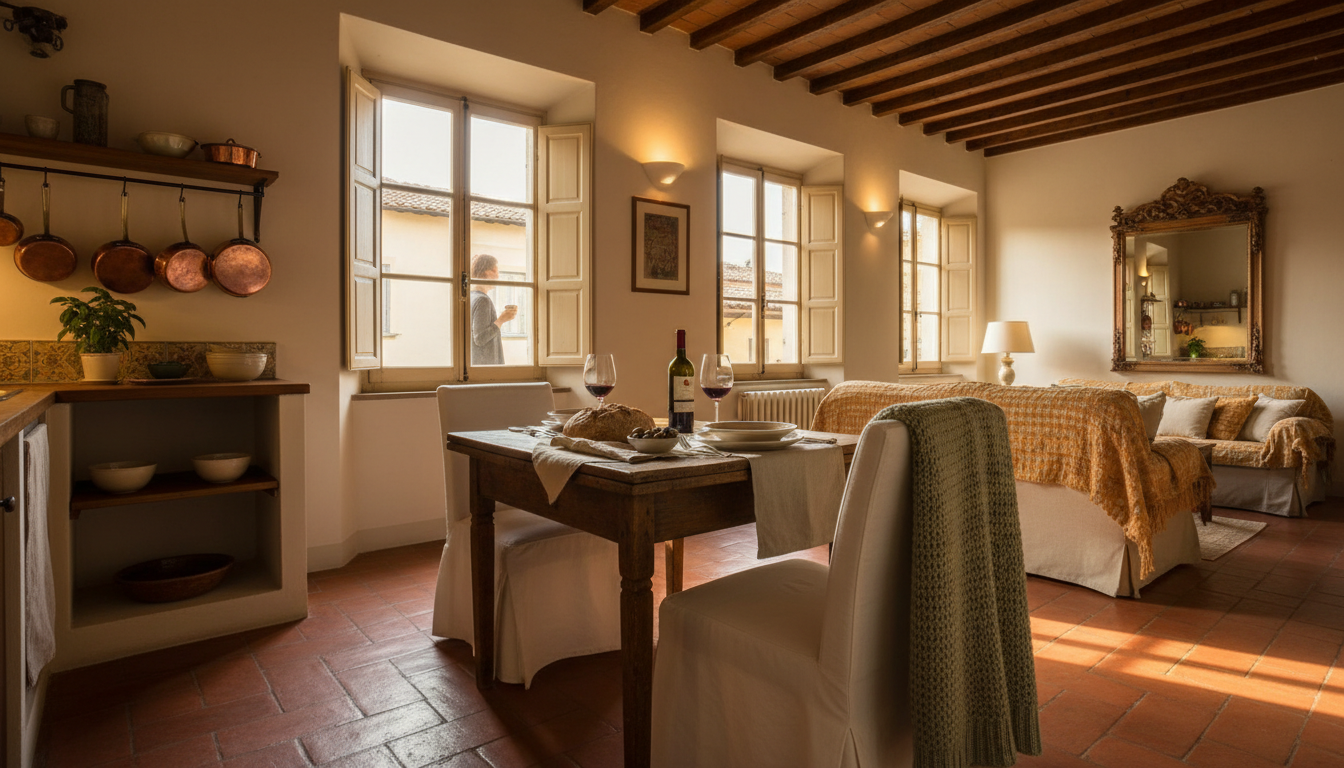 Cozy Florentine apartment interior showing exposed wooden beams, a small kitchen with copper pots, a
Planning Your Romantic Florence Itinerary
The couples who return from Florence raving aren't the ones who tried to see everything. They're the ones who chose depth over breadth, building their days around experiences that benefit from intimacy rather than efficiency.
Day Structure That Actually Works
Florence rewards early risers and late diners. The city's major attractions open around 8:15-8:30 AM, and the first 90 minutes offer a completely different experience than midday visits. Couples who reach the Uffizi at opening can spend two unhurried hours with Botticelli's "Birth of Venus" and "Primavera" before the tour groups arrive.
Midday belongs to the apartment. This is when Florence's streets become uncomfortably crowded and summer temperatures peak. Return to your home swap, prepare a light lunch from market ingredients, and embrace the Italian tradition of riposo. A shared nap, a slow espresso on the terrace, reading in the afternoon light—this is the luxury that hotels can't replicate.
Evenings in Florence extend late. Aperitivo hour runs roughly 6-8 PM, followed by dinner at 8:30 or 9 PM (earlier reservations mark you as tourists). The passeggiata—the evening stroll—fills the streets around 7 PM as temperatures cool and the city's social life emerges.
Experiences Designed for Two
Some Florence experiences work better as a couple than in any other configuration.
Cooking classes take on different energy when it's just the two of you (or a very small group) learning to make fresh pappardelle. Look for classes in private homes rather than commercial kitchens—several operate in the Oltrarno, offering market shopping followed by cooking and dining together.
Wine tasting in Chianti becomes a day trip romance when you rent a vintage Fiat 500 (available from several Florence agencies around €100-150/day) and wind through the Tuscan hills to estates like Castello di Ama or Badia a Coltibuono. The 30-minute drive from Florence to Greve in Chianti passes through landscape that justifies every cliché about Tuscany.
The Vasari Corridor, the elevated passageway connecting the Uffizi to Palazzo Pitti, reopened in 2024 after years of restoration. Tickets are limited and expensive (around €90-100 per person), but walking the same route the Medici used to cross the city—surrounded by their self-portrait collection—delivers genuine "special occasion" energy.
Sunset at San Miniato al Monte beats Piazzale Michelangelo for couples who prefer atmosphere over crowds. This Romanesque church sits slightly higher on the hill, with fewer tourists and a peaceful cemetery where you can watch the light change over Florence while monks chant vespers inside.
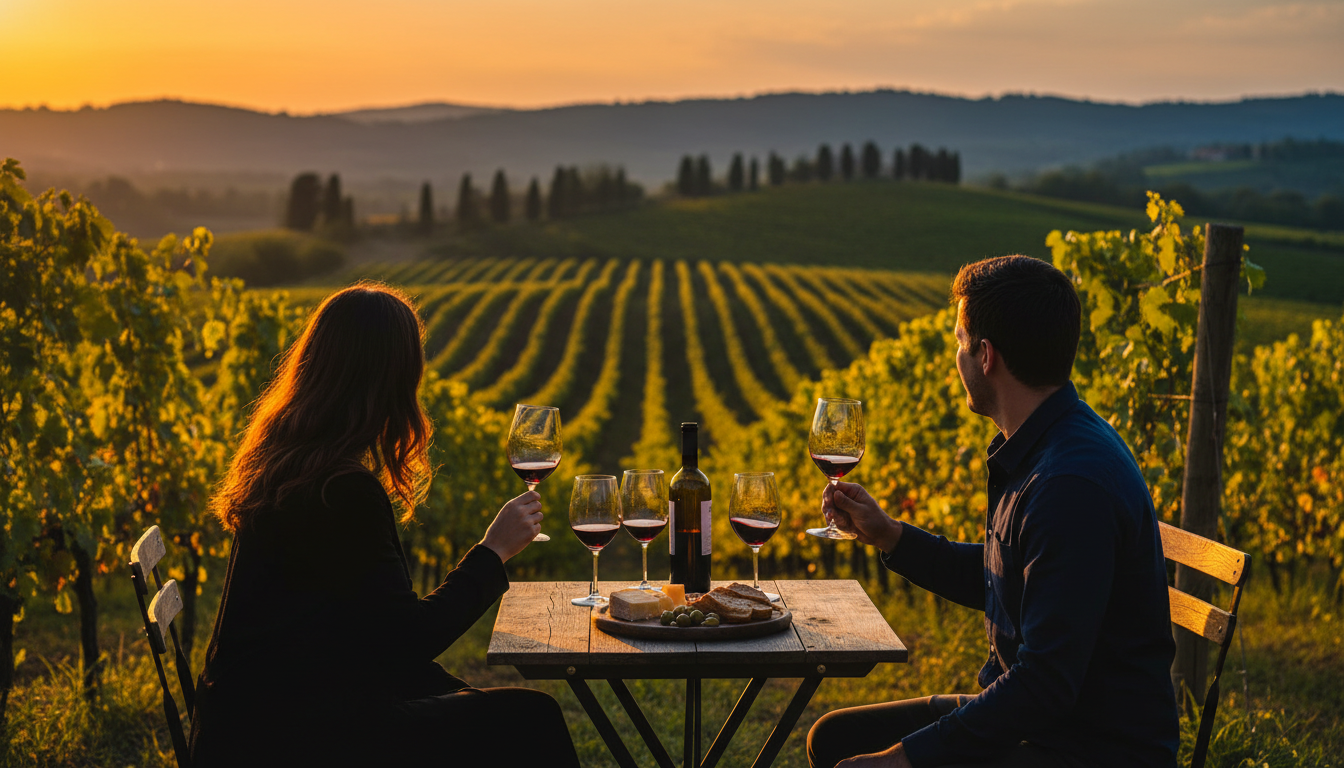 Couple at a small table in a Tuscan vineyard, rolling hills in background, tasting glasses of Chiant
The Practical Details: Costs, Timing, and Getting There
What You'll Actually Spend
A romantic home swap in Florence eliminates accommodation costs, which typically run €150-350 per night for a quality hotel or €120-200 for a well-located Airbnb. Over a week-long trip, that's €840-2,450 in savings.
Here's what remaining expenses look like for a couple:
Flights: Varies wildly by origin, but Florence's Peretola Airport (FLR) receives direct flights from major European hubs. Alternatively, Pisa Airport (PSA) is 80 minutes by train and often offers better fares. Budget €400-800 per person from North America, €50-200 within Europe.
Daily food budget: €60-100 for two, eating well. This assumes market breakfasts at the apartment (€5-8), light lunches (€15-25), aperitivo (€10-15), and a proper dinner (€40-60 with wine). You can spend much more or somewhat less.
Activities: The Uffizi costs €20-25 per person (book timed entry at uffizi.it to avoid lines). The Accademia (home of David) runs €16-19. Most churches are free or €5-8. A cooking class costs €80-150 per person. Wine tasting day trips run €100-200 per person including transportation.
Local transport: Florence's historic center is entirely walkable. Taxis to/from the airport cost €22-25 (fixed rate). The tram from the airport to the center costs €1.50.
Total for one week (excluding flights): €500-800 for a comfortable couple's trip, compared to €1,500-3,000+ with hotel accommodation.
Best Times for a Romantic Florence Trip
Florence's climate and crowd patterns create distinct seasons for couples:
April-May: Ideal conditions. Temperatures range 15-22°C (59-72°F), gardens are in bloom, and tourist crowds haven't peaked. Book home swaps early—this is prime season.
September-October: The vendemmia (grape harvest) brings energy to Tuscan wine country. Temperatures remain warm (18-25°C), summer crowds thin, and the city's cultural season begins. Late September through mid-October offers perhaps the best overall experience.
June: Warm but not oppressive (22-28°C), with longer days perfect for evening strolls. Crowds increase but remain manageable.
November-March: Cooler temperatures (5-15°C) and occasional rain, but dramatically fewer tourists. Museums become contemplative rather than crowded. Hotel prices drop 30-50%, making this season ideal for couples who don't mind layering up.
July-August: The honest advice? Consider elsewhere. Florence becomes uncomfortably hot (30-38°C), many locals flee to the coast, and tourist density peaks. If you must visit in summer, the home swap advantage becomes even more valuable—afternoon retreats to air-conditioned apartments make the heat manageable.
What to Expect from Your Florentine Home Swap
Home exchanges work best when both parties communicate clearly about expectations. For Florence specifically, a few considerations matter:
Apartment Realities
Florentine buildings are old—Renaissance-era old, in many cases. This means character (exposed stone walls, original terracotta floors, wooden beam ceilings) but also quirks (narrow stairs, compact kitchens, occasionally temperamental plumbing). Elevators are rare in historic buildings.
Air conditioning exists in most SwappaHome listings but isn't universal. If you're traveling in summer, confirm AC availability before requesting a swap. Heating in winter is typically radiator-based and effective.
Kitchens in Italian apartments tend toward the compact and practical. You'll find a moka pot (the stovetop espresso maker), basic cookware, and usually a small oven. What you won't find: a dishwasher in most older buildings, American-sized refrigerators, or garbage disposals.
Communication with Your Host
The SwappaHome community in Florence tends toward warm, communicative hosts who take pride in sharing their city. Common practices include detailed neighborhood guides with restaurant recommendations, instructions for local markets and specialty shops, tips on avoiding tourist traps, and suggestions for day trips to Siena, San Gimignano, or Lucca.
Reciprocate by providing equally thoughtful information about your home and neighborhood. The exchange of local knowledge is part of what makes home swapping richer than hotel stays.
House Rules and Expectations
Italian apartment buildings often have specific rules about noise (riposo hours typically 1-4 PM and after 10 PM), garbage sorting (Florence takes recycling seriously—expect separate bins for organic, plastic, paper, and glass), and common area etiquette.
Your host will explain specifics, but approaching the stay with respect for neighbors and building customs goes a long way. You're not just staying in an apartment—you're temporarily joining a community.
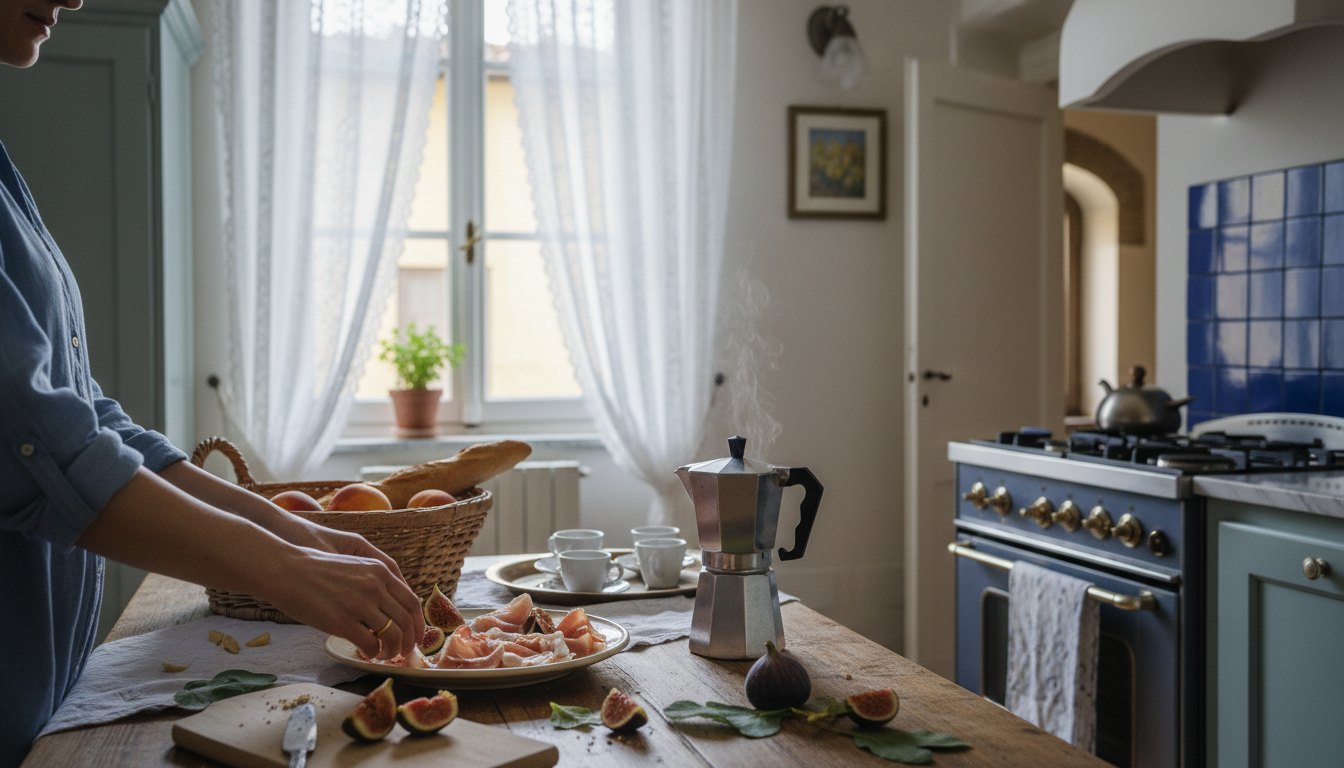 Morning scene in a Florence apartment kitchen, hands preparing breakfast with fresh figs and prosciu
Romantic Restaurants Worth Booking Ahead
Florence's dining scene ranges from centuries-old trattorias to contemporary tasting-menu restaurants. For couples, these spots consistently deliver:
Buca Mario (Centro Storico): Operating since 1886 in a vaulted cellar near the Duomo. Traditional Florentine cuisine—bistecca alla fiorentina, ribollita, pappa al pomodoro—served with old-school elegance. Reserve 3-5 days ahead. Expect €60-90 per person with wine.
Il Latini (Santa Maria Novella): Communal tables, hanging hams, and legendary hospitality. Not intimate in the private-table sense, but romantic in the swept-up-in-Italian-conviviality sense. No reservations—arrive at 7:30 PM and wait in line together.
Ora d'Aria (Centro Storico): One Michelin star, contemporary Tuscan cuisine, and a terrace with Palazzo Vecchio views. This is the splurge dinner. Tasting menus run €120-150 per person. Reserve 1-2 weeks ahead.
Trattoria Mario (San Lorenzo): Cash only, no reservations, communal seating, and some of the best simple Florentine cooking in the city. Lunch only. Arrive before noon or after 1:30 PM to minimize wait times. €15-20 per person.
Enoteca Pitti Gola e Cantina (Oltrarno): Wine bar with exceptional cheese and salumi boards, perfect for aperitivo that extends into dinner. Intimate atmosphere, knowledgeable staff, wines by the glass from €5-15.
Day Trips That Enhance Rather Than Exhaust
Florence's location in central Tuscany makes day trips tempting, but couples often overestimate how many they need. One or two well-chosen excursions complement a Florence stay without creating travel fatigue.
Fiesole (20 minutes by bus): The hill town overlooking Florence offers Roman ruins, cooler temperatures, and panoramic views of the city below. Take the #7 bus from Piazza San Marco, explore the archaeological area, lunch at a terrace restaurant, and return by late afternoon. Zero planning required.
Siena (75 minutes by bus): A full day trip to Florence's historic rival. The Campo (main square), the Duomo, and the medieval streetscape justify the journey. Buses run frequently from Florence's SITA station. Consider staying for dinner and returning on a late bus.
Chianti wine country (30-60 minutes by car): Rent a car for the day and wind through the Chiantigiana road (SR222) between Florence and Siena. Stop at Greve in Chianti, visit a winery or two (Antinori nel Chianti Classico offers stunning architecture alongside wine), and return via back roads through Panzano and Radda.
Making Your Home Swap Request Stand Out
Florence hosts receive numerous swap requests, particularly during peak seasons. Requests that get accepted tend to share certain characteristics:
Personalized messages: Generic "we'd love to stay at your place" requests get ignored. Reference specific details from the listing, explain why Florence appeals to you as a couple, and share something about your home that might interest the host.
Complete profiles: Verified identity, detailed home description, quality photos, and previous reviews (if you have them) all increase acceptance rates. Hosts want to know who's staying in their home.
Flexibility on dates: If your travel dates allow any flexibility, mention it. A host might have a conflict with your first-choice dates but could accommodate you a few days earlier or later.
Reciprocal hospitality: If you're new to SwappaHome, emphasize what makes your home appealing. Hosts are often curious about staying in your city—give them reasons to imagine themselves there.
The Intangibles: Why Home Swapping Changes How You Travel Together
The practical benefits of a romantic home swap in Florence—cost savings, neighborhood immersion, kitchen access—are easy to quantify. The intangible benefits take longer to articulate but matter more.
There's something about making morning coffee together in a stranger's kitchen that shifts how couples experience travel. The rituals of home—cooking, sleeping in a real bed, having a door you can close on the world—create space for genuine relaxation rather than the performative relaxation of hotel stays.
Couples fight less when they're not navigating hotel logistics, restaurant reservations for every meal, and the constant low-grade stress of being "on" in public spaces. They talk more when evenings can be spent on a terrace with a bottle of wine rather than in a hotel bar.
Travelers frequently report that home exchanges strengthen relationships in ways that traditional vacations don't. Something about being trusted with someone's home—and trusting them with yours—creates a different kind of travel mindset. More generous, more curious, more open to the unexpected.
Florence, with its emphasis on beauty, craft, and the pleasures of daily life, amplifies these qualities. The city doesn't reward rushing. It rewards attention, patience, and the willingness to let an afternoon unfold without agenda.
A romantic home swap in Florence isn't just a budget-friendly accommodation choice. It's an invitation to experience the city the way Florentines do—slowly, sensually, and with someone you love.
Frequently Asked Questions
Is a home swap in Florence safe for couples?
Home swapping in Florence carries similar safety considerations to any travel accommodation. SwappaHome's verification system and review structure create accountability between members, and the mutual trust inherent in exchanging homes tends to attract responsible travelers. Very few issues get reported in Florence specifically. That said, travelers should arrange their own travel insurance if they want coverage for personal belongings or liability—SwappaHome connects members but doesn't provide insurance protection.
How far in advance should we book a romantic Florence home swap?
For peak seasons (April-May and September-October), begin browsing listings and sending requests 2-3 months ahead. Summer and winter trips can often be arranged 4-6 weeks out. Last-minute swaps sometimes work, but romantic getaways benefit from planning—you want the right neighborhood and apartment character, not just availability.
Can we do a home swap in Florence if we've never swapped before?
Absolutely. New SwappaHome members receive 7 free credits (one week of stays) upon joining. First-time swappers should focus on creating detailed, honest profiles with quality photos of their homes. Personalized request messages explaining your interest in Florence and what makes your home appealing significantly improve acceptance rates with experienced hosts.
What's the best Florence neighborhood for a couples' home swap?
Oltrarno (particularly Santo Spirito and San Niccolò) consistently ranks highest among couples for its combination of authentic atmosphere, excellent dining, and proximity to attractions without Centro Storico crowds. Santa Croce offers similar benefits with a slightly grittier, more local character. The "best" neighborhood ultimately depends on your priorities—walkability to the Duomo versus evening atmosphere versus quiet mornings.
Is it cheaper to home swap in Florence or rent an Airbnb?
Home swapping eliminates accommodation costs entirely (beyond SwappaHome membership), while Florence Airbnbs typically run €120-200 per night for quality, well-located properties. Over a week-long romantic getaway, that's €840-1,400 in savings. The trade-off: Airbnb offers more listings and instant booking, while home swapping requires advance planning and host acceptance. For couples prioritizing budget without sacrificing location quality, home swapping delivers significantly better value.

Published by
SwappaHome
SwappaHome Editorial Team
Home Exchange & Slow Travel Editorial
The SwappaHome Editorial Team brings together travel research, home-exchange community insights, and platform data to produce practical guides for first-time and experienced home swappers. Every article cites real platforms, current market rates, and verifiable city-level facts so readers can make informed decisions without guessing.
Ready to try home swapping?
Join SwappaHome and start traveling by exchanging homes. Get 7 free credits when you sign up!
Related articles
Bachelor and Bachelorette Parties in Singapore: The Complete Home Swap Group Guide for 2026
Planning a bachelor or bachelorette party in Singapore? Discover how home swapping lets groups of 6-12 stay together in luxury condos, saving thousands while partying in Marina Bay.
Cycling in Lisbon: 7 Home Swap Bike Tour Itineraries for Every Rider
Discover the best cycling routes in Lisbon with these home swap bike tour itineraries—from waterfront paths to hilltop adventures, all starting from your borrowed home.
Graduation Trip to Barcelona: How Home Swapping Gives New Graduates the Ultimate Celebration
Planning a graduation trip to Barcelona? Discover how home swapping lets new graduates explore Spain's most vibrant city without the hostel crowds or hotel costs.