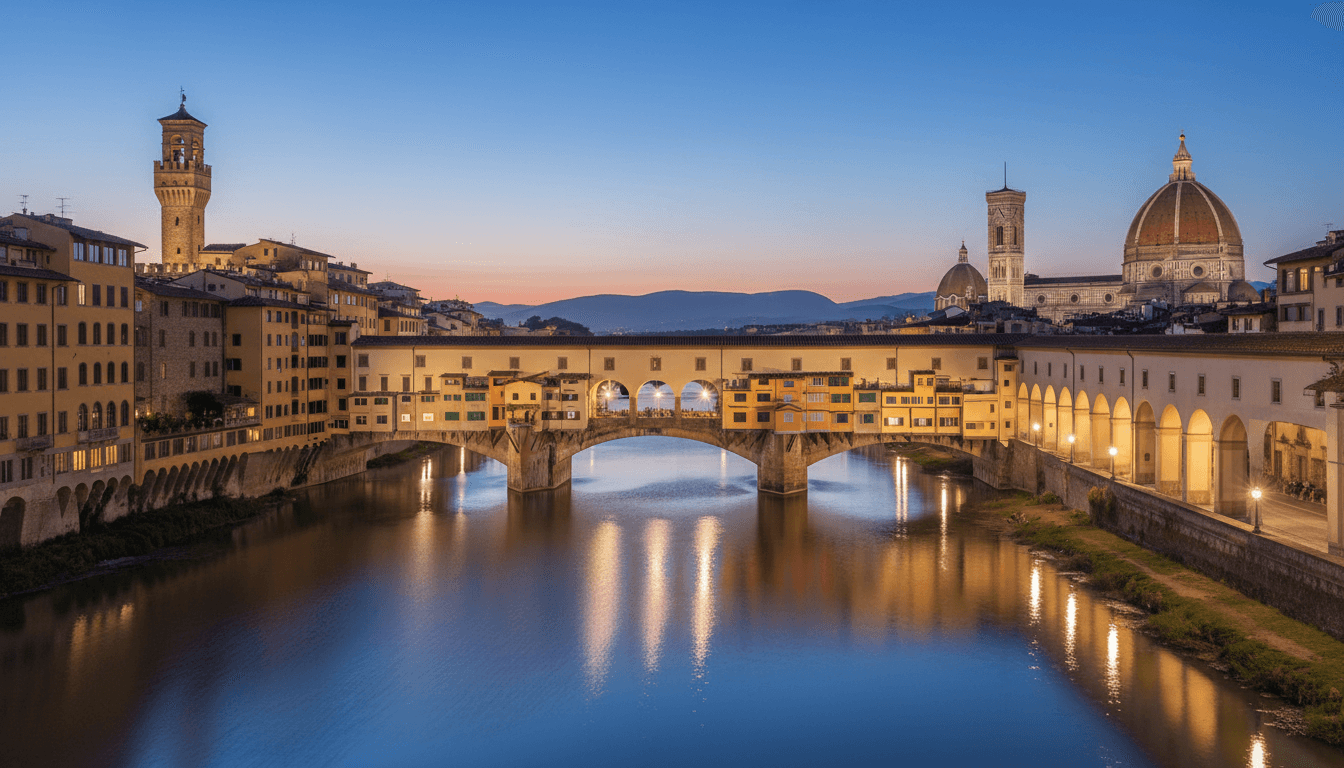
Florence Home Swap Arrival Guide: Your First 24 Hours Checklist

SwappaHome Editorial Team
Home Exchange & Slow Travel Editorial
Master your Florence home swap arrival with this essential 24-hour checklist. From key collection to finding the nearest alimentari, everything you need.
The brass key sticks a little. You jiggle it left, then right, and suddenly you're standing in a Florentine apartment with terracotta floors, shuttered windows filtering afternoon light, and the faint scent of someone else's coffee still lingering in the air. This isn't a hotel. There's no concierge. No housekeeping schedule slipped under the door. Just you, a stranger's home, and the next 24 hours to figure out how everything works.
Here's the thing about those first hours: they matter more than most travelers realize. Get them right, and the rest of your stay flows smoothly. Get them wrong—miss the hidden water shutoff, forget to check the gas situation, overlook the neighbor who waters the plants—and small problems compound into genuine headaches. The SwappaHome community has collectively navigated thousands of these arrivals across Florence's historic center, the artisan workshops of the Oltrarno, and the quieter residential streets of Campo di Marte. This checklist distills that hard-won wisdom.
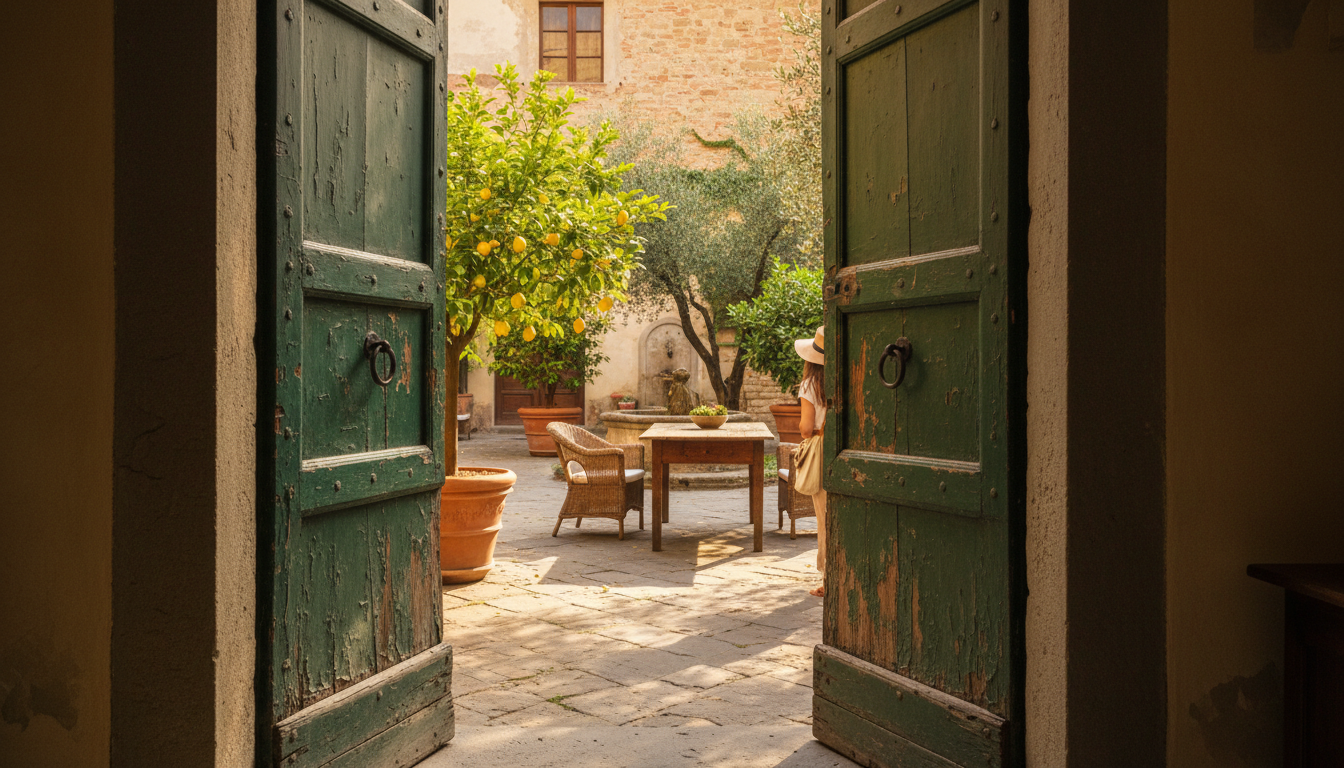 A weathered wooden door in Florences San Frediano neighborhood, slightly ajar, revealing a glimpse o
Before You Even Turn the Key: Pre-Arrival Essentials
Your Florence home swap arrival actually begins 48 hours before you land at Aeroporto di Firenze-Perugia (FLR) or step off the high-speed train at Santa Maria Novella station. This pre-arrival window is when experienced home exchangers separate themselves from first-timers who show up hoping everything will just work out.
Confirm Your Key Collection Method
Florence presents unique key logistics. Many apartments in the centro storico occupy buildings from the 15th or 16th century—structures that predate modern concepts like standardized locks or keyless entry systems.
Your host might use a traditional brass key for the main portone (street door), a separate key for the apartment itself, a third key for the cantina (basement storage), and possibly a fourth for the building's shared terrace. Confirm exactly how many keys you're receiving and where.
Some hosts leave keys with the portineria (building superintendent). Others use a lockbox—though these are less common in Florence's historic buildings where drilling into Renaissance-era stone requires special permits. A growing number coordinate handoffs at nearby establishments; travelers report successful key exchanges at Bar Gilli on Piazza della Repubblica and various tabacchi shops in the Santa Croce district.
If your host is doing a direct handoff, reconfirm the meeting time accounting for potential flight delays. The Tramvia T2 line from the airport takes approximately 20 minutes to reach the city center, but factor in another 15-20 minutes if you're arriving during the passeggiata hours when foot traffic clogs the narrow streets.
Download Offline Maps of Your Specific Neighborhood
Google Maps works, but Florence's medieval street layout will humble any navigation app. Streets change names mid-block. Addresses use a dual numbering system—red numbers (rosso) for commercial establishments, blue or black numbers for residences. Your apartment might be at Via dei Servi 15 rosso or Via dei Servi 15—two completely different doors.
Download the offline map for Tuscany, then screenshot your exact route from Santa Maria Novella station to your apartment. Include the walking directions from your host. Many Florence apartments sit on streets too narrow for Google's car-mounted cameras, meaning Street View won't help you identify the building.
Notify Your Host of Your ETA
Send a message through SwappaHome's secure platform with your expected arrival time, your mobile number (with country code), and your WhatsApp availability. Italian hosts often prefer WhatsApp over SMS. If you're arriving after 21:00, explicitly confirm this works—many residential buildings in Florence have noise ordinances, and fumbling with unfamiliar locks at midnight while neighbors peer through peepholes isn't the introduction you want.
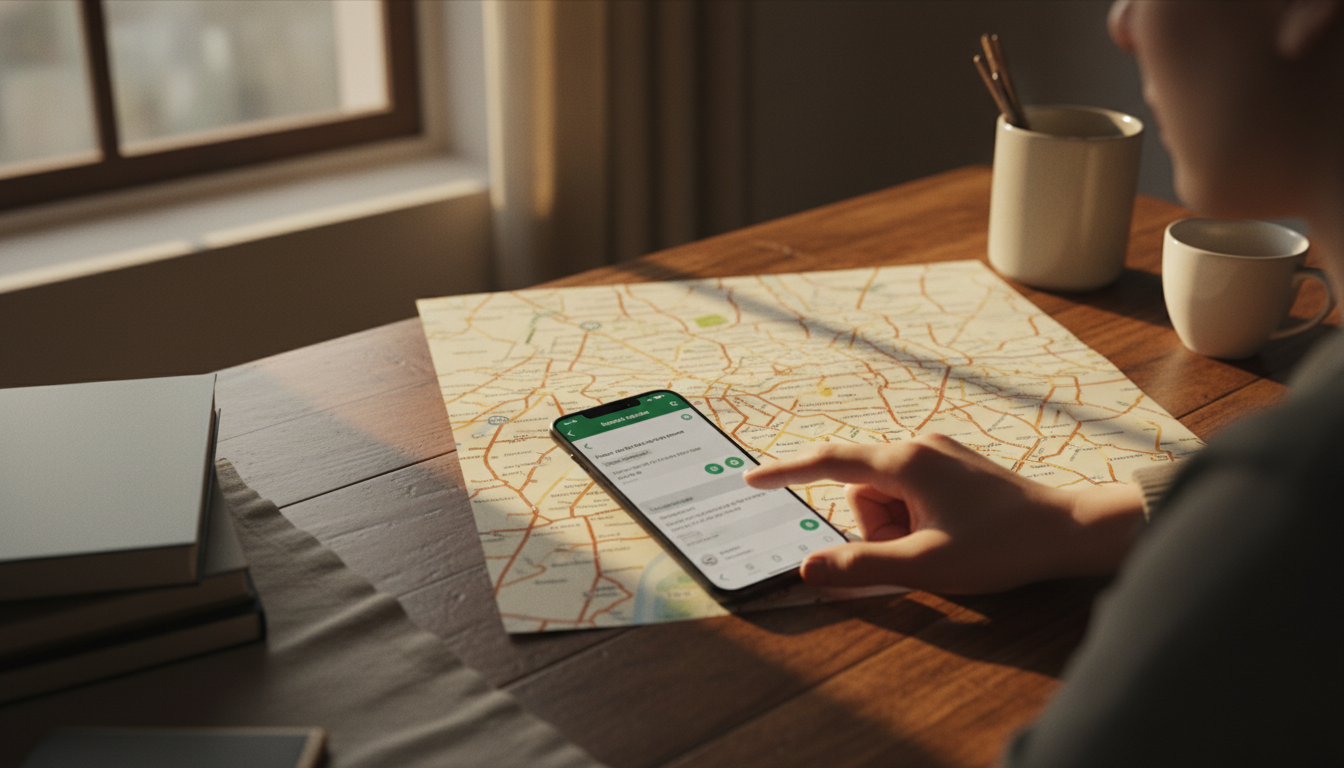 A smartphone screen showing a WhatsApp conversation with arrival details, a Florence street map visi
The First 30 Minutes: Your Immediate Arrival Protocol
You're inside. The door closes behind you. Here's exactly what to do before you even think about unpacking.
Document Everything Immediately
This isn't paranoia—it's protection for both you and your host. Open your phone's camera and spend five minutes recording a slow video walkthrough of the entire apartment. Narrate what you see: "Kitchen, Tuesday 3pm, all appliances present, small chip on counter near stove, appears pre-existing." Open closets, check under sinks, note any existing damage.
Pay particular attention to the condition of floors (Florentine terracotta tiles chip easily), any marks on walls (especially in the hallway where luggage passes), appliances that appear damaged or non-functional, the state of linens and towels, and balcony or terrace conditions.
Upload this video to cloud storage immediately while on the apartment's wifi. This protects you if any disputes arise later and protects your host from unfair claims. The SwappaHome community operates on trust, and documentation reinforces that trust rather than undermining it.
Locate the Electrical Panel and Water Shutoff
In Florence's older buildings, electrical systems can be temperamental. The contatore (electrical panel) typically lives near the entrance or in a hallway closet. Identify which switch controls the main power and which handle individual circuits. Many Italian apartments have a salvavita (circuit breaker) that trips if too many appliances run simultaneously—knowing where this is prevents the panic of sudden darkness.
The water shutoff usually sits under the kitchen sink or in the bathroom. Some buildings have a building-wide shutoff in the basement. Your host should have indicated this in their instructions, but if not, locate it now. A burst pipe at 2am isn't the time to start searching.
Test the Gas Situation
Most Florentine kitchens use gas stovetops (fornelli a gas). Locate the gas shutoff valve—typically a red or yellow lever near the stove or under the counter. Verify the stove ignites properly. If it's a manual ignition system (common in older apartments), make sure you understand the light-then-turn-gas sequence. If you smell gas and can't identify the source, open windows immediately and contact your host before using any electrical switches.
Some apartments also have gas-powered water heaters (scaldabagno). These require the pilot light to be on for hot water. Your host should have left instructions, but if the shower runs cold, this is often the culprit.
Check the Wifi and Test All Devices
Locate the router. Note the network name and password (often printed on a sticker on the router itself). Test the connection on your phone and laptop. If the wifi isn't working, try the classic Italian solution: unplug the router, wait 30 seconds, plug it back in. If problems persist, your host needs to know immediately—Italian internet providers like TIM and Vodafone have notoriously slow response times for service calls.
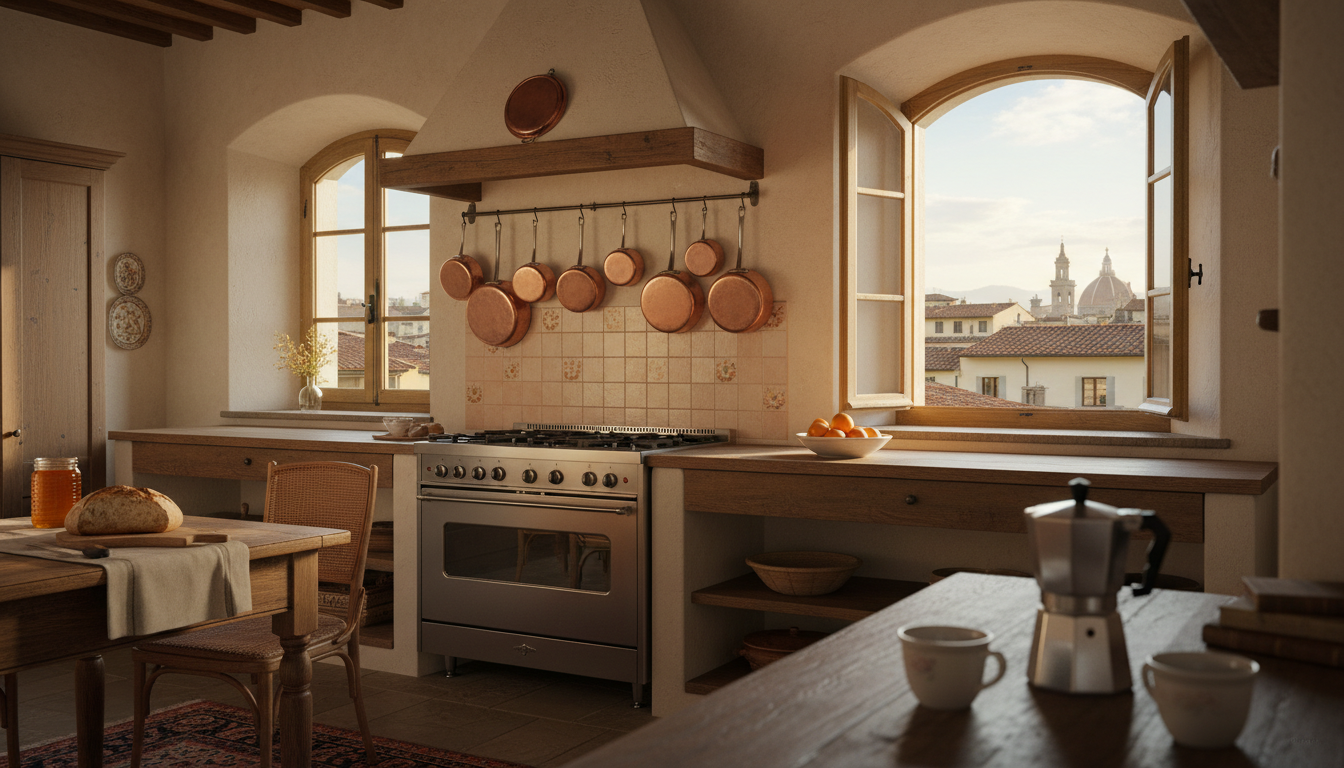 A cozy Florentine kitchen with a gas stovetop, copper pots hanging on the wall, a small espresso mak
Hours 1-4: Getting Oriented in Your Florence Neighborhood
Once the essentials are handled, it's time to step outside and establish your local bearings. This reconnaissance mission serves practical purposes beyond simple exploration.
Find Your Nearest Alimentari or Small Supermarket
The large supermarkets like Esselunga (there's one near the train station on Via Alamanni) or Conad keep longer hours, but your neighborhood alimentari will become your daily lifeline. These small grocery shops stock fresh bread, local cheeses, prosciutto, and basic supplies. Prices run slightly higher than supermarkets—expect €4-6 for a decent bottle of everyday Chianti, €3-4 for fresh mozzarella—but the convenience and personal service justify the premium.
In the Oltrarno, Alimentari Orizi on Via Santo Spirito has served the neighborhood for decades. Near San Lorenzo, the covered Mercato Centrale offers both quick meals and groceries, though it's become increasingly tourist-oriented. For the best local experience, ask your host which alimentari they use—or simply look for the shop with the most Italian grandmothers queuing outside.
Identify the Nearest Farmacia
Italian pharmacies (farmacie) operate differently than American or British ones. They're your first stop for minor medical issues—pharmacists can recommend treatments for common ailments and dispense many medications that would require prescriptions elsewhere.
Locate your nearest farmacia and note its hours. Most close for lunch (typically 13:00-16:00) and on Sunday, but Florence maintains a rotating schedule of farmacie di turno that stay open 24/7. The Farmacia di Santa Maria Novella on Via della Scala is famous for its historic premises and artisanal products, but it's not where you'd go for urgent needs—it's more museum than medicine cabinet.
Scout the Coffee Situation
This is Florence. Coffee matters.
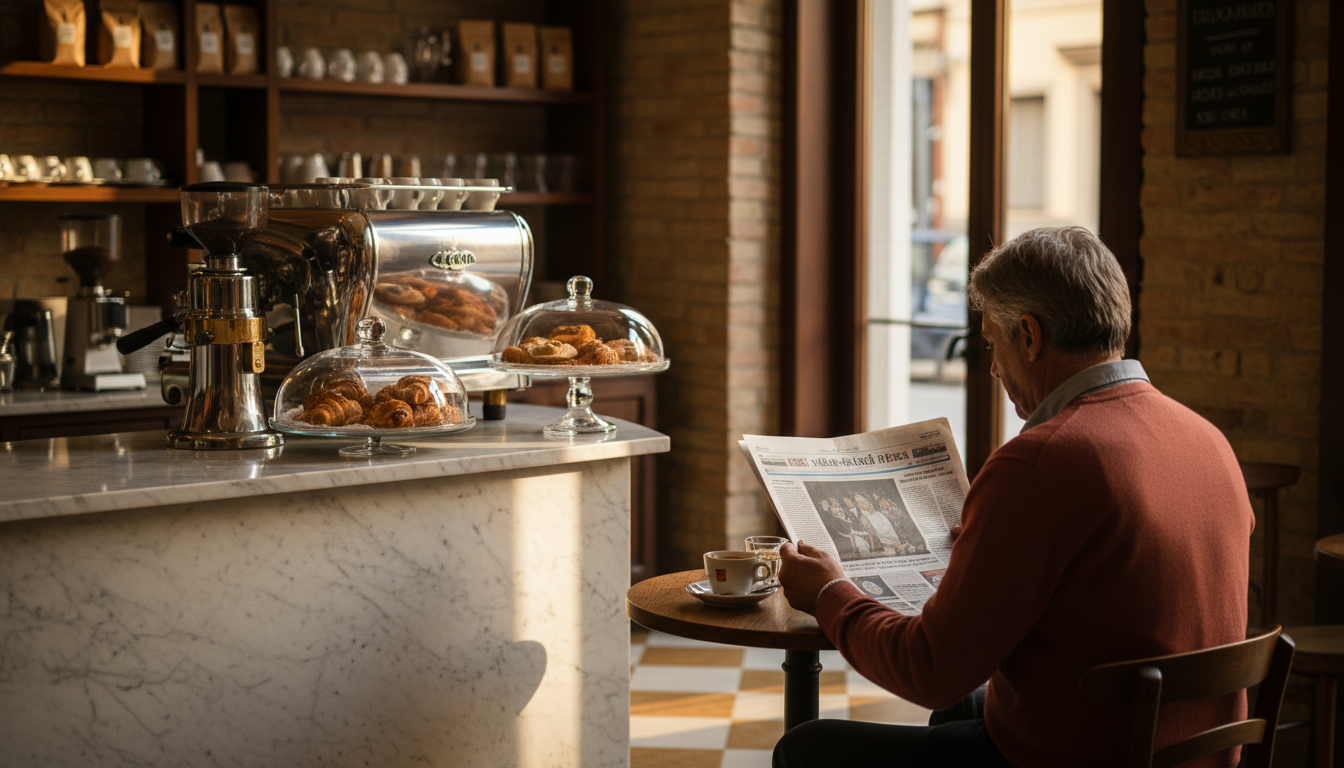
Identify the bar (café) nearest to your apartment where you'll take your morning espresso. The ritual is simple: enter, say "buongiorno," order at the bar (standing is cheaper than sitting), pay, leave. A standard espresso costs €1.10-1.50 at the bar throughout most of Florence; the same coffee sitting down in Piazza della Signoria might run €6-8.
In the San Niccolò neighborhood, Caffè Notte has been serving espresso since the 1960s. Near Santa Croce, Caffè Cibrèo offers excellent coffee alongside its famous restaurant. In the Oltrarno, Volume is a hybrid café-bookshop that's become a local institution. Wherever you choose, become a regular. Say buongiorno. The barista will remember you by day three.
 An Italian espresso bar interior with a marble counter, vintage Gaggia machine, pastries under glass
Hours 4-8: Practical Systems and Local Knowledge
With orientation complete, turn your attention to the systems that will govern daily life in your Florence home swap.
Understand the Garbage Situation (This Is Critical)
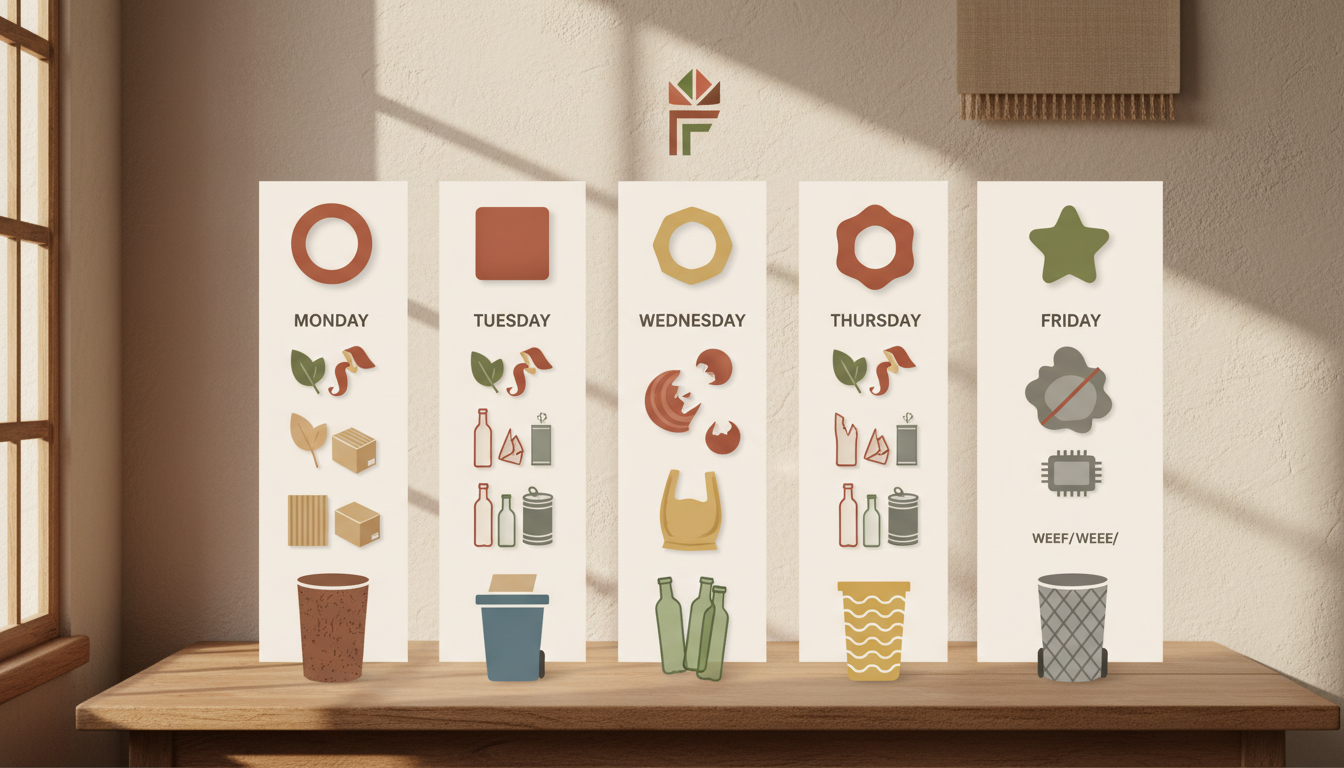
Florence takes waste management seriously, and the system confuses even long-term residents. The city uses a porta-a-porta (door-to-door) collection system with different types of waste collected on different days:
- Organico (organic/food waste): typically collected daily
- Indifferenziato (non-recyclable): twice weekly
- Carta (paper/cardboard): once weekly
- Plastica/Metalli (plastics/metals): once weekly
- Vetro (glass): once weekly
Your host should have left a collection schedule and shown you which bins correspond to which waste type. The bins often live in a closet or on the balcony. Put the wrong waste out on the wrong day, and it sits there. Contaminate recycling with non-recyclables, and you might receive a fine. The SwappaHome community consistently flags this as the most overlooked aspect of Florence home swap arrivals.
Learn the Building's Unwritten Rules
Every Florentine apartment building has its own social code. When does the portone (main door) lock automatically? Are there quiet hours? (Most buildings observe silence after 22:00.) Is there a shared terrace or courtyard, and what are its usage rules? How does mail delivery work? Is there a portiere (doorman) and what are their hours?
If you encounter neighbors in the stairwell, a simple "buongiorno" or "buonasera" goes far. Italians value these small courtesies. Don't be the tourist who ignores greetings—it marks you immediately and colors every subsequent interaction.
Set Up Your Kitchen for Actual Cooking
One of home swapping's greatest pleasures is cooking with local ingredients. But Italian kitchens operate differently than what you might know.
The moka pot (that octagonal stovetop espresso maker) requires specific technique: fill the bottom with water to just below the valve, add finely ground coffee to the basket without packing it down, assemble, and heat on medium until you hear gurgling. Remove from heat immediately when the top chamber fills. It takes practice, but morning espresso from a moka pot, made in a Florentine kitchen while church bells ring across the rooftops, justifies the learning curve.
Most Italian kitchens lack a clothes dryer (you'll use a stendino, a drying rack, often on the balcony), a large oven (Italian ovens tend to be compact), a garbage disposal (never put food waste down the drain), and ice makers (buy ice bags at the supermarket if needed). They typically include a bidet in the bathroom (not for what tourists sometimes assume), shutters (persiane) that block light completely when closed, and a washing machine, often in the bathroom or kitchen.
 An infographic showing the Florence waste collection schedule with icons for each waste type, days o
Hours 8-16: Settling In and Establishing Routines
By evening of your first day, the initial adrenaline fades. This is when thoughtful home swappers shift from survival mode to actually living in Florence.
Take a Sunset Walk to Piazzale Michelangelo
Yes, it's touristy. Yes, the crowds can be intense. But watching the sun set over Florence's cathedral dome from Piazzale Michelangelo remains one of those experiences that earns its cliché status. The walk up from the San Niccolò neighborhood takes about 20 minutes and passes through the old city gate at Porta San Miniato. Arrive 45 minutes before sunset to secure a spot on the steps.
Alternatively, if you're staying in the Oltrarno, walk up to San Miniato al Monte, the Romanesque church just above Piazzale Michelangelo. Fewer tourists, better views, and if you time it right, you'll hear the monks singing vespers.
Have Your First Real Florentine Meal
Not at a restaurant with photos on the menu. Not at the place with the guy outside trying to hand you a laminated card.
Find a trattoria where the menu is handwritten, changes daily, and features dishes you might not recognize. In the Sant'Ambrogio neighborhood, Trattoria da Rocco inside the market serves ribollita (Tuscan bread soup) that costs €5 and tastes like someone's grandmother made it—because someone's grandmother probably did. Near Santo Spirito, Trattoria Sabatino has occupied the same corner since 1956, serving fixed-price lunches to workers and students for around €12-15. In the Santa Croce area, Trattoria Anita remains defiantly local despite its proximity to tourist traffic.
Order the lampredotto if you're adventurous—it's tripe, served in a sandwich from street carts throughout the city, and it's the most Florentine thing you can eat. The cart near the Mercato Centrale has been there for generations.
Send Your Host a "Settled In" Message
Before bed, send a brief message through SwappaHome confirming you've arrived safely, everything is working, and you've found the essentials. Mention anything that wasn't clear or any minor issues. This simple courtesy builds the trust that makes home swapping work. Your host is likely anxious about a stranger in their home—reassurance costs you nothing and means everything to them.
Hours 16-24: Fine-Tuning and Future Planning
Your second morning in Florence. You've survived the first night, figured out the moka pot, and navigated the garbage system. Now optimize.
Establish Your Daily Rhythm
Florence operates on a schedule that might feel foreign. Shops close for lunch (typically 13:00-15:30 or 16:00). Dinner rarely starts before 19:30, with 20:30-21:00 being more typical. Attempting to eat at 18:00 marks you as a tourist and limits your options to places that cater specifically to tourists.
Plan your days around this rhythm: mornings for coffee and museums (book Uffizi and Accademia tickets online, weeks in advance), midday for lunch and rest during the hottest hours, late afternoon for shopping, wandering, and aperitivo, and evenings for dinner, the passeggiata, and gelato.
Book Your Must-Do Reservations
Certain Florence experiences require advance booking. From your home base, with wifi and time to plan, secure Uffizi Gallery tickets (€20-25, book 2+ weeks ahead in high season), Accademia Gallery for Michelangelo's David (€12-16, similar lead time), Duomo dome climb (free but requires timed reservation), and any special-occasion restaurants (Enoteca Pinchiorri requires weeks of notice).
The Vasari Corridor, the elevated passageway connecting Palazzo Vecchio to Palazzo Pitti, reopened in 2024 after years of renovation—tickets sell out months in advance.
Locate Your Neighborhood's Hidden Gems
Ask your host, check their guestbook if they have one, or simply wander. Every Florence neighborhood hides treasures that don't appear in guidebooks: the Officina Profumo-Farmaceutica di Santa Maria Novella, a 13th-century pharmacy selling artisanal perfumes and remedies; the Brancacci Chapel in Santa Maria del Carmine, with Masaccio frescoes that predate and arguably rival the Sistine Chapel; the Bardini Gardens, a terraced hillside garden with Duomo views and a fraction of Boboli's crowds; the Museo Stefano Bardini, an eccentric collection in a former palace, rarely crowded; and the Rose Garden (Giardino delle Rose) below Piazzale Michelangelo, free entry, peak bloom in May.
Stock Your Kitchen for the Week
With your bearings established, do a proper grocery shop. The Mercato di Sant'Ambrogio operates every morning except Sunday and offers better prices and more local character than the tourist-heavy Mercato Centrale. For specialty items, Pegna on Via dello Studio has been Florence's gourmet grocer since 1860.
Buy good olive oil (Tuscan, obviously—expect €10-15 for a quality half-liter), fresh pasta from a pasta fresca shop, local cheeses like pecorino toscano and fresh ricotta, seasonal vegetables from the market, and a bottle of Chianti Classico for cooking and drinking (€8-15 for everyday quality).
The Florence Home Swap Arrival Checklist: Quick Reference
Pre-Arrival (48 hours before): Confirm key collection method and location. Download offline Florence maps. Send host your ETA and contact details. Verify any building access codes.
First 30 Minutes: Video document entire apartment. Locate electrical panel and water shutoff. Test gas appliances and pilot lights. Connect to wifi and test.
Hours 1-4: Find nearest alimentari/supermarket. Locate nearest farmacia. Identify your daily coffee bar.
Hours 4-8: Learn garbage collection schedule and system. Understand building rules and quiet hours. Set up kitchen for cooking.
Hours 8-16: Sunset walk to Piazzale Michelangelo. First authentic Florentine meal. Send host a "settled in" message.
Hours 16-24: Establish daily rhythm around Italian schedule. Book museum and restaurant reservations. Explore neighborhood hidden gems. Stock kitchen for the week.
What Makes Florence Home Swaps Different
Florence isn't like swapping in a modern city apartment. The buildings here have witnessed centuries. Your temporary home might have walls that Medici-era merchants touched, windows that look out on views essentially unchanged since the Renaissance, plumbing that... well, let's just say the plumbing has character.
This history creates both magic and challenges. Expect quirks: doors that stick in humidity, radiators that clang, shutters that require specific techniques to close properly. These aren't problems—they're features of living in a city that prioritizes preservation over convenience.
The SwappaHome community in Florence tends toward a particular type: people who appreciate the texture of old things, who don't mind trading modern efficiency for historical character, who understand that the crack in the ceiling has been there since the 1800s and will remain there long after we're gone.
Frequently Asked Questions
What time should I arrive at my Florence home swap?
Aim for early-to-mid afternoon, ideally between 14:00-17:00. This gives you daylight for orientation, time to sort any issues before evening, and avoids the difficulty of navigating unfamiliar streets and locks after dark. If your flight arrives in the morning, store luggage at Santa Maria Novella station (€6-8 per bag) and explore until your check-in time.
How do I handle the Florence tourist tax during a home swap?
Florence charges a tourist tax (tassa di soggiorno) of €4.50-5.50 per person per night for the first 7 nights. Home swaps typically don't trigger this tax since no commercial transaction occurs—you're a guest, not a paying customer. Confirm with your host, but SwappaHome exchanges generally fall outside the tax's scope.
Is it safe to drink tap water in Florence?
Yes. Florence tap water is safe and actually quite good—it comes from the Arno valley aquifers. Bring a reusable bottle and fill it at your apartment. You'll also find public drinking fountains (fontanelle) throughout the city, including the famous Fontana del Porcellino near the Mercato Nuovo.
What if something breaks during my Florence home swap?
Contact your host immediately through SwappaHome's messaging system. For minor issues (lightbulb, clogged drain), ask if they'd prefer you handle it or wait. For anything significant, document with photos and let them guide the response. Many hosts leave emergency contact numbers for trusted local repair services. Remember that SwappaHome facilitates connections between members but doesn't provide damage coverage—consider personal travel insurance if you want that protection.
What's the best neighborhood for a first-time Florence home swap?
The Oltrarno (south of the Arno River) offers the ideal balance: authentic neighborhood feel, excellent restaurants and bars around Santo Spirito, easy walking distance to major sights, and typically more spacious apartments than the cramped centro storico. San Frediano and San Niccolò within the Oltrarno are particularly well-suited to home swappers seeking local immersion over tourist convenience. Expect listings in this area to show strong demand during the April-October high season.

Published by
SwappaHome
SwappaHome Editorial Team
Home Exchange & Slow Travel Editorial
The SwappaHome Editorial Team brings together travel research, home-exchange community insights, and platform data to produce practical guides for first-time and experienced home swappers. Every article cites real platforms, current market rates, and verifiable city-level facts so readers can make informed decisions without guessing.
Ready to try home swapping?
Join SwappaHome and start traveling by exchanging homes. Get 7 free credits when you sign up!
Related articles
Bachelor and Bachelorette Parties in Singapore: The Complete Home Swap Group Guide for 2026
Planning a bachelor or bachelorette party in Singapore? Discover how home swapping lets groups of 6-12 stay together in luxury condos, saving thousands while partying in Marina Bay.
Cycling in Lisbon: 7 Home Swap Bike Tour Itineraries for Every Rider
Discover the best cycling routes in Lisbon with these home swap bike tour itineraries—from waterfront paths to hilltop adventures, all starting from your borrowed home.
Graduation Trip to Barcelona: How Home Swapping Gives New Graduates the Ultimate Celebration
Planning a graduation trip to Barcelona? Discover how home swapping lets new graduates explore Spain's most vibrant city without the hostel crowds or hotel costs.