
Pet-Friendly Tokyo Home Swap: The Complete Guide to Traveling with Animals in Japan

SwappaHome Editorial Team
Home Exchange & Slow Travel Editorial
Navigate Japan's pet regulations, find welcoming neighborhoods, and discover why home swapping in Tokyo beats pet-friendly hotels for traveling with your furry companion.
Your dog sprawls across the tatami mat floor of a quiet Setagaya apartment, afternoon light filtering through shoji screens, while you sip green tea and plan tomorrow's walk through Komazawa Olympic Park. This isn't a fantasy—it's what a pet-friendly Tokyo home swap actually looks like when you do it right.
Getting here, though? That requires navigating Japan's notoriously strict animal import regulations, finding neighborhoods where pets are genuinely welcome (not just tolerated), and understanding why traditional Tokyo hotels make traveling with animals nearly impossible. The pet-friendly Tokyo home swap has become the go-to solution for travelers who refuse to leave their companions behind—and for good reason.
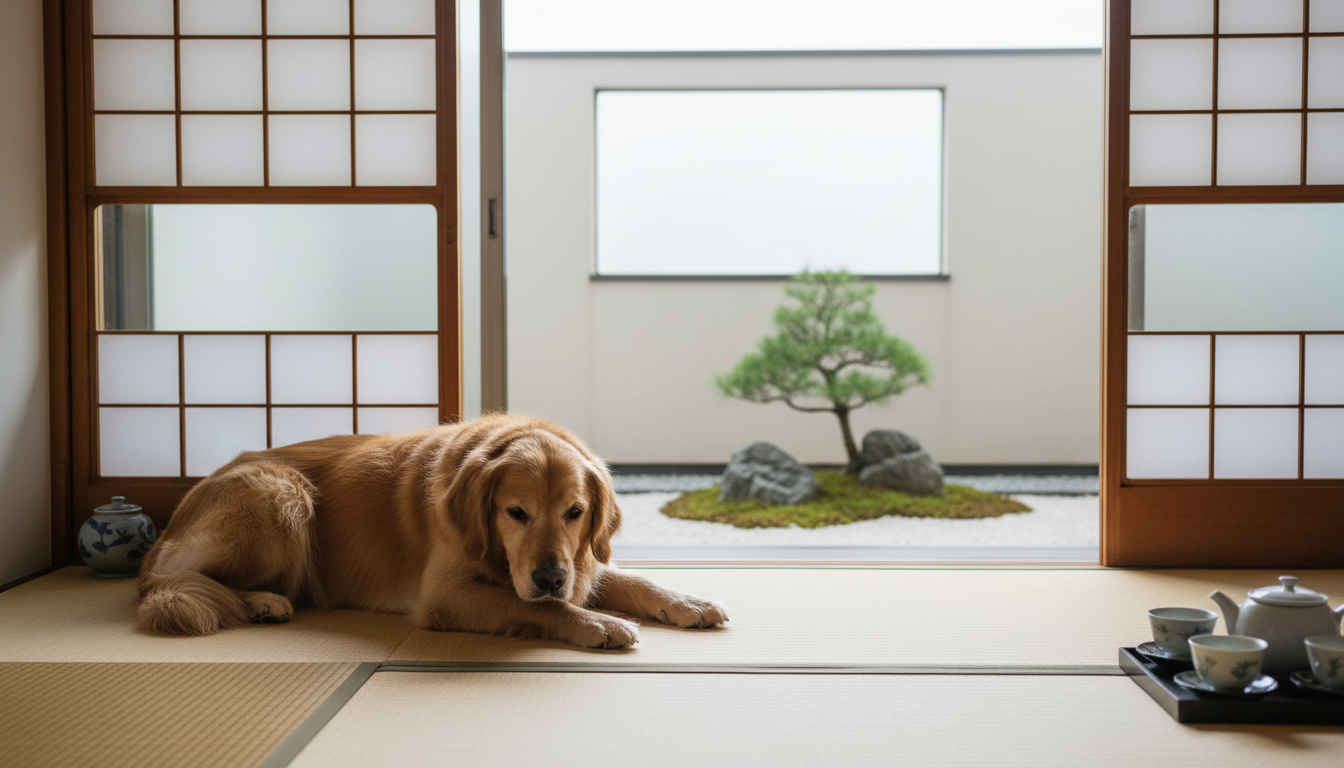 Golden retriever resting on traditional tatami floor in a bright Japanese apartment with sliding sho
Why Home Swapping Beats Pet-Friendly Hotels in Tokyo
Here's the honest truth about pet-friendly accommodation in Tokyo: it barely exists in the traditional hotel sector. Most major hotels either prohibit animals entirely or restrict them to carriers under 5kg—essentially excluding any dog larger than a Chihuahua. The few that do accept pets charge ¥5,000–15,000 ($35–100 USD) per night in additional fees, require extensive documentation, and often limit pets to specific "pet floors" with restricted access to common areas.
The math gets brutal fast. A two-week Tokyo trip with a medium-sized dog at a pet-accepting hotel runs ¥280,000–420,000 ($1,900–2,900 USD) in accommodation alone, before the pet surcharges. SwappaHome members traveling with pets report spending exactly zero on accommodation—just their annual membership and the credits they've earned hosting others.
But cost isn't even the main advantage.
Actual living space. Tokyo apartments come with dedicated pet areas, nearby walking routes the host has already mapped, and often supplies like food bowls, leashes, and pet beds. You're not confined to a 25-square-meter hotel room with a nervous animal.
Neighborhood integration. Hosts share their favorite dog parks, the convenience store that stocks your pet's preferred food brand, the veterinary clinic two blocks away. This local knowledge is impossible to replicate through hotel concierge services.
Stress reduction for your animal. Pets settle faster in home environments than in hotels with constant hallway noise, unfamiliar elevator rides, and restricted outdoor access. Community members frequently report that their animals adapt to swap homes within 24–48 hours, compared to the ongoing anxiety many experience in hotel settings.
Japan's Pet Import Requirements: What You Actually Need
Japan operates one of the world's strictest animal import systems, and misunderstanding it can result in your pet being quarantined for up to 180 days at your expense. This isn't bureaucratic paranoia—it's rabies prevention in a country that eliminated the disease domestically in 1957.
The process must begin at least seven months before your arrival. Here's the timeline that experienced pet travelers follow:
Seven months out: Microchip implantation (ISO 11784/11785 standard) followed immediately by rabies vaccination. The microchip must be readable at time of vaccination, or the entire timeline resets.
Six months out: Blood test for rabies antibody titer (must show ≥0.5 IU/ml). The blood sample must go to a Japan-approved laboratory—there are only about 40 worldwide. Results take 2–3 weeks.
180-day wait: From the blood draw date, you must wait 180 days before entering Japan. Non-negotiable. This catches most travelers off-guard.
40 days before arrival: Submit the "Advance Notification" form to the Animal Quarantine Service at your arrival airport (Narita, Haneda, Kansai, etc.). You'll receive a notification number required for entry.
10 days before departure: Obtain a health certificate from an accredited veterinarian, then have it endorsed by your country's official veterinary authority (USDA in the US, APHA in the UK).
Cost for the complete process runs approximately $400–800 USD depending on your country, not including any required booster vaccinations.
The penalty for incomplete documentation is severe: your pet enters mandatory quarantine at the Animal Quarantine Service facility, which costs roughly ¥3,000 ($20 USD) per day plus food, and can last up to 180 days while missing requirements are fulfilled.
 Organized pet travel documents spread on a desk including microchip certificate, rabies vaccination
Best Tokyo Neighborhoods for Pet-Friendly Home Swaps
Not all Tokyo neighborhoods treat pets equally. Some actively welcome them with dedicated infrastructure; others technically allow them while making daily life difficult. Here's where the SwappaHome community has found the most success:
Setagaya: The Gold Standard for Dog Owners
Setagaya ward, in Tokyo's western suburbs, has earned its reputation as the city's most dog-friendly area. Komazawa Olympic Park offers 41 hectares of green space with a dedicated dog run that's become a social hub for local pet owners. The surrounding streets are lined with pet supply shops, grooming salons, and even dog-friendly cafés.
Home swap listings in Setagaya typically feature dedicated pet washing areas (common in newer apartment buildings), balconies or small gardens suitable for quick bathroom breaks, walking distance to multiple parks and green spaces, and lower noise sensitivity from neighbors accustomed to pets.
The tradeoff? Setagaya sits 20–40 minutes from central Tokyo by train. For travelers prioritizing pet comfort over proximity to major tourist sites, this distance is worth it. The Tokyu Den-en-toshi Line and Odakyu Line provide reliable connections to Shibuya and Shinjuku.
Meguro: Urban Convenience with Pet Infrastructure
Meguro ward offers a middle ground—closer to central Tokyo while maintaining strong pet-friendly infrastructure. The Meguro River walking path provides a scenic 8-kilometer route popular with dog walkers, particularly stunning during cherry blossom season when the trees create a pink canopy over the water.
Nakameguro, the trendy neighborhood along the river, has numerous dog-friendly cafés and restaurants with outdoor seating. Rinshi-no-Mori Park offers an off-leash dog area that's well-maintained and regularly used.
Home swaps here tend to be smaller (typical Tokyo space constraints apply) but compensate with location advantages. You're 5–10 minutes from Shibuya, with direct access to the Tokyu Toyoko Line.
Koto: Waterfront Space for Larger Dogs
For travelers with larger breeds, Koto ward's waterfront developments offer something rare in Tokyo: space. The Toyosu and Shinonome areas feature newer apartment buildings with pet-friendly policies, larger floor plans, and proximity to waterfront parks.
Shiokaze Park, on the Tokyo Bay waterfront, provides expansive walking areas with sea views. The nearby Odaiba entertainment district includes several pet-friendly shopping areas and the massive Odaiba Seaside Park.
The area connects well via the Yurikamome Line to central Tokyo, though the monorail doesn't permit pets outside carriers—a consideration for larger dogs.
Nerima: Budget-Friendly with Abundant Green Space
Nerima ward, in northwestern Tokyo, offers the most affordable home swap options while maintaining excellent pet infrastructure. Shakujii Park, one of Tokyo's largest, features extensive walking trails around two ponds and a dedicated dog run.
The neighborhood has a more residential, less touristy feel—which many pet owners prefer. Local parks are less crowded, neighbors are accustomed to dogs, and the overall pace is calmer than central Tokyo. Connections to central Tokyo take 25–35 minutes via the Seibu Ikebukuro Line or Toei Oedo Line.
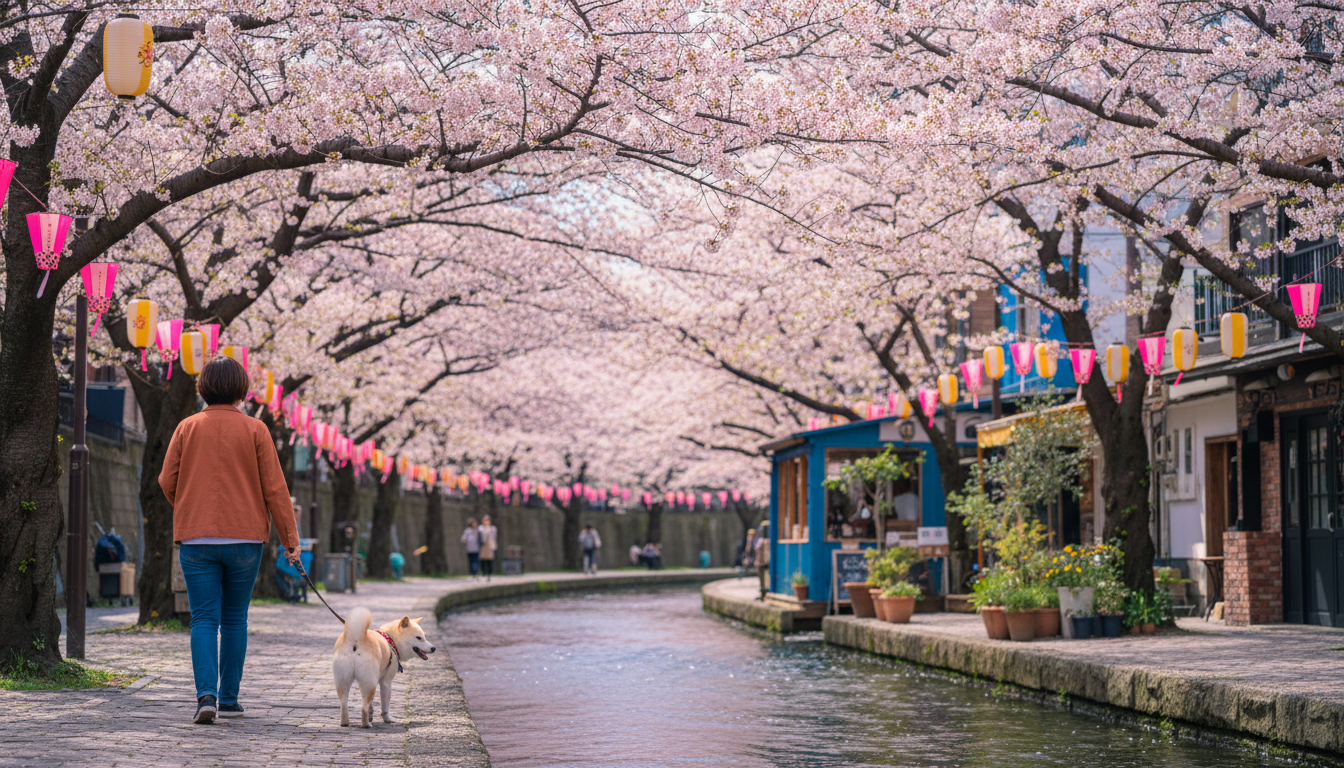 Owner walking a Shiba Inu along the cherry blossom-lined Meguro River path with traditional lanterns
Finding and Securing Pet-Friendly Tokyo Home Swaps
The search process for pet-friendly swaps requires more specificity than standard home exchange hunting.
Filtering Your Search
Start by filtering for Tokyo listings that explicitly mention pets. But don't stop there—many hosts who accept pets don't prominently feature this in their listing title. Search the full listing text for terms like ペット可 (petto-ka, "pets allowed"), 犬OK (inu OK, "dogs OK"), 猫OK (neko OK, "cats OK"), or simply "pet-friendly" and "animal-friendly."
The SwappaHome platform's messaging system allows you to contact hosts directly before committing. A brief, specific inquiry works best:
"We're planning a two-week Tokyo trip in October with our 12kg Labrador mix. Your Setagaya listing looks perfect—could you confirm pets are welcome and share any house rules about animals?"
Evaluating Listings for Pet Suitability
Beyond the "pets allowed" label, look for practical indicators.
Floor type: Hardwood or tile floors are easier to clean than carpet if accidents happen. Traditional tatami rooms require more careful pet management—claws can damage the woven surface.
Outdoor access: Ground-floor apartments with small gardens or balconies make bathroom breaks dramatically easier than high-rise units requiring elevator trips.
Neighborhood context: Check Google Maps satellite view for nearby green spaces. A listing might be technically pet-friendly but located in a concrete jungle with no walking options.
Building policies: Some Tokyo apartment buildings (マンション, mansion) have building-wide pet policies that differ from individual unit owner preferences. Ask hosts to confirm their building's rules.
The Reciprocal Consideration
Home swapping works on mutual trust. If you're bringing a pet into someone's home, consider what you're offering in return. Hosts are more likely to accept pet travelers if your own listing clearly welcomes pets (demonstrating you understand the requirements), if you have positive reviews from previous swaps—ideally mentioning your pet's behavior—if you offer to provide references from previous pet-friendly accommodations, and if you're flexible on dates and willing to work around the host's preferences.
The credit system means you don't need a simultaneous swap—you can host guests (with or without pets) in your home city and use those earned credits for your Tokyo trip. This flexibility is particularly valuable for pet owners, as finding a simultaneous swap where both parties have pets and compatible travel dates is significantly harder.
Navigating Tokyo with Your Pet: Practical Daily Life
Once you've arrived and settled into your swap home, daily life with a pet in Tokyo has its own rhythm and rules.
Public Transportation Rules
Tokyo's trains and subways permit pets only in carriers that fit on your lap or at your feet. The maximum carrier size is approximately 70cm × 90cm × 70cm, with a combined weight limit (pet plus carrier) of 10kg on most lines.
This effectively excludes medium and large dogs from public transit. Your options: Walking—Tokyo is surprisingly walkable, and many destinations are reachable on foot from residential neighborhoods. Taxis—Japan Taxi and other services accept pets, though drivers may decline if your animal is very large or visibly anxious; having a carrier or blanket to protect seats increases acceptance rates. Pet taxis—specialized services like Pet Taxi Tokyo transport animals of any size, though costs run ¥3,000–8,000 ($20–55 USD) for typical city trips. Rental cars—available from major agencies, though Tokyo's traffic and parking challenges make this practical mainly for day trips outside the city.
Dog Run Etiquette
Tokyo's dog runs (ドッグラン, doggu ran) operate on strict etiquette that differs from Western dog parks. Registration is often required—many runs ask for proof of rabies vaccination and registration with your local ward office (technically required for stays over 90 days, but some runs check regardless). Size segregation is common, with large and small dog areas kept separate. Owners must remain in the run with their dogs—no dropping off and leaving. Aggressive behavior results in immediate removal; Japanese dog culture emphasizes calm, well-socialized animals. Cleaning up is mandatory and carefully observed, so bring bags even if dispensers are provided.
Popular dog runs include Yoyogi Park Dog Run (central location, requires registration at the park office), Komazawa Olympic Park Dog Run (largest in Tokyo, divided into small/large sections), and Showa Kinen Park Dog Run (in western Tokyo, massive space with agility equipment).
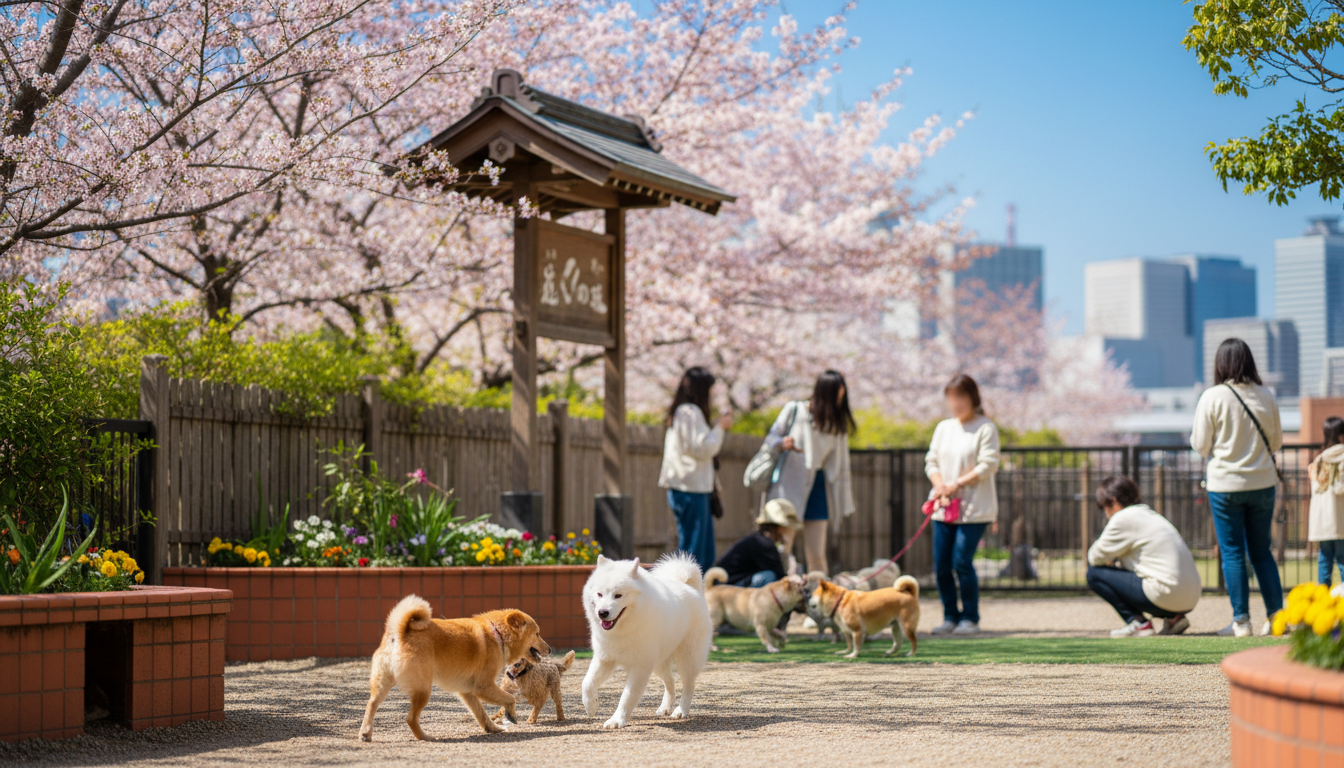 Dogs of various breeds socializing in a well-maintained Tokyo dog run with Japanese signage, cherry
Pet-Friendly Dining and Shopping
Tokyo's pet-friendly dining scene has expanded significantly, though it still operates differently than in pet-casual Western cities.
Terrace seating: Many cafés and restaurants with outdoor areas welcome leashed dogs. Nakameguro, Daikanyama, and Shimokitazawa have particularly high concentrations.
Dog cafés: Dedicated establishments where dogs are the primary guests, not just tolerated. These often serve human food and drinks alongside dog treats and meals.
Department store rooftops: Several Tokyo department stores have rooftop gardens that permit pets, including some with dedicated dog areas.
Pet supply stores: Chains like Kojima and Pet Plus are found throughout the city and welcome pets inside.
For grocery shopping and errands, pets typically cannot enter. Plan to leave your animal at the swap home or alternate shopping duties if traveling with a partner.
Veterinary Care
Emergency veterinary care is available 24/7 in Tokyo, though English-speaking services are limited. Key resources include Tokyo Animal Medical Center in Setagaya (24-hour emergency care, some English-speaking staff), TRVA or Tokyo Regional Veterinary Association (emergency referral service, phone assistance in English), and the Japan Animal Hospital Association (searchable database of member hospitals).
Keep your pet's vaccination records, microchip number, and any regular medications documented in both English and Japanese. Translation apps work well for basic communication, but complex medical situations benefit from a professional interpreter.
Seasonal Considerations for Pet Travel in Tokyo
Timing your pet-friendly Tokyo home swap affects both your experience and your animal's comfort.
Spring (March–May): Cherry Blossom Season
The most popular tourist season brings spectacular scenery but significant challenges for pet owners. Parks are extremely crowded during hanami (flower viewing) season, making dog walks stressful. Many cherry blossom viewing areas prohibit or restrict pets. Accommodation demand peaks, making home swaps harder to secure. Weather is mild and comfortable for most animals.
If traveling in spring, book your swap 4–6 months in advance and plan park visits for early morning or late evening to avoid crowds.
Summer (June–August): Heat and Humidity
Tokyo's summer is brutal—temperatures regularly exceed 35°C (95°F) with 80%+ humidity. This creates genuine health risks for pets. Pavement temperatures can burn paw pads; walk only in early morning or after sunset. Brachycephalic breeds (bulldogs, pugs, etc.) face serious heat stroke risk. Air conditioning is essential—confirm your swap home has it. Rainy season (tsuyu) in June means extended indoor time.
Summer is the easiest season to secure home swaps due to lower tourism demand, but only suitable for pets if you can manage the heat carefully.
Autumn (September–November): Ideal Conditions
The best season for pet travel to Tokyo. Comfortable temperatures (15–25°C / 59–77°F), lower humidity than summer, beautiful autumn colors in parks (koyo season), moderate tourist crowds, and good availability of home swaps. October and November are particularly recommended, with November offering the added bonus of autumn foliage viewing.
Winter (December–February): Cold but Manageable
Tokyo winters are mild compared to northern climates. Temperatures rarely drop below 0°C (32°F), snow is uncommon in central Tokyo, parks are quiet and uncrowded, and holiday season (late December) brings some crowd increases.
Short-coated breeds may need jackets for extended outdoor time, but most dogs handle Tokyo winters comfortably.
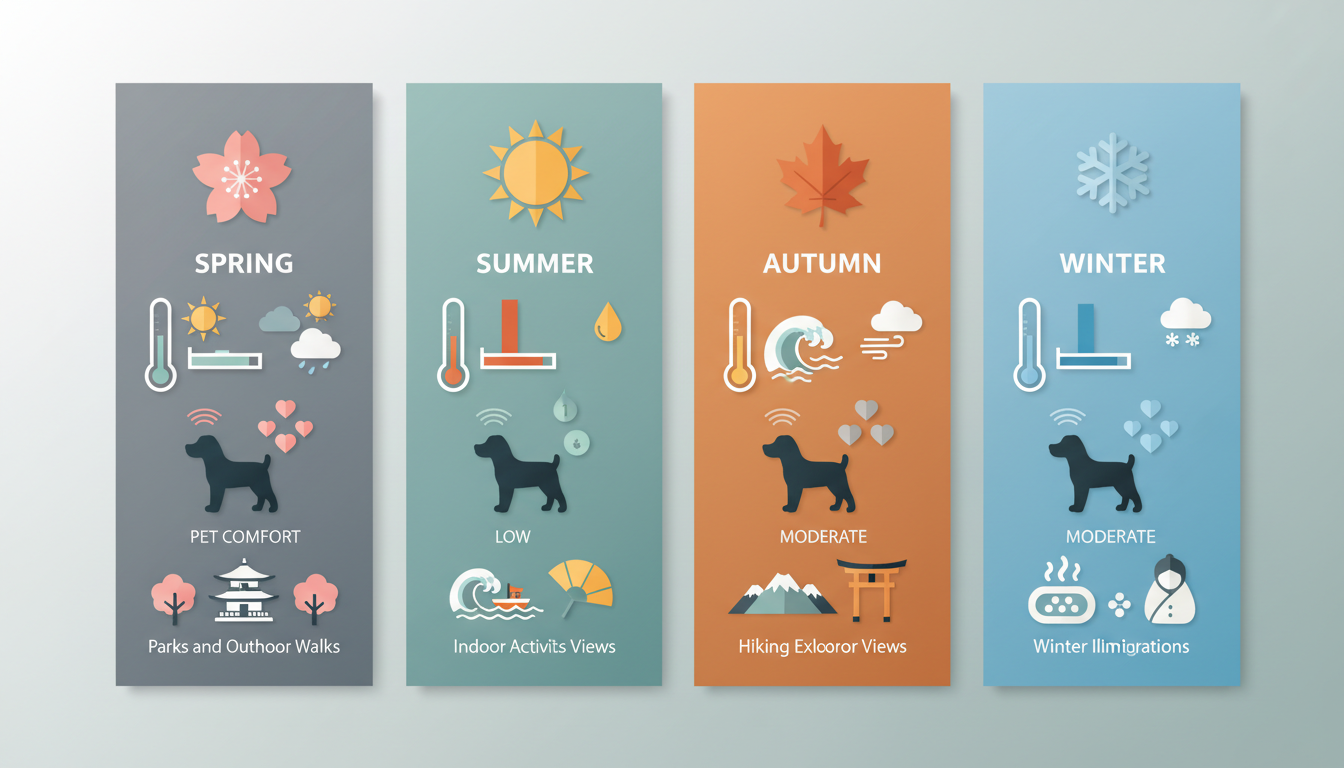 Infographic showing Tokyos four seasons with temperature ranges, pet comfort ratings, and best activ
Preparing Your Home for Hosting Pet Owners
The home swap equation works both ways. If you want pet-friendly hosts to accept you, consider making your own home welcoming to their animals.
Basic pet-proofing: Secure trash cans, remove fragile items from pet-height surfaces, identify and communicate any hazards (toxic plants, accessible medications, etc.).
Pet supplies: Keeping basic supplies—food and water bowls, a spare leash, waste bags—makes your listing more attractive to pet owners.
Local information: Document your neighborhood's pet resources: nearest veterinary clinic, good walking routes, pet-friendly cafés, off-leash areas.
Clear guidelines: Specify any restrictions (no pets on furniture, certain rooms off-limits, etc.) in your listing to avoid misunderstandings.
Members who actively welcome pets in their listings report significantly higher success rates when seeking pet-friendly swaps themselves. The community notices and reciprocates.
Insurance and Liability Considerations
SwappaHome connects members but doesn't provide insurance coverage for damages or incidents. For pet travelers, this means taking responsibility for your own protection.
Travel insurance: Verify your policy covers pet-related incidents abroad. Many standard policies exclude animals entirely; specialized pet travel insurance is available from providers like Petplan and Nationwide.
Liability coverage: If your pet damages the swap home or injures someone, you're personally responsible. Some homeowner's insurance policies extend liability coverage to temporary residences; check with your provider.
Pet health insurance: International coverage varies widely. Confirm whether your pet insurance covers veterinary care in Japan, or budget for out-of-pocket emergency expenses (which can run ¥50,000–200,000 / $350–1,400 USD for serious issues).
Security deposits: Some hosts request refundable deposits for pet stays. This is arranged directly between members and isn't managed through the platform.
The honest advice: don't travel internationally with a pet unless you can absorb unexpected costs. A medical emergency or damage incident without coverage can turn a dream trip into a financial nightmare.
Real Talk: Is a Pet-Friendly Tokyo Home Swap Right for You?
Some honest assessment is warranted here.
A Tokyo home swap makes sense if you're staying at least 10–14 days (the preparation effort isn't worth it for shorter trips), your pet is well-socialized and adapts reasonably to new environments, you can start the import documentation process 7+ months in advance, you're comfortable with the financial responsibility of potential incidents, and you have flexibility on neighborhoods and don't need to be in central Tokyo.
Consider alternatives if your pet has significant anxiety or behavioral issues in new environments, you're traveling for less than a week, you can't commit to the 7-month preparation timeline, your pet is a restricted breed in Japan (Pit Bulls and related breeds face additional scrutiny), or you need to be in central Tokyo daily and have a larger dog that can't use public transit.
The SwappaHome community includes many successful pet travelers, but also members who've concluded that certain trips work better without their animals. There's no shame in arranging quality care at home and traveling pet-free when the destination logistics are prohibitive.
Making Your First Pet-Friendly Tokyo Swap Happen
The path forward is clearer than it might seem.
Today: Start the import documentation process if you're within 7 months of your target travel date. Schedule the microchip and vaccination appointment.
This week: Create or update your SwappaHome profile to explicitly welcome pets, documenting your own home's pet-friendly features.
This month: Begin searching Tokyo listings and reaching out to potential hosts. Early communication—even 6+ months out—helps secure the best matches.
Ongoing: Build your credit balance by hosting guests. Each night you host earns one credit, regardless of your home's size or location. Those credits translate directly to nights in Tokyo.
The pet-friendly Tokyo home swap isn't the easiest way to travel with animals—but it might be the most rewarding. Waking up in a real Tokyo neighborhood, walking your dog past local shops and through quiet parks, experiencing the city as residents do rather than tourists: that's worth the preparation.
Your dog on that tatami mat, afternoon light through the shoji screens, green tea in hand—it's waiting for you. The paperwork is just the price of admission.
Frequently Asked Questions
How far in advance should I start planning a pet-friendly Tokyo home swap?
Begin at least seven months before your intended travel date. Japan's animal import requirements include a mandatory 180-day waiting period after your pet's rabies antibody blood test. Add time for microchipping, vaccinations, and finding the right home swap match. Most successful pet travelers start the process 8–10 months ahead to avoid deadline stress.
What size dogs can use Tokyo public transportation?
Tokyo trains and subways only permit pets in carriers that fit on your lap, with a combined weight limit (pet plus carrier) of approximately 10kg. This effectively limits public transit to small dogs and cats. Medium and large dogs must travel by taxi, specialized pet transport services, or on foot. Many pet owners find Tokyo surprisingly walkable for this reason.
Is home swapping in Tokyo safe for my pet?
Home swapping provides a more stable, comfortable environment for pets than hotels, with dedicated space, familiar home surroundings, and local knowledge from hosts about veterinary care and walking routes. However, SwappaHome is a platform connecting members—it doesn't provide insurance or damage coverage. Members are responsible for arranging their own travel and pet insurance for protection against unexpected incidents.
How much can I save with a pet-friendly Tokyo home swap versus hotels?
Pet-friendly hotels in Tokyo are rare and expensive, typically charging ¥20,000–35,000 ($140–240 USD) per night plus ¥5,000–15,000 ($35–100 USD) in pet fees. A two-week stay runs ¥350,000–700,000 ($2,400–4,800 USD). Home swapping costs only your SwappaHome membership and credits earned by hosting—potentially saving $2,000–4,500 on a two-week trip while providing significantly better accommodation for your pet.
What's the best season for a pet-friendly Tokyo home swap?
Autumn (October–November) offers ideal conditions: comfortable temperatures of 15–25°C (59–77°F), low humidity, beautiful foliage, and moderate crowds. Spring is scenic but extremely crowded during cherry blossom season. Summer's heat and humidity pose genuine health risks for many pets. Winter is manageable but requires jackets for short-coated breeds during extended outdoor time.

Published by
SwappaHome
SwappaHome Editorial Team
Home Exchange & Slow Travel Editorial
The SwappaHome Editorial Team brings together travel research, home-exchange community insights, and platform data to produce practical guides for first-time and experienced home swappers. Every article cites real platforms, current market rates, and verifiable city-level facts so readers can make informed decisions without guessing.
Ready to try home swapping?
Join SwappaHome and start traveling by exchanging homes. Get 7 free credits when you sign up!
Related articles

Bachelor and Bachelorette Parties in Singapore: The Complete Home Swap Group Guide for 2026
Planning a bachelor or bachelorette party in Singapore? Discover how home swapping lets groups of 6-12 stay together in luxury condos, saving thousands while partying in Marina Bay.

Cycling in Lisbon: 7 Home Swap Bike Tour Itineraries for Every Rider
Discover the best cycling routes in Lisbon with these home swap bike tour itineraries—from waterfront paths to hilltop adventures, all starting from your borrowed home.

Graduation Trip to Barcelona: How Home Swapping Gives New Graduates the Ultimate Celebration
Planning a graduation trip to Barcelona? Discover how home swapping lets new graduates explore Spain's most vibrant city without the hostel crowds or hotel costs.